


 购物车
购物车 个人中心
个人中心
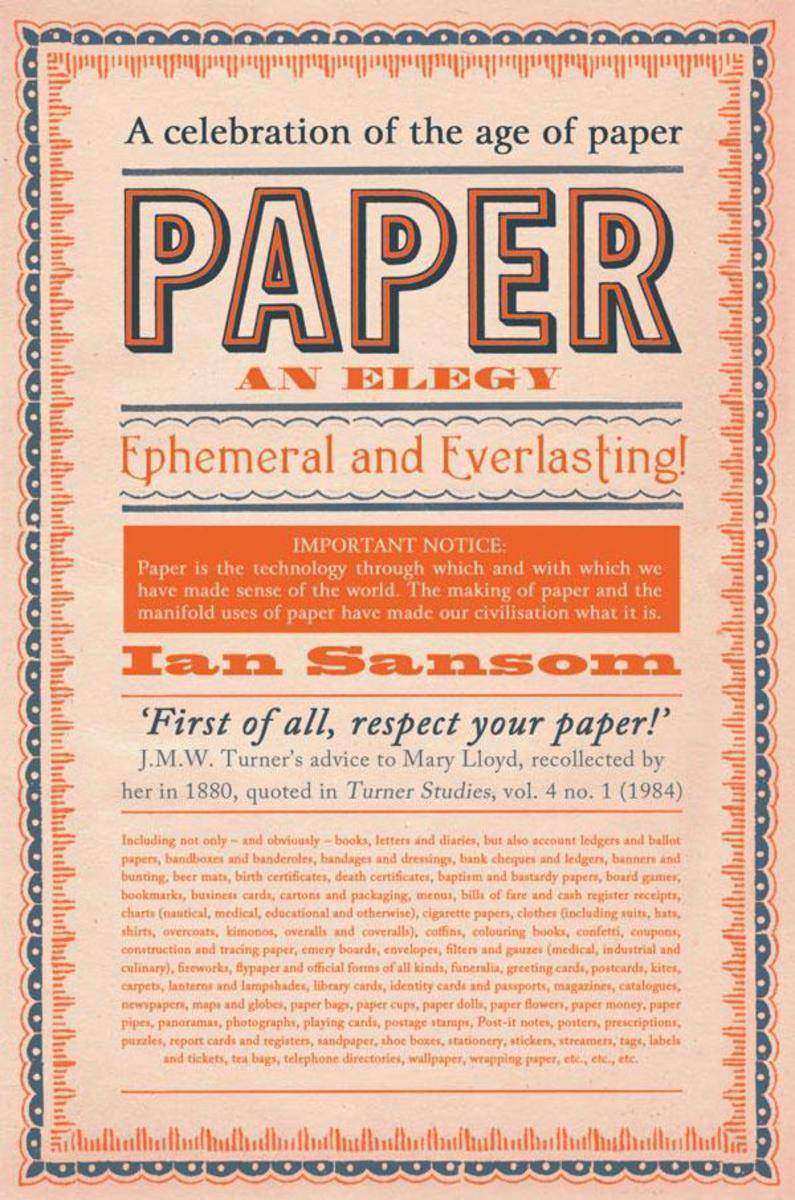
Paper
¥90.51
Let us suppose for a moment that paper were to disappear.Would anything be lost?Everything would be lost.aper surrounds us. Not only as books, letters and diaries, but as beer mats and birth certificates, board games and business cards, fireworks and flypaper, photographs and playing cards, tickets and tea bags. We are paper people.But the age of paper is coming to an end. E-books regularly outsell physical books. E-tickets replace the paper variety. Archives are digitized. The world we know was made from paper, and yet everywhere we look, paper is beginning to disappear. As we enter a world beyond paper, Ian Sansom explores the paradoxes of the greatest of man-made materials and shows how some kinds of paper, and the ghosts and shadows of paper, will always be with us.Paper: An Elegy is a history of paper in all its forms and functions. Both a cultural study and a series of personal reflections on the meaning of paper, this book is a timely meditation on the very paper it is printed on.
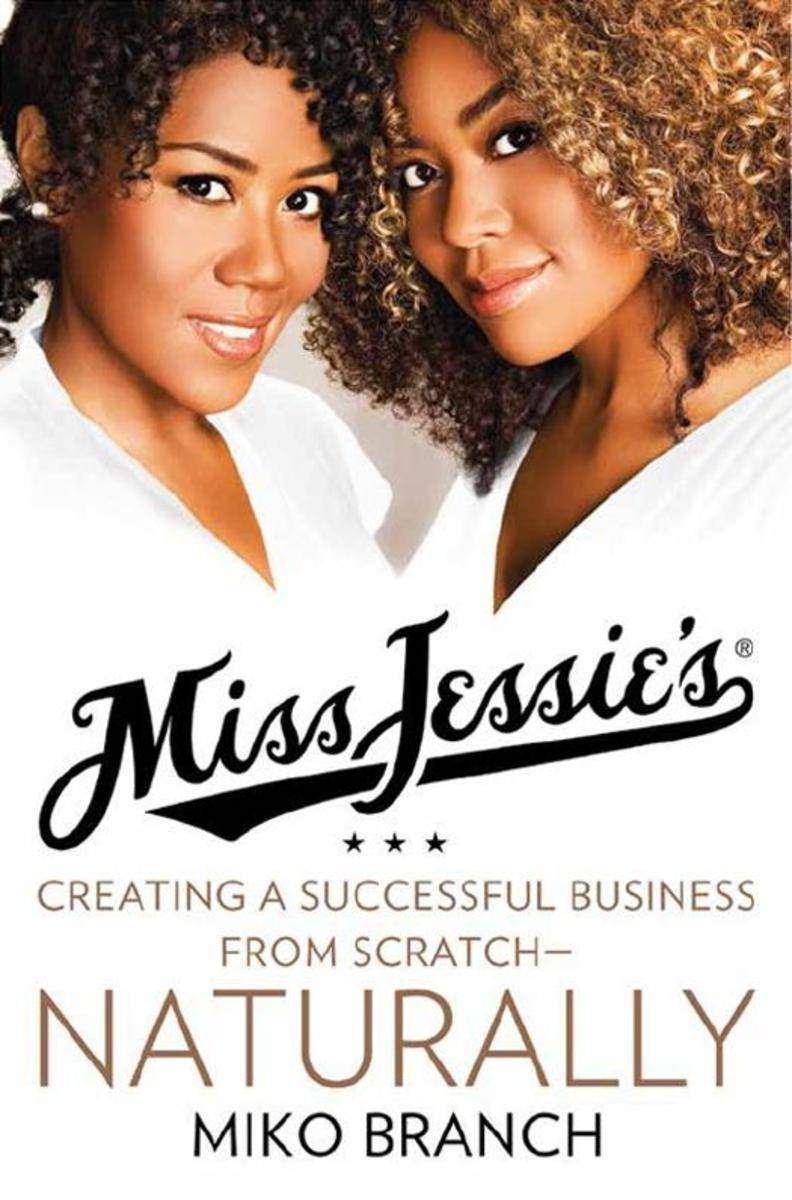
Miss Jessie's
¥88.56
Miss Jessie's is a memoir and business guide rich with inspirational life lessons and unique business advice from Miko Branch, the Chief Executive Officer of the dynamic Miss Jessie's the company that revolutionized the hair-care industry.When Miko and her sister, Titi, were children, their grandmother Miss Jessie taught them independence and showed them the value of being "do it yourself" women, all while whipping up homemade hair concoctions at her kitchen table. As a co-founder of Miss Jessie's, Miko reveals how she and Titi applied their grandmother's lessons to create a successful business from scratch. Miss Jessie's chronicles the Branch sisters' remarkable story. When they were children, their stern father encouraged them to become self-reliant and not to depend on their looks to get ahead. Taking this message to heart, they blossomed into business owners and leaders in their field, using ingenuity and without borrowing a dime. They soaked up the entrepreneurial and creative culture of the early hip-hop era on the streets of Brooklyn in the late 1990s, and in the high-end salons of Manhattan. They blended these inspirations to establish a business that has gone from their kitchen table to the shelves of major retailers around the globe, revolutionizing the hair-care industry. A charming and enlightening look at the women behind the brand, Miss Jessie's is chock-full of entertaining stories and invaluable instruction that can be applied to any business: an authentic expression that the American Dream is possible.
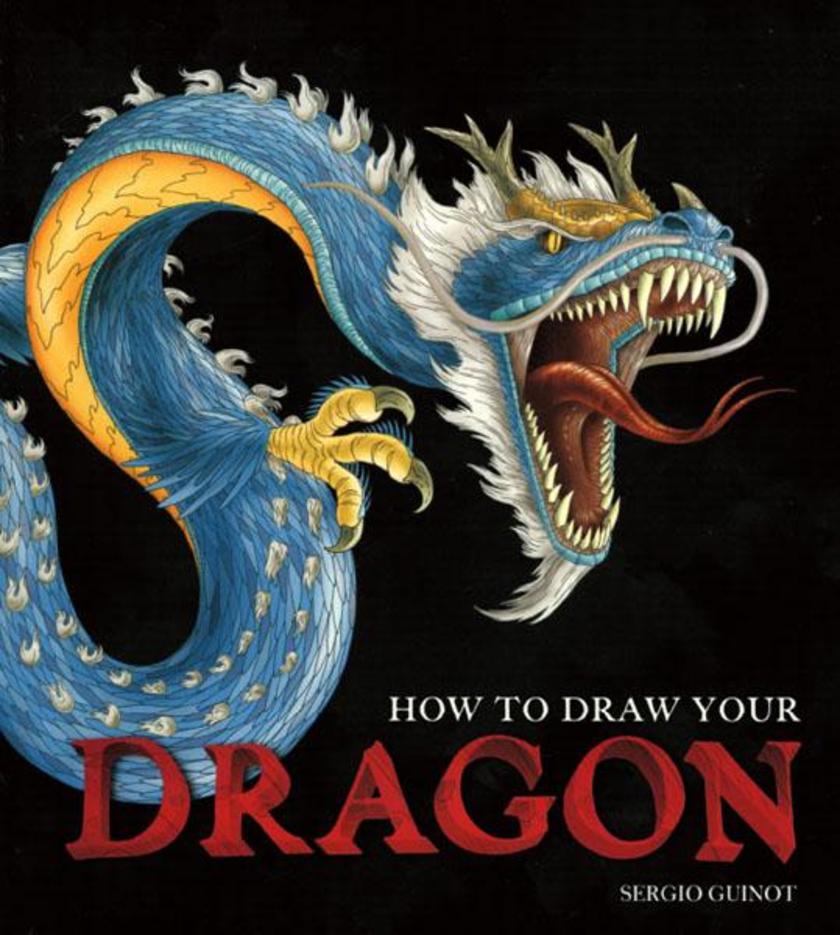
How to Draw Your Dragon
¥157.15
Massive fire-breathing dragons can be terrifying or kind, evil or accomplices of the hero, but they're never supporting characters, and all expert fantasy artists know how to depict them. Now, for the first time ever, a master dragon drawer reveals his secrets for doing this, taking you along for the ride as he meets these breathtaking creatures face-to-face.Inside you'll find: Easy to follow step-by-step instructions for creating realistic drawings of dragons. Dozens of different types of dragons, along with their unique anatomical and personality traits. An exploration of the digital and hand-drawing steps a dragon drawer must know.
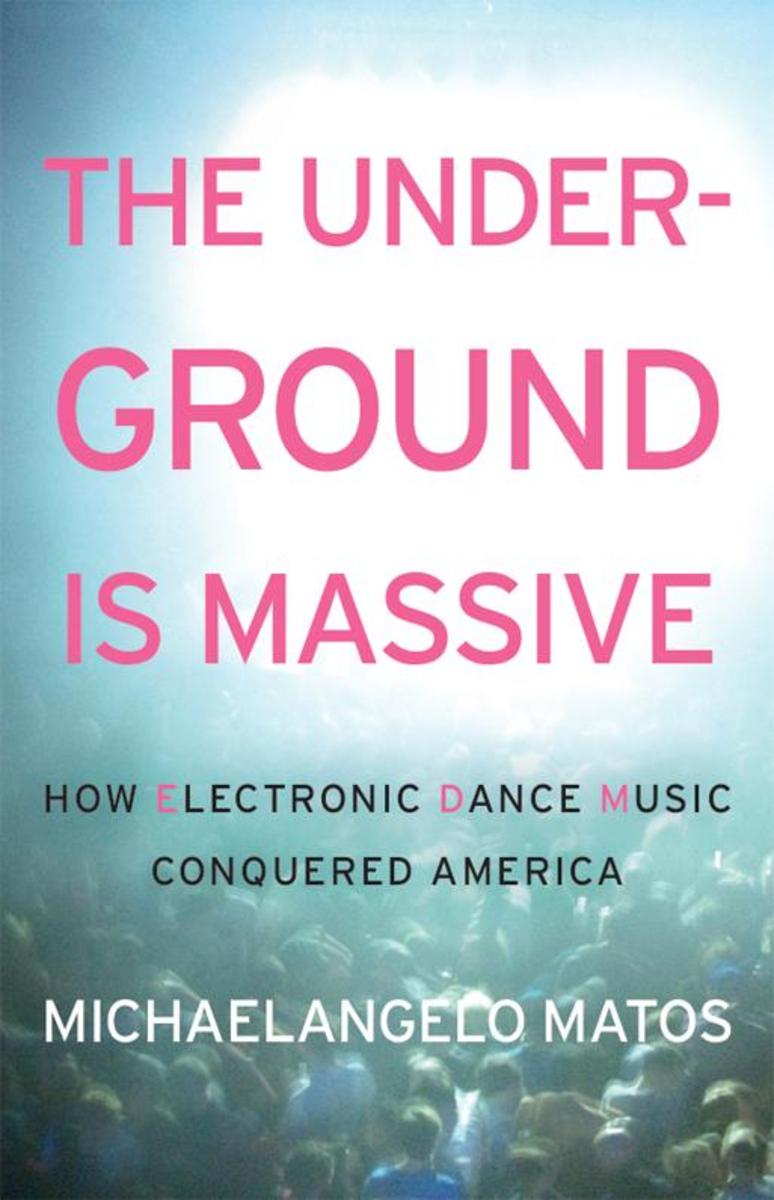
The Underground Is Massive
¥88.56
What started as an underground party business—run and dominated by youths and hustlers—grew into the music business's greatest and biggest success. The Underground Is Massive is the first-ever big-picture history of the American electronic dance music underground, viewed through the lens of nineteen parties over thirty years—from the black, gay underground clubs of Chicago and Detroit's elite teen-party scene through nineties "electronica" to today's EDM-festival juggernaut, the book takes in the rise of the Internet and Burning Man, 9/11, and the collapse of the record business—and vividly charts why and how it took nearly three decades after electronic dance music became a global youth soundtrack for it to hit big in the land that birthed it. Through unparalleled insider access to anecdotes, interviews, and history, Michaelangelo Matos demystifies how what once belonged to a devoted audience of casual partiers and diehard dancers has become America's soundtrack of choice and changed the music industry completely. Matos expertly tackles the vast diversity of EDM's musical landscape, its technologically prophetic yet illicit origins, and the path by which underground raves grew into fiercely successful music festivals. Taking in legendary artists from Frankie Knuckles to Moby as well as the biggest names in EDM—Diplo, Skrillex, Deadmau5, David Guetta, Ti?sto, and Daft Punk—Matos's deep mix of sources and wide-lens overview of the culture make every chapter a page-turning revelation.
The Other Serious
¥84.28
An original collection of incandescent cultural criticism, both experimental and personal, full of pragmatic advice for how to live a considered, joyful existence in our era of screen living and hipster irony, by a Gen-X Princeton professor and contributor to the New York TimesThe essays in The Other Serious examine the signature pheno?mena of our moment: the way our lives contradict themselves, how exaggeration and excess seep into our collective subconscious, why gender is becoming more rather than less complicated, and how we interact with the material things that surround us. It is a book about the delicacy and bluntness of American life, about how pop culture sticks its finger deeply into the ethical dilemmas of our time, and how to negotiate between the old and the new, the high and the low, the global and the local, the sacred and the profane. At the heart of these reflections lies a central question: What should you do when you don't know what to do?Taken together, these essays comprise a guide for the overhaul of "the administrativersity" of contemporary American life, a bureaucratic prison where the brain needn't work anymore. These pieces investigate the writer's own way of thinking putting forth new ideas, questioning them, and urging the reader to adopt the same spirit of critical reexamination.
Momstrology
¥143.95
They say kids don't come with a set of instructions the AstroTwins beg to differ!Are you a Cancer mom trying to understand your Sagittarius daughterAre you a Virgo mother with a Pisces son who seems to be your polar oppositeWondering why your little Taurus was such an easy baby, but your Aquarius was anything butEven if you've only ever read your horoscope in the back of a magazine for fun or never given astrology a second thought, you'll be amazed at the insights you'll get from Momstrology, a guide to parenting by the stars.From choosing a preschool, to picking hobbies and activities, to understanding what it means when your toddler gets clingy, or your big kid wants to quit soccer, or your tween talks back, Momstrology is a unique guide through all of the phases of your child's life. Offering charts for every astrological sign to decipher your child's good days and bad days, likes and dislikes, and how your child deals with authority, limits, separation, and siblings, the AstroTwins offer real-world advice, from a cosmic perspective, that is always supportive and never overwhelming. With a section devoted to understanding your strengths and challenges as a mom based on your sign and another section that matches you with your children to see how you all mesh together, Momstrology is a parenting guide like no other.Let Momstrology be your go-to guide in the trenches of parenthood...through tears and triumphs and meltdowns and milestones, for every age and stage.
All In
¥143.95
When journalist and fatherhood columnist Josh Levs was denied fair parental leave by his employer after his child was born, he fought back -- and corporate America responded. He became a leading advocate for modern families. In All In, he shows how fatherhood today is far different from previous generations and what it means for our individual lives, families, workplaces, and society. An investigative journalist, expert on modern fatherhood and dad of three, Levs spent years reporting for CNN on air and online and serving as the network's "dad columnist". Prior to CNN, he was a reporter for NPR. His many prizes include six Peabody awards, two Edward R. Murrow awards, and a designation as a Journalist of the Year from the Atlanta Press Club. Levs is also a motivational and keynote speaker. He lives in Atlanta, Georgia, with his wife and children. Visit his website: www.joshlevs.com
Make 'Em Laugh
¥95.11
The beloved Hollywood star and New York Times bestselling author of Unsinkable continues her intimate chat with fans in this entertaining collection of anecdotes, stories, jokes, and random musings from a woman who has seen it all—and done most of it. From her acclaimed performances to her headline-making divorce from Eddie Fisher, raising a famous daughter to hitting the road with a successful one-woman show, Debbie Reynolds has been in the spotlight for decades. She’s met presidents, performed for the Queen of England, and partied with kings. A show business icon, she continues to sing and dance—and can drop more names than Andy Cohen. In this fabulous personal tour, she recalls wonderful moments with the greats of the entertainment world—Lucille Ball, Frank Sinatra, Bette Davis, Phyllis Diller, and many, many more—sharing stories that shed new light on her life and career and the glittering world of Hollywood then and now. Debbie has plenty to tell—and in Make ’Em Laugh, she dishes it in the warm, down-to-earth voice her fans adore. Debbie shares memories of late night pals and some of the greatest comedians of all time, stories from the big screen and small, and tales of marriage, motherhood, and children. Combining her wicked sense of humor and appealing charm, she reveals the personal side of show business and fame in funny, poignant, and delightful reminiscences. Nothing is off limits: Debbie talks about her sex life, her family drama—and even shares a few secret recipes. As irresistible as the woman at its heart, this collection shows the consummate skill of a beloved entertainer who truly knows how to Make ’Em Laugh.
Water to the Angels
¥94.10
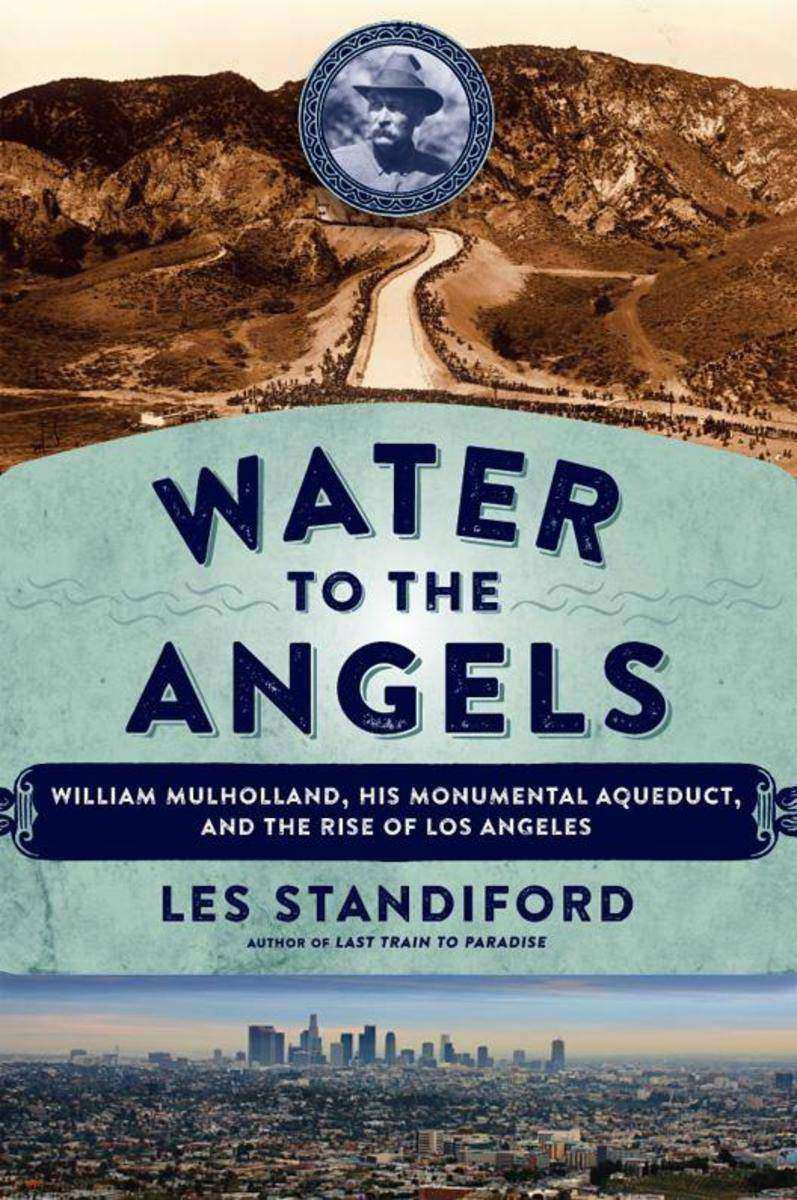
In 1907, Irish immigrant William Mulholland designed and began to build one of the greatest civil engineering feats in history: the aqueduct that carried water 233 miles from the Sierra Nevada Mountains to Los Angeles allowing this small, resource-challenged desert city to grow into a modern global metropolis. Drawing on new research, Les Standiford vividly captures the larger-than-life engineer and the breathtaking scope of his six-year, $23 million project that would transform a region, a state, and a nation at the dawn of its greatest century.Mulholland, a penniless Dublin immigrant who made his way west as a stowaway on a passenger ship, personifies the American rags-to-riches tale, working from a position as a ditchdigger to become chief engineer of the Los Angeles Water Company. Confronted with a decade-long drought that threatened his adopted city's future, the self taught Mulholland found the answer in the rushing snow melt from the Eastern Sierra Nevada Mountains, nearly 250 miles away. He proposed to build an aqueduct that would outdo any such ever conceived, one that would carry an entire river from its source to Los Angeles, through mountains, over chasms, and across an alternately freezing and blistering terra incognita, because he believed it was the city's only hope.The project brought a simmering-to-this-day firestorm of protest from residents of California's Owens Valley where the waters would be taken, as well as an all-out onslaught from political opponents and vested interests in Los Angeles, who were fearful of losing their stranglehold on the city's yield. But after nine years of struggle, including the efforts of thousands of workmen many of whom lost their lives and the use of engineering techniques and strategies never previously employed, Mulholland turned the gates and loosed the waters that brought an unprecedented wave of development and prosperity to his city and the region.Though the landmark film Chinatown touched on the subject, Mulholland was characterized there as Hollis Mulwray, a colorless pipsqueak easily dispatched by archvillain and developer Noah Cross (John Houston). In real life, however, Mulholland was every bit the equal of any of his foes, a colorful, brook-no-nonsense man of the people who accomplished a feat like no other and became a hero in the process. Water to the Angels is not only a book that provides insight into the seeds of significant ecological concerns of this day, it is also a stirring story of accomplishment against all odds, all the more captivating for being true.As Robert Towne, author of the screenplay for Chinatown suggests, the subject is timeless. "I found the ubiquity of water in everyone's lives to be compelling. Everybody needs water."At a time when the importance of water is being recognized as never before considered by many experts to be the essential resource of the twenty-first century Water to the Angels brings into focus the vigor of a fabled era, the might of a larger-than-life individual, and the scale of a priceless construction project, and sheds critical light on a past that offers insights for our future.
Parables and Portraits
¥96.18
A revised edition of the first book of poems by Stephen Mitchell, the renowned translator of Rilke's poetry, The Book of Job, and the Tao Te Ching. --This text refers to an out of print or unavailable edition of this title.

Evidence of the Afterlife
¥83.03
Evidence of the Afterlife shares the firsthand accounts of people who have died and lived to tell about it. Through their work at the Near Death Experience Research Foundation, radiation oncologist Jeffrey Long and his wife, Jody, have gathered thousands of accounts of near-death experiences (NDEs) from all over the world. In addition to sharing the personal narrative of their experiences, visitors to the website are asked to fill out a one hundred item questionnaire designed to isolate specific elements of the experience and to flag counterfeit accounts.The website has become the largest NDE research database in the world, containing over 1,600 NDE accounts. The people whose stories are captured in the database span all age groups, races, and religious affiliations and come from all over the world, yet the similarities in their stories are as awe-inspiring as they are revealing. Using this treasure trove of data, Dr. Long explains how medical evidence fails to explain these reports and why there is only one plausible explanation that people have survived death and traveled to another dimension.
The Big Book of Packaging
¥280.65
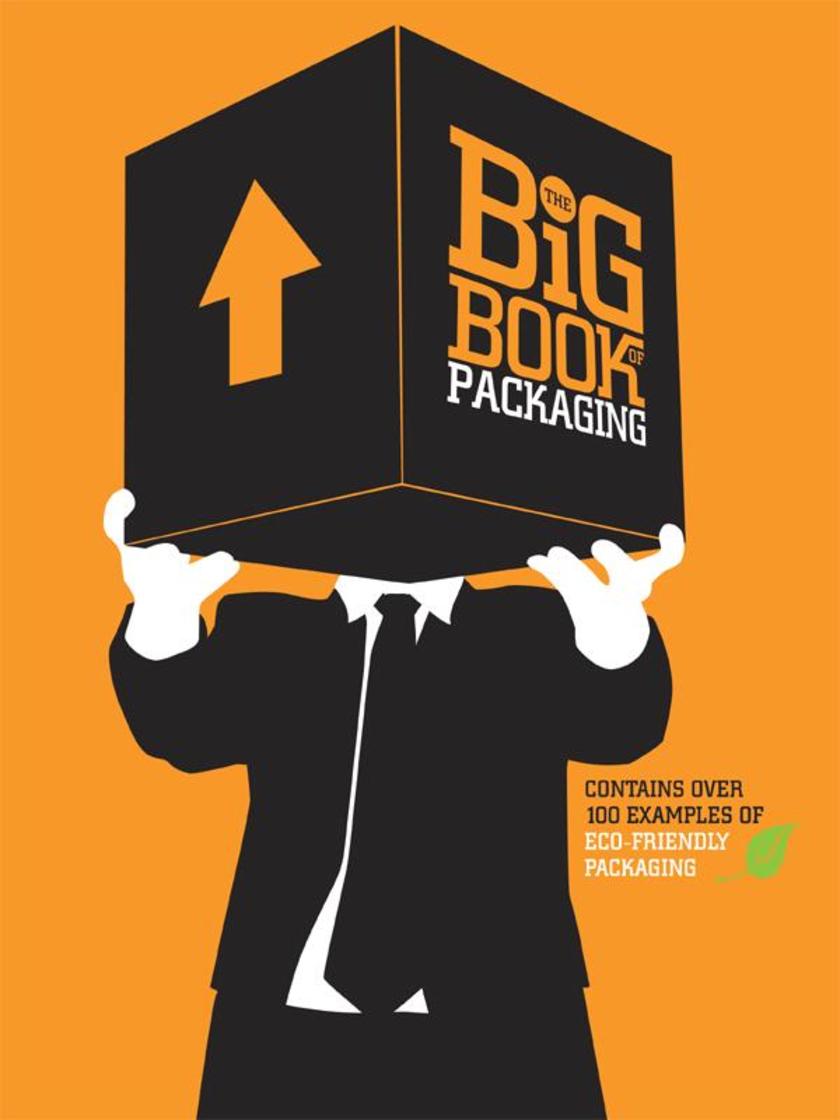
Intended as a comprehensive resource for designers, creative professionals, marketers, and retailers, The Big Book of Packaging contains 384 pages of the most innovative packaging designs from around the world. With over 500 featured designs and profiles of twelve of the world's leading designers, the book is a must-have resource for anyone interested in the future of packaging and design. In light of the recent lift in environmental consciousness, this volume of the Big Book Series will devote one third of its content to the increasingly important subject of green packaging-showing designers and retailers how to package their products creatively, responsibly, and at low cost, factors that will be reflected in the books own packaging/binding as well.The Big Book of Packaging will appeal to designers, students, marketers, retailers, and aesthetes alike, providing a thorough look at what goes into building an effective package and how to think "outside the box."
Acolytes
¥95.39
A collection of eighty all new poems, Acolytes is distinctly Nikki Giovanni, but different. Not softened, but more inspired by love, celebration, memories and even nostalgia. She aims her intimate and sparing words at family and friends, the deaths of heroes and friends, favorite meals and candy, nature, libraries, and theatre. But in between, the deep and edgy conscience that has defined her for decades shines through when she writes about Rosa Parks, hurricane Katrina, and Emmett Till's disappearance, leaving no doubt that Nikki has not traded one approach for another, but simply made room for both.

Bloody Crimes
¥94.10
On the morning of April 2, 1865, Jefferson Davis, president of the Confederacy, received a telegram from General Robert E. Lee. There is no more time the Yankees are coming, it warned. Shortly before midnight, Davis boarded a train from Richmond and fled the capital, setting off an intense and thrilling chase in which Union cavalry hunted the Confederate president. Two weeks later, President Lincoln was assassinated, and the nation was convinced that Davis was involved in the conspiracy that led to the crime. Lincoln's murder, autopsy, and White House funeral transfixed the nation. His final journey began when soldiers placed his corpse aboard a special train that would carry him home on the 1,600-mile trip to Springfield. Along the way, more than a million Americans looked upon their martyr's face, and several million watched the funeral train roll by. It was the largest and most magnificent funeral pageant in American history.To the Union, Davis was no longer merely a traitor. He became a murderer, a wanted man with a $100,000 bounty on his head. Davis was hunted down and placed in captivity, the beginning of an intense and dramatic odyssey that would transform him into a martyr of the South's Lost Cause. The saga that began with Manhunt continues with the suspenseful and electrifying Bloody Crimes. James Swanson masterfully weaves together the stories of two fallen leaders as they made their last expeditions through the bloody landscape of a wounded nation.

The Book of Love
¥78.55
From Roger Rosenblatt, author of the acclaimed memoirs Making Toast, Kayak Morning, and The Boy Detective, comes another lyrical meditation on and celebration of a universal and elusive subjectIn The Book of Love, Roger Rosenblatt looks at love in all its themes and variations romantic love, courtship, marriage, battle, heartbreak, fury, confusion, melancholy, beauty, delirium, ecstasy; love of lovers, family, friends, of country, of work, writing, solitude, of art; love of nature; love of life itself. Using lines from love songs to create a kind of verbal jazz riff, as infectious as it is engaging, Rosenblatt intersperses thoughts about love with fictional vignettes that capture a variety of lovers in different situations with notes addressed to "you," his wife of fifty years. "The story I have to tell is of you. Of others, too. Other people, other things. But mainly of you. It begins and ends with you. It always comes back to you." Pieces follow upon one another in a continuous progression, as if composing one long song that flows through the entire mystery and magic of what it means to love and be in love. What is this thing called loveLively yet profound, poignant yet joyous, The Book of Love is a triumph of intellect and imagination.
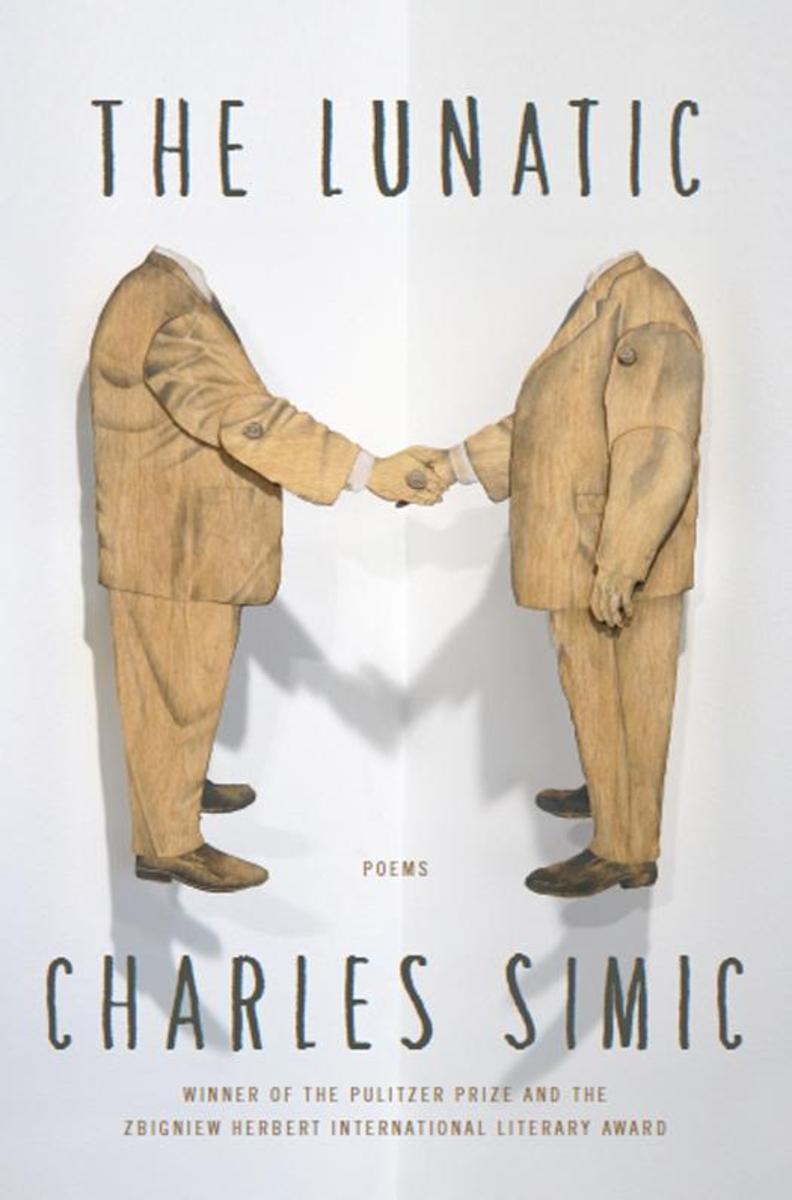
The Lunatic
¥90.77
From Pulitzer Prize winner and former poet laureate charles simic comes a dazzling collection of poems as original, meditative, and humorous as the poet himselfThis latest volume of poetry from Charles Simic, one of America's most celebrated poets, demonstrates his revered signature style a mix of wry melancholy and sardonic wit. These seventy luminous poems range in subject from mortality to personal ads, from the simple wonders of nature to his childhood in war-torn Yugoslavia.For more than fifty years, Simic has delighted readers with his innovative form, quiet humor, and his rare ability to limn our interior life and concisely capture the depth of human emotion. These stunning, succinct poems validate and reinforce Simic's importance and relevance in modern poetry.

My Journey with Farrah
¥94.10
Alana Stewart and Farrah Fawcett went through it all together. Friends for thirty years, they were an essential part of each other's lives since first meeting at a dinner party in the 1970s. During that time, they supported each other through the trials of Hollywood life while also raising their families, keeping in close contact. But in the fall of 2006, a test of their friendship arose unlike any other they'd faced: Farrah was diagnosed with aggressive rectal cancer. She was determined to fight, and Alana was determined to help her. Together, they were relentless in their pursuit of a cure, traveling halfway around the world as they sought every mainstream, alternative, and experimental therapy available. In all, they spent the better part of the next three years together - Alana by her friend's side as they struggled hand in hand with the unknown. Now, in these intimate and personal diaries, Alana shares her thoughts on the events of the last three years, documenting the journey she and Farrah embarked on as they prayed for a miracle. Reflecting back on the three decades they shared, Alana details what she's learned about her friend and herself as they battled through the trials of this illness. From the importance of selflessness, to the undeniable value of faith, to the remarkable resilience of the human spirit, Alana's day-to-day entries reveal a side of these two friends that the world has never seen. Even in the face of this debilitating disease, Farrah's courage and determination continues to teach us about life . . . and love. Writing candidly about aging, marriage, motherhood, and faith--all topics she and Farrah dealt with together over the years - Alana provides a moving tribute to a woman, once Hollywood's golden girl, and an inspiring celebration of life. My Journey with Farrah is the story of two courageous women who stood by each other through good times, bad times, and now the most trying of times. It is a book that will make people laugh, cry, and rejoice in the power of friendship.
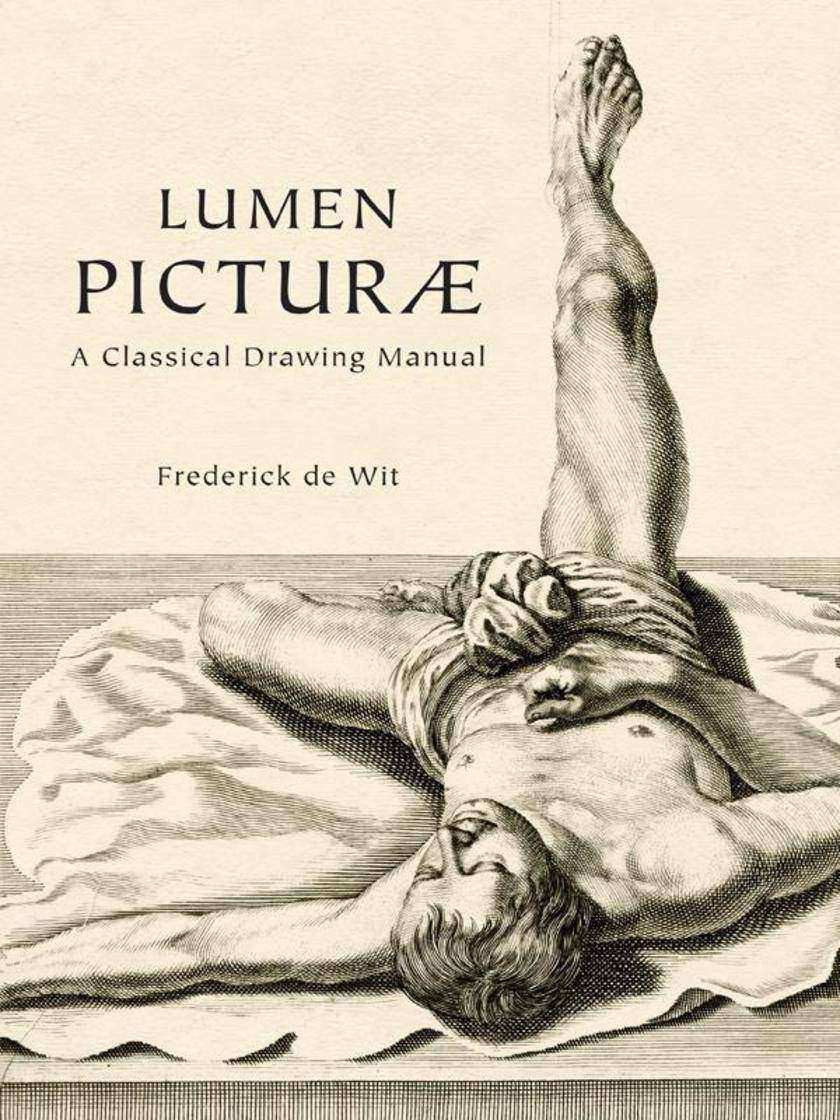
Lumen Picturae
¥140.29
Thanks to its exquisite pictorial material, this book familiarizes the reader with the logic and golden rules of art. It enables an understanding, on the one hand, of the keys to appreciating the works of the great masters, and on the other, of how to apply these rules to the practice of one's own creative activities.The work begins with a number of basic explanations on how to represent and interrelate the different parts of the human body. The introduction is followed by chapters on the various possibilities for representing male and female nudes, and mythological and biblical figures, dressed and contextualized. Finally it looks at quadruped animals and birds.

The Double-Daring Book for Girls
¥151.10
The eagerly anticipated follow-up to the bestselling phenomenon The Daring Book for Girls is an even more daring guide to everything from making a raft to learning how to play football to the art of the Japanese Tea ceremony. This second volume, with all new original material, promises to be even more of a daring adventure than the first. Girls will learn how to surf, get horseback riding tips, make a labyrinth, find out about April Fool's Day history and pranks, how to organize a croquet tournament, find out about cowgirls, the Nobel Prize, being a detective and much more! Just as packed with creative and exciting material as the original, but twice as fun, this book will be beloved by all Daring fans everywhere!

Machines of Loving Grace
¥88.56
Robots are poised to transform today's society as completely as the Internet did twenty years ago. Pulitzer prize-winning New York Times science writer John Markoff argues that we must decide to design ourselves into our future, or risk being excluded from it altogether.In the past decade, Google introduced us to driverless cars; Apple debuted Siri, a personal assistant that we keep in our pockets; and an Internet of Things connected the smaller tasks of everyday life to the farthest reaches of the Web. Robots have become an integral part of society on the battlefield and the road; in business, education, and health care. Cheap sensors and powerful computers will ensure that in the coming years, these robots will act on their own. This new era offers the promise of immensely powerful machines, but it also reframes a question first raised more than half a century ago, when the intelligent machine was born. Will we control these systems, or will they control us?In Machines of Loving Grace, John Markoff offers a sweeping history of the complicated and evolving relationship between humans and computers. In recent years, the pace of technological change has accelerated dramatically, posing an ethical quandary. If humans delegate decisions to machines, who will be responsible for the consequencesAs Markoff chronicles the history of automation, from the birth of the artificial intelligence and intelligence augmentation communities in the 1950s and 1960s, to the modern-day brain trusts at Google and Apple in Silicon Valley, and on to the expanding robotics economy around Boston, he traces the different ways developers have addressed this fundamental problem and urges them to carefully consider the consequences of their work. We are on the brink of the next stage of the computer revolution, Markoff argues, and robots will profoundly transform modern life. Yet it remains for us to determine whether this new world will be a utopia. Moreover, it is now incumbent upon the designers of these robots to draw a bright line between what is human and what is machine.After nearly forty years covering the tech industry, Markoff offers an unmatched perspective on the most drastic technology-driven societal shifts since the introduction of the Internet. Machines of Loving Grace draws on an extensive array of research and interviews to present an eye-opening history of one of the most pressing questions of our time, and urges us to remember that we still have the opportunity to design ourselves into the future before it's too late.
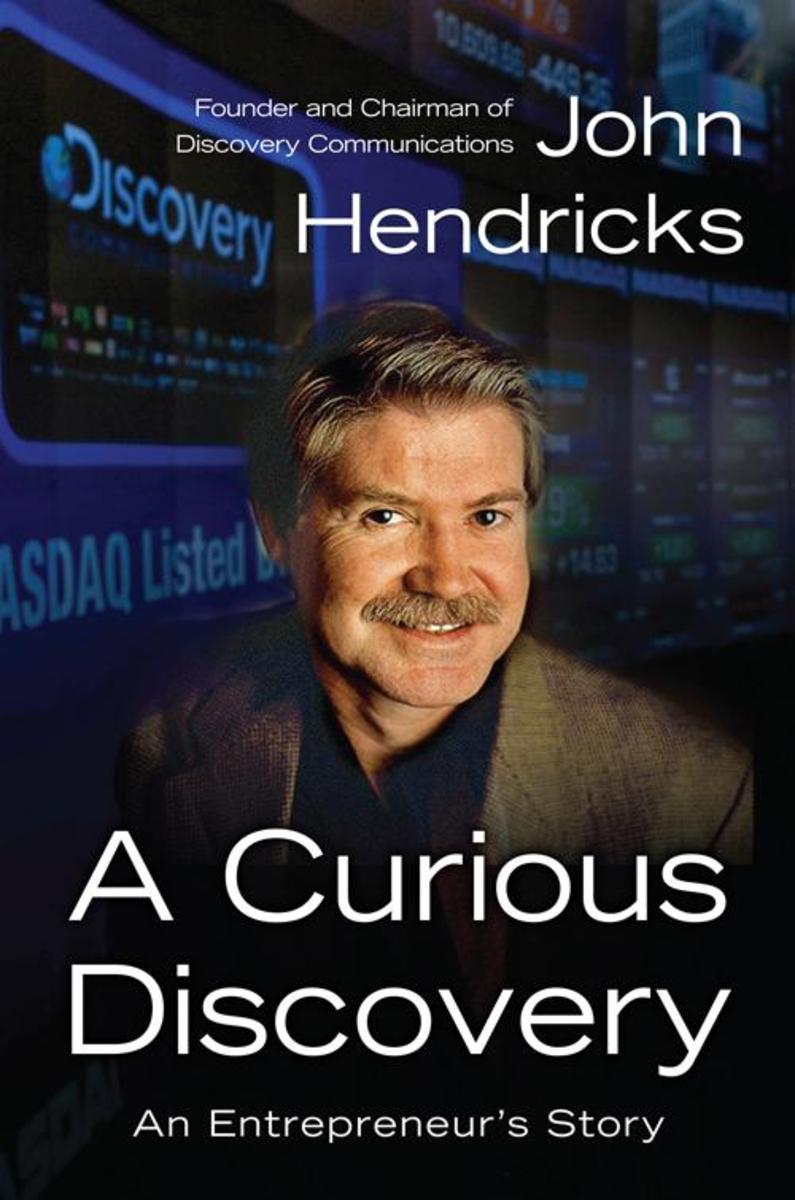
A Curious Discovery
¥160.56
A Curious Discovery is one of the most complete and honest accounts of entrepreneurship and the building of a giant corporation ever written. Media visionary John Hendricks takes the reader on his unforgettable journey from founding Discovery Communications over a breakfast table to establishing the organization as the world's largest provider of television content. Hendricks tells this remarkable story from the triumphs to the failures with unflinching candor. In the process, he shares what he's learned over the past three decades, from the obstacles and successes of the early years to the very real and very different challenges that exist today. The result is not only a powerful autobiography and corporate history, but also a valuable primer for all budding entrepreneurs.A Curious Discovery goes behind the scenes, telling the fascinating stories of some of the network's most popular shows: Deadliest Catch, Mythbusters, The Crocodile Hunter, Planet Earth, Dirty Jobs, and Trading Spaces. It also draws lessons from the network's setbacks, including the unsuccessful collaboration with the New York Times, and explains the company's high-profile decisions, such as Discovery's partnership with Oprah Winfrey and OWN: The Oprah Winfrey Network.Hendricks reveals that his achievements would not have been possible without one crucial factor that has informed his life since childhood: curiosity. Ever eager to learn, to uncover even to take enormous risks his questioning mind has guided his development and success, and continues to shape his outlook today as he works to improve education around the world.


