


 购物车
购物车 个人中心
个人中心
The Gray Dawn
¥8.09
Classic western. According to Wikipedia: "Stewart Edward White (12 March 1873 – September 18, 1946) was an American author. Born in Grand Rapids, Michigan he earned degrees from University of Michigan (Ph.D., 1895; M.A., 1903). From about 1900 until about 1922, he wrote adventure travel books."
The Mountains
¥8.09
Classic western. According to Wikipedia: "Stewart Edward White (12 March 1873 – September 18, 1946) was an American author. Born in Grand Rapids, Michigan he earned degrees from University of Michigan (Ph.D., 1895; M.A., 1903). From about 1900 until about 1922, he wrote adventure travel books."
The Riverman
¥8.09
Classic western. According to Wikipedia: "Stewart Edward White (12 March 1873 – September 18, 1946) was an American author. Born in Grand Rapids, Michigan he earned degrees from University of Michigan (Ph.D., 1895; M.A., 1903). From about 1900 until about 1922, he wrote adventure travel books."
Man-Size
¥8.09
Classic western novel, first published in 1922. According to Wikipedia: "William MacLeod Raine (1871—1954), was a British-born American novelist who wrote fictional adventure stories about the American Old West.."
Ridgway of Montana, a Story of To-Day, in Which the Hero is Also the Villain
¥8.09
Classic western novel, first published in 1909. " Story of today, in which the hero is also the villain." "The scene is laid in the mining centers of Montana, where politics and mining industries are the religion of the country." According to Wikipedia: "William MacLeod Raine (1871—1954), was a British-born American novelist who wrote fictional adventure stories about the American Old West.."
Northanger Abbey
¥8.09
This parody of a gothic romance was finished in 1803, but not published until 1818, after Jane Austen's death. According to Wikipedia: "Jane Austen (1775 – 1817) was an English novelist whose realism, biting social commentary and masterful use of free indirect speech, burlesque and irony have earned her a place as one of the most widely read and most beloved writers in English literature. Austen lived her entire life as part of a small and close-knit family located on the lower fringes of English gentry. She was educated primarily by her father and older brothers as well as through her own reading. The steadfast support of her family was critical to Austen's development as a professional writer. Austen's artistic apprenticeship lasted from her teenage years until she was about thirty-five years old. During this period, she experimented with various literary forms, including the epistolary novel which she tried and then abandoned, and wrote and extensively revised three major novels and began a fourth. From 1811 until 1815, with the release of Sense and Sensibility (1811), Pride and Prejudice (1813), Mansfield Park (1814) and Emma (1815), she achieved success as a published writer. She wrote two additional novels, Northanger Abbey and Persuasion, both published after her death in 1817, and began a third, which was eventually titled Sanditon, but died before completing it."
The Sheriff's Son
¥8.09
Classic western novel, first published in 1917. "The hero finally conquers both himself and his enemies and wins the love of a wonderful girl." According to Wikipedia: "William MacLeod Raine (1871—1954), was a British-born American novelist who wrote fictional adventure stories about the American Old West.."
Steve Yeager
¥8.09
Classic western novel, first published in 1915. "A story brimful of excitement, with enough gun-play and adventure to suit anyone." According to Wikipedia: "William MacLeod Raine (1871—1954), was a British-born American novelist who wrote fictional adventure stories about the American Old West.."
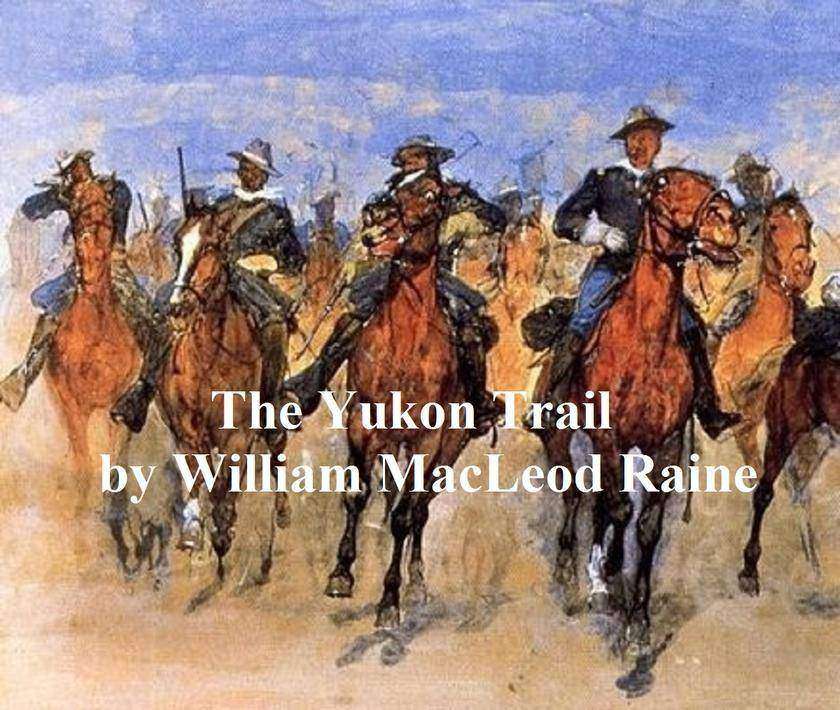
The Yukon Trail, A Tale of the North
¥8.09
Classic western novel, first published in 1917. "A crisply entertaining love story in the land where might makes right." According to Wikipedia: "William MacLeod Raine (1871—1954), was a British-born American novelist who wrote fictional adventure stories about the American Old West.."
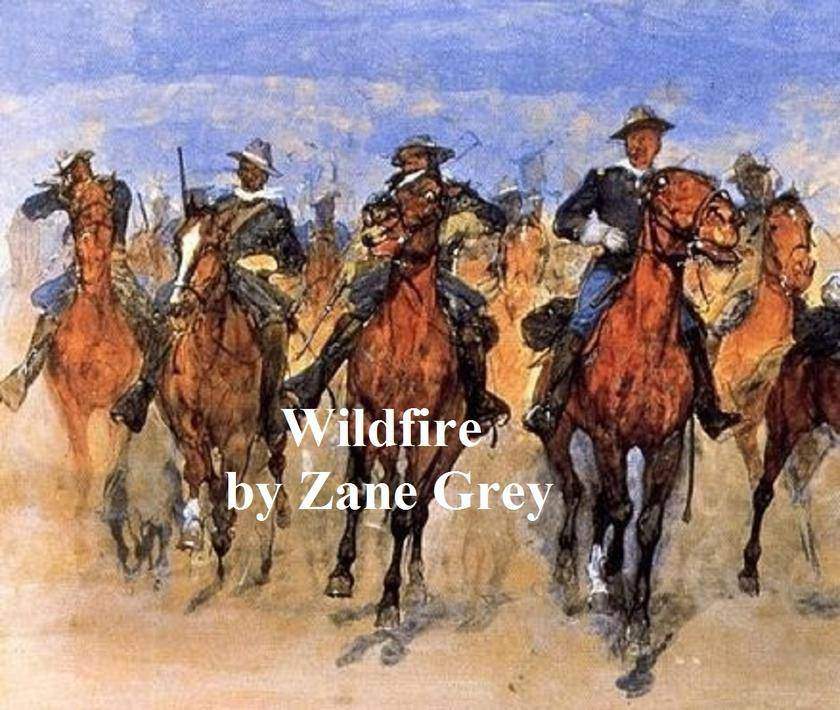
Wildfire
¥8.09
Classic Western, first published in 1917. One of Zane Grey's best-known novels. According to Wikipedia: "Zane Grey (1872 – 1939) was an American author best known for his popular adventure novels and stories that presented an idealized image of the rugged Old West. As of June 2007, the Internet Movie Database credits Grey with 110 films, one TV episode, and a series, Dick Powell's Zane Grey Theater based loosely on his novels and short stories."
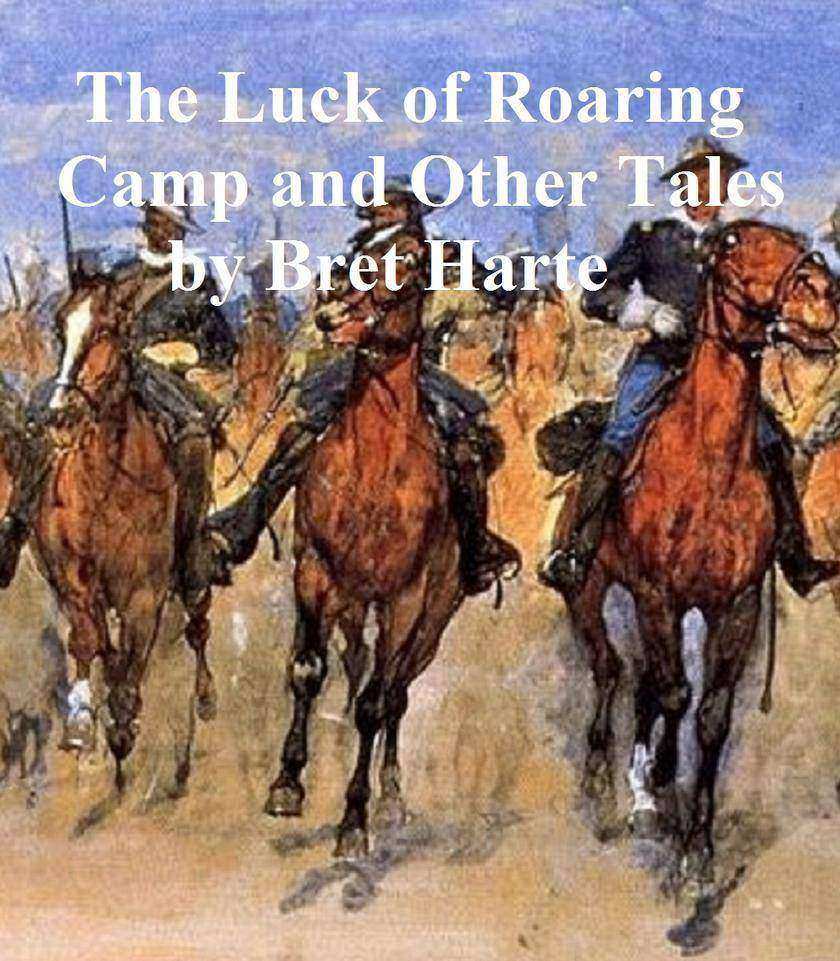
The Luck of Roaring Camp and Other Tales
¥8.09
Collection of Bret Harte's work up to 1897. According to Wikipedia: "Bret Harte (August 25, 1836[2] – May 6, 1902) was an American author and poet, best remembered for his accounts of pioneering life in California. He was born in Albany, New York. ... He moved to California in 1853, later working there in a number of capacities, including miner, teacher, messenger, and journalist. He spent part of his life in the northern California coast town now known as Arcata, then just a mining camp on Humboldt Bay. His first literary efforts, including poetry and prose, appeared in The Californian, an early literary journal edited by Charles Henry Webb. In 1868 he became editor of The Overland Monthly, another new literary magazine, but this one more in tune with the pioneering spirit of excitement in California. His story, "The Luck of Roaring Camp," appeared in the magazine's second edition, propelling Harte to nationwide fame... Determined to pursue his literary career, in 1871 he and his family traveled back East, to New York and eventually to Boston, where he contracted with the publisher of The Atlantic Monthly for an annual salary of $10,000, "an unprecedented sum at the time." His popularity waned, however, and by the end of 1872 he was without a publishing contract and increasingly desperate. He spent the next few years struggling to publish new work (or republish old), delivering lectures about the gold rush, and even selling an advertising jingle to a soap company. In 1878 Harte was appointed to the position of United States Consul in the town of Krefeld, Germany and then to Glasgow in 1880. In 1885 he settled in London. During the thirty years he spent in Europe, he never abandoned writing, and maintained a prodigious output of stories that retained the freshness of his earlier work. He died in England in 1902 of throat cancer and is buried at Frimley."
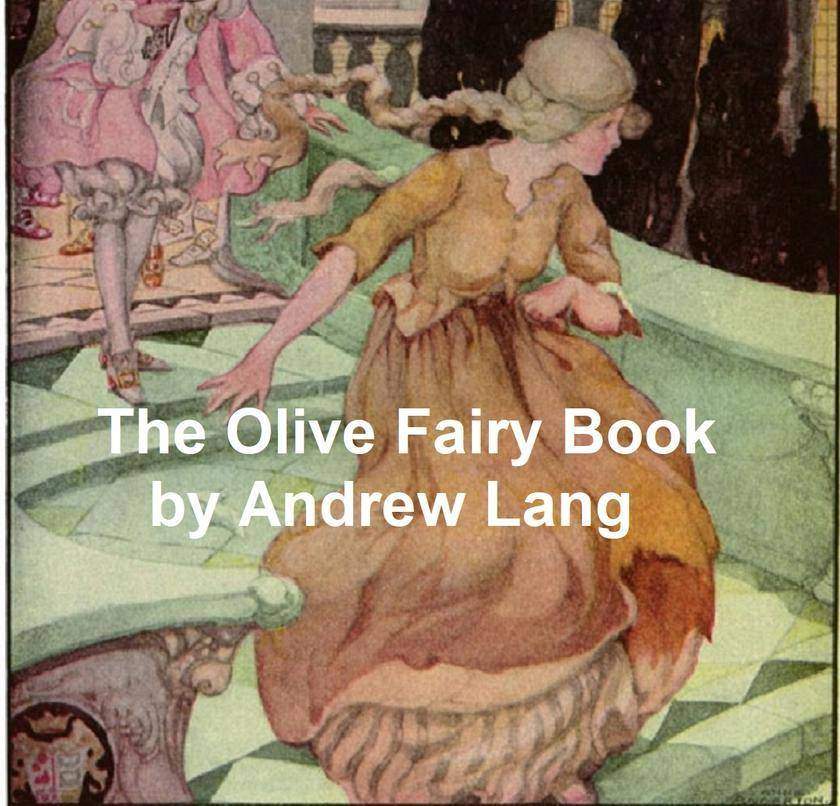
The Olive Fairy Book
¥8.09
Collection of classic fairy tales. According to Wikipedia: "Andrew Lang (March 31, 1844, Selkirk ? July 20, 1912, Banchory, Kincardineshire) was a prolific Scots man of letters. He was a poet, novelist, and literary critic, and contributor to anthropology. He now is best known as the collector of folk and fairy tales." With the active (hyperlinked) table of contents, click on a story title to go to that story.

The Violet Fairy Book
¥8.09
Collection of classic fairy tales. According to Wikipedia: "Andrew Lang (March 31, 1844, Selkirk ? July 20, 1912, Banchory, Kincardineshire) was a prolific Scots man of letters. He was a poet, novelist, and literary critic, and contributor to anthropology. He now is best known as the collector of folk and fairy tales." With the active (hyperlinked) table of contents, click on a story title to go to that story.
A Cathedral Courtship
¥8.09
Victorian novel. According to Wikipedia: "Kate Douglas Wiggin ( 1856 - 1923) was an American children's author and educator. Kate Douglas Smith Wiggin was born in Philadelphia, and was of Welsh descent . She started the first free kindergarten in San Francisco in 1878 (the Silver Street Free Kindergarten). With her sister in the 1880s she also established a training school for kindergarten teachers. She was also a writer of children's books, the best known being The Birds' Christmas Carol (1887) and Rebecca of Sunnybrook Farm (1903)."
A Deal in Wheat, and other Stories of the New and Old West
¥8.09
Collection of classic short stories. According to Wikipedia: "Benjamin Franklin Norris, Jr. (March 5, 1870 – October 25, 1902) was an American novelist, during the Progressive Era, writing predominantly in the naturalist genre. His notable works include McTeague (1899), The Octopus: A California Story (1901), and The Pit (1903). Although he did not openly support socialism as a political system, his work nevertheless evinces a socialist mentality and influenced socialist/progressive writers such as Upton Sinclair. Like many of his contemporaries, he was profoundly influenced by the advent of Darwinism, and Thomas Henry Huxley's philosophical defense of it. Norris was particularly influenced by an optimistic strand of Darwinist philosophy taught by Joseph LeConte, whom Norris studied under while at the University of California, Berkeley. Through many of his novels, notably McTeague, runs a preoccupation with the notion of the civilized man overcoming the inner "brute," his animalistic tendencies. His peculiar, and often confused, brand of Social Darwinism also bears the influence of the early criminologist Cesare Lombroso and the French naturalist Emile Zola."
What is Man ? and Other Essays
¥8.09
Collection of humorous and skeptical essays, including: What Is Man? The Death of Jean, The Turning-Point of My Life, How to Make History Dates Stick, The Memorable Assassination, A Scrap of Curious History, Switzerland, the Cradle of Liberty, At the Shrine of St. Wagner, William Dean Howells, English as She is Taught, A Simplified Alphabet, As Concerns Interpreting the Deity, Concerning Tobacco, Taming the Bicycle, Is Shakespeare Dead? According to Wikipedia: "Samuel Langhorne Clemens (1835 – 1910), better known by the pen name Mark Twain, was an American author and humorist. Twain is most noted for his novels Adventures of Huckleberry Finn, which has since been called the Great American Novel and The Adventures of Tom Sawyer. He is extensively quoted. During his lifetime, Twain became a friend to presidents, artists, industrialists and European royalty. Twain enjoyed immense public popularity, and his keen wit and incisive satire earned him praise from both critics and peers. American author William Faulkner called Twain "the father of American literature."
Jimmy's Cruise in the Pinafore
¥8.09
Collection of short stories by the author of Little Women. According to Wikipedia: "Louisa May Alcott's overwhelming success dated from the appearance of the first part of Little Women: or Meg, Jo, Beth and Amy, (1868) a semi-autobiographical account of her childhood years with her sisters in Concord, Massachusetts. Part two, or Part Second, also known as Good Wives, (1869) followed the March sisters into adulthood and their respective marriages. Little Men (1871) detailed Jo's life at the Plumfield School that she founded with her husband Professor Bhaer at the conclusion of Part Two of Little Women. Jo's Boys (1886) completed the "March Family Saga." Most of her later volumes, An Old Fashioned Girl (1870), Aunt Jo's Scrap Bag (6 vols., 1871–1879), Eight Cousins and its sequel Rose in Bloom (1876), and others, followed in the line of Little Women, remaining popular with her large and loyal public. Although the Jo character in Little Women was based on Louisa May Alcott, she, unlike Jo, never married. Alcott explained her "spinsterhood" in an interview with Louise Chandler Moulton, "... because I have fallen in love with so many pretty girls and never once the least bit with any man.""
Bric-a-Brac
¥8.09
Collection d'histoires courtes, en fran?ais original, y compris DEUX INFANTICIDES; PO?TES, PEINTRES ET MUSICIENS; DESIR ET POSSESSION; UNE MERE; LE CURE DE BOULOGNE; PERSONNEL DE L'ONU FAIT; COMMENT J'AI FAIT JOUER A MARSEILLE LE DRAME DES FORESTIERS; HEURES DE PRISON; JACQUES FOSSE; LE CHATEAU DE PIERREFONDS; et LE LOTUS BLANC ET LA ROSE MOUSSEUSE. Selon Wikipédia: "Alexandre Dumas, père (fran?ais pour" père ", apparenté à" Senior "en anglais), né Dumas Davy de la Pailleterie (24 Juillet 1802 - 5 Décembre 1870) était un écrivain fran?ais, mieux connu pour ses nombreux Romans historiques de grande aventure qui ont fait de lui l'un des auteurs fran?ais les plus lus au monde, dont nombre de ses romans, dont Le Comte de Monte-Cristo, Les Trois Mousquetaires, Vingt Ans Après et Le Vicomte de Bragelonne. a également écrit des pièces de thé?tre et des articles de magazines et était un correspondant prolifique. "
Urban Sketches, a collection of stories
¥8.09
Collection of stories, including: A Venerable Imposter, From a Balcony, Melons, Surprising Adventures of master Charles Summerton, Sidewalkings, A Boy's Dog, Charitable Reminiscences, "Seeing the Steamer Off", Neighborhoods I have Moved From, My Suburban Residence, On a Vulgar Little Boy, and Waiting for the Ship. According to Wikipedia: "Bret Harte (August 25, 1836 – May 6, 1902) was an American author and poet, best remembered for his accounts of pioneering life in California. He was born in Albany, New York. ... He moved to California in 1853, later working there in a number of capacities, including miner, teacher, messenger, and journalist. He spent part of his life in the northern California coast town now known as Arcata, then just a mining camp on Humboldt Bay. His first literary efforts, including poetry and prose, appeared in The Californian, an early literary journal edited by Charles Henry Webb. In 1868 he became editor of The Overland Monthly, another new literary magazine, but this one more in tune with the pioneering spirit of excitement in California. His story, "The Luck of Roaring Camp," appeared in the magazine's second edition, propelling Harte to nationwide fame... Determined to pursue his literary career, in 1871 he and his family traveled back East, to New York and eventually to Boston, where he contracted with the publisher of The Atlantic Monthly for an annual salary of $10,000, "an unprecedented sum at the time." His popularity waned, however, and by the end of 1872 he was without a publishing contract and increasingly desperate. He spent the next few years struggling to publish new work (or republish old), delivering lectures about the gold rush, and even selling an advertising jingle to a soap company. In 1878 Harte was appointed to the position of United States Consul in the town of Krefeld, Germany and then to Glasgow in 1880. In 1885 he settled in London. During the thirty years he spent in Europe, he never abandoned writing, and maintained a prodigious output of stories that retained the freshness of his earlier work. He died in England in 1902 of throat cancer and is buried at Frimley."
By Shore and Sedge, collection of stories
¥8.09
Collection of stories. According to Wikipedia: "Bret Harte (August 25, 1836[2] – May 6, 1902) was an American author and poet, best remembered for his accounts of pioneering life in California. He was born in Albany, New York. ... He moved to California in 1853, later working there in a number of capacities, including miner, teacher, messenger, and journalist. He spent part of his life in the northern California coast town now known as Arcata, then just a mining camp on Humboldt Bay. His first literary efforts, including poetry and prose, appeared in The Californian, an early literary journal edited by Charles Henry Webb. In 1868 he became editor of The Overland Monthly, another new literary magazine, but this one more in tune with the pioneering spirit of excitement in California. His story, "The Luck of Roaring Camp," appeared in the magazine's second edition, propelling Harte to nationwide fame... Determined to pursue his literary career, in 1871 he and his family traveled back East, to New York and eventually to Boston, where he contracted with the publisher of The Atlantic Monthly for an annual salary of $10,000, "an unprecedented sum at the time." His popularity waned, however, and by the end of 1872 he was without a publishing contract and increasingly desperate. He spent the next few years struggling to publish new work (or republish old), delivering lectures about the gold rush, and even selling an advertising jingle to a soap company. In 1878 Harte was appointed to the position of United States Consul in the town of Krefeld, Germany and then to Glasgow in 1880. In 1885 he settled in London. During the thirty years he spent in Europe, he never abandoned writing, and maintained a prodigious output of stories that retained the freshness of his earlier work. He died in England in 1902 of throat cancer and is buried at Frimley."
A Protegee of Jack Hamlin's, a collection of stories
¥8.09
Collection of western stories, including: A Protegee of Jack Hamlin's, An Ingenue of the Sierras, The Reformation of James Reddy, The Heir of the McHulishes, An Episode of West Woodlands, and The Home-Coming of Jim Wilkes. According to Wikipedia: "Bret Harte (August 25, 1836[2] – May 6, 1902) was an American author and poet, best remembered for his accounts of pioneering life in California. He was born in Albany, New York. ... He moved to California in 1853, later working there in a number of capacities, including miner, teacher, messenger, and journalist. He spent part of his life in the northern California coast town now known as Arcata, then just a mining camp on Humboldt Bay. His first literary efforts, including poetry and prose, appeared in The Californian, an early literary journal edited by Charles Henry Webb. In 1868 he became editor of The Overland Monthly, another new literary magazine, but this one more in tune with the pioneering spirit of excitement in California. His story, "The Luck of Roaring Camp," appeared in the magazine's second edition, propelling Harte to nationwide fame... Determined to pursue his literary career, in 1871 he and his family traveled back East, to New York and eventually to Boston, where he contracted with the publisher of The Atlantic Monthly for an annual salary of $10,000, "an unprecedented sum at the time." His popularity waned, however, and by the end of 1872 he was without a publishing contract and increasingly desperate. He spent the next few years struggling to publish new work (or republish old), delivering lectures about the gold rush, and even selling an advertising jingle to a soap company. In 1878 Harte was appointed to the position of United States Consul in the town of Krefeld, Germany and then to Glasgow in 1880. In 1885 he settled in London. During the thirty years he spent in Europe, he never abandoned writing, and maintained a prodigious output of stories that retained the freshness of his earlier work. He died in England in 1902 of throat cancer and is buried at Frimley."


