


 购物车
购物车 个人中心
个人中心
Middlemarch
¥8.09
The classic novel. According to Wikipedia: "Mary Ann (Marian) Evans (1819 – 1880), better known by her pen name, George Eliot, was an English novelist. She was one of the leading writers of the Victorian era. Her novels, largely set in provincial England, are well known for their realism and psychological perspicacity. She used a male pen name, she said, to ensure that her works were taken seriously. Female authors published freely under their own names, but Eliot wanted to ensure that she was not seen as merely a writer of romances. An additional factor may have been a desire to shield her private life from public scrutiny and to prevent scandals attending her relationship with the married George Henry Lewes."
Adventures of Tom Sawyer
¥8.09
The 1886 edition, with 151 black-and-white illustrations. According to Wikipedia: "Thomas "Tom" Sawyer is the title character of the Mark Twain novel The Adventures of Tom Sawyer (1876). He appears in three other novels by Twain: Adventures of Huckleberry Finn (1884), Tom Sawyer Abroad (1894), and Tom Sawyer, Detective (1896)... Tom Sawyer's best friends include Joe Harper and Huckleberry Finn. In The Adventures of Tom Sawyer, Tom's infatuation with classmate Rebecca "Becky" Thatcher is apparent. He lives with his half brother Sid, his cousin Mary, and his stern Aunt Polly in the (fictional) town of St. Petersburg, Missouri. In addition, he has another aunt, Sally Phelps, who lives considerably farther down the Mississippi River, in the town of Pikesville. Tom is the son of Aunt Polly's dead sister."
The Red Badge of Courage
¥8.09
The classic realistic novel of war, from the perspective of a young recruit. According to Wikipedia: "Stephen Crane (1871 – 1900) was an American novelist, short story writer, poet and journalist. Prolific throughout his short life, he wrote notable works in the Realist tradition as well as early examples of American Naturalism and Impressionism. He is recognized by modern critics as one of the most innovative writers of his generation. The eighth surviving child of highly devout parents, Crane was raised in several New Jersey towns and Port Jervis, New York. He began writing at an early age and had published several articles by the age of 16. Having little interest in university studies, he left school in 1891 and began work as a reporter and writer. Crane's first novel was the 1893 Bowery tale Maggie: A Girl of the Streets, which critics generally consider the first work of American literary Naturalism. He won international acclaim for his 1895 Civil War novel The Red Badge of Courage, which he wrote without any battle experience."
20,000 Leagues Under the Sea
¥8.09
The classic tale of Captain Nemo and his submarine The Nautilus. According to Wikipedia: "Jules Gabriel Verne (February 8, 1828 – March 24, 1905) was a French author who pioneered the science-fiction genre. He is best known for his novels Journey to the Center of the Earth (written in 1864), From the Earth to the Moon (1865), Twenty Thousand Leagues Under the Sea (1869–1870), and Around the World in Eighty Days (1873). Verne wrote about space, air, and underwater travel before navigable aircraft and practical submarines were invented, and before any means of space travel had been devised. Consequently he is often referred to as the "Father of science fiction", along with H. G. Wells. Verne is the second most translated author of all time, only behind Agatha Christie with 4162 translations... Some of his work has been made into films."

Birds in the Bush
¥8.09
According to Wikipedia: "Bradford Torrey (born in Weymouth, Massachusetts, 9 October 1843; died 7 October 1912 was a United States ornithologist. He was educated in the public schools of Weymouth, taught for two years, and subsequently engaged in business in Boston. In 1886, he became an assistant editor of the Youth's Companion. He was also a frequent contributor to periodicals. Torrey devoted much time to the study of birds, their habits, peculiarities, and domestic traits. He wrote numerous papers on this subject, and published Birds in the Bush (Boston, 1885)."
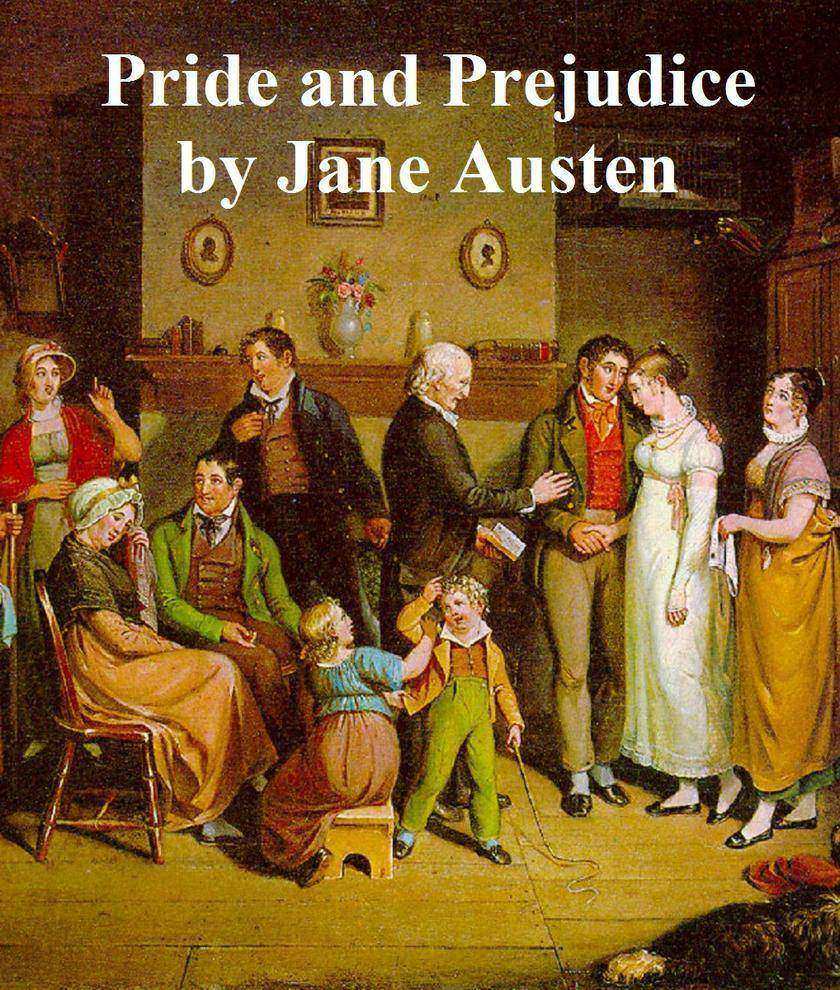
Pride and Prejudice
¥8.09
The classic, much-filmed novel. According to Wikipedia: "Jane Austen (1775 – 1817) was an English novelist whose realism, biting social commentary and masterful use of free indirect speech, burlesque and irony have earned her a place as one of the most widely read and most beloved writers in English literature. Austen lived her entire life as part of a small and close-knit family located on the lower fringes of English gentry. She was educated primarily by her father and older brothers as well as through her own reading. The steadfast support of her family was critical to Austen's development as a professional writer. Austen's artistic apprenticeship lasted from her teenage years until she was about thirty-five years old. During this period, she experimented with various literary forms, including the epistolary novel which she tried and then abandoned, and wrote and extensively revised three major novels and began a fourth. From 1811 until 1815, with the release of Sense and Sensibility (1811), Pride and Prejudice (1813), Mansfield Park (1814) and Emma (1815), she achieved success as a published writer. She wrote two additional novels, Northanger Abbey and Persuasion, both published after her death in 1817, and began a third, which was eventually titled Sanditon, but died before completing it."
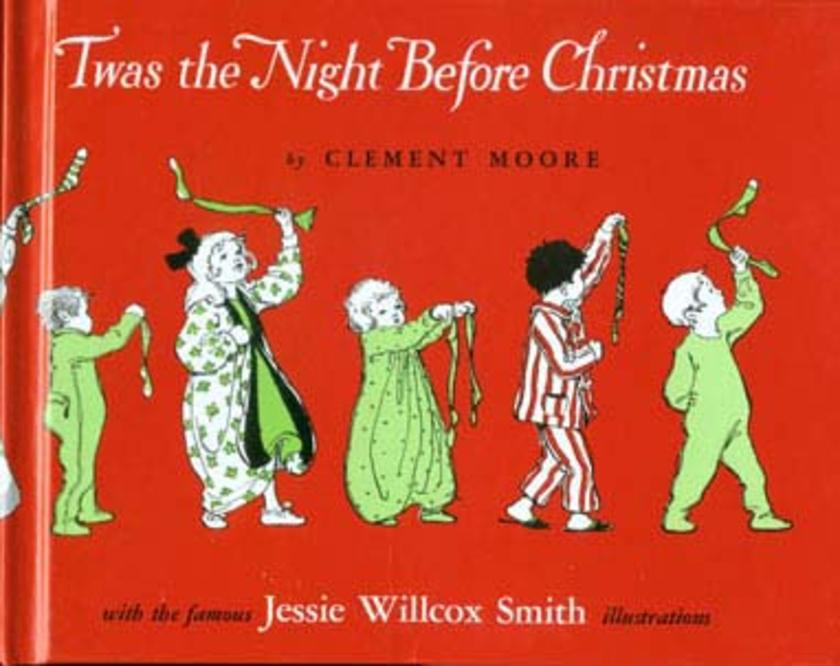
Twas the Night Before Christmas, illustrated
¥8.09
Classic picture book for children. 15 illustrations, some color, some black-and-white. This edition as first published in 1912. According to Wikipedia: "Clement Clarke Moore (July 15, 1779 – July 10, 1863) was an American professor of Oriental and Greek literature at Columbia College, now Columbia University. He donated land from his family estate for the foundation of the General Theological Seminary, where he was a professor of Biblical learning and compiled a two-volume Hebrew dictionary. He is generally considered to be the author of the yuletide poem "A Visit from St. Nicholas", which later became famous as "'Twas the Night Before Christmas"... The poem, "arguably the best-known verses ever written by an American", was first published anonymously in the Troy, New York, Sentinel on December 23, 1823, and was reprinted frequently thereafter with no name attached. Moore later acknowledged authorship and the poem was included in an 1844 anthology of his works at the insistence of his children, for whom he wrote it." ... "Jessie Willcox Smith (September 6, 1863 – May 3, 1935) was one of the most prominent female illustrators in the United States during the Golden Age of American illustration. She was a prolific contributor to respected books and magazines during the late 19th and early 20th centuries. She illustrated stories and articles for clients such as Century, Collier's Weekly, Leslie's Weekly, Harper's, McClure's, Scribners, and the Ladies' Home Journal."
Memoirs of a Cavalier
¥8.09
The introduction begins: "Daniel Defoe is, perhaps, best known to us as the author of Robinson Crusoe, a book which has been the delight of generations of boys and girls ever since the beginning of the eighteenth century. For it was then that Defoe lived and wrote, being one of the new school of prose writers which grew up at that time and which gave England new forms of literature almost unknown to an earlier age. Defoe was a vigorous pamphleteer, writing first on the Whig side and later for the Tories in the reigns of William III and Anne. He did much to foster the growth of the newspaper, a form of literature which henceforth became popular. He also did much towards the development of the modern novel, though he did not write novels in our sense of the word. His books were more simple than is the modern novel. What he really wrote were long stories told, as is Robinson Crusoe, in the first person and with so much detail that it is hard to believe that they that they are works of imagination and not true"

The Monster and Other Stories
¥8.09
This story collection includes: The Monster, The Blue Hotel, and His New Mittens. According to Wikipedia: "Stephen Crane (November 1, 1871 – June 5, 1900) was an American novelist, short story writer, poet and journalist. Prolific throughout his short life, he wrote notable works in the Realist tradition as well as early examples of American Naturalism and Impressionism. He is recognized by modern critics as one of the most innovative writers of his generation."

The Man in the Iron Mask
¥8.09
The Man in the Iron Mask is a self-contained novel, the sixth and last of a series of novels -- The Three Musketeers (covering 1625-1628), Twenty Years After (covering 1648-49), The Vicomte de Bragelonne (covering 1660), Ten Years Later (covering 1660-1661), Louise de la Valliere (covering 1661), The Man in the Iron Mask (covering 1661-1673). D'Artagnan, the fourth and most important musketeer is based on an historical figure, who was eventually promoted to commander of the musketeers. You can read about him at Wikipedia. According to Wikipedia: "Alexandre Dumas, père (French for "father", akin to 'Senior' in English), born Dumas Davy de la Pailleterie (1802 — 1870) was a French writer, best known for his numerous historical novels of high adventure which have made him one of the most widely read French authors in the world. Many of his novels, including The Count of Monte Cristo, The Three Musketeers, Twenty Years After, and The Vicomte de Bragelonne were serialized. He also wrote plays and magazine articles and was a prolific correspondent."
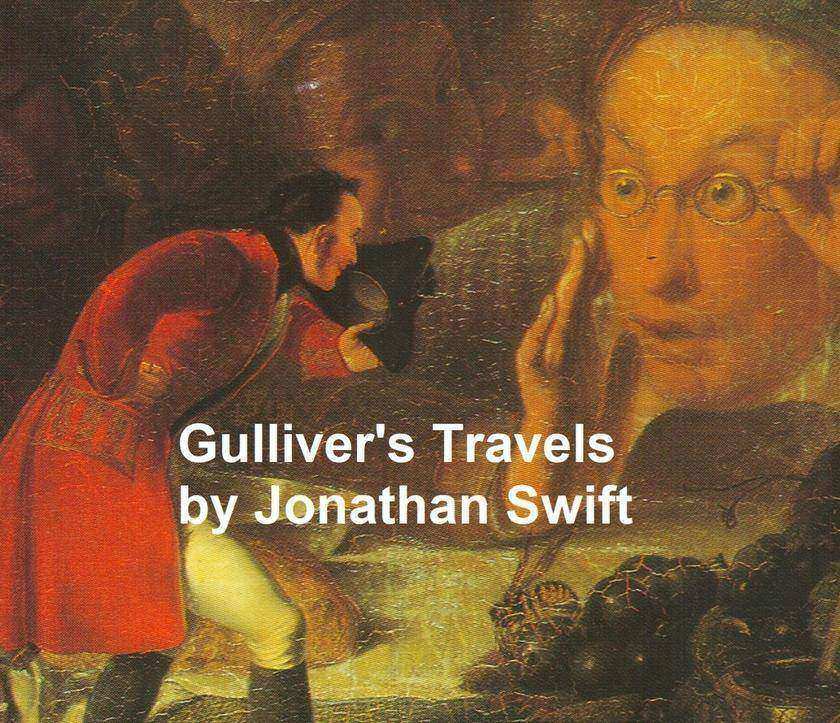
Gulliver's Travels
¥8.09
The satiric voyages to Lilliput, Brobdingnag, Laputa, Balnibarbi, Glubbdubdrib, Luggnagg, Japan, and the Country of the Houyhnhnms. According to Wikipedia: "Jonathan Swift (1667 - 1745) was an Anglo-Irish cleric, Dean of St. Patrick's, Dublin, satirist, essayist, political pamphleteer (first for Whigs then for Tories), and poet, famous for works like Gulliver's Travels, A Modest Proposal, A Journal to Stella, The Drapier's Letters, The Battle of the Books, and A Tale of a Tub. Swift is probably the foremost prose satirist in the English language..."
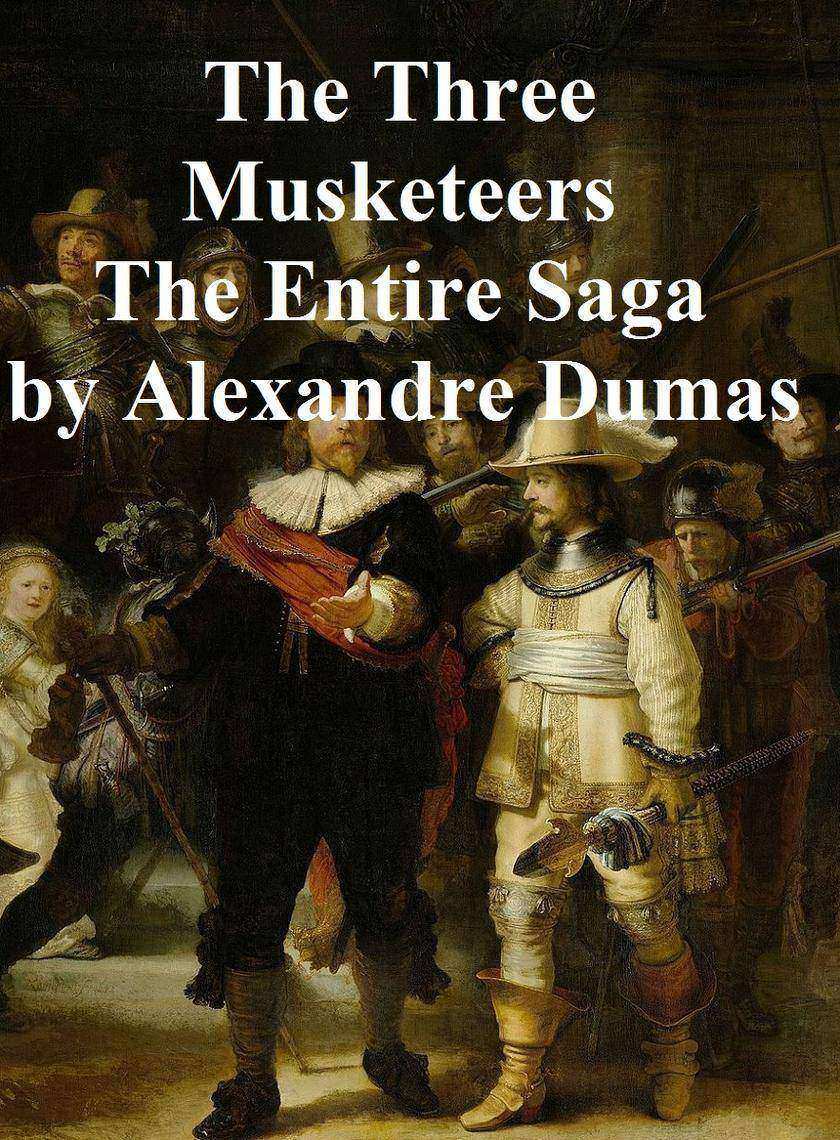
The Three Musketeers
¥8.09
The Three Musketeers is the first and best known of a series of six novels, all of which are included (in English translation) in this one book file -- The Three Musketeers (covering 1625-1628), Twenty Years After (covering 1648-49), The Vicomte de Bragelonne (covering 1660), Ten Years Later (covering 1660-1661), Louise de la Valliere (covering 1661), The Man in the Iron Mask (covering 1661-1673) . D'Artagnan, the fourth and most important musketeer, is based on an historical figure, who was eventually promoted to commander of the musketeers. According to Wikipedia: "Alexandre Dumas, père (French for "father", akin to 'Senior' in English), born Dumas Davy de la Pailleterie (24 July 1802 — 5 December 1870) was a French writer, best known for his numerous historical novels of high adventure which have made him one of the most widely read French authors in the world. Many of his novels, including The Count of Monte Cristo, The Three Musketeers, Twenty Years After, and The Vicomte de Bragelonne were serialized. "
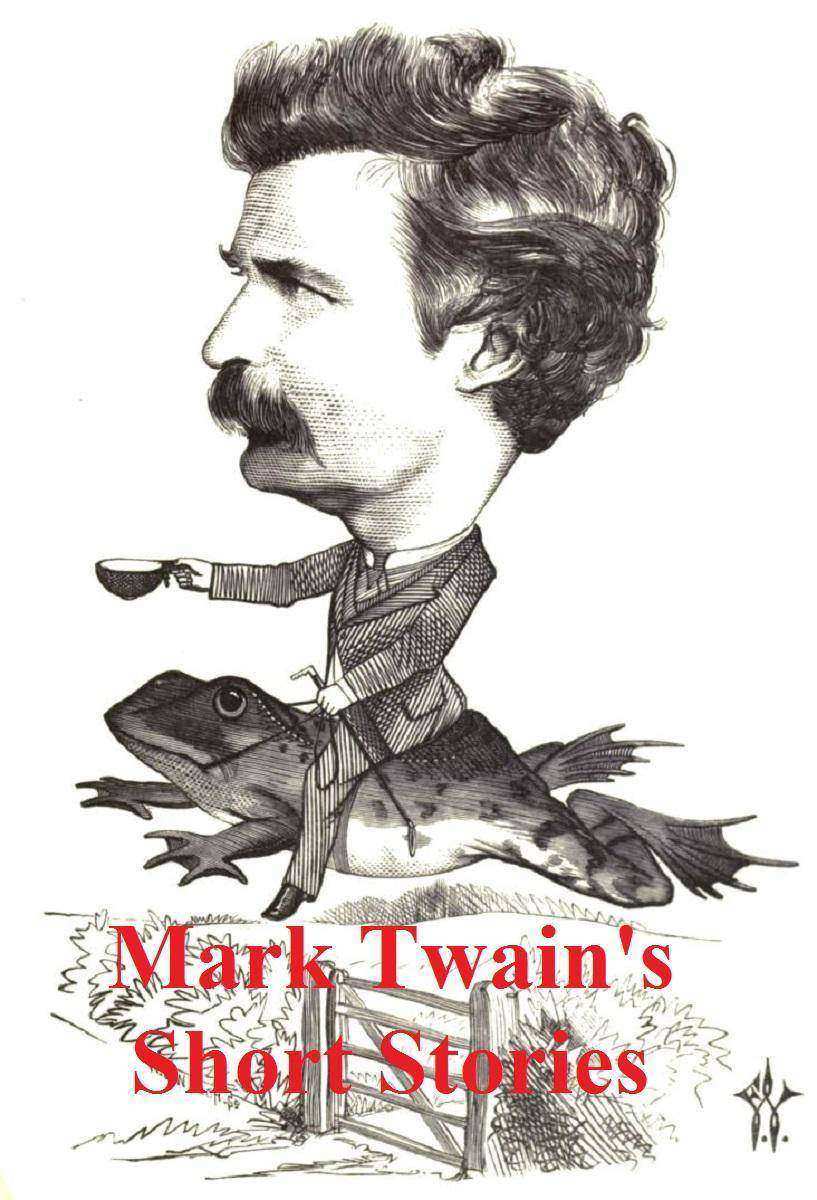
Mark Twain's Short Stories
¥8.09
This book-collection file includes the collections: The $30,000 Bequest and Other Stories, Alonzo Fitz and Other Stories, The Curious Republic of gondour and other Whimsical Sketches, The Man That Corrupted Hadleyburg and Other Stories, and A Mysterious Stranger. It also includes the individual stories: 1601, Extract from Captain Stormfield's Visit to Heave, The Recent Carnival of Crime in Connecticut, A Dog's Tale, A Double Barreled Detective, Extracts from Adam's Diary, Goldsmith's Friend Abroad Again, A Horse's Tale, Those Extraordinary Twins, Tom Sawyer Abroad, and Tom Sawyer Detective. According to Wikipedia: "Samuel Langhorne Clemens (November 30, 1835 – April 21, 1910),[1] better known by the pen name Mark Twain, was an American humorist, satirist, lecturer and writer. Twain is most noted for his novels Adventures of Huckleberry Finn, which has since been called the Great American Novel,[2] and The Adventures of Tom Sawyer. He is also known for his quotations.[3][4] During his lifetime, Twain became a friend to presidents, artists, industrialists and European royalty. Twain enjoyed immense public popularity, and his keen wit and incisive satire earned him praise from both critics and peers. American author William Faulkner called Twain "the father of American literature."

Velveteen Rabbit
¥8.09
Children's classic, with the seven original color illustrations. According to Wikipedia: "The Velveteen Rabbit (or How Toys Become Real) is a children's novel written by Margery Williams and illustrated by William Nicholson. It chronicles the story of a stuffed rabbit and his quest to become real through the love of his owner. The book was first published in 1922 and has been republished many times since."

The World War Series
¥8.09
This book-collection file includes The Guns of Europe, The Hosts of the Air and The Forest of Swords. According to the original publisher: "Mr. Altsheler, who was in Vienna the day war was declared on Servia in Munich when war was declared against Russia, and in England when the British forces were mobilizing, has given in these three volumes the impressions he gained at the places of action during the world crisis.... The Hosts of the Air: The pretty young sister of Phillip is seized by the enemy and carried into Austria. John resolves to get her back and his adventures make awonderfully exciting story... The Forest of Swords: The hero finds himself in Paris with Phillip Lannes, his friend, and the Germans only fifteen miles away. Finally the enemy is turned back at the Marne, a battle in which John and Phillip are actively engaged." According to Wikipedia, "Joseph Alexander Altsheler (April 29, 1862 - June 5, 1919), was an American author of popular juvenile historical fiction."

At Aboukir and Acre
¥8.09
Classic historical novel. According to Wikipedia: "George Alfred Henty (8 December 1832 – 16 November 1902), was a prolific English novelist and a special correspondent. He is best known for his historical adventure stories that were popular in the late 19th century. His works include Out on the Pampas (1871), The Young Buglers (1880), With Clive in India (1884) and Wulf the Saxon (1895)."

By Conduct and Courage
¥8.09
Classic historical novel. According to Wikipedia: "George Alfred Henty (8 December 1832 – 16 November 1902), was a prolific English novelist and a special correspondent. He is best known for his historical adventure stories that were popular in the late 19th century. His works include Out on the Pampas (1871), The Young Buglers (1880), With Clive in India (1884) and Wulf the Saxon (1895)."
Condemned as a Nihilist
¥8.09
Classic historical novel. According to Wikipedia: "George Alfred Henty (8 December 1832 – 16 November 1902), was a prolific English novelist and a special correspondent. He is best known for his historical adventure stories that were popular in the late 19th century. His works include Out on the Pampas (1871), The Young Buglers (1880), With Clive in India (1884) and Wulf the Saxon (1895)."
A Touch of the Sun and Other Short Stories
¥8.09
Collection of stories, first published in 1903. According to Wikipedia: "Mary Hallock was born November 9, 1847, in Milton, New York, of English Quaker ancestry. A singular girl and youth, she attended the Female Collegiate Seminary in Poughkeepsie, New York, then studied art in New York City at the new Cooper Institute School of Design for Women. By her early twenties she had become established in New York City as an accomplished artist-illustrator for notable publishers there. In 1876 Hallock married a young mining engineer, Arthur De Wint Foote, then moved cross-continent to live with him at the New Almaden mine near San Jose, California. Subsequently, as Arthur pursued his engineering career, she followed him throughout the West; to Leadville, Colorado, to Deadwood, South Dakota, then to Boise, Idaho, where Arthur originated a major irrigation project on the Boise River; then to Morelia, Michoacán, Mexico, and finally to Grass Valley, California, where Arthur advanced to managing the North Star mine, and retired there...Wallace Stegner's novel Angle of Repose (Pulitzer Prize, 1971) is based directly upon Mary Hallock Foote's extensive personal correspondence.'
The Witch and Other Stories
¥8.09
This collection includes: THE WITCH, PEASANT WIVES, THE POST, THE NEW VILLA, DREAMS, THE PIPE, AGAFYA, AT CHRISTMAS TIME, GUSEV, THE STUDENT, IN THE RAVINE, THE HUNTSMAN, HAPPINESS, A MALEFACTOR, and PEASANTS. According to Wikipedia: "Anton Pavlovich Chekhov (1860 – 1904) was a Russian short-story writer, playwright and physician, considered to be one of the greatest short-story writers in world literature. His career as a dramatist produced four classics and his best short stories are held in high esteem by writers and critics Chekhov practised as a doctor throughout most of his literary career: "Medicine is my lawful wife," he once said, "and literature is my mistress." Chekhov renounced the theatre after the disastrous reception of The Seagull in 1896; but the play was revived to acclaim in 1898 by Constantin Stanislavski's Moscow Art Theatre, which subsequently also produced Uncle Vanya and premiered Chekhov’s last two plays, Three Sisters and The Cherry Orchard. These four works present a special challenge to the acting ensemble as well as to audiences, because in place of conventional action Chekhov offers a "theatre of mood" and a "submerged life in the text." Chekhov had at first written stories only for the money, but as his artistic ambition grew, he made formal innovations which have influenced the evolution of the modern short story. His originality consists in an early use of the stream-of-consciousness technique, later adopted by James Joyce and other modernists, combined with a disavowal of the moral finality of traditional story structure He made no apologies for the difficulties this posed to readers, insisting that the role of an artist was to ask questions, not to answer them."
In Exile and Other Stories
¥8.09
Collection of stories, first published in 1894. According to Wikipedia: "Mary Hallock was born November 9, 1847, in Milton, New York, of English Quaker ancestry. A singular girl and youth, she attended the Female Collegiate Seminary in Poughkeepsie, New York, then studied art in New York City at the new Cooper Institute School of Design for Women. By her early twenties she had become established in New York City as an accomplished artist-illustrator for notable publishers there. In 1876 Hallock married a young mining engineer, Arthur De Wint Foote, then moved cross-continent to live with him at the New Almaden mine near San Jose, California. Subsequently, as Arthur pursued his engineering career, she followed him throughout the West; to Leadville, Colorado, to Deadwood, South Dakota, then to Boise, Idaho, where Arthur originated a major irrigation project on the Boise River; then to Morelia, Michoacán, Mexico, and finally to Grass Valley, California, where Arthur advanced to managing the North Star mine, and retired there...Wallace Stegner's novel Angle of Repose (Pulitzer Prize, 1971) is based directly upon Mary Hallock Foote's extensive personal correspondence.'


