


 购物车
购物车 个人中心
个人中心
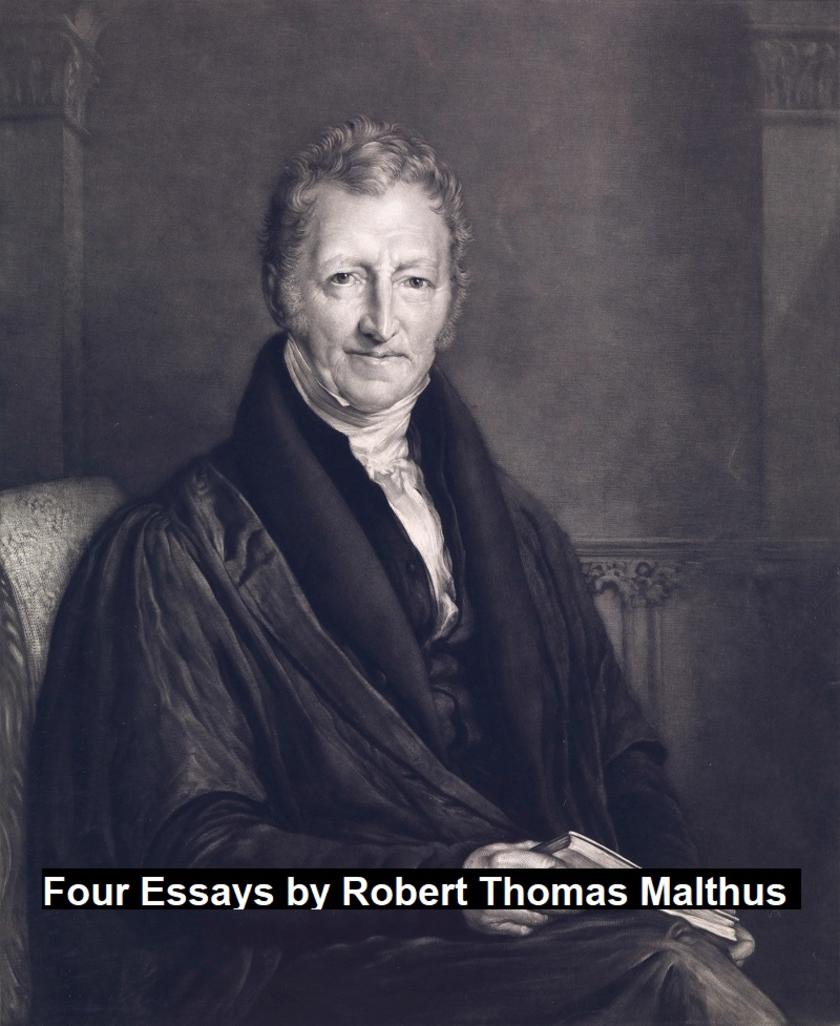
Four Essays
¥8.09
This file includes the book "An Essay on the Principle of Population", plus the essays "Observations on the Effects of the Corn Laws", "The Grounds of an Opinion on the Policy of Resrticting the Importation of Foreign Corn", and "An Inquiry into the Nature and Progress of Rent". According to Wikipedia: "The Reverend Thomas Robert Malthus (13 or 14 February 1766 – 23 or 29 December 1834) was an English scholar, influential in political economy and demography. Malthus popularized the economic theory of rent. Malthus has become widely known for his theories about population and its increase or decrease in response to various factors. The six editions of his An Essay on the Principle of Population, published from 1798 to 1826, observed that sooner or later population gets checked by famine and disease. He wrote in opposition to the popular view in 18th-century Europe that saw society as improving and in principle as perfectible."
A Mountain Europa
¥8.09
Classic western. According to Wikipedia: "Born in Stony Point, Kentucky to John William Fox, Sr., and Minerva Worth Carr, Fox studied English at Harvard University. He graduated in 1883 before becoming a reporter in New York City. After working for both New York Times and the New York Sun, he published a successful serialization of his first novel, A Mountain Europa, in Century magazine in 1892. Two moderately successful short story collections followed, as well as his first conventional novel, The Kentuckians in 1898. Fox gained a following as a war correspondent, working for Harper's Weekly in Cuba during the Spanish-American War of 1898, where he served with the "Rough Riders." Six years later he traveled to Asia to report on the Russo-Japanese War for Scribner's magazine. Though he occasionally wrote for periodicals, after 1904, Fox dedicated much of his attention to fiction. The Little Shepherd of Kingdom Come (published in 1903) and The Trail of the Lonesome Pine (published in 1908) are arguably his most well known and successful works, entering the New York Times top ten list of bestselling novels for 1903, 1904, 1908, and 1909 respectively. Many of his works reflected the naturalist style, his childhood in Kentucky's Bluegrass region, and his life among the coal miners of Big Stone Gap, Virginia. Many of his novels were historical romances or period dramas set in that region."

The Delectable Duchy
¥8.09
Dodo Collections brings you another classic from Arthur Quiller-Couch ‘The Delectable Duchy.’ The Delectable Duchy was first published in 1894. Sir Arthur Thomas Quiller-Couch was a Cornish writer, who published under the pen name of Q. He published his Dead Man's Rock (a romance in the vein of Stevenson's Treasure Island) in 1887, and he followed this up with Troy Town (1888) and The Splendid Spur (1889). After some journalistic experience in London, mainly as a contributor to the Speaker, in 1891 he settled at Fowey in Cornwall. He published in 1896 a series of critical articles, Adventures in Criticism, and in 1898 he completed Robert Louis Stevenson's unfinished novel, St Ives. With the exception of the parodies entitled Green Bays: Verses and Parodies (1893), his poetical work is contained in Poems and Ballads (1896). In 1895 he published an anthology from the sixteenth and seventeenth-century English lyrists, The Golden Pomp, followed in 1900 by an equally successful Oxford Book of English Verse, 1250-1900 (1900). He was made a Bard of Gorseth Kernow in 1928, taking the Bardic name Marghak Cough ('Red Knight'). Quiller-Couch was a noted literary critic, publishing editions of some of Shakespeare's plays (in the New Shakespeare, published by Cambridge University Press, with Dover Wilson) and several critical works, including Studies in Literature (1918) and On the Art of Reading (1920). He edited a successor to his verse anthology: Oxford Book of English Prose, which was published in 1923. He left his autobiography, Memories and Opinions, unfinished; it was nevertheless published in 1945.
Mr. Justice Raffles
¥8.09
Classic Crime Press presents you Mr. Justice Raffles in a fantastic ebook edition. ? Mr. Justice Raffles was a 1909 novel written by E.W. Hornung. It featured his popular character A. J. Raffles a well-known cricketer and gentleman thief. It was the fourth and last in his four Raffles books which had begun with The Amateur Cracksman in 1899. Unlike the three previous works, the book was a full-length novel and featured darker elements than the earlier collections of short stories. In it a jaded Raffles is growing increasingly cynical about British high society. He encounters Dan Levy, an unscrupulous moneylender, who manages to entrap a number of young men, mostly sons of the wealthy, by giving them loans and then charging huge amounts of interest. Raffles takes it upon himself to teach Levy a lesson. At the end of Hornung's second Raffles short story collection The Black Mask, Raffles and his companion Bunny Manders volunteer for service in the Second Boer War in 1899 where he was killed at the hands of the Boers. Hornung had intended this as a patriotic finale to his hero's story. However there was great popular demand for the return of the character, and a number of generous publishing offers, and Hornung agreed to write another book. In this he has been compared to Arthur Conan Doyle's decision to resurrect Sherlock Holmes after he had been killed falling over the Reichenbach Falls. Doyle had managed this by revealing that Holmes had actually survived the falls, while Hornung set Mr. Justice Raffles before the events of the Boer War. The comparison between the resurrections of Holmes and Raffles is made interesting by the fact that Doyle and Hornung were brothers-in-law. Indeed prior to resurrecting Holmes, Doyle had used much the same technique, demand had called for another Holmes story, so the book he wrote to meet this demand The Hound of the Baskervilles was set prior to Holmes's "demise".
Brother Copas
¥8.09
Dodo Collections brings you another classic from Arthur Quiller-Couch, ‘Brother Copas.’ To those who are acquainted with the literary standing of "Q" the lightness and slightness of his novels always come as a surprise. They have, however, a distinctive touch of learning here and there and a fair and elegant style. The setting in the present case is easily identified as the Hospital of St. Cross at Winchester, although Sir Quiller-Couch confusingly calls his town Merchester suggesting Melchester, the name given by Mr. Hardy to the cathedral town of Salisbury. The dissensions and difficulties in this community of noble poverty, the great unsettled question of high church or low church, and the final solution by means of that charity which covers a multitude of sins is the theme of rother Copas. There is a delightful Swinburnian translation of a late Latin poem-the sort of thing that Sir Quiller-Couch does con amore. There is a town pageant which brings peace after dissension and there is a perfectly unreal and perfectly impossible but equally charming American child. But, on the whole, there is enough background and enough setting, enough learning, and enough ease of writing to make the whole book very readable and pleasant for an idle half-hour. If this is the only way in which Sir Quiller-Couch can earn the liberty to do his literary studies we pardon his novels. Quiller-Couch was a noted literary critic, publishing editions of some of Shakespeare's plays (in the New Shakespeare, published by Cambridge University Press, with Dover Wilson) and several critical works, including Studies in Literature (1918) and On the Art of Reading (1920). He edited a successor to his verse anthology: Oxford Book of English Prose, which was published in 1923. He left his autobiography, Memories and Opinions, unfinished; it was nevertheless published in 1945.
Eureka: a Prose Poem
¥8.09
Illustrated with the one diagram that appears in the original. According to Wikipedia: "Eureka (1848) is a lengthy non-fiction work by American author Edgar Allan Poe which he subtitled "A Prose Poem", though it has also been subtitled as "An Essay on the Material and Spiritual Universe". Adapted from a lecture he had presented, Eureka describes Poe's intuitive conception of the nature of the universe with no scientific work done to reach his conclusions. He also discusses man's relationship with God, whom he compares to an author. It is dedicated to the German naturalist and explorer Alexander von Humboldt. Though it is generally considered a literary work, some of Poe's ideas anticipate discoveries of the 20th century. Indeed a critical analysis of the scientific content of Eureka reveals a non-causal correspondence with modern cosmology due to the assumption of an evolving Universe, but excludes the anachronistic anticipation of relativistic concepts such as black holes."

The Yellow Wallpaper
¥8.09
The Yellow Wallpaper is regarded as an important early work of American feminist literature, illustrating attitudes in the 19th century toward women's health, both physical and mental. ? Presented in the first person, the story is a collection of journal entries written by a woman whose physician husband (John) has rented an old mansion for the summer. Foregoing other rooms in the house, the couple moves into the upstairs nursery. As a form of treatment she is forbidden from working, and is encouraged to eat well and get plenty of exercise and air, so she can recuperate from what he calls a "temporary nervous depression – a slight hysterical tendency", a diagnosis common to women in that period. She hides her journal from her husband and his sister the housekeeper, fearful of being reproached for overworking herself. The room's windows are barred to prevent children from climbing through them, and there is a gate across the top of the stairs, though she and her husband have access to the rest of the house and its adjoining estate. ? The story depicts the effect of understimulation on the narrator's mental health and her descent into psychosis. With nothing to stimulate her, she becomes obsessed by the pattern and color of the wallpaper. "It is the strangest yellow, that wall-paper! It makes me think of all the yellow things I ever saw – not beautiful ones like buttercups, but old foul, bad yellow things. But there is something else about that paper – the smell! ... The only thing I can think of that it is like is the color of the paper! A yellow smell." ? In the end, she imagines there are women creeping around behind the patterns of the wallpaper and comes to believe she is one of them. She locks herself in the room, now the only place she feels safe, refusing to leave when the summer rental is up. "For outside you have to creep on the ground, and everything is green instead of yellow. But here I can creep smoothly on the floor, and my shoulder just fits in that long smooch around the wall, so I cannot lose my way."
The Forest Runners, A Story of the Great War Trail in Early Kentucky
¥8.09
Historical novel from the Young Trailers series. According to Wikipedia: "Joseph Alexander Altsheler (1862 - 1919), was an American author of popular juvenile historical fiction. Altsheler was born in Three Springs, Kentucky to Joseph and Louise Altsheler. In 1885, he took a job at the Louisville Courier-Journal as a reporter and later, an editor. He started working for the New York World in 1892, first as the paper's Hawaiian correspondent and then as the editor of the World's tri-weekly magazine. Due to a lack of suitable stories, he began writing children's stories for the magazine.
Free Rangers, A Story of the Early Days Along the Mississippi
¥8.09
Historical novel from the Young Trailers series. According to Wikipedia: "Joseph Alexander Altsheler (1862 - 1919), was an American author of popular juvenile historical fiction. Altsheler was born in Three Springs, Kentucky to Joseph and Louise Altsheler. In 1885, he took a job at the Louisville Courier-Journal as a reporter and later, an editor. He started working for the New York World in 1892, first as the paper's Hawaiian correspondent and then as the editor of the World's tri-weekly magazine. Due to a lack of suitable stories, he began writing children's stories for the magazine.
The Lion of the North, A Tale of the Times of Gustavus Adolphus
¥8.09
Historical novel set during the Thirty Years War. According to the Preface: "You are nowadays called upon to acquire so great a mass of learning and information in the period of life between the ages of twelve and eighteen that it is not surprising that but little time can be spared for the study of the history of foreign nations. Most lads are, therefore, lamentably ignorant of the leading events of even the most important epochs of Continental history, although, as many of these events have exercised a marked influence upon the existing state of affairs in Europe, a knowledge of them is far more useful, and, it may be said, far more interesting than that of the comparatively petty affairs of Athens, Sparta, Corinth, and Thebes." According to Wikipedia: "George Alfred Henty (8 December 1832 - 16 November 1902), referred to as G. A. Henty, was a prolific English novelist, special correspondent, and Imperialist born in Trumpington, Cambridgeshire, England. He is best known for his historical adventure stories that were popular in the late 19th century. His works include Out on the Pampas (1871), The Young Buglers (1880), With Clive in India (1884) and Wulf the Saxon (1895)."

Saint George for England
¥8.09
Historical novel set in the 14th century, during the Hundred Years War between England and France. The Preface begins: "You may be told perhaps that there is no good to be obtained from tales of fighting and bloodshed, - that there is no moral to be drawn from such histories. Believe it not. War has its lessons as well as Peace. You will learn from tales like this that determination and enthusiasm can accomplish marvels, that true courage is generally accompanied by magnanimity and gentleness, and that if not in itself the very highest of virtues, it is the parent of almost all the others, since but few of them can be practised without it. The courage of our forefathers has created the greatest empire in the world around a small and in itself insignificant island; if this empire is ever lost, it will be by the cowardice of their descendants." According to Wikipedia: "George Alfred Henty (8 December 1832 - 16 November 1902), referred to as G. A. Henty, was a prolific English novelist, special correspondent, and Imperialist born in Trumpington, Cambridgeshire, England. He is best known for his historical adventure stories that were popular in the late 19th century. His works include Out on the Pampas (1871), The Young Buglers (1880), With Clive in India (1884) and Wulf the Saxon (1895)."
The Young Franc Tireurs
¥8.09
Historical novel set in the late 19th century, during the Franco-Prussian War. The Preface begins: "The present story was written and published a few months, only, after the termination of the Franco-German war. At that time the plan--which I have since carried out in The Young Buglers, Cornet of Horse, and In Times of Peril, and which I hope to continue, in further volumes--of giving, under the guise of historical tales, full and accurate accounts of all the leading events of great wars, had not occurred to me. My object was only to represent one phase of the struggle--the action of the bodies of volunteer troops known as franc tireurs." According to Wikipedia: "George Alfred Henty (8 December 1832 - 16 November 1902), referred to as G. A. Henty, was a prolific English novelist, special correspondent, and Imperialist born in Trumpington, Cambridgeshire, England. He is best known for his historical adventure stories that were popular in the late 19th century. His works include Out on the Pampas (1871), The Young Buglers (1880), With Clive in India (1884) and Wulf the Saxon (1895)."

The Heart of Mid-Lothian
¥8.09
Historical novel, first published in 1818. Set in Edinburgh, Richmond, and London in 1736. According to Wikipedia: "Sir Walter Scott, 1st Baronet (1771 – 1832) was a prolific Scottish historical novelist and poet popular throughout Europe during his time. In some ways Scott was the first English-language author to have a truly international career in his lifetime, with many contemporary readers all over Europe, Australia, and North America. His novels and poetry are still read, and many of his works remain classics of both English-language literature and of Scottish literature. Famous titles include Ivanhoe, Rob Roy, The Lady of The Lake, Waverley, The Heart of Midlothian and The Bride of Lammermoor."
The Bride of Lammermoor
¥8.09
Historical novel, first published in 1819. Set in East Lothian, in 1709-1711. According to Wikipedia: "Sir Walter Scott, 1st Baronet (1771 – 1832) was a prolific Scottish historical novelist and poet popular throughout Europe during his time. In some ways Scott was the first English-language author to have a truly international career in his lifetime, with many contemporary readers all over Europe, Australia, and North America. His novels and poetry are still read, and many of his works remain classics of both English-language literature and of Scottish literature. Famous titles include Ivanhoe, Rob Roy, The Lady of The Lake, Waverley, The Heart of Midlothian and The Bride of Lammermoor."

Redgauntlet
¥8.09
Historical novel, first published in 1824. Set in Southern Scotland and Cumberland, England, in 1766. According to Wikipedia: "Sir Walter Scott, 1st Baronet (1771 – 1832) was a prolific Scottish historical novelist and poet popular throughout Europe during his time. In some ways Scott was the first English-language author to have a truly international career in his lifetime, with many contemporary readers all over Europe, Australia, and North America. His novels and poetry are still read, and many of his works remain classics of both English-language literature and of Scottish literature. Famous titles include Ivanhoe, Rob Roy, The Lady of The Lake, Waverley, The Heart of Midlothian and The Bride of Lammermoor."
Arsene Lupin
¥8.09
According to Wikipedia: "Maurice Marie ?mile Leblanc (11 November 1864 – 6 November 1941) was a French novelist and writer of short stories, known primarily as the creator of the fictional gentleman thief and detective Arsène Lupin, often described as a French counterpart to Arthur Conan Doyle's creation Sherlock Holmes.
The Extraordinary Adventures of Arsene Lupin
¥8.09
According to Wikipedia: "Maurice Marie ?mile Leblanc (11 November 1864 – 6 November 1941) was a French novelist and writer of short stories, known primarily as the creator of the fictional gentleman thief and detective Arsène Lupin, often described as a French counterpart to Arthur Conan Doyle's creation Sherlock Holmes.
On the Irrawaddy
¥8.09
Historical novel, set during British colonial war in the 19th century. According to the Preface: "With the exception of the terrible retreat from Afghanistan, none of England's many little wars have been so fatal--in proportion to the number of those engaged--as our first expedition to Burma. It was undertaken without any due comprehension of the difficulties to be encountered, from the effects of climate and the deficiency of transport; the power, and still more the obstinacy and arrogance of the court of Ava were altogether underrated; and it was considered that our possession of her ports would assuredly bring the enemy, who had wantonly forced the struggle upon us, to submission." According to Wikipedia: "George Alfred Henty (8 December 1832 - 16 November 1902), referred to as G. A. Henty, was a prolific English novelist, special correspondent, and Imperialist born in Trumpington, Cambridgeshire, England. He is best known for his historical adventure stories that were popular in the late 19th century. His works include Out on the Pampas (1871), The Young Buglers (1880), With Clive in India (1884) and Wulf the Saxon (1895)."
The Cornet of Horse
¥8.09
Historical novel, set in Europe in the early 18th century. According to Wikipedia: "George Alfred Henty (8 December 1832 - 16 November 1902), referred to as G. A. Henty, was a prolific English novelist, special correspondent, and Imperialist born in Trumpington, Cambridgeshire, England. He is best known for his historical adventure stories that were popular in the late 19th century. His works include Out on the Pampas (1871), The Young Buglers (1880), With Clive in India (1884) and Wulf the Saxon (1895)."

The Young Buglers
¥8.09
Historical novel, set in Spain during the Peninsular War (Britain vs. the armies of Napoleon). The Preface begins: "...as a boy, I regarded any attempt to mix instruction with amusement as being as objectionable a practice as the administration of powder in jam; but I think that this feeling arose from the fact that in those days books contained a very small share of amusement and a very large share of instruction. I have endeavored to avoid this, and I hope that the accounts of battles and sieges, illustrated as they are by maps, will be found as interesting as the lighter parts of the story. As in my tale, "_The Young Franc-Tireurs_," I gave the outline of the Franco-German war, so I have now endeavored to give the salient features of the great Peninsular struggle. The military facts... are all strictly accurate, and any one who has read with care the story of "The Young Buglers" could pass an examination as to the leading events of the Peninsula War." According to Wikipedia: "George Alfred Henty (8 December 1832 - 16 November 1902), referred to as G. A. Henty, was a prolific English novelist, special correspondent, and Imperialist born in Trumpington, Cambridgeshire, England. He is best known for his historical adventure stories that were popular in the late 19th century. His works include Out on the Pampas (1871), The Young Buglers (1880), With Clive in India (1884) and Wulf the Saxon (1895)."
The Knight of the White Cross
¥8.09
Historical novel. According to the Preface: "The order of the Knights of St. John, which for some centuries played a very important part in the great struggle between Christianity and Mahomedanism, was, at its origin, a semi-religious body, its members being, like other monks, bound by vows of obedience, chastity, and poverty, and pledged to minister to the wants of the pilgrims who flocked to the Holy Places, to receive them at their great Hospital -- or guest house -- at Jerusalem, dedicated to St. John the Baptist, and to defend them on their passage to and from the sea, against attack by Moslems. In a comparatively short time the constitution of the order was changed, and the Knights Hospitallers became, like the Templars, a great military Order pledged to defend the Holy Sepulchre, and to war everywhere against the Moslems. The Hospitallers bore a leading share in the struggle which terminated in the triumph of the Moslems, and the capture by them of Jerusalem." According to Wikipedia: "George Alfred Henty (8 December 1832 - 16 November 1902), referred to as G. A. Henty, was a prolific English novelist, special correspondent, and Imperialist born in Trumpington, Cambridgeshire, England. He is best known for his historical adventure stories that were popular in the late 19th century. His works include Out on the Pampas (1871), The Young Buglers (1880), With Clive in India (1884) and Wulf the Saxon (1895)."


