


 购物车
购物车 个人中心
个人中心
Trois Contes
¥8.09
Collection classique de nouvelles, initialement publiée en 1877, en fran?ais original. Selon Wikipédia: ?Un c?ur simple, aussi appelé Un c?ur simple ou Le perroquet en fran?ais, raconte l'histoire d'une servante nommée Félicité, son seul et unique amour, Théodore, épouse une femme aisée, et ce faisant, Après cette trahison, Felicité quitte la ferme sur laquelle elle travaille et se dirige vers Pont-l'Evêque où elle se met immédiatement au travail dans une maison de domestique.Elle est très loyale et prête facilement son affection à cette famille et à d'autres les gens, comme son neveu, et les choses, comme son perroquet, elle donne entièrement aux autres, et beaucoup en profitent, les gens ne réalisent pas à quel point elle les aime, elle est la quintessence d'un personnage désintéressé, et Flaubert montre le l'horreur de l'altruisme véritable - la réalité d'être altruiste, n'ayant rien de propre à vivre: elle n'a pas de mari, pas d'enfants, pas de biens, dépend de sa ma?tresse pour la garder, elle est totalement inculte, sa mort est virtuellement inaper?u ... Elle vit une vie bestiale, non examinée. Cependant, elle ressent l'amour et l'éveil spirituel. La légende de Saint Julien l'Hospitalier, en fran?ais Saint Julien l'Hospitalier, raconte l'histoire de Julian l'Hospitalier [un saint] ... Hérodias raconte la décapitation de Jean-Baptiste. Il commence légèrement avant l'arrivée du gouverneur syrien, Vitellius. Hérodias tient une grande fête d'anniversaire pour son deuxième mari, Herod Antipas. Inconnu de lui, elle a concocté un plan pour décapiter John. Selon Flaubert, ce plan implique que son mari tombe amoureux de sa fille, Salomé, ce qui l'amène à lui promettre ce qu'elle veut.
The End of the Tether
¥8.09
Classic Conrad novel. "For a long time after the course of the steamer Sofala had been altered for the land, the low swampy coast had retained its appearance of a mere smudge of darkness beyond a belt of glitter. The sunrays seemed to fall violently upon the calm sea--seemed to shatter themselves upon an adamantine surface into sparkling dust, into a dazzling vapor of light that blinded the eye and wearied the brain with its unsteady brightness." According to Wikipedia: "Joseph Conrad (1857 – 1924) was a Polish-born English novelist. Many critics regard him as one of the greatest novelists in the English language—a fact that is remarkable, as he did not learn to speak English fluently until he was in his twenties (and always with a strong Polish accent). He became a naturalized British subject in 1886. Conrad is recognized as a master prose stylist. Some of his works have a strain of romanticism, but more importantly he is recognized as an important forerunner of modernist literature. His narrative style and anti-heroic characters have influenced many writers, including Ernest Hemingway, D. H. Lawrence, F. Scott Fitzgerald, Graham Greene, William S. Burroughs, Joseph Heller, V.S. Naipaul, Italo Calvino and J. M. Coetzee."

Barsetshire Novels
¥8.09
The Barsetshire Novel series includes: The Warden, Barchester Towers, Dr. Thorne, Framley Parsonage, The Small House at Allington, and The Last Chronicle of Barset. This file has an active (hyperlinked) table of contents. Click on a book title and go to the beginning of that book. Push Back to return to the Table of Contents. According to Wikipedia: "Anthony Trollope (April 24, 1815 – December 6, 1882) became one of the most successful, prolific and respected English novelists of the Victorian era. Some of Trollope's best-loved works, known as the Chronicles of Barsetshire, revolve around the imaginary county of Barsetshire; he also wrote penetrating novels on political, social, and gender issues and conflicts of his day."
The Inheritors
¥8.09
Little-known Conrad novel, co-authored with Ford Hueffer. According to Wikipedia: "Joseph Conrad (1857 – 1924) was a Polish-born English novelist. Many critics regard him as one of the greatest novelists in the English language—a fact that is remarkable, as he did not learn to speak English fluently until he was in his twenties (and always with a strong Polish accent). He became a naturalized British subject in 1886. Conrad is recognized as a master prose stylist. Some of his works have a strain of romanticism, but more importantly he is recognized as an important forerunner of modernist literature. His narrative style and anti-heroic characters have influenced many writers, including Ernest Hemingway, D. H. Lawrence, F. Scott Fitzgerald, Graham Greene, William S. Burroughs, Joseph Heller, V.S. Naipaul, Italo Calvino and J. M. Coetzee."
Heart of Darkness
¥8.09
According to Wikipedia: "Heart of Darkness (1899), by Joseph Conrad, is a short novel, presented as a frame narrative, about Charles Marlow’s job as an ivory transporter down the Congo River. In the course of his commercial-agent work in the Congo Free State (1885–1908), the seaman Marlow becomes very interested in and investigates Mr Kurtz, an ivory-procurement agent, a man of established notoriety among the native Africans and the European colonials. The story is a thematic exploration of thesavagery-versus-civilization relationship, and of the colonialism and the racism that make imperialism possible. Originally published as a three-part serial story, in ‘Blackwood’s Magazine’, the novella Heart of Darkness has been variously published and translated into many languages. In 1998, the Modern Library ranked Heart of Darkness as the sixty-seventh top-novel of the hundred-best-novels in English of the twentieth century; and is included to the Western canon."
Diary of a Goose Girl
¥8.09
Long children's story. According to Wikipedia: "Kate Douglas Wiggin ( 1856 - 1923) was an American children's author and educator. Kate Douglas Smith Wiggin was born in Philadelphia, and was of Welsh descent. She started the first free kindergarten in San Francisco in 1878 (the Silver Street Free Kindergarten). With her sister in the 1880s she also established a training school for kindergarten teachers. She was also a writer of children's books, the best known being The Birds' Christmas Carol (1887) and Rebecca of Sunnybrook Farm (1903)."
The Nigger of the Narcissus
¥8.09
According to Wikipedia: "The Nigger of the 'Narcissus': A Tale of the Sea (1897) is a novella by Joseph Conrad. Because of its quality compared to earlier works, some have described it as marking the start of Conrad's major (middle) period; others have placed it as the best work of his early (first) period. John G. Peters said of it in 2006: "The unfortunately titled The Nigger of the "Narcissus" (titled The Children of the Sea in the first American edition) is Conrad's best work of his early period. In fact, were it not for the book's title, it undoubtedly would be read more often than it is currently. At one time, it was one of Conrad's most frequently read books. In part because of its brevity, in part because of its adventure qualities, and in part because of its literary qualities, the novel used to attract a good deal of attention." The author's preface to the novel, regarded as a manifesto of literary impressionism, is considered one of Conrad's significant pieces of non-fiction writing."
Victory
¥8.09
Classic Conrad novel. According to Wikipedia: "Joseph Conrad (1857 – 1924) was a Polish-born English novelist. Many critics regard him as one of the greatest novelists in the English language—a fact that is remarkable, as he did not learn to speak English fluently until he was in his twenties (and always with a strong Polish accent). He became a naturalized British subject in 1886. Conrad is recognized as a master prose stylist. Some of his works have a strain of romanticism, but more importantly he is recognized as an important forerunner of modernist literature. His narrative style and anti-heroic characters have influenced many writers, including Ernest Hemingway, D. H. Lawrence, F. Scott Fitzgerald, Graham Greene, William S. Burroughs, Joseph Heller, V.S. Naipaul, Italo Calvino and J. M. Coetzee."
Edmond Dantes and Monte-Cristo's Daughter
¥8.09
According to Wikipedia: "The Count of Monte Cristo (French: Le Comte de Monte-Cristo) is an adventure novel by Alexandre Dumas. It is often considered to be, along with The Three Musketeers, Dumas's most popular work." These sequels were written by a 19th-century American author.
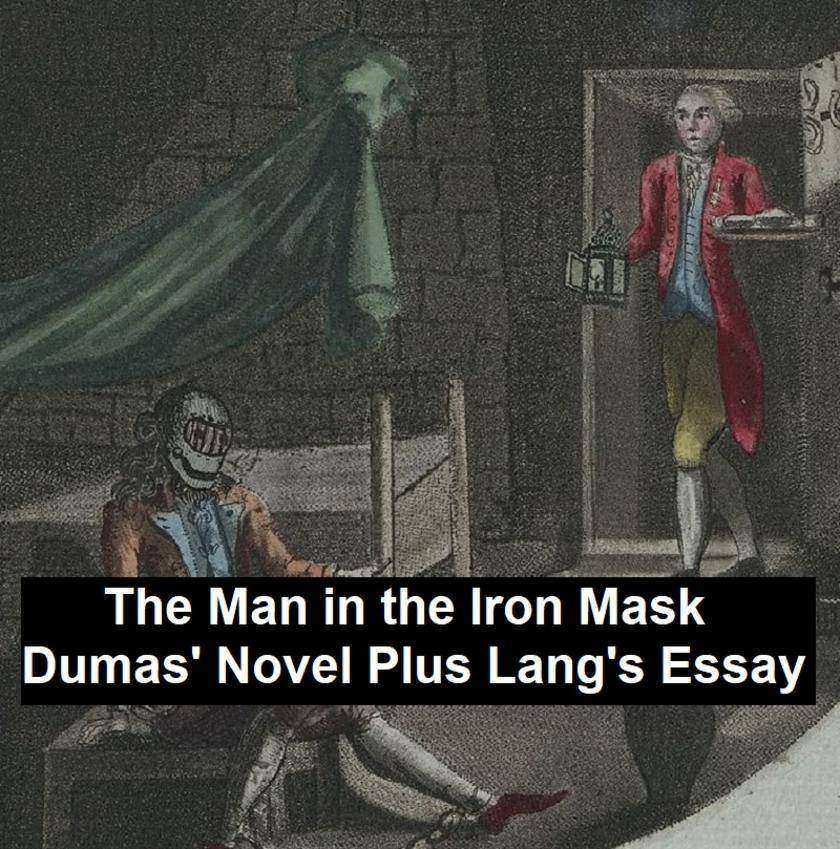
The Man in the Iron Mask: Dumas' Novel Plus Lang's Essay
¥8.09
The classic Dumas novel (part of the Three Musketeers series), plus an essay by Andrew Lang examining the historical basis of the story/legend.
Napoleon the Little and Napoleon le Petit
¥8.09
Bilingual, English and French. According to Wikipedia: "Napoleon le Petit was an influential political pamphlet by Victor Hugo which condemned the reign of Napoleon III, Emperor of the French. Hugo lived in exile in Guernsey for most of Napoleon III's reign, and his criticism of the monarch was significant as he was one of the most prominent Frenchmen of the time, and was revered by many. It includes the concept of two and two make five as a denial of truth by authority, a notion later used by George Orwell in Nineteen Eighty-Four. Volumes were smuggled into France (eg. in bales of hay, and between metal sheets as a tin of sardines), read at secret meetings, and hand-copied." Bilingue, anglais et fran?ais. Selon Wikipédia: ?Napoléon le Petit était un pamphlet politique influent de Victor Hugo qui condamnait le règne de Napoléon III, empereur des Fran?ais, qui vécut en exil à Guernesey pendant la plus grande partie du règne de Napoléon III, et sa critique du monarque fut significative. Comme il était l'un des Fran?ais les plus éminents de l'époque, il a été vénéré par beaucoup de gens et inclut le concept de deux et de deux comme un déni de la vérité par l'autorité, une notion utilisée plus tard par George Orwell dans Nineteen Quatre-vingt-quatre. Les volumes étaient introduits clandestinement en France (par exemple dans des ballots de foin et entre des t?les comme une bo?te de sardines), lus lors de réunions secrètes et copiés à la main.
Winesburg, Ohio: A Group of Tales of Ohio Small Town Life
¥8.09
Dodo Collections brings you another classic from Sherwood Anderson, ‘"Winesburg, Ohio”. ? The work is structured around the life of protagonist George Willard, from the time he was a child to his growing independence and ultimate abandonment of Winesburg as a young man. It is set in the fictional town of Winesburg, Ohio (not to be confused with the actual Winesburg), which is based loosely on the author's childhood memories of Clyde, Ohio. ? Mostly written from late 1915 to early 1916, with a few stories completed closer to publication, they were "...conceived as complementary parts of a whole, centered in the background of a single community." The book consists of twenty-two stories, with the first story, "The Book of the Grotesque", serving as an introduction. Each of the stories shares a specific character's past and present struggle to overcome the loneliness and isolation that seems to permeate the town. Stylistically, because of its emphasis on the psychological insights of characters over plot, and plain-spoken prose, Winesburg, Ohio is known as one of the earliest works of Modernist literature. ? Anderson was born on Sept. 13, 1876, in Camden, Ohio. He never finished high school because he had to work to support his family. By 1912, he was the successful manager of a paint factory in Elyria, Ohio, and the father of three children by the first of his four wives. In 1912, Anderson deserted his family and job. In early 1913, he moved to Chicago, where he devoted more time to his imaginative writing. He became a heroic model for younger writers because he broke with what they considered to be American materialism and convention to commit himself to art.

The Human Machine
¥8.09
Dodo Collections brings you another classic from Arnold Bennett, ‘The Human Machine’. This is a typical example of the sort of self-improvement essays or book that Arnold Bennett produced so readily during his heyday. In Britain in the first decades of the 20th century, there was a demand for anything that would help ordinary people better themselves, and Bennett obliged with volumes on Mental Efficiency, how to live 24 hours a day, how to improve one's literary taste, as well as books on the life of a novelist, etc. Bennett (1867-1931) was a British novelist. He was born in a modest house in Hanley in the Potteries district of Staffordshire. At age 21 he went to London as a solicitor's clerk. He won a literary competition in Tit Bits magazine in 1889 and was encouraged to take up journalism full time. From 1900 he devoted himself full time to writing, giving up the editorship and writing much serious criticism, and also theatre journalism, one of his special interests. In 1902 Anna of the Five Towns, the first of a succession of stories which detailed life in the Potteries appeared. In 1908 The Old Wives' Tale was published, and was an immediate success throughout the English-speaking world. His most famous works are the Clayhanger (1910) trilogy and The Old Wives' Tale. These books draw on his experience of life in the Potteries, as did most of his best work. Among his other books are: The Grand Babylon Hotel (1902), The Grim Smile of the Five Towns (1907), Hilda Lessways (1911), The Author's Craft (1914), The Lion's Share (1916), and The Roll-Call (1919).?
Mental Efficiency, and Other Hints to Men and Women
¥8.09
Dodo Collections brings you another classic from Arnold Bennett, ‘Mental Efficiency, and Other Hints to Men and Women’. This book on Mental Efficiency was typical of the self-improvement essays and books that Arnold Bennett produced alongside his outstanding fiction. Even all these years later, it still makes a lot of sense, and modern readers will be amused and instructed! Bennett (1867-1931) was a British novelist. He was born in a modest house in Hanley in the Potteries district of Staffordshire. At age 21 he went to London as a solicitor's clerk. He won a literary competition in Tit Bits magazine in 1889 and was encouraged to take up journalism full time. From 1900 he devoted himself full time to writing, giving up the editorship and writing much serious criticism, and also theatre journalism, one of his special interests. In 1902 Anna of the Five Towns, the first of a succession of stories which detailed life in the Potteries appeared. In 1908 The Old Wives' Tale was published, and was an immediate success throughout the English-speaking world. His most famous works are the Clayhanger (1910) trilogy and The Old Wives' Tale. These books draw on his experience of life in the Potteries, as did most of his best work. Among his other books are: The Grand Babylon Hotel (1902), The Grim Smile of the Five Towns (1907), Hilda Lessways (1911), The Author's Craft (1914), The Lion's Share (1916), and The Roll-Call (1919).
Buried Alive: A Tale of These Days
¥8.09
Dodo Collections brings you another classic from Arnold Bennett, ‘"Buried Alive: A Tale of These Days".’ ? An ingenious satire, "Buried Alive" is Bennett at his most charming and wittiest. It is the story a renowned but exceedingly shy painter, Priam Farll, who assumes the identity of his dead valet, Henry Leek, as a means of avoiding press attention. The novel was enormously successful as a play, retitled The Great Adventure, and later as the film "Holy Matrimony." ? Enoch Arnold Bennett (always known as Arnold Bennett) was one of the most remarkable literary figures of his time, a product of the English Potteries that he made famous as the Five Towns. Yet he could hardly wait to escape his home town, and he did so by the sheer force of his ambition to succeed as an author. In his time he turned his hand to every kind of writing, but he will be remembered for such novels as The Old Wives' Tale, the Clayhanger trilogy (Clayhanger, Hilda Lessways, and These Twain), and The Card. He also wrote such intriguing self-improvement books as Literary Taste, How To Live on 24 Hours a Day, The Human Machine, etc. After a local education Bennett finished his education at the University of London and for a time was editor of Woman magazine. After 1900 he devoted himself entirely to writing; dramatic criticism was one of his foremost interests. Bennett is best known, however, for his novels, several of which were written during his residence in France. ? Bennett's infancy was spent in genteel poverty, which gave way to prosperity as his father succeeded as a solicitor. From this provincial background he became a novelist. His enduring fame is as a Chronicler of the Potteries towns, the setting and inspiration of some of his most famous and enduring literary work and the place where he grew up.
The Price of Love
¥8.09
Dodo Collections brings you another classic from Arnold Bennett, ‘The Price of Love’. A story of small-town intrigue, that begins with a large sum of money being entrusted and then mysteriously disappearing. The novel was extremely popular and one of Bennett's greatest successes. Bennett (1867-1931) was a British novelist. He was born in a modest house in Hanley in the Potteries district of Staffordshire. At age 21 he went to London as a solicitor's clerk. He won a literary competition in Tit Bits magazine in 1889 and was encouraged to take up journalism full time. From 1900 he devoted himself full time to writing, giving up the editorship and writing much serious criticism, and also theatre journalism, one of his special interests. In 1902 Anna of the Five Towns, the first of a succession of stories which detailed life in the Potteries appeared. In 1908 The Old Wives' Tale was published, and was an immediate success throughout the English-speaking world. His most famous works are the Clayhanger (1910) trilogy and The Old Wives' Tale. These books draw on his experience of life in the Potteries, as did most of his best work. Among his other books are: The Grand Babylon Hotel (1902), The Grim Smile of the Five Towns (1907), Hilda Lessways (1911), The Author's Craft (1914), The Lion's Share (1916), and The Roll-Call (1919).

The Matador of the Five Towns and Other Stories
¥8.09
Dodo Collections brings you another classic from Arnold Bennett, ‘"The Matador of the Five Towns and Other Stories."’ ? Twenty-two short stories by Arnold Bennett, mainly set in the 'Five Towns', Bennett's name for the pottery manufacturing towns of the English midlands ? Enoch Arnold Bennett (always known as Arnold Bennett) was one of the most remarkable literary figures of his time, a product of the English Potteries that he made famous as the Five Towns. Yet he could hardly wait to escape his home town, and he did so by the sheer force of his ambition to succeed as an author. In his time he turned his hand to every kind of writing, but he will be remembered for such novels as The Old Wives' Tale, the Clayhanger trilogy (Clayhanger, Hilda Lessways, and These Twain), and The Card. He also wrote such intriguing self-improvement books as Literary Taste, How To Live on 24 Hours a Day, The Human Machine, etc. ? After a local education Bennett finished his education at the University of London and for a time was editor of Woman magazine. After 1900 he devoted himself entirely to writing; dramatic criticism was one of his foremost interests. Bennett is best known, however, for his novels, several of which were written during his residence in France. Bennett's infancy was spent in genteel poverty, which gave way to prosperity as his father succeeded as a solicitor. From this provincial background he became a novelist. His enduring fame is as a Chronicler of the Potteries towns, the setting and inspiration of some of his most famous and enduring literary work and the place where he grew up.

Denry the Audacious
¥8.09
Dodo Collections brings you another classic from Arnold Bennett, ‘"Denry the Audacious."’ ? Like many of Arnold Bennett's works of fiction, the comic novel Denry the Audacious is set among the quaint village lanes of the Potteries District of Staffordshire. It is amidst this humble environment that the one-of-a-kind character Edward Henry Machin emerges from poverty and, largely through the force of his own indomitable will, achieves a measure of power and influence. ? Enoch Arnold Bennett (always known as Arnold Bennett) was one of the most remarkable literary figures of his time, a product of the English Potteries that he made famous as the Five Towns. Yet he could hardly wait to escape his home town, and he did so by the sheer force of his ambition to succeed as an author. In his time he turned his hand to every kind of writing, but he will be remembered for such novels as The Old Wives' Tale, the Clayhanger trilogy (Clayhanger, Hilda Lessways, and These Twain), and The Card. He also wrote such intriguing self-improvement books as Literary Taste, How To Live on 24 Hours a Day, The Human Machine, etc. ? After a local education Bennett finished his education at the University of London and for a time was editor of Woman magazine. After 1900 he devoted himself entirely to writing; dramatic criticism was one of his foremost interests. Bennett is best known, however, for his novels, several of which were written during his residence in France. ? Bennett's infancy was spent in genteel poverty, which gave way to prosperity as his father succeeded as a solicitor. From this provincial background he became a novelist. His enduring fame is as a Chronicler of the Potteries towns, the setting and inspiration of some of his most famous and enduring literary work and the place where he grew up.
The Figure in the Carpet
¥8.09
Dodo Classics brings you another classic from Henry James, ‘The Figure in the Carpet’. ? The short story is usually referred to as a novella and is told in the first person. The narrator, whose name is never revealed, meets his favorite author and becomes obsessed with discovering the secret meaning or intention within the entire author's works. Henry James, OM (15 April 1843 – 28 February 1916) was an American writer who spent most of his writing career in Britain. He is regarded as one of the key figures of 19th-century literary realism. He was the son of Henry James, Sr. and the brother of philosopher and psychologist William James and diarist Alice James. ? He is best known for a number of novels showing Americans encountering Europe and Europeans. His method of writing from a character's point of view allowed him to explore issues related to consciousness and perception, and his style in later works has been compared to impressionist painting. His imaginative use of point of view, interior monologue and unreliable narrators brought a new depth to narrative fiction. ? James contributed significantly to literary criticism, particularly in his insistence that writers be allowed the greatest possible freedom in presenting their view of the world. James claimed that a text must first and foremost be realistic and contain a representation of life that is recognizable to its readers. Good novels, to James, show life in action and are, most importantly, interesting. In addition to his voluminous works of fiction he published articles and books of travel, biography, autobiography, and criticism, and wrote plays. James alternated between America and Europe for the first twenty years of his life; eventually he settled in England, becoming a British subject in 1915, one year before his death. James was nominated for the Nobel Prize in Literature in 1911, 1912, and 1916.
The Innocence of Father Brown
¥8.09
Classic collection of stories, first published early in the 20th century. According to Wikipedia: "Gilbert Keith Chesterton, KC*SG (29 May 1874 – 14 June 1936) was an English writer. His prolific and diverse output included philosophy, ontology, poetry, plays, journalism, public lectures and debates, literary and art criticism, biography, Christian apologetics, and fiction, including fantasy and detective fiction. Chesterton has been called the "prince of paradox". Time magazine, in a review of a biography of Chesterton, observed of his writing style: "Whenever possible Chesterton made his points with popular sayings, proverbs, allegories—first carefully turning them inside out." For example, Chesterton wrote "Thieves respect property. They merely wish the property to become their property that they may more perfectly respect it.
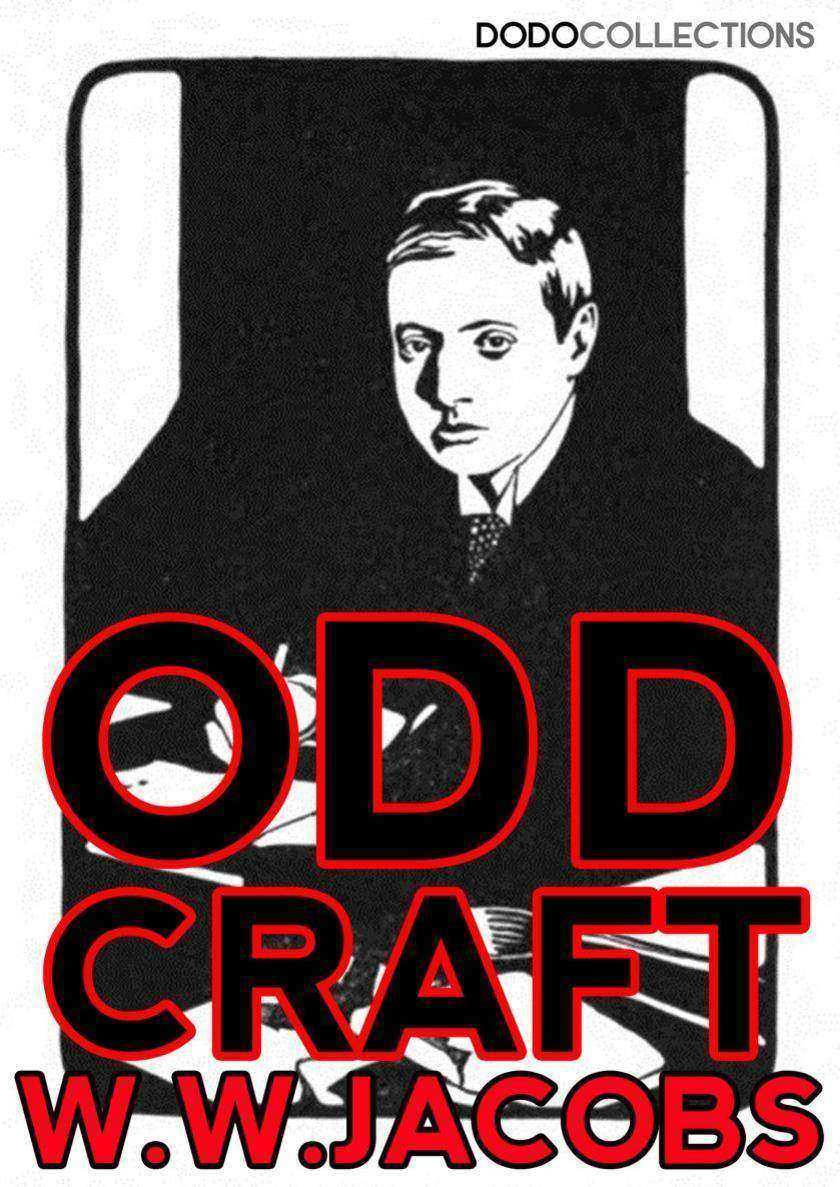
Odd Craft
¥8.09
Dodo Collections brings you another classic from W.W Jacobs, ‘Odd Craft.’ ? Mr. Jacobs serenely continues to distribute wholesome food for laughter. These characters elicit fresh admiration for the inexhaustible inventions of their creator. ? William Wymark Jacobs was an English author of short stories and novels. Quite popular in his lifetime primarily for his amusing maritime tales of life along the London docks (many of them humorous as well as sardonic in tone). Today he is best known for a few short works of horror fiction. One being "The Monkey's Paw"(published 1902). It has in its own right become a well-known and widely anthologized classic.


