


 购物车
 个人中心

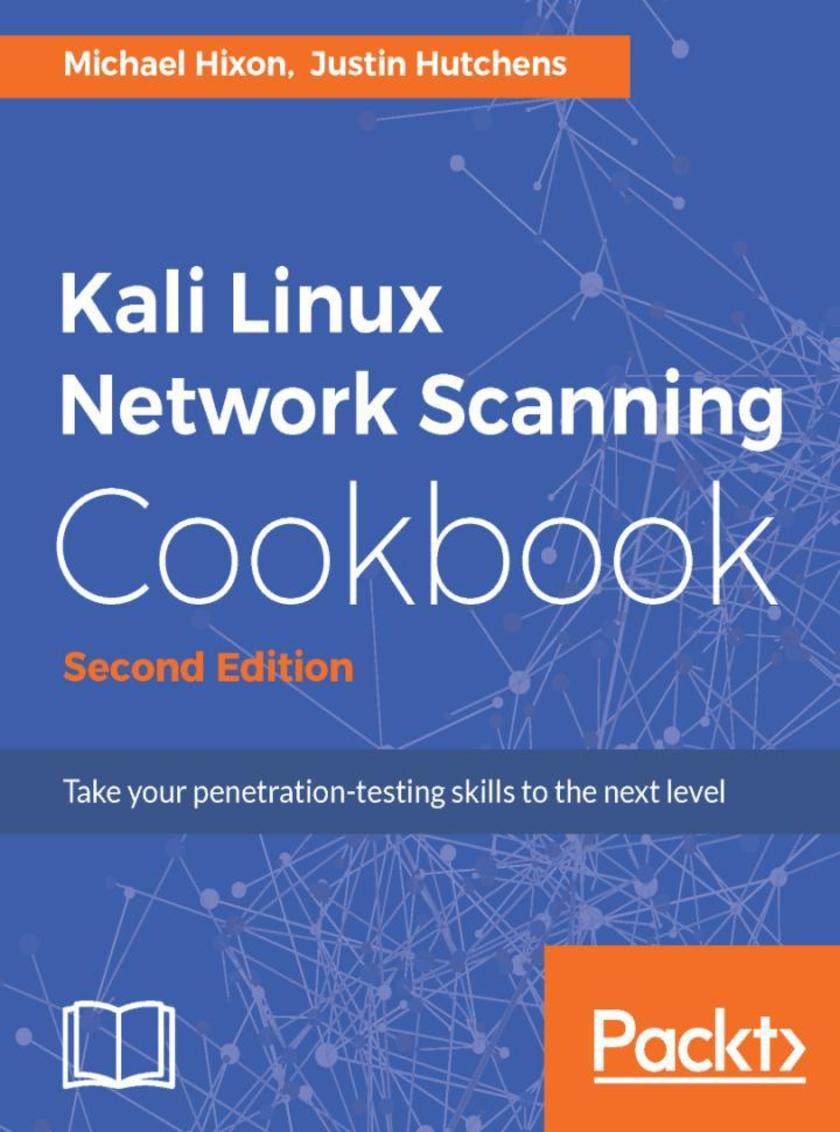
Kali Linux Network Scanning Cookbook - Second Edition
¥90.46
Over 100 practical recipes that leverage custom *s and integrated tools in Kali Linux to help you effectively master network scanning About This Book ? Learn the fundamentals behind commonly used scanning techniques ? Deploy powerful scanning tools that are integrated into the Kali Linux testing platform ? The practical recipes will help you automate menial tasks and build your own * library Who This Book Is For This book is for information security professionals and casual security enthusiasts alike. It provides foundational principles if you’re a novice, but will also introduce *ing techniques and in-depth analysis if you’re more advanced. Whether you are brand new to Kali Linux or a seasoned veteran, this book will help you both understand and ultimately master many of the most powerful and useful scanning techniques in the industry. It is assumed that you have some basic security testing experience. What You Will Learn ? Develop a network-testing environment to test scanning tools and techniques ? Understand the principles of network-scanning tools by building *s and tools ? Identify distinct vulnerabilities in web apps and remote services and learn how they are exploited ? Perform comprehensive scans to identify listening on TCP and UDP sockets ? Get started with different Kali desktop environments--KDE, MATE, LXDE, and Xfce ? Use Sparta for information gathering, port scanning, fingerprinting, vulnerability scanning, and more ? Evaluate DoS threats and learn how common DoS attacks are performed ? Learn how to use Burp Suite to evaluate web applications In Detail With the ever-increasing amount of data flowing in today’s world, information security has become vital to any application. This is where Kali Linux comes in. Kali Linux focuses mainly on security auditing and penetration testing. This step-by-step cookbook on network scanning trains you in important scanning concepts based on version 2016.2. It will enable you to conquer any network environment through a range of network scanning techniques and will also equip you to * your very own tools. Starting with the fundamentals of installing and managing Kali Linux, this book will help you map your target with a wide range of network scanning tasks, including discovery, port scanning, fingerprinting, and more. You will learn how to utilize the arsenal of tools available in Kali Linux to conquer any network environment. The book offers expanded coverage of the popular Burp Suite and has new and updated *s for automating scanning and target exploitation. You will also be shown how to identify remote services, how to assess security risks, and how various attacks are performed. You will cover the latest features of Kali Linux 2016.2, which includes the enhanced Sparta tool and many other exciting updates. This immersive guide will also encourage the creation of personally *ed tools and the skills required to create them. Style and approach This step-by-step guide is full of recipes that will help you use integrated scanning tools in Kali Linux and develop custom *s to make new and unique tools of your own.
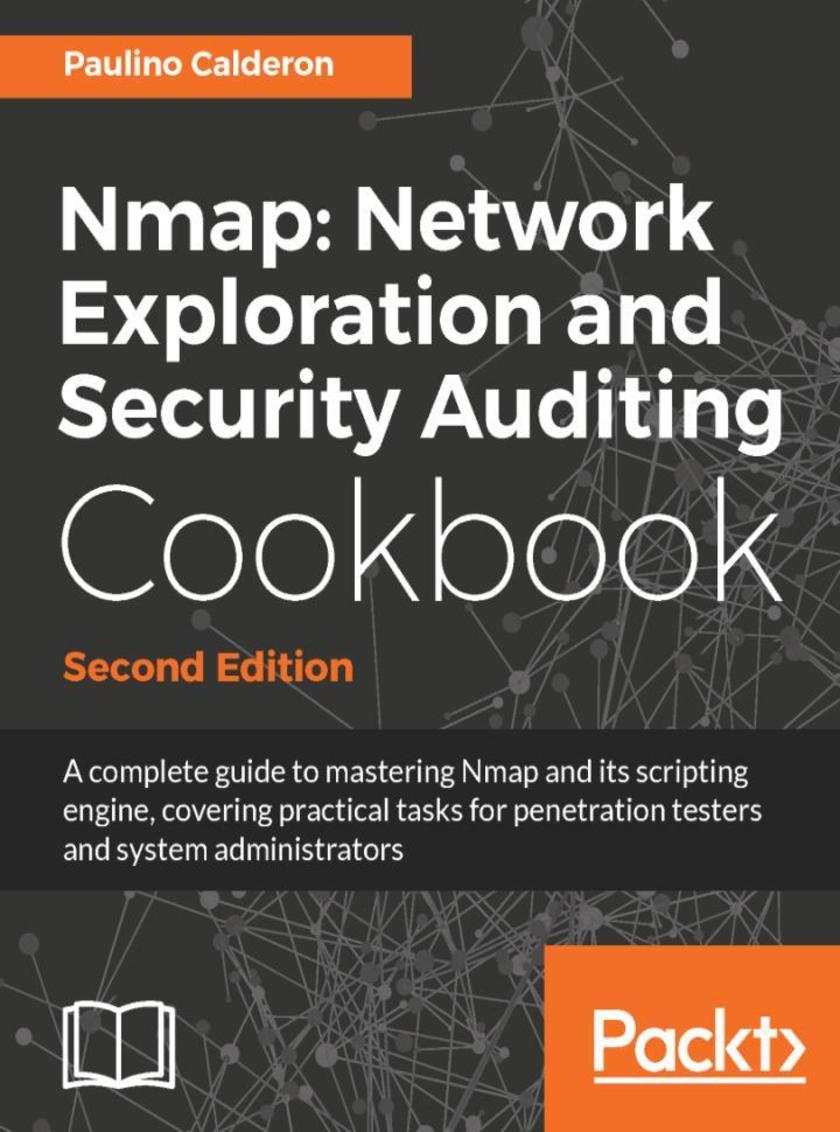
Nmap: Network Exploration and Security Auditing Cookbook - Second Edition
¥90.46
Over 100 practical recipes related to network and application security auditing using the powerful Nmap About This Book ? Learn through practical recipes how to use Nmap for a wide range of tasks for system administrators and penetration testers. ? Learn the latest and most useful features of Nmap and the Nmap Scripting Engine. ? Learn to audit the security of networks, web applications, databases, mail servers, Microsoft Windows servers/workstations and even ICS systems. ? Learn to develop your own modules for the Nmap Scripting Engine. ? Become familiar with Lua programming. ? 100% practical tasks, relevant and explained step-by-step with exact commands and optional arguments de*ion Who This Book Is For The book is for anyone who wants to master Nmap and its *ing engine to perform real life security auditing checks for system administrators and penetration testers. This book is also recommended to anyone looking to learn about network security auditing. Finally, novice Nmap users will also learn a lot from this book as it covers several advanced internal aspects of Nmap and related tools. What You Will Learn ? Learn about Nmap and related tools, such as Ncat, Ncrack, Ndiff, Zenmap and the Nmap Scripting Engine ? Master basic and advanced techniques to perform port scanning and host discovery ? Detect insecure configurations and vulnerabilities in web servers, databases, and mail servers ? Learn how to detect insecure Microsoft Windows workstations and scan networks using the Active Directory technology ? Learn how to safely identify and scan critical ICS/SCADA systems ? Learn how to optimize the performance and behavior of your scans ? Learn about advanced reporting ? Learn the fundamentals of Lua programming ? Become familiar with the development libraries shipped with the NSE ? Write your own Nmap Scripting Engine *s In Detail This is the second edition of 'Nmap 6: Network Exploration and Security Auditing Cookbook'. A book aimed for anyone who wants to master Nmap and its *ing engine through practical tasks for system administrators and penetration testers. Besides introducing the most powerful features of Nmap and related tools, common security auditing tasks for local and remote networks, web applications, databases, mail servers, Microsoft Windows machines and even ICS SCADA systems are explained step by step with exact commands and argument explanations. The book starts with the basic usage of Nmap and related tools like Ncat, Ncrack, Ndiff and Zenmap. The Nmap Scripting Engine is thoroughly covered through security checks used commonly in real-life scenarios applied for different types of systems. New chapters for Microsoft Windows and ICS SCADA systems were added and every recipe was revised. This edition reflects the latest updates and hottest additions to the Nmap project to date. The book will also introduce you to Lua programming and NSE * development allowing you to extend further the power of Nmap. Style and approach This book consists of practical recipes on network exploration and security auditing techniques, enabling you to get hands-on experience through real life scenarios.
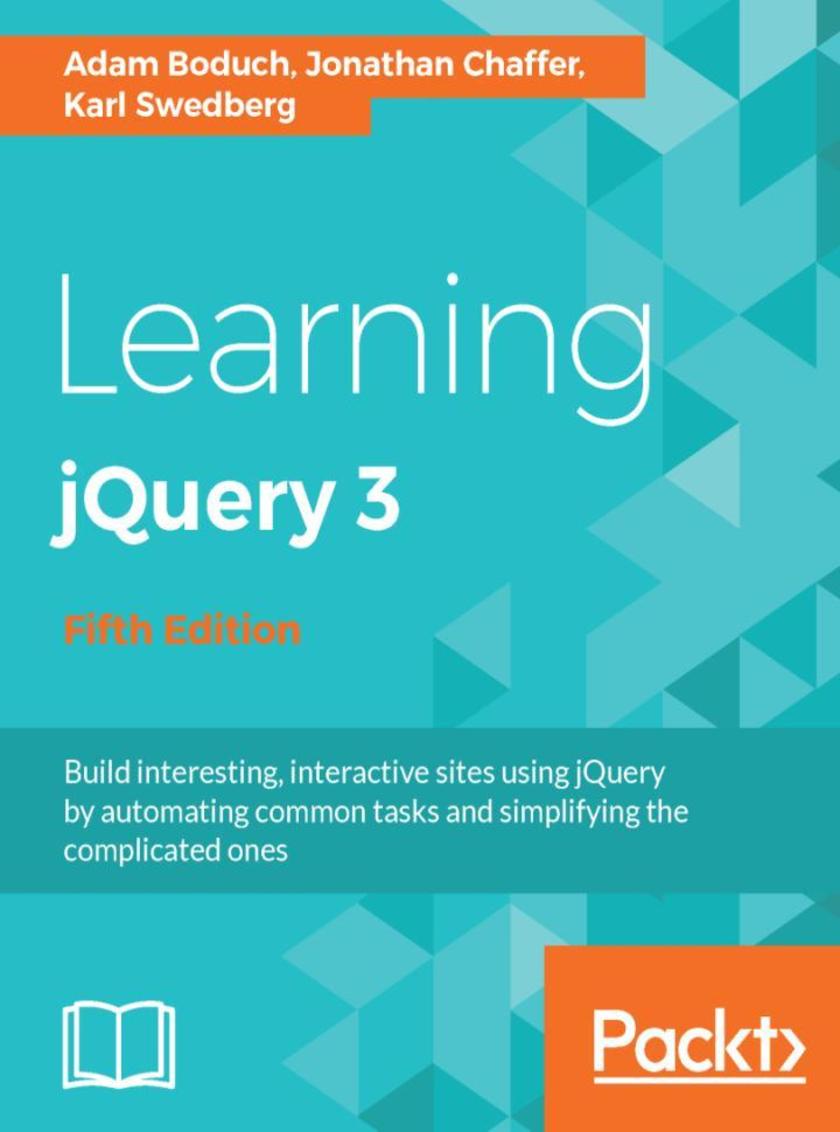
Learning jQuery 3 - Fifth Edition
¥71.93
Create efficient and smart web applications with jQuery 3.0 using this step-by-step practical tutorial About This Book ? Create a fully featured and responsive client-side application using jQuery ? Explore all the latest features of jQuery 3.0 and code examples updated to reflect modern JavaScript environments ? Develop high performance interactive pages Who This Book Is For This book is ideal for client-side JavaScript developers. You do need to have any previous experience with jQuery, although basic JavaScript programming knowledge is necessary. What You Will Learn ? Create custom interactive elements for your web designs ? Find out how to create the best user interface for your web applications ? Use selectors in a variety of ways to get anything you want from a page when you need it ? Master events to bring your web pages to life ? Add flair to your actions with a variety of different animation effects ? Discover the latest features available in jQuery with the latest update of this incredibly popular title ? Using jQuery npm Packages In Detail If you are a web developer and want to create web applications that look good, are efficient, have rich user interfaces, and integrate seamlessly with any backend using AJAX, then this book is the ideal match for you. We’ll show you how you can integrate jQuery 3.0 into your web pages, avoid complex JavaScript code, create brilliant animation effects for your web applications, and create a flawless app. We start by configuring and customising the jQuery environment, and getting hands-on with DOM manipulation. Next, we’ll explore event handling advanced animations, creating optimised user interfaces, and building useful third-party plugins. Also, we'll learn how to integrate jQuery with your favourite back-end framework. Moving on, we’ll learn how the ECMAScript 6 features affect your web development process with jQuery. we’ll discover how to use the newly introduced JavaScript promises and the new animation API in jQuery 3.0 in great detail, along with sample code and examples. By the end of the book, you will be able to successfully create a fully featured and efficient single page web application and leverage all the new features of jQuery 3.0 effectively. Style and approach Create efficient client-side apps that look great and run seamlessly across all devices with this step-by-step practical guide. There are illustrative examples for those who need extra help to get started with jQuery web development.
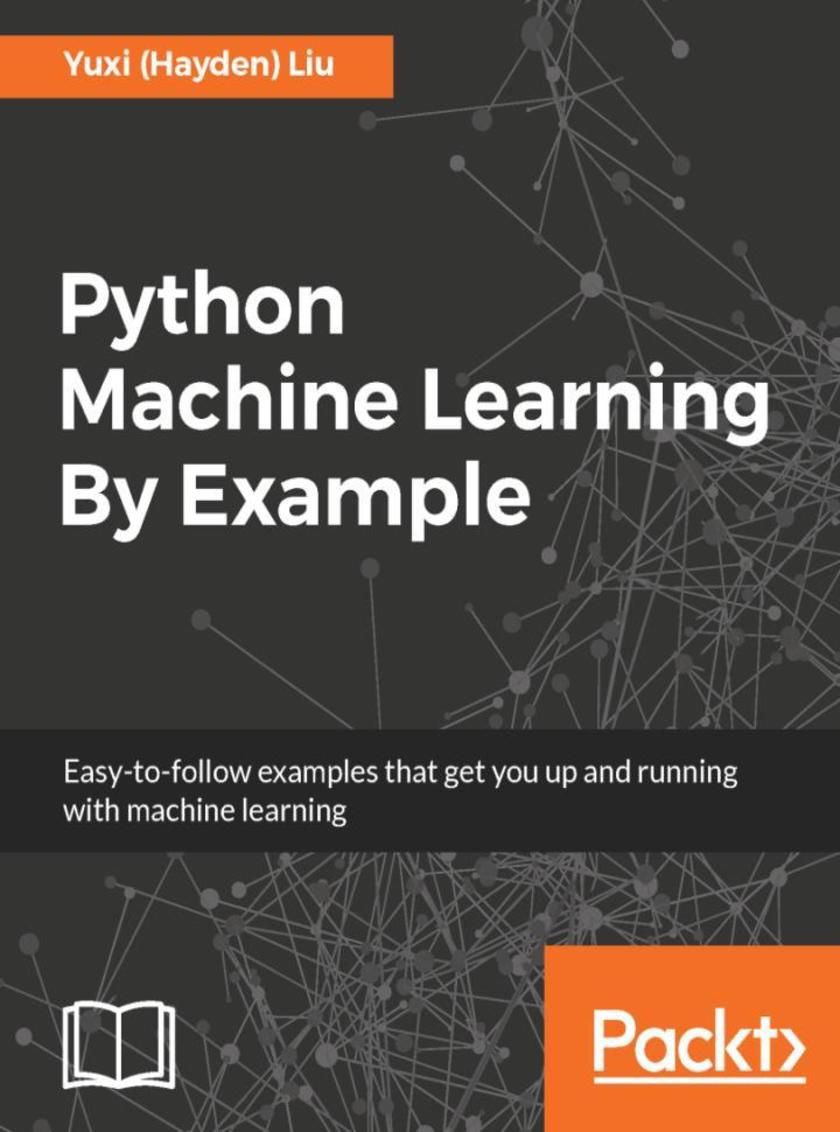
Python Machine Learning By Example
¥90.46
Take tiny steps to enter the big world of data science through this interesting guide About This Book ? Learn the fundamentals of machine learning and build your own intelligent applications ? Master the art of building your own machine learning systems with this example-based practical guide ? Work with important classification and regression algorithms and other machine learning techniques Who This Book Is For This book is for anyone interested in entering the data science stream with machine learning. Basic familiarity with Python is assumed. What You Will Learn ? Exploit the power of Python to handle data extraction, manipulation, and exploration techniques ? Use Python to visualize data spread across multiple dimensions and extract useful features ? Dive deep into the world of analytics to predict situations correctly ? Implement machine learning classification and regression algorithms from scratch in Python ? Be amazed to see the algorithms in action ? Evaluate the performance of a machine learning model and optimize it ? Solve interesting real-world problems using machine learning and Python as the journey unfolds In Detail Data science and machine learning are some of the top buzzwords in the technical world today. A resurging interest in machine learning is due to the same factors that have made data mining and Bayesian analysis more popular than ever. This book is your entry point to machine learning. This book starts with an introduction to machine learning and the Python language and shows you how to complete the setup. Moving ahead, you will learn all the important concepts such as, exploratory data analysis, data preprocessing, feature extraction, data visualization and clustering, classification, regression and model performance evaluation. With the help of various projects included, you will find it intriguing to acquire the mechanics of several important machine learning algorithms – they are no more obscure as they thought. Also, you will be guided step by step to build your own models from scratch. Toward the end, you will gather a broad picture of the machine learning ecosystem and best practices of applying machine learning techniques. Through this book, you will learn to tackle data-driven problems and implement your solutions with the powerful yet simple language, Python. Interesting and easy-to-follow examples, to name some, news topic classification, spam email detection, online ad click-through prediction, stock prices forecast, will keep you glued till you reach your goal. Style and approach This book is an enticing journey that starts from the very basics and gradually picks up pace as the story unfolds. Each concept is first succinctly defined in the larger context of things, followed by a detailed explanation of their application. Every concept is explained with the help of a project that solves a real-world problem, and involves hands-on work—giving you a deep insight into the world of machine learning. With simple yet rich language—Python—you will understand and be able to implement the examples with ease.

Elon Musk
¥95.11
South African born Elon Musk is the renowned entrepreneur and innovator behind PayPal, SpaceX, Tesla, and SolarCity. Musk wants to save our planet; he wants to send citizens into space, to form a colony on Mars; he wants to make money while doing these things; and he wants us all to know about it. He is the real-life inspiration for the Iron Man series of films starring Robert Downey Junior. The personal tale of Musk’s life comes with all the trappings one associates with a great, drama-filled story. He was a freakishly bright kid who was bullied brutally at school, and abused by his father. In the midst of these rough conditions, and the violence of apartheid South Africa, Musk still thrived academically and attended the University of Pennsylvania, where he paid his own way through school by turning his house into a club and throwing massive parties. He started a pair of huge dot-com successes, including PayPal, which eBay acquired for $1.5 billion in 2002. Musk was forced out as CEO and so began his lost years in which he decided to go it alone and baffled friends by investing his fortune in rockets and electric cars. Meanwhile Musk’s marriage disintegrated as his technological obsessions took over his life ... Elon Musk is the Steve Jobs of the present and the future, and for the past twelve months, he has been shadowed by tech reporter, Ashlee Vance. Elon Musk: How the Billionaire CEO of Spacex and Tesla is Shaping our Future is an important, exciting and intelligent account of the real-life Iron Man.
Building Microservices with .NET Core
¥80.65
Architect your .NET applications by breaking them into really small pieces—microservices—using this practical, example-based guide About This Book ? Start your microservices journey and understand a broader perspective of microservices development ? Build, deploy, and test microservices using ASP.Net MVC, Web API, and Microsoft Azure Cloud ? Get started with reactive microservices and understand the fundamentals behind it Who This Book Is For This book is for .NET Core developers who want to learn and understand microservices architecture and implement it in their .NET Core applications. It’s ideal for developers who are completely new to microservices or have just a theoretical understanding of this architectural approach and want to gain a practical perspective in order to better manage application complexity. What You Will Learn ? Compare microservices with monolithic applications and SOA ? Identify the appropriate service boundaries by mapping them to the relevant bounded contexts ? Define the service interface and implement the APIs using ASP.NET Web API ? Integrate the services via synchronous and asynchronous mechanisms ? Implement microservices security using Azure Active Directory, OpenID Connect, and OAuth 2.0 ? Understand the operations and scaling of microservices in .NET Core ? Understand the testing pyramid and implement consumer-driven contract using pact net core ? Understand what the key features of reactive microservices are and implement them using reactive extension In Detail Microservices is an architectural style that promotes the development of complex applications as a suite of small services based on business capabilities. This book will help you identify the appropriate service boundaries within the business. We'll start by looking at what microservices are, and what the main characteristics are. Moving forward, you will be introduced to real-life application scenarios, and after assessing the current issues, we will begin the journey of transforming this application by splitting it into a suite of microservices. You will identify the service boundaries, split the application into multiple microservices, and define the service contracts. You will find out how to configure, deploy, and monitor microservices, and configure scaling to allow the application to quickly adapt to increased demand in the future. With an introduction to the reactive microservices, you strategically gain further value to keep your code base simple, focusing on what is more important rather than the messy asynchronous calls. Style and approach This guide serves as a stepping stone that helps .NET Core developers in their microservices architecture. This book provides just enough theory to understand the concepts and apply the examples.
HoloLens Blueprints
¥80.65
Unveil the world of mixed reality with HoloLens About This Book ? Bring holographic insights to existing line-of-business applications, tools, and workflows ? Focus on developing end-to-end realistic holographic application. ? Build interactive model *s and test them in Unity3D and holographic emulators Who This Book Is For This book is targeted at developers and designers working on mixed-reality developments for complex integrated scenarios using HoloLens. What You Will Learn ? Interact with holograms using different interaction models ? Develop your first holographic app ? Integrate holographic applications with cloud systems ? Visualize data feeds coming from the cloud through holograms ? Manage the application distribution of enterprise-enabled HoloLens ? Integrate HoloLens applications with services deployed on Azure ? Identify and create 3D Assets and Scenes ? Use HoloLens to explore the Internet of Things In Detail Do you want to create stunning applications with HoloLens? Are you a developer who is fascinated with Microsoft HoloLens and its capabilities? If so, this is the book for you. This book introduces and demystifies the HoloLens platform and shows you different ways of interaction with computers (mixed-reality). You will start your mixed-reality journey by understanding different types of digital reality. You will learn to build your first holographic app. Also, you will understand holographic application integration possibilities within Line of Business Applications using Azure. Moving ahead, you will create Integrated Solutions using IoT with HoloLens. Gradually you'll learn how to create and deploy apps on a device. You will learn to publish application to the store; if you are an enterprise developer, you will also manage and distribute applications for enterprise-enabled or domain-joined HoloLens. Finally, you will develop an end-to-end realistic holographic app, ranging from scenario identification to sketching, development, deployment, and, finally, production. Style and approach The book is a project-based guide to help you to create some really astonishing mixed-reality applications. It will provide end-to-end solutions and enable you to build stunning applications for HoloLens.
Introduction to JVM Languages
¥80.65
Explore the Java Virtual Machine with modern programming languages About This Book ? This guide provides in-depth coverage of the Java Virtual Machine and its features ? Filled with practical examples, this book will help you understand the core concepts of Java, Scala, Clojure, Kotlin, and Groovy ? Work with various programming paradigms and gain knowledge about imperative, object-oriented and functional programming Who This Book Is For This book is meant for programmers who are interested in the Java Virtual Machine (JVM) and want to learn more about the most popular programming languages that can be used for JVM development. Basic practical knowledge of a modern programming language that supports object-oriented programming (JavaScript, Python, C#, VB.NET, and C++) is assumed. What You Will Learn ? Gain practical information about the Java Virtual Machine ? Understand the popular JVM languages and the Java Class Library ? Get to know about various programming paradigms such as imperative, object-oriented, and functional ? Work with common JVM tools such as Eclipse IDE, Gradle, and Maven ? Explore frameworks such as SparkJava, Vert.x, Akka and JavaFX ? Boost your knowledge about dialects of other well-known programming languages that run on the JVM, including JavaScript, Python, and Ruby In Detail Anyone who knows software development knows about the Java Virtual Machine. The Java Virtual Machine is responsible for interpreting Java byte code and translating it into actions. In the beginning, Java was the only programming language used for the JVM. But increasing complexity of the language and the remarkable performance of the JVM created an opening for a new generation of programming languages. If you want to build a strong foundation with the Java Virtual Machine and get started with popular modern programming languages, then this book is for you. The book will begin with a general introduction of the JVM and its features, which are common to the JVM languages, helping you get abreast with its concepts. It will then dive into explaining languages such as Java, Scala, Clojure, Kotlin, and Groovy and will show how to work with each language, their features, use cases, and pros and cons. By writing example projects in those languages and focusing on each language’s strong points, it will help you find the programming language that is most appropriate for your particular needs. By the end of the book, you will have written multiple programs that run on the Java Virtual Machine and know about the differences between the various languages. Style and approach This practical, example-filled guide will help you get started with the JVM and some of its most popular languages.
ArcPy and ArcGIS - Second Edition
¥90.46
Use Python modules such as ArcPy, ArcREST and the ArcGIS API for Python to automate the analysis and mapping of geospatial data. About This Book ? Perform GIS analysis faster by automating tasks. ? Access the spatial data contained within shapefiles and geodatabases and transform between spatial reference systems. ? Automate the mapping of geospatial analyses and production of map books. Who This Book Is For If you are a GIS student or professional who needs an understanding of how to use ArcPy to reduce repetitive tasks and perform analysis faster, this book is for you. It is also a valuable book for Python programmers who want to understand how to automate geospatial analyses and implement ArcGIS Online data management. What You Will Learn ? Understand how to integrate Python into ArcGIS and make GIS analysis faster and easier. ? Create Python * using ArcGIS ModelBuilder. ? Learn to use ArcGIS online feature services and the basics of the ArcGIS REST API ? Understand the unique Python environment that is new with ArcGIS Pro ? Learn about the new ArcGIS Python API and how to use Anaconda and Jupyter with it ? Learn to control ArcGIS Enterprise using ArcPy In Detail ArcGIS allows for complex analyses of geographic information. The ArcPy module is used to * these ArcGIS analyses, providing a productive way to perform geo-analyses and automate map production. The second edition of the book focuses on new Python tools, such as the ArcGIS API for Python. Using Python, this book will guide you from basic Python *ing to advanced ArcPy * tools. This book starts off with setting up your Python environment for ArcGIS automation. Then you will learn how to output maps using ArcPy in MXD and update feature class in a geodatabase using arcpy and ArcGIS Online. Next, you will be introduced to ArcREST library followed by examples on querying, updating and manipulating ArcGIS Online feature services. Further, you will be enabling your *s in the browser and directly interacting with ArcGIS Online using Jupyter notebook. Finally, you can learn ways to use of ArcPy to control ArcGIS Enterprise and explore topics on deployments, data quality assurances, data updates, version control, and editing safeguards. By the end of the book, you will be equipped with the knowledge required to create automated analysis with administration reducing the time-consuming nature of GIS. Style and approach The book takes a pragmatic approach, showing ways to automate repetitive tasks and utilizing features of ArcPy with ArcGIS Pro and ArcGIS online.
Game Audio Development with Unity 5.X
¥80.65
Create ‘AAA’ quality game audio with new features and tools built for Unity About This Book ? Explore the basics of audio development in Unity to create spatial sound, mixing, effects, composition, adaptive audio and more. ? Leverage the Audio Mixer of Unity 5.x to create blockbuster sound and music for your game. ? Learn about developing professional audio for games with FMOD Studio and composing original music with Reaper. ? Build amazing audio synchronized graphic visualizations with Unity. ? Understand how real-time character lip syncing can be implemented. Who This Book Is For The ideal target audience for this book will be game developers, both Indie as well as semi pro. No prior knowledge of Unity and audio development is assumed, What You Will Learn ? Develop game audio and other audio effects with Unity ? Getting familiar with the new Audio Mixer introduced in Unity 5 ? Implement dynamic and adaptive audio using various tools and strategies ? Explore interesting ways to incorporate audio into a game with sound visualization ? Use 3rd party professional audio development tools like FMOD ? Compose original music and record vocals ? Understand and troubleshoot audio performance issues In Detail Game Audio is one of the key components in making a game successful and it is quite popular in the gaming industry. So if you are a game developer with an eye on capturing the gamer market then this book is the right solution for you. In this book, we will take you through a step by step journey which will teach you to implement original and engaging soundtracks and SFX with Unity 5.x. You will be firstly introduced to the basics of game audio and sound development in Unity. After going through the core topics of audio development: audio sources, spatial sound, mixing, effects, and more; you will then have the option of delving deeper into more advanced topics like dynamic and adaptive audio. You will also learn to develop dynamic and adaptive audio using the Unity Audio Mixer. Further, you will learn how professional third party tools like FMOD are used for audio development in Unity. You will then go through the creation of sound visualization techniques and creating your own original music using the simple yet powerful audio workstation Reaper. Lastly, you will go through tips, techniques and strategies to help you optimize game audio performance or troubleshoot issues. At the end of the book, you’ll have gained the skills to implement professional sound and music. Along with a good base knowledge audio and music principles you can apply across a range of other game development tools. Style and approach This book will have a step by step practical approach where downloadable free games will be given with the book and readers will be free to work with them.
Practical Game AI Programming
¥90.46
Jump into the world of Game AI development About This Book ? Move beyond using libraries to create smart game AI, and create your own AI projects from scratch ? Implement the latest algorithms for AI development and in-game interaction ? Customize your existing game AI and make it better and more efficient to improve your overall game performance Who This Book Is For This book is for game developers with a basic knowledge of game development techniques and some basic programming techniques in C# or C++. What You Will Learn ? Get to know the basics of how to create different AI for different type of games ? Know what to do when something interferes with the AI choices and how the AI should behave if that happens ? Plan the interaction between the AI character and the environment using Smart Zones or Triggering Events ? Use animations correctly, blending one animation into another and rather than stopping one animation and starting another ? Calculate the best options for the AI to move using Pruning Strategies, Wall Distances, Map Preprocess Implementation, and Forced Neighbours ? Create Theta algorithms to the AI to find short and realistic looking paths ? Add many characters into the same scene and make them behave like a realistic crowd In Detail The book starts with the basics examples of AI for different game genres and directly jumps into defining the probabilities and possibilities of the AI character to determine character movement. Next, you’ll learn how AI characters should behave within the environment created. Moving on, you’ll explore how to work with animations. You’ll also plan and create pruning strategies, and create Theta algorithms to find short and realistic looking game paths. Next, you’ll learn how the AI should behave when there is a lot of characters in the same scene. You'll explore which methods and algorithms, such as possibility maps, Forward Chaining Plan, Rete Algorithm, Pruning Strategies, Wall Distances, and Map Preprocess Implementation should be used on different occasions. You’ll discover how to overcome some limitations, and how to deliver a better experience to the player. By the end of the book, you think differently about AI. Style and approach The book has a step-by-step tutorial style approach. The algorithms are explained by implementing them in #.
Learning Salesforce Visual Workflow and Process Builder - Second Edition
¥90.46
Click your way to automating various business processes using Salesforce Visual Workflow About This Book ? Develop an application using Point and Click with the help of Flow ? Get to grips with various ways to launch a Flow ? Capture data from an external user without using the Visualforce page ? Save user input into the database, and learn how to query and manipulate the data ? Discover various ways to debug and deploy Flow and Process Builder ? Understand the concepts of Subflow and Login Flow ? Handle complex business processes using Process builder and keep them clean ? Use existing or new Flows to work with Salesforce Lightning Experience. Who This Book Is For This book is intended for those who want to use Flows to automate their business requirements by clicking, not coding. No previous experience in computer coding or programming is required. What You Will Learn ? Develop an application using point and click with the help of Flow ? Get to grips with various ways to launch a Flow ? Capture data from an external user without using the Visualforce page ? Save user input into the database, and learn how to query and manipulate the data ? Discover various ways to debug and deploy Flow and Process Builder ? Understand the concepts of Subflow and Login Flow ? Handle complex business processes using Process builder and keep them clean ? Use existing or new Flows to work with Salesforce Lightning Experience. In Detail Salesforce Management System is an information system used in CRM to automate the business processes like sales and marketing. To implement this, Force.com developed a powerful tool called Visual Workflow to automate business processes by creating applications also called Flows. Learning Salesforce Visual Workflow, Second Edition is a practical guide on Flows that will enable you to develop custom applications in Salesforce with minimized code usage. The book starts with an introduction to Visual Workflows that teaches all the building blocks of creating Flows and use it efficiently. You will learn how to easily automate business processes and tackle complex business scenarios using Flows. The book explains the working of the Process Builder so you can create reusable processes. The book also covers how you can integrate existing or newly created Flows with the Salesforce Lightening Experience. By the end of the book, you will get a clear understanding on how to use Flows and Process Builder in your organization to optimize code usage. Style and approach Step by step approch to use Process Builder to solve complex business requirements with the help of Flow
Python GUI Programming Cookbook - Second Edition
¥90.46
Master over 80 object-oriented recipes to create amazing GUIs in Python and revolutionize your applications today About This Book ? Use object-oriented programming to develop amazing GUIs in Python ? Create a working GUI project as a central resource for developing your Python GUIs ? Easy-to-follow recipes to help you develop code using the latest released version of Python Who This Book Is For This book is for intermediate Python programmers who wish to enhance their Python skills by writing powerful GUIs in Python. As Python is such a great and easy to learn language, this book is also ideal for any developer with experience of other languages and enthusiasm to expand their horizon. What You Will Learn ? Create the GUI Form and add widgets ? Arrange the widgets using layout managers ? Use object-oriented programming to create GUIs ? Create Matplotlib charts ? Use threads and talking to networks ? Talk to a MySQL database via the GUI ? Perform unit-testing and internationalizing the GUI ? Extend the GUI with third-party graphical libraries ? Get to know the best practices to create GUIs In Detail Python is a multi-domain, interpreted programming language. It is a widely used general-purpose, high-level programming language. It is often used as a *ing language because of its forgiving syntax and compatibility with a wide variety of different eco-systems. Python GUI Programming Cookbook follows a task-based approach to help you create beautiful and very effective GUIs with the least amount of code necessary. This book will guide you through the very basics of creating a fully functional GUI in Python with only a few lines of code. Each and every recipe adds more widgets to the GUIs we are creating. While the cookbook recipes all stand on their own, there is a common theme running through all of them. As our GUIs keep expanding, using more and more widgets, we start to talk to networks, databases, and graphical libraries that greatly enhance our GUI’s functionality. This book is what you need to expand your knowledge on the subject of GUIs, and make sure you’re not missing out in the long run. Style and approach This programming cookbook consists of standalone recipes, and this approach makes it unique.. While each recipe explains a certain concept, throughout the book you’ll build a more and more advanced GUI, recipe after recipe. In some of the advanced topics, we simply create a new GUI in order to explore these topics in depth.
Learning OpenDaylight
¥80.65
A practical guide to building programmable networks using OpenDaylight About This Book ? Learn and understand how SDN controllers operate and integrate with networks; this book's step-by-step tutorials will give you a strong foundation in SDN, NVF, and OpenDayLight. ? Learn how to map legacy Layer 2/3 networking technologies in the SDN world ? Add new services and capabilities to your infrastructure and quickly adopt SDN and NFV within your organization with OpenDayLight. ? Integrate and manage software-defined networks efficiently in your organization. ? Build innovative network applications with OpenDayLight and save time and resources. Who This Book Is For This book targets network engineers, network programmers and developers, administrators, and anyone with some level of networking experience who'd like to deploy OpenDayLight effectively. Familiarity with the day-to-day operations of computer networks is expected What You Will Learn ? Transition from legacy networking to software-defined networking ? Learn how SDN controllers work and manage a network using southbound and northbound APIs ? Learn how to deploy the OpenDayLight SDN controller and integrate it with virtual switches ? Understand the basic design and operation of the OpenDaylight platform ? Build simple MD-SAL OpenDaylight applications ? Build applications on top of OpenDayLight to trigger network changes based on different events ? Integrate OpenStack with OpenDayLight to build a fully managed network ? Learn how to build a software-defined datacenter using NFV and service-chaining technologies In Detail OpenDaylight is an open source, software-defined network controller based on standard protocols. It aims to accelerate the adoption of Software-Defined Networking (SDN) and create a solid foundation for Network Functions Virtualization (NFV). SDN is a vast subject; many network engineers find it difficult to get started with using and operating different SDN platforms. This book will give you a practical bridge from SDN theory to the practical, real-world use of SDN in datacenters and by cloud providers. The book will help you understand the features and use cases for SDN, NFV, and OpenDaylight. NFV uses virtualization concepts and techniques to create virtual classes for node functions. Used together, SDN and NFV can elevate the standards of your network architecture; generic hardware-saving costs and the advanced and abstracted software will give you the freedom to evolve your network in the future without having to invest more in costly equipment. By the end of this book, you will have learned how to design and deploy OpenDaylight networks and integrate them with physical network switches. You will also have mastered basic network programming over the SDN fabric. Style and approach This is a step-by-step tutorial aimed at getting you up-to-speed with OpenDayLight and ready to adopt it for your SDN (Software-Defined Networking) and NFV (Network Functions Virtualization) ecosystem.

CORS Essentials
¥63.21
Share code and assets across domains in Web applications with CORS About This Book ? A step-by-step guide but at a high level/fast pace. Not all steps are covered as a basic knowledge is assumed ? Provides a basic overview of the concepts but the focus is on providing the practical skills required to develop applications ? Focuses on providing practical examples Who This Book Is For Web developers have been limited by the Same Origin Policy and often wish they could spread their application across different domains. You know JavaScript and AJAX, and have run up against the Same Domain Policy, which is limiting your applications. What You Will Learn ? Why you need CORS: Bending the Same Origin Policy and basic CORS implementation, headers and XMLHttpRequest ? Creating proxies for CORS: Sometimes the header is not enough ? Security: vulnerabilities and how to secure your CORS application ? CORS implementations in Content Management systems ? Learn about CORS in Windows applications ? Take CORS on the Cloud ? Apply CORS in Node.js ? Best practices for CORS In Detail This book explains how to use CORS, including specific implementations for platforms such as Drupal, WordPress, IIS Server, ASP.NET, JBoss, Windows Azure, and Salesforce, as well as how to use CORS in the Cloud on Amazon AWS, YouTube, Mulesoft, and others. It examines limitations, security risks, and alternatives to CORS. It explores the W3C Specification and major developer documentation sources about CORS. It attempts to predict what kinds of extension to the CORS specification, or completely new techniques, will come in the future to address the limitations of CORS Web developers will learn how to share code and assets across domains with CORS. They will learn a variety of techniques that are rather similar in their method and syntax. The book is organized by similar types of framework and application, so it can be used as a reference. Developers will learn about special cases, such as when a proxy is necessary. And they will learn about some alternative techniques that achieve similar goals, and when they may be preferable to using CORS Style and approach A step-by-step guide filled with real-world applications
Build Applications with Meteor
¥80.65
Build a variety of cross-platform applications with the world’s most complete full-stack JavaScript framework— Meteor About This Book ? Develop a set of real-world applications each exploring different features of Meteor ? Make your app more appealing by adding reactivity and responsiveness to it ? Work with the most powerful feature of Meteor—the “full stack reactivity”—through building real-time applications with many third party libraries Who This Book Is For If you are a developer who is looking forward to taking your application development skills with Meteor to next level by getting your hands-on different projects, this book is for you. What You Will Learn ? See how Meteor fits in the modern web application development by using its reactive data system ? Make your front-end behave consistently across environments by implementing a predictable state container with Redux ? Get familiar with React and overview of Angular 2 ? Add a map to your application with a real-time geolocation ? Plugin into Meteor social media APIs like Twitter’s streaming and Facebook’s Messenger ? Add search functionality from scratch to your existing app and data ? Add responsiveness with Bootstrap 4 and Google’s Material Design using Less and Sass ? Distribute your data across machines and data centers by adding Apache Cassandra to your existing stack. ? Learn how to scale your microservices with the high performant language neutral framework gRPC. ? Learn how to query multiple data sources using GraphQL. In Detail This book starts with the basic installation and overview of the main components in Meteor. You’ll get hands-on multiple versatile applications covering a wide range of topics from adding a front-end views with the hottest rendering technology React to implementing a microservices oriented architecture.All the code is written with ES6/7 which is the latest significantly improved JavaScript language. We’ll also look at real-time data streaming, server to server data exchange, responsive styles on the front-end, full-text search functionality, and integration of many third-party libraries and APIs using npm. By the end of the book, you’ll have the skills to quickly prototype and even launch your next app idea in a matter of days. Style and Approach This book takes an easy-to-follow project-based approach. Each project starts with the goal of what you will learn and an overview the technologies used.
Python Data Structures and Algorithms
¥80.65
Implement classic and functional data structures and algorithms using Python About This Book ? A step by step guide, which will provide you with a thorough discussion on the analysis and design of fundamental Python data structures. ? Get a better understanding of advanced Python concepts such as big-o notation, dynamic programming, and functional data structures. ? Explore illustrations to present data structures and algorithms, as well as their analysis, in a clear, visual manner. Who This Book Is For The book will appeal to Python developers. A basic knowledge of Python is expected. What You Will Learn ? Gain a solid understanding of Python data structures. ? Build sophisticated data applications. ? Understand the common programming patterns and algorithms used in Python data science. ? Write efficient robust code. In Detail Data structures allow you to organize data in a particular way efficiently. They are critical to any problem, provide a complete solution, and act like reusable code. In this book, you will learn the essential Python data structures and the most common algorithms. With this easy-to-read book, you will be able to understand the power of linked lists, double linked lists, and circular linked lists. You will be able to create complex data structures such as graphs, stacks and queues. We will explore the application of binary searches and binary search trees. You will learn the common techniques and structures used in tasks such as preprocessing, modeling, and transforming data. We will also discuss how to organize your code in a manageable, consistent, and extendable way. The book will explore in detail sorting algorithms such as bubble sort, selection sort, insertion sort, and merge sort. By the end of the book, you will learn how to build components that are easy to understand, debug, and use in different applications. Style and approach The easy-to-read book with its fast-paced nature will improve the productivity of Python programmers and improve the performance of Python applications.
Mastering Ceph
¥80.65
Deep dive into the unified, distributed storage system in order to provide excellent performance About This Book ? Leverage Ceph's advanced features such as erasure coding, tiering, and Bluestore ? Solve large-scale problems with Ceph as a tool by understanding its strengths and weaknesses to develop the best solutions ? A practical guide that covers engaging use cases to help you use advanced features of Ceph effectively Who This Book Is For If you are a developer and an administrator who has deployed a Ceph cluster before and are curious about some of the most advanced features in order to improve performance then this book is for you What You Will Learn ?Know when and how to use some of Ceph's advanced new features ? Set up a test cluster with Ansible and some virtual machines using VirtualBox and Vagrant ?Develop novel solutions to massive problems with librados and shared object classes. ? Choose intelligent parameters for an erasure coded pool and set it up. ? Configure the Bluestore settings and see how they interact with different hardware configurations. ? Keep Ceph running through thick and thin with tuning, monitoring and disaster recovery advice. In Detail Mastering Ceph covers all that you need to know to use Ceph effectively. Starting with design goals and planning steps that should be undertaken to ensure successful deployments, you will be guided through to setting up and deploying the Ceph cluster, with the help of orchestration tools. Key areas of Ceph including Bluestore, Erasure coding and cache tiering will be covered with help of examples. Development of applications which use Librados and Distributed computations with shared object classes are also covered. A section on tuning will take you through the process of optimisizing both Ceph and its supporting infrastructure. Finally, you will learn to troubleshoot issues and handle various scenarios where Ceph is likely not to recover on its own. By the end of the book, you will be able to successfully deploy and operate a resilient high performance Ceph cluster. Style and approach A practical guide which has each chapter explaining the concept, sharing tips and tricks and a use case to implement the most powerful features of Ceph
Learning Neo4j 3.x - Second Edition
¥90.46
Run blazingly fast queries on complex graph datasets with the power of the Neo4j graph database About This Book ? Get acquainted with graph database systems and apply them in real-world use cases ? Use Cypher query language, APOC and other Neo4j extensions to derive meaningful analysis from complex data sets. ? A practical guide filled with ready to use examples on querying, graph processing and visualizing information to build smarter spatial applications. Who This Book Is For This book is for developers who want an alternative way to store and process data within their applications. No previous graph database experience is required; however, some basic database knowledge will help you understand the concepts more easily. What You Will Learn ? Understand the science of graph theory, databases and its advantages over traditional databases. ? Install Neo4j, model data and learn the most common practices of traversing data ? Learn the Cypher query language and tailor-made procedures to analyze and derive meaningful representations of data ? Improve graph techniques with the help of precise procedures in the APOC library ? Use Neo4j advanced extensions and plugins for performance optimization. ? Understand how Neo4j's new security features and clustering architecture are used for large scale deployments. In Detail Neo4j is a graph database that allows traversing huge amounts of data with ease. This book aims at quickly getting you started with the popular graph database Neo4j. Starting with a brief introduction to graph theory, this book will show you the advantages of using graph databases along with data modeling techniques for graph databases. You'll gain practical hands-on experience with commonly used and lesser known features for updating graph store with Neo4j's Cypher query language. Furthermore, you'll also learn to create awesome procedures using APOC and extend Neo4j's functionality, enabling integration, algorithmic analysis, and other advanced spatial operation capabilities on data. Through the course of the book you will come across implementation examples on the latest updates in Neo4j, such as in-graph indexes, scaling, performance improvements, visualization, data refactoring techniques, security enhancements, and much more. By the end of the book, you'll have gained the skills to design and implement modern spatial applications, from graphing data to unraveling business capabilities with the help of real-world use cases. Style and approach A step-by-step approach of adopting Neo4j, the world's leading graph database. This book includes a lot of background information, helps you grasp the fundamental concepts behind this radical new way of dealing with connected data, and will give you lots of examples of use cases and environments where a graph database would be a great fit
Progressive Web Apps with React
¥80.65
Enhance the performance of your applications by using React and adding the Progressive web app capability to it About This Book ? Bring the best of mobile sites and native apps to your users with progressive web applications ? Create fast, reliable, and engaging PWAs with React and Firebase ? Create high-performance applications even with low connection speeds by leveraging modern web technologies Who This Book Is For This book is for Java* Developers who want to develop high performance Web User Interfaces. This book requires basic knowledge of HTML, CSS and JavaScript. What You Will Learn ? Set up Webpack configuration, as well as get the development server running ? Learn basic Firebase configuration and deployment ? Create routes, manage multiple components, and learn how to use React Router v4 to manage the flow of data ? Use React life cycle methods to load data ? Add a service worker to the app and learn how it works ? Use a service worker to send Push Notifications ? Configure Webpack to split up the JavaScript bundle and lazy load component files ? Learn how to use the web Cache API to use your app offline ? Audit PWAs with Google's Lighthouse tool In Detail For years, the speed and power of web apps has lagged behind native applications. Progressive Web Apps (PWAs) aim to solve this by bridging the gap between the web apps and native apps, delivering a host of exciting features. Simultaneously, React is fast becoming the go-to solution for building modern web UIs, combining ease of development with performance and capability. Using React alongside PWA technology will make it easy for you to build a fast, beautiful, and functional web app. After an introduction and brief overview of the goals of PWAs, the book moves on to setting up the application structure. From there, it covers the Webpack build process and the process of creating React components. You'll learn how to set up the backend database and authentication solution to communicate with Firebase and how to work with React Router. Next, you will create and configure your web app manifest, making your PWA installable on mobile devices. Then you'll get introduced to service workers and see how they work as we configure the app to send push notifications using Firebase Cloud Messaging. We'll also explore the App Shell pattern, a key concept in PWAs and look at its advantages regarding efficient performance. Finally, you'll learn how to add offline capabilities to the app with caching and confirm your progress by auditing your PWA with Lighthouse. Also, you'll discover helper libraries and shortcuts that will help you save time and understand the future of PWA development. Style and approach This is a step-by-step book, wherein, you will use the React framework to create a complete progressive web app.
Building Web and Mobile ArcGIS Server Applications with JavaScript - Second Edit
¥90.46
Master the ArcGIS API for JavaScript to build web and mobile applications using this practical guide. About This Book ? Develop ArcGIS Server applications with JavaScript, both for traditional web browsers as well as the mobile platform ? Make your maps informative with intuitive geographic layers, user interface widgets, and more ? Integrate ArcGIS content into your custom applications and perform analytics with the ArcGIS Online Who This Book Is For If you are a web or mobile application developer, who wants to create GIS applications in your respective platform, this book is ideal for you. You will need Java Script programming experience to get the most out of this book. Although designed as an introductory to intermediate level book, it will also be useful for more advanced developers who are new to the topic of developing applications with ArcGIS Server. What You Will Learn ? To create an application with the ArcGIS API for JavaScript ? Build and display a broad range of different geometry types to represent features on the map ? The best way to leverage a feature layer and display related attribute data ? The functionality of the wide range of widgets and how to use them effectively ? Query data to gain new insights into the information it contains ? Work with tasks to discover and locate features on the map ? Using the geocoder and associated widgets ? The ability of the API to provide turn by turn directions and routing capabilities ? How to use the Geometry Engine and Geometry Service tasks for common geoprocessing operations ? Integrate content on ArcGIS online and add it to your custom web mapping application In Detail The ArcGIS API for JavaScript enables you to quickly build web and mobile mapping applications that include sophisticated GIS capabilities, yet are easy and intuitive for the user. Aimed at both new and experienced web developers, this practical guide gives you everything you need to get started with the API. After a brief introduction to HTML/CSS/JavaScript, you'll embed maps in a web page, add the tiled, dynamic, and streaming data layers that your users will interact with, and mark up the map with graphics. You will learn how to quickly incorporate a broad range of useful user interface elements and GIS functionality to your application with minimal effort using prebuilt widgets. As the book progresses, you will discover and use the task framework to query layers with spatial and attribute criteria, search for and identify features on the map, geocode addresses, perform network analysis and routing, and add custom geoprocessing operations. Along the way, we cover exciting new features such as the client-side geometry engine, learn how to integrate content from ArcGIS.com, and use your new skills to build mobile web mapping applications. We conclude with a look at version 4 of the ArcGIS API for JavaScript (which is being developed in parallel with version 3.x) and what it means for you as a developer. Style and approach Readers will be taken through a series of exercises that will demonstrate how to efficiently build ArcGIS Server applications for the mobile and web.


