


 购物车
 个人中心


Umbrella Graveyard
¥44.05
Paddy Jones' ordinary life as a young architect in York is suddenly transformed when, while travelling home from his parents' house in Hepby after his traditional Christmas visit, his ardent curiosity leads him to follow a mysterious beam of light and he finds himself catapulted into the parallel universe of Tunnelton. Why was he there? How did he get there? And, most importantly, how would he get back home? As he travels around his new and unusual environment, which is to be his home for the next seven days, his imagination is stretched to the limit as he searches for the answers to his questions, meeting a whole host of engaging and intriguing characters, and gradually uncovering the mysteries of this strange and enchanting place. One thing's for sure, this would turn out to be the most fascinating, thought-provoking and awesome New Year of his life, and he would never be able to look at a duck or an umbrella in the same way again!

Violent Sunflowers
¥39.14
A parody of Europe's current immigration, security, and identity crisis, as told through the misadventures of insects migrating to the affluent sunflower field.
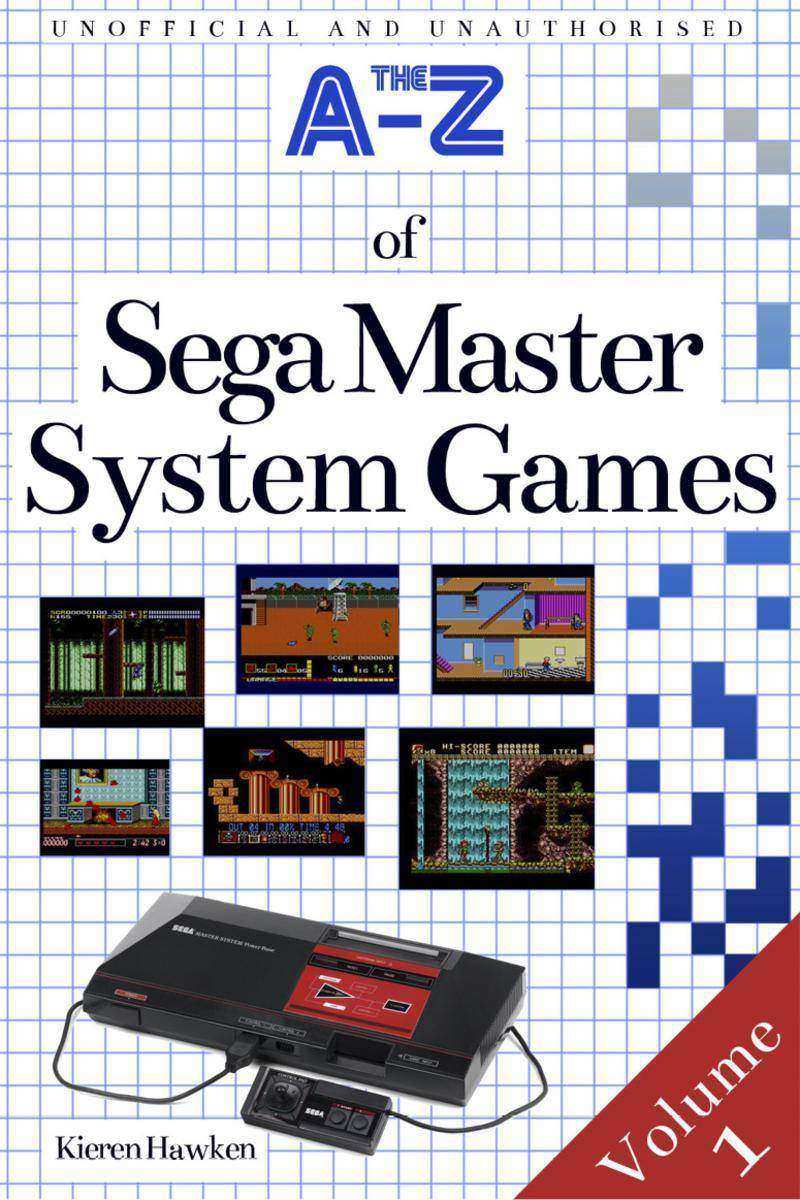
A-Z of Sega Master System Games
¥19.52
The A-Z of Sega Master System Games: Volume 1 features reviews of three different games for each letter of the alphabet. The games range from the very earliest releases in the mid-eighties to the modern homebrew games of today. This book shows you just how diverse the library of titles is for the Sega Master System and how it put Sega on the path to success.
PyTorch Deep Learning Hands-On
¥70.84
All the key deep learning methods built step-by-step in PyTorch Key Features * Understand the internals and principles of PyTorch * Implement key deep learning methods in PyTorch: CNNs, GANs, RNNs, reinforcement learning, and more * Build deep learning workflows and take deep learning models from prototyping to production Book Description PyTorch is a new, lightweight, and Python-first tool for deep learning. Built by Facebook to offer flexibility and speed, it has quickly become the preferred tool for deep learning experts. PyTorch helps you release deep learning models faster than ever before. PyTorch Deep Learning Hands-On shows how to implement every major deep learning architecture in PyTorch. Starting with simple neural networks, it covers PyTorch for computer vision (CNN), natural language processing (RNN), GANs, and reinforcement learning. You will also build deep learning workflows with the PyTorch framework, migrate models built in Python to highly efficient TorchScript, and deploy to production using the most sophisticated available tools. Each chapter focuses on a different area of deep learning. Chapters start with a refresher on the core principles, before sharing the code you need to implement them in PyTorch. If you want to become a deep learning expert this book is for you. What you will learn Use PyTorch to build: * Simple Neural Networks – build neural networks the PyTorch way, with high-level functions, optimizers, and more * Convolutional Neural Networks – create advanced computer vision systems * Recurrent Neural Networks – work with sequential data such as natural language and audio * Generative Adversarial Networks – create new content with models including SimpleGAN and CycleGAN * Reinforcement Learning – develop systems that can solve complex problems such as driving or game playing * Deep Learning workflows – move effectively from ideation to production with proper deep learning workflow using PyTorch and its utility packages * Production-ready models – package your models for high-performance production environments Who this book is for Machine learning professionals and enthusiasts who know Python and want to build efficient and powerful deep learning systems in PyTorch.
Machine Learning with Scala Quick Start Guide
¥53.40
Supervised and unsupervised machine learning made easy in Scala with this quick-start guide. Key Features * Construct and deploy machine learning systems that learn from your data and give accurate predictions * Unleash the power of Spark ML along with popular machine learning algorithms to solve complex tasks in Scala. * Solve hands-on problems by combining popular neural network architectures such as LSTM and CNN using Scala with DeepLearning4j library Book Description Scala is a highly scalable integration of object-oriented nature and functional programming concepts that make it easy to build scalable and complex big data applications. This book is a handy guide for machine learning developers and data scientists who want to develop and train effective machine learning models in Scala. The book starts with an introduction to machine learning, while covering deep learning and machine learning basics. It then explains how to use Scala-based ML libraries to solve classification and regression problems using linear regression, generalized linear regression, logistic regression, support vector machine, and Na?ve Bayes algorithms. It also covers tree-based ensemble techniques for solving both classification and regression problems. Moving ahead, it covers unsupervised learning techniques, such as dimensionality reduction, clustering, and recommender systems. Finally, it provides a brief overview of deep learning using a real-life example in Scala. What you will learn * Get acquainted with JVM-based machine learning libraries for Scala such as Spark ML and Deeplearning4j * Learn RDDs, DataFrame, and Spark SQL for analyzing structured and unstructured data * Understand supervised and unsupervised learning techniques with best practices and pitfalls * Learn classification and regression analysis with linear regression, logistic regression, Na?ve Bayes, support vector machine, and tree-based ensemble techniques * Learn effective ways of clustering analysis with dimensionality reduction techniques * Learn recommender systems with collaborative filtering approach * Delve into deep learning and neural network architectures Who this book is for This book is for machine learning developers looking to train machine learning models in Scala without spending too much time and effort. Some fundamental knowledge of Scala programming and some basics of statistics and linear algebra is all you need to get started with this book.
Hands-On AWS Penetration Testing with Kali Linux
¥79.56
Identify tools and techniques to secure and perform a penetration test on an AWS infrastructure using Kali Linux Key Features * Efficiently perform penetration testing techniques on your public cloud instances * Learn not only to cover loopholes but also to automate security monitoring and alerting within your cloud-based deployment pipelines * A step-by-step guide that will help you leverage the most widely used security platform to secure your AWS Cloud environment Book Description The cloud is taking over the IT industry. Any organization housing a large amount of data or a large infrastructure has started moving cloud-ward — and AWS rules the roost when it comes to cloud service providers, with its closest competitor having less than half of its market share. This highlights the importance of security on the cloud, especially on AWS. While a lot has been said (and written) about how cloud environments can be secured, performing external security assessments in the form of pentests on AWS is still seen as a dark art. This book aims to help pentesters as well as seasoned system administrators with a hands-on approach to pentesting the various cloud services provided by Amazon through AWS using Kali Linux. To make things easier for novice pentesters, the book focuses on building a practice lab and refining penetration testing with Kali Linux on the cloud. This is helpful not only for beginners but also for pentesters who want to set up a pentesting environment in their private cloud, using Kali Linux to perform a white-box assessment of their own cloud resources. Besides this, there is a lot of in-depth coverage of the large variety of AWS services that are often overlooked during a pentest — from serverless infrastructure to automated deployment pipelines. By the end of this book, you will be able to identify possible vulnerable areas efficiently and secure your AWS cloud environment. What you will learn * Familiarize yourself with and pentest the most common external-facing AWS services * Audit your own infrastructure and identify flaws, weaknesses, and loopholes * Demonstrate the process of lateral and vertical movement through a partially compromised AWS account * Maintain stealth and persistence within a compromised AWS account * Master a hands-on approach to pentesting * Discover a number of automated tools to ease the process of continuously assessing and improving the security stance of an AWS infrastructure Who this book is for If you are a security analyst or a penetration tester and are interested in exploiting Cloud environments to reveal vulnerable areas and secure them, then this book is for you. A basic understanding of penetration testing, cloud computing, and its security concepts is mandatory.
Mastering Python for Finance
¥70.84
Take your financial skills to the next level by mastering cutting-edge mathematical and statistical financial applications Key Features * Explore advanced financial models used by the industry and ways of solving them using Python * Build state-of-the-art infrastructure for modeling, visualization, trading, and more * Empower your financial applications by applying machine learning and deep learning Book Description The second edition of Mastering Python for Finance will guide you through carrying out complex financial calculations practiced in the industry of finance by using next-generation methodologies. You will master the Python ecosystem by leveraging publicly available tools to successfully perform research studies and modeling, and learn to manage risks with the help of advanced examples. You will start by setting up your Jupyter notebook to implement the tasks throughout the book. You will learn to make efficient and powerful data-driven financial decisions using popular libraries such as TensorFlow, Keras, Numpy, SciPy, and sklearn. You will also learn how to build financial applications by mastering concepts such as stocks, options, interest rates and their derivatives, and risk analytics using computational methods. With these foundations, you will learn to apply statistical analysis to time series data, and understand how time series data is useful for implementing an event-driven backtesting system and for working with high-frequency data in building an algorithmic trading platform. Finally, you will explore machine learning and deep learning techniques that are applied in finance. By the end of this book, you will be able to apply Python to different paradigms in the financial industry and perform efficient data analysis. What you will learn * Solve linear and nonlinear models representing various financial problems * Perform principal component analysis on the DOW index and its components * Analyze, predict, and forecast stationary and non-stationary time series processes * Create an event-driven backtesting tool and measure your strategies * Build a high-frequency algorithmic trading platform with Python * Replicate the CBOT VIX index with SPX options for studying VIX-based strategies * Perform regression-based and classification-based machine learning tasks for prediction * Use TensorFlow and Keras in deep learning neural network architecture Who this book is for If you are a financial or data analyst or a software developer in the financial industry who is interested in using advanced Python techniques for quantitative methods in finance, this is the book you need! You will also find this book useful if you want to extend the functionalities of your existing financial applications by using smart machine learning techniques. Prior experience in Python is required.
Security Tokens and Stablecoins Quick Start Guide
¥53.40
A complete guide to understanding, developing, and testing popular security-token smart contracts Key Features * Understand key Blockchain and Ethereum platforms concepts * Step-by-step guide to developing STO smart contracts on Ethereum * Monetize digital tokens under various U.S. securities laws Book Description The failure of initial coin offerings (ICOs) is no accident, as most ICOs do not link to a real asset and are not regulated. Realizing the shortcomings of ICOs, the blockchain community and potential investors embraced security token offerings (STOs) and stablecoins enthusiastically. In this book, we start with an overview of the blockchain technology along with its basic concepts. We introduce the concept behind STO, and cover the basic requirements for launching a STO and the relevant regulations governing its issuance. We discuss U.S. securities laws development in launching security digital tokens using blockchain technology and show some real use cases. We also explore the process of STO launches and legal considerations. We introduce popular security tokens in the current blockchain space and talk about how to develop a security token DApp, including smart contract development for ERC1404 tokens. Later, you'll learn to build frontend side functionalities to interact with smart contracts. Finally, we discuss stablecoin technical design functionalities for issuing and operating STO tokens by interacting with Ethereum smart contracts. By the end of this book, you will have learned more about STOs and gained a detailed knowledge of building relevant applications—all with the help of practical examples. What you will learn * Understand the basic requirements for launching a security token offering * Explore various US securities laws governing the offering of security digital tokens * Get to grips with the stablecoin concept with the help of use cases * Learn how to develop security token decentralized applications * Understand the difference between ERC-20 and ERC-721 tokens * Learn how to set up a development environment and build security tokens * Explore the technical design of stablecoins Who this book is for This book is ideal for blockchain beginners and business user developers who want to quickly master popular Security Token Offerings and stablecoins. Readers will learn how to develop blockchain/digital cryptos, guided by U.S. securities laws and utilizing some real use cases. Prior exposure to an Object-Oriented Programming language such as JavaScript would be an advantage, but is not mandatory.
Vue CLI 3 Quick Start Guide
¥53.40
Build Vue apps the right way using Vue CLI 3. Understand how the building blocks of Vue CLI 3 work including npm, webpack, babel, eslint, plugins, GUI, testing, and SCSS. Import third-party libraries and maintain your project. Key Features * Learn to work with Vue CLI 3 both on the command line and with a GUI * Manage VueJS apps, settings, Vue plugins, and third-party libraries * Learn how to build Vue apps from scratch using webpack, babel, ES6, vue-router, Jest, Cypress, SCSS, and Git Book Description The sprawling landscape of various tools in JavaScript web development is becoming overwhelming. This book will show you how Vue CLI 3 can help you take back control of the tool chain. To that end, we'll begin by configuring webpack, utilizing HMR, and using single-file .vue components. We'll also use SCSS, ECMAScript, and TypeScript. We'll unit test with Jest and perform E2E testing with Cypress. This book will show you how to configure Vue CLI as your default way of building Vue projects. You'll discover the reasons behind using webpack, babel, eslint, and other modern JavaScript toolchain technologies. You'll learn about the inner workings of each through the lens of Vue CLI 3. We'll explore the extendibility of Vue CLI with the built-in settings, and various core and third-party plugins. Vue CLI helps you work with Vue components, routers, directives, and services in the Vue ecosystem. While learning these concepts, you'll examine the evolution of JavaScript. You'll learn about use of npm, IIFEs, modules in JavaScript, Common.js modules, task runners, npm scripts, module bundlers, and webpack. You'll get familiar with the reasons why Vue CLI 3 is set up the way it is. You'll also learn to perform linting with ESLint and Prettier. Towards the end, we'll introduce you to working with styles and SCSS. Finally, we'll show you how to deploy your very own Vue project on Github Pages. What you will learn * Work with nvm, install Node.js and npm, use Vue CLI 3 with no configuration, via the command line and the graphical user interface * Build a Vue project from scratch using npm and webpack, and learn about hot module replacement * Work with Babel settings, configurations, and presets * Work with Vue plugins, including testing plugins such as Jest and Cypress * Write, run, and watch unit and E2E tests using TDD assertions in the red-green-refactor cycle * Work with Vue router and use, nested, lazy-loading, and dynamic routes * Add SCSS to your projects and work with third-party Vue plugins * Deploy your Vue apps to Github Pages Who this book is for This book is for existing web developers and developers who are new to web development. You must be familiar with HTML, CSS, and JavaScript programming. Basic knowledge of the command line will be helpful but is not necessary.
Hands-On Generative Adversarial Networks with Keras
¥70.84
Develop generative models for a variety of real-world use-cases and deploy them to production Key Features * Discover various GAN architectures using Python and Keras library * Understand how GAN models function with the help of theoretical and practical examples * Apply your learnings to become an active contributor to open source GAN applications Book Description Generative Adversarial Networks (GANs) have revolutionized the fields of machine learning and deep learning. This book will be your first step towards understanding GAN architectures and tackling the challenges involved in training them. This book opens with an introduction to deep learning and generative models, and their applications in artificial intelligence (AI). You will then learn how to build, evaluate, and improve your first GAN with the help of easy-to-follow examples. The next few chapters will guide you through training a GAN model to produce and improve high-resolution images. You will also learn how to implement conditional GANs that give you the ability to control characteristics of GAN outputs. You will build on your knowledge further by exploring a new training methodology for progressive growing of GANs. Moving on, you'll gain insights into state-of-the-art models in image synthesis, speech enhancement, and natural language generation using GANs. In addition to this, you'll be able to identify GAN samples with TequilaGAN. By the end of this book, you will be well-versed with the latest advancements in the GAN framework using various examples and datasets, and you will have the skills you need to implement GAN architectures for several tasks and domains, including computer vision, natural language processing (NLP), and audio processing. Foreword by Ting-Chun Wang, Senior Research Scientist, NVIDIA What you will learn * Learn how GANs work and the advantages and challenges of working with them * Control the output of GANs with the help of conditional GANs, using embedding and space manipulation * Apply GANs to computer vision, NLP, and audio processing * Understand how to implement progressive growing of GANs * Use GANs for image synthesis and speech enhancement * Explore the future of GANs in visual and sonic arts * Implement pix2pixHD to turn semantic label maps into photorealistic images Who this book is for This book is for machine learning practitioners, deep learning researchers, and AI enthusiasts who are looking for a perfect mix of theory and hands-on content in order to implement GANs using Keras. Working knowledge of Python is expected.
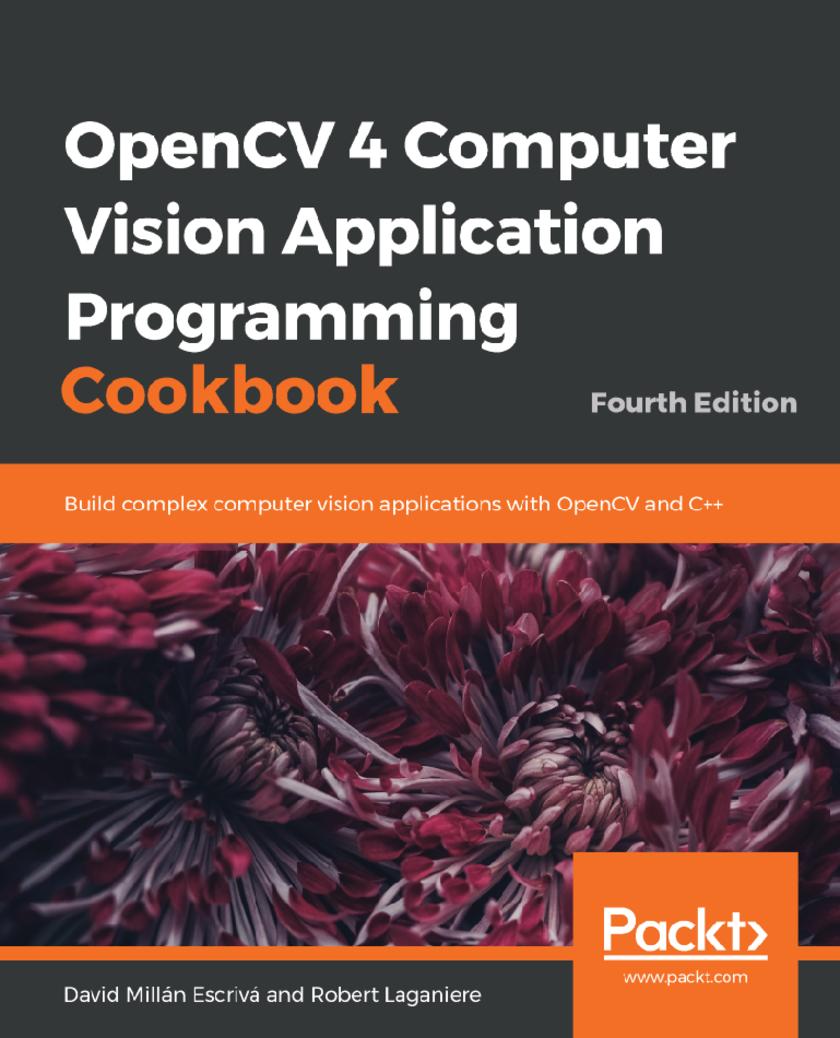
OpenCV 4 Computer Vision Application Programming Cookbook
¥70.84
Discover interesting recipes to help you understand the concepts of object detection, image processing, and facial detection Key Features * Explore the latest features and APIs in OpenCV 4 and build computer vision algorithms * Develop effective, robust, and fail-safe vision for your applications * Build computer vision algorithms with machine learning capabilities Book Description OpenCV is an image and video processing library used for all types of image and video analysis. Throughout the book, you'll work through recipes that implement a variety of tasks, such as facial recognition and detection. With 70 self-contained tutorials, this book examines common pain points and best practices for computer vision (CV) developers. Each recipe addresses a specific problem and offers a proven, best-practice solution with insights into how it works, so that you can copy the code and configuration files and modify them to suit your needs. This book begins by setting up OpenCV, and explains how to manipulate pixels. You'll understand how you can process images with classes and count pixels with histograms. You'll also learn detecting, describing, and matching interest points. As you advance through the chapters, you'll get to grips with estimating projective relations in images, reconstructing 3D scenes, processing video sequences, and tracking visual motion. In the final chapters, you'll cover deep learning concepts such as face and object detection. By the end of the book, you'll be able to confidently implement a range to computer vision algorithms to meet the technical requirements of your complex CV projects What you will learn * Install and create a program using the OpenCV library * Segment images into homogenous regions and extract meaningful objects * Apply image filters to enhance image content * Exploit image geometry to relay different views of a pictured scene * Calibrate the camera from different image observations * Detect people and objects in images using machine learning techniques * Reconstruct a 3D scene from images * Explore face detection using deep learning Who this book is for If you’re a CV developer or professional who already uses or would like to use OpenCV for building computer vision software, this book is for you. You’ll also find this book useful if you’re a C++ programmer looking to extend your computer vision skillset by learning OpenCV.
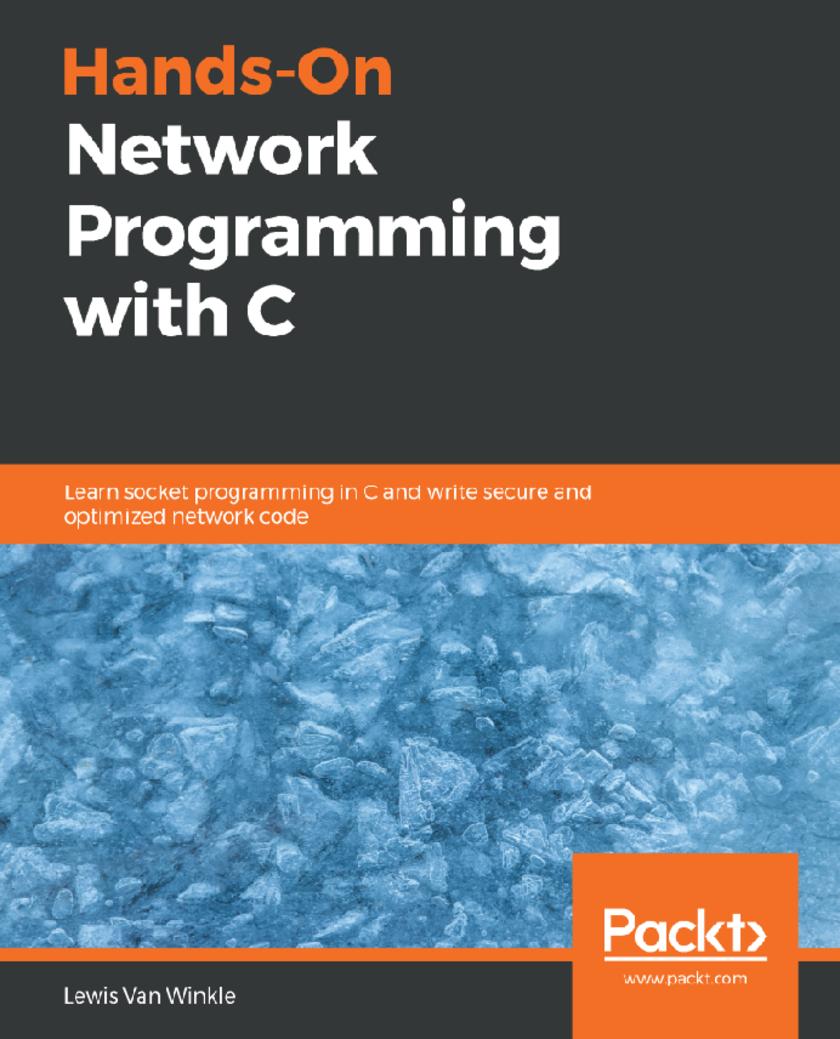
Hands-On Network Programming with C
¥62.12
A comprehensive guide to programming with network sockets, implementing Internet protocols, designing IoT devices, and much more with C Key Features * Leverage your C or C++ programming skills to build powerful network applications * Get to grips with a variety of network protocols that allow you to load web pages, send emails, and do much more * Write portable network code for operating systems such as Windows, Linux, and macOS Book Description Network programming, a challenging topic in C, is made easy to understand with a careful exposition of socket programming APIs. This book gets you started with modern network programming in C and the right use of relevant operating system APIs. This book covers core concepts, such as hostname resolution with DNS, that are crucial to the functioning of the modern web. You’ll delve into the fundamental network protocols, TCP and UDP. Essential techniques for networking paradigms such as client-server and peer-to-peer models are explained with the help of practical examples. You’ll also study HTTP and HTTPS (the protocols responsible for web pages) from both the client and server perspective. To keep up with current trends, you’ll apply the concepts covered in this book to gain insights into web programming for IoT. You’ll even get to grips with network monitoring and implementing security best practices. By the end of this book, you’ll have experience of working with client-server applications, and be able to implement new network programs in C. The code in this book is compatible with the older C99 version as well as the latest C18 and C++17 standards. Special consideration is given to writing robust, reliable, and secure code that is portable across operating systems, including Winsock sockets for Windows and POSIX sockets for Linux and macOS. What you will learn * Uncover cross-platform socket programming APIs * Implement techniques for supporting IPv4 and IPv6 * Understand how TCP and UDP connections work over IP * Discover how hostname resolution and DNS work * Interface with web APIs using HTTP and HTTPS * Acquire hands-on experience with Simple Mail Transfer Protocol (SMTP) * Apply network programming to the Internet of Things (IoT) Who this book is for If you're a developer or a system administrator who wants to enter the world of network programming, this book is for you. Basic knowledge of C programming is assumed.
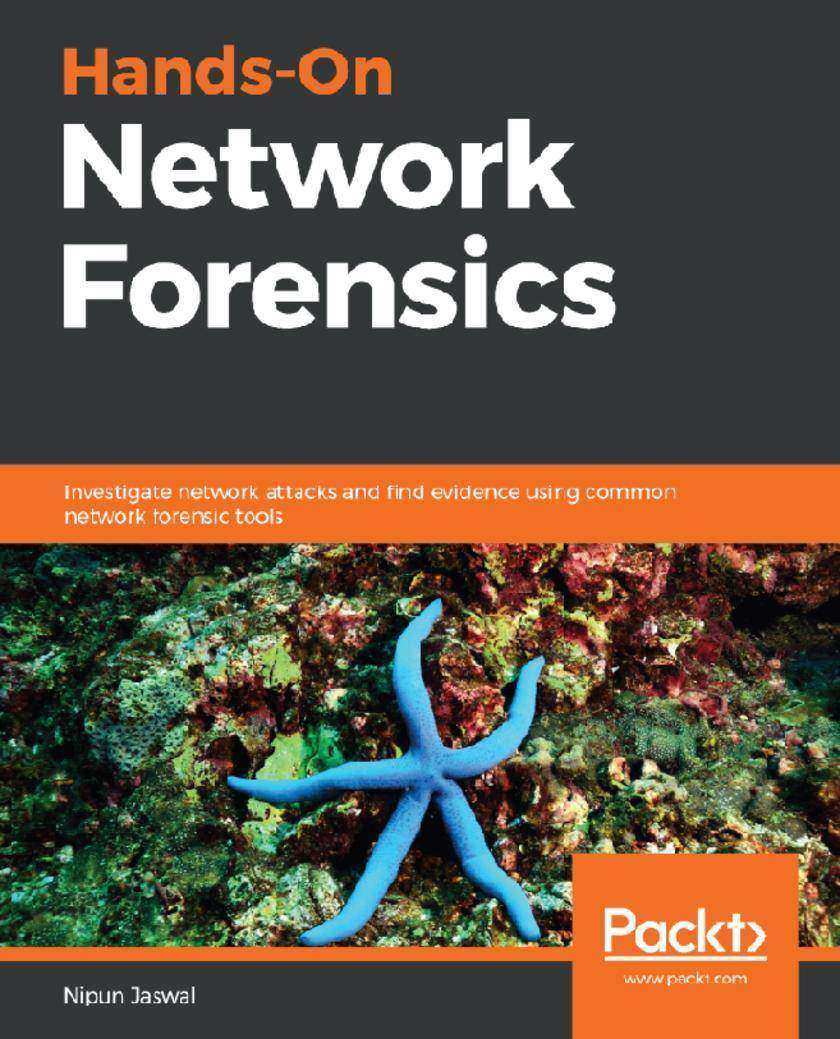
Hands-On Network Forensics
¥73.02
Gain basic skills in network forensics and learn how to apply them effectively Key Features * Investigate network threats with ease * Practice forensics tasks such as intrusion detection, network analysis, and scanning * Learn forensics investigation at the network level Book Description Network forensics is a subset of digital forensics that deals with network attacks and their investigation. In the era of network attacks and malware threat, it’s now more important than ever to have skills to investigate network attacks and vulnerabilities. Hands-On Network Forensics starts with the core concepts within network forensics, including coding, networking, forensics tools, and methodologies for forensic investigations. You’ll then explore the tools used for network forensics, followed by understanding how to apply those tools to a PCAP file and write the accompanying report. In addition to this, you will understand how statistical flow analysis, network enumeration, tunneling and encryption, and malware detection can be used to investigate your network. Towards the end of this book, you will discover how network correlation works and how to bring all the information from different types of network devices together. By the end of this book, you will have gained hands-on experience of performing forensics analysis tasks. What you will learn * Discover and interpret encrypted traffic * Learn about various protocols * Understand the malware language over wire * Gain insights into the most widely used malware * Correlate data collected from attacks * Develop tools and custom scripts for network forensics automation Who this book is for The book targets incident responders, network engineers, analysts, forensic engineers and network administrators who want to extend their knowledge from the surface to the deep levels of understanding the science behind network protocols, critical indicators in an incident and conducting a forensic search over the wire.
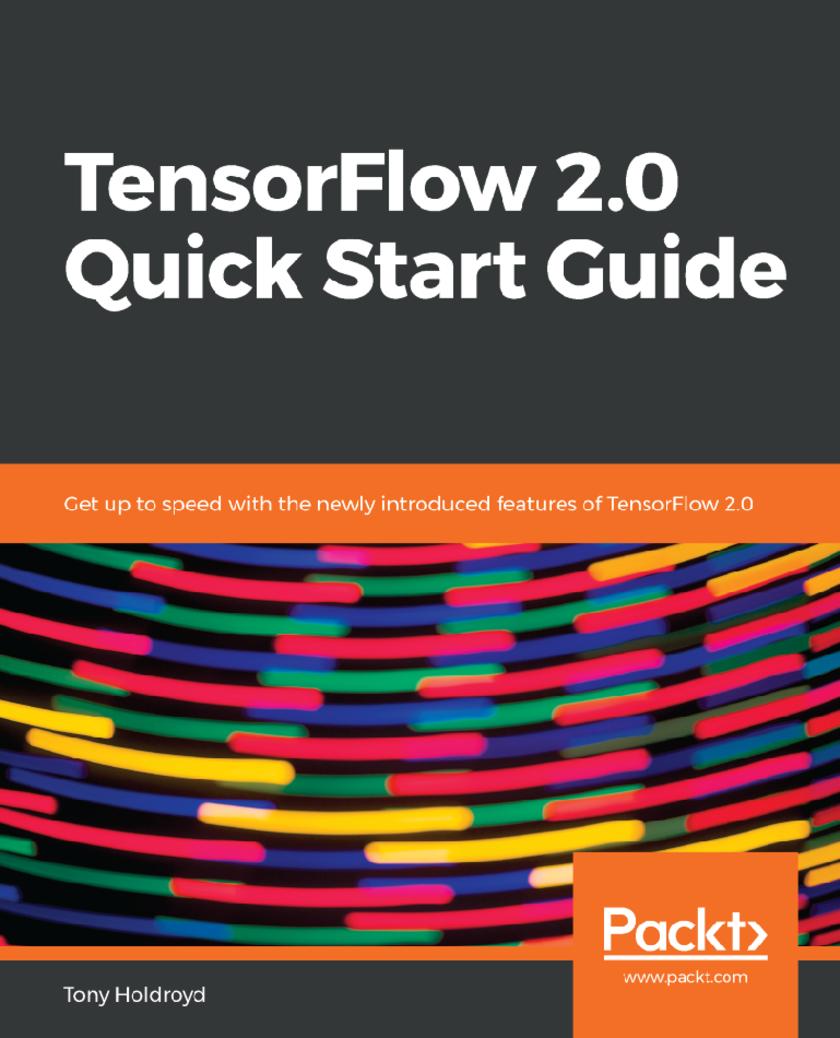
TensorFlow 2.0 Quick Start Guide
¥54.49
Perform supervised and unsupervised machine learning and learn advanced techniques such as training neural networks. Key Features * Train your own models for effective prediction, using high-level Keras API * Perform supervised and unsupervised machine learning and learn advanced techniques such as training neural networks * Get acquainted with some new practices introduced in TensorFlow 2.0 Alpha Book Description TensorFlow is one of the most popular machine learning frameworks in Python. With this book, you will improve your knowledge of some of the latest TensorFlow features and will be able to perform supervised and unsupervised machine learning and also train neural networks. After giving you an overview of what's new in TensorFlow 2.0 Alpha, the book moves on to setting up your machine learning environment using the TensorFlow library. You will perform popular supervised machine learning tasks using techniques such as linear regression, logistic regression, and clustering. You will get familiar with unsupervised learning for autoencoder applications. The book will also show you how to train effective neural networks using straightforward examples in a variety of different domains. By the end of the book, you will have been exposed to a large variety of machine learning and neural network TensorFlow techniques. What you will learn * Use tf.Keras for fast prototyping, building, and training deep learning neural network models * Easily convert your TensorFlow 1.12 applications to TensorFlow 2.0-compatible files * Use TensorFlow to tackle traditional supervised and unsupervised machine learning applications * Understand image recognition techniques using TensorFlow * Perform neural style transfer for image hybridization using a neural network * Code a recurrent neural network in TensorFlow to perform text-style generation Who this book is for Data scientists, machine learning developers, and deep learning enthusiasts looking to quickly get started with TensorFlow 2 will find this book useful. Some Python programming experience with version 3.6 or later, along with a familiarity with Jupyter notebooks will be an added advantage. Exposure to machine learning and neural network techniques would also be helpful.
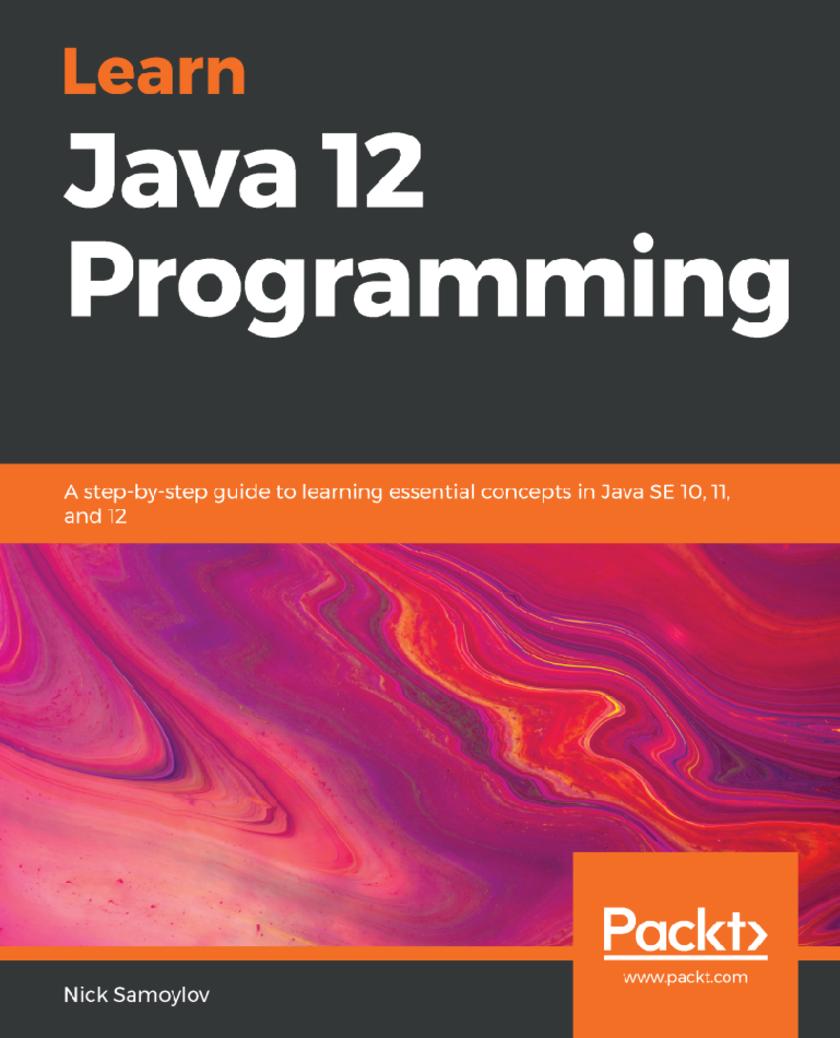
Learn Java 12 Programming
¥62.12
A comprehensive guide to get started with Java and gain insights into major concepts such as object-oriented, functional, and reactive programming Key Features * Strengthen your knowledge of important programming concepts and the latest features in Java * Explore core programming topics including GUI programming, concurrency, and error handling * Learn the idioms and best practices for writing high-quality Java code Book Description Java is one of the preferred languages among developers, used in everything right from smartphones, and game consoles to even supercomputers, and its new features simply add to the richness of the language. This book on Java programming begins by helping you learn how to install the Java Development Kit. You will then focus on understanding object-oriented programming (OOP), with exclusive insights into concepts like abstraction, encapsulation, inheritance, and polymorphism, which will help you when programming for real-world apps. Next, you’ll cover fundamental programming structures of Java such as data structures and algorithms that will serve as the building blocks for your apps. You will also delve into core programming topics that will assist you with error handling, debugging, and testing your apps. As you progress, you’ll move on to advanced topics such as Java libraries, database management, and network programming, which will hone your skills in building professional-grade apps. Further on, you’ll understand how to create a graphic user interface using JavaFX and learn to build scalable apps by taking advantage of reactive and functional programming. By the end of this book, you’ll not only be well versed with Java 10, 11, and 12, but also gain a perspective into the future of this language and software development in general. What you will learn * Learn and apply object-oriented principles * Gain insights into data structures and understand how they are used in Java * Explore multithreaded, asynchronous, functional, and reactive programming * Add a user-friendly graphic interface to your application * Find out what streams are and how they can help in data processing * Discover the importance of microservices and use them to make your apps robust and scalable * Explore Java design patterns and best practices to solve everyday problems * Learn techniques and idioms for writing high-quality Java code Who this book is for Students, software developers, or anyone looking to learn new skills or even a language will find this book useful. Although this book is for beginners, professional programmers can benefit from it too. Previous knowledge of Java or any programming language is not required.


新视野日本语(入门)
¥39.90
本套教材为“非全日制日语专业”(也适合中等教育)零起综合日语教材。学完本套教材之后学习者普遍达到全日制日语本科二年级结束时水平,日语能力考试N2水平。本套教材分为,主教材1~4册,外加教学参考用书1册,共5册。主教材1~4册分别为“新视野日本语(门)”“新视野日本语(基础)”“新视野日本语(提高)”“新视野日本语(精通)”。

非凡.新日本语能力考试.N2全真模拟试题
¥19.90
【本书内容与特点】 一、“文字?词汇”试题涉及所有的词性。 二、“语法”中的项目尽可能选择实际运用中出现比较频繁的表达形式,出题形式也努力做到紧扣真题。 三、“读解”中的文章根据考试要求以及级别的不同,选编了诸如论述文、评论文、说明文、随笔以及应用文等不同体裁的文章。文章的来源既有日本的报纸、杂志等传统出版物,也有网络、电视等媒体。 四、“听解”中的内容紧密结合实际生活,难易度和篇幅等也尽可能地接近真题,文本均由日语专家海老原博先生编写。 五、编者精心编写了所有模拟试题的详细解析及听力原文。

非凡.新日本语能力考试.N3全真模拟试题
¥19.90
【本书内容与特】 一、“文字?词汇”试题涉及所有的词性。二、“语法”中的项目尽可能选择实际运用中出现比较频繁的表达形式,出题形式也努力做到紧扣真题。三、“读解”中的文章根据考试要求以及级别的不同,选编了诸如论述文、评论文、说明文、随笔以及应用文等不同体裁的文章。文章的来源既有日本的报纸、杂志等传统出版物,也有网络、电视等媒体。四、“听解”中的内容紧密结合实际生活,难易度和篇幅等也尽可能地近真题,文本均由日语专家海老原博先生编写。五、编者精心编写了所有模拟试题的详细解析及听力原文。

非凡.新日本语能力考试.N5文字词汇
¥14.00
一、正文。正文按场景分类,每个大类中又分若干小项,如“事物的动向”中包含“存在”“移动”“触”等小项,这样能让学习者在把握出题范围的同时,了解各个类别中的近义词表达。正文中的例句简短、精练。通过对例句的学习,学习者可以掌握单词*核心的用法。全书所有例句均标注注音假名,以便学习者学习。二、课后练习。练习不仅采用了出题形式中的题型,还根据学习需要,增加了“汉字书写”“读音书写”“词语搭配”等题型,从而帮助学习者更全面地掌握词语的应用知识。三、模拟试题。选择出题频率高的词汇作为考查对象,有助于学习者有效检验和评价自己的学习效果和实战能力。

世界经典童话:狼和七只小羊(日文版)
¥3.00
本故事为世界经典童话之一。羊妈妈要出门去寻找食物,嘱咐七只小羊在家里千万不能给狼开门,但是天真的小羊还是被狡猾的狼欺骗了,不过幸好,勇敢的羊妈妈拯救了大家。故事情节为普通读者熟知。全书为日文版。难词标注假名,供日语学习者学习使用。

世界经典童话:冰雪女王(日文版)
¥3.00
本故事为世界经典童话之一。安徒生童话《白雪皇后》是安徒生作品中经典的作品之一,又译冰雪女王、白雪女王、冰雪皇后、雪之女王、雪后等,曾被多个国家翻拍成不同版本的电影以及动画。童话中讲述魔鬼的一面镜子的两片碎片注入小男孩加伊(又译凯、凯伊)的内心和眼睛,从而使他变得冷酷无情,并被白雪皇后带入她的冰宫,小女孩格尔达(又译盖尔达)是加伊的好朋友,格尔达亲自寻找白雪皇后并解除加伊身上的诅咒,路上遇到重重困难终被克服。全书为日文版。难词标注假名,供日语学习者学习使用。


