


 购物车
购物车 个人中心
个人中心
The People of the Abyss
¥8.09
Classic novel. According to Wikipedia: "Jack London (January 12, 1876 – November 22, 1916) was an American author who wrote The Call of the Wild, White Fang, and The Sea Wolf along with many other popular books. A pioneer in the then-burgeoning world of commercial magazine fiction, he was one of the first Americans to make a lucrative career exclusively from writing."
The Waif of the Cynthia
¥8.09
Classic novel. According to Wikipedia: "Jules Gabriel Verne (February 8, 1828-March 24, 1905) was a French author who pioneered the science-fiction genre. He is best known for novels such as Journey to the Center of the Earth (1864), Twenty Thousand Leagues under the Sea (1870), and Around the World in Eighty Days (1873). Verne wrote about space, air, and underwater travel before air travel and practical submarines were invented, and before practical means of space travel had been devised. He is the third most translated author in the world, according to Index Translationum. Some of his books have been made into films. Verne, along with H. G. Wells, is often popularly referred to as the "Father of Science Fiction"

20,000 Lieues sous les Mers
¥8.09
La version originale fran?aise du scifi adventure classique. Selon Wikipédia: ?Jules Gabriel Verne (8 février 1828 - 24 mars 1905) est un auteur fran?ais qui a été le pionnier du genre de la science-fiction, notamment des romans comme Voyage au centre de la terre (1864), Vingt mille lieues sous la mer (1870) et autour du monde en quatre-vingts jours (1873) Verne a écrit sur l'espace, l'air et les voyages sous-marins avant que les voyages aériens et les sous-marins pratiques soient inventés. Selon Index Translationum, il est le troisième auteur le plus traduit au monde, certains de ses livres ont été transformés en films ... Verne, avec HG Wells, est souvent surnommé le ?père de la science-fiction?
Jennie Gerhardt
¥8.09
Classic novel. According to Wikipedia: "Theodore Herman Albert Dreiser (August 27, 1871 – December 28, 1945) was an American novelist and journalist. He pioneered the naturalist school and is known for portraying characters whose value lies not in their moral code, but in their persistence against all obstacles, and literary situations that more closely resemble studies of nature than tales of choice and agency... His second novel, Jennie Gerhardt, was published in 1911. Many of Dreiser's subsequent novels dealt with social inequality. His first commercial success was An American Tragedy (1925), which was made into a film in 1931 and again in 1951."
Jimmie Higgins
¥8.09
Classic novel. According to Wikipedia: "Upton Beall Sinclair, Jr. (1878 - 1968), was a prolific American author who wrote over 90 books in many genres and was widely considered to be one of the best investigators advocating socialist views. He achieved considerable popularity in the first half of the 20th century. He gained particular fame for his 1906 novel The Jungle, which dealt with conditions in the U.S. meat packing industry and caused a public uproar that partly contributed to the passage of the Pure Food and Drug Act and the Meat Inspection Act in 1906."
The Three Musketeers
¥8.09
The Three Musketeers" is the first and best known of a series of six novels -- The Three Musketeers (covering 1625-1628), Twenty Years After (covering 1648-49), The Vicomte de Bragelonne (covering 1660), Ten Years Later (covering 1660-1661), Louise de la Valliere (covering 1661), The Man in the Iron Mask (covering 1661-1673). D'Artagnan, the fourth and most important musketeer is based on an historical figure, who was eventually promoted to commander of the musketeers. You can read about him at Wikipedia. According to Wikipedia: "Alexandre Dumas, père (French for "father", akin to 'Senior' in English), born Dumas Davy de la Pailleterie (1802 — 1870) was a French writer, best known for his numerous historical novels of high adventure which have made him one of the most widely read French authors in the world. Many of his novels, including The Count of Monte Cristo, The Three Musketeers, Twenty Years After, and The Vicomte de Bragelonne were serialized. He also wrote plays and magazine articles and was a prolific correspondent."
Great Explorers of the 19th Century
¥8.09
Third and last part of Jules Verne's history of world exploration. This volume covers the 19th century. According to Wikipedia: "Jules Gabriel Verne (February 8, 1828 – March 24, 1905) was a French author who pioneered the science-fiction genre. He is best known for his novels Journey to the Center of the Earth (written in 1864), From the Earth to the Moon (1865), Twenty Thousand Leagues Under the Sea (1869–1870), and Around the World in Eighty Days (1873). Verne wrote about space, air, and underwater travel before navigable aircraft and practical submarines were invented, and before any means of space travel had been devised. Consequently he is often referred to as the "Father of science fiction", along with H. G. Wells. Verne is the second most translated author of all time, only behind Agatha Christie with 4162 translations..."
The Picture of Dorian Gray
¥8.09
Classic novel. The Preface begins: "The artist is the creator of beautiful things. To reveal art and conceal the artist is art's aim. The critic is he who can translate into another manner or a new material his impression of beautiful things. The highest as the lowest form of criticism is a mode of autobiography. Those who find ugly meanings in beautiful things are corrupt without being charming. This is a fault. Those who find beautiful meanings in beautiful things are the cultivated. For these there is hope. They are the elect to whom beautiful things mean only beauty. There is no such thing as a moral or an immoral book. Books are well written, or badly written. That is all." According to Wikipedia: "Oscar Fingal O'Flahertie Wills Wilde (1854 - 1900) was an Irish playwright, novelist, poet, and author of short stories. Known for his barbed wit, he was one of the most successful playwrights of late Victorian London, and one of the greatest celebrities of his day. As the result of a famous trial, he suffered a dramatic downfall and was imprisoned for two years of hard labour after being convicted of the offence of 'gross indecency.'"
14 Plays
¥8.09
This book includes: Gondoliers, Grand Duke, H.M.S Pinafore, Iolanthe, The Mikado, Pirates of Penzance, Ruddigore, The Sorcerer, Thespis, Trial by Jury, Utopia Limited, Yeomen of the Guard, and Patience. All of these plays/operettas were written 1871 to 1896. According to Wikipedia: "Gilbert and Sullivan refers to the Victorian era partnership of librettist W. S. Gilbert (1836–1911) and composer Arthur Sullivan (1842–1900). Together, they wrote fourteen comic operas between 1871 and 1896, of which H.M.S. Pinafore, The Pirates of Penzance, and The Mikado are among the best known. Gilbert, who wrote the words, created fanciful "topsy-turvy" worlds for these operas, where each absurdity is taken to its logical conclusion—fairies rub elbows with British lords, flirting is a capital offence, gondoliers ascend to the monarchy, and pirates turn out to be noblemen who have gone wrong. Sullivan, six years Gilbert's junior, composed the music, contributing memorable melodies that could convey both humour and pathos. Producer Richard D'Oyly Carte brought Gilbert and Sullivan together and nurtured their collaboration. He built the Savoy Theatre in 1881 to present their joint works—which came to be known as the Savoy Operas—and he founded the D'Oyly Carte Opera Company, which performed and promoted their works for over a century. The Gilbert and Sullivan operas have enjoyed broad and enduring international success and are still performed frequently throughout the English-speaking world. The collaboration introduced innovations in content and form that directly influenced the development of musical theatre through the 20th century. The operas have also influenced political discourse, literature, film and television and have been widely parodied and pastiched by humorists."
The Wolves and the Lamb
¥8.09
Classic play. According to Wikipedia: "Thackeray is most often compared to one other great novelist of Victorian literature, Charles Dickens. During the Victorian era, he was ranked second only to Dickens, but he is now much less read and is known almost exclusively for Vanity Fair. In that novel he was able to satirize whole swaths of humanity while retaining a light touch. It also features his most memorable character, the engagingly roguish Becky Sharp. As a result, unlike Thackeray's other novels, it remains popular with the general reading public; it is a standard fixture in university courses and has been repeatedly adapted for movies and television. In Thackeray's own day, some commentators, such as Anthony Trollope, ranked his History of Henry Esmond as his greatest work, perhaps because it expressed Victorian values of duty and earnestness, as did some of his other later novels. It is perhaps for this reason that they have not survived as well as Vanity Fair, which satirizes those values."
21 Books
¥8.09
This book-collection file includes 13 novels (Touchstone, Valley of Decision, Sanctuary, House of Mirth, Fruit of the Tree, Ethan Frome, The Reef, the Custom of the Country, Bunner Sisters, Summer, Age of Innocence, Glimpses of the Moon), 6 collections of stories (Crucial Instances, The Greater Inclination, Tales of Men and Ghosts, The Hermit and the Wild Woman, The Descent of Man, and Eleven Stories by Edith Wharton), a book of verse (Artemis to Actaeon), and two non-fiction books (Fighting France and In Morocco). According to Wikipedia: "Edith Wharton (January 24, 1862 - August 11, 1937) was an American novelist, short story writer, and designer. ... The Age of Innocence (1920), perhaps her best known work, won the 1921 Pulitzer Prize for literature, making her the first woman to win the award."
Falk, a Reminiscence
¥8.09
Classic Conrad novel. According to Wikipedia: "Joseph Conrad (1857 – 1924) was a Polish-born English novelist. Many critics regard him as one of the greatest novelists in the English language—a fact that is remarkable, as he did not learn to speak English fluently until he was in his twenties (and always with a strong Polish accent). He became a naturalized British subject in 1886. Conrad is recognized as a master prose stylist. Some of his works have a strain of romanticism, but more importantly he is recognized as an important forerunner of modernist literature. His narrative style and anti-heroic characters have influenced many writers, including Ernest Hemingway, D. H. Lawrence, F. Scott Fitzgerald, Graham Greene, William S. Burroughs, Joseph Heller, V.S. Naipaul, Italo Calvino and J. M. Coetzee."
Mark Twain's Essays Letters and Speeches
¥8.09
This book-collection file includes books of Mark Twain's speeches and letters, plus 3 book-length collections of essays: What is Man? Sketches New and Old, and Christian Science. It also includes the following short collections and individual essays: Editorial Wild Oats, Essays on Paul Bourget, Fenimore Cooper's Literary Offences, and In Defence of Harriet Shelley. According to Wikipedia: "Samuel Langhorne Clemens (1835 – 1910), better known by the pen name Mark Twain, was an American humorist, satirist, lecturer and writer. Twain is most noted for his novels Adventures of Huckleberry Finn, which has since been called the Great American Novel, and The Adventures of Tom Sawyer. He is also known for his quotations. During his lifetime, Twain became a friend to presidents, artists, industrialists and European royalty. Twain enjoyed immense public popularity, and his keen wit and incisive satire earned him praise from both critics and peers. American author William Faulkner called Twain "the father of American literature."
Dream Tales and Prose Poems
¥8.09
Classic Russian short stories, including Clara Militch, Phantoms, The Song of Triumphant Love, and The Dream, plus poems in prose. According to Wikipedia: "Ivan Sergeyevich Turgenev 1818 - 1883) was a Russian novelist and playwright. His novel Fathers and Sons is regarded as one of the major works of 19th-century fiction."

12 Books
¥8.09
This file includes twelve books: Active Service, Black Riders and Other Lines (poetry), The Little Regiment and Other Episodes of the American Civil War, Last Words, Maggie: a Girl of the Streets, The Monster and Other Stories; Men, Women and Boats; ORuddy, The Red Badge of Courage, The Third Violet, War Is Kind (poetry), and Whilomville Stories. According to Wikipedia: "Stephen Crane (November 1, 1871 – June 5, 1900) was an American novelist, short story writer, poet and journalist. Prolific throughout his short life, he wrote notable works in the Realist tradition as well as early examples of American Naturalism and Impressionism. He is recognized by modern critics as one of the most innovative writers of his generation."
16 Short Story Collections
¥8.09
This book-collection file includes the following short story collections : Son of the Wolf, Children of the Frost, Tales of the Fish Patrol, South Sea Tales, Smoke Bellew, The Turtles of Tasman, Dutch Courage and Other Stories, The Faith of Men, Moon Face, Lost Face, Human Drift, The House of Pride, The Night Born, On the Makaloa Mat, Strength of the Strong, Tales of the Klondyke, When God Laughs and Other Stories. It also includes the plays Theft and The Acorn Planter. According to Wikipedia: "Jack London (12 January, 1876 – 22 November, 1916) was an American author who wrote The Call of the Wild and other books. A pioneer in the then-burgeoning world of commercial magazine fiction, he was one of the first Americans to make a lucrative career exclusively from writing."
Two Challenger Novels
¥8.09
This book-collection file includes two Challenger novels: The Lost World and The Poison Belt. According to Wikipedia: "Sir Arthur Ignatius Conan Doyle, DL (22 May 1859 – 7 July 1930) was an author most noted for his stories about the detective Sherlock Holmes, which are generally considered a major innovation in the field of crime fiction, and for the adventures of Professor Challenger. He was a prolific writer whose other works include science fiction stories, historical novels, plays and romances, poetry, and non-fiction."
The Shot
¥8.09
Classic Russian short story. According to Wikipedia: "Alexander Sergeyevich Pushkin (1799 - 1837) was a Russian Romantic author who is considered to be the greatest Russian poet and the founder of modern Russian literature. Pushkin pioneered the use of vernacular speech in his poems and plays, creating a style of storytelling, mixing drama, romance, and satire, associated with Russian literature ever since and greatly influencing later Russian writers."
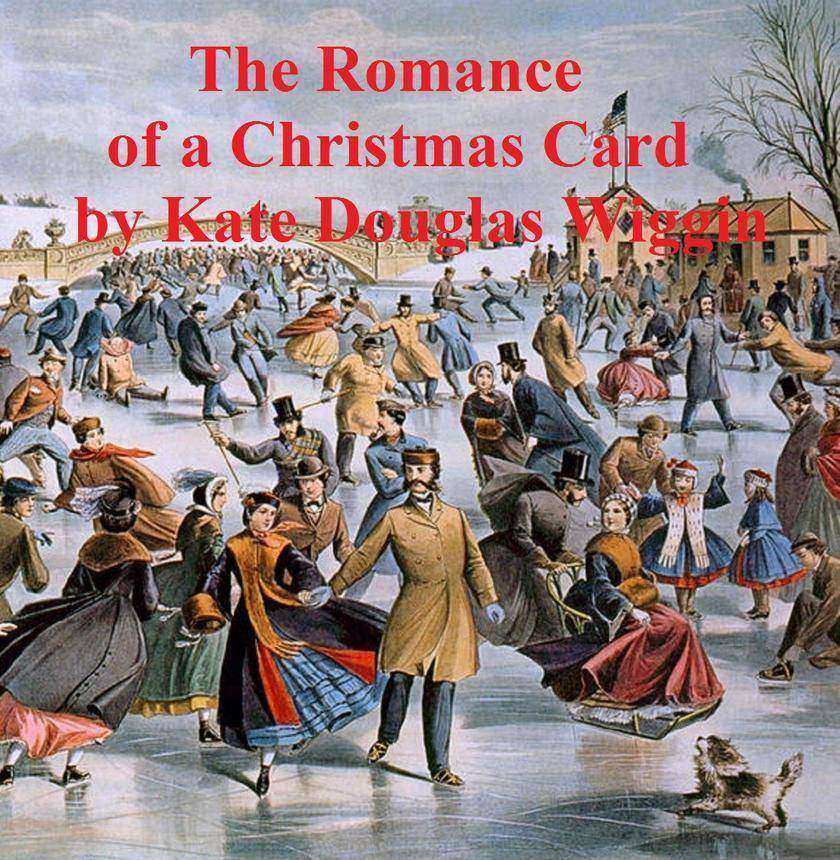
The Romance of a Christmas Card
¥8.09
Long story for children and teens. According to Wikipedia: "Kate Douglas Wiggin ( 1856 - 1923) was an American children's author and educator. Kate Douglas Smith Wiggin was born in Philadelphia, and was of Welsh descent. She started the first free kindergarten in San Francisco in 1878 (the Silver Street Free Kindergarten). With her sister in the 1880s she also established a training school for kindergarten teachers. She was also a writer of children's books, the best known being The Birds' Christmas Carol (1887) and Rebecca of Sunnybrook Farm (1903)."

Dewey and other Naval Commanders
¥8.09
Biography. According to Wikipedia: "Edward Sylvester Ellis (April 11, 1840 – June 20, 1916) was an American author who was born in Ohio and died at Cliff Island, Maine. Ellis was a teacher, school administrator, and journalist, but his most notable work was that that he performed as author of hundreds of dime novels that he produced under his name and a number of noms de plume. Notable works by Ellis include The Huge Hunter, or the Steam Man of the Prairies and Seth Jones, or the Captives of the Frontier. Internationally, Edward S. Ellis is probably best known for his Deerhunter novels widely read by young boys up to the 1950s (together with works by James Fenimore Cooper and Karl May). In the mid-1880s, after a fiction-writing career of some thirty years, Ellis eventually turned his pen to more serious works of biography, history, and persuasive writing."

Les Enfants du Capitaine Grant
¥8.09
Roman d'aventure classique, en fran?ais original. Selon Wikipédia: ?Jules Gabriel Verne (8 février 1828 - 24 mars 1905) est un auteur fran?ais qui a été le pionnier du genre de la science-fiction, notamment des romans comme Voyage au centre de la terre (1864), Vingt mille lieues sous la mer (1870) et autour du monde en quatre-vingts jours (1873) Verne a écrit sur l'espace, l'air et les voyages sous-marins avant que les voyages aériens et les sous-marins pratiques soient inventés. Selon Index Translationum, il est le troisième auteur le plus traduit au monde, certains de ses livres ont été transformés en films ... Verne, avec HG Wells, est souvent surnommé le ?père de la science-fiction?


