


 购物车
购物车 个人中心
个人中心
Plutarch's Lives
¥8.09
The complete multi-volume Lives, in a single file. The Clough translation. According to Wikipedia: "Lucius Mestrius Plutarchus (c. AD 46 - 120 — commonly known in English as Plutarch — was a Roman historian (of Greek ethnicity), biographer, essayist, and Middle Platonist. Plutarch was born to a prominent family in Chaeronea, Boeotia, a town about twenty miles east of Delphi. His known works consist of the Parallel Lives and the Moralia."
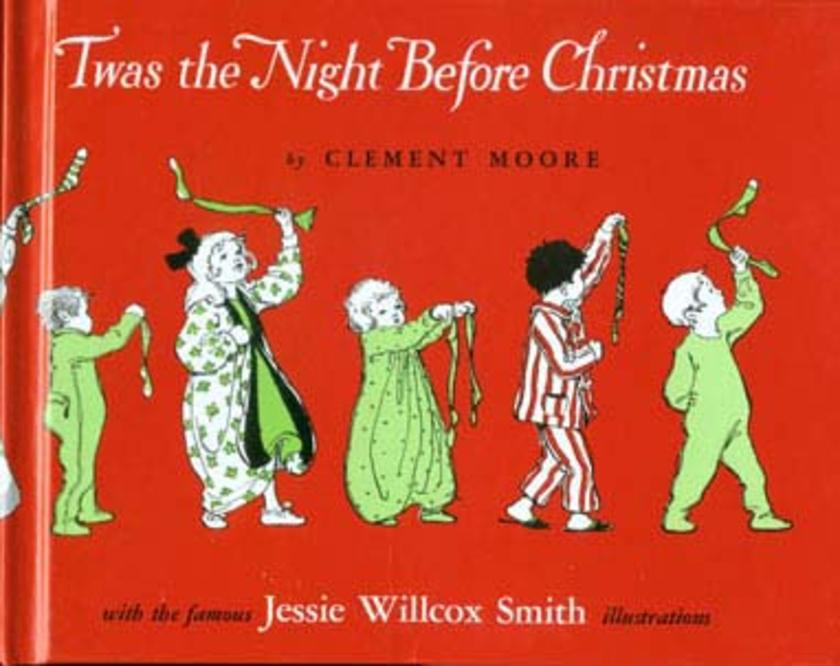
Twas the Night Before Christmas, illustrated
¥8.09
Classic picture book for children. 15 illustrations, some color, some black-and-white. This edition as first published in 1912. According to Wikipedia: "Clement Clarke Moore (July 15, 1779 – July 10, 1863) was an American professor of Oriental and Greek literature at Columbia College, now Columbia University. He donated land from his family estate for the foundation of the General Theological Seminary, where he was a professor of Biblical learning and compiled a two-volume Hebrew dictionary. He is generally considered to be the author of the yuletide poem "A Visit from St. Nicholas", which later became famous as "'Twas the Night Before Christmas"... The poem, "arguably the best-known verses ever written by an American", was first published anonymously in the Troy, New York, Sentinel on December 23, 1823, and was reprinted frequently thereafter with no name attached. Moore later acknowledged authorship and the poem was included in an 1844 anthology of his works at the insistence of his children, for whom he wrote it." ... "Jessie Willcox Smith (September 6, 1863 – May 3, 1935) was one of the most prominent female illustrators in the United States during the Golden Age of American illustration. She was a prolific contributor to respected books and magazines during the late 19th and early 20th centuries. She illustrated stories and articles for clients such as Century, Collier's Weekly, Leslie's Weekly, Harper's, McClure's, Scribners, and the Ladies' Home Journal."
6 Books of Poetry
¥8.09
This collection includes the poetry books: Ballads of Lost Haven, Behind the Arras, Later Poems, More songs from Vagabondia, Sappho, and Songs from Vagabondia. According to Wikipedia: ""Bliss Carman (April 15, 1861 – June 8, 1929) was a Canadian poet who lived most of his life in the United States, where he achieved international fame. He was acclaimed as Canada's poet laureate during his later years. In Canada Carman is classed as one of the Confederation Poets, a group which also included Charles G.D. Roberts (his cousin), Archibald Lampman, and Duncan Campbell Scott. Of the group, Carman had the surest lyric touch and achieved the widest international recognition."
Memoirs of a Cavalier
¥8.09
The introduction begins: "Daniel Defoe is, perhaps, best known to us as the author of Robinson Crusoe, a book which has been the delight of generations of boys and girls ever since the beginning of the eighteenth century. For it was then that Defoe lived and wrote, being one of the new school of prose writers which grew up at that time and which gave England new forms of literature almost unknown to an earlier age. Defoe was a vigorous pamphleteer, writing first on the Whig side and later for the Tories in the reigns of William III and Anne. He did much to foster the growth of the newspaper, a form of literature which henceforth became popular. He also did much towards the development of the modern novel, though he did not write novels in our sense of the word. His books were more simple than is the modern novel. What he really wrote were long stories told, as is Robinson Crusoe, in the first person and with so much detail that it is hard to believe that they that they are works of imagination and not true"

The Monster and Other Stories
¥8.09
This story collection includes: The Monster, The Blue Hotel, and His New Mittens. According to Wikipedia: "Stephen Crane (November 1, 1871 – June 5, 1900) was an American novelist, short story writer, poet and journalist. Prolific throughout his short life, he wrote notable works in the Realist tradition as well as early examples of American Naturalism and Impressionism. He is recognized by modern critics as one of the most innovative writers of his generation."

The Man in the Iron Mask
¥8.09
The Man in the Iron Mask is a self-contained novel, the sixth and last of a series of novels -- The Three Musketeers (covering 1625-1628), Twenty Years After (covering 1648-49), The Vicomte de Bragelonne (covering 1660), Ten Years Later (covering 1660-1661), Louise de la Valliere (covering 1661), The Man in the Iron Mask (covering 1661-1673). D'Artagnan, the fourth and most important musketeer is based on an historical figure, who was eventually promoted to commander of the musketeers. You can read about him at Wikipedia. According to Wikipedia: "Alexandre Dumas, père (French for "father", akin to 'Senior' in English), born Dumas Davy de la Pailleterie (1802 — 1870) was a French writer, best known for his numerous historical novels of high adventure which have made him one of the most widely read French authors in the world. Many of his novels, including The Count of Monte Cristo, The Three Musketeers, Twenty Years After, and The Vicomte de Bragelonne were serialized. He also wrote plays and magazine articles and was a prolific correspondent."
Tales from Shakespeare
¥8.09
The plots of Shakespeare's plays, told as stories for children.
Gulliver's Travels
¥8.09
The satiric voyages to Lilliput, Brobdingnag, Laputa, Balnibarbi, Glubbdubdrib, Luggnagg, Japan, and the Country of the Houyhnhnms. According to Wikipedia: "Jonathan Swift (1667 - 1745) was an Anglo-Irish cleric, Dean of St. Patrick's, Dublin, satirist, essayist, political pamphleteer (first for Whigs then for Tories), and poet, famous for works like Gulliver's Travels, A Modest Proposal, A Journal to Stella, The Drapier's Letters, The Battle of the Books, and A Tale of a Tub. Swift is probably the foremost prose satirist in the English language..."
The Three Musketeers
¥8.09
The Three Musketeers is the first and best known of a series of six novels, all of which are included (in English translation) in this one book file -- The Three Musketeers (covering 1625-1628), Twenty Years After (covering 1648-49), The Vicomte de Bragelonne (covering 1660), Ten Years Later (covering 1660-1661), Louise de la Valliere (covering 1661), The Man in the Iron Mask (covering 1661-1673) . D'Artagnan, the fourth and most important musketeer, is based on an historical figure, who was eventually promoted to commander of the musketeers. According to Wikipedia: "Alexandre Dumas, père (French for "father", akin to 'Senior' in English), born Dumas Davy de la Pailleterie (24 July 1802 — 5 December 1870) was a French writer, best known for his numerous historical novels of high adventure which have made him one of the most widely read French authors in the world. Many of his novels, including The Count of Monte Cristo, The Three Musketeers, Twenty Years After, and The Vicomte de Bragelonne were serialized. "

A Confederate Girl's Diary
¥8.09
The war-time diary of a young girl, first published in 1913.
The Fire Bird
¥8.09
Long poem about native Americans and their mythology. According to Wikipedia: Gene Stratton-Porter (August 17, 1863 – December 6, 1924) was an American author, amateur naturalist, wildlife photographer, and one of the earliest women to form a movie studio and production company. She wrote some best-selling novels and well-received columns in national magazines, such as McCalls. Her works were translated into several languages, including Braille, and Stratton-Porter was estimated to have had 50 million readers around the world."
Mark Twain's Short Stories
¥8.09
This book-collection file includes the collections: The $30,000 Bequest and Other Stories, Alonzo Fitz and Other Stories, The Curious Republic of gondour and other Whimsical Sketches, The Man That Corrupted Hadleyburg and Other Stories, and A Mysterious Stranger. It also includes the individual stories: 1601, Extract from Captain Stormfield's Visit to Heave, The Recent Carnival of Crime in Connecticut, A Dog's Tale, A Double Barreled Detective, Extracts from Adam's Diary, Goldsmith's Friend Abroad Again, A Horse's Tale, Those Extraordinary Twins, Tom Sawyer Abroad, and Tom Sawyer Detective. According to Wikipedia: "Samuel Langhorne Clemens (November 30, 1835 – April 21, 1910),[1] better known by the pen name Mark Twain, was an American humorist, satirist, lecturer and writer. Twain is most noted for his novels Adventures of Huckleberry Finn, which has since been called the Great American Novel,[2] and The Adventures of Tom Sawyer. He is also known for his quotations.[3][4] During his lifetime, Twain became a friend to presidents, artists, industrialists and European royalty. Twain enjoyed immense public popularity, and his keen wit and incisive satire earned him praise from both critics and peers. American author William Faulkner called Twain "the father of American literature."

Velveteen Rabbit
¥8.09
Children's classic, with the seven original color illustrations. According to Wikipedia: "The Velveteen Rabbit (or How Toys Become Real) is a children's novel written by Margery Williams and illustrated by William Nicholson. It chronicles the story of a stuffed rabbit and his quest to become real through the love of his owner. The book was first published in 1922 and has been republished many times since."

The World War Series
¥8.09
This book-collection file includes The Guns of Europe, The Hosts of the Air and The Forest of Swords. According to the original publisher: "Mr. Altsheler, who was in Vienna the day war was declared on Servia in Munich when war was declared against Russia, and in England when the British forces were mobilizing, has given in these three volumes the impressions he gained at the places of action during the world crisis.... The Hosts of the Air: The pretty young sister of Phillip is seized by the enemy and carried into Austria. John resolves to get her back and his adventures make awonderfully exciting story... The Forest of Swords: The hero finds himself in Paris with Phillip Lannes, his friend, and the Germans only fifteen miles away. Finally the enemy is turned back at the Marne, a battle in which John and Phillip are actively engaged." According to Wikipedia, "Joseph Alexander Altsheler (April 29, 1862 - June 5, 1919), was an American author of popular juvenile historical fiction."

At Aboukir and Acre
¥8.09
Classic historical novel. According to Wikipedia: "George Alfred Henty (8 December 1832 – 16 November 1902), was a prolific English novelist and a special correspondent. He is best known for his historical adventure stories that were popular in the late 19th century. His works include Out on the Pampas (1871), The Young Buglers (1880), With Clive in India (1884) and Wulf the Saxon (1895)."

By Conduct and Courage
¥8.09
Classic historical novel. According to Wikipedia: "George Alfred Henty (8 December 1832 – 16 November 1902), was a prolific English novelist and a special correspondent. He is best known for his historical adventure stories that were popular in the late 19th century. His works include Out on the Pampas (1871), The Young Buglers (1880), With Clive in India (1884) and Wulf the Saxon (1895)."
Condemned as a Nihilist
¥8.09
Classic historical novel. According to Wikipedia: "George Alfred Henty (8 December 1832 – 16 November 1902), was a prolific English novelist and a special correspondent. He is best known for his historical adventure stories that were popular in the late 19th century. His works include Out on the Pampas (1871), The Young Buglers (1880), With Clive in India (1884) and Wulf the Saxon (1895)."
Elective Affinities, Essays, and Letters by Goethe
¥8.09
This collection includes: Elective Affiniities and shorter works by Goethe. The German Classics Of The Nineteenth And Twentieth Centuries, Volume 2, edited by Kuno Francke.
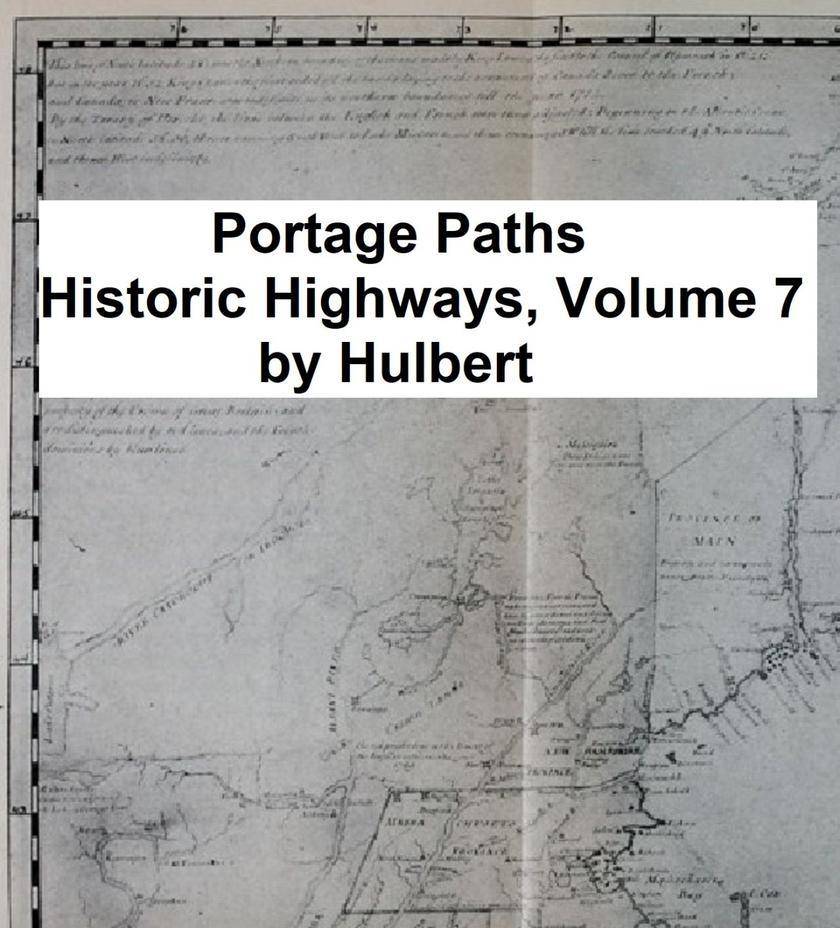
Portage Paths
¥8.09
Volume 7 of the series "Historic Highways of America". According to Wikipedia: "Archer Butler Hulbert (26 Jan 1873 – 24 Dec 1933), historical geographer, writer, and professor of American history... He was Vice-Principal of the Putnam Military Academy, Zanesville, Ohio, until 1897. Hulbert then did newspaper work in Korea in 1897 and '98: he was editor of the Korean Independent (Seoul) and edited Far East American newspapers... He was Professor of American History at Marietta College 1904-18. After Marietta College, Hulbert became a lecturer in American History at Clark University from 1918 to 1919. He also was a lecturer at the University of Chicago in 1904 and 1923; and he served as archivist for the Harvard Commission on Western History (1912-16). Hulbert's last position was at Colorado College, from 1920 until his death... Hulbert's interest in trails dated from fishing trips taken during his college, when he noticed Indian trails. This interest led at first to his 16 volumes of Historic Highways of America (1902-05)."
Judith, a Play in Three Acts: Founded on the Apocryphal Book of Judith
¥8.09
Dodo Collections brings you another classic from Arnold Bennett, ‘"Judith, a Play in Three Acts; Founded on the Apocryphal Book of Judith."’ ? Enoch Arnold Bennett (always known as Arnold Bennett) was one of the most remarkable literary figures of his time, a product of the English Potteries that he made famous as the Five Towns. Yet he could hardly wait to escape his home town, and he did so by the sheer force of his ambition to succeed as an author. In his time he turned his hand to every kind of writing, but he will be remembered for such novels as The Old Wives' Tale, the Clayhanger trilogy (Clayhanger, Hilda Lessways, and These Twain), and The Card. He also wrote such intriguing self-improvement books as Literary Taste, How To Live on 24 Hours a Day, The Human Machine, etc. ? After a local education Bennett finished his education at the University of London and for a time was editor of Woman magazine. After 1900 he devoted himself entirely to writing; dramatic criticism was one of his foremost interests. Bennett is best known, however, for his novels, several of which were written during his residence in France. ? Bennett's infancy was spent in genteel poverty, which gave way to prosperity as his father succeeded as a solicitor. From this provincial background he became a novelist. His enduring fame is as a Chronicler of the Potteries towns, the setting and inspiration of some of his most famous and enduring literary work and the place where he grew up.

Henri IV, Premiere Partie, (Henry IV Part I in French)
¥8.09
Pièce d'histoire de Shakespeare, Henry IV Part One, en traduction fran?aise. Selon Wikipédia: "Henry IV, Part 1 est une pièce d'histoire de William Shakespeare, qui aurait été écrite au plus tard en 1597. C'est la deuxième pièce de la tétralogie de Shakespeare traitant des règnes successifs de Richard II, Henri IV (deux pièces ), et Henry V. Henry IV, partie 1 dépeint une période de l'histoire qui commence avec la bataille de Hotspur à Homildon contre le Douglas à la fin de 1402 et se termine avec la défaite des rebelles à Shrewsbury au milieu de 1403. Dès le début il a été un jeu extrêmement populaire à la fois avec le public et les critiques. "


