


 购物车
购物车 个人中心
个人中心

Scala Data Analysis Cookbook
¥80.65
Navigate the world of data analysis, visualization, and machine learning with over 100 hands-on Scala recipesAbout This BookImplement Scala in your data analysis using features from Spark, Breeze, and ZeppelinScale up your data anlytics infrastructure with practical recipes for Scala machine learningRecipes for every stage of the data analysis process, from reading and collecting data to distributed analytics Who This Book Is For This book shows data scientists and analysts how to leverage their existing knowledge of Scala for quality and scalable data analysis.What You Will LearnFamiliarize and set up the Breeze and Spark libraries and use data structuresImport data from a host of possible sources and create dataframes from CSVClean, validate and transform data using Scala to pre-process numerical and string dataIntegrate quintessential machine learning algorithms using Scala stackBundle and scale up Spark jobs by deploying them into a variety of cluster managersRun streaming and graph analytics in Spark to visualize data, enabling exploratory analysis In Detail This book will introduce you to the most popular Scala tools, libraries, and frameworks through practical recipes around loading, manipulating, and preparing your data. It will also help you explore and make sense of your data using stunning and insightfulvisualizations, and machine learning toolkits. Starting with introductory recipes on utilizing the Breeze and Spark libraries, get to grips withhow to import data from a host of possible sources and how to pre-process numerical, string, and date data. Next, you’ll get an understanding of concepts that will help you visualize data using the Apache Zeppelin and Bokeh bindings in Scala, enabling exploratory data analysis. iscover how to program quintessential machine learning algorithms using Spark ML library. Work through steps to scale your machine learning models and deploy them into a standalone cluster, EC2, YARN, and Mesos. Finally dip into the powerful options presented by Spark Streaming, and machine learning for streaming data, as well as utilizing Spark GraphX.Style and approach This book contains a rich set of recipes that covers the full spectrum of interesting data analysis tasks and will help you revolutionize your data analysis skills using Scala and Spark.
Learning Underscore.js
¥71.93
Explore the Underscore.js library by example using a test-driven development approachAbout This BookUnderstand and learn to apply functional programming principles using the built-in functions of Underscore.jsLeverage and reuse Underscore.js-based code to create code that targets client, server, or database contextsTake Underscore.js further by reusing code between client and server and by learning about other closely related libraries Who This Book Is For If you are a developer with fundamental JavaScript knowledge and want to use modern JavaScript libraries to extend your functional programming skills, then Underscore.js is an important library you should be familiar with.What You Will LearnReference and call Underscore.js functions using a modern JavaScript development workflowApply Underscore.js to JavaScript arrays, objects, and functionsTake advantage of object-oriented or functional programming techniques with Underscore.jsLeverage Underscore.js to create code that targets client, server, or database contextsExtend Underscore.js functionality with other closely related librariesReuse Underscore.js-based code between client and server applicationsPrepare for the upcoming JavaScript standard ECMAScript 6 and support older browsers In Detail Underscore.js is one of the most popular modern JavaScript libraries used for functional programming. It can be used as a base for building complex JavaScript applications in a sustainable manner and for building other JavaScript libraries. It embraces functional programming principles but is not opinionated and can be used with imperative, object-oriented, functional, or other programming styles. This book explores how to use Underscore.js to power your code and understand modern JavaScript development concepts while applying a lightweight and efficient workflow to build applications. The book starts with an incremental Underscore.js introduction by exploring key JavaScript concepts. You will then explore the basic features of Underscore.js in action and establish a lightweight development workflow that allows the provided examples to be guided by tests. The book then covers the functionality of Underscore.js with in-depth examples and explanations for understanding and applying the Underscore.js API. You'll also learn how to use Underscore.js as a base for your own modules and libraries within an object-oriented or functional programming style, and will be able to explore Underscore.js use cases in different environments. Eventually, you'll learn about libraries that are closely related with Underscore.js, how to share code between client and server, and how to prepare for the upcoming JavaScript standard ECMAScript 6.Style and approach This book takes an example-driven approach to describing some of the essential JavaScript concepts and practices that are useful for building sustainable applications.
OpenStack Networking Cookbook
¥90.46
Harness the power of OpenStack Networking for public and private clouds using 90 hands-on recipesAbout This BookBuild and manage virtual switching, routing, and firewall-based networks in OpenStack using NeutronDevelop plugins and drivers for Neutron to enhance the built-in networking capabilitiesMonitor and automate OpenStack networks using tools like Ceilometer and Heat Who This Book Is For This book is aimed at network and system administrators who want to deploy and manage OpenStack-based cloud and IT infrastructure. If you have basic knowledge of OpenStack and virtualization, this book will help you leverage the rich functionality of OpenStack Networking in your cloud deployments.What You Will LearnOperate OpenStack Networking for public and private cloudsConfigure advanced routing services for your workloadsSecure data traffic using firewall-as-a-service capabilities of OpenStackDiscover how to leverage VXLAN to implement SDN in your OpenStack cloudMonitor the virtual networks using CeilometerDevelop plugins to enhance and customize OpenStack NetworkingProvide HA and VPN connectivity for your virtual machinesTroubleshoot and solve common problems with OpenStack Networking In Detail Networking in OpenStack has evolved from Nova Network to Neutron. This has resulted in a rich suite of networking services available to OpenStack users and administrators. Advanced services such as routers, firewall, and load balancers use building blocks such as network and subnets. Recent improvements support powerful customization using plugins. The evolution of Neutron continues as it integrates with tools like Ceilometer and Heat. This book will explore the built-in capabilities of Neutron to effectively deploy cloud solutions. You will begin with the most fundamental constructs of OpenStack Networking for switching and routing. You will then learn how to provide your tenants with services like firewalls and load-balancers. The step-by-step recipes will help you configure and troubleshoot networking problems in your cloud. This book will also introduce you to advanced topics like Ceilometer, Heat, and other upcoming tools in OpenStackStyle and approach The book is full of step-by-step recipes to configure and manage the networking aspects of your OpenStack cloud. In addition to covering basic configuration involved in OpenStack Networking, the books also shares various troubleshooting tips and techniques. As much as possible the book uses OpenStack dashboard (Horizon) to help the user get a feel of real OpenStack Networking
OpenStack Orchestration
¥71.93
Exploit the power of dynamic cloud formation and auto-scaling features to fully implement OpenStack orchestrationAbout This BookSet up, manage, and troubleshoot Heat and effectively automate your datacenter and cloud-based servicesAchieve high availability, minimize down-time, and automate the deployment of cloud-based services and resources with minimum effortUpgrade your skills and manipulate resources on virtual machines in an unattended fashion using Heat Who This Book Is For If you are a System Engineer, System Administrator, Cloud Administrator, or a Cloud Engineer, then this book is for you. You should have a background of working in a Linux-based setup. Any knowledge of OpenStack-based cloud infrastructure will help you create wonders using this book.What You Will LearnInstall an orchestration service for a private cloud environmentTackle errors that show up during the installation and configuration of heatConfigure a template for orchestration using the native HOT formatConfigure a template for orchestration using the AWS cloud formation formatDeploy a stack using the HOT templateDeploy a test stack using the AWS CloudFormation templateAutomate and orchestrate cloud-based services with OpenStack Heat In Detail This book is focused on setting up and using one of the most important services in OpenStack orchestration, Heat. First, the book introduces you to the orchestration service for OpenStack to help you understand the uses of the templating mechanism, complex control groups of cloud resources, and huge-potential and multiple-use cases. We then move on to the topology and orchestration specification for cloud applications and standards, before introducing the most popular IaaS cloud framework, Heat. You will get to grips with the standards used in Heat, overview and roadmap, architecture and CLI, heat API, heat engine, CloudWatch API, scaling principles, JeOS and installation and configuration of Heat. We wrap up by giving you some insights into troubleshooting for OpenStack. With easy-to-follow, step-by-step instructions and supporting images, you will be able to manage OpenStack operations by implementing the orchestration services of Heat.Style and approach The book is a step-by-step guide to implementing an orchestration (cloud formation) service for OpenStack-based cloud environments. This book uses real-world scenarios and examples to demonstrate the procedures in an easy-to-understand language with plenty of screenshots to help you get a better understanding.
Building a RESTful Web Service with Spring
¥54.49
A hands-on guide to building an enterprise-grade, scalable RESTful web service using the Spring FrameworkAbout This BookFollow best practices and explore techniques such as clustering and caching to achieve a scalable web serviceLeverage the Spring Framework to quickly implement RESTful endpointsLearn to implement a client library for a RESTful web service using the Spring Framework Who This Book Is For This book is intended for those who want to learn to build RESTful web services with the Spring Framework. To make best use of the code samples included in the book, you should have a basic knowledge of the Java language. Previous experience with the Spring Framework would also help you get up and running quickly.What You Will LearnDeep dive into the principles behind RESTExpose CRUD operations through RESTful endpoints with the Spring FrameworkDevise response formats and error handling strategies, offering a consistent and flexible structure to simplify integration for service consumersFollow the best approaches for dealing with a service’s evolution while maintaining backward compatibilityUnderstand techniques to secure web servicesComply with the best ways to test RESTful web services, including tips for load testingOptimise and scale web services using techniques such as caching and clustering In Detail REST is an architectural style that tackles the challenges of building scalable web services. In today’s connected world, APIs have taken a central role on the web. APIs provide the fabric through which systems interact, and REST has become synonymous with APIs. The depth, breadth, and ease of use of Spring makes it one of the most attractive frameworks in the Java ecosystem. Marrying the two technologies is therefore a very natural choice. This book takes you through the design of RESTful web services and leverages the Spring Framework to implement these services. Starting from the basics of the philosophy behind REST, you’ll go through the steps of designing and implementing an enterprise-grade RESTful web service. Taking a practical approach, each chapter provides code samples that you can apply to your own circumstances. This book goes beyond the use of Spring and explores approaches to tackle resilience, security, and scalability concerns. You’ll learn techniques to deal with security in Spring and discover how to implement unit and integration test strategies. Finally, the book ends by walking you through building a Java client for your RESTful web service, along with some scaling techniques for it.Style and approach This book is a step-by-step, hands-on guide to designing and building RESTful web services. The book follows the natural cycle of developing these services and includes multiple code samples to help you.
Troubleshooting Citrix XenDesktop?
¥90.46
The ultimate troubleshooting guide for clear, concise, and real-world solutions to a wide range of common Citrix XenDesktop problemsAbout This BookExplore the XenDesktop architecture and work with various troubleshooting tools that every Citrix admin should know aboutDiscover how to troubleshoot performance, VDA registration, and NetScaler integration issuesA fast-paced troubleshooting guide to help you identify and resolve any kind of problem you might face while working with Citrix XenDesktop Who This Book Is For Troubleshooting Citrix XenDesktop is targeted at Citrix Administrators or Citrix Engineers who are working on Xendesktop and want to learn tips and techniques required to deal with the issues they face in their day-to-day life. A working knowledge of core elements and concepts of Xendesktop would be an added advantage.What You Will LearnSolve VDA registration problems and Citrix session launch difficultiesIdentify and resolve XenDesktop service issuesTroubleshoot performance issues related to the XenDesktop architectureWork around common printing issuesUnderstand the Citrix XenDesktop HDX policies and deal with the HDX MediaStream challengesResolve the common MCS and PVS configuration issues in your XenDesktop environmentFind solutions to some general issues that have been identified and recorded by Citrix in their database that every administrator must be aware of In Detail In today’s world, many organizations have decided to move to secure and stable VDI platforms to benefit their organization to meet their security needs. To meet an organization’s requirements, Citrix XenDesktop serves as the best desktop virtualization solution available, providing the optimum user experience. Troubleshooting Citrix XenDesktop is a single resource guide that will help you dig deep into all the technical issues you encounter to resolve them using an autonomous and well-defined approach. The book starts by walking you through the XenDesktop architecture and the troubleshooting toolkit for Citrix XenDesktop. The subsequent chapters will help you identify possible causes of various types of Citrix XenDesktop problems that may arise while installing, configuring, or troubleshooting day-to-day problems. You will also be dealing with the most common and important VDA registration problems that you might often face while working with the XenDesktop product suite. Additionally, you will resolve issues that arise while launching Citrix sessions, troubleshoot performance issues, and learn how to integrate Citrix NetScaler with your XenDesktop environment.Style and approach This book is an easy-to-follow troubleshooting guide with real-world examples of resolving XenDesktop issues. Each chapter is focused on a specific troubleshooting area, giving you the time to learn about and apply relevant tools and practices to troubleshoot the problems using a systematic approach.

Swift 2 Blueprints
¥80.65
Sharpen your skills in Swift by designing and deploying seven fully functional applicationsAbout This BookDevelop a variety of iOS-compatible applications that range from health and fitness to utilities using this project-based handbookDiscover ways to make the best use of the latest features in Swift to build on a wide array of applicationsFollow step-by-step instructions to create Swift apps oriented for the real world Who This Book Is For If you are a competent iOS developer who wants to develop stunning applications with Swift, then this book is for you. Familiarity with Swift programming is assumed.What You Will LearnGet to grips with the basics of Xcode and Swift for application developmentCreate a Photo Sharing application to capture an image, edit it using different features and share it via social media.Develop applications using the WatchKit and exchange data between iPhone and the WatchUse advanced features such as SpriteKit to build a gameInstall third-party Swift frameworks to improvise on your application developmentDiscover how to simulate home automation with HomeKitBuild an application to monitor the user's weight, heart rate and the number of steps for Health Historic AnalysisManipulate media using AVFoundation framework to merge audio and video. In Detail In this book, you will work through seven different projects to get you hands-on with developing amazing applications for iOS devices. We start off with a project that teaches you how to build a utility app using Swift. Moving on, we cover the concepts behind developing an entertainment or social networking related application, for example, a small application that helps you to share images, audio, and video files from one device to another. You’ll also be guided through create a city information app with customized table views, a reminder app for the Apple Watch, and a game app using SpriteKit. By the end of this book, you will have the required skillset to develop various types of iOS applications with Swift that can run on different iOS devices. You will also be well versed with complex techniques that can be used to enhance the performance of your applications.Style and approach This book takes a step-by-step approach to help you build apps from scratch and learn the methodology to develop real-time applications using Swift.
Data Analysis and Business Modeling with Excel 2013
¥71.93
Manage, analyze, and visualize data with Microsoft Excel 2013 to transform raw data into ready to use informationAbout This BookCreate formulas to help you analyze and explain findingsDevelop interactive spreadsheets that will impress your audience and give them the ability to slice and dice dataA step-by-step guide to learn various ways to model data for businesses with the help of Excel 2013 Who This Book Is For If you want to start using Excel 2013 for data analysis and business modeling and enhance your skills in the data analysis life cycle then this book is for you, whether you’re new to Excel or experienced.What You Will LearnDiscover what Excel formulas are all about and how to use them in your spreadsheet developmentIdentify bad data and learn cleaning strategiesCreate interactive spreadsheets that engage and appeal to your audienceLeverage Excel’s powerful built-in tools to get the median, maximum, and minimum values of your dataBuild impressive tables and combine datasets using Excel’s built-in functionalityLearn the powerful *ing language VBA, allowing you to implement your own custom solutions with ease In Detail Excel 2013 is one of the easiest to use data analysis tools you will ever come across. Its simplicity and powerful features has made it the go to tool for all your data needs. Complex operations with Excel, such as creating charts and graphs, visualization, and analyzing data make it a great tool for managers, data scientists, financial data analysts, and those who work closely with data. Learning data analysis and will help you bring your data skills to the next level. This book starts by walking you through creating your own data and bringing data into Excel from various sources. You’ll learn the basics of SQL syntax and how to connect it to a Microsoft SQL Server Database using Excel’s data connection tools. You will discover how to spot bad data and strategies to clean that data to make it useful to you. Next, you'll learn to create custom columns, identify key metrics, and make decisions based on business rules. You’ll create macros using VBA and use Excel 2013’s shiny new macros. Finally, at the end of the book, you'll be provided with useful shortcuts and tips, enabling you to do efficient data analysis and business modeling with Excel 2013.Style and approach This is a step-by-step guide to performing data analysis and business modelling with Excel 2013, complete with examples and tips.
Ionic Cookbook
¥90.46
Over 35 exciting recipes to spice up your application development with IonicAbout This BookLearn how to utilize the robust features of Ionic CLI and its framework to create, develop, and build your mobile appExplore new integrations with various Backend-as-a-Services, along with AngularJS modules, for creative solutionsUse out-of-the-box Ionic functionalities, customize existing components, and add new components with this comprehensive, step-by-step guide Who This Book Is For If you are a front-end developer and want to take advantage of your existing mobile application development skills to develop cross-platform mobile apps, this book is for you. You will build up your Ionic knowledge with in-depth recipes on Angular.js, Cordova, and Sass.What You Will LearnAuthenticate users using an e-mail password, Twitter, Facebook, Google+, and LinkedInRetrieve data and store it using FirebaseAccess native device functionalities such as a camera, contact list, e-mail, and maps using ngCordovaWork with localStorage and SQLite for persistent data access on the client sideCommunicate to and from your app using push notifications or SMSLeverage AngularJS events and Ionic-specific events to communicate across pages, controllers, and directivesCustomize the color and theme of your Ionic appCreate new custom directives as componentsCompile your app for iOS, Android, and Windows Phone In Detail The world of mobile development is extremely fragmented with many platforms, frameworks, and technologies available. Ionic is intended to fill that gap, by enabling developers to build apps that have a native feel to them, using web technologies such as HTML, CSS, and AngularJS. Ionic makes it easy for front-end developers to become app developers. The framework provides superior performance with deep Cordova integration and a comprehensive set of tools for prototyping, backend support, and deployment. Ionic Cookbook takes you through the process of developing a cross-platform mobile app using just HTML5 and the JavaScript-based Ionic. You will start with an introduction to the CLI and then move on to building and running an app. You will explore common features of real-world mobile apps such as authenticating a user, and getting and saving data using either Firebase or Local Storage. Next, the book covers how Ionic integrates with Cordova to support native device features using ngCordova, and you will discover how to take advantage of existing modules around its ecosystem. You will also delve into advanced topics, including how to extend Ionic to create new components. Finally, the book will walk you through customizing the Ionic theme and building the app so that it can be deployed to all platforms.Style and approach This book follows a recipe-based approach to cross-platform mobile app development, where each task is explained in a conversational and easy-to-follow style. Every topic explains individual features or components of Ionic, and provides extra details for readers to come up with custom solutions based on real-world applications.
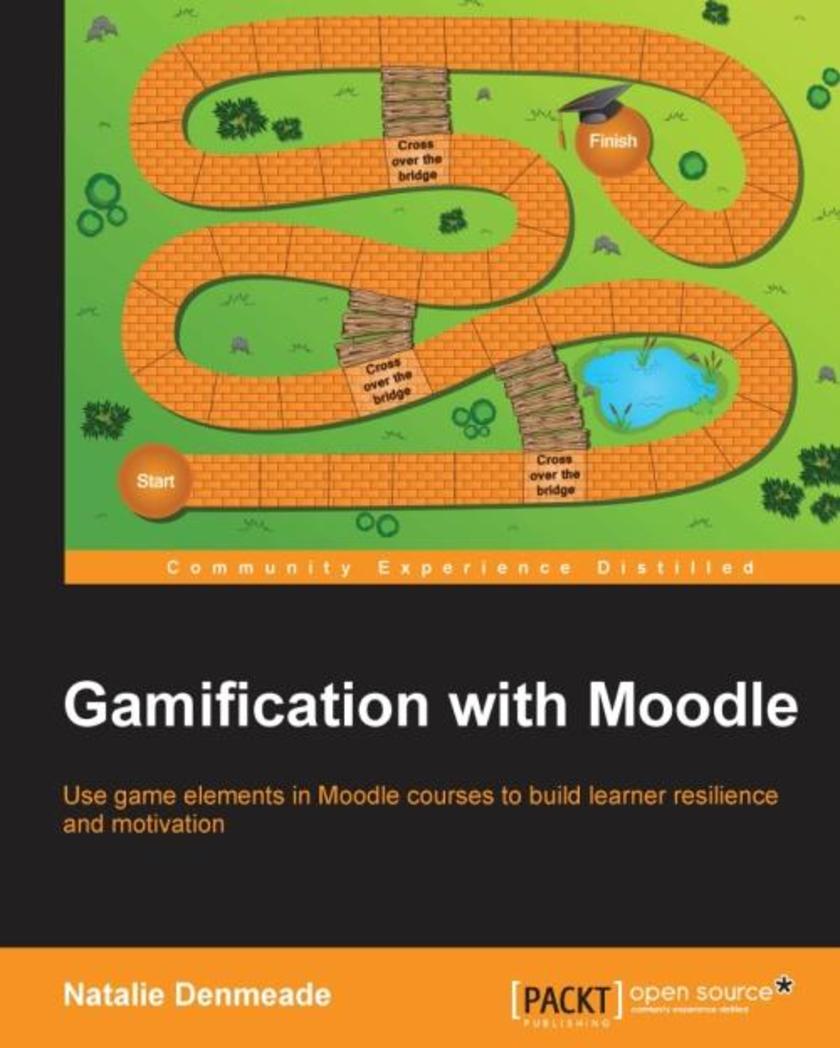
Gamification with Moodle
¥54.49
Use game elements in Moodle courses to build learner resilience and motivationAbout This BookFormulate a Moodle course that acts as a flexible framework ready for your own contentKeep learners engrossed and create opportunities for motivation through the concepts of status, access, and powerA resourceful guide to innovative learning using automatic reports, assessments, and conditional release of activities Who This Book Is For This book has been designed for teachers who to use technology to create more engaging learning experiences for both online learning and in face-to-face sessions. This book will especially appeal to people who are interested in the underlying mechanics of play and games and want to know more about applying these concepts in an educational context. It is assumed that you are a teacher and expert in your field, have basic computer skills, and have access to the Internet.What You Will LearnSet up a scoring system using Moodle GradebookEnable communication and collaboration in your class as a Learning Community using forumsAssess your learners’ abilities by setting up challenges and questsConfigure gateways to check and ensure progress before new content or activities are releasedCreate Moodle assignments to provide effective feedback through a comment bank and custom scaleIssue Open Badges to recognize achievements and set up an online backpack to share digital badgesReduce anxiety for learners by using the game-like concept of “Levelling Up” In Detail This book describes how teachers can use Gamification design within the Moodle Learning Management System. Game elements can be included in course design by using, badges, rubrics, custom grading scales, forums, and conditional activities. Moodle courses do not have to be solo-learning experiences that replicate Distance Education models. The Gamification design process starts by profiling players and creating levels of achievement towards meeting learning outcomes. Each task is defined, valued, and sequenced. Motivation loops are devised to keep the momentum going. In a gaming studio, this approach would require a team of specialists with a large budget and time frames. Preparing for a class rarely has these optimal conditions. The approach used in this book is to introduce game elements into the course design gradually. First, apply gamification to just one lesson and then build up to gamifying a series of lessons over a term. Each example will indicate the difficulty level and time investment. Try it out to see what is most effective with your learners and choose wisely in your use of technology. By the end of this book, you will be able to create Moodle courses that incorporate choice, communication, challenge, and creativity.Style and approach An easy-to-follow guide full of screenshots and step-by-step instructions with estimated time frames required to accomplish numerous tasks. Tips are offered for new Moodlers and plugin extensions are suggested for advanced Moodlers. The focus of the book is on why you would want to use each activity rather than detailed technical de*ions.
Learning Java Functional Programming
¥99.18
Create robust and maintainable Java applications using the functional style of programmingAbout This BookExplore how you can blend object-oriented and functional programming styles in JavaUse lambda expressions to write flexible and succinct codeA tutorial that strengthens your fundamentals in functional programming techniques to enhance your applications Who This Book Is For If you are a Java developer with object-oriented experience and want to use a functional programming approach in your applications, then this book is for you. All you need to get started is familiarity with basic Java object-oriented programming concepts.What You Will LearnUse lambda expressions to simplyfy codeUse function composition to achieve code fluencyApply streams to simply implementations and achieve parallelismIncorporate recursion to support an application’s functionalityProvide more robust implementations using OptionalsImplement design patterns with less codeRefactor object-oriented code to create a functional solutionUse debugging and testing techniques specific to functional programs In Detail Functional programming is an increasingly popular technology that allows you to simplify many tasks that are often cumbersome and awkward using an object-oriented approach. It is important to understand this approach and know how and when to apply it. Functional programming requires a different mindset, but once mastered it can be very rewarding. This book simplifies the learning process as a problem is described followed by its implementation using an object-oriented approach and then a solution is provided using appropriate functional programming techniques. Writing succinct and maintainable code is facilitated by many functional programming techniques including lambda expressions and streams. In this book, you will see numerous examples of how these techniques can be applied starting with an introduction to lambda expressions. Next, you will see how they can replace older approaches and be combined to achieve surprisingly elegant solutions to problems. This is followed by the investigation of related concepts such as the Optional class and monads, which offer an additional approach to handle problems. Design patterns have been instrumental in solving common problems. You will learn how these are enhanced with functional techniques. To transition from an object-oriented approach to a functional one, it is useful to have IDE support. IDE tools to refactor, debug, and test functional programs are demonstrated through the chapters. The end of the book brings together many of these functional programming techniques to create a more comprehensive application. You will find this book a very useful resource to learn and apply functional programming techniques in Java.Style and approach In this tutorial, each chapter starts with an introduction to the terms and concepts covered in that chapter. It quickly progresses to contrast an object-oriented approach with a functional approach using numerous code examples.
The Food52 Cookbook, Volume 2
¥196.59
The team behind the bestselling The Food52 Cookbook and the James Beard Award–winning website Food52.com are back. Powered by a thriving online community and edited by noted food writers Amanda Hesser and Merrill Stubbs, Food52.com spotlights the best recipes from talented home cooks all over the world. The Food52 Cookbook, Volume 2, features seventy-five of the latest community favorites, including:Late-Night Coffee-Brined Chicken Roasted Carrot Soup Herbed Beef Skewers with Horseradish Cream Kentucky Hot Toddy Burnt Caramel Pudding
Meteor Design Patterns
¥63.21
Accelerate your code writing skills with over twenty programming patterns that will make your code easier to maintain and scaleAbout This BookOptimize your web application for production useBuild views and controllers with minimal effort that will evolve with your applicationLearn how to maintain a MeteorJS project while it is running in production Who This Book Is For This book is for developers who have already had an introductory course with Meteor. Basic knowledge of web development is recommended.What You Will LearnUse of Jade, Stylus, and CoffeeScript to speed up web developmentIncrease productivity by leveraging the best packages in the communityOptimize your site for load speed with advanced publishers and subscribersLeverage the aggregation framework to produce results with big dataMaster the intricacies of front-end development using Jeet, Bootstrap, CSS animations, and moreOptimize your site for search engine visibilitySecure your site with Meteor’s best practicesTrack the live status of your application, ensuring all errors have been taken care of In Detail With the increasing interest in NodeJS web applications, a new framework, Meteor, has joined the ranks to simplify developer workflows. Meteor is one of the few open source frameworks that has received funding since its early development stages. It builds on ideas from existing frameworks and libraries, offering developers an easy way to develop a prototype app. At the same time, it gives them the tools and flexibility to build a fully fledged production app. Meteor is the weapon of choice for start-ups in today’s world. Meteor Design Patterns cuts through the jargon that most websites play with and gets to the point with simple solutions that will boost your development skills. We start off with a refresher on the basics of JavaScript programming such as templates, CoffeeScript, the Event Loop, and the Merge Box, amongst others. You then learn how to map real-world data and optimize the data’s publishers to output data with the least amount of work done by the server with some subscribe and publish patterns. Next, using front-end patterns, you will learn how to create maintainable and trackable forms, and make our site crawlable by any search engine. Following this, you will see how to optimize and secure the web application and maintain applications without breaking other features. Finally, you will learn how to deploy a secure production-ready application while learning to set up modulus, compose with Oplog tracking and SSL certificates, as well as error tracking with Kadira. Throughout the book, you will put your skills to practice and build an online shop from scratch. By the end of the book, you will have built a feature-rich online shop.Style and approach The book is a practical handbook on how to build an e-commerce web app using Meteor. Every topic ties into the webapp to easily illustrate the concepts that you are learning about.
Mastering Python Data Visualization
¥99.18
Generate effective results in a variety of visually appealing charts using the plotting packages in PythonAbout This BookExplore various tools and their strengths while building meaningful representations that can make it easier to understand dataPacked with computational methods and algorithms in diverse fields of scienceWritten in an easy-to-follow categorical style, this book discusses some niche techniques that will make your code easier to work with and reuse Who This Book Is For If you are a Python developer who performs data visualization and wants to develop existing knowledge about Python to build analytical results and produce some amazing visual display, then this book is for you. A basic knowledge level and understanding of Python libraries is assumed.What You Will LearnGather, cleanse, access, and map data to a visual frameworkRecognize which visualization method is applicable and learn best practices for data visualizationGet acquainted with reader-driven narratives and author-driven narratives and the principles of perceptionUnderstand why Python is an effective tool to be used for numerical computation much like MATLAB, and explore some interesting data structures that come with itExplore with various visualization choices how Python can be very useful in computation in the field of finance and statisticsGet to know why Python is the second choice after Java, and is used frequently in the field of machine learningCompare Python with other visualization approaches using Julia and a JavaScript-based framework such as D3.jsDiscover how Python can be used in conjunction with NoSQL such as Hive to produce results efficiently in a distributed environment In Detail Python has a handful of open source libraries for numerical computations involving optimization, linear algebra, integration, interpolation, and other special functions using array objects, machine learning, data mining, and plotting. Pandas have a productive environment for data analysis. These libraries have a specific purpose and play an important role in the research into diverse domains including economics, finance, biological sciences, social science, health care, and many more. The variety of tools and approaches available within Python community is stunning, and can bolster and enhance visual story experiences. This book offers practical guidance to help you on the journey to effective data visualization. Commencing with a chapter on the data framework, which explains the transformation of data into information and eventually knowledge, this book subsequently covers the complete visualization process using the most popular Python libraries with working examples. You will learn the usage of Numpy, Scipy, IPython, MatPlotLib, Pandas, Patsy, and Scikit-Learn with a focus on generating results that can be visualized in many different ways. Further chapters are aimed at not only showing advanced techniques such as interactive plotting; numerical, graphical linear, and non-linear regression; clustering and classification, but also in helping you understand the aesthetics and best practices of data visualization. The book concludes with interesting examples such as social networks, directed graph examples in real-life, data structures appropriate for these problems, and network analysis. By the end of this book, you will be able to effectively solve a broad set of data analysis problems.Style and approach The approach of this book is not step by step, but rather categorical. The categories are based on fields such as bioinformatics, statistical and machine learning, financial computation, and linear algebra. This approach is beneficial for the community in many different fields of work and also helps you learn how one approach can make sense across many fields

Fifty Things You Need To Know About British History
¥72.40
What are the 50 key events you need to understand to grasp British history? If you could choose the 50 things that define British history, events of significance not only in themselves, but in their importance to wider themes running through our past, what would they be? Hugh Williams has made that selection, and the result is a fascinating overview of Britain’s past. He refines British history into a series of key themes that represent a crucial strand in our history, and pinpoints the seminal events within those strands - Roots, from the Roman invasion to Britain’s entry into the Common Market; Fight, Fight and Fight Again, from the Battle of Agincourt to the Falklands War; The Pursuit of Liberty, from the Magna Carta through the Glorious Revolution to the foundation of the NHS; Home and Abroad, from Sir Francis Drake and Clive of India to the arrival of the SS Empire Windrush; and All Change, from Chaucer and the English language to the invention of the jet engine. With great clarity, simplicity and a zest for the marvellous stories that underpin many of these events, Hugh Williams explains the linkage between each one and its importance in the progress of British history as a whole. Along the way, he has some fascinating tales to tell, making this a highly enjoyable read as well as a perceptive insight into our shared past, and vital for anyone who wants quickly and enjoyably to grasp the essential facts about Britain’s history.

Britain AD: A Quest for Arthur, England and the Anglo-Saxons
¥73.58
Leading archaeologist Francis Pryor retells the story of King Arthur, legendary king of the Britons, tracing it back to its Bronze Age origins. The legend of King Arthur and Camelot is one of the most enduring in Britain's history, spanning centuries and surviving invasions by Angles, Vikings and Normans. In his latest book Francis Pryor – one of Britain’s most celebrated archaeologists and author of the acclaimed ‘Britain B.C.’ and ‘Seahenge’ – traces the story of Arthur back to its ancient origins. Putting forth the compelling idea that most of the key elements of the Arthurian legends are deeply rooted in Bronze and Iron Ages (the sword Excalibur, the Lady of the Lake, the Sword in the Stone and so on), Pryor argues that the legends' survival mirrors a flourishing, indigenous culture that endured through the Roman occupation of Britain, and the subsequent invasions of the so-called Dark Ages. As in ‘Britain B.C.’, Pryor roots his story in the very landscape, from Arthur’s Seat in Edinburgh, to South Cadbury Castle in Somerset and Tintagel in Cornwall. He traces the story back to the 5th-century King Arthur and beyond, all the time testing his ideas with archaeological evidence, and showing how the story was manipulated through the ages for various historical and literary purposes, by Geoffrey of Monmouth and Malory, among others. Delving into history, literary sources – ancient, medieval and romantic – and archaeological research, Francis Pryor creates an original, lively and illuminating account of this most British of legends.
Getting into Guinness: One man’s longest, fastest, highest journey inside the wo
¥72.99
Getting Into Guinness is the hilarious true story of record breaking attempts, how record obsession has become a global phenomenon, the weird and wonderful characters that set records and the history of the Guinness Book of World Records. Meet Larry Olmsted, a freelance travel and sports writer, always on the hunt for new and intriguing stories. In Spring 2003, somewhere over the North Atlantic, Larry stumbled on an article about the worldwide popularity of Guinness. Inspired by what he read, and in a bid to impress his editor, he took the drastic decision to set a record of his own and become part of the book's history. This leads Larry to break the record for the greatest distance travelled between two rounds of golf played on the same day and two years later to play poker continuously for 72 hours. After his own hilarious record attempts, Larry sets out to discover more about the vast and colourful history of the Guinness Book of World Records. This leads him to his fellow record setters with their widely varied motives for record-mania. Meet Ashrita, Record Breaker for God, who has been breaking records for 30 years and has set or broken 177 Guinness World Records in his lifetime. And Jackie 'The Texas Snakeman' Bibby, who became one of the book's all time icons by sharing a bathtub with poisonous rattlesnakes and dangling them from his mouth, and who literally puts his life on the line every time he breaks one of his rattlesnake records.

Waterloo: Napoleon's Last Gamble
¥73.58
Part of the ‘Making History Series’ – ‘Waterloo’ is an exciting retelling of one of the moments that shook the world – Waterloo, one of the truly decisive battles of history. The illustrious ‘Making History Series’, edited by Lisa Jardine and Amanda Foreman, explores an eclectic mix of history's tipping points. In ‘Waterloo’, Roberts provides not only a fizzing account of one of the most significant forty-eight hour periods of all time, but also a startling interrogation into the methodology of history – is it possible to create an accurate picture from a single standpoint? What we can say for certain about the battle is that it ended forever one of the great personal epics. The career of Napoleon was brought to a shuddering halt on the evening of 18 June 1815. Interwoven in the clear-cut narrative are exciting revelations brought to light by recent research: accident rather than design led to the crucial cavalry debacle that lost the battle. Amongst the all-too-human explanation for the blunder that cost Napoleon his throne, Roberts sets the political, strategic and historical scene, and finally shows why Waterloo was such an important historical punctuation mark. The generation after Waterloo saw the birth of the modern era: ghastly as the carnage here was, henceforth the wars of the future were fought with infinitely more ghastly methods of trenches, machine-guns, directed starvation, concentration camps, and aerial bombardment. By the time of the Great War, chivalry was utterly dead. The honour of bright uniform and tangible spirit of élan met their final dance at Waterloo.

Harmony: A New Way of Looking at Our World
¥173.05
A practical guide to what we have lost in the modern world, why we have lost it and how easily it is to rediscover. Harmony is a blueprint for a more balanced, sustainable world that the human race must create to survive. For more than 30 years His Royal Highness Prince Charles The Prince of Wales has been at the forefront of a growing ecological movement. Originally treated with scepticism, many of his ideas are now widely accepted and gaining increasing impact and influence. His work has sought to meet a huge range of modern challenges, from urbanisation to deforestation. In every case, however, the philosophy that is the foundation of his work has always been the same, but has always been unspoken, until now. For the first time, Prince Charles, with the help of his two leading advisors, has brought together his vast knowledge and experience to set out this philosophy - a philosophy that is as robust as it is practical. In Harmony, Prince Charles looks at different aspects of our modern world to demonstrate how many of the challenges seen in areas as diverse as architecture, farming and medicine can be traced to how we have abandoned a classical sense of balance and proportion. From the rice farms of India to America's corn belt, Harmony spans the globe, dissecting the specific practices of modern life that have put us at odds with the world and showing how this imbalance manifests itself throughout our lives. Harmony shows how the imbalance that has emerged is at heart of a crisis which now threatens our very civilisation. It tells the story of how our disconnection from Nature has contributed to the greatest crisis in the history of mankind and how seeking balance in our actions will return us to a more considered, secure, comfortable and cleaner world. Drawing on his own practical experience, Prince Charles charts how changes to how we look at the world could lead us toward a better future. He describes how knowledge and perspectives now largely lost could help us meet very modern challenges, including in the built environment, engineering, medicine and farming.

The Age of Wonder: How the Romantic Generation Discovered the Beauty and Terror
¥95.75
Shortlisted for the Samuel Johnson Prize and winner of the Royal Society Prize for Science Books, Richard Holmes’s dazzling portrait of the age of great scientific discovery is a groundbreaking achievement. The book opens with Joseph Banks, botanist on Captain Cook’s first Endeavour voyage, who stepped onto a Tahitian beach in 1769 fully expecting to have located Paradise. Back in Britain, the same Romantic revolution that had inspired Banks was spurring other great thinkers on to their own voyages of artistic and scientific discovery – astronomical, chemical, poetical, philosophical – that together made up the ‘age of wonder’. In this breathtaking group biography, Richard Holmes tells the stories of the period’s celebrated innovators and their great scientific discoveries: from telescopic sight to the miner’s lamp, and from the first balloon flight to African exploration.

Birds of New Zealand, Hawaii, Central and West Pacific (Collins Field Guide)
¥206.30
The essential guide to identifying every species of bird you may see in this area, for both tourists and wildlife enthusiasts. Featuring over 750 species, Birds of New Zealand, Hawaii, Central and West Pacific is the only field guide to illustrate and describe every species of bird you may see in the area, from Australia, New Zealand and New Guinea to Melanesia, Micronesia, and Polynesia. ? Text gives information on key identification features, habitat, and songs and calls ? All plumages for each species are illustrated, including those of males, females and juveniles The stunning 95 colour plates appear opposite their relevant text for quick and easy reference. Distribution maps are included, showing where each species can be found and how common it is, to further aid identification. This comprehensive and highly portable guide is a must for all birdwatchers visiting the region.


