


 购物车
购物车 个人中心
个人中心
The Discourses
¥40.79
The Discourses are a series of extracts of the teachings of the Stoic philosopher Epictetus written down by Arrian c. 108 AD. It is a guide for the advanced student of Stoicism to show him the best roads toward the goal of becoming a true philosopher.
Vandover and the Brute
¥8.09
Classic novel. According to Wikipedia: "Benjamin Franklin Norris, Jr. (March 5, 1870 – October 25, 1902) was an American novelist, during the Progressive Era, writing predominantly in the naturalist genre. His notable works include McTeague (1899), The Octopus: A California Story (1901), and The Pit (1903). Although he did not openly support socialism as a political system, his work nevertheless evinces a socialist mentality and influenced socialist/progressive writers such as Upton Sinclair. Like many of his contemporaries, he was profoundly influenced by the advent of Darwinism, and Thomas Henry Huxley's philosophical defense of it. Norris was particularly influenced by an optimistic strand of Darwinist philosophy taught by Joseph LeConte, whom Norris studied under while at the University of California, Berkeley. Through many of his novels, notably McTeague, runs a preoccupation with the notion of the civilized man overcoming the inner "brute," his animalistic tendencies. His peculiar, and often confused, brand of Social Darwinism also bears the influence of the early criminologist Cesare Lombroso and the French naturalist Emile Zola."
The Complete Dialogues of Plato
¥8.09
This book-collection file includes all 26 dialogues: Apology, Charmides (and preface to the collection), Cratylus, Critias, Crito, Euthyphro, Euthydemus, Gorgias, Ion, Laches, Laws, Lesser Hippias, Lysis, Menexus, Meno, Parmenides, Phaedo, Phaedrus, Philebus, Protagoras, Republic, Sophist, Statesman, Symposium, Theaetetus, and Timaeus. The Jowett translation. According to Wikipedia: "Plato (428/427 BC[a] – 348/347 BC), was a Classical Greek philosopher, who, together with his mentor, Socrates, and his student, Aristotle, helped to lay the foundations of Western philosophy.[2] Plato was also a mathematician, writer of philosophical dialogues, and founder of the Academy in Athens, the first institution of higher learning in the western world. Plato was originally a student of Socrates, and was as much influenced by his thinking as by what he saw as his teacher's unjust death."

Boone's Wilderness Road
¥8.09
Volume 6 of the series "Historic Highways of America". According to Wikipedia: "Archer Butler Hulbert (26 Jan 1873 – 24 Dec 1933), historical geographer, writer, and professor of American history... He was Vice-Principal of the Putnam Military Academy, Zanesville, Ohio, until 1897. Hulbert then did newspaper work in Korea in 1897 and '98: he was editor of the Korean Independent (Seoul) and edited Far East American newspapers... He was Professor of American History at Marietta College 1904-18. After Marietta College, Hulbert became a lecturer in American History at Clark University from 1918 to 1919. He also was a lecturer at the University of Chicago in 1904 and 1923; and he served as archivist for the Harvard Commission on Western History (1912-16). Hulbert's last position was at Colorado College, from 1920 until his death... Hulbert's interest in trails dated from fishing trips taken during his college, when he noticed Indian trails. This interest led at first to his 16 volumes of Historic Highways of America (1902-05)."

Waterways of Westward Expansion
¥8.09
Volume 9 of the series "Historic Highways of America". According to Wikipedia: "Archer Butler Hulbert (26 Jan 1873 – 24 Dec 1933), historical geographer, writer, and professor of American history... He was Vice-Principal of the Putnam Military Academy, Zanesville, Ohio, until 1897. Hulbert then did newspaper work in Korea in 1897 and '98: he was editor of the Korean Independent (Seoul) and edited Far East American newspapers... He was Professor of American History at Marietta College 1904-18. After Marietta College, Hulbert became a lecturer in American History at Clark University from 1918 to 1919. He also was a lecturer at the University of Chicago in 1904 and 1923; and he served as archivist for the Harvard Commission on Western History (1912-16). Hulbert's last position was at Colorado College, from 1920 until his death... Hulbert's interest in trails dated from fishing trips taken during his college, when he noticed Indian trails. This interest led at first to his 16 volumes of Historic Highways of America (1902-05)."
The Origin and Deeds of the Goths
¥8.09
This English version first published in 1908. "For the first time the story of the Goths recorded in the Getica of Jordanes, a Christian Goth who wrote his account in the year 551, probably in Constantinople, is now put in English form, as part of an edition of the Getica prepared by Mr. Mierow. Those who care for the romance of history will be charmed by this great tale of a lost cause and will not find the simple-hearted exaggerations of the eulogist of the Gothic race misleading. He pictured what he believed or wanted to believe, and his employment of fable and legend, as well as the naive exhibition of his loyal prejudices, merely heightens the interest of his story." According to Wikipedia: "Jordanes, also written Jordanis or, uncommonly, Jornandes, was a 6th-century Roman bureaucrat, who turned his hand to history later in life. While he also wrote Romana about the history of Rome, his best-known work is his Getica, written in Constantinople about AD 551. It is the only extant ancient work dealing with the early history of the Goths."
Rudimental Divine Science
¥8.09
First published in 1891. According to Wikipedia: "Mary Baker Eddy (born Mary Morse Baker July 16, 1821 – December 3, 1910) was the founder of the Christian Science movement. Deeply religious, she advocated Christian Science as a spiritual practical solution to health and moral issues. She wrote Science and Health with Key to the Scriptures, founded The First Church of Christ, Scientist of Boston in 1879, and several periodicals including The Christian Science Monitor. She took the name Mary Baker Glover from her first marriage and was also known as Mary Baker Glover Eddy or Mary Baker G. Eddy from her third marriage. She did much spiritual teaching, lecturing, and instantaneous healing. Her influence continues to grow through her writings."
The Unity of Good
¥8.09
First published in 1887. According to Wikipedia: "Mary Baker Eddy (born Mary Morse Baker July 16, 1821 – December 3, 1910) was the founder of the Christian Science movement. Deeply religious, she advocated Christian Science as a spiritual practical solution to health and moral issues. She wrote Science and Health with Key to the Scriptures, founded The First Church of Christ, Scientist of Boston in 1879, and several periodicals including The Christian Science Monitor. She took the name Mary Baker Glover from her first marriage and was also known as Mary Baker Glover Eddy or Mary Baker G. Eddy from her third marriage. She did much spiritual teaching, lecturing, and instantaneous healing. Her influence continues to grow through her writings."
A Visit to Three Fronts
¥8.09
Account of World War I, first published in 1916. According to Wikipedia: "Sir Arthur Ignatius Conan Doyle (22 May 1859 – 7 July 1930) was a Scottish physician and writer who is most noted for his fictional stories about the detective Sherlock Holmes, which are generally considered milestones in the field of crime fiction. He is also known for writing the fictional adventures of a second character he invented, Professor Challenger, and for popularising the mystery of the Mary Celeste. He was a prolific writer whose other works include fantasy and science fiction stories, plays, romances, poetry, non-fiction, and historical novels."
A Desert Drama
¥8.09
According to Wikipedia: "Korosko was a 19th-century settlement on the Nile River in Sudan. It was located 118 miles (190 km) south of Aswan and served as the point of departure for caravans avoiding the Dongola bend in the river by striking out directly across the desert to Abu Hamad. It was replaced in this function by Wadi Halfa after the construction of the Sudan Military Railroad during the 1890s amid the Mahdi War. Although the railway employed a different gauge and was not connected to the Egyptian system, the two networks were connected directly by steamboat and Korosko, between them, diminished in importance. Its former location was flooded by Lake Nasser upon the completion of the Aswan High Dam."
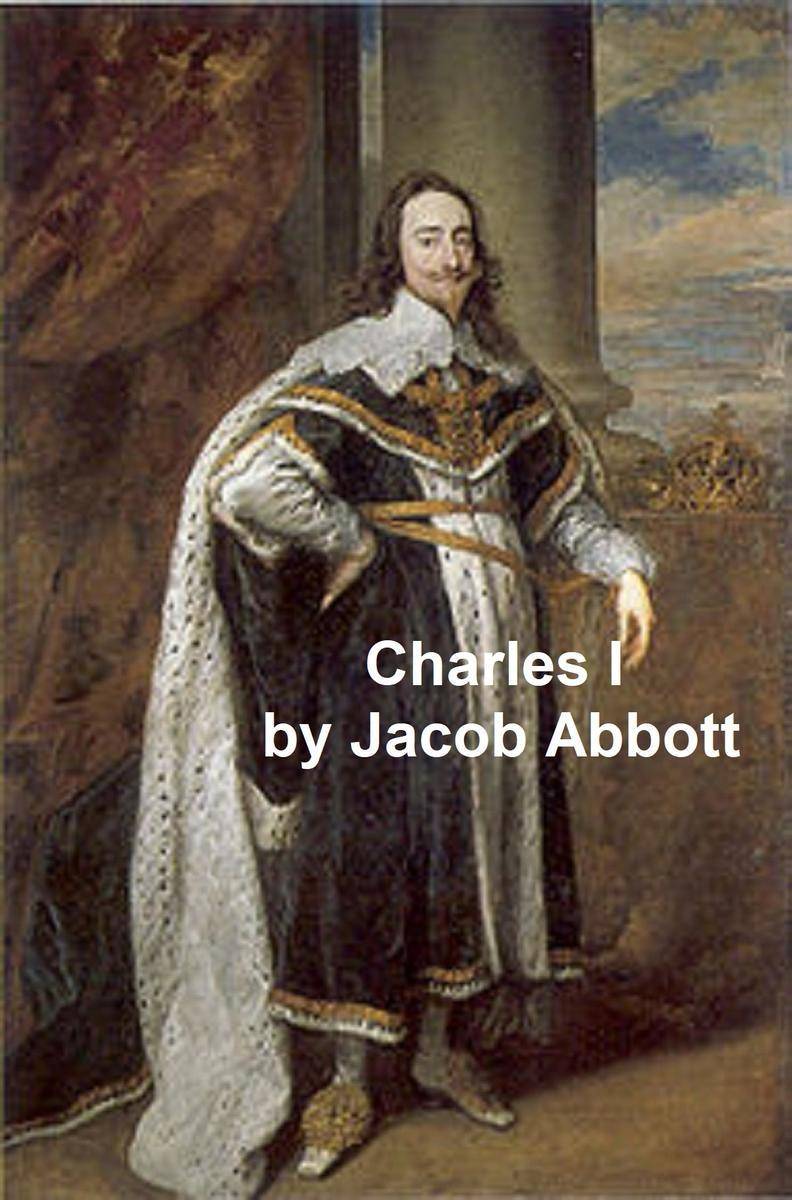
Charles I
¥8.09
According to Wikipedia: "Jacob Abbott (November 14, 1803 – October 31, 1879) was an American writer of children's books. Abbott was born at Hallowell, Maine to Jacob and Betsey Abbott. He graduated from Bowdoin College in 1820; studied at Andover Theological Seminary in 1821, 1822, and 1824; was tutor in 1824-1825, and from 1825 to 1829 was professor of mathematics and natural philosophy at Amherst College; was licensed to preach by the Hampshire Association in 1826; founded the Mount Vernon School for Young Ladies in Boston in 1829, and was principal of it in 1829-1833; was pastor of Eliot Congregational Church (which he founded), at Roxbury, Massachusetts in 1834-1835; and was, with his brothers, a founder, and in 1843-1851 a principal of Abbott's Institute, and in 1845-1848 of the Mount Vernon School for Boys, in New York City. He was a prolific author, writing juvenile fiction, brief histories, biographies, religious books for the general reader, and a few works in popular science. He died in Farmington, Maine, where he had spent part of his time after 1839, and where his brother, Samuel Phillips Abbott, founded the Abbott School."
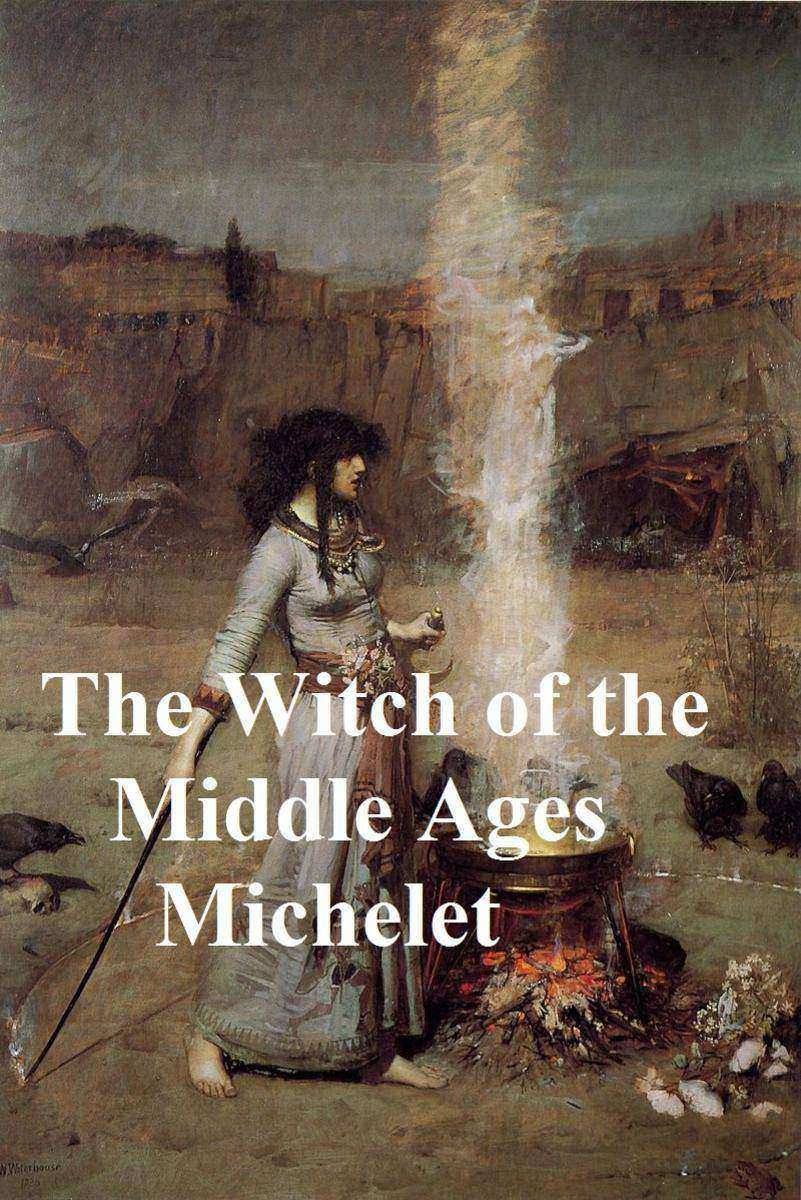
The Witch of the Middle Ages
¥8.09
History of witchcraft in the Middle Ages. According to Wikipedia: "Jules Michelet (21 August 1798 – 9 February 1874) was a French historian. He was born in Paris to a family with Huguenot traditions." The Preface begins: "In this translation of a work rich in the raciest beauties and defects of an author long since made known to the British public, the present writer has striven to recast the trenchant humour, the scornful eloquence, the epigrammatic dash of Mr. Michelet, in language not all unworthy of such a word-master. How far he has succeeded others may be left to judge. In one point only is he aware of having been less true to his original than in theory he was bound to be."
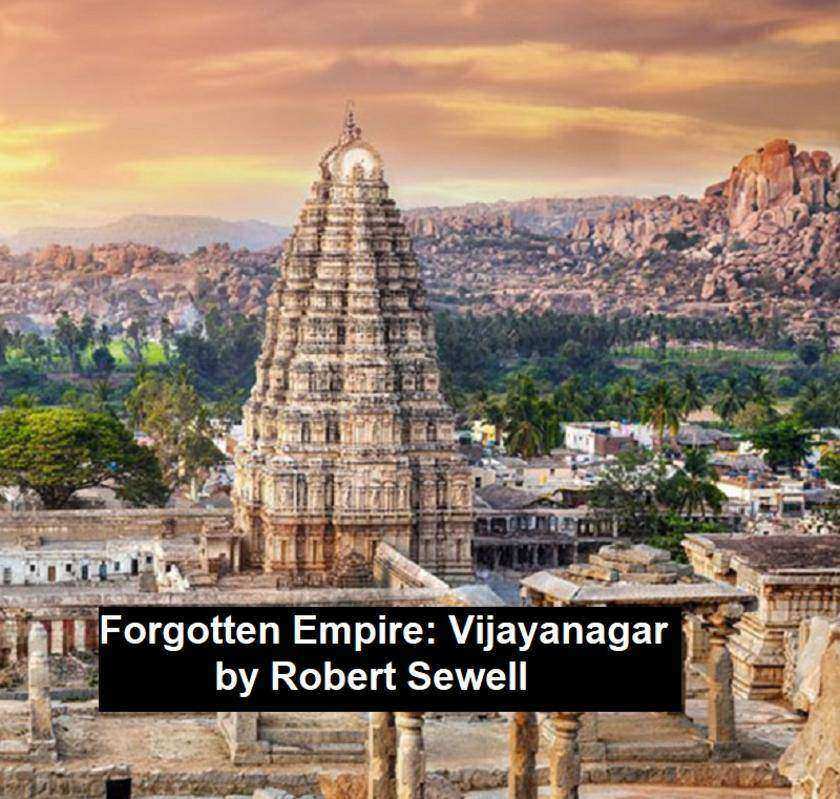
A Forgotten Empire: Vijayanagar
¥8.09
According to Wikipedia: "Robert Sewell (1845–1925) was a civil servant in colonial India. He is the author of the book A Forgotten Empire Vijayanagar: A Contribution to the History of India. He did extensive work on the history of the Vijayanagara Empire, particularly the fall of Hampi, the empire's capital. Sewell also translated The Vijayanagar Empire as seen by Domingo Paes and Fernao Nuniz which is described as an eyewitness account of Portuguese travellers to India in the 16th century and report on the Vijayanagar empire."
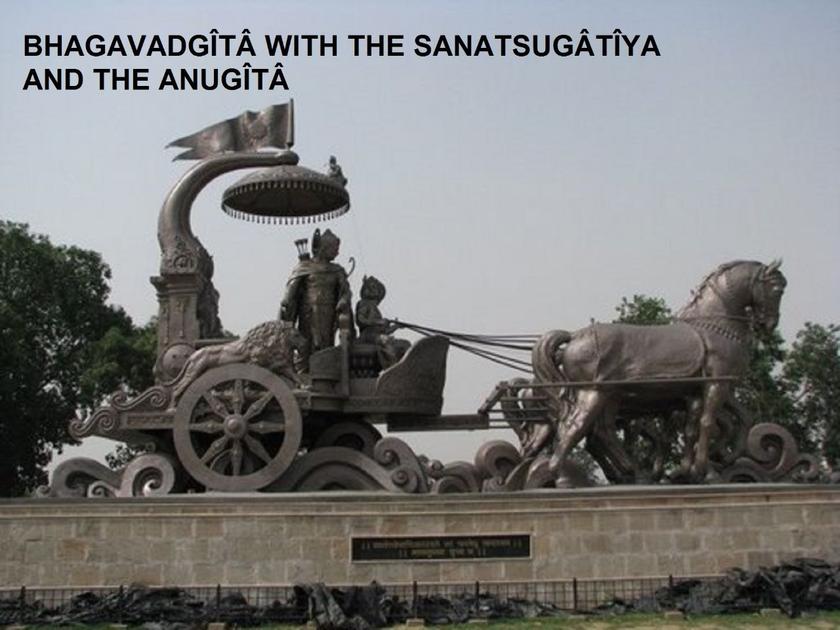
Bhagavadgita with the Sanatsugatiya and the Anugita
¥8.09
According to Wikipedia: "The Bhagavad Gita ... is a 700-verse Hindu scripture that is part of the ancient Sanskrit epic Mahabharata... The Sānatsujātiya refers to a portion of the Mahābhārata, a Hindu epic. It appears in the Udyoga Parva (book), and is composed of five chapters... The Anugita is part of the Asvamedhikaparva a book of the Sanskrit epic Mahabharata. It contains Krishna's conversation with Arjuna when Krishna decided to return to Dwaraka after restoring to the Pandavas, their kingdom. The main topics discussed are transmigration of souls, means of attaining liberation, description of gunas and ashramas, dharma, and the effects of tapas or austerity."
The Rough Riders
¥8.09
Dodo Collections brings you another classic from Theodore Roosevelt, ‘The Rough Riders’. ? In 1898, as the Spanish-American War was escalating, Theodore Roosevelt assembled an improbable regiment of Ivy Leaguers, cowboys, Native Americans, African-Americans, and Western Territory land speculators. This group of men, which became known as the Rough Riders, trained for four weeks in the Texas desert and then set sail for Cuba. Over the course of the summer, Roosevelt's Rough Riders fought valiantly, and sometimes recklessly, in the Cuban foothills, incurring casualties at a far greater rate than the Spanish. ? Roosevelt kept a detailed diary from the time he left Washington until his triumphant return from Cuba later that year. The Rough Riders was published to instant acclaim in 1899. Robust in its style and mesmerizing in its account of battle, it is exhilarating, illuminating, and utterly essential reading for every armchair historian and at-home general. ? Theodore Roosevelt, Jr., also known as T.R., and to the public (but never to friends and intimates) as Teddy, was the twenty-sixth President of the United States, and a leader of the Republican Party and of the Progressive Movement. He became the youngest President in United States history at the age of 42. He served in many roles including Governor of New York, historian, naturalist, explorer, author, and soldier. Roosevelt is most famous for his personality: his energy, his vast range of interests and achievements, his model of masculinity, and his "cowboy" persona.

Cetywayo and his White Neighbours
¥8.09
Dodo Collections brings you another classic from H. Rider Haggard, ‘Cetywayo and his White Neighbors’. ? Cetywayo and His White Neighbors, or Remarks on Recent Events in Zululand, Natal and the Transvaal is an 1882 non-fiction book by H. Rider Haggard, his first full-length published work. It was based on his time working in South Africa. The "Cetywayo" of the title is the Zulu king Cetshwayo kaMpande. ? The book had some good reviews and Haggard received letters of praise from such figures as Lord Carnarvon and Randolph Churchill. ? H. Rider Haggard — was an English writer of adventure novels set in exotic locations, predominantly Africa, and a pioneer of the Lost World literary genre. He was also involved in agricultural reform throughout the British Empire. His stories, situated at the lighter end of Victorian literature, continue to be popular and influential. ? His novels portray many of the stereotypes associated with colonialism, yet they are unusual for the degree of sympathy with which the native populations are portrayed. Africans often play heroic roles in the novels, although the protagonists are typically European (though not invariably). Notable examples are the heroic Zulu warrior Umslopogaasi and Ignosi, the rightful king of Kukuanaland, in King Solomon's Mines. Having developed an intense mutual friendship with the three Englishmen who help him regain his throne, he accepts their advice and abolishes witch-hunts and arbitrary capital punishment.

Predicting the Soviet Invasion of Afghanistan
¥8.09
Originally published by the CIA, as an unclassified public document. Douglas MacEachin served as CIA's Deputy Director for Intelligence from 1993 to 1995 during his thirty-two year career at CIA. Mr. MacEachin was an officer-in-residence at Harvard University's John F. Kennedy School of Government, from 1995 to 1997, subsequently becoming a senior at the Kennedy School.
The Witch Mania
¥8.09
Excerpt from Memoirs of Extraordinary Popular Delusions. The essay begins: "The belief that disembodied spirits may be permitted to revisit this world, has its foundation upon that sublime hope of immortality, which is at once the chief solace and greatest triumph of our reason. Even if revelation did not teach us, we feel that we have that within us which shall never die; and all our experience of this life but makes us cling the more fondly to that one repaying hope. But in the early days of "little knowledge," this grand belief became the source of a whole train of superstitions, which, in their turn, became the fount from whence flowed a deluge of blood and horror. Europe, for a period of two centuries and a half, brooded upon the idea, not only that parted spirits walked the earth to meddle in the affairs of men, but that men had power to summon evil spirits to their aid to work woe upon their fellows. An epidemic terror seized upon the nations; no man thought himself secure, either in his person or possessions, from the machinations of the devil and his agents. Every calamity that befell him, he attributed to a witch."
Cousin Betty by Honoré de Balzac - Delphi Classics (Illustrated)
¥8.09
This eBook features the unabridged text of ‘Cousin Betty by Honoré de Balzac - Delphi Classics (Illustrated)’ from the bestselling edition of ‘The Collected Works of Honoré de Balzac’. Having established their name as the leading publisher of classic literature and art, Delphi Classics produce publications that are individually crafted with superior formatting, while introducing many rare texts for the first time in digital print. The Delphi Classics edition of Balzac includes original annotations and illustrations relating to the life and works of the author, as well as individual tables of contents, allowing you to navigate eBooks quickly and easily. eBook features: * The complete unabridged text of ‘Cousin Betty by Honoré de Balzac - Delphi Classics (Illustrated)’ * Beautifully illustrated with images related to Balzac’s works * Individual contents table, allowing easy navigation around the eBook * Excellent formatting of the text Please visit www.delphiclassics.com to learn more about our wide range of titles
Eccentric Preachers
¥8.09
Profiles of Protestant preachers by a 19th century English Baptist, known as "the Prince of Preachers". Chapters include: 1. What is Eccentricity? 2. Who have been called Eccentric? 3. Causes of Eccentricity 4. Hugh Latimer 5. Hugh Peters 6. Daniel Burgess 7. John Berridge 8. Rowland Hill 9. Matthew Wilks 10. William Dawson 11. Jacob Gruber 12. Edward Taylor 13. Edward Brooke 14. Billy Bray. According to Wikipedia: "Charles Haddon Spurgeon, commonly C.H. Spurgeon, ( 1834 – 1892) was a British Reformed Baptist preacher who remains highly influential among Christians of different denominations, among whom he is still known as the "Prince of Preachers." He also founded the charity organization now known as Spurgeon's, that works worldwide with families and children, as well as a famous theological college which after his death was called after him: Spurgeon's College. Spurgeon was a prolific author of many types of works including sermons, an autobiography, a commentary, books on prayer, a devotional, a magazine, and more. Many sermons were transcribed as he spoke and were translated into many languages during his lifetime. Arguably, no other author, Christian or otherwise, has more material in print than C.H. Spurgeon."
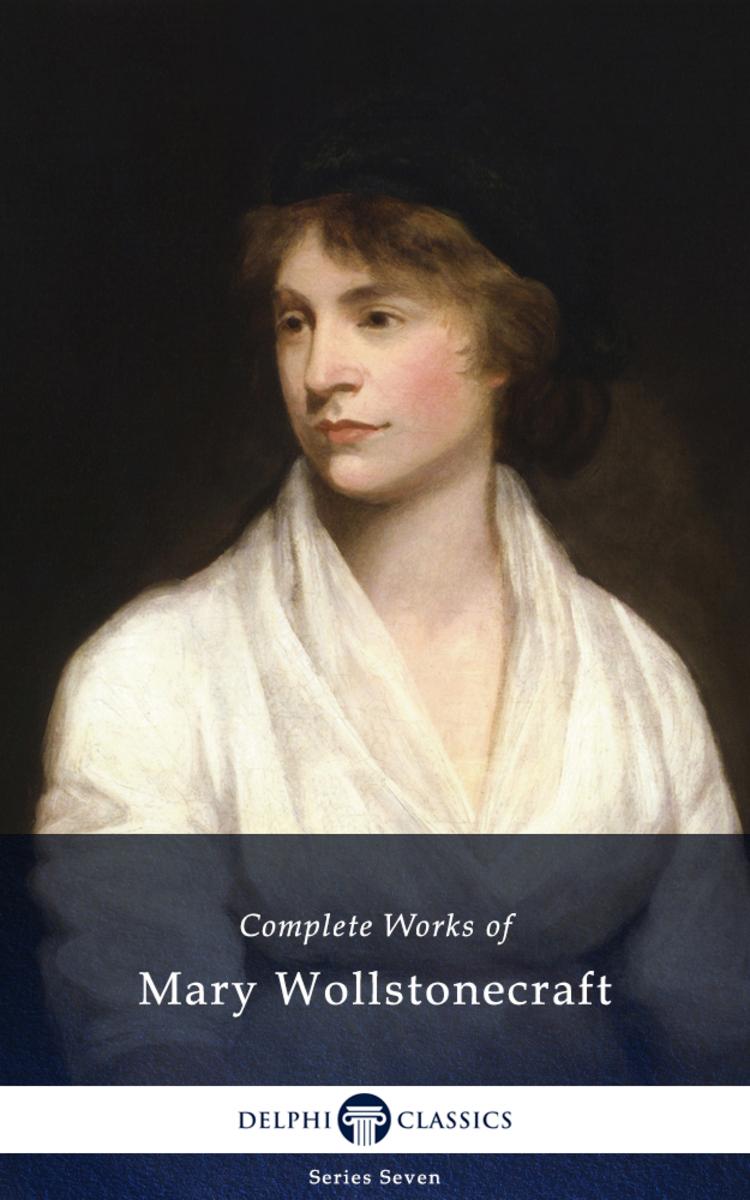
Delphi Complete Works of Mary Wollstonecraft (Illustrated)
¥24.44
English writer, philosopher and pioneering advocate of women's rights, Mary Wollstonecraft wrote novels, treatises, a travel narrative, a history of the French Revolution and a children's book. In her landmark feminist text, A Vindication of the Rights of Woman (1792), Wollstonecraft argued that women are not naturally inferior to men, but appeared to be only because they lacked education. She called for men and women to be treated equally, paving the way for the emergence of the feminist movement at the turn of the twentieth century. This comprehensive eBook presents Wollstonecraft’s complete fictional works, with numerous illustrations, rare texts, informative introductions and the usual Delphi bonus material. (Version 1) * Beautifully illustrated with images relating to Wollstonecraft’s life and works* Concise introductions to the novels and other texts* All the novels, with individual contents tables* Images of how the books were first published, giving your eReader a taste of the original texts* Excellent formatting of the texts* Includes Wollstonecraft’s complete pamphlets* ‘A Vindication of the Rights of Man’ in presented with an appendix of Burke’s ‘Reflections on the Revolution in France’* Includes Wollstonecraft’s posthumously published Works* Features three biographies, including the author’s husband’s controversial memoir - discover Wollstonecraft’s personal and literary life* Scholarly ordering of texts into chronological order and literary genres Please visit www.delphiclassics.com to browse through our range of exciting titles CONTENTS: The FictionMARY: A FICTIONMARIA; OR, THE WRONGS OF WOMANTHE CAVE OF FANCY The Children’s BookORIGINAL STORIES FROM REAL LIFE The Non-FictionTHOUGHTS ON THE EDUCATION OF DAUGHTERSA VINDICATION OF THE RIGHTS OF MENA VINDICATION OF THE RIGHTS OF WOMANAN HISTORICAL AND MORAL VIEW OF THE FRENCH REVOLUTION; AND THE EFFECT IT HAS PRODUCED IN EUROPELETTERS WRITTEN DURING A SHORT RESIDENCE IN SWEDEN, NORWAY, AND DENMARKON POETRY, AND OUR RELISH FOR THE BEAUTIES OF NATURELETTER ON THE PRESENT CHARACTER OF THE FRENCH NATIONFRAGMENT OF LETTERS ON THE MANAGEMENT OF INFANTSLETTERS TO MR. JOHNSON, BOOKSELLER, IN ST. PAUL’S CHURCH-YARDLESSONSHINTSLETTERS The BiographiesMEMOIRS OF THE AUTHOR OF A VINDICATION OF THE RIGHTS OF WOMAN by William GodwinMARY WOLLSTONECRAFT by Elizabeth Robins PennellA BRIEF SKETCH OF THE LIFE OF MARY WOLLSTONECRAFT Please visit www.delphiclassics.com to browse through our range of exciting titles or to purchase this eBook as a Parts Edition of individual eBooks


