


 购物车
购物车 个人中心
个人中心

Assassinato no meio da noite
¥7.63
Quando você menos espera, a vingan?a entra na sua casa. Murilo Azevedo é assassinado no meio da noite e sua morte pode ter a ver com uma parcela atrasada do carro.

Perdidos na floresta
¥7.63
Um casal de namorados se aventura em uma floresta mal assombrada para terem um momento de privacidade e amor, porém acabam se perdendo e sendo alvos de um?fantasma vingativo.

101 Charadas
¥7.63
E se você pudesse?passar o tempo e também exercitar o cérebro ao mesmo tempo? Divirta-se com essa cole??o com as melhores 101 charadas para você passar o tempo?e?botar a cachola para pensar.

Siddhartha
¥7.85
Digitalisiert vom Projekt Gutenberg Eine indische Dichtung ist eine Erz?hlung von Hermann Hesse, die im S. Fischer Verlag in Berlin im Jahr 1922 zum ersten Mal ver?ffentlicht wurde. Siddhartha, der Brahmane Das Buch handelt von einem jungen Brahmanen namens Siddhartha und seinem Freund Govinda. Der von allen verehrte und bewunderte Siddhartha widmet sein Leben der Suche nach dem Atman, dem All-Einen, das in jedem Menschen ist. Siddhartha, der Samana Seine Suche macht aus dem Brahmanen einen Samana, einen Asketen und Bettler. Govinda folgt ihm auf diesem Weg. Siddhartha spürt jedoch nach einiger Zeit, dass ihn das Leben als Samana nicht an sein Ziel bringen wird. Zusammen mit Govinda pilgert er zu Gautama, dem Buddha. Doch dessen Lehre kann er nicht annehmen. Siddhartha erkennt zwar, dass Gotama Erleuchtung erlangt hat und zweifelt die Richtigkeit seiner Lehre nicht an, jedoch glaubt er, diese sei allein für Gotama selbst gültig. Man kann nicht durch Lehre Buddha werden, sondern muss dieses Ziel mittels eigener Erfahrungen erreichen. Aus dieser Erkenntnis heraus begibt er sich erneut auf die Reise und beginnt einen neuen Lebensabschnitt, w?hrend sich sein Freund Govinda Gotama anschlie?t. Siddhartha bei den ?Kindermenschen“ Intensiv erf?hrt er nun seine Umgebung und die Sch?nheit der Natur, welche er zuvor als Samana zu verachten lernte. Er überquert einen Fluss, wobei ihm der F?hrmann prophezeit, er werde einst zu diesem zurückkehren, und erreicht eine gro?e Stadt. Hier begegnet er der Kurtisane Kamala, die er bittet, seine Lehrerin in der Kunst der Liebe zu werden. Um sich ihre Dienste leisten zu k?nnen, wird er Kaufmann. Anfangs sieht er das Streben nach Erfolg und Geld nur als eine wunderliche Eigenart der ?Kindermenschen“, wie er die dem Weltlichen ergebenen Menschen nennt. Bald wandelt sich jedoch sein ?bermut in Hochmut und er wird selbst den Kindermenschen immer ?hnlicher. Erst ein Traum führt ihm dies vor Augen und erinnert ihn wieder an seine
El conde de montecristo
¥8.01
Novela de aventuras que tiene lugar en Francia, Italia y varias islas del Mediterráneo entre 1814 y 1838. La historia esta basada en las memorias de Jacques Peuchet, quien escribió sobre un zapatero llamado Fran?ois Picaud.
The Touchstone by Edith Wharton - Delphi Classics (Illustrated)
¥8.09
This eBook features the unabridged text of ‘The Touchstone by Edith Wharton - Delphi Classics (Illustrated)’ from the bestselling edition of ‘The Complete Works of Edith Wharton’. Having established their name as the leading publisher of classic literature and art, Delphi Classics produce publications that are individually crafted with superior formatting, while introducing many rare texts for the first time in digital print. The Delphi Classics edition of Wharton includes original annotations and illustrations relating to the life and works of the author, as well as individual tables of contents, allowing you to navigate eBooks quickly and easily. eBook features: * The complete unabridged text of ‘The Touchstone by Edith Wharton - Delphi Classics (Illustrated)’ * Beautifully illustrated with images related to Wharton’s works * Individual contents table, allowing easy navigation around the eBook * Excellent formatting of the text Please visit www.delphiclassics.com to learn more about our wide range of titles

The Captive by Marcel Proust - Delphi Classics (Illustrated)
¥8.09
This eBook features the unabridged text of ‘The Captive by Marcel Proust - Delphi Classics (Illustrated)’ from the bestselling edition of ‘The Complete Works of Marcel Proust’. Having established their name as the leading publisher of classic literature and art, Delphi Classics produce publications that are individually crafted with superior formatting, while introducing many rare texts for the first time in digital print. The Delphi Classics edition of Proust includes original annotations and illustrations relating to the life and works of the author, as well as individual tables of contents, allowing you to navigate eBooks quickly and easily. eBook features: * The complete unabridged text of ‘The Captive by Marcel Proust - Delphi Classics (Illustrated)’ * Beautifully illustrated with images related to Proust’s works * Individual contents table, allowing easy navigation around the eBook * Excellent formatting of the text Please visit www.delphiclassics.com to learn more about our wide range of titles
The Dolliver Romance by Nathaniel Hawthorne - Delphi Classics (Illustrated)
¥8.09
This eBook features the unabridged text of ‘The Dolliver Romance by Nathaniel Hawthorne - Delphi Classics (Illustrated)’ from the bestselling edition of ‘The Complete Works of Nathaniel Hawthorne’. Having established their name as the leading publisher of classic literature and art, Delphi Classics produce publications that are individually crafted with superior formatting, while introducing many rare texts for the first time in digital print. The Delphi Classics edition of Hawthorne includes original annotations and illustrations relating to the life and works of the author, as well as individual tables of contents, allowing you to navigate eBooks quickly and easily. eBook features: * The complete unabridged text of ‘The Dolliver Romance by Nathaniel Hawthorne - Delphi Classics (Illustrated)’ * Beautifully illustrated with images related to Hawthorne’s works * Individual contents table, allowing easy navigation around the eBook * Excellent formatting of the text Please visit www.delphiclassics.com to learn more about our wide range of titles

Essays Towards a Theory of Knowledge
¥8.09
Essays Towards a Theory of Knowledge
Essays in Radical Empiricism
¥8.09
Essays in Radical Empiricism
Eccentric Preachers
¥8.09
Profiles of Protestant preachers by a 19th century English Baptist, known as "the Prince of Preachers". Chapters include: 1. What is Eccentricity? 2. Who have been called Eccentric? 3. Causes of Eccentricity 4. Hugh Latimer 5. Hugh Peters 6. Daniel Burgess 7. John Berridge 8. Rowland Hill 9. Matthew Wilks 10. William Dawson 11. Jacob Gruber 12. Edward Taylor 13. Edward Brooke 14. Billy Bray. According to Wikipedia: "Charles Haddon Spurgeon, commonly C.H. Spurgeon, ( 1834 – 1892) was a British Reformed Baptist preacher who remains highly influential among Christians of different denominations, among whom he is still known as the "Prince of Preachers." He also founded the charity organization now known as Spurgeon's, that works worldwide with families and children, as well as a famous theological college which after his death was called after him: Spurgeon's College. Spurgeon was a prolific author of many types of works including sermons, an autobiography, a commentary, books on prayer, a devotional, a magazine, and more. Many sermons were transcribed as he spoke and were translated into many languages during his lifetime. Arguably, no other author, Christian or otherwise, has more material in print than C.H. Spurgeon."
Retrospection and Introspection
¥8.09
According to Wikipedia: "Mary Baker Eddy (born Mary Morse Baker July 16, 1821 – December 3, 1910) was the founder of the Christian Science movement. Deeply religious, she advocated Christian Science as a spiritual practical solution to health and moral issues. She wrote Science and Health with Key to the Scriptures, founded The First Church of Christ, Scientist of Boston in 1879, and several periodicals including The Christian Science Monitor. She took the name Mary Baker Glover from her first marriage and was also known as Mary Baker Glover Eddy or Mary Baker G. Eddy from her third marriage. She did much spiritual teaching, lecturing, and instantaneous healing. Her influence continues to grow through her writings."

The Character and Influence of the Indian Trade in Wisconsin
¥8.09
Classic work of American history. According to Wikipedia: "Frederick Jackson Turner (November 14, 1861 - March 14, 1932) is widely regarded, along with Charles A. Beard, as one of the two most influential American historians of the early 20th century. He is best known for The Significance of the Frontier in American History."
Napoleon le Petit
¥8.09
Selon Wikipédia: ?Napoléon le Petit était un pamphlet politique influent de Victor Hugo qui condamnait le règne de Napoléon III, empereur des Fran?ais, qui vécut en exil à Guernesey pendant la plus grande partie du règne de Napoléon III, et sa critique du monarque fut significative. comme il était l'un des Fran?ais les plus éminents de l'époque, et a été vénéré par beaucoup, il inclut le concept de deux et deux font cinq comme un déni de la vérité par l'autorité, une notion plus tard utilisée par George Orwell dans Nineteen Quatre-vingt-quatre volumes ont été introduites clandestinement en France (par exemple dans des balles de foin, et entre des t?les comme une bo?te de sardines), lues lors de réunions secrètes et copiées à la main.Toujours selon Wikipédia: "Victor-Marie Hugo (26 février 1802 - 22 mai 1885) était un poète, dramaturge, romancier, essayiste, plasticien, homme d'?tat, militant des droits de l'homme et représentant du mouvement romantique en France. En France, la renommée littéraire de Hugo vient d'abord de sa poésie mais repose aussi sur ses romans et ses réalisations dramatiques. Parmi les nombreux volumes de poésie, Les Contemplations et La Légende des siècles sont particulièrement estimés et Hugo est parfois identifié comme le plus grand poète fran?ais. Hors de France, ses ?uvres les plus connues sont les romans Les Misérables et Notre-Dame de Paris (connus aussi en anglais sous le titre de Le Bossu de Notre-Dame). Bien que royaliste conservateur engagé lorsqu'il était jeune, Hugo devint plus libéral au fil des décennies; il est devenu un partisan passionné du républicanisme et son travail touche à la plupart des questions politiques et sociales et aux tendances artistiques de son temps. Il est enterré au Panthéon. "
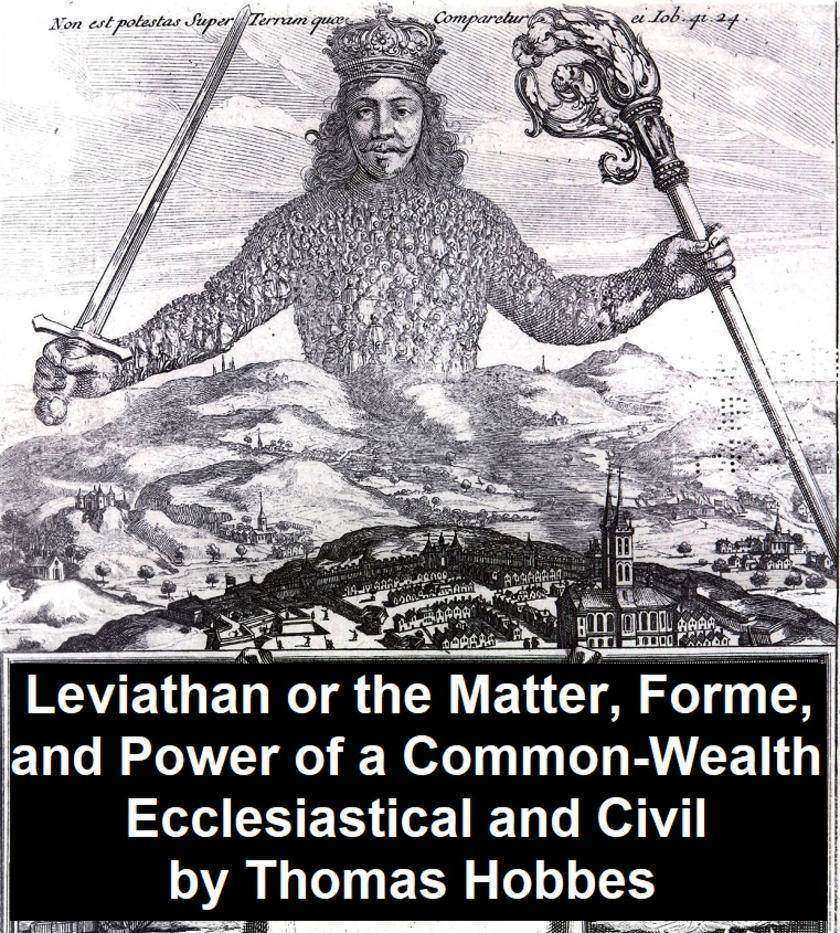
Leviathan, Or the Matter, Forme, and Power of a Common-Wealth Ecclesiastical and
¥8.09
First published in 1651, a classic of political science. According to Wikipedia: "Thomas Hobbes (1588 – 1679) was an English philosopher, remembered today for his work on political philosophy. His 1651 book Leviathan established the foundation for most of Western political philosophy from the perspective of social contract theory. Hobbes also contributed to a diverse array of fields, including history, geometry, physics of gases, theology, ethics, general philosophy, and political science. His account of human nature as self-interested cooperation has proved to be an enduring theory in the field of philosophical anthropology."

Vandover and the Brute
¥8.09
Classic novel. According to Wikipedia: "Benjamin Franklin Norris, Jr. (March 5, 1870 – October 25, 1902) was an American novelist, during the Progressive Era, writing predominantly in the naturalist genre. His notable works include McTeague (1899), The Octopus: A California Story (1901), and The Pit (1903). Although he did not openly support socialism as a political system, his work nevertheless evinces a socialist mentality and influenced socialist/progressive writers such as Upton Sinclair. Like many of his contemporaries, he was profoundly influenced by the advent of Darwinism, and Thomas Henry Huxley's philosophical defense of it. Norris was particularly influenced by an optimistic strand of Darwinist philosophy taught by Joseph LeConte, whom Norris studied under while at the University of California, Berkeley. Through many of his novels, notably McTeague, runs a preoccupation with the notion of the civilized man overcoming the inner "brute," his animalistic tendencies. His peculiar, and often confused, brand of Social Darwinism also bears the influence of the early criminologist Cesare Lombroso and the French naturalist Emile Zola."
Nero
¥8.09
According to Wikipedia: "Jacob Abbott (November 14, 1803 – October 31, 1879) was an American writer of children's books. Abbott was born at Hallowell, Maine to Jacob and Betsey Abbott. He graduated from Bowdoin College in 1820; studied at Andover Theological Seminary in 1821, 1822, and 1824; was tutor in 1824-1825, and from 1825 to 1829 was professor of mathematics and natural philosophy at Amherst College; was licensed to preach by the Hampshire Association in 1826; founded the Mount Vernon School for Young Ladies in Boston in 1829, and was principal of it in 1829-1833; was pastor of Eliot Congregational Church (which he founded), at Roxbury, Massachusetts in 1834-1835; and was, with his brothers, a founder, and in 1843-1851 a principal of Abbott's Institute, and in 1845-1848 of the Mount Vernon School for Boys, in New York City. He was a prolific author, writing juvenile fiction, brief histories, biographies, religious books for the general reader, and a few works in popular science. He died in Farmington, Maine, where he had spent part of his time after 1839, and where his brother, Samuel Phillips Abbott, founded the Abbott School."
Laughter: an Essay on the Meaning of the Comic
¥8.09
According to Wikipedia: "In the idiosyncratic Laughter: An Essay on the Meaning of the Comic, Bergson develops a theory not of laughter itself, but of how laughter can be provoked (see his objection to Delage, published in the 23rd edition of the essay). He describes the process of laughter (refusing to give a conceptual definition which would not approach its reality), used in particular by comics and clowns, as the caricature of the mechanism nature of humans (habits, automatic acts, etc.), one of the two tendencies of life (degradation towards inert matter and mechanism, and continual creation of new forms). However, Bergson warns us that laughter’s criterion of what should be laughed at is not a moral criterion and that it can in fact cause serious damage to a person’s self-esteem.This essay made his opposition to the Cartesian theory of the animal-machine obvious."
The Great Pestilence
¥8.09
According to Wikipedia: "The Black Death was one of the most devastating pandemics in human history, resulting in the deaths of an estimated 75 to 200 million people and peaking in Europe in the years 1346–53. Although there were several competing theories as to the etiology of the Black Death, analysis of DNA from victims in northern and southern Europe published in 2010 and 2011 indicates that the pathogen responsible was the Yersinia pestis bacterium, probably causing several forms of plague. The Black Death is thought to have originated in the arid plains of central Asia, where it then travelled along the Silk Road, reaching the Crimea by 1346.[citation needed][6] From there, it was most likely carried by Oriental rat fleas living on the black rats that were regular passengers on merchant ships. Spreading throughout the Mediterranean and Europe, the Black Death is estimated to have killed 30–60% of Europe's total population. All in all, the plague reduced the world population from an estimated 450 million down to 350–375 million in the 14th century. The aftermath of the plague created a series of religious, social, and economic upheavals, which had profound effects on the course of European history. It took 150 years for Europe's population to recover. The plague recurred occasionally in Europe until the 19th century."
The Varieties of Religious Experience
¥8.09
The psychology of religious belief. "If the inquiry be psychological, not religious institutions, but rather religious feelings and religious impulses must be its subject, and I must confine myself to those more developed subjective phenomena recorded in literature produced by articulate and fully self-conscious men, in works of piety and autobiography." According to Wikipedia: "William James (1842 – 1910) was a pioneering American psychologist and philosopher trained as a medical doctor. He wrote influential books on the young science of psychology, educational psychology, psychology of religious experience and mysticism, and the philosophy of pragmatism. He was the brother of novelist Henry James and of diarist Alice James. William James was born at the Astor House in New York City. He was the son of Henry James Sr., an independently wealthy and notoriously eccentric Swedenborgian theologian well acquainted with the literary and intellectual elites of his day. The intellectual brilliance of the James family milieu and the remarkable epistolary talents of several of its members have made them a subject of continuing interest to historians, biographers, and critics."
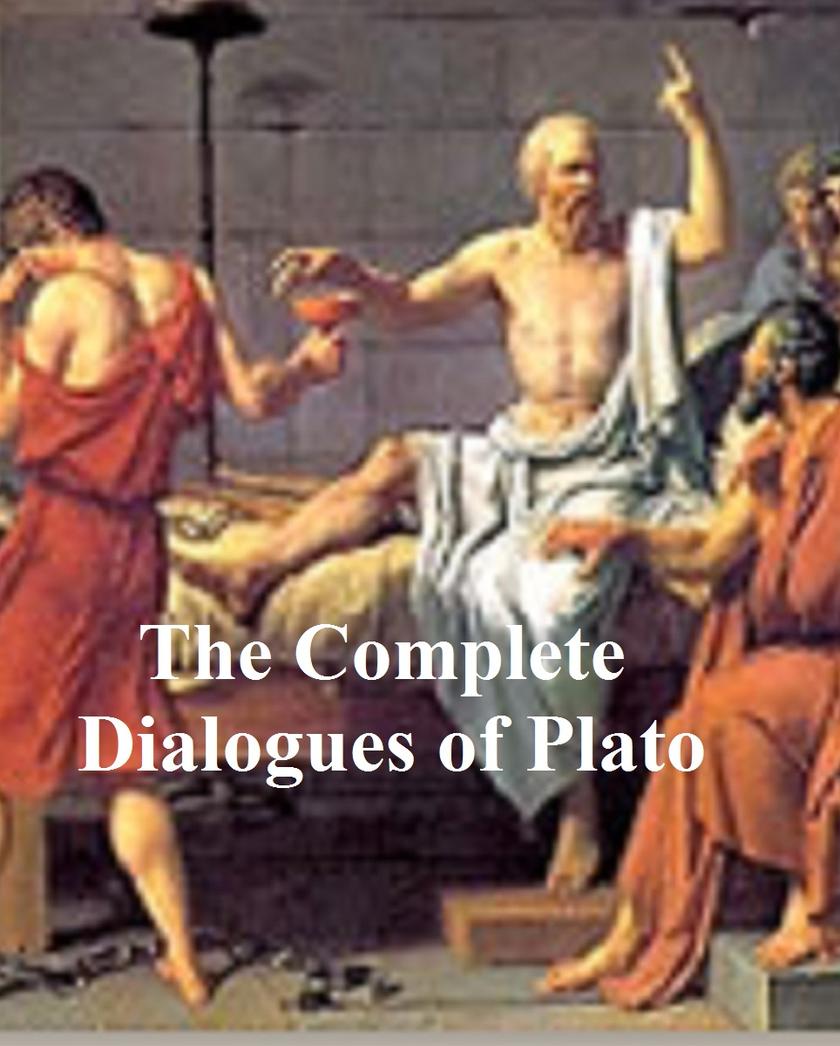
The Complete Dialogues of Plato
¥8.09
This book-collection file includes all 26 dialogues: Apology, Charmides (and preface to the collection), Cratylus, Critias, Crito, Euthyphro, Euthydemus, Gorgias, Ion, Laches, Laws, Lesser Hippias, Lysis, Menexus, Meno, Parmenides, Phaedo, Phaedrus, Philebus, Protagoras, Republic, Sophist, Statesman, Symposium, Theaetetus, and Timaeus. The Jowett translation. According to Wikipedia: "Plato (428/427 BC[a] – 348/347 BC), was a Classical Greek philosopher, who, together with his mentor, Socrates, and his student, Aristotle, helped to lay the foundations of Western philosophy.[2] Plato was also a mathematician, writer of philosophical dialogues, and founder of the Academy in Athens, the first institution of higher learning in the western world. Plato was originally a student of Socrates, and was as much influenced by his thinking as by what he saw as his teacher's unjust death."


