


 购物车
购物车 个人中心
个人中心
Wool Knitting & Crochet
¥24.44
Wool Knitting & Crochet

Ensaios de um escritor frustrado
¥8.18
Ensaios de um escritor frustrado

Show Me Your Money Idea
¥38.99
Show Me Your Money Idea
The Gallic Wars (Illustrated)
¥24.44
The Gallic Wars (Illustrated)
Sports Jokes
¥4.09
Sports Jokes
Sexist Jokes
¥4.09
Sexist Jokes
Relationship Jokes
¥2.78
Relationship Jokes
Pop Culture Jokes
¥2.78
Pop Culture Jokes
Food Jokes
¥4.09
Food Jokes
Family Jokes
¥4.09
Family Jokes
National Jokes
¥2.78
National Jokes
Why You Got All That Stuff
¥32.62
Why You Got All That Stuff

Passive Income Blueprint
¥32.62
Passive Income Blueprint

Pragmatism
¥8.09
Pragmatism

A Midsummer Night's Dream
¥8.67
The Divine Comedy describes Dante's journey through Hell (Inferno), Purgatory (Purgatorio), and Paradise (Paradiso), guided first by the Roman poet Virgil and then by Beatrice, the subject of his love and of another of his works, La Vita Nuova. While the vision of Hell, the Inferno, is vivid for modern readers, the theological niceties presented in the other books require a certain amount of patience and knowledge to appreciate. Purgatorio, the most lyrical and human of the three, also has the most poets in it; Paradiso, the most heavily theological, has the most beautiful and ecstatic mystic passages in which Dante tries to describe what he confesses he is unable to convey (e.g., when Dante looks into the face of God: "all'alta fantasia qui mancò possa" — "at this high moment, ability failed my capacity to describe," Paradiso, XXXIII, 142). "IN the midway of this our mortal life, I found me in a gloomy wood, astray Gone from the path direct: and e'en to tell It were no easy task, how savage wild That forest, how robust and rough its growth, Which to remember only, my dismay Renews, in bitterness not far from death.." (Dante) IN the midway of this our mortal life,I found me in a gloomy wood, astrayGone from the path direct: and e'en to tellIt were no easy task, how savage wildThat forest, how robust and rough its growth,Which to remember only, my dismayRenews, in bitterness not far from death.Yet to discourse of what there good befell,All else will I relate discover'd there.How first I enter'd it I scarce can say,Such sleepy dullness in that instant weigh'dMy senses down, when the true path I left,But when a mountain's foot I reach'd, where clos'dThe valley, that had pierc'd my heart with dread,I look'd aloft, and saw his shoulders broadAlready vested with that planet's beam,Who leads all wanderers safe through every way. Then was a little respite to the fear,That in my heart's recesses deep had lain,All of that night, so pitifully pass'd:And as a man, with difficult short breath,Forespent with toiling, 'scap'd from sea to shore,Turns to the perilous wide waste, and standsAt gaze; e'en so my spirit, that yet fail'dStruggling with terror, turn'd to view the straits,That none hath pass'd and liv'd. My weary frameAfter short pause recomforted, againI journey'd on over that lonely steep,The hinder foot still firmer. Scarce the ascentBegan, when, lo! a panther, nimble, light,And cover'd with a speckled skin, appear'd,Nor, when it saw me, vanish'd, rather stroveTo check my onward going; that ofttimesWith purpose to retrace my steps I turn'd. ? ?About Dante: ? Durante degli Alighieri, simply referred to as Dante (1265–1321), was a major Italian poet of the Middle Ages. His Divine Comedy, originally called La Comedia and later called Divina by Boccaccio, is widely considered the greatest literary work composed in the Italian language and a masterpiece of world literature. In Italy he is known as il Sommo Poeta ("the Supreme Poet") or just il Poeta. He, Petrarch and Boccaccio are also known as "the three fountains" or "the three crowns". Dante is also called the "Father of the Italian language".
Democracy in America: Book Two
¥28.04
The girl had been an orphan from childhood, and Rowland Trowbridge had been almost as a father to her. Avice loved him and watched over him as a daughter; at least, that had been the case until lately. A few weeks since, Mr. Trowbridge had succumbed to the rather florid charms of Mrs. Black, his housekeeper, and told Avice he would marry her in a month. Though greatly surprised and not greatly pleased, Avice had accepted the situation and treated the housekeeper with the same pleasant courtesy she had always shown her. The two “got along” as the phrase is, though their natures were not in many ways congenial. Avice remained at the window till she saw at last Leslie Hoyt’s tall form approaching. She ran to open the door herself. “Oh, Judge Hoyt,” she cried, “Uncle hasn’t come yet! There must be something wrong! What can we do” THE MARK OF CAINBY CAROLYN WELLS AUTHOR OF “A CHAIN OF EVIDENCE,” “THE GOLD BAG,” “THE WHITE ALLEY,” ETC.WITH A FRONTISPIECE IN COLOR BY GAYLE HOSKINS
The Alchemist
¥18.74
Of all the myths which have come down to us from the East, and of all the creations of Western fancy and belief, the Personality of Evil has had the strongest attraction for the mind of man. The Devil is the greatest enigma that has ever con-fronted the human intelligence. So large a place has Satan taken in our imagination, and we might also say in our heart, that his expulsion therefrom, no matter what philosophy may teach us, must for ever remain an impossibility. As a character in imagi-native literature Lucifer has not his equal in heaven above or on the earth beneath. In contrast to the idea of Good, which is the more exalted in proportion to its freedom from anthropomor-phism, the idea of Evil owes to the presence of this element its chief value as a poetic theme. The discrowned archangel may have been inferior to St. Michael in military tactics, but he cer-tainly is his superior in matters literary. The fair angels—all frankness and goodness—are beyond our comprehension, but the fallen angels, with all their faults and sufferings, are kin to us. There is a legend that the Devil has always had literary aspi-rations. The German theosophist Jacob B?hme relates that when Satan was asked to explain the cause of God’s enmity to him and his consequent downfall, he replied: “I wanted to be an author.” Whether or not the Devil has ever written anything over his own signature, he has certainly helped others compose their greatest works. It is a significant fact that the greatest im-aginations have discerned an attraction in Diabolus. What would the world’s literature be if from it we eliminated Dante’s Divine Comedy, Calderón’s Marvellous Magician, Milton’s Paradise Lost, Goethe’s Faust, Byron’s Cain, Vigny’s Eloa, and Lermon-tov’s Demon? Sorry indeed would have been the plight of litera-ture without a judicious admixture of the Diabolical. Without the Devil there would simply be no literature, because without his intervention there would be no plot, and without a plot the story of the world would lose its interest. Even now, when the belief in the Devil has gone out of fashion, and when the very mention of his name, far from causing men to cross themselves, brings a smile to their faces, Satan has continued to be a puissant personage in the realm of letters. As a matter of fact, Beelzebub has perhaps received his greatest elaboration at the hands of writers who believed in him just as little as Shake-speare did in the ghost of Hamlet’s father.

The Grey Woman and other Tales
¥40.79
A collection of gothic tales from one of the finest Victorian writers featuring: The Grey Woman, Curious if True, Six Weeks at Heppenheim, Libbie Marsh's Three Eras, Christmas Storms and Sunshine, Hand and Heart, Bessy's Troubles at Home, Disappearances.
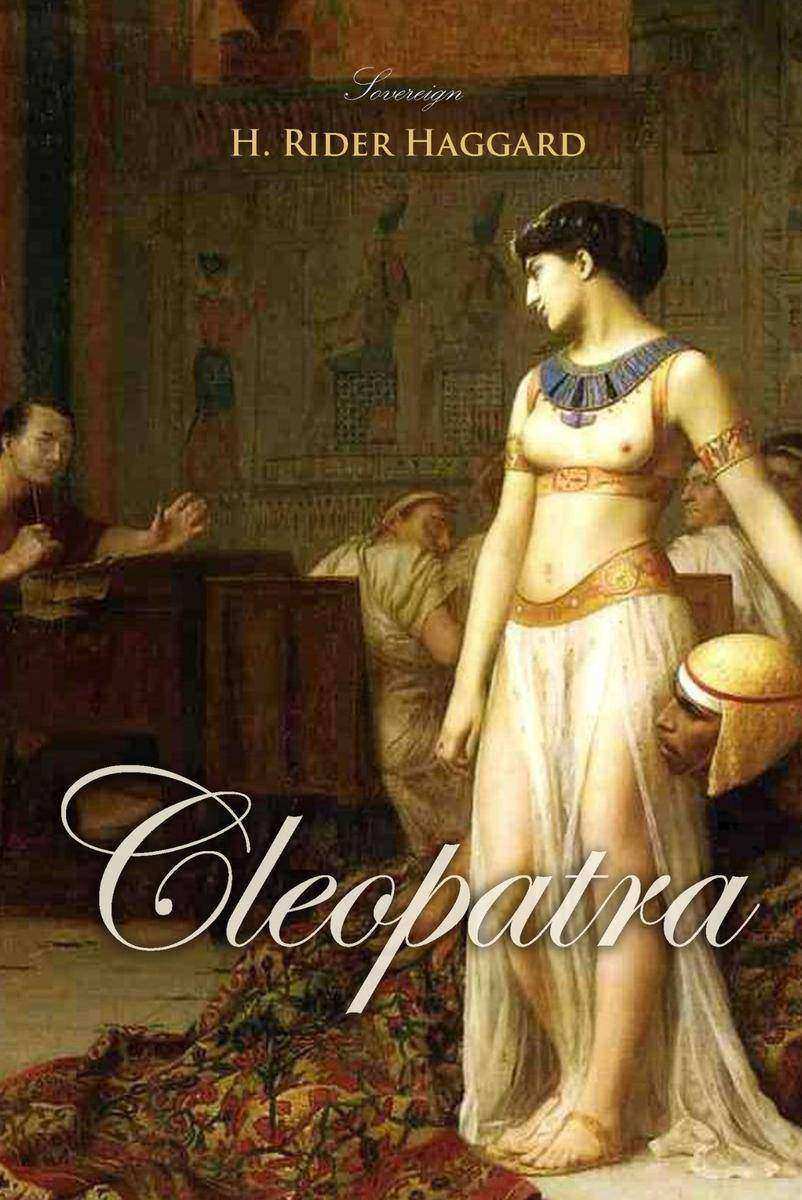
Cleopatra
¥40.79
The story of the survival of a dynasty bloodline protected by the Priesthood of Isis, setin the Ptolemaic era of Ancient Egyptian history. The main character Harmachis is charged by the Priesthood to overthrow the supposed impostor Cleopatra, drive out the Romans and restore Egypt to its golden era.
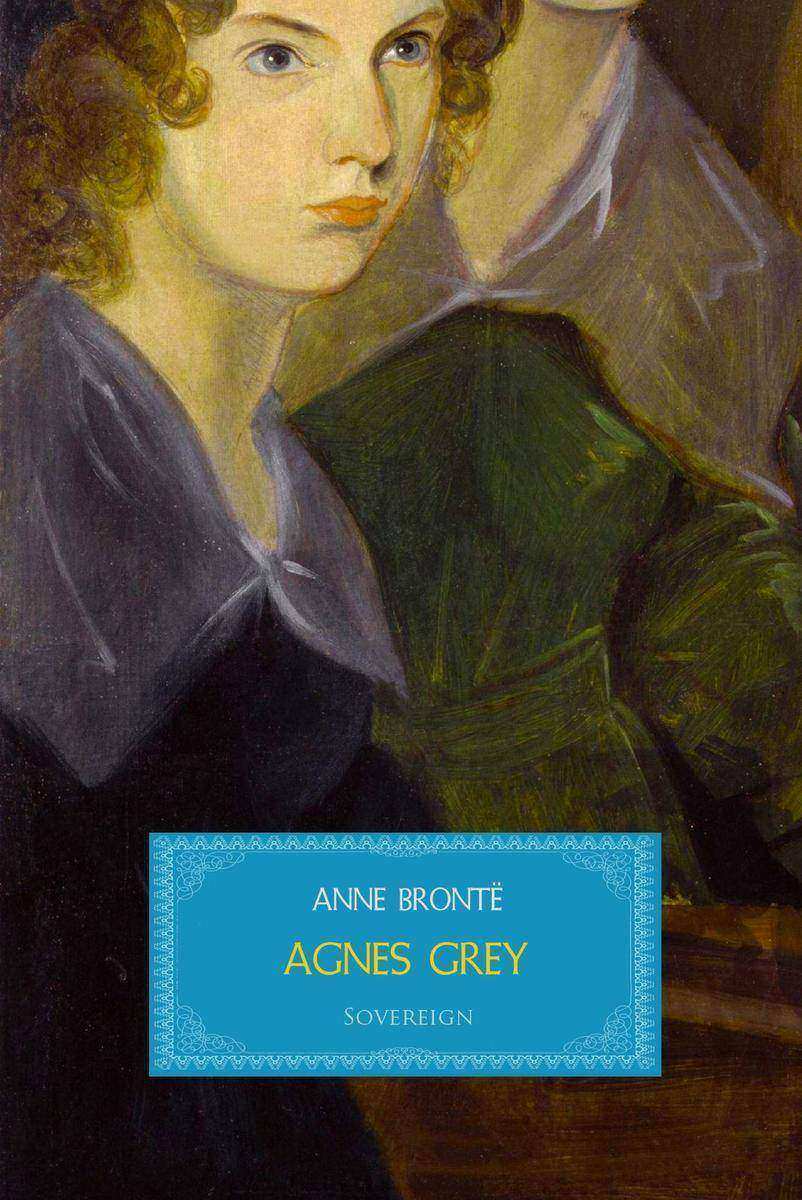
Agnes Grey
¥40.79
The novel follows Anges and her uneasy path to personal happiness and a romance with Mr. Weston. Agnes, her sister, Mary, and their mother all try to keep expenses low and to bring in extra money, but Agnes is frustrated that everyone treats her like a child. To prove herself and to earn money, she starts working as a governess, teaching children of rich families. Agnes Grey is an autobiographical novel with strong parallels between its events and Anne Bronte's own life as a governess.

Do It Yourself Dog Grooming: Dog Grooming Made Easy
¥32.62
Do It Yourself Dog Grooming: Dog Grooming Made Easy


