


 购物车
购物车 个人中心
个人中心
Up From Slavery
¥8.09
According to Wikipedia: "Booker Taliaferro Washington (April 5, 1856 – November 14, 1915) was an American educator, orator, author and leader of the African-American community. He was freed from slavery as a child, and after working at several menial jobs in West Virginia, earned his way through an education at Hampton Institute and Wayland Seminary. Upon recommendation of Hampton founder Sam Armstrong, as a young man, he was appointed as the first leader of the new Tuskegee Institute, then a teachers' college for blacks."
Incidents in the Life of a Slave Girl, Seven Years Concealed
¥8.09
Autobiography of a slave girl, first published in 1861. According to Wikipedia: "Harriet Ann Jacobs (February 11, 1813 – March 7, 1897) was an American writer, who escaped from slavery and became an abolitionist speaker and reformer. Jacobs' single work, Incidents in the Life of a Slave Girl, published in 1861 under the pseudonym Linda Brent, was one of the first autobiographical narratives about the struggle for freedom by female slaves and an account of the sexual harassment and abuse they endured."
A Book of Sibyls
¥8.09
Biographical sketches of Mrs. Barbauld, Miss Edgeworth, Mrs. Opie, and Jane Austen, first published in 1883. According to Wikipedia: " Anne Isabella, Lady Ritchie, née Thackeray (9 June 1837 – 26 February 1919) was an English writer. She was the eldest daughter of William Makepeace Thackeray.
Israel Potter: His Fifty Years of Exile
¥8.09
Biography of a soldier in the American Revolution. Melville explains, "Biography, in its purer form, confined to the ended lives of the true and brave, may be held the fairest meed of human virtue--one given and received in entire disinterestedness--since neither can the biographer hope for acknowledgment from the subject, nor the subject at all avail himself of the biographical distinction conferred. Israel Potter well merits the present tribute--a private of Bunker Hill, who for his faithful services was years ago promoted to a still deeper privacy under the ground, with a posthumous pension, in default of any during life, annually paid him by the spring in ever-new mosses and sward." According to Wikipedia: "Herman Melville (August 1, 1819 – September 28, 1891) was an American novelist, short story writer, essayist and poet. His first two books gained much attention, though they were not bestsellers, and his popularity declined precipitously after only a few years. By the time of his death he had been almost completely forgotten, but his longest novel, Moby-Dick — largely considered a failure during his lifetime, and most responsible for Melville's fall from favor with the reading public — was recognized in the 20th century as one of the chief literary masterpieces of both American and world literature."
Father Damien
¥8.09
Short essay. According to Wikipedia: "Robert Louis (Balfour) Stevenson ( 1850 - 1894), was a Scottish novelist, poet, and travel writer, and a leading representative of Neo-romanticism in English literature. He was the man who "seemed to pick the right word up on the point of his pen, like a man playing spillikins", as G. K. Chesterton put it. He was also greatly admired by many authors, including Jorge Luis Borges, Ernest Hemingway, Rudyard Kipling, Vladimir Nabokov, and J. M. Barrie. Most modernist writers dismissed him, however, because he was popular and did not write within their definition of modernism. It is only recently that critics have begun to look beyond Stevenson's popularity and allow him a place in the canon."
Biographical Studies
¥8.09
The biographies (from the collection "Fanshawe and Other Pieces") are: Mrs. Hutchinson, Sir William Phips, Sir William Pepperell, Thomas Green Fessenden, and Jonathan Cilley. According to Wikipedia: ""Nathaniel Hawthorne (born Nathaniel Hathorne; July 4, 1804 – May 19, 1864) was an American novelist and short story writer."
Journal of an African Cruiser
¥8.09
"Comprising sketches of the Canaries, the Cape Verds, Liberia, Maeira, Sierra Leone, and other places of interest on the west coast of Africa. By an officer of the US Navy. Edited by Nathaniel Hawthorne... 1845." According to Wikipedia: ""Nathaniel Hawthorne (born Nathaniel Hathorne; July 4, 1804 – May 19, 1864) was an American novelist and short story writer."
The Silverado Squatters
¥8.09
Travelogue/memoir of a stay in a ghost town in northern California on Mount Saint Helena in the 1870s. According to Wikipedia: "Robert Louis (Balfour) Stevenson ( 1850 - 1894), was a Scottish novelist, poet, and travel writer, and a leading representative of Neo-romanticism in English literature. He was the man who "seemed to pick the right word up on the point of his pen, like a man playing spillikins", as G. K. Chesterton put it. He was also greatly admired by many authors, including Jorge Luis Borges, Ernest Hemingway, Rudyard Kipling, Vladimir Nabokov, and J. M. Barrie. Most modernist writers dismissed him, however, because he was popular and did not write within their definition of modernism. It is only recently that critics have begun to look beyond Stevenson's popularity and allow him a place in the canon."
Familiar Studies of Men and Books
¥8.09
This collection of essays includes: VICTOR HUGO'S ROMANCES, SOME ASPECTS OF ROBERT BURNS, WALT WHITMAN, HENRY DAVID THOREAU: HIS CHARACTER AND OPINIONS, YOSHIDA-TORAJIRO, FRANCOIS VILLON, STUDENT, POET, AND HOUSE-BREAKER, CHARLES OF ORLEANS, SAMUEL PEPYS, and JOHN KNOX AND WOMEN. According to Wikipedia: "Robert Louis (Balfour) Stevenson ( 1850 - 1894), was a Scottish novelist, poet, and travel writer, and a leading representative of Neo-romanticism in English literature. He was the man who "seemed to pick the right word up on the point of his pen, like a man playing spillikins", as G. K. Chesterton put it. He was also greatly admired by many authors, including Jorge Luis Borges, Ernest Hemingway, Rudyard Kipling, Vladimir Nabokov, and J. M. Barrie. Most modernist writers dismissed him, however, because he was popular and did not write within their definition of modernism. It is only recently that critics have begun to look beyond Stevenson's popularity and allow him a place in the canon."

The English Governess at the Siamese Court
¥8.09
First published in 1870. "Being recollections of six years in the royal palace at Bangkok." According to Wikipedia: "Anna Harriette Leonowens (6 November 1831 – 19 January 1915) born Anna Harriet Emma Edwards, was an Anglo-Indian or Indian-born British travel writer, educator, and social activist. Her experiences in Siam (Thailand) were fictionalised in Margaret Landon's 1944 best-selling novel Anna and the King of Siam, as well as films and television series based on the book, most notably Rodgers and Hammerstein's 1951 hit musical The King and I. During the course of her life, Leonowens also lived in Aden, Australia, Singapore, the United States and Canada. Among other achievements, she co-founded the Nova Scotia College of Art and Design."
Anatomy of Melancholy
¥8.09
According to Wikipedia: "The Anatomy of Melancholy (Full title: The Anatomy of Melancholy, What it is: With all the Kinds, Causes, Symptomes, Prognostickes, and Several Cures of it. In Three Maine Partitions with their several Sections, Members, and Subsections. Philosophically, Medicinally, Historically, Opened and Cut Up) is a book by Robert Burton, first published in 1621. Burton's book consists mostly of a collection of opinions of a multitude of writers, grouped under quaint and old-fashioned divisions; in a solemn tone Burton endeavoured to prove indisputable facts by weighty quotations. The subjects discussed and determined by Burton ranged from the doctrines of religion to military discipline, from inland navigation to the morality of dancing-schools. On its surface, the book is presented as a medical textbook in which Burton applies his vast and varied learning, in the scholastic manner, to the subject of melancholia (which includes what is now termed clinical depression). Though presented as a medical text, The Anatomy of Melancholy is as much a sui generis work of literature as it is a scientific or philosophical text, and Burton addresses far more than his stated subject. In fact, the Anatomy uses melancholy as the lens through which all human emotion and thought may be scrutinized, and virtually the entire contents of a 17th-century library are marshalled into service of this goal. It is encyclopedic in its range and reference. In his satirical preface to the reader, Burton's persona Democritus Junior explains, "I write of melancholy by being busy to avoid melancholy." This is characteristic of the author's style, which often supersedes the book's strengths as a medical text or historical document as its main source of appeal to admirers. Both satirical and serious in tone, the Anatomy is "vitalized by (Burton's) pervading humour",[3] and Burton's digressive and inclusive style, often verging on a stream of consciousness, consistently informs and animates the text."
Records of a Family of Engineers
¥8.09
Robert Louis Stevenson's account of his ancestors. According to Wikipedia: "Robert Louis (Balfour) Stevenson ( 1850 - 1894), was a Scottish novelist, poet, and travel writer, and a leading representative of Neo-romanticism in English literature. He was the man who "seemed to pick the right word up on the point of his pen, like a man playing spillikins", as G. K. Chesterton put it. He was also greatly admired by many authors, including Jorge Luis Borges, Ernest Hemingway, Rudyard Kipling, Vladimir Nabokov, and J. M. Barrie. Most modernist writers dismissed him, however, because he was popular and did not write within their definition of modernism. It is only recently that critics have begun to look beyond Stevenson's popularity and allow him a place in the canon."

A v?r?slámpás ház
¥8.83
BORNAI TIBOR ?S BORNAI TIBOR? Talán csak nem ?nmagával fog társalogni a szerz?? Nos, ezúttal másról van szó. A k?nyvet, amit most a kezében tart az olvasó, ketten írták: Bornai Tibor, az édesapa, aki hatvanéves korában, negyven évvel ezel?tt hunyt el, és fia, Bornai Tibor, aki akkor még csak tizenhét éves volt. Az apa 1912-ben született, és 1972-ben halt meg. Fia 1955-ben látta meg a napvilágot, a másik dátum még titok. Kettejük t?rténeteib?l rajzolódik ki ez a nehéz, csodákkal és tragédiákkal telezsúfolt id?szak, amelynek kezdete éppen most, a k?nyv megjelenésekor ér százéves évfordulójához. Err?l a száz évr?l mesélnek ?k ketten: a kályha mellett ülve téli estéken, a Balaton partján heverészve, egy május elsejei felvonuláson, egy Párizs felé robogó kisbuszon, a Népliget mutatványosbódéi el?tti padon vagy egy ?ll?i úti bérház konyhájában. Sírós-nevet?s k?nyv ez, dokumentumregény, minden benne szerepl? tény és adat valóságos. Apa és fia jegyzetfüzetében lapozgathatunk csodálkozva, hogy mennyire rímel egymásra ez a két sors. ?s talán sokan lesznek majd, akik a maguk életében is megtalálják az ugyanilyen rímképlet? verssorokat. ?Oroszlán az Ecseri úton? Hogy kerül egy oroszlán az Ecseri útra, ahol a használt gyerekkocsitól a hibás rádióig, a szakadozott k?nyvekt?l a molyos rókaboáig ócska tárgyakat adnak-vesznek az emberek?” Kiderül majd, ahogy az olvasók az igazi, nagy kérdésekre is választ találnak ebben az emberséggel és humorral átsz?tt k?nyvben.

Darabokra t?rt szívek
¥57.31
Meg lehet-e gyógyulni egy súlyos betegségb?l, amelynek már a puszta neve is sokakat rettegéssel t?lt el? Péceli Rita válasza: igen! S hogy mi kell hozzá? Elszántság, bátorság, bizalom és szeretet. Odafigyelés ?nmagunkra, remek orvosok, barátaink támogatása és nem utolsósorban egy h?séges társ, aki jóban-rosszban kitart mellettünk. Mert a gyógyulás lehetséges, még akkor is, ha a bajban éppen azoktól nem kapunk segítséget, akikre a leginkább számítunk. A t?rténet bizonyítja: a legnehezebb helyzetb?l is megtalálhatjuk a kiutat. Mert a szeretet és a segítség er?t ad. Ennek k?sz?nhet?en Rita felveszi a keszty?t, és a hosszú, gy?trelmes küzdelem végén megtalálja a gyógyulást, a boldogságot és igazi hivatását is. Visszakapja egészségét, normális életét, s?t a szenvedés árán egy sokkal gazdagabb, igazabb életet nyer a régi helyett. ?Hamarosan hozzám is odaj?ttek. – Ni, csak, a vicces kedv? h?lgy. – Engem is átraktak a kórtermi ágyamba. Megint elveszítettem az ?ntudatomat. Amikor végleg felébredtem, úgy éreztem, majd kicsattanok. Az ablaküvegen átfúródó napsugarak táncot jártak a szobában, minden sarokba jutott bel?lük. Az ágynem?k a korábbinál is fehérebben vakítottak. Egy darabka mennyország dicsfénnyel és felh?kkel. Valóságos eufória lett úrrá rajtam. – ?lek, élek, élek! – kiáltottam. – Micsoda boldogság!” A visszakapott élet Rados Virág második regénye, a nagy siker? Bipoláris folytatása, amely szintén igaz t?rténet alapján íródott.
Morien, an Arthurian Romance
¥8.09
A short Arthurian romance not represented in Malory's "Morte Darthur". A metrical romance rendered into English prose from the Mediaeval Dutch.
Books and Persons: Being Comments on a Past Epoch (1908-1911)
¥8.09
Dodo Collections brings you another classic from Arnold Bennett, ‘"Books and Persons; Being Comments on a Past Epoch, 1908-1911".’ ? The contents of this book have been chosen from a series of weekly articles which enlivened the?New Ageduring the years 1908, 1909, 1910, and 1911, under the pseudonym "Jacob Tonson." The man responsible for the republication is the dedicatee, who, having mysteriously demanded from me back numbers of theNew Age, sat in my house one Sunday afternoon and in four hours read through the entire series. He then announced that he had made a judicious selection, and that the selection must positively be issued in volume form. Mr. Frank Swinnerton approved the selection and added to it slightly. In my turn I suggested a few more additions. The total amounts to one-third of the original matter. Beyond correcting misprints, softening the crudity of several epithets, and censoring lines here and there which might give offence without helping the sacred cause, I have not altered the articles. They appear as they were journalistically written in Paris, London, Switzerland, and the Forest of Fontainebleau. In particular I have left the critical judgments alone, for the good reason that I stand by nearly all of them, though perhaps with a less challenging vivacity, to this day. ARNOLD BENNETT February 1917 Enoch Arnold Bennett (always known as Arnold Bennett) was one of the most remarkable literary figures of his time, a product of the English Potteries that he made famous as the Five Towns. Yet he could hardly wait to escape his hometown, and he did so by the sheer force of his ambition to succeed as an author. In his time he turned his hand to every kind of writing, but he will be remembered for such novels as The Old Wives' Tale, the Clayhanger trilogy (Clayhanger, Hilda Lessways, and These Twain), and The Card. He also wrote such intriguing self-improvement books as Literary Taste, How To Live on 24 Hours a Day, The Human Machine, etc.
The Letters of Henry James
¥8.09
Dodo Collections brings you another classic from Henry James, ‘The Letters of Henry James’. ? The Complete Letters of Henry James fills a crucial gap in modern literary studies by presenting in a scholarly edition the complete letters of one of the great novelists and letter writers of the English language. Comprising more than ten thousand letters reflecting on a remarkably wide range of topics—from James’s own life and literary projects to broader questions on art, literature, and criticism. ? Henry James, OM (15 April 1843 – 28 February 1916) was an American writer who spent most of his writing career in Britain. He is regarded as one of the key figures of 19th-century literary realism. He was the son of Henry James, Sr. and the brother of philosopher and psychologist William James and diarist Alice James. ? He is best known for a number of novels showing Americans encountering Europe and Europeans. His method of writing from a character's point of view allowed him to explore issues related to consciousness and perception, and his style in later works has been compared to impressionist painting. His imaginative use of point of view, interior monologue and unreliable narrators brought a new depth to narrative fiction. ? James contributed significantly to literary criticism, particularly in his insistence that writers be allowed the greatest possible freedom in presenting their view of the world. James claimed that a text must first and foremost be realistic and contain a representation of life that is recognizable to its readers. Good novels, to James, show life in action and are, most importantly, interesting. In addition to his voluminous works of fiction he published articles and books of travel, biography, autobiography, and criticism, and wrote plays. James alternated between America and Europe for the first twenty years of his life; eventually he settled in England, becoming a British subject in 1915, one year before his death. James was nominated for the Nobel Prize in Literature in 1911, 1912, and 1916.
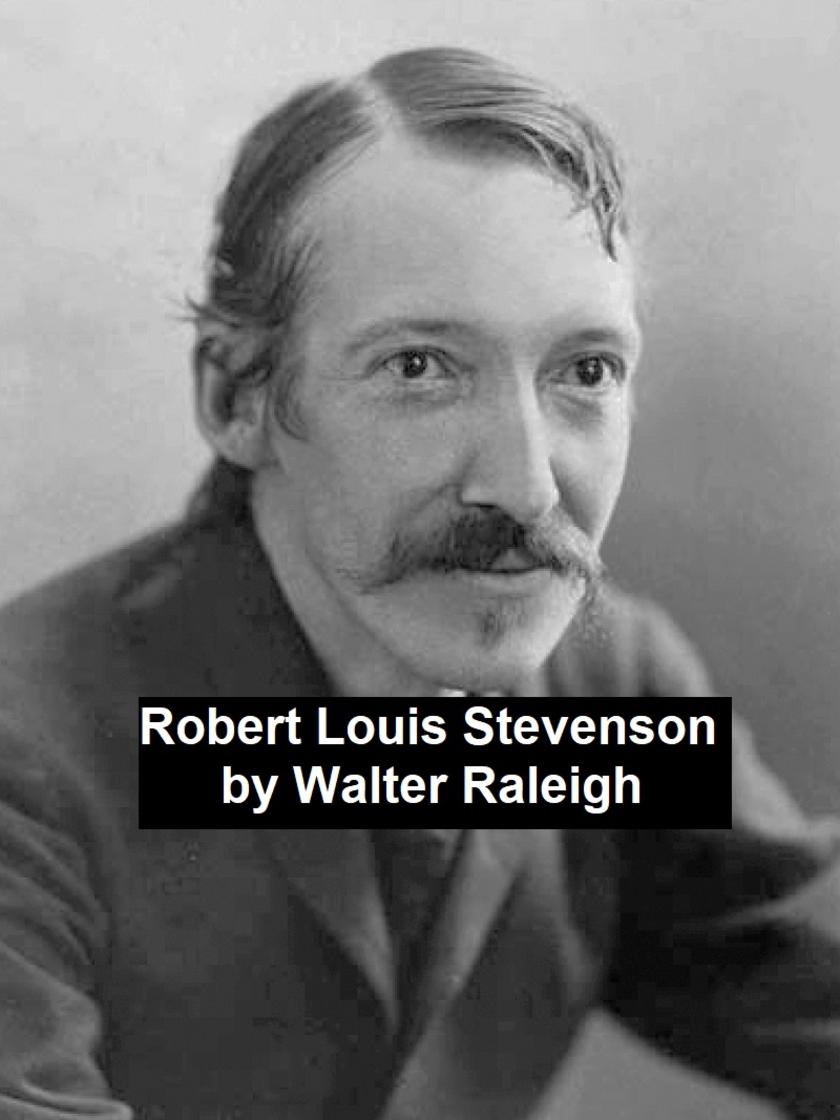
Robert Louis Stevenson
¥8.09
Short biographical essay. According to Wikipedia: "Robert Louis (Balfour) Stevenson ( 1850 - 1894), was a Scottish novelist, poet, and travel writer, and a leading representative of Neo-romanticism in English literature. He was the man who "seemed to pick the right word up on the point of his pen, like a man playing spillikins", as G. K. Chesterton put it. He was also greatly admired by many authors, including Jorge Luis Borges, Ernest Hemingway, Rudyard Kipling, Vladimir Nabokov, and J. M. Barrie. Most modernist writers dismissed him, however, because he was popular and did not write within their definition of modernism. It is only recently that critics have begun to look beyond Stevenson's popularity and allow him a place in the canon."

Mental Endurance: How to develop mental toughness from the world's elite forces
¥61.83
You can train all you like, but when it comes to the crunch, do you have the mental endurance to see yourself through combat situations, being held hostage or finding yourself at the mercy of the elements? SAS and Elite Forces Handbook: Mental Endurance examines what it takes to be as mentally fit as a special forces soldier. It is equally important to focus on diet, rest patterns and mental discipline as it is to concentrate on push-ups, sit-ups and other physical exercises. Using simple steps, the book shows the reader how they can build up their endurance over a matter of weeks and months, and how their quality of life will benefit. SAS and Elite Forces Handbook: Mental Endurance demonstrates how you can gain the psychological edge over your opponent. Whether you are competing in unarmed combat sports, running a marathon or just looking to get ahead, the book will have helpful and practical advice for you. Exercises such as positive thinking and visualisations and memory games are explored as ways of dealing with solitude, depression, anger management and torture when in crisis situations. Using 300 instructive artworks, SAS and Elite Forces Handbook: Mental Endurance shows you how special forces units such as the SAS and Delta Force stretch themselves mentally.
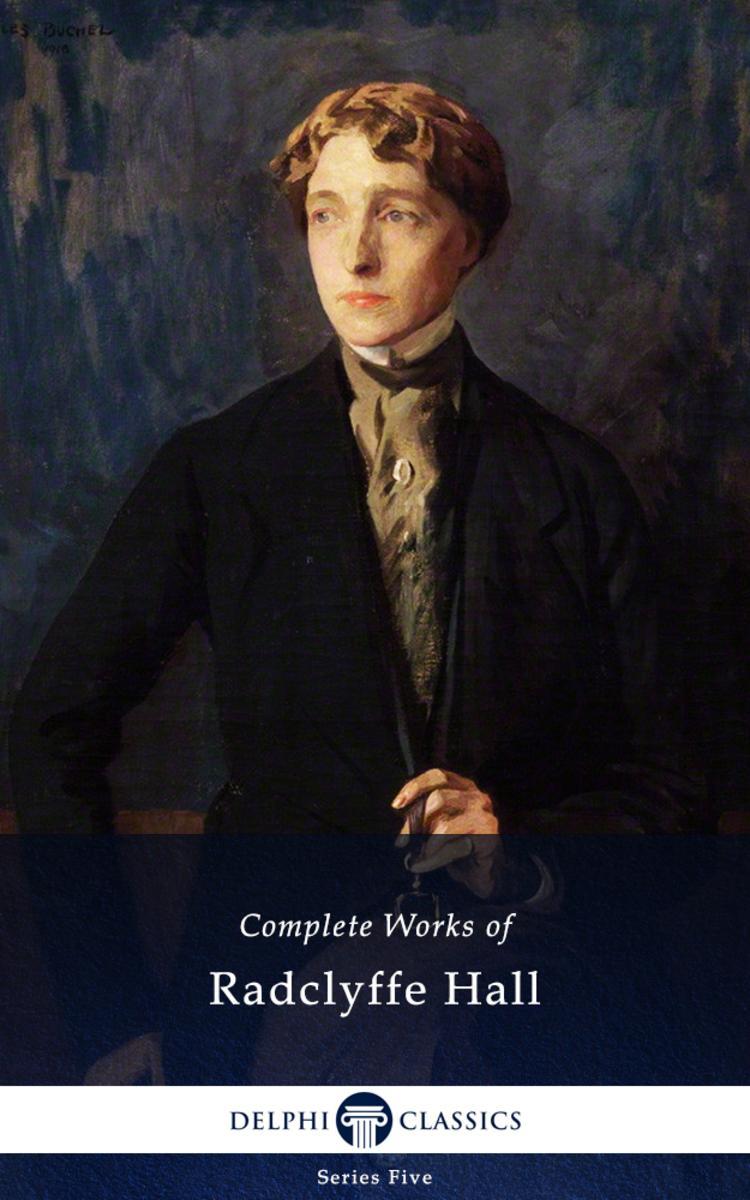
Delphi Complete Works of Radclyffe Hall (Illustrated)
¥20.36
Radclyffe Hall’s 1928 novel “The Well of Loneliness” caused a publishing scandal in 1928 and is now recognised as the first overt lesbian novel in English literature. Hall was also awarded prestigious literary prizes for the novel “Adam’s Breed” and she produced a large body of accomplished verse. For the first time in publishing history, this comprehensive eBook presents Hall’s complete works, with numerous illustrations, rare texts, informative introductions and the usual Delphi bonus material. (Version 1) * Beautifully illustrated with images relating to Hall’s life and works * Concise introductions to the novels and other texts * ALL 7 novels, with individual contents tables * Images of how the books were first printed, giving your eReader a taste of the original texts * Excellent formatting of the texts * The rare short story collection MISS OGILVY FINDS HERSELF, first time in digital print * Special chronological and alphabetical contents tables for the poetry * Easily locate the poems you want to read * Scarce poetry collections, available in no other edition * A bonus biography - discover Hall’s literary life * Scholarly ordering of texts into chronological order and literary genres Please visit www.delphiclassics.com to browse through our range of exciting titles Please note: no known copies of the posthumous Italian poetry collection RHYMES AND RHYTHMS are available at the time of publication. Once the text becomes available, it will be added to the collection as a free update. CONTENTS: The Novels THE FORGE THE UNLIT LAMP A SATURDAY LIFE ADAM’S BREED THE WELL OF LONELINESS THE MASTER OF THE HOUSE THE SIXTH BEATITUDE The Short Story Collection MISS OGILVY FINDS HERSELF The Poetry Collections INTRODUCTION TO THE POETRY OF RADCLYFFE HALL TWIXT EARTH AND STARS A SHEAF OF VERSES POEMS OF THE PAST & PRESENT SONGS OF THREE COUNTIES AND OTHER POEMS THE FORGOTTEN ISLAND The Poems LIST OF POEMS IN CHRONOLOGICAL ORDER LIST OF POEMS IN ALPHABETICAL ORDER The Biography A SHORT BIOGRAPHY OF RADCLYFFE HALL by Gill Rossini Please visit www.delphiclassics.com to browse through our range of exciting titles
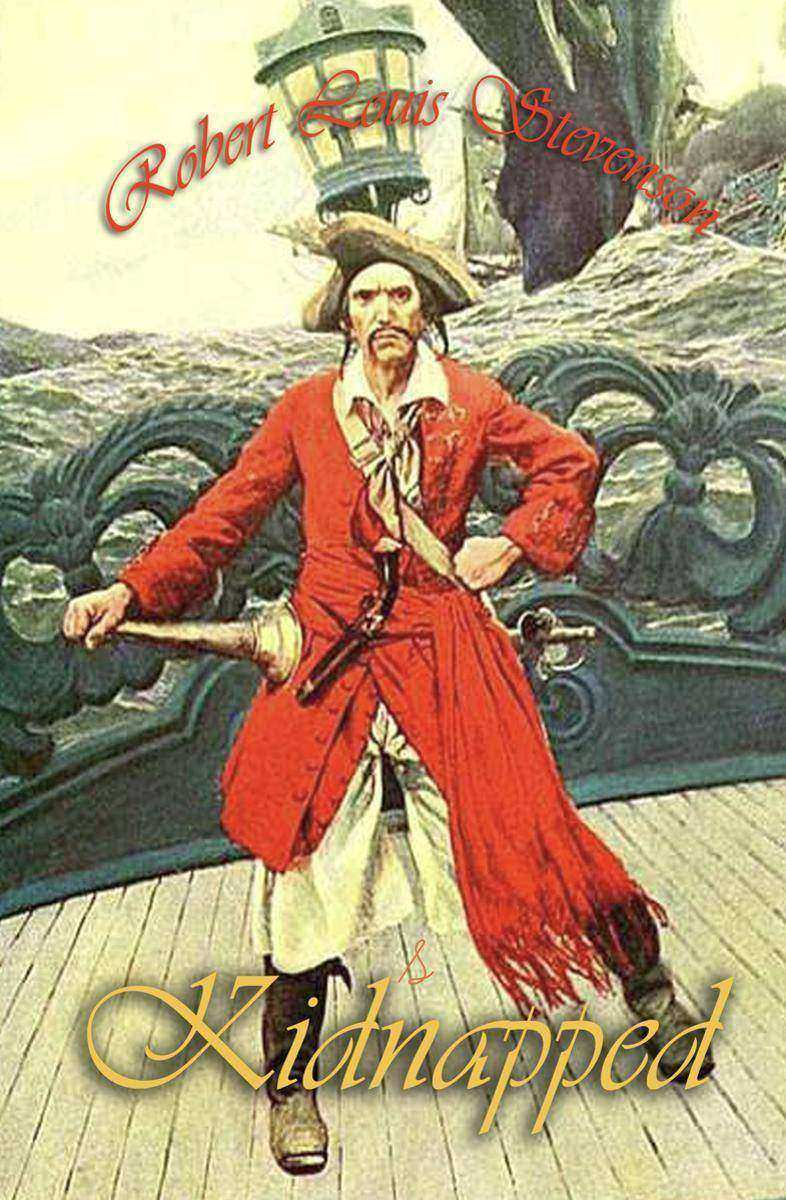
Kidnapped
¥40.79
Kidnapped is a historical adventure novel set around 18th-century Scottish events, notably the Appin Murder, which occurred near Ballachulish in the aftermath of the Jacobite Rising. Many of the characters, and one of the principals, Alan Breck Stewart, were real people.


