


 购物车
 个人中心

Cruelty and Laughter
¥311.96
Eighteenth-century British culture is often seen as polite and sentimental-the creation of an emerging middle class. Simon Dickie?disputes these assumptions in Cruelty and Laughter, a wildly enjoyable but shocking plunge into the forgotten comic literature of the age. Beneath the surface of Enlightenment civility, Dickie uncovers a rich vein of?cruel humor?that?forces us to recognize just how slowly?ordinary human sufferings became worthy of sympathy.Delving into an enormous archive of comic novels, jestbooks, farces, variety shows, and cartoons,?Dickie finds?a vast repository of jokes about cripples, blind men, rape, and wife-beating. Epigrams about syphilis and scurvy sit alongside one-act comedies about hunchbacks in love. He shows us that everyone-rich and poor, women as well as men-laughed along. In the process,?Dickie also expands our understanding of many of the century's major authors, including Samuel Richardson, Lady Mary Wortley Montagu, Tobias Smollett, Frances Burney, and Jane Austen. He devotes particular attention to Henry Fielding's Joseph Andrews, a novel that reflects repeatedly on the limits of compassion and the ethical problems of laughter. Cruelty and Laughter is an engaging, far-reaching study of the other side of culture in eighteenth-century Britain.

Well Worth Saving
¥288.41
The urgent demand for housing after World War I fueled a boom in residential construction that led to historic peaks in home ownership. Foreclosures at the time were rare, and when they did happen, lenders could quickly recoup their losses by selling into a strong market. But no mortgage system is equipped to deal with credit problems on the scale of the Great Depression. As foreclosures quintupled, it became clear that the mortgage system of the 1920s was not up to the task, and borrowers, lenders, and real estate professionals sought action at the federal level.Well Worth Saving tells the story of the disastrous housing market during the Great Depression and the extent to which an immensely popular New Deal relief program, the Home Owners' Loan Corporation (HOLC), was able to stem foreclosures by buying distressed mortgages from lenders and refinancing them. Drawing on historical records and modern statistical tools, Price Fishback, Jonathan Rose, and Kenneth Snowden investigate important unanswered questions to provide an unparalleled view of the mortgage loan industry throughout the 1920s and early '30s. Combining this with the stories of those involved, the book offers a clear understanding of the HOLC within the context of the housing market in which it operated, including an examination of how the incentives and behaviors at play throughout the crisis influenced the effectiveness of policy.?More than eighty years after the start of the Great Depression, when politicians have called for similar programs to quell the current mortgage crisis, this accessible account of the Home Owners' Loan Corporation holds invaluable lessons for our own time.
Reformation of Emotions in the Age of Shakespeare
¥288.41
The crises of faith that fractured Reformation Europe also caused crises of individual and collective identity. Structures of feeling as well as structures of belief were transformed; there was a reformation of social emotions as well as a Reformation of faith.As Steven Mullaney shows in?The Reformation of Emotions in the Age of Shakespeare, Elizabethan popular drama played a significant role in confronting the uncertainties and unresolved traumas of Elizabethan Protestant England. Shakespeare and his contemporaries-audiences as well as playwrights-reshaped popular drama into a new form of embodied social, critical, and affective thought. Examining a variety of works, from revenge plays to Shakespeare's first history tetralogy and beyond, Mullaney explores how post-Reformation drama not only exposed these faultlines of society on stage but also provoked playgoers in the audience to acknowledge their shared differences. He demonstrates that our most lasting works of culture remain powerful largely because of their deep roots in the emotional landscape of their times.
Before Mickey
¥288.41
This witty and fascinating study reminds us that there was animation before Disney: about thirty years of creativity and experimentation flourishing in such extraordinary work as Girdie the Dinosaur and Felix the Cat. Before Mickey, the first and only in-depth history of animation from 1898-1928, includes accounts of mechanical ingenuity, marketing and art. Crafton is equally adept at explaining techniques of sketching and camera work, evoking characteristic styles of such pioneering animators as Winsor McCay and Ladislas Starevitch, placing work in its social and economic context, and unraveling the aesthetic impact of specific cartoons."e;Before Mickey's scholarship is quite lively and its de*ions are evocative and often funny. The history of animation coexisted with that of live-action film but has never been given as much attention."e;-Tim Hunter, New York Times
Metropolitan Jews
¥288.41
In this provocative and accessible urban history, Lila Corwin Berman considers the role that Detroit's Jews played in the city's well-known narrative of migration and decline. Taking its cue from social critics and historians who have long looked toward Detroit to understand twentieth-century urban transformations, Metropolitan Jews tells the story of Jews leaving the city while retaining a deep connection to it. Berman argues convincingly that though most Jews moved to the suburbs, urban abandonment, disinvestment, and an embrace of conservatism did not invariably accompany their moves. Instead, the Jewish postwar migration was marked by an enduring commitment to a newly fashioned urbanism with a vision of self, community, and society that persisted well beyond city limits.Complex and subtle, Metropolitan Jews pushes urban scholarship beyond the tenacious black/white, urban/suburban dichotomy. It demands a more nuanced understanding of the process and politics of suburbanization and will reframe how we think about the American urban experiment and modern Jewish history.
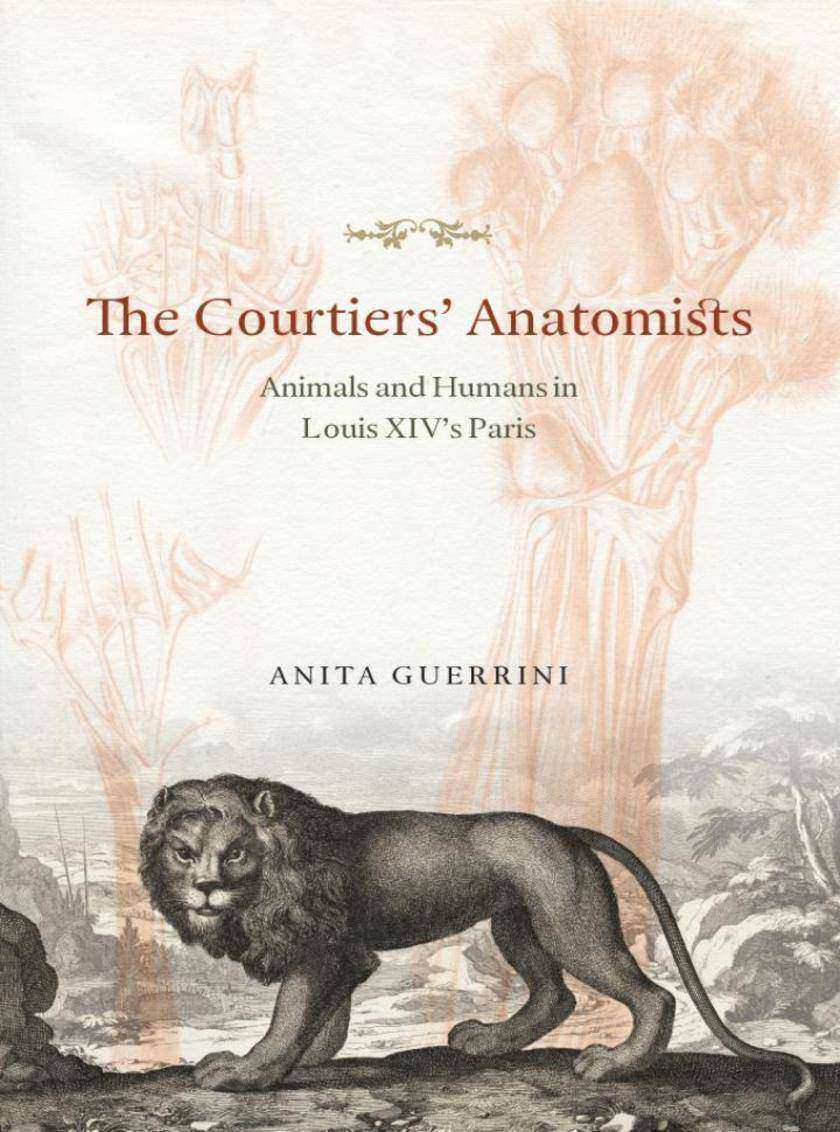
Courtiers' Anatomists
¥288.41
The Courtiers' Anatomists is about dead bodies and live animals in Louis XIV's Paris--and the surprising links between them. Examining the practice of seventeenth-century anatomy, Anita Guerrini reveals how anatomy and natural history were connected through animal dissection and vivisection. Driven by an insatiable curiosity, Parisian scientists, with the support of the king, dissected hundreds of animals from the royal menageries and the streets of Paris. Guerrini is the first to tell the story of Joseph-Guichard Duverney, who performed violent, riot-inducing dissections of both animal and human bodies before the king at Versailles and in front of hundreds of spectators at the King's Garden in Paris. At the Paris Academy of Sciences, meanwhile, Claude Perrault, with the help of Duverney's dissections, edited two folios in the 1670s filled with lavish illustrations by court artists of exotic royal animals.Through the stories of Duverney and Perrault, as well as those of Marin Cureau de la Chambre, Jean Pecquet, and Louis Gayant, The Courtiers' Anatomists explores the relationships between empiricism and theory, human and animal, as well as the origins of the natural history museum and the relationship between science and other cultural activities, including art, music, and literature.
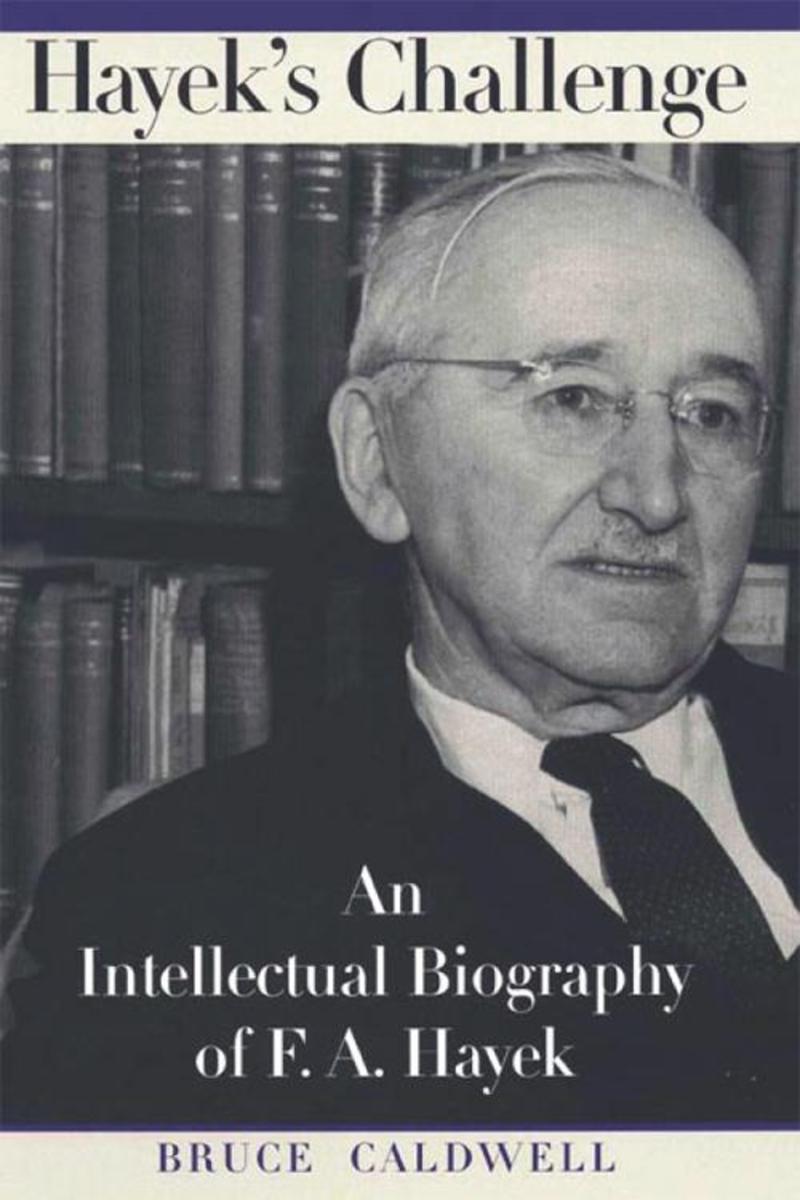
Hayek's Challenge
¥265.87
Friedrich A. Hayek is regarded as one of the preeminent economic theorists of the twentieth century, as much for his work outside of economics as for his work within it. During a career spanning several decades, he made contributions in fields as diverse as psychology, political philosophy, the history of ideas, and the methodology of the social sciences. Bruce Caldwell-editor of The Collected Works of F. A. Hayek-understands Hayek's thought like few others, and with this book he offers us the first full intellectual biography of this pivotal social theorist.Caldwell begins by providing the necessary background for understanding Hayek's thought, tracing the emergence, in fin-de-sicle Vienna, of the Austrian school of economics-a distinctive analysis forged in the midst of contending schools of thought. In the second part of the book, Caldwell follows the path by which Hayek, beginning from the standard Austrian assumptions, gradually developed his unique perspective on not only economics but a broad range of social phenomena. In the third part, Caldwell offers both an assessment of Hayek's arguments and, in an epilogue, an insightful estimation of how Hayek's insights can help us to clarify and reexamine changes in the field of economics during the twentieth century.As Hayek's ideas matured, he became increasingly critical of developments within mainstream economics: his works grew increasingly contrarian and evolved in striking-and sometimes seemingly contradictory-ways. Caldwell is ideally suited to explain the complex evolution of Hayek's thought, and his analysis here is nothing short of brilliant, impressively situating Hayek in a broader intellectual context, unpacking the often difficult turns in his thinking, and showing how his economic ideas came to inform his ideas on the other social sciences.Hayek's Challenge will be received as one of the most important works published on this thinker in recent decades.
Moral Imagination
¥265.87
Using path-breaking discoveries of cognitive science, Mark Johnson argues that humans are fundamentally imaginative moral animals, challenging the view that morality is simply a system of universal laws dictated by reason. According to the Western moral tradition, we make ethical decisions by applying universal laws to concrete situations. But Johnson shows how research in cognitive science undermines this view and reveals that imagination has an essential role in ethical deliberation.Expanding his innovative studies of human reason in Metaphors We Live By and The Body in the Mind, Johnson provides the tools for more practical, realistic, and constructive moral reflection.
What Is Education?
¥253.10
One day in 1938, John Dewey addressed a room of professional educators and urged them to take up the task of "e;finding out just what education is."e;?Reading this lecture in the late 1940s, Philip W. Jackson took Dewey's charge to heart and spent the next sixty years contemplating his words. The stimulating result of a lifetime of thinking about educating, What Is Educationis a profound philosophical exploration of how we transmit knowledge in human society and how we think about accomplishing that vital task.?Most contemporary approaches to education follow a strictly empirical track, aiming to discover pragmatic solutions for teachers and school administrators. Jackson argues that we need to learn not just how to improve on current practices but also how to think about what education means-in short, we need to answer Dewey by constantly rethinking education from the ground up. Guiding us through the many facets of Dewey's comments, Jackson also calls on Hegel, Kant, and Paul Tillich to shed light on how a society does, can, and should transmit truth and knowledge to successive generations. Teasing out the implications in these thinkers' works ultimately leads Jackson to the conclusion that education is at root a moral enterprise.?At a time when schools increasingly serve as a battleground for ideological contests, What Is Educationis a stirring call to refocus our minds on what is for Jackson the fundamental goal of education: making students as well as teachers-and therefore everyone-better people.
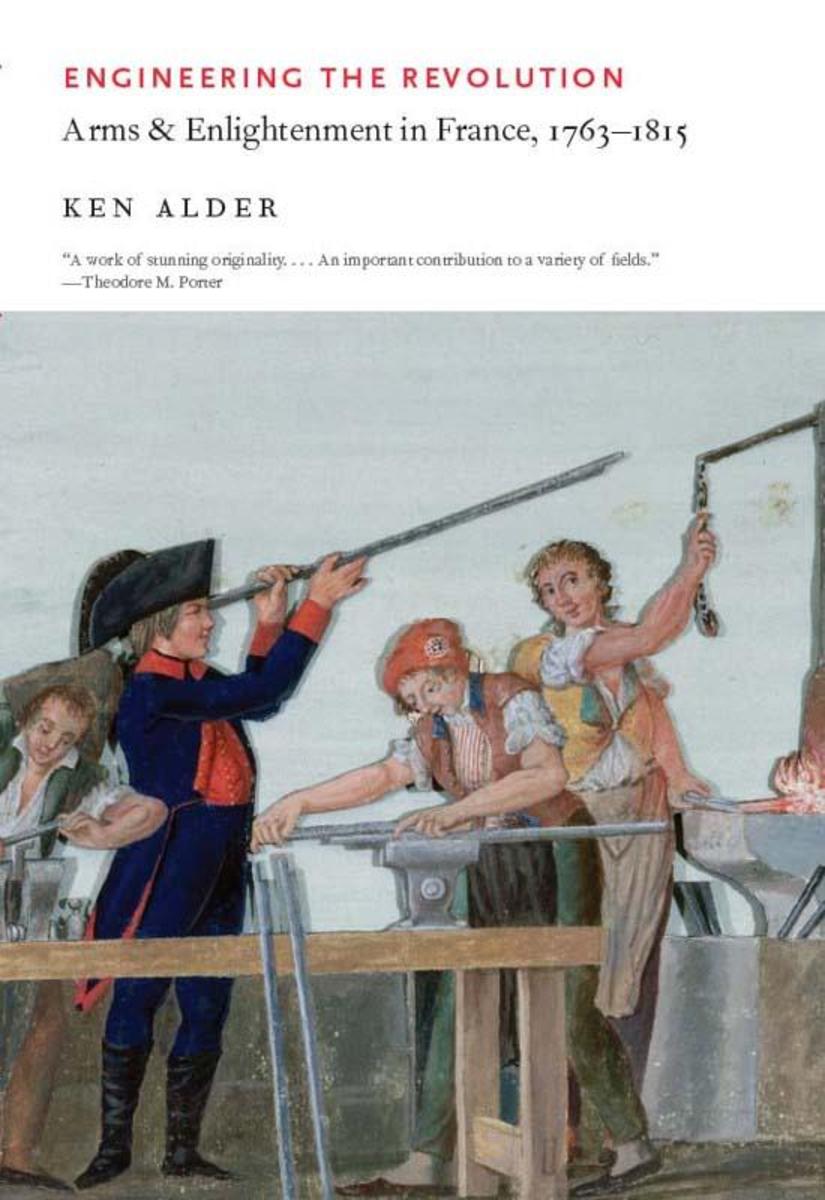
Engineering the Revolution
¥247.21
Engineering the Revolution documents the forging of a new relationship between technology and politics in Revolutionary France, and the inauguration of a distinctively modern form of the "e;technological life."e;Here, Ken Alder rewrites the history of the eighteenth century as the total history of one particular artifact-the gun-by offering a novel and historical account of how material artifacts emerge as the outcome of political struggle. By expanding the "e;political"e; to include conflict over material objects, this volume rethinks the nature of engineering rationality, the origins of mass production, the rise of meritocracy, and our interpretation of the Enlightenment and the French Revolution.
Mind, Self, and Society
¥247.21
George Herbert Mead is widely recognized as one of the most brilliantly original American pragmatists. Although he had a profound influence on the development of social philosophy, he published no books in his lifetime. This makes the lectures collected in Mind, Self, and Society all the more remarkable, as they offer a rare synthesis of his ideas.This collection gets to the heart of Mead's meditations on social psychology and social philosophy. Its penetrating, conversational tone transports the reader directly into Mead's classroom as he teases out the genesis of the self and the nature of the mind. The book captures his wry humor and shrewd reasoning, showing a man comfortable quoting Aristotle alongside Alice in Wonderland.Included in this edition are an insightful foreword from leading Mead scholar Hans Joas, a revealing set of textual notes by Dan Huebner that detail the text's origins, and a comprehensive bibliography of Mead's other published writings. While Mead's lectures inspired hundreds of students, much of his brilliance has been lost to time. This new edition ensures that Mead's ideas will carry on, inspiring a new generation of thinkers.
Michel Foucault
¥247.21
This book, which Foucault himself has judged accurate, is the first to provide a sustained, coherent analysis of Foucault's work as a whole.To demonstrate the sense in which Foucault's work is beyond structuralism and hermeneutics, the authors unfold a careful, analytical exposition of his oeuvre. They argue that during the of Foucault's work became a sustained and largely successful effort to develop a new method-"e;interpretative analytics"e;-capable fo explaining both the logic of structuralism's claim to be an objective science and the apparent validity of the hermeneutical counterclaim that the human sciences can proceed only by understanding the deepest meaning of the subject and his tradition."e;There are many new secondary sources [on Foucault]. None surpass the book by Hubert Dreyfus and Paul Rabinow. . . . The American paperback edition contains Foucault's 'On the Genealogy of Ethics,' a lucid interview that is now our best source for seeing how he construed the whole project of the history of sexuality."e;-David Hoy, London Review of Books
Mosaic Constitution
¥447.34
It is a common belief that *ure has no place in modern, secular politics. Graham Hammill challenges this notion in The Mosaic Constitution, arguing that Moses's constitution of Israel, which created people bound by the rule of law, was central to early modern writings about government and state.Hammill shows how political writers from Machiavelli to Spinoza drew on Mosaic narrative to imagine constitutional forms of government. At the same time, literary writers like Christopher Marlowe, Michael Drayton, and John Milton turned to Hebrew *ure to probe such fundamental divisions as those between populace and multitude, citizenship and race, and obedience and individual choice. As these writers used biblical narrative to fuse politics with the creative resources of language, Mosaic narrative also gave them a means for exploring divine authority as a product of literary imagination. The first book to place Hebrew *ure at the cutting edge of seventeenth-century literary and political innovation, The Mosaic Constitution offers a fresh perspective on political theology and the relations between literary representation and the founding of political communities.
Romantic Absolute
¥412.02
The absolute was one of the most significant philosophical concepts in the early nineteenth century, particularly for the German romantics. Its exact meaning and its role within philosophical romanticism remain, however, a highly contested topic among contemporary scholars.In?The Romantic Absolute, Dalia Nassar offers an illuminating new assessment of the romantics and their understanding of the absolute. In doing so, she fills an important gap in the history of philosophy, especially with respect to the crucial period between Kant and Hegel.Scholars today interpret philosophical romanticism along two competing lines: one emphasizes the romantics' concern with epistemology, the other their concern with metaphysics. Through careful textual analysis and systematic reconstruction of the work of three major romantics-Novalis, Friedrich Schlegel, and Friedrich Schelling-Nassar shows that neither interpretation is fully satisfying. Rather, she argues, one needs to approach the absolute from both perspectives. Rescuing these philosophers from frequent misunderstanding, and even dismissal, she articulates not only a new angle on the philosophical foundations of romanticism but on the meaning and significance of the notion of the absolute itself.
Capitalism and Cartography in the Dutch Golden Age
¥412.02
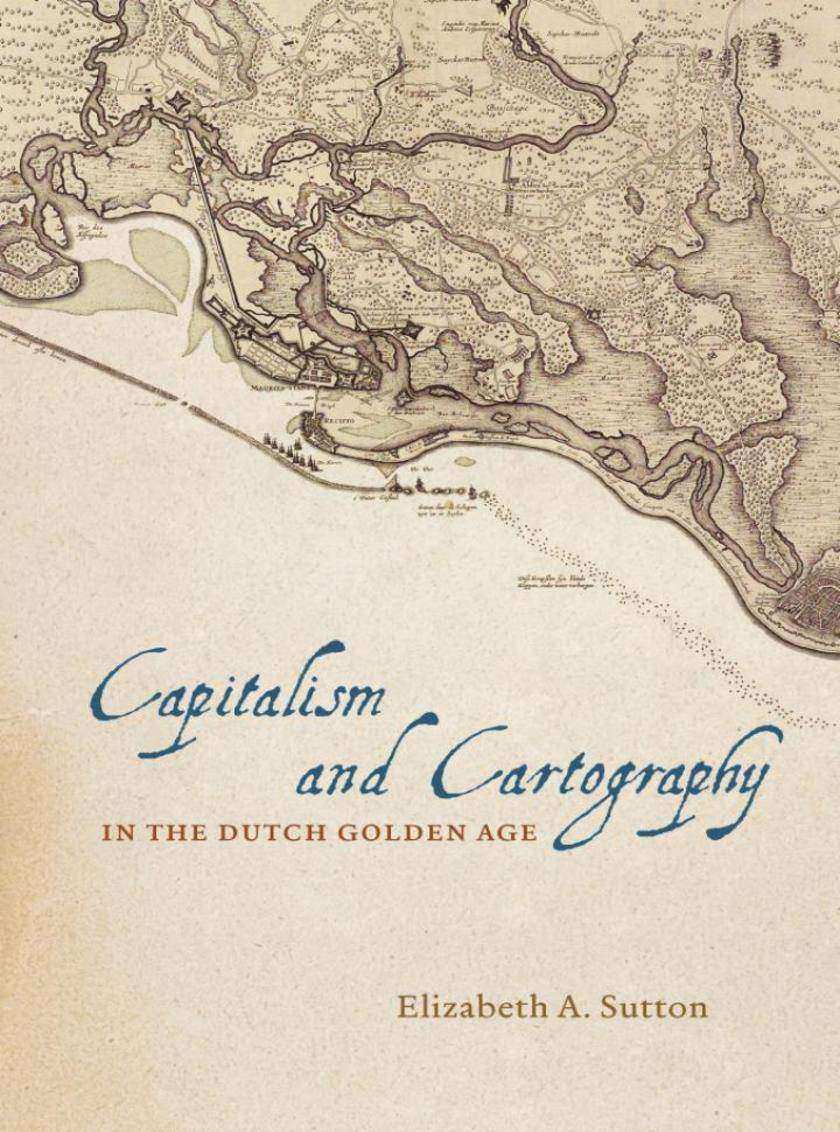
In?Capitalism and Cartography in the Dutch Golden Age, Elizabeth A. Sutton explores the fascinating but previously neglected history of corporate cartography during the Dutch Golden Age, from ca. 1600 to 1650. She examines how maps were used as propaganda tools for the Dutch West India Company in order to encourage the commodification of land and an overall capitalist agenda.Building her exploration around the central figure of Claes Jansz Vischer, an Amsterdam-based publisher closely tied to the Dutch West India Company, Sutton shows how printed maps of Dutch Atlantic territories helped rationalize the Dutch Republic's global expansion. Maps of land reclamation projects in the Netherlands, as well as the Dutch territories of New Netherland (now New York) and New Holland (Dutch Brazil), reveal how print media were used both to increase investment and to project a common narrative of national unity. Maps of this era showed those boundaries, commodities, and topographical details that publishers and the Dutch West India Company merchants and governing Dutch elite deemed significant to their agenda. In the process, Sutton argues, they perpetuated and promoted modern state capitalism.
Marking Modern Times
¥394.36
The public spaces and buildings of the United States are home to many thousands of timepieces-bells, time balls, and clock faces-that tower over urban streets, peek out from lobbies, and gleam in store windows. And in the streets and squares beneath them, men, women, and children wear wristwatches of all kinds. Americans have decorated their homes with clocks and included them in their poetry, sermons, stories, and songs. And as political instruments, social tools, and cultural symbols, these personal and public timekeepers have enjoyed a broad currency in art, life, and culture.In Marking Modern Times, Alexis McCrossen relates how the American preoccupation with time led people from across social classes to acquire watches and clocks. While noting the difficulties in regulating and synchronizing so many timepieces, McCrossen expands our understanding of the development of modern time discipline, delving into the ways we have standardized time and describing how timekeepers have served as political, social, and cultural tools in a society that doesn't merely value time but regards access to time as a natural-born right, a privilege of being an American.

Boll Weevil Blues
¥394.36
Between the 1890s and the early 1920s, the boll weevil slowly ate its way across the Cotton South from Texas to the Atlantic Ocean. At the turn of the century, some Texas counties were reporting crop losses of over 70 percent, as were areas of Louisiana, Arkansas, and Mississippi. By the time the boll weevil reached the limits of the cotton belt, it had destroyed much of the region's chief cash crop-tens of billions of pounds of cotton, worth nearly a trillion dollars.?As staggering as these numbers may seem, James C. Giesen demonstrates that it was the very idea of the boll weevil and the struggle over its meanings that most profoundly changed the South-as different groups, from policymakers to blues singers, projected onto this natural disaster the consequences they feared and the outcomes they sought. Giesen asks how the myth of the boll weevil's lasting impact helped obscure the real problems of the region-those caused not by insects, but by landowning patterns, antiquated credit systems, white supremacist ideology, and declining soil fertility. Boll Weevil Blues brings together these cultural, environmental, and agricultural narratives in a novel and important way that allows us to reconsider the making of the modern American South.
Building a Market
¥394.36
Each year, North Americans spend as much money fixing up their homes as they do buying new ones. This obsession with improving our dwellings has given rise to a multibillion-dollar industry that includes countless books, consumer magazines, a cable television network, and thousands of home improvement stores.Building a Market charts the rise of the home improvement industry in the United States and Canada from the end of World War I into the late 1950s. Drawing on the insights of business, social, and urban historians, and making use of a wide range of documentary sources, Richard Harris shows how the middle-class preference for home ownership first emerged in the 1920s-and how manufacturers, retailers, and the federal government combined to establish the massive home improvement market and a pervasive culture of Do-It-Yourself.?Deeply insightful, Building a Market is the carefully crafted history of the emergence and evolution of a home improvement revolution that changed not just American culture but the American landscape as well.
Restoring Justice
¥370.82
In the wake of Watergate, Gerald Ford appointed eminent lawyer and scholar Edward H. Levi to the post of attorney general-and thus gave him the onerous task of restoring legitimacy to a discredited Department of Justice. Levi was famously fair-minded and free of political baggage, and his inspired addresses during this tumultuous time were critical to rebuilding national trust. They reassured a tense and troubled nation that the Department of Justice would act in accordance with the principles underlying its name, operating as a nonpartisan organization under the strict rule of law.For Restoring Justice, Jack Fuller has carefully chosen from among Levi's speeches a selection that sets out the attorney general's view of the considerable challenges he faced: restoring public confidence through discussion and acts of justice, combating the corrosive skepticism of the time, and ensuring that the executive branch would behave judicially. Also included are addresses and Congressional testimonies that speak to issues that were hotly debated at the time, including electronic surveillance, executive privilege, separation of powers, antitrust enforcement, and the guidelines governing the FBI-many of which remain relevant today. Serving at an almost unprecedentedly difficult time, Levi was among the most admired attorney generals of the modern era. Published here for the first time, the speeches in Restoring Justice offer a superb sense of the man and his work.
More Important Than the Music
¥370.82
Today, jazz is considered high art, America's national music, and the catalog of its recordings-its discography-is often taken for granted. But behind jazz discography is a fraught and highly colorful history of research, fanaticism, and the intense desire to know who played what, where, and when. This history gets its first full-length treatment in Bruce D. Epperson's More Important Than the Music. Following the dedicated few who sought to keep jazz's legacy organized, Epperson tells a fascinating story of archival pursuit in the face of negligence and deception, a tale that saw curses and threats regularly employed, with fisticuffs and lawsuits only slightly rarer.Epperson examines the documentation of recorded jazz from its casual origins as a novelty in the 1920s and '30s, through the overwhelming deluge of 12-inch vinyl records in the middle of the twentieth century, to the use of computers by today's discographers. Though he focuses much of his attention on comprehensive discographies, he also examines the development of a variety of related listings, such as buyer's guides and library catalogs, and he closes with a look toward discography's future. From the little black book to the full-featured online database, More Important Than the Music offers a history not just of jazz discography but of the profoundly human desire to preserve history itself.
Trade and Romance
¥370.82
In Trade and Romance, Michael Murrin examines the complex relations between the expansion of trade in Asia and the production of heroic romance in Europe from the second half of the thirteenth century through the late seventeenth century. He shows how these tales of romance, ostensibly meant for the aristocracy, were important to the growing mercantile class as a way to gauge their own experiences in traveling to and trading in these exotic locales. Murrin also looks at the role that growing knowledge of geography played in the writing of the creative literature of the period, tracking how accurate, or inaccurate, these writers were in depicting far-flung destinations, from Iran and the Caspian Sea all the way to the Pacific.?With reference to an impressive range of major works in several languages-including the works of Marco Polo, Geoffrey Chaucer, Matteo Maria Boiardo, Lus de Cames, Ferno Mendes Pinto, Edmund Spenser, John Milton, and more-Murrin tracks numerous accounts by traders and merchants through the literature, first on the Silk Road, beginning in the mid-thirteenth century; then on the water route to India, Japan, and China via the Cape of Good Hope; and, finally, the overland route through Siberia to Beijing. All of these routes, originally used to exchange commodities, quickly became paths to knowledge as well, enabling information to pass, if sometimes vaguely and intermittently, between Europe and the Far East. These new tales of distant shores fired the imagination of Europe and made their way, with surprising accuracy, as Murrin shows, into the poetry of the period.


