


 购物车
购物车 个人中心
个人中心

Fragments and Assemblages
¥223.67
In Fragments and Assemblages, Arthur Bahr expands the ways in which we interpret medieval manu*s, examining the formal characteristics of both physical manu*s and literary works. Specifically, Bahr argues that manu* compilations from fourteenth-century London reward interpretation as both assemblages and fragments: as meaningfully constructed objects whose forms and textual contents shed light on the city's literary, social, and political cultures, but also as artifacts whose physical fragmentation invites forms of literary criticism that were unintended by their medieval makers. Such compilations are not simply repositories of data to be used for the reconstruction of the distant past; their physical forms reward literary and aesthetic analysis in their own right. The compilations analyzed reflect the full vibrancy of fourteenth-century London's literary cultures: the multilingual codices of Edwardian civil servant Andrew Horn and Ricardian poet John Gower, the famous Auchinleck manu* of texts in Middle English, and Chaucer's Canterbury Tales. By reading these compilations as both formal shapes and historical occurrences, Bahr uncovers neglected literary histories specific to the time and place of their production. The book offers a less empiricist way of interpreting the relationship between textual and physical form that will be of interest to a wide range of literary critics and manu* scholars.
Kant's Organicism
¥223.67
Because it laid the foundation for nearly all subsequent epistemologies, Immanuel Kant's Critique of Pure Reason has overshadowed his other interests in natural history and the life sciences, which scholars have long considered as separate from his rigorous theoretical philosophy-until now. In Kant's Organicism, Jennifer Mensch draws a crucial link between these spheres by showing how the concept of epigenesis-a radical theory of biological formation-lies at the heart of Kant's conception of reason.?As Mensch argues, epigenesis was not simply a metaphor for Kant but centrally guided his critical philosophy, especially the relationship between reason and the categories of the understanding. Offsetting a study of Kant's highly technical theory of cognition with a mixture of intellectual history and biography, she situates the epigenesis of reason within broader investigations into theories of generation, genealogy, and classification, and against later writers and thinkers such as Goethe and Darwin. Distilling vast amounts of research on the scientific literature of the time into a concise and readable book, Mensch offers one of the most refreshing looks not only at Kant's famous first Critique but at the history of philosophy and the life sciences as well.
In the Watches of the Night
¥223.67
Before skyscrapers and streetlights glowed at all hours, American cities fell into inky blackness with each setting of the sun. But over the course of the nineteenth and early twentieth century, new technologies began to light up streets, sidewalks, buildings, and public spaces. Peter C. Baldwin's evocative book depicts the changing experience of the urban night over this period, visiting a host of actors-scavengers, newsboys, and mashers alike-in the nocturnal city.Baldwin examines work, crime, transportation, and leisure as he moves through the gaslight era, exploring the spread of modern police forces and the emergence of late-night entertainment, to the era of electricity, when social campaigns sought to remove women and children from public areas at night. While many people celebrated the transition from darkness to light as the arrival of twenty-four hours of daytime, Baldwin shows that certain social patterns remained, including the danger of street crime and the skewed gender profile of night work. Sweeping us from concert halls and brothels to streetcars and industrial forges, In the Watches of the Night is an illuminating study of a vital era in American urban history.
Arbitrary Rule
¥223.67
Slavery appears as a figurative construct during the English revolution of the mid-seventeenth century, and again in the American and French revolutions, when radicals represent their treatment as a form of political slavery. What, if anything, does figurative, political slavery have to do with transatlantic slaveryIn Arbitrary Rule, Mary Nyquist explores connections between political and chattel slavery by excavating the tradition of Western political thought that justifies actively opposing tyranny. She argues that as powerful rhetorical and conceptual constructs, Greco-Roman political liberty and slavery reemerge at the time of early modern Eurocolonial expansion; they help to create racialized "e;free"e; national identities and their "e;unfree"e; counterparts in non-European nations represented as inhabiting an earlier, privative age.?Arbitrary Rule is the first book to tackle political slavery's discursive complexity, engaging Eurocolonialism, political philosophy, and literary studies, areas of study too often kept apart. Nyquist proceeds through analyses not only of texts that are canonical in political thought-by Aristotle, Cicero, Hobbes, and Locke-but also of literary works by Euripides, Buchanan, Vondel, Montaigne, and Milton, together with a variety of colonialist and political writings, with special emphasis on tracts written during the English revolution. She illustrates how "e;antityranny discourse,"e; which originated in democratic Athens, was adopted by republican Rome, and revived in early modern Western Europe, provided members of a "e;free"e; community with a means of protesting a threatened reduction of privileges or of consolidating a collective, political identity. Its semantic complexity, however, also enabled it to legitimize racialized enslavement and imperial expansion.?Throughout, Nyquist demonstrates how principles relating to political slavery and tyranny are bound up with a Roman jurisprudential doctrine that sanctions the power of life and death held by the slaveholder over slaves and, by extension, the state, its representatives, or its laws over its citizenry.
Beyond Redemption
¥223.67
In the months after the end of the Civil War, there was one word on everyone's lips: redemption. From the fiery language of Radical Republicans calling for a reconstruction of the former Confederacy to the petitions of those individuals who had worked the land as slaves to the white supremacists who would bring an end to Reconstruction in the late 1870s, this crucial concept informed the ways in which many people-both black and white, northerner and southerner-imagined the transformation of the American South.Beyond Redemption explores how the violence of a protracted civil war shaped the meaning of freedom and citizenship in the new South. Here, Carole Emberton traces the competing meanings that redemption held for Americans as they tried to come to terms with the war and the changing social landscape. While some imagined redemption from the brutality of slavery and war, others-like the infamous Ku Klux Klan-sought political and racial redemption for their losses through violence. Beyond Redemption merges studies of race and American manhood with an analysis of post-Civil War American politics to offer unconventional and challenging insight into the violence of Reconstruction.
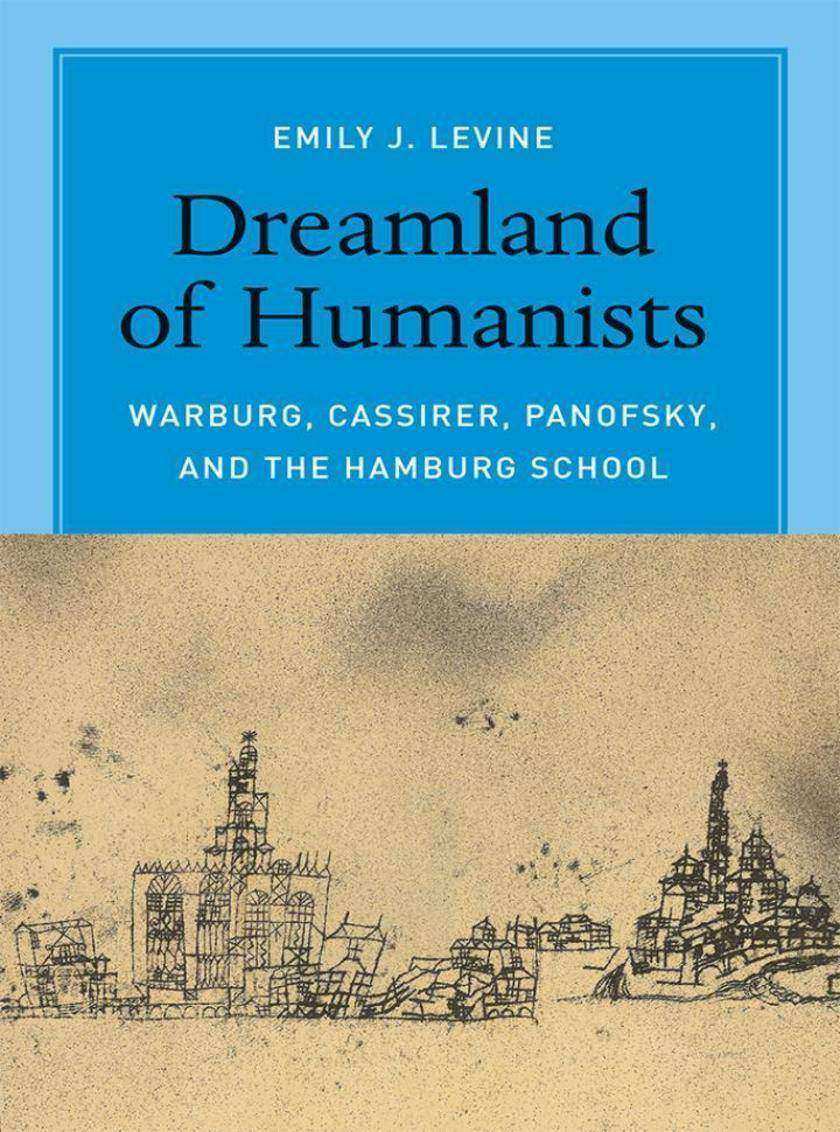
Dreamland of Humanists
¥223.67
Deemed by Heinrich Heine a city of merchants where poets go to die, Hamburg was an improbable setting for a major intellectual movement. Yet it was there, at the end of World War I, at a new university in this commercial center, that a trio of twentieth-century pioneers in the humanities emerged. Working side by side, Aby Warburg, Ernst Cassirer, and Erwin Panofsky developed new avenues in art history, cultural history, and philosophy, changing the course of cultural and intellectual history in Weimar Germany and throughout the world.In Dreamland of Humanists, Emily J. Levine considers not just these men, but the historical significance of the time and place where their ideas took form. Shedding light on the origins of their work on the Renaissance and the Enlightenment, Levine clarifies the social, political, and economic pressures faced by German-Jewish scholars on the periphery of Germany's intellectual world. By examining the role that context plays in our analysis of ideas, Levine confirms that great ideas-like great intellectuals-must come from somewhere.?

The Game
¥223.86
Hidden somewhere, in nearly every major city in the world, is an underground seduction lair. And in these lairs, men trade the most devastatingly effective techniques ever invented to charm women. This is not fiction. These men really exist. They live together in houses known as Projects. And Neil Strauss, the bestselling author and journalist, spent two years living among them, using the pseudonym Style to protect his real-life identity. The result is one of the most explosive and controversial books of the last decade guaranteed to change the lives of men and transform the way women understand the opposite sex forever. On his journey from AFC (average frustrated chump) to PUA (pick-up artist) to PUG (pick-up guru), Strauss not only shares scores of original seduction techniques but also has unforgettable encounters with the likes of Tom Cruise, Britney Spears, Paris Hilton, Heidi Fleiss, and Courtney Love. And then things really start to get strange and passions lead to betrayals lead to violence. The Game is the story of one man's transformation from frog to prince to prisoner in the most unforgettable book of this generation.

We Wanna Boogie: The Rockabilly Roots of Sonny Burgess and the Pacers
¥225.63
Rock and roll pioneer and Newport native Sonny Burgess is a member of the Rockabilly Hall of Fame. In this book full of personal interviews and remembrances, Burgess and his band tell of their original recordings for Sun Records in the 1950s; their shows with greats such as Elvis Presley, Johnny Cash, and Jerry Lee Lewis; and their success in the contemporary rockabilly revival. This also is the history of a once prominent and spirited Delta community of extensive agricultural wealth. Newport was home to numerous music clubs that hosted national artists as well as illicit backroom gambling. Burgess is a product of this history, and his vivacious music is shaped by his hometown and the dramatic transformation of southern rural life it witnessed.
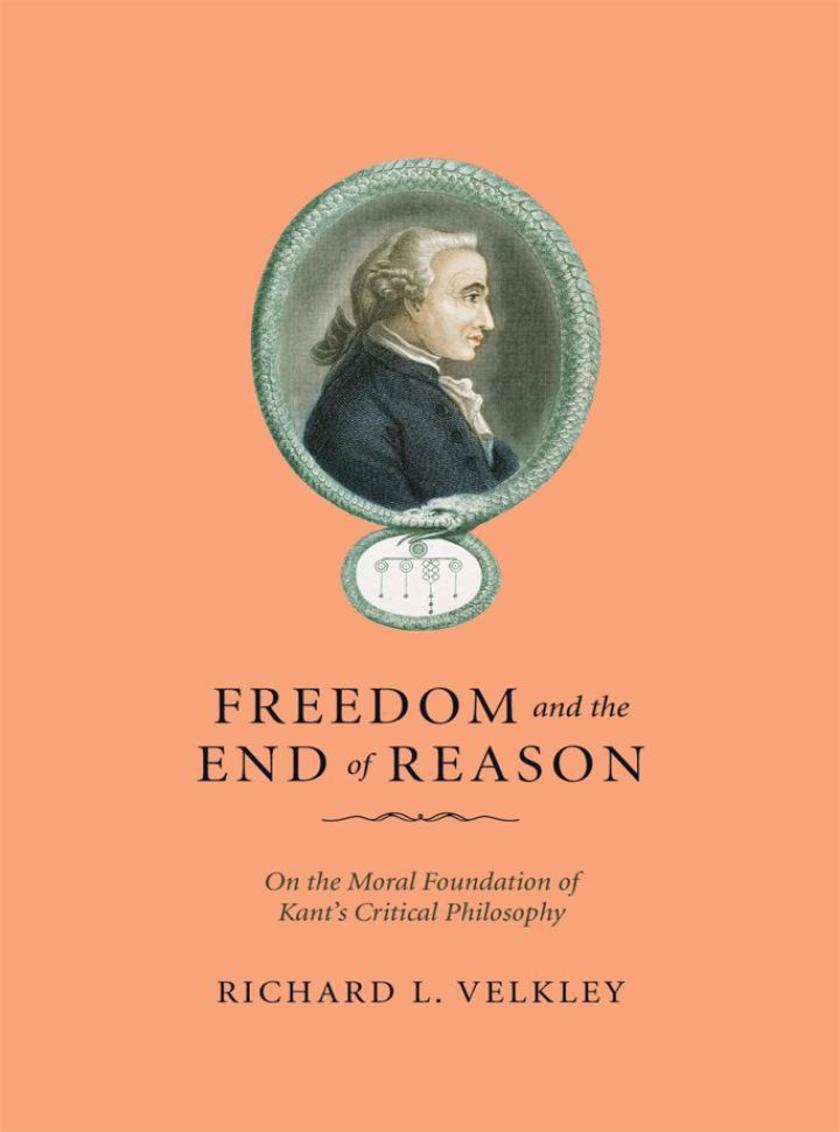
Freedom and the End of Reason
¥229.55
In Freedom and the End of Reason, Richard L. Velkley offers an influential interpretation of the central issue of Kant's philosophy and an evaluation of its position within modern philosophy's larger history. He persuasively argues that the whole of Kantianism-not merely the Second Critique-focuses on a "e;critique of practical reason"e; and is a response to a problem that Kant saw as intrinsic to reason itself: the teleological problem of its goodness. Reconstructing the influence of Rousseau on Kant's thought, Velkley demonstrates that the relationship between speculative philosophy and practical philosophy in Kant is far more intimate than generally has been perceived. By stressing a Rousseau-inspired notion of reason as a provider of practical ends, he is able to offer an unusually complete account of Kant's idea of moral culture.
Little Magazine in Contemporary America
¥229.55
Little magazines have often showcased the best new writing in America. Historically, these idiosyncratic, small-circulation outlets have served the dual functions of representing the avant-garde of literary expression while also helping many emerging writers become established authors. Although changing technology and the increasingly harsh financial realities of publishing over the past three decades would seem to have pushed little magazines to the brink of extinction, their story is far more complicated.In this collection, Ian Morris and Joanne Diaz gather the reflections of twenty-three prominent editors whose little magazines have flourished over the past thirty-five years. Highlighting the creativity and innovation driving this diverse and still vital medium, contributors offer insights into how their publications sometimes succeeded, sometimes reluctantly folded, but mostly how they evolved and persevered. Other topics discussed include the role of little magazines in promoting the work and concerns of minority and women writers, the place of universities in supporting and shaping little magazines, and the online and offline future of these publications.Selected contributorsBetsy Sussler, BOMB; Lee Gutkind, Creative Nonfiction; Bruce Andrews, L=A=N=G=U=A=G=E; Dave Eggers, McSweeney's; Keith Gessen, n+1; Don Share, Poetry; Jane Friedman, VQR; Amy Hoffman, Women's Review of Books; and more.?

What Did the Romans Know?
¥229.55
What did the Romans know about their worldQuite a lot, as Daryn Lehoux makes clear in this fascinating and much-needed contribution to the history and philosophy of ancient science. Lehoux contends that even though many of the Romans' views about the natural world have no place in modern science-the umbrella-footed monsters and dog-headed people that roamed the earth and the stars that foretold human destinies-their claims turn out not to be so radically different from our own.?Lehoux draws upon a wide range of sources from what is unquestionably the most prolific period of ancient science, from the first century BC to the second century AD. He begins with Cicero's theologico-philosophical trilogy On the Nature of the Gods, On Divination, and On Fate, illustrating how Cicero's engagement with nature is closely related to his concerns in politics, religion, and law. Lehoux then guides readers through highly technical works by Galen and Ptolemy, as well as the more philosophically oriented physics and cosmologies of Lucretius, Plutarch, and Seneca, all the while exploring the complex interrelationships between the objects of scientific inquiry and the norms, processes, and structures of that inquiry. This includes not only the tools and methods the Romans used to investigate nature, but also the Romans' cultural, intellectual, political, and religious perspectives. Lehoux concludes by sketching a methodology that uses the historical material he has carefully explained to directly engage the philosophical questions of incommensurability, realism, and relativism.?By situating Roman arguments about the natural world in their larger philosophical, political, and rhetorical contexts, What Did the Romans Knowdemonstrates that the Romans had sophisticated and novel approaches to nature, approaches that were empirically rigorous, philosophically rich, and epistemologically complex.

Conjugations
¥229.55
Bollywood movies have been long known for their colorful song-and-dance numbers and knack for combining drama, comedy, action-adventure, and music. But when India entered the global marketplace in the early 1990s, its film industry transformed radically. Production and distribution of films became regulated, advertising and marketing created a largely middle-class audience, and films began to fit into genres like science fiction and horror. In this bold study of what she names New Bollywood, Sangita Gopal contends that the key to understanding these changes is to analyze films' evolving treatment of romantic relationships.Gopalargues that the form of the conjugal duo in movies reflects other social forces in India's new consumerist and global society. She takes a daring look at recent Hindi films and movie trends-the decline of song-and-dance sequences, the upgraded status of the horror genre, and the rise of the multiplex and multi-plot-to demonstrate how these relationships exemplify different formulas of contemporary living. A provocative account of how cultural artifacts can embody globalization's effects on intimate life, Conjugations will shake up the study of Hindi film.
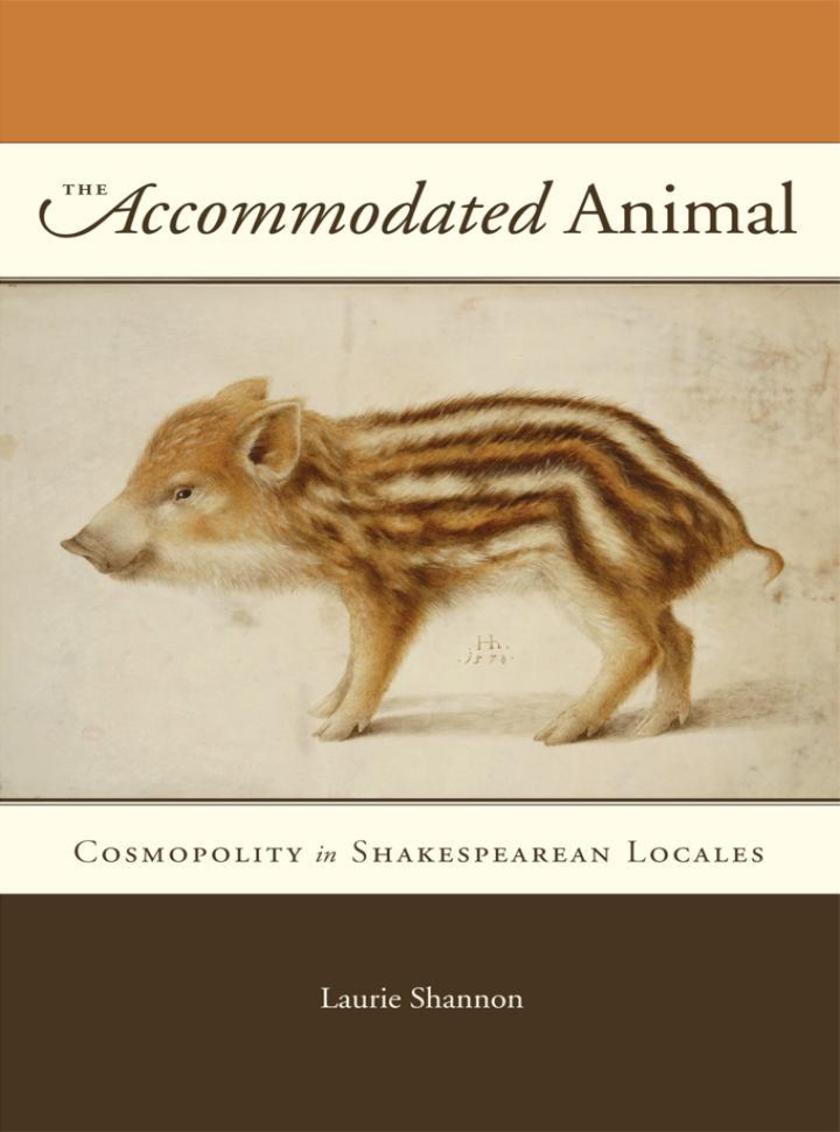
Accommodated Animal
¥229.55
Shakespeare wrote of lions, shrews, horned toads, curs, mastiffs, and hellhounds. But the word "e;animal"e; itself only appears very rarely in his work, which was in keeping with sixteenth-century usage. As Laurie Shannon reveals in The Accommodated Animal, the modern human / animal divide first came strongly into play in the seventeenth century, with Descartes's famous formulation that reason sets humans above other species: "e;I think, therefore I am."e; Before that moment, animals could claim a firmer place alongside humans in a larger vision of belonging, or what she terms cosmopolity.?With Shakespeare as her touchstone, Shannon explores the creaturely dispensation that existed until Descartes. She finds that early modern writers used classical natural history and readings of Genesis to credit animals with various kinds of stakeholdership, prerogative, and entitlement, employing the language of politics in a constitutional vision of cosmic membership. Using this political idiom to frame cross-species relations, Shannon argues, carried with it the notion that animals possess their own investments in the world, a point distinct from the question of whether animals have reason. It also enabled a sharp critique of the tyranny of humankind. By answering "e;the question of the animal"e; historically, The Accommodated Animal makes a brilliant contribution to cross-disciplinary debates engaging animal studies, political theory, intellectual history, and literary studies.
Until Choice Do Us Part
¥229.55
For centuries, people have been thinking and writing-and fiercely debating-about the meaning of marriage. Just a hundred years ago, Progressive era reformers embraced marriage not as a time-honored repository for conservative values, but as a tool for social change.In Until Choice Do Us Part, Clare Virginia Eby offers a new account of marriage as it appeared in fiction, journalism, legal decisions, scholarly work, and private correspondence at the turn into the twentieth century. She begins with reformers like sexologist Havelock Ellis, anthropologist Elsie Clews Parsons, and feminist Charlotte Perkins Gilman, who argued that spouses should be "e;class equals"e; joined by private affection, not public sanction. ?Then Eby guides us through the stories of three literary couples-Upton and Meta Fuller Sinclair, Theodore and Sara White Dreiser, and Neith Boyce and Hutchins Hapgood-who sought to reform marriage in their lives and in their writings, with mixed results. With this focus on the intimate side of married life, Eby views a historical moment that changed the nature of American marriage-and that continues to shape marital norms today.
Enigma of Diversity
¥229.55
Diversity these days is a hallowed American value, widely shared and honored. That's a remarkable change from the Civil Rights era-but does this public commitment to diversity constitute a civil rights victoryWhat does diversity mean in contemporary America, and what are the effects of efforts to support it?Ellen Berrey digs deep into those questions in The Enigma of Diversity. Drawing on six years of fieldwork and historical sources dating back to the 1950s and making extensive use of three case studies from widely varying arenas-housing redevelopment in Chicago's Rogers Park neighborhood, affirmative action in the University of Michigan's admissions program, and the workings of the human resources department at a Fortune 500 company-Berrey explores the complicated, contradictory, and even troubling meanings and uses of diversity as it is invoked by different groups for different, often symbolic ends. In each case, diversity affirms inclusiveness, especially in the most coveted jobs and colleges, yet it resists fundamental change in the practices and cultures that are the foundation of social inequality. Berrey shows how this has led racial progress itself to be reimagined, transformed from a legal fight for fundamental rights to a celebration of the competitive advantages afforded by cultural differences.Powerfully argued and surprising in its conclusions, The Enigma of Diversity reveals the true cost of the public embrace of diversity: the taming of demands for racial justice.
Top Student, Top School?
¥229.55
Most of us think that valedictorians can write their own ticket. By reaching the top of their class they have proven their merit, so their next logical step should be to attend the nation's very best universities. Yet in Top Student, Top School?, Alexandria Walton Radford, of RTI International, reveals that many valedictorians do not enroll in prestigious institutions. Employing an original five-state study that surveyed nine hundred public high school valedictorians, she sets out to determine when and why valedictorians end up at less selective schools, showing that social class makes all the difference.?Radford traces valedictorians' paths to college and presents damning evidence that high schools do not provide sufficient guidance on crucial factors affecting college selection, such as reputation, financial aid, and even the application process itself. Left in a bewildering environment of seemingly similar options, many students depend on their parents for assistance-and this allows social class to rear its head and have a profound impact on where students attend. Simply put, parents from less affluent backgrounds are far less informed about differences in colleges' quality, the college application process, and financial aid options, which significantly limits their child's chances of attending a competitive school, even when their child has already managed to become valedictorian.?Top Student, Top Schoolpinpoints an overlooked yet critical juncture in the education process, one that stands as a barrier to class mobility. By focusing solely on valedictorians, it shows that students' paths diverge by social class even when they are similarly well-prepared academically, and this divergence is traceable to specific failures by society, failures that we can and should address.Watch an interview of Alexandria Walton Radford discussing her book here:?http://www.youtube.com/watch?v=F81c1D1BpY0

Not Tonight
¥229.55
Pain. Vomiting. Hours and days spent lying in the dark. Migraine is an extraordinarily common, disabling, and painful disorder that affects over 36 million Americans and costs the US economy at least $32 billion per year. Nevertheless, it is frequently dismissed, ignored, and delegitimized.In?Not Tonight, Joanna Kempner argues that this general dismissal of migraine can be traced back to the gendered social values embedded in the way we talk about, understand, and make policies for people in pain. Because the symptoms that accompany headache disorders-like head pain, visual auras, and sensitivity to sound-lack an objective marker of distress that can confirm their existence, doctors rely on the perceived moral character of their patients to gauge how serious their complaints are. Kempner shows how this problem plays out in the history of migraine, from nineteenth-century formulations of migraine as a disorder of upper-class intellectual men and hysterical women to the influential concept of "e;migraine personality"e; in the 1940s, in which women with migraine were described as uptight neurotics who withheld sex, to contemporary depictions of people with highly sensitive "e;migraine brains."e;?Not Tonight?casts new light on how cultural beliefs about gender, pain, and the distinction between mind and body influence not only whose suffering we legitimate, but which remedies are marketed, how medicine is practiced, and how knowledge about disease is produced.

Under a Bad Sign
¥229.55
Many people have contributed to the completion of this book.Its inception can be traced to a seminar that Lary May and Paula Rabinowitz asked me to deliver on hip hop's gangsta culture toward the end of my graduate studies in the American studies program at the University of Minnesota.The media hype and moral panic surrounding gangsta culture in the early 1990s bore an uncanny resemblance to the troublesome reception of Hollywood's white ethnic gangsters in the 1930s, the subject of my research at the time.The chance to discuss the gangster/gangsta relation also fueled the development of an undergraduate course on African American popular culture.So I have the American studies faculty and fellow graduates in Scott Hall, as well as the students on the consequent course, to thank for setting me on the road to writing Under a Bad Sign.A particular shout-out has to go to John Wright, who insisted I dig up Claude McKay's Harlem: Negro Metropolis in the rare books section of Wilson Library to see how deep the provenance and complex the relationship was between black denizens of the American city and their gangster culture heroes.

War's Waste
¥229.55
With US soldiers stationed around the world and engaged in multiple conflicts, Americans will be forced for the foreseeable future to come to terms with those permanently disabled in battle.?At the moment, we accept rehabilitation as the proper social and cultural response to the wounded, swiftly returning injured combatants to their civilian lives. But this was not always the case, as Beth Linker reveals in her provocative new book, War's Waste.?Linker explains how, before entering World War I, the United States sought a way to avoid the enormous cost of providing injured soldiers with pensions, which it had done since the Revolutionary War. Emboldened by their faith in the new social and medical sciences, reformers pushed rehabilitation as a means to "e;rebuild"e; disabled soldiers, relieving the nation of a monetary burden and easing the decision to enter the Great War. Linker's narrative moves from the professional development of orthopedic surgeons and physical therapists to the curative workshops, or hospital spaces where disabled soldiers learned how to repair automobiles as well as their own artificial limbs. The story culminates in the postwar establishment of the Veterans Administration, one of the greatest legacies to come out of the First World War.
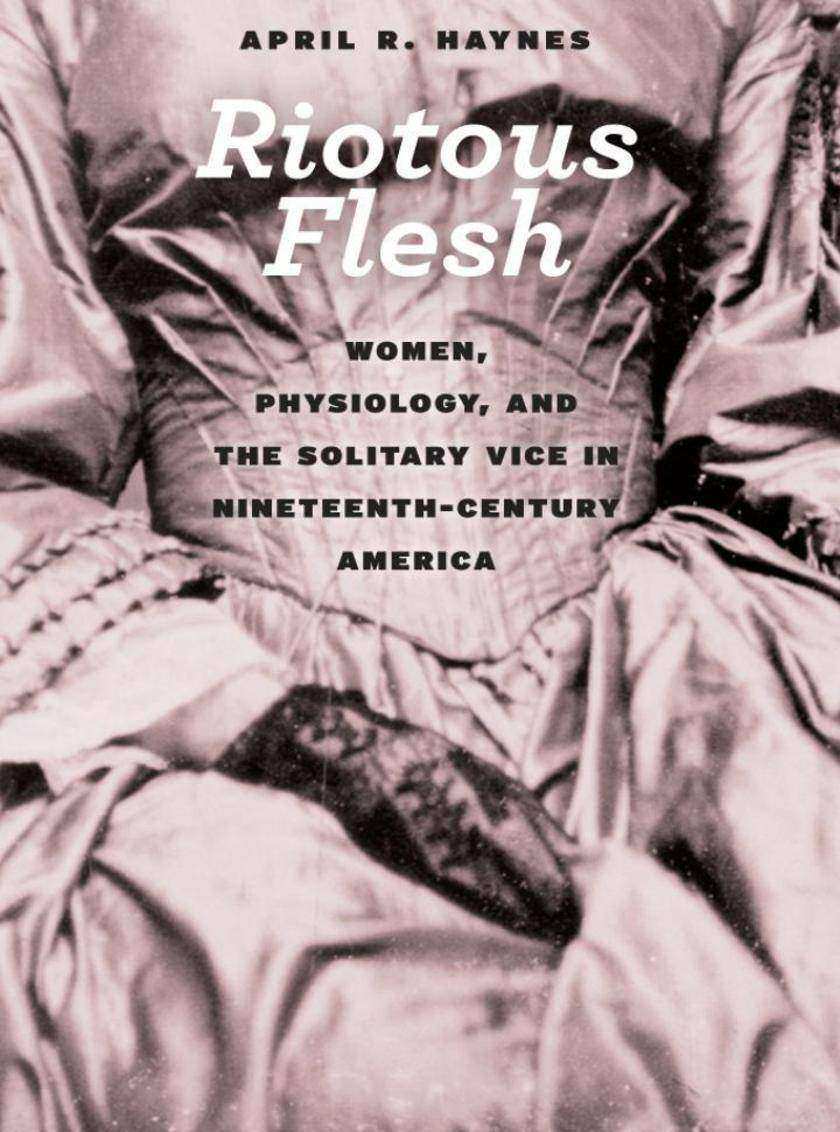
Riotous Flesh
¥229.55
Nineteenth-century America saw numerous campaigns against masturbation, which was said to cause illness, insanity, and even death. Riotous Flesh explores women's leadership of those movements, with a specific focus on their rhetorical, social, and political effects, showing how a desire to transform the politics of sex created unexpected alliances between groups that otherwise had very different goals.As April R. Haynes shows, the crusade against female masturbation was rooted in a generally shared agreement on some major points: that girls and women were as susceptible to masturbation as boys and men; that "e;self-abuse"e; was rooted in a lack of sexual information; and that sex education could empower women and girls to master their own bodies. Yet the groups who made this education their goal ranged widely, from "e;ultra"e; utopians and nascent feminists to black abolitionists. Riotous Flesh explains how and why diverse women came together to popularize, then institutionalize, the condemnation of masturbation, well before the advent of sexology or the professionalization of medicine.

Peak Oil
¥229.55
In recent years, the concept of "e;peak oil"e;-the moment when global oil production peaks and a train of economic, social, and political catastrophes accompany its subsequent decline-has captured the imagination of a surprisingly large number of Americans, ordinary citizens as well as scholars, and created a quiet, yet intense underground movement.In Peak Oil, Matthew Schneider-Mayerson takes readers deep inside the world of "e;peakists,"e; showing how their hopes and fears about the postcarbon future led them to prepare for the social breakdown they foresee-all of which are fervently discussed and debated via websites, online forums, videos, and novels. By exploring the worldview of peakists, and the unexpected way that the fear of peak oil and climate change transformed many members of this left-leaning group into survivalists, Schneider-Mayerson builds a larger analysis of the rise of libertarianism, the role of oil in modern life, the political impact of digital technologies, the racial and gender dynamics of post-apocalyptic fantasies, and the social organization of environmental denial.


