


 购物车
购物车 个人中心
个人中心
Children and Traumatic Incident Reduction:Creative and Cognitive Approaches
¥65.99
What if we could resolve childhood trauma early, rather than late? We are understanding more and more about how early traumatic experiences affect long-term mental and physical health: ·Physical impacts are stored in muscles and posture ·Threats of harm are stored as tension ·Overwhelming emotion is held inside ·Negative emotional patterns become habit ·Coping and defense mechanism become inflexible What if we could resolve childhood trauma before years go by and these effects solidify in body and mind? In a perfect world, we'd like to be able to shield children from hurt and harm. In the real world, children, even relatively fortunate ones, may experience accidents, injury, illness, and loss of loved ones. Children unfortunate enough to live in unsafe environments live through abuse, neglect, and threats to their well-being and even their life. What if we could resolve childhood trauma fully, gently, and completely while the child is still young? We Can. Read Children and Traumatic Incident Reduction and find out how! "This book is a must for any therapist working with kids. Naturally, it focuses on the approach of Traumatic Incident Reduction, but there is a lot of excellent material that will be useful even to the therapist who has never before heard of TIR and may not be particularly interested in learning about it. The general approach is respectful of clients, based on a great deal of personal experience by contributors as well as on the now extensive research base supporting TIR, and fits the more general research evidence on what works". --Robert Rich, PhD Book #2 in the TIR Applications Series. Series Editor: Robert Rich, PhD Learn more about TIR books at www.TIRbook.com

Onegin: English and Russian Language Edition
¥40.79
Bilingual edition of Pushkin's Eugene Onegin in both Russian and English languages. Meet Onegin, a dandy from Saint Petersburg, about 26. An arrogant, selfish and world-weary cynic. One day he inherits a landed estate from his uncle where he strikes up a friendship with his neighbour, a starry-eyed young poet named Vladimir Lensky. One day, Lensky takes Onegin to dine with the family of his fiancee, the sociable but rather thoughtless Olga Larina. At this meeting he also catches a glimpse of Olga's sister Tatyana. A quiet, precocious romantic and the exact opposite of Olga, Tatyana becomes intensely drawn to Onegin. Soon after, she bares her soul to Onegin in a letter professing her love.

Surviving a Stroke—or Two: The Secret to Recovery
¥8.09
Having a stroke isn't bad. I didn't even know it was happening. It's afterward that all the fun starts. When you can't move or talk—even blink your eyes. That's a scary feeling. This book is a record of my journey—how the strokes happened—and more importantly, the long road to recovery ?
Fiul risipitor
¥68.75
Se spune c? ?nceputurile pot fi uneori ca o cea?? de nep?truns. A?a este ?i cazul acestei pove?ti, care ?ncepe cu apari?ia unei noi specii, probabil ?n urm? cu dou? mii de ani. Specia nu are ?nc? un nume – nimic nu are ?nc? unul – dar are capacitatea de a numi lucruri.Asemenea oric?rei alte noi specii, starea acesteia este fragil?. Num?rul membrilor s?i este mic, iar teritoriul pe care ?l ocup? este redus la o bucat? din estul Africii. Popula?ia sa cre?te treptat, dar apoi, destul de probabil, aceasta se diminueaz? din nou – unii ar spune c? asta se ?nt?mpl? ?ntr-un mod aproape fatal – ajung?nd la doar c?teva mii de perechi.Membrii speciei nu sunt neap?rat foarte rapizi sau puternici sau fertili. Ei sunt ?ns? nemaipomenit de descurc?re?i. Progresiv, ei ?ncep s? exploreze teritorii cu diferite climate, diferi?i pr?d?tori ?i diferite tipuri de v?nat. Nici una dintre constr?ngerile aduse de habitat sau de geografia locului nu pare s? ?i afecteze prea tare.
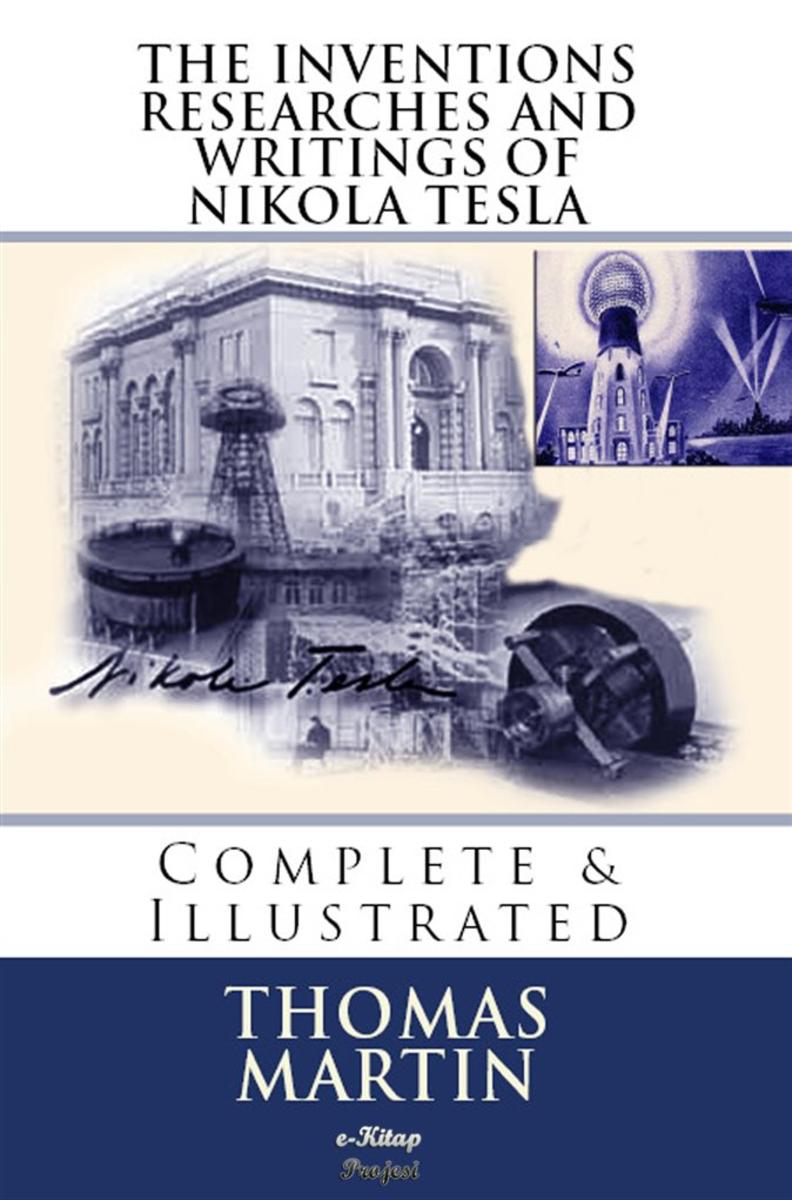
The Inventions, Researches and Writings of Nikola Tesla: Complete & Illustrated
¥28.61
The electrical problems of the present day lie largely in the economical transmission of power and in the radical improvement of the means and methods of illumination. To many workers and thinkers in the domain of electrical invention, the apparatus and devices that are familiar, appear cumbrous and wasteful, and subject to severe limitations. They believe that the principles of current generation must be changed, the area of current supply be enlarged, and the appliances used by the consumer be at once cheapened and simplified. The brilliant successes of the past justify them in every expectancy of still more generous fruition.??The present volume is a simple record of the pioneer work done in such departments up to date, by Mr. Nikola Tesla, in whom the world has already recognized one of the foremost of modern electrical in-vestigators and inventors. No attempt whatever has been made here to emphasize the importance of his researches and discoveries. ??Great ideas and real inventions win their own way, determining their own place by intrinsic merit. But with the conviction that Mr. Tesla is blazing a path that electrical development must follow for many years to come, the compiler has endeavored to bring together all that bears the impress of Mr. Tesla's genius, and is worthy of preservation. Aside from its value as showing the scope of his inventions, this volume may be of service as indicating the range of his thought. There is intellectual profit in studying the push and play of a vigorous and original mind.?
Ruins of Ancient Cities: (Volume - I)
¥28.04
"UKRAY" - UNIFIED FIELD THEORY - - A New Unification Theory on Electromagnetic Gravitation- PREFACE ? ?“This study which aims to prove that all forces and laws of physics exist in a single unified structure at the Starting and Ending moment of the Universe analyzes all laws of physics within the framework of a unified structure from Newton Mechanics to Quantum Theory, Einstein Relativity to modern 11-dimensional Super string theory. The study may also be considered as a "MODERN ERA PRINCIPIA" since it was started to be written in about 300 years (early 2007) after the publication of the great study of Newton named "PRINCIPIA" (1703-1707) on the topic of gravity theories. The volume includes SEVEN CHAPTERS in the form of SEVEN different articles which follow each other and make clear the subject when they are read consecutively. In addition, FOUR additional chapters in the form of APPENDIXES in nature of FUNDAMENTALS OF MATHEMATICS were also included at the end of the volume for readers who have a less degree of technical knowledge about the topic… THIS THEORY, GETS THESE QUESTIONS INTO; - A CHANGE into Gravitational field and field equations, STATIC AND UNIVERSAL GRAVITATIONAL CONSTANTS, - THE DYNAMICS OF Gravitational field with Combining the Electromagnetics Theory. - THE VELOCITY OF LIGHT COULD BE EXCEEDED? THIS THEORY WAS PREPARED AS A CONSEQUENCE OF APPROXIMATELY 16 YEARS STUDY, - WHOLE "666" PAGE- INCLUDES ABOUT 100 THEOREMS, - AND 1000 ILLUSTRATED DRAWINGS, - ASSERTS THE NEW PHYSICS OF THE UNIVERSE. AND MUCH MORE… "I imagined the situation of a mass falling towards the singularity point in a blackhole singularity in electrodynamic gravity conditions for some relative structures in the electromagnetic theory which is the most important and understandable theory in the classical physics I had comprehensive knowledge in my last years of my undergraduate term of the academic life (in about 2000) in an article of Faraday on the topic of the law of induction I had incidentally seen while I was examining the existing physics literature in the faculty's library. I wondered if the law of induction in a circular conducting wire differently perceived according to an observer in the train and the one on the land in the special relativity of Einstein may occur by the increase and decrease of mass during the course of falling to singularity in this blackhole and may create an electromagnetic gravity wave and a magnetic charge current which would decrease the impact of gravitation in parallel to this. This oriented me to a series of researches to study and create this theory for years and then directed me to create a unified electromagnetic gravity theory composed of SEVEN ARTICLES in total I will submit here in order and step by step. Even though the theory includes a deductive mathematical approach, tensor calculation and geometric modellings, I will give solutions of Einstein-Maxwell Equations with a different mathematical 4x4 Pauli-Dirac Spinors and Tensor calculation construction in direction of closed extra dimension of the space (5 Dimension Effect) What Does the Theory Tell? {Short Abstract and Philosophy of the Theory} The THEORY summarizes the general and simple mathematical description of the universe in the form of general conclusion items and forecasts the followings; Basic Projections of the Theory? - NEW MODEL OF AN ATOM, - NEW MODEL OF THE UNIVERSE, - CHANGE IN GALILEO Inertia Principle, - A Fundamental Change in the Structure of MAXWELL's EQUATIONS, AN ADDITIONAL TERMS AND ADDITIONS, - A CHANGE IN POYNTING ENERGY THEORY, - A NEW ATOMIC MODEL, - A NEW UNIVERSE MODEL, - CHANGE IN GALILEO'S PRINCIPLE OF INERTIA, - A FUNDEMENTAL CHANGE AND AN ADDITIONAL TERM IN THE STRUCTURE IF MAXWELL EQUATIONS, - A CHANGE IN STATIC FIELD EQUATIONS OF THE GRAVITY FIELD AND IN THE UNIVERSAL GRAVITY CONSTANT. - CHANGE IN POYNTING ENERGY THEOREM, - HOW CAN THE VELOCITY OF LIGHT BE EXCEEDED?
Ancient Medicine
¥40.79
The art of Medicine would not have been invented at first, nor would it have been made a subject of investigation (for there would have been no need of it), if when men are indisposed, the same food and other articles of regimen which they eat and drink when in good health were proper for them, and if no others were preferable to these. But now necessity itself made medicine to be sought out and discovered by men, since the same things when administered to the sick, which agreed with them when in good health, neither did nor do agree with them.
Aphorisms
¥40.79
Life is short, and Art long; the crisis fleeting; experience perilous, and decision difficult. The physician must not only be prepared to do what is right himself, but also to make the patient, the attendants, and externals cooperate.
Epidemics
¥40.79
Early in the beginning of spring, and through the summer, and towards winter, many of those who had been long gradually declining, took to bed with symptoms of phthisis; in many cases formerly of a doubtful character the disease then became confirmed; in these the constitution inclined to the phthisical. Many, and, in fact, the most of them, died; and of those confined to bed, I do not know if a single individual survived for any considerable time; they died more suddenly than is common in such cases. But other diseases, of a protracted character, and attended with fever, were well supported, and did not prove fatal: of these we will give a description afterwards.

The Sacred Disease
¥40.79
It is thus with regard to the disease called Sacred: it appears to me to be nowise more divine nor more sacred than other diseases, but has a natural cause from the originates like other affections. Men regard its nature and cause as divine from ignorance and wonder, because it is not at all like to other diseases. And this notion of its divinity is kept up by their inability to comprehend it, and the simplicity of the mode by which it is cured, for men are freed from it by purifications and incantations. But if it is reckoned divine because it is wonderful, instead of one there are many diseases which would be sacred; for, as I will show, there are others no less wonderful and prodigious, which nobody imagines to be sacred.
Azi cant jazz
¥24.44
sszefoglaló knyvem olyan témát mutat be, amivel már tbb ismeretterjeszt írásban találkozhatott az olvasó, ám ezúttal olyan részletekkel és érdekességekkel találkozunk, amit eme knyvek alig, vagy egyáltalán nem taglalnak. E szerzeményben végigkvetjük a Fld mélyérl induló izzó anyagot, a kérgen át a felszínig, ahol tüzet és pusztítást zúdít mindenre és mindenkire a kzelben. Bemutatom, hogy mi lesz a kihlt lávából, és milyen formákat hoz létre. Ezen külnleges természeti képzdmények kialakulását és fejdését vesszük górcs alá. Megismerkedünk pár külnleges tzhányóval, amik pusztításuk révén rendkívüli hatással voltak nemcsak krnyezetükre, hanem az emberiségre is. Olyan ismereteket mutatunk be, amelyek meglepetést okozhatnak az olvasóknak.
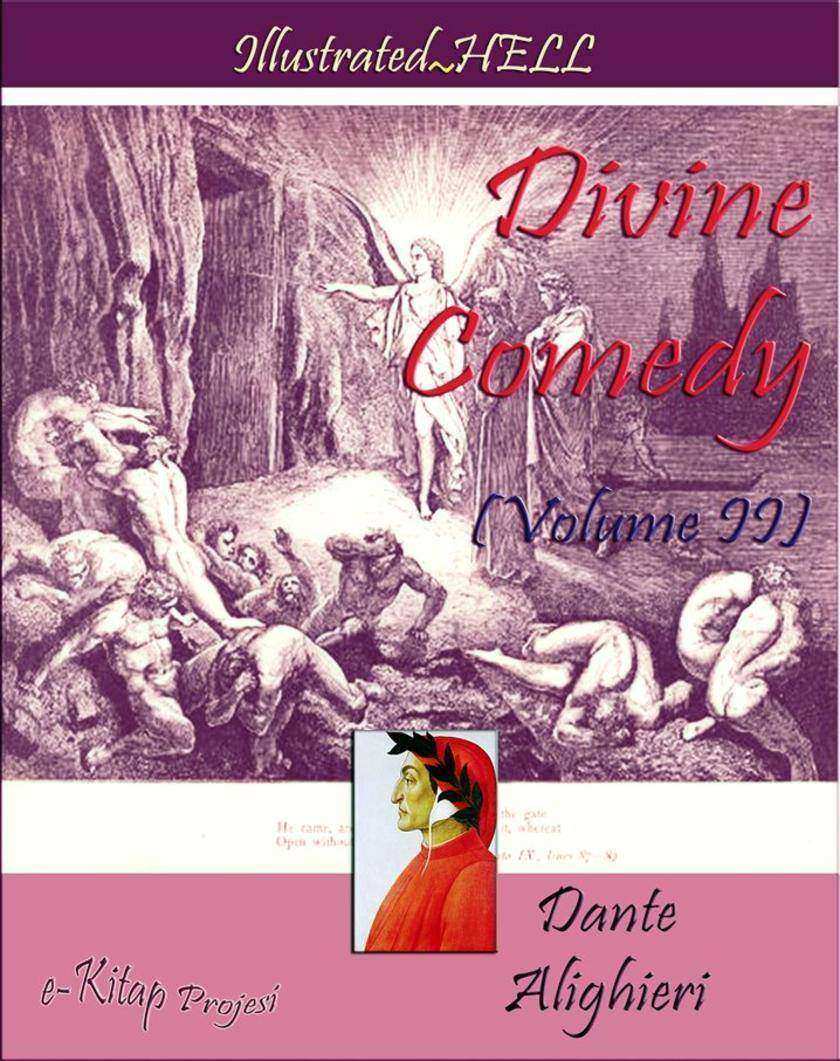
Divine Comedy (Volume II): Illustrated Hell
¥18.74
Micrographia is a historic book by Robert Hooke, detailing the then thirty-year-old Hooke's observations through various lenses. Published in September 1665, the first major publication of the Royal Society, it was the first scientific best-seller, inspiring a wide public interest in the new science of microscopy. It is also notable for coining the biological term cell. Observations: Hooke most famously describes a fly's eye and a plant cell (where he coined that term because plant cells, which are walled, reminded him of a monk's quarters). Known for its spectacular copperplate engravings of the miniature world, particularly its fold-out plates of insects, the text itself reinforces the tremendous power of the new microscope. The plates of insects fold out to be larger than the large folio itself, the engraving of the louse in particular folding out to four times the size of the book. Although the book is best known for demonstrating the power of the microscope, Micrographia also describes distant planetary bodies, the wave theory of light, the organic origin of fossils, and various other philosophical and scientific interests of its author. Publication: Published under the aegis of The Royal Society, the popularity of the book helped further the society's image and mission of being "the" scientifically progressive organization of London. Micrographia also focused attention on the miniature world, capturing the public's imagination in a radically new way. This impact is illustrated by Samuel Pepys' reaction upon completing the tome: "the most ingenious book that I ever read in my life." Hooke also selected several objects of human origin; among these objects were the jagged edge of a honed razor and the point of a needle, seeming blunt under the microscope. His goal may well have been as a way to contrast the flawed products of mankind with the perfection of nature (and hence, in the spirit of the times, of biblical creation). About Author: Robert Hooke (1635 – 1703) was an English natural philosopher, architect and polymath.His adult life comprised three distinct periods: as a scientific inquirer lacking money; achieving great wealth and standing through his reputation for hard work and scrupulous honesty following the great fire of 1666, but eventually becoming ill and party to jealous intellectual disputes. These issues may have contributed to his relative historical obscurity. He was at one time simultaneously the curator of experiments of the Royal Society and a member of its council, Gresham Professor of Geometry and a Surveyor to the City of London after the Great Fire of London, in which capacity he appears to have performed more than half of all the surveys after the fire. He was also an important architect of his time – though few of his buildings now survive and some of those are generally misattributed – and was instrumental in devising a set of planning controls for London whose influence remains today. Allan Chapman has characterised him as "England's Leonardo".Robert Gunther's Early Science in Oxford, a history of science in Oxford during the Protectorate, Restoration and Age of Enlightenment, devotes five of its fourteen volumes to Hooke.Hooke studied at Wadham College during the Protectorate where he became one of a tightly knit group of ardent Royalists led by John Wilkins. Here he was employed as an assistant to Thomas Willis and to Robert Boyle, for whom he built the vacuum pumps used in Boyle's gas law experiments. He built some of the earliest Gregorian telescopes and observed the rotations of Mars and Jupiter. In 1665 he inspired the use of microscopes for scientific exploration with his book, Micrographia. Based on his microscopic observations of fossils, Hooke was an early proponent of biological evolution. He investigated the phenomenon of refraction, deducing the wave theory of light, and was the first to suggest that matter expands when heated and that air is made of small particles separated by relatively large distances. He performed pioneering work in the field of surveying and map-making and was involved in the work, though his plan for London on a grid system was rejected in favour of rebuilding along the existing routes. He also came near to an experimental proof that gravity follows an inverse square law, and hypothesised that such a relation governs the motions of the planets, an idea which was subsequently developed by Newton.
Euthyphro
¥9.24
On the Origin of Species, published on 24 November 1859, is a work of scientific literature by Charles Darwin which is considered to be the foundation of evolutionary biology. Its full title was On the Origin of Species by Means of Natural Selection, or the Preservation of Favoured Races in the Struggle for Life. For the sixth edition of 1872, the short title was changed to The Origin of Species. Darwin's book introduced the scientific theory that populations evolve over the course of generations through a process of natural selection. It presented a body of evidence that the diversity of life arose by common descent through a branching pattern of evolution. Darwin included evidence that he had gathered on the Beagle expedition in the 1830s and his subsequent findings from research, correspondence, and experimentation. Various evolutionary ideas had already been proposed to explain new findings in biology. There was growing support for such ideas among dissident anatomists and the general public, but during the first half of the 19th century the English scientific establishment was closely tied to the Church of England, while science was part of natural theology. Ideas about the transmutation of species were controversial as they conflicted with the beliefs that species were unchanging parts of a designed hierarchy and that humans were unique, unrelated to other animals. The political and theological implications were intensely debated, but transmutation was not accepted by the scientific mainstream. The book was written for non-specialist readers and attracted widespread interest upon its publication. As Darwin was an eminent scientist, his findings were taken seriously and the evidence he presented generated scientific, philosophical, and religious discussion. The debate over the book contributed to the campaign by T. H. Huxley and his fellow members of the X Club to secularise science by promoting scientific naturalism. Within two decades there was widespread scientific agreement that evolution, with a branching pattern of common descent, had occurred, but scientists were slow to give natural selection the significance that Darwin thought appropriate. During the "eclipse of Darwinism" from the 1880s to the 1930s, various other mechanisms of evolution were given more credit. With the development of the modern evolutionary synthesis in the 1930s and 1940s, Darwin's concept of evolutionary adaptation through natural selection became central to modern evolutionary theory, and it has now become the unifying concept of the life sciences. Summary of Darwin's theory: Darwin's theory of evolution is based on key facts and the inferences drawn from them, which biologist Ernst Mayr summarised as follows: ? Every species is fertile enough that if all offspring survived to reproduce the population would grow (fact).? Despite periodic fluctuations, populations remain roughly the same size (fact).? Resources such as food are limited and are relatively stable over time (fact).? A struggle for survival ensues (inference).? Individuals in a population vary significantly from one another (fact).? Much of this variation is inheritable (fact).? Individuals less suited to the environment are less likely to survive and less likely to reproduce; individuals more suited to the environment are more likely to survive and more likely to reproduce and leave their inheritable traits to future generations, which produces the process of natural selection (inference).? This slowly effected process results in populations changing to adapt to their environments, and ultimately, these variations accumulate over time to form new species (inference).
Bilin? ve Zaman
¥9.32
Her ?ey ?evresiyle etkile?imsel bütünlükte anlaml? olmaktad?r. Soral?m yine de; Bütünü par?alar?ndan fazlas? yapan nedenler nelerdir? Evrende neyin ifadesiyiz? Canl?l?k, bilin?, ruh, duygular art?k anla??labilir midir? Canl?l?k h?z farklar?ndan m? olu?maktad?r? H?zl? bile?enimiz olan elektri?in; canl?l???n ve bilincimizin olu?umunda nas?l bir etken olmaktad?r? Bizleri olu?turanlardan beden, duygular, bilin?, ruh diye tan?mlad?klar?m?z aras?nda ba?lant?lar nas?l kurulmaktad?r? Sorular?, günümüzde enerjiler aras? ba?lant?, etkile?im nas?l kurulmaktad?r? Sorusu gibi oldu?u, yani her?ey gibi onlar?nda enerji oldu?u anla??lm??t?r. Ruh olarak tan?mlad?k, zihin-beden aras?nda ba?lant?y? kurmaya, duygular? anlamaya ?al??t?k. Bilincin, alg?n?n tüm bunlarla nas?l bir ili?kisi olabilece?ini sorgulad?k. Genelde ?yle oluyor ya, bütünün ?nce par?alar?n? anlamaya, par?alara ay?r?p anlamaya ?al??man?n sorunlar?n?n izlerini sürüp bütünle olan etkile?imini g?rmeye y?neliyoruz. Zaman?n i?inde zaman ge?irmemize ra?men bilincimizle, canl?l???m?zla nas?l ba?lant?l? oldu?unu g?rmezden geldik. Günümüz dünyas?n?n ula?t??? bilgi, ya?amsal deneyimlerin kaydedilip aktar?lmas?, izledi?imiz filmlerden tutun da, deneyimlerimizin h?zl? etkile?imiyle zaman aral?klar?n? orduk. S?n?r sistemimize benzeyen internet a?lar? olu?turduk. ?nsanl?k olarak yapay zekalar geli?tirdik. Hücre ile beden benzeri; canl?yla tüm canl?l???n, ekosistemin, varl???n etkile?im ?rüntüsü oldu?unu, etkile?imsel ?rüntüde anlam? oldu?unu ??rendik. Belki de olu?turdu?umuz yeni anlamlar gelecekte olu?acaklar?n par?alar?d?r. De?i?im devam ediyor. G?rünen o ki, canl?lar bu evrenin en ileri evrensel enerji alanlar?d?r. Soral?m kendimize; Evrende canl?l?ktan daha anlaml? bir ?ey var m?d?r? Dünya bilinci ?a?lard?r. Biriktirdi?i bilgi ve deneyimlerini, olu?umun ba?lang?c?ndan itibaren nesiller boyu aktarm??, ekosistemiyle bir bütün olarak evrilmi?tir. Ula?t??? bilin? halini ?evresiyle etkile?imsel d?ngü i?inde hep yeniden ?ekillendirmi?tir. D?nü?ümsel etkile?imin hi?bir zaman?n?n ayn? olmay??? temel evrensel durumun etkisiyle de zamanda evrilmi? ve günümüz dünyas?n?n paradigmas?na ula?m??t?r. Evrimsel ?rüntüye paralel geli?en teknolojik entegrasyonla bilgi, zamanda ?ok yo?un etkile?ebilmi?tir. Dünya üzerinde artan s?n?r hücresi say?s? yani artan canl? say?s?n?n olumlu bir yan? ise, bilginin etkile?imini art?rm?? olmas?d?r. Platon’un idealar dünyas?nda var olan?n kendi ba??na var olamayaca??n?, var olan?n ?ncül bir mükemmeli olmal? dü?üncesiyle hareket etti?i g?rülüyor. Bu dü?ünceye bi ele?tiriyle ba?lay?p daha sonra ele?tiriyide ele?tirelim. Diyelim ki bu dü?ünceye evrimin, zaman?n itiraz? var. Buna b?yle devam edersek ba?lang?? i?inde, uzaylar i?inde ba?layan evrenler olsa bile bugünki mant?k yine en ba?a d?nmemizi s?ylüyor. Yani ilk nas?l olu?tu? Bu olu?um ?ncesi uzay diyeyim en mükemmel saf hali olan B?R nas?l olu?tu. 1’de ise hi?bir ?zellik olmamal? yani nas?l olurda idea’lar oradan kaynaklan?r. Demek ki varl?k olu?umu bi süre?, evrim olur gibi. Sondan ba?a d?nsekte bi süre?, ba?tan ba?lam?? olsakta bi süre?. Bu ifadeler B?R d?ngüsü i?inde do?ru olabilir. ?dealar nereden geldi ?ünki sonu? olarak idealar B?R de olmamal? ?ünkü B?R farkl?l?k bar?nd?rm?yor. Asl?nda her ?eyi B?R kapsar, o kaynak potansiyeller alan?d?r. Haliyle her ?eyle ayn? alandad?r. Bi nevi potansiyeller alan?yla varl?k ayn? ?eydir, benzerdir. O halde Platon’un idealar kuram?n?n kayna?? ve kendisi bu evrendedir, bu evrendir. Günümüz bilim dünyas?nda ?oklu evrenler dü?üncesi olduk?a yayg?nd?r. O halde evrenlerin oldu?u daha dev uzaysal kaynaklar, alanlar olmal?d?r. ??te B?R belkide bizimde i?inde evrildi?imiz vede k?smen farkl?la?t???m?z her ?eyin kayna??, alan?d?r. Evren büyük tabii ancak büyüklük hep yan?lt?c? olmaya devam etmi?tir. Belkide hiper bir uzay hatta uzaylar alan?nda olabiliriz. Belki ama e?er do?ru b? dü?ünce ?ekliyse bu ilk soruyu yinede de?i?tirmiyor. ?lk ba?lang?? diye bir ?ey var m??
Bütünsel Bak??la Canl?l?k-II: "Madde ve Enerji, Beden ve Ruh ?li?kisi"
¥0.01
alardan beridir insanln duygularn, rüyalarn, davranlarn, düüncelerini, hemen her eyini etkileyen ve algland kadaryla sorduu baz sorularn günümüz dünyasnda anlalmaya, kaplarnn aralanp bilincimizi yeniden ekillendirmeye baladn grürken, yeni sorular oluturmaya baladmz grüyoruz. Bugünlere kadar hepimizin merak ettii sorularn bazlar unlardr: - Canllk nedir - Duygularmz nedir - Ben neyim Bunlar alglayp yorumlayabildiimiz bilin nedir - Beden ile düünce zamanda nasl balanmtr - Düüncelerimi, grdüklerimi, gzleyen nedir - Uzay nedir Nasl var olmutur - Evrende neyin ifadesiyiz - Zaman nedir - lümden sonras var mdr Ruh olarak tanmladk, zihin-beden arasnda balanty kurmaya, duygular anlamaya alrken. Bilincin, algnn ve tüm bunlarla nasl bir ilikisi olabileceini sorguladk. Genelde yle oluyor ya bütünün nce paralarn anlamaya, paralara ayrp anlamaya almann, sorunlarn izlerini sürüp bütünle olan etkileimini grmeye yneliyoruz. Zamann iinde zaman geirmemize ramen, bilincimizle, canllmzla nasl balantl olduunu grmezden geldik. Günümüz dünyasnn ulat bilgi, yaamsal deneyimlerin kaydedilip aktarlmas, izlediimiz filmlerden tutun da, deneyimlerimizin hzl etkileimiyle zaman aralklarn orduk. Snr sistemimize benzeyen internet alar oluturduk. nsanlk olarak yapay zekalar gelitirdik. Hücre ile beden benzeri; canlyla tüm canlln, ekosistemin, varln etkileim rüntüsü olduunu anlamaya baladk. Belki de oluturduumuz yeni anlamlar, gelecekte oluacaklarn paralardr. Deiim devam ediyor. Grünen o ki, canllar bu evrenin en ileri evrensel alanlardr. Soralm kendimize; Evrende canllktan daha anlaml bir ey var mdr

A Bundakirály
¥68.83
Более 100 разнообразных диет ? Безопасные способы похудения ? Советы по питанию и подбору диеты ? Наглядные таблицы с меню Избавиться от лишних килограммов – это просто! Важно лишь правильно подобрать диету, подходящую именно вам, – и результат не заставит себя ждать. Вы будете худеть, великолепно выглядеть и прекрасно себя чувствовать! В этой книге собрано множество вариантов традиционных и современных диет, правила и секреты оптимального питания, которые позволят стройнеть без особых усилий и закрепить полученные результаты. Диета для ленивых, кальциевая, рисовая, безуглеводная диеты, гречневая, кефирная, голливудская, кремлевская, средиземноморская диеты, диеты Аткинса, Дюкана и другие – выбирайте свой вариант! Наглядные и удобные таблицы с меню для каждой диеты сделают процесс похудения еще менее хлопотным! Bolee 100 raznoobraznyh diet ? Bezopasnye sposoby pohudenija ? Sovety po pitaniju i podboru diety ? Nagljadnye tablicy s menju Izbavit'sja ot lishnih kilogrammov – jeto prosto! Vazhno lish' pravil'no podobrat' dietu, podhodjashhuju imenno vam, – i rezul'tat ne zastavit sebja zhdat'. Vy budete hudet', velikolepno vygljadet' i prekrasno sebja chuvstvovat'! V jetoj knige sobrano mnozhestvo variantov tradicionnyh i sovremennyh diet, pravila i sekrety optimal'nogo pitanija, kotorye pozvoljat strojnet' bez osobyh usilij i zakrepit' poluchennye rezul'taty. Dieta dlja lenivyh, kal'cievaja, risovaja, bezuglevodnaja diety, grechnevaja, kefirnaja, gollivudskaja, kremlevskaja, sredizemnomorskaja diety, diety Atkinsa, Djukana i drugie – vybirajte svoj variant! Nagljadnye i udobnye tablicy s menju dlja kazhdoj diety sdelajut process pohudenija eshhe menee hlopotnym!

Székely és más finomságok kerek pocakoknak
¥28.86
Боли в руках, ногах, коленях периодически испытывают многие, а с возрастом болевые ощущения усиливаются. В этой книге представлена подробная информация о заболеваниях, которые становятся причиной неприятных симптомов. Вы вновь ощутите радость от движения без боли! ? Клинические симптомы, диагностика и лечение заболеваний: артрит, остеоартроз, синдром усталых ног, подагра и др. ? Народные методы лечения: настои, отвары, компрессы, ванны ? Лечебная гимнастика, массаж и самомассаж, рефлексо- и парафинотерапия ? Рецепты здорового питания ? Очищение организма и профилактика заболеваний ? ?Скорая помощь? для снятия боли. Boli v rukah, nogah, kolenjah periodicheski ispytyvajut mnogie, a s vozrastom bolevye oshhushhenija usilivajutsja. V jetoj knige predstavlena podrobnaja informacija o zabolevanijah, kotorye stanovjatsja prichinoj neprijatnyh simptomov. Vy vnov' oshhutite radost' ot dvizhenija bez boli! ? Klinicheskie simptomy, diagnostika i lechenie zabolevanij: artrit, osteoartroz, sindrom ustalyh nog, podagra i dr. ? Narodnye metody lechenija: nastoi, otvary, kompressy, vanny ? Lechebnaja gimnastika, massazh i samomassazh, reflekso- i parafinoterapija ? Recepty zdorovogo pitanija ? Ochishhenie organizma i profilaktika zabolevanij ? ?Skoraja pomoshh'? dlja snjatija boli.
TOTAL WAR: Attila kardja
¥34.58
Not many years ago the group Insecta was held even by Zoologists to include numberless small creatures—centipedes, spiders, mites, etc.—which further study has shown to present essential differences of structure, and in popular language any fairly minute animal is still an insect, just as any insect is popularly a “fly”—or, in the United States, a “bug.” Scientifically the use of the term Insect is now much restricted, though still extensive enough in all conscience, since it includes many more than a quarter of a million known species. Zoologists recognise a large group of animals characterised by having no internal skeleton but a more or less firm external coating of a peculiar substance called chitin, often strengthened by calcareous deposits, which necessitates the presence of joints in their bodies, and especially in their limbs if they are to move freely, just as medieval suits of armour required to be jointed. These are the Arthropoda. One subdivision of this group consists of aquatic animals, breathing by gills, and known as Crustacea. Crabs, lobsters, shrimps and “water-fleas” are familiar examples, and with the exception of the so-called land-crabs the only Crustaceans habitually found on land are wood-lice. The other Arthropoda are air-breathing, and since their characteristic breathing organs are branching tubes known as tracheae, the term Tracheata is sometimes used to include them all. They fall naturally into three divisions, the Myriapoda, the Insecta and the Arachnida, and it is in this last-named division that we shall find the spiders. The Myriapoda are the centipedes and millipedes, and having said this we may dismiss them, for insects and arachnids are strictly limited as to legs; and no myriapod can ever be mistaken for a spider. The Arachnida are so varied in structure that it is not easy to give characteristics common to them all, and to any general statement there are bound to be exceptions, but for practical purposes it may be said that while an insect, when mature, has only six legs, and a pair of feelers or antennae of quite different structure, Arachnids have normally eight legs, and their feeling organs are not antennae but leg-like “pedipalps.”
Mica ?ar?
¥57.14
Amit az olvasó a kezében tart, a F?ld kül?nb?z? pontjain feltárt lel?helyekr?l és a bennük található leletekr?l szól. Kül?nleges ablakot nyit elfeledett világokba, amiket a legt?bb ember nehezen tud elképzelni. Ezek a helyek olyan k?rülmények k?z?tt j?ttek létre, amik k?vetkeztében halált hoztak a figyelmetlenekre, legyenek azok kicsik vagy hatalmasak. Ebben a k?nyvben végigmegyünk kül?nb?z? f?ldt?rténeti korokon, mik?zben megtudjuk, hogy ezek a csapdák hogyan keletkeztek, hogyan m?k?dtek, és a bennük elpusztultak maradványaiból rekonstruáljuk a rég elfeledett él?lényeket.
Superimunitatea. F?r? injec?ii, f?r? medicamente, f?r? concedii medicale
¥81.67
E u?or s? te ba?i cu pumnul ?n piept c? iube?ti Rom?nia. E simplu s?-?i cumperi un fular ?n culorile tricolorului – ro?u, galben ?i albastru – ?i s? ie?i ?n pia?? de 1 Decembrie, la un pahar de vin gratis. E comod s? te cer?i ?n diferite grupuri pe Facebook cu ?nenoroci?ii care nu iubesc trupul patriei mam? ?i-l p?ng?resc“. E la ?ndem?n? s?-?i lipe?ti pe man?et? o etichet? care url? c? ?rom?nii sunt frumo?i“. E confortabil s? te ?mp?unezi cu reu?itele altor rom?ni, al?ii dec?t tine – fie c? vorbim despre filme rom?ne?ti premiate ?n lume, fie c? vorbim despre o echip? de fotbal sau ni?te liceeni olimpici la matematic?. E ideal s? spui, de acas?, din fotoliul t?u, scuip?nd o coaj? de s?m?n?? pe covor: ?E buni, domle, e rom?ni de-ai no?tri!“ Dar, de fiecare dat? c?nd e?ti tentat s? spui asta, pune-?i ?i ?ntrebarea: c?nd am f?cut, cu adev?rat, ceva real ?i personal PENTRU Rom?nia?

Un american la Chi?in?u
¥48.97
Medicina modern? a f?cut progrese imense. Cu toate acestea, nu a reu?it s? ?nving? cancerul, boala nemiloas? care face milioane de victime ?n fiecare an, la nivel mondial. ?i totu?i, dr. Max Gerson (1881-1959) ne-a oferit o raz? de speran??, prin terapia alternativ? care ?i poart? numele. ?n 1958, el a fost primul medic din lume care a spus despre cancer c? ar fi cauzat de mai mul?i factori independen?i. Dintre cei 49 de astfel de factori identifica?i p?n? ?n prezent (deficien?ele de nutri?ie, radia?iile de diverse tipuri, ingerarea aditivilor alimentari, stresul cronic, consumul de tutun ?i de alcool etc.), ?n mod surprinz?tor, alimentele toxice fac cel mai mare r?u. Peste 70% dintre tumorile maligne sunt cauzate, ?ntr-un fel sau altul, de ceea ce m?nc?m. Tocmai de aceea, Terapia Gerson are la baz? o diet? care include fructe ?i legume proaspete, cultivate organic, ?i 13 pahare de sucuri proaspete pe zi, la intervale fixe. Dup? 70 de ani de la apari?ia terapiei, timp ?n care mii de pacien?i au fost trata?i cu succes, fiica dr. Gerson, Charlotte, ea ?ns??i terapeut ?n medicina alternativ?, ?mpreun? cu dr. Morton Walker ofer? ?i mai multe informa?ii despre efectele puternice de vindecare ale fructelor ?i legumelor organice. Afl?: cum s? ?nvingi cancerul schimb?nd chimia organismului;cum s? prepari sucuri prin tehnici speciale pentru a le maximiza puterea de vindecare;cum s? scapi de alergii, obezitate, hipertensiune, SIDA, lupus ?i alte boli;ce suplimente ?nt?resc sistemul imunitar. Terapia Gerson – cea mai bun? metod? pentru oricine a spus vreodat? ?Vreau s? m? fac bine. Ar?ta-mi cum“ A func?ionat ?i pentru al?ii, va func?iona ?i pentru tine! ?nvinge boala cu ajutorul Terapiei Gerson!


