


 购物车
 个人中心


Legal Aspects of Patient Confidentiality 2nd edition
¥166.67
This revised and updated edition explores the law relating to patient confidentiality and reflects the recent legislation in the field. The text is written in a jargon free, non-legalistic way to allow the reader to understand the principles and how they apply to practice. The book is aimed at all health professionals who care for the patient, and for patient service managers, patient groups, relatives and anybody who is interested in understanding the law relating to patient confidentiality. The book includes case studies throughout.
Suicide
¥19.52
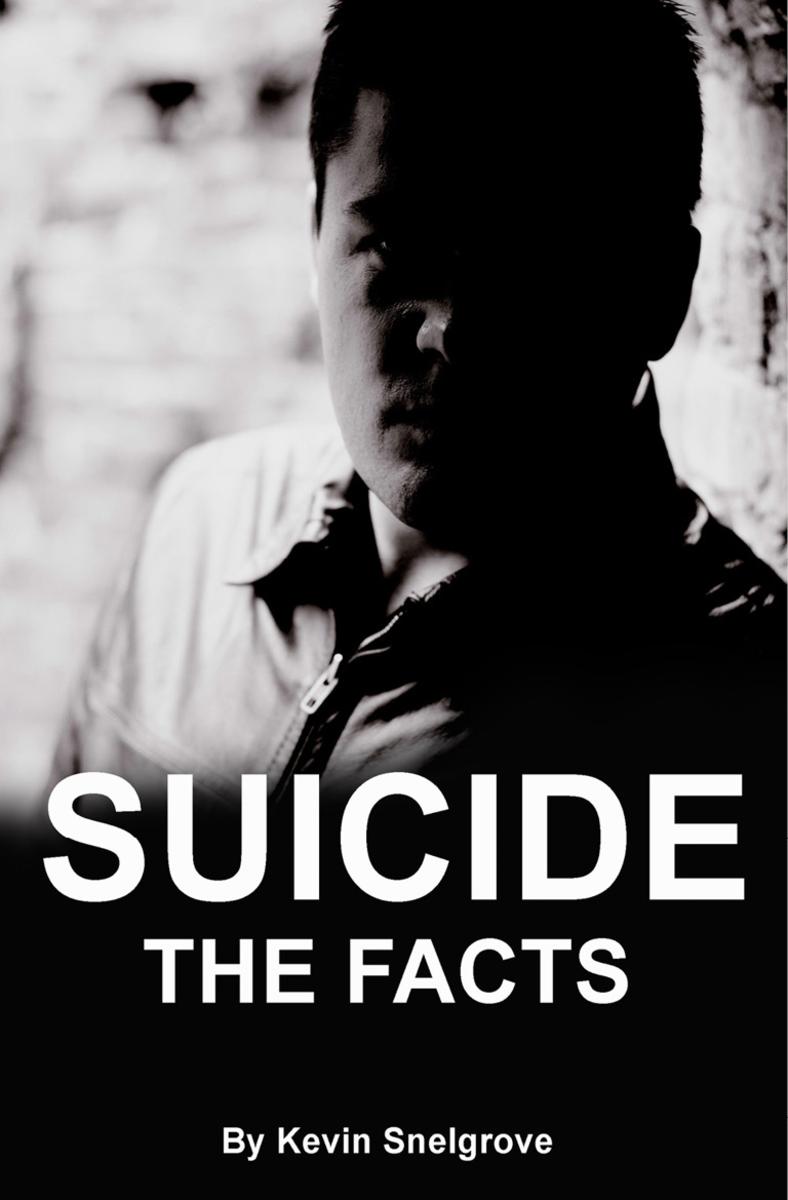
When someone commits suicide it effects the people who care about them very deeply and it can be difficult for family and friends to understand what motivated their loved one to take their own life. This new book sets out the facts about suicide in a straightforward way in order to help people who are trying to come to terms with their loss or are close to someone experiencing suicidal thoughts. Written by someone who has experienced the pain of someone close committing suicide, this sympathetic book aims to support those struggling to find understanding. Suicide: The Facts contains 101 points about the reasons why people might chose to take their own life, the signs to look out for and how to cope. Did you know that one in ten adolescents think about suicide? Are you aware that suicidal feelings are often treatable and that attempting suicide can be a cry for help? If you, or someone you know, has been affected by suicide this book is a good starting point in finding the support you need.
Ruins of Ancient Cities: (Volume - I)
¥28.04
"UKRAY" - UNIFIED FIELD THEORY - - A New Unification Theory on Electromagnetic Gravitation- PREFACE ? ?“This study which aims to prove that all forces and laws of physics exist in a single unified structure at the Starting and Ending moment of the Universe analyzes all laws of physics within the framework of a unified structure from Newton Mechanics to Quantum Theory, Einstein Relativity to modern 11-dimensional Super string theory. The study may also be considered as a "MODERN ERA PRINCIPIA" since it was started to be written in about 300 years (early 2007) after the publication of the great study of Newton named "PRINCIPIA" (1703-1707) on the topic of gravity theories. The volume includes SEVEN CHAPTERS in the form of SEVEN different articles which follow each other and make clear the subject when they are read consecutively. In addition, FOUR additional chapters in the form of APPENDIXES in nature of FUNDAMENTALS OF MATHEMATICS were also included at the end of the volume for readers who have a less degree of technical knowledge about the topic… THIS THEORY, GETS THESE QUESTIONS INTO; - A CHANGE into Gravitational field and field equations, STATIC AND UNIVERSAL GRAVITATIONAL CONSTANTS, - THE DYNAMICS OF Gravitational field with Combining the Electromagnetics Theory. - THE VELOCITY OF LIGHT COULD BE EXCEEDED? THIS THEORY WAS PREPARED AS A CONSEQUENCE OF APPROXIMATELY 16 YEARS STUDY, - WHOLE "666" PAGE- INCLUDES ABOUT 100 THEOREMS, - AND 1000 ILLUSTRATED DRAWINGS, - ASSERTS THE NEW PHYSICS OF THE UNIVERSE. AND MUCH MORE… "I imagined the situation of a mass falling towards the singularity point in a blackhole singularity in electrodynamic gravity conditions for some relative structures in the electromagnetic theory which is the most important and understandable theory in the classical physics I had comprehensive knowledge in my last years of my undergraduate term of the academic life (in about 2000) in an article of Faraday on the topic of the law of induction I had incidentally seen while I was examining the existing physics literature in the faculty's library. I wondered if the law of induction in a circular conducting wire differently perceived according to an observer in the train and the one on the land in the special relativity of Einstein may occur by the increase and decrease of mass during the course of falling to singularity in this blackhole and may create an electromagnetic gravity wave and a magnetic charge current which would decrease the impact of gravitation in parallel to this. This oriented me to a series of researches to study and create this theory for years and then directed me to create a unified electromagnetic gravity theory composed of SEVEN ARTICLES in total I will submit here in order and step by step. Even though the theory includes a deductive mathematical approach, tensor calculation and geometric modellings, I will give solutions of Einstein-Maxwell Equations with a different mathematical 4x4 Pauli-Dirac Spinors and Tensor calculation construction in direction of closed extra dimension of the space (5 Dimension Effect) What Does the Theory Tell? {Short Abstract and Philosophy of the Theory} The THEORY summarizes the general and simple mathematical description of the universe in the form of general conclusion items and forecasts the followings; Basic Projections of the Theory? - NEW MODEL OF AN ATOM, - NEW MODEL OF THE UNIVERSE, - CHANGE IN GALILEO Inertia Principle, - A Fundamental Change in the Structure of MAXWELL's EQUATIONS, AN ADDITIONAL TERMS AND ADDITIONS, - A CHANGE IN POYNTING ENERGY THEORY, - A NEW ATOMIC MODEL, - A NEW UNIVERSE MODEL, - CHANGE IN GALILEO'S PRINCIPLE OF INERTIA, - A FUNDEMENTAL CHANGE AND AN ADDITIONAL TERM IN THE STRUCTURE IF MAXWELL EQUATIONS, - A CHANGE IN STATIC FIELD EQUATIONS OF THE GRAVITY FIELD AND IN THE UNIVERSAL GRAVITY CONSTANT. - CHANGE IN POYNTING ENERGY THEOREM, - HOW CAN THE VELOCITY OF LIGHT BE EXCEEDED?

The Hound of the Baskervilles: Sherlock Holmes #5
¥16.27
Egy csodálatos fantáziával és íráskészséggel megáldott fiatal n? került a budapesti Moravcsik-féle elmeklinikára. Akkor végezte ott éppen klinikai gyakorlatait dr. Brenner József fiatal orvos, Csáth Géza néven országos hír? novellista és zenekritikus. Rendkívül sokoldalú tehetség: zenél és zenét szerez, felfedez? érték? zenekritikát ír, ráérez a legújabb festészeti ízlésre, s útt?r?je a novellam?fajnak. Akármibe fog, mindig és mindenben megel?zi kora gondolkodását, ízlését, m?veltségét. ?gy van ez orvostudományi munkásságával is. A nagy tekintély?, de konzervatív iskolát képvisel? Moravcsik professzor égisze alatt a szakmában még igazán sehol el nem ismert freudi módszereket alkalmazza betege pszichés védelmi mechanizmusainak f?ltárásában, megismerésében. A korszak magyar tudományosságát a teljes nyitottság jellemezte az új t?rekvések iránt. Még a konzervatív Moravcsik és orvosgárdája is elt?rte, s?t segítette kezd? orvosa freudista kísérleteit. Egy zseniális adottságokkal rendelkez? elmebeteg, egy zseniális fiatal orvos és lélekbúvár író, valamint egy minden újra fogékony tudományos k?rnyezet szerencsés találkozása eredményeképpen született meg Az elmebetegségek pszichikus mechanizmusa.
Euthyphro
¥9.24
On the Origin of Species, published on 24 November 1859, is a work of scientific literature by Charles Darwin which is considered to be the foundation of evolutionary biology. Its full title was On the Origin of Species by Means of Natural Selection, or the Preservation of Favoured Races in the Struggle for Life. For the sixth edition of 1872, the short title was changed to The Origin of Species. Darwin's book introduced the scientific theory that populations evolve over the course of generations through a process of natural selection. It presented a body of evidence that the diversity of life arose by common descent through a branching pattern of evolution. Darwin included evidence that he had gathered on the Beagle expedition in the 1830s and his subsequent findings from research, correspondence, and experimentation. Various evolutionary ideas had already been proposed to explain new findings in biology. There was growing support for such ideas among dissident anatomists and the general public, but during the first half of the 19th century the English scientific establishment was closely tied to the Church of England, while science was part of natural theology. Ideas about the transmutation of species were controversial as they conflicted with the beliefs that species were unchanging parts of a designed hierarchy and that humans were unique, unrelated to other animals. The political and theological implications were intensely debated, but transmutation was not accepted by the scientific mainstream. The book was written for non-specialist readers and attracted widespread interest upon its publication. As Darwin was an eminent scientist, his findings were taken seriously and the evidence he presented generated scientific, philosophical, and religious discussion. The debate over the book contributed to the campaign by T. H. Huxley and his fellow members of the X Club to secularise science by promoting scientific naturalism. Within two decades there was widespread scientific agreement that evolution, with a branching pattern of common descent, had occurred, but scientists were slow to give natural selection the significance that Darwin thought appropriate. During the "eclipse of Darwinism" from the 1880s to the 1930s, various other mechanisms of evolution were given more credit. With the development of the modern evolutionary synthesis in the 1930s and 1940s, Darwin's concept of evolutionary adaptation through natural selection became central to modern evolutionary theory, and it has now become the unifying concept of the life sciences. Summary of Darwin's theory: Darwin's theory of evolution is based on key facts and the inferences drawn from them, which biologist Ernst Mayr summarised as follows: ? Every species is fertile enough that if all offspring survived to reproduce the population would grow (fact).? Despite periodic fluctuations, populations remain roughly the same size (fact).? Resources such as food are limited and are relatively stable over time (fact).? A struggle for survival ensues (inference).? Individuals in a population vary significantly from one another (fact).? Much of this variation is inheritable (fact).? Individuals less suited to the environment are less likely to survive and less likely to reproduce; individuals more suited to the environment are more likely to survive and more likely to reproduce and leave their inheritable traits to future generations, which produces the process of natural selection (inference).? This slowly effected process results in populations changing to adapt to their environments, and ultimately, these variations accumulate over time to form new species (inference).

Fecske-torony
¥63.03
I shall be grateful to any Reader of this book who will point out any mistakes or misprints he may happen to notice in it, or any passage which he thinks is not clearly expressed. I have a quantity of MS. in hand for Parts II and III, and hope to be able——should life, and health, and opportunity, be granted to me, to publish them in the course of the next few years. Their contents will be as follows:— PART II. ADVANCED.Further investigations in the subjects of Part I. Propositions of other forms (such as “Not-all x are y”). Triliteral and Multiliteral Propositions (such as “All abc are de”). Hypotheticals. Dilemmas. &c. &c. Part III. TRANSCENDENTAL.Analysis of a Proposition into its Elements. Numerical and Geometrical Problems. The Theory of Inference. The Construction of Problems. And many other Curiosa Logica. Introduction TO LEARNERS.[N.B. Some remarks, addressed to Teachers, will be found in the Appendix]The Learner, who wishes to try the question fairly, whether this little book does, or does not, supply the materials for a most interesting mental recreation, is earnestly advised to adopt the following Rules:— (1) Begin at the beginning, and do not allow yourself to gratify a mere idle curiosity by dipping into the book, here and there. This would very likely lead to your throwing it aside, with the remark “This is much too hard for me!”, and thus losing the chance of adding a very large item to your stock of mental delights. This Rule (of not dipping) is very desirable with other kinds of books——such as novels, for instance, where you may easily spoil much of the enjoyment you would otherwise get from the story, by dipping into it further on, so that what the author meant to be a pleasant surprise comes to you as a matter of course. Some people, I know, make a practice of looking into Vol. III first, just to see how the story ends: and perhaps it is as well just to know that all ends happily——that the much-persecuted lovers do marry after all, that he is proved to be quite innocent of the murder, that the wicked cousin is completely foiled in his plot and gets the punishment he deserves, and that the rich uncle in India (Qu. Why in India? Ans. Because, somehow, uncles never can get rich anywhere else) dies at exactly the right moment——before taking the trouble to read Vol. I. This, I say, is just permissible with a novel, where Vol. III has a meaning, even for those who have not read the earlier part of the story; but, with a scientific book, it is sheer insanity: you will find the latter part hopelessly unintelligible, if you read it before reaching it in regular course. (2) Don’t begin any fresh Chapter, or Section, until you are certain that you thoroughly understand the whole book up to that point, and that you have worked, correctly, most if not all of the examples which have been set. So long as you are conscious that all the land you have passed through is absolutely conquered, and that you are leaving no unsolved difficulties behind you, which will be sure to turn up again later on, your triumphal progress will be easy and delightful. Otherwise, you will find your state of puzzlement get worse and worse as you proceed, till you give up the whole thing in utter disgust. (3) When you come to any passage you don’t understand, read it again: if you still don’t understand it, read it again: if you fail, even after three readings, very likely your brain is getting a little tired. In that case, put the book away, and take to other occupations, and next day, when you come to it fresh, you will very likely find that it is quite easy.(4) If possible, find some genial friend, who will read the book along with you, and will talk over the difficulties with you. Talking is a wonderful smoother-over of difficulties. When I come upon anything——in Logic or in any other hard subject——that entirely puzzles me, I find it a capital plan to talk it over, aloud. ? ? ? ? ? L. C.29, Bedford Street, Strand. February 21, 1896.
TOTAL WAR: Attila kardja
¥34.58
Not many years ago the group Insecta was held even by Zoologists to include numberless small creatures—centipedes, spiders, mites, etc.—which further study has shown to present essential differences of structure, and in popular language any fairly minute animal is still an insect, just as any insect is popularly a “fly”—or, in the United States, a “bug.” Scientifically the use of the term Insect is now much restricted, though still extensive enough in all conscience, since it includes many more than a quarter of a million known species. Zoologists recognise a large group of animals characterised by having no internal skeleton but a more or less firm external coating of a peculiar substance called chitin, often strengthened by calcareous deposits, which necessitates the presence of joints in their bodies, and especially in their limbs if they are to move freely, just as medieval suits of armour required to be jointed. These are the Arthropoda. One subdivision of this group consists of aquatic animals, breathing by gills, and known as Crustacea. Crabs, lobsters, shrimps and “water-fleas” are familiar examples, and with the exception of the so-called land-crabs the only Crustaceans habitually found on land are wood-lice. The other Arthropoda are air-breathing, and since their characteristic breathing organs are branching tubes known as tracheae, the term Tracheata is sometimes used to include them all. They fall naturally into three divisions, the Myriapoda, the Insecta and the Arachnida, and it is in this last-named division that we shall find the spiders. The Myriapoda are the centipedes and millipedes, and having said this we may dismiss them, for insects and arachnids are strictly limited as to legs; and no myriapod can ever be mistaken for a spider. The Arachnida are so varied in structure that it is not easy to give characteristics common to them all, and to any general statement there are bound to be exceptions, but for practical purposes it may be said that while an insect, when mature, has only six legs, and a pair of feelers or antennae of quite different structure, Arachnids have normally eight legs, and their feeling organs are not antennae but leg-like “pedipalps.”
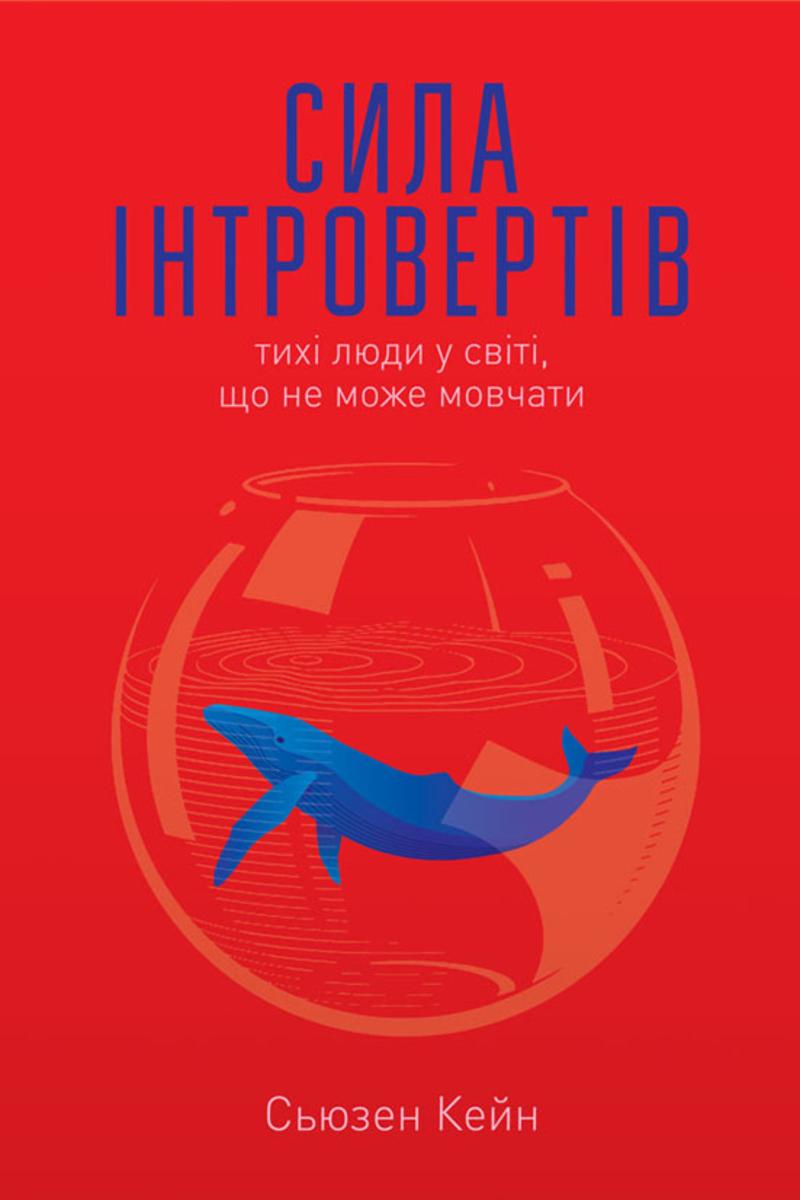
Сила ?нтроверт?в: Тих? люди у св?т?, що не може мовчати
¥35.15
Disciplina affascinante e misteriosa, la Selfica permette di realizzare oggetti in metallo, inchiostri e colori in grado di interagire positivamente con l’ambiente e permettono a chi li possiede di aumentare il benessere personale, la sensibilità, l’equilibrio psicofisico. Le “self”– siano esse gioielli, strutture per l’ambiente o quadri – aiutano chi le usa a conoscere meglio se stessi e a entrare in contatto con dimensioni energetiche e campi di informazioni differenti da quelli in cui siamo normalmente immersi. La Selfica – sviluppata attraverso le ricerche e gli insegnamenti di Oberto Airaudi, Falco Tarassaco, ispiratore di Damanhur, Federazione di Comunità – è in realtà un’arte-scienza antichissima, già conosciuta da molti popoli del passato. Questo libro racconta le sperimentazioni di numerosi ricercatori e appassionati, raccolte dall’Autrice, protagonista a sua volta di molte esperienze appassionanti. ? un viaggio in una nuova dimensione dove tempo, spazio, emozione e memoria rispondono a leggi molto diverse da quelle a cui siamo abituati...

Broken: Part 2 of 3: A traumatised girl. Her troubled brother. Their shocking se
¥23.45
Rosie Lewis is a full-time foster carer. She has been working in this field for over a decade. Before that, she worked in the special units team in the police force.Based in northern England, Rosie writes under a pseudonym to protect the identities of the children she looks after.

Broken: Part 3 of 3: A traumatised girl. Her troubled brother. Their shocking se
¥23.45
Rosie Lewis is a full-time foster carer. She has been working in this field for over a decade. Before that, she worked in the special units team in the police force.Based in northern England, Rosie writes under a pseudonym to protect the identities of the children she looks after.
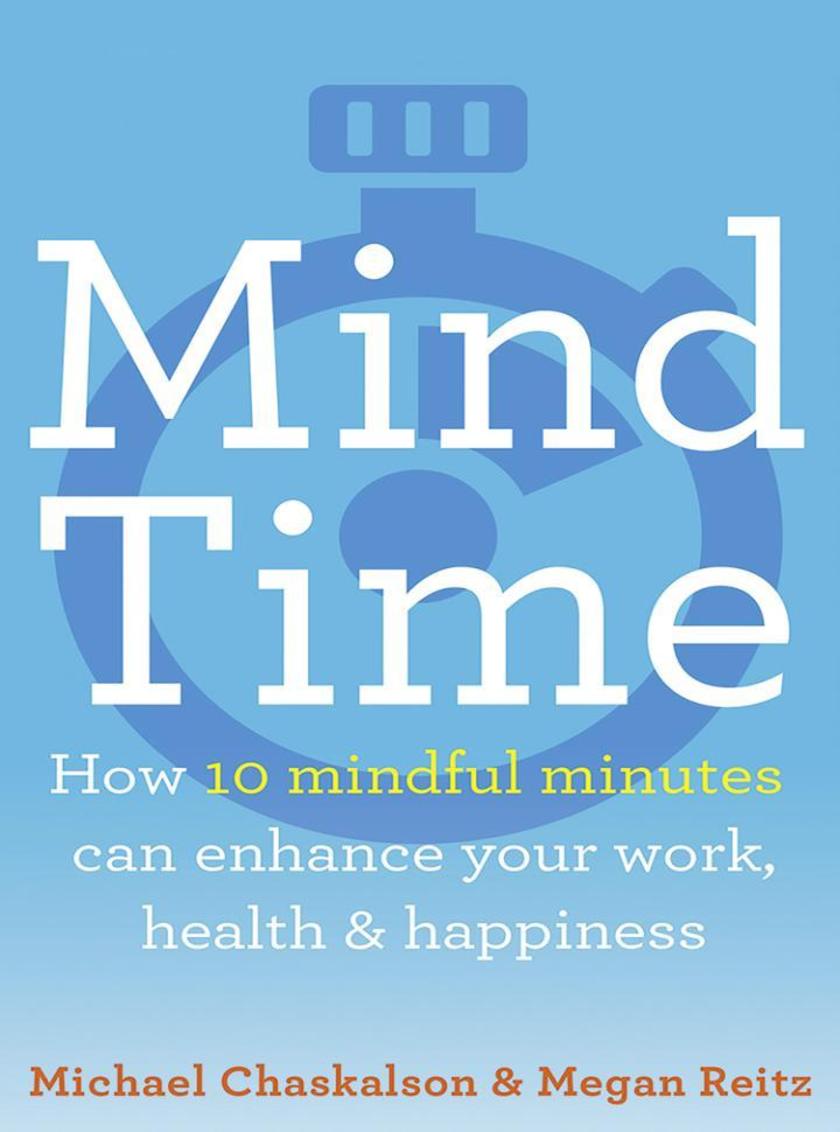
Mind Time: How ten mindful minutes can enhance your work, health and happiness
¥95.75
Michael Chaskalson Michael is one of the pioneers of mindfulness teaching and research in Europe. He is the author of the agenda-setting The Mindful Workplace and Mindfulness in Eight Weeks. Based on his 40 years of personal practice of mindfulness and related disciplines, Michael now shares his insights and research with audiences worldwide as a keynote speaker, coach, consultant, and teacher. Michael is founder and CEO of Mindfulness Works and a Professor of Practice at Ashridge Business School. Dr Megan Reitz Megan is Associate Professor of Leadership and Dialogue at Ashridge Business School where she speaks, researches, and consults on the intersection of leadership, change, dialogue and mindfulness. She has presented her research to audiences throughout the world and is the author of Dialogue in Organizations.
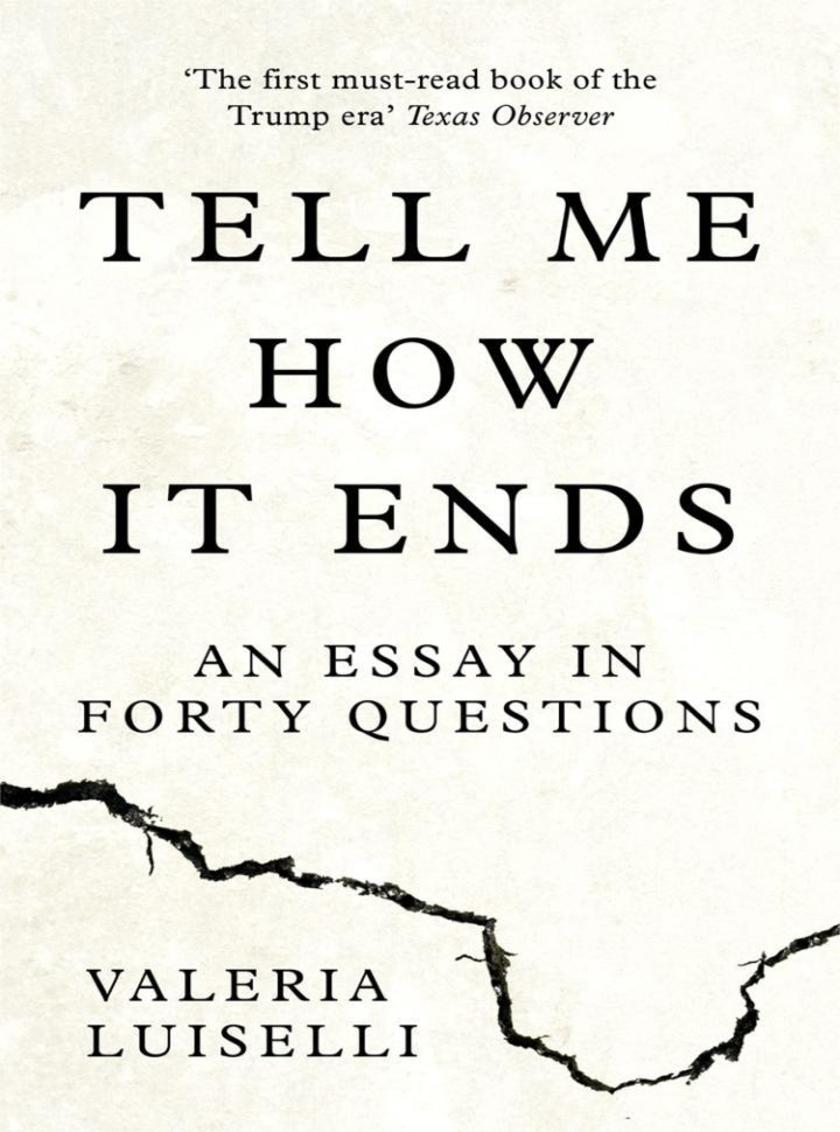
Tell Me How it Ends: An Essay in Forty Questions
¥44.24
Valeria Luiselli was born in Mexico City in 1983. She is the author of the novels Faces in the Crowd and The Story of My Teeth, and of a collection of essays called Sidewalks. Her work has been published in magazines and newspapers such as Letras Libres, the New York Times, the New Yorker, Freeman’s, El Pais and Harper’s and she is published in fifteen languages. She is currently professor of Romance Language and Literature at Hofstra University and lives in New York City.
The Greatest Benefit to Mankind: A Medical History of Humanity
¥184.23
Roy Porter is Professor of the Social History of Medicine at the Wellcome Institute for the History of Medicine. He is the editor of the Fontana History of Science series, and the author of over sixty-five books, including the acclaimed bestseller ‘London: A Social History’. His book on the history of madness in England, ‘Mind Forg’d Manacles’, won the Leo Gershoy Prize.
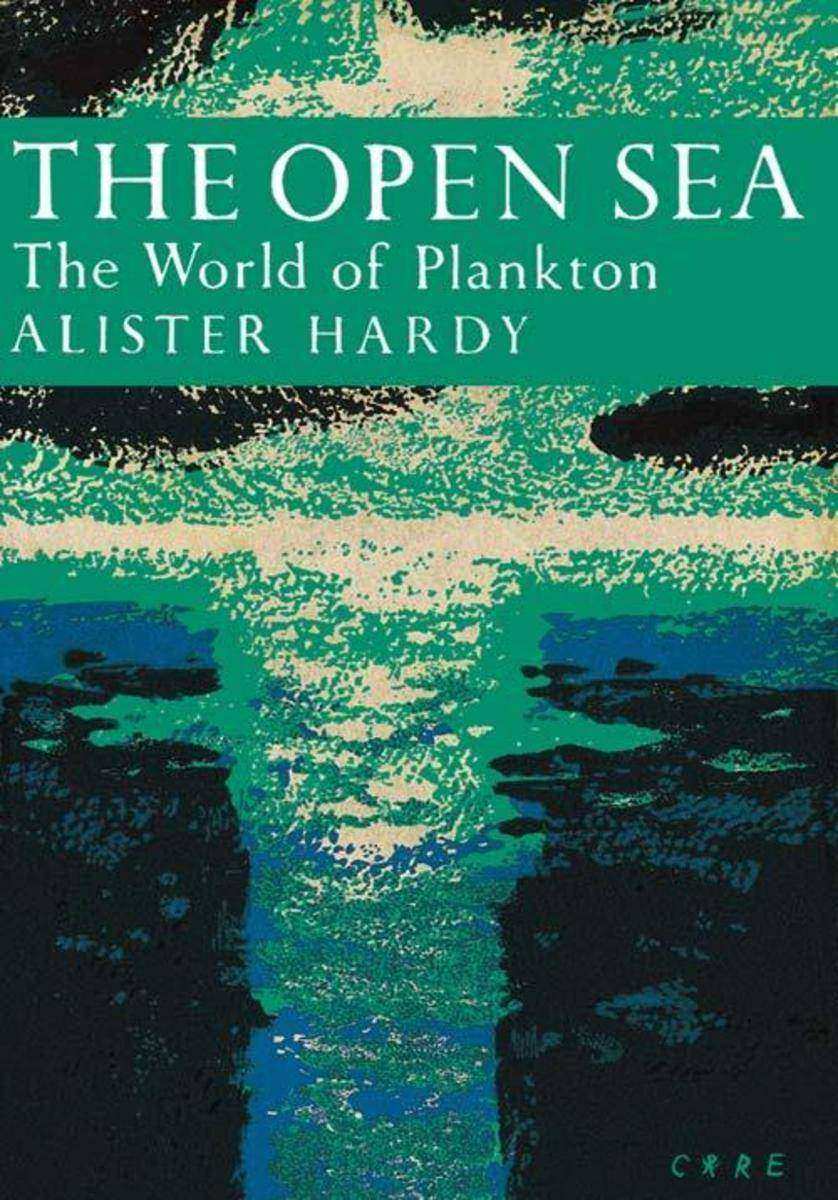
The Open Sea
¥456.66
The New Naturalist editors believe this to be the greatest general work on the subject ever written. This edition is exclusive to newnaturalists.com Professor Alistair Hardy is truly obsessed by animals of the sea - devotedly enthusiastic about the nature of their adaptations and life histories, brilliantly critical in the examination of their mysteries, acutely lucid (and at the same time highly artistic) in his de*ions of them in his arresting plates. To describe the relatively unknown and mysterious world of plankton is a task that the greatest of marine zoologists might boggle at. Yet the plankton is to the sea what vegetation is to the land. The study of plankton is a complex discipline which few amateur naturalists have had the privilege to enjoy. Never before has such a synthesis of knowledge been attempted in a community of animals so mysterious, yet so important. Professor Hardy has grasped this problem in a new and exciting way; and at least the common reader can discern the pattern of life that dominates two-thirds of the world’s surface.
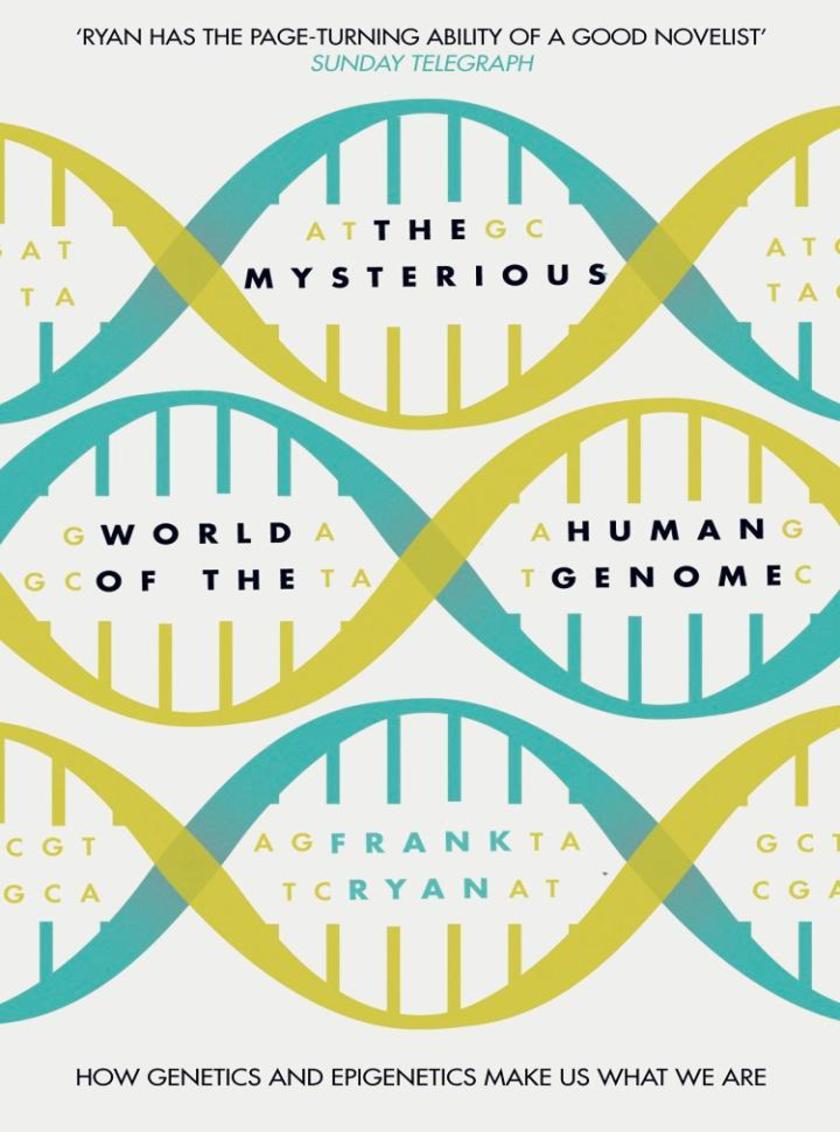
The Mysterious World of the Human Genome
¥81.03
How could a relatively simple chemical code give rise to the complexity of a human being? How could our human genome have evolved? And how does it actually work? Over the past 50 years we have deciphered the inner workings of the human genome. From the basic structure of DNA through to the complete sequence of the code, what first appeared to be simple is actually a complex and beautiful three-dimensional world that makes each of us who we are. In The Mysterious World of the Human Genome acclaimed science writer Frank Ryan leads us through the most exciting scientific discoveries of the last 50 years, revealing how this science has unlocked the cure of some genetic diseases, developed the use of DNA in forensic science and paternity testing, helped us trace our ancestors and provided a definitive map for the movement of humans out of Africa. This scientific journey has had a profound impact on our understanding of the evolution of life itself, through the role of the most ancient of organisms in our basic biology all the way to the revelation that our most recent ancestor, Homo neanderthalensis, lives on in many of us. In the ever more complicated world of the human genome, this is the first book to explain how the human genome actually works as a whole and how that knowledge will have a profound effect on our understanding of where we have come from and where we are likely to be going in the future.

Revolting!: How the Establishment are Undermining Democracy and What They’re Afr
¥51.50
Mick Hume is a journalist and author of ‘Trigger Warning: Is the Fear of Being Offensive Killing Free Speech?’ He is editor-at-large of Spiked and writes regularly on free-speech issues. He had a weekly column in The Times for ten years, and was described as ‘Britain’s only libertarian Marxist newspaper columnist’. More recently he has written in defence of freedom of speech and a free press in The Times, the Sunday Times, the Independent and the Sun.

Stalkers
¥46.11
‘IT’S THE NIGHTS that are the worst. I don’t know where he is, but my imagination tells me he is close at hand. In daylight I can keep the fears down; at night I am alone with the terror that he has created. If he rings me every ten minutes I think I will go mad with it; if he does not ring I worry that he is outside, watching me.’
Botany (Collins Internet-Linked Dictionary of)
¥63.27
Compiled by a team of scientists,and edited by Jill Bailey in consultation with Sir John Burnett, Chairman of the Trustees,National Biodiversity Network and Dr Andrew Lack,Senior Lecturer in Environmental Biology,Oxford Brookes University

Healing Your Emotions: Discover your five element type and change your life
¥117.82
Angela & John Hicks are the joint principals of the College of Integrated Chinese medicine in Reading. Angela is author of The Five Laws for Healthy Living, Principles of Acupuncture and Principles of Chinese Medicine. John is author of Principles of Chinese Herbal Medicine. They have been practising for over 17 years.
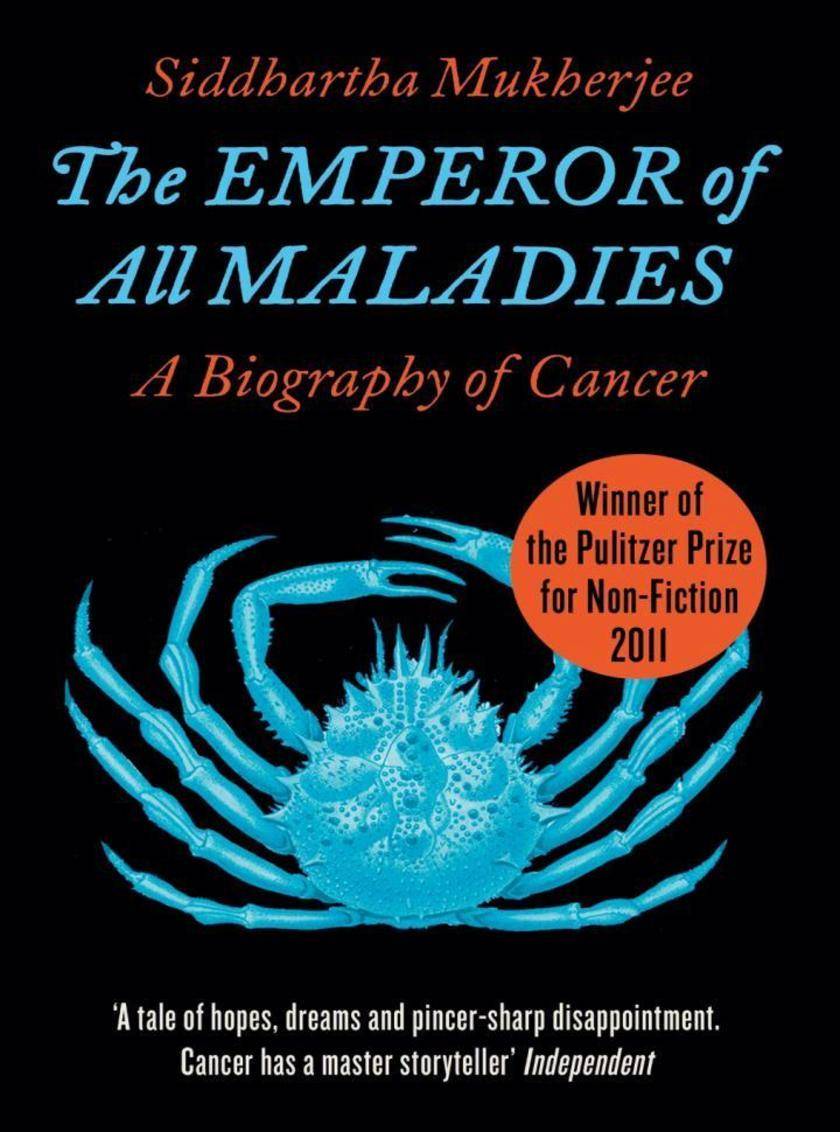
The Emperor of All Maladies
¥65.94
A magnificent, beautifully written biography of cancer - from its first documented appearances thousands of years ago through the epic battles to cure, control and conquer it to a radical new understanding of its essence. In The Emperor of All Maladies, Siddhartha Mukherjee, doctor, researcher and award-winning science writer, examines cancer with a cellular biologist’s precision, a historian’s perspective, and a biographer’s passion. The result is an astonishingly lucid and eloquent chronicle of a disease humans have lived with - and perished from - for more than five thousand years. The story of cancer is a story of human ingenuity, resilience and perseverance, but also of hubris, arrogance and misperception, all leveraged against a disease that, just three decades ago, was thought to be easily vanquished in an all-out ‘war against cancer’. Mukherjee recounts centuries of discoveries, setbacks, victories and deaths, told through the eyes of predecessors and peers, training their wits against an infinitely resourceful adversary. From the Persian Queen Atossa, whose Greek slave cut off her malignant breast, to the nineteeth-century recipient of primitive radiation and chemotherapy and Mukherjee’s own leukemia patient, Carla, The Emperor of All Maladies is about the people who have soldiered through toxic, bruising, and draining regimes to survive and to increase the store of human knowledge. Riveting and magesterial, The Emperor of All Maladies provides a fascinating glimpse into the future of cancer treatments and a brilliant new perspective on the way doctors, scientists, philosophers and lay people have observed and understood the human body for millennia.
Big Bang
¥80.25
The bestselling author of Fermat’s Last Theorem and The Code Book tells the story of the brilliant minds that deciphered the mysteries of the Big Bang. A fascinating exploration of the ultimate question: how was our universe created? Albert Einstein once said: ‘The most incomprehensible thing about the universe is that it is comprehensible.’ Simon Singh believes geniuses like Einstein are not the only people able to grasp the physics that govern the universe. We all can. As well as explaining what the Big Bang theory actually is and why cosmologists believe it is an accurate de*ion of the origins of the universe, this book is also the fascinating story of the scientists who fought against the established idea of an eternal and unchanging universe. Simon Singh, renowned for making difficult ideas much less daunting than they first seem, is the perfect guide for this journey. Everybody has heard of the Big Bang Theory. But how many of us can actually claim to understand it? With characteristic clarity and a narrative peppered with anecdotes and personal histories of those who have struggled to understand creation, Simon Singh has written the story of the most important theory ever.


