


 购物车
购物车 个人中心
个人中心
Ruins of Ancient Cities: (Volume - I)
¥28.04
"UKRAY" - UNIFIED FIELD THEORY - - A New Unification Theory on Electromagnetic Gravitation- PREFACE ? ?“This study which aims to prove that all forces and laws of physics exist in a single unified structure at the Starting and Ending moment of the Universe analyzes all laws of physics within the framework of a unified structure from Newton Mechanics to Quantum Theory, Einstein Relativity to modern 11-dimensional Super string theory. The study may also be considered as a "MODERN ERA PRINCIPIA" since it was started to be written in about 300 years (early 2007) after the publication of the great study of Newton named "PRINCIPIA" (1703-1707) on the topic of gravity theories. The volume includes SEVEN CHAPTERS in the form of SEVEN different articles which follow each other and make clear the subject when they are read consecutively. In addition, FOUR additional chapters in the form of APPENDIXES in nature of FUNDAMENTALS OF MATHEMATICS were also included at the end of the volume for readers who have a less degree of technical knowledge about the topic… THIS THEORY, GETS THESE QUESTIONS INTO; - A CHANGE into Gravitational field and field equations, STATIC AND UNIVERSAL GRAVITATIONAL CONSTANTS, - THE DYNAMICS OF Gravitational field with Combining the Electromagnetics Theory. - THE VELOCITY OF LIGHT COULD BE EXCEEDED? THIS THEORY WAS PREPARED AS A CONSEQUENCE OF APPROXIMATELY 16 YEARS STUDY, - WHOLE "666" PAGE- INCLUDES ABOUT 100 THEOREMS, - AND 1000 ILLUSTRATED DRAWINGS, - ASSERTS THE NEW PHYSICS OF THE UNIVERSE. AND MUCH MORE… "I imagined the situation of a mass falling towards the singularity point in a blackhole singularity in electrodynamic gravity conditions for some relative structures in the electromagnetic theory which is the most important and understandable theory in the classical physics I had comprehensive knowledge in my last years of my undergraduate term of the academic life (in about 2000) in an article of Faraday on the topic of the law of induction I had incidentally seen while I was examining the existing physics literature in the faculty's library. I wondered if the law of induction in a circular conducting wire differently perceived according to an observer in the train and the one on the land in the special relativity of Einstein may occur by the increase and decrease of mass during the course of falling to singularity in this blackhole and may create an electromagnetic gravity wave and a magnetic charge current which would decrease the impact of gravitation in parallel to this. This oriented me to a series of researches to study and create this theory for years and then directed me to create a unified electromagnetic gravity theory composed of SEVEN ARTICLES in total I will submit here in order and step by step. Even though the theory includes a deductive mathematical approach, tensor calculation and geometric modellings, I will give solutions of Einstein-Maxwell Equations with a different mathematical 4x4 Pauli-Dirac Spinors and Tensor calculation construction in direction of closed extra dimension of the space (5 Dimension Effect) What Does the Theory Tell? {Short Abstract and Philosophy of the Theory} The THEORY summarizes the general and simple mathematical description of the universe in the form of general conclusion items and forecasts the followings; Basic Projections of the Theory? - NEW MODEL OF AN ATOM, - NEW MODEL OF THE UNIVERSE, - CHANGE IN GALILEO Inertia Principle, - A Fundamental Change in the Structure of MAXWELL's EQUATIONS, AN ADDITIONAL TERMS AND ADDITIONS, - A CHANGE IN POYNTING ENERGY THEORY, - A NEW ATOMIC MODEL, - A NEW UNIVERSE MODEL, - CHANGE IN GALILEO'S PRINCIPLE OF INERTIA, - A FUNDEMENTAL CHANGE AND AN ADDITIONAL TERM IN THE STRUCTURE IF MAXWELL EQUATIONS, - A CHANGE IN STATIC FIELD EQUATIONS OF THE GRAVITY FIELD AND IN THE UNIVERSAL GRAVITY CONSTANT. - CHANGE IN POYNTING ENERGY THEOREM, - HOW CAN THE VELOCITY OF LIGHT BE EXCEEDED?

Azi cant jazz
¥24.44
sszefoglaló knyvem olyan témát mutat be, amivel már tbb ismeretterjeszt írásban találkozhatott az olvasó, ám ezúttal olyan részletekkel és érdekességekkel találkozunk, amit eme knyvek alig, vagy egyáltalán nem taglalnak. E szerzeményben végigkvetjük a Fld mélyérl induló izzó anyagot, a kérgen át a felszínig, ahol tüzet és pusztítást zúdít mindenre és mindenkire a kzelben. Bemutatom, hogy mi lesz a kihlt lávából, és milyen formákat hoz létre. Ezen külnleges természeti képzdmények kialakulását és fejdését vesszük górcs alá. Megismerkedünk pár külnleges tzhányóval, amik pusztításuk révén rendkívüli hatással voltak nemcsak krnyezetükre, hanem az emberiségre is. Olyan ismereteket mutatunk be, amelyek meglepetést okozhatnak az olvasóknak.
The Valley of Fear: Illustrated
¥18.74
Darwin, ?nsan dahil tüm canl? türlerinin do?al se?i-lim yoluyla bir ya da birka? ortak ata-dan evrildi?ini ?ne sürmü? ve o günün ?artlar?na g?re bu teoriyi destekleyen pek ?ok kan?t sunmu?tur. Darwin'in fikirleri üzerine in?a edilen modern evrim teorisi, bugün biyoloji biliminin temeli ve birle?tirici ??esidir. Evrimin ger?ekle?ti?i ger?e?i Charles Darwin'in ya?ad??? d?nemde, do?al se?ilim teorisinin evrimin ana a??klamas? oldu?u ise 1930'lu y?llarda bilim dünyas? taraf?ndan kabul g?rmü?tür. Darwin'in orijinal teorileri modern evrimsel biyolojinin temelini olu?turmakta, hayat?n ?e?itlili?i üzerine birle?tirici bir mant?ksal a??klama sunmaktad?r. Darwin'in Hayat? da dahil Evrim teorisi ve türlerin k?keni eserini tüm y?nleriyle ele alan bu ba?ucu eserini mutlaka okuman?z? ?neriyoruz.. DARW?N K?MD?R? ?nsan dahil tüm?canl??türlerinin?do?al se?ilim?yoluyla bir ya da birka??ortak atadan?evrildi?ini??ne sürmü? ve o günün ?artlar?na g?re bu teoriyi destekleyen pek ?ok kan?t sunmu?tur.?Darwin'in fikirleri üzerine in?a edilen modern?evrim teorisi, bugün?biyoloji?biliminin temeli ve birle?tirici ??esidir. Evrimin ger?ekle?ti?i ger?e?i Charles Darwin'in ya?ad??? d?nemde, do?al se?ilim teorisinin evrimin ana a??klamas? oldu?u ise 1930'lu y?llarda bilim dünyas? taraf?ndan kabul g?rmü?tür.?Darwin'in orijinal teorileri modern evrimsel biyolojinin temelini olu?turmakta, hayat?n ?e?itlili?i üzerine birle?tirici bir mant?ksal a??klama sunmaktad?r. Darwin'in?do?a tarihine?duydu?u ilgi, ?nce?Edinburgh ?niversitesi'nde?t?p, sonra?Cambridge ?niversitesi'nde?teoloji?okurken geli?ti. Beagle?gemisinde yapt??? be? senelik yolculuk s?ras?nda, zaman?n me?hur jeolo?u?Charles Lyell'?n ortaya att???, ge?mi?teki jeolojik süre?lerin bugünkülerle ayn? oldu?unu savunan teoriyi destekleyecek pek ?ok g?zlem yapt? ve iyi bir jeolog olarak ünlendi.?Ayn? yolculukta, canl?lar?n co?rafi da??l?m? ve?fosiller?üzerine yapt??? dikkatli g?zlemler sonucunda, türlerin birbirine d?nü?ümüyle ilgilenmeye ba?lad? ve 1838'de?do?al se?ilim?fikrini geli?tirdi.?Daha ?nce benzer fikirlerin "sapk?nl?k" olarak nitelendirildi?ini ve bast?r?ld???n? g?rmü? oldu?undan, uzun süre fikirlerini en yak?n arkada?lar? d???nda kimseye a?mad?.?Olas? itirazlara en iyi ?ekilde cevap verebilmek i?in ara?t?rma yapmaya ve kan?t toplamaya ba?lad?.?1858'de?Alfred Russell Walla-ce'dan ald??? bir mektubu okuyunca, Wallace-'?n da kendisininkine benzer bir teori geli?tirdi?ini anlad?, ve nihayet teorisini yay?mlamaya karar verdi. 1859'da yay?mlad????On the Origin of Speci-es?(Türlerin K?keni ?zerine) adl? kitab?, canl?lar?n ortak atalardan evrilerek ?e?itlendi?i fikrinin geni? kabul g?rmesini sa?lad?. Daha sonra yay?mlad????The Descent of Man, and Selection in Relation to Sex?(?nsan?n Türeyi?i, ve Cinsiyete Mahsus Se?ilim) kitab?nda insan evrimini ve cinsel se?ilim fikrini inceledi.?The Expression of the Emotions in Man and Animals (?nsan ve Hayvanlarda Duygular?n ?fadesi) adl? kitab?nda ise insanlar?n ve hayvanlar?n duygular?n? ifade edi? ?ekilleri aras?ndaki benzerlikleri ortaya koydu.

The Hound of the Baskervilles: Sherlock Holmes #5
¥16.27
Egy csodálatos fantáziával és íráskészséggel megáldott fiatal n? került a budapesti Moravcsik-féle elmeklinikára. Akkor végezte ott éppen klinikai gyakorlatait dr. Brenner József fiatal orvos, Csáth Géza néven országos hír? novellista és zenekritikus. Rendkívül sokoldalú tehetség: zenél és zenét szerez, felfedez? érték? zenekritikát ír, ráérez a legújabb festészeti ízlésre, s útt?r?je a novellam?fajnak. Akármibe fog, mindig és mindenben megel?zi kora gondolkodását, ízlését, m?veltségét. ?gy van ez orvostudományi munkásságával is. A nagy tekintély?, de konzervatív iskolát képvisel? Moravcsik professzor égisze alatt a szakmában még igazán sehol el nem ismert freudi módszereket alkalmazza betege pszichés védelmi mechanizmusainak f?ltárásában, megismerésében. A korszak magyar tudományosságát a teljes nyitottság jellemezte az új t?rekvések iránt. Még a konzervatív Moravcsik és orvosgárdája is elt?rte, s?t segítette kezd? orvosa freudista kísérleteit. Egy zseniális adottságokkal rendelkez? elmebeteg, egy zseniális fiatal orvos és lélekbúvár író, valamint egy minden újra fogékony tudományos k?rnyezet szerencsés találkozása eredményeképpen született meg Az elmebetegségek pszichikus mechanizmusa.
Divine Comedy (Volume II): Illustrated Hell
¥18.74
Micrographia is a historic book by Robert Hooke, detailing the then thirty-year-old Hooke's observations through various lenses. Published in September 1665, the first major publication of the Royal Society, it was the first scientific best-seller, inspiring a wide public interest in the new science of microscopy. It is also notable for coining the biological term cell. Observations: Hooke most famously describes a fly's eye and a plant cell (where he coined that term because plant cells, which are walled, reminded him of a monk's quarters). Known for its spectacular copperplate engravings of the miniature world, particularly its fold-out plates of insects, the text itself reinforces the tremendous power of the new microscope. The plates of insects fold out to be larger than the large folio itself, the engraving of the louse in particular folding out to four times the size of the book. Although the book is best known for demonstrating the power of the microscope, Micrographia also describes distant planetary bodies, the wave theory of light, the organic origin of fossils, and various other philosophical and scientific interests of its author. Publication: Published under the aegis of The Royal Society, the popularity of the book helped further the society's image and mission of being "the" scientifically progressive organization of London. Micrographia also focused attention on the miniature world, capturing the public's imagination in a radically new way. This impact is illustrated by Samuel Pepys' reaction upon completing the tome: "the most ingenious book that I ever read in my life." Hooke also selected several objects of human origin; among these objects were the jagged edge of a honed razor and the point of a needle, seeming blunt under the microscope. His goal may well have been as a way to contrast the flawed products of mankind with the perfection of nature (and hence, in the spirit of the times, of biblical creation). About Author: Robert Hooke (1635 – 1703) was an English natural philosopher, architect and polymath.His adult life comprised three distinct periods: as a scientific inquirer lacking money; achieving great wealth and standing through his reputation for hard work and scrupulous honesty following the great fire of 1666, but eventually becoming ill and party to jealous intellectual disputes. These issues may have contributed to his relative historical obscurity. He was at one time simultaneously the curator of experiments of the Royal Society and a member of its council, Gresham Professor of Geometry and a Surveyor to the City of London after the Great Fire of London, in which capacity he appears to have performed more than half of all the surveys after the fire. He was also an important architect of his time – though few of his buildings now survive and some of those are generally misattributed – and was instrumental in devising a set of planning controls for London whose influence remains today. Allan Chapman has characterised him as "England's Leonardo".Robert Gunther's Early Science in Oxford, a history of science in Oxford during the Protectorate, Restoration and Age of Enlightenment, devotes five of its fourteen volumes to Hooke.Hooke studied at Wadham College during the Protectorate where he became one of a tightly knit group of ardent Royalists led by John Wilkins. Here he was employed as an assistant to Thomas Willis and to Robert Boyle, for whom he built the vacuum pumps used in Boyle's gas law experiments. He built some of the earliest Gregorian telescopes and observed the rotations of Mars and Jupiter. In 1665 he inspired the use of microscopes for scientific exploration with his book, Micrographia. Based on his microscopic observations of fossils, Hooke was an early proponent of biological evolution. He investigated the phenomenon of refraction, deducing the wave theory of light, and was the first to suggest that matter expands when heated and that air is made of small particles separated by relatively large distances. He performed pioneering work in the field of surveying and map-making and was involved in the work, though his plan for London on a grid system was rejected in favour of rebuilding along the existing routes. He also came near to an experimental proof that gravity follows an inverse square law, and hypothesised that such a relation governs the motions of the planets, an idea which was subsequently developed by Newton.
Euthyphro
¥9.24
On the Origin of Species, published on 24 November 1859, is a work of scientific literature by Charles Darwin which is considered to be the foundation of evolutionary biology. Its full title was On the Origin of Species by Means of Natural Selection, or the Preservation of Favoured Races in the Struggle for Life. For the sixth edition of 1872, the short title was changed to The Origin of Species. Darwin's book introduced the scientific theory that populations evolve over the course of generations through a process of natural selection. It presented a body of evidence that the diversity of life arose by common descent through a branching pattern of evolution. Darwin included evidence that he had gathered on the Beagle expedition in the 1830s and his subsequent findings from research, correspondence, and experimentation. Various evolutionary ideas had already been proposed to explain new findings in biology. There was growing support for such ideas among dissident anatomists and the general public, but during the first half of the 19th century the English scientific establishment was closely tied to the Church of England, while science was part of natural theology. Ideas about the transmutation of species were controversial as they conflicted with the beliefs that species were unchanging parts of a designed hierarchy and that humans were unique, unrelated to other animals. The political and theological implications were intensely debated, but transmutation was not accepted by the scientific mainstream. The book was written for non-specialist readers and attracted widespread interest upon its publication. As Darwin was an eminent scientist, his findings were taken seriously and the evidence he presented generated scientific, philosophical, and religious discussion. The debate over the book contributed to the campaign by T. H. Huxley and his fellow members of the X Club to secularise science by promoting scientific naturalism. Within two decades there was widespread scientific agreement that evolution, with a branching pattern of common descent, had occurred, but scientists were slow to give natural selection the significance that Darwin thought appropriate. During the "eclipse of Darwinism" from the 1880s to the 1930s, various other mechanisms of evolution were given more credit. With the development of the modern evolutionary synthesis in the 1930s and 1940s, Darwin's concept of evolutionary adaptation through natural selection became central to modern evolutionary theory, and it has now become the unifying concept of the life sciences. Summary of Darwin's theory: Darwin's theory of evolution is based on key facts and the inferences drawn from them, which biologist Ernst Mayr summarised as follows: ? Every species is fertile enough that if all offspring survived to reproduce the population would grow (fact).? Despite periodic fluctuations, populations remain roughly the same size (fact).? Resources such as food are limited and are relatively stable over time (fact).? A struggle for survival ensues (inference).? Individuals in a population vary significantly from one another (fact).? Much of this variation is inheritable (fact).? Individuals less suited to the environment are less likely to survive and less likely to reproduce; individuals more suited to the environment are more likely to survive and more likely to reproduce and leave their inheritable traits to future generations, which produces the process of natural selection (inference).? This slowly effected process results in populations changing to adapt to their environments, and ultimately, these variations accumulate over time to form new species (inference).

Fecske-torony
¥63.03
I shall be grateful to any Reader of this book who will point out any mistakes or misprints he may happen to notice in it, or any passage which he thinks is not clearly expressed. I have a quantity of MS. in hand for Parts II and III, and hope to be able——should life, and health, and opportunity, be granted to me, to publish them in the course of the next few years. Their contents will be as follows:— PART II. ADVANCED.Further investigations in the subjects of Part I. Propositions of other forms (such as “Not-all x are y”). Triliteral and Multiliteral Propositions (such as “All abc are de”). Hypotheticals. Dilemmas. &c. &c. Part III. TRANSCENDENTAL.Analysis of a Proposition into its Elements. Numerical and Geometrical Problems. The Theory of Inference. The Construction of Problems. And many other Curiosa Logica. Introduction TO LEARNERS.[N.B. Some remarks, addressed to Teachers, will be found in the Appendix]The Learner, who wishes to try the question fairly, whether this little book does, or does not, supply the materials for a most interesting mental recreation, is earnestly advised to adopt the following Rules:— (1) Begin at the beginning, and do not allow yourself to gratify a mere idle curiosity by dipping into the book, here and there. This would very likely lead to your throwing it aside, with the remark “This is much too hard for me!”, and thus losing the chance of adding a very large item to your stock of mental delights. This Rule (of not dipping) is very desirable with other kinds of books——such as novels, for instance, where you may easily spoil much of the enjoyment you would otherwise get from the story, by dipping into it further on, so that what the author meant to be a pleasant surprise comes to you as a matter of course. Some people, I know, make a practice of looking into Vol. III first, just to see how the story ends: and perhaps it is as well just to know that all ends happily——that the much-persecuted lovers do marry after all, that he is proved to be quite innocent of the murder, that the wicked cousin is completely foiled in his plot and gets the punishment he deserves, and that the rich uncle in India (Qu. Why in India? Ans. Because, somehow, uncles never can get rich anywhere else) dies at exactly the right moment——before taking the trouble to read Vol. I. This, I say, is just permissible with a novel, where Vol. III has a meaning, even for those who have not read the earlier part of the story; but, with a scientific book, it is sheer insanity: you will find the latter part hopelessly unintelligible, if you read it before reaching it in regular course. (2) Don’t begin any fresh Chapter, or Section, until you are certain that you thoroughly understand the whole book up to that point, and that you have worked, correctly, most if not all of the examples which have been set. So long as you are conscious that all the land you have passed through is absolutely conquered, and that you are leaving no unsolved difficulties behind you, which will be sure to turn up again later on, your triumphal progress will be easy and delightful. Otherwise, you will find your state of puzzlement get worse and worse as you proceed, till you give up the whole thing in utter disgust. (3) When you come to any passage you don’t understand, read it again: if you still don’t understand it, read it again: if you fail, even after three readings, very likely your brain is getting a little tired. In that case, put the book away, and take to other occupations, and next day, when you come to it fresh, you will very likely find that it is quite easy.(4) If possible, find some genial friend, who will read the book along with you, and will talk over the difficulties with you. Talking is a wonderful smoother-over of difficulties. When I come upon anything——in Logic or in any other hard subject——that entirely puzzles me, I find it a capital plan to talk it over, aloud. ? ? ? ? ? L. C.29, Bedford Street, Strand. February 21, 1896.
Great Astronomers
¥24.44
Great Astronomers
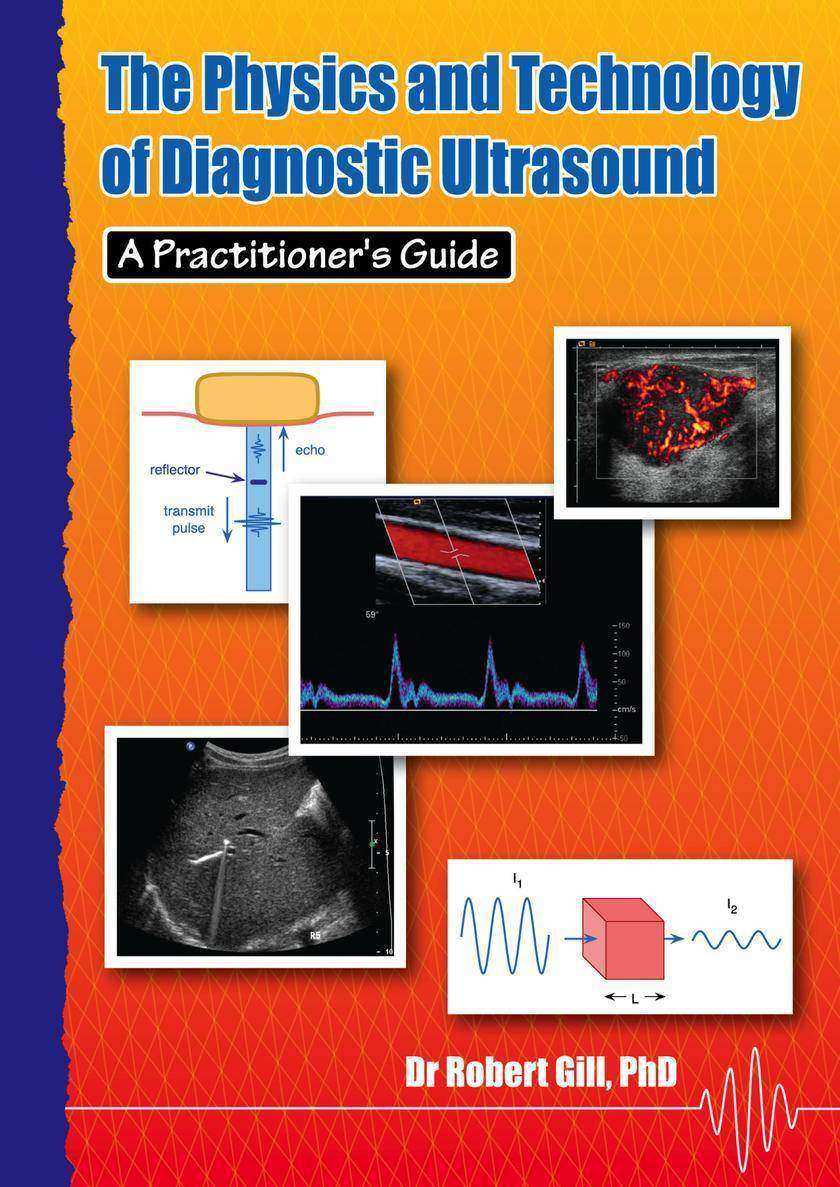
The Physics and Technology of Diagnostic Ultrasound: A Practitioner's Guide
¥232.01
The Physics and Technology of Diagnostic Ultrasound: A Practitioner's Guide
Biological Principles: A Tutorial Study Guide
¥32.62
Biological Principles: A Tutorial Study Guide
Circulatory System: A Tutorial Study Guide
¥32.62
Circulatory System: A Tutorial Study Guide

Immune System: A Tutorial Study Guide
¥32.62
Immune System: A Tutorial Study Guide
Motor System: A Tutorial Study Guide
¥32.62
Motor System: A Tutorial Study Guide
Dose-Response Curve: A Tutorial Study Guide
¥32.62
Dose-Response Curve: A Tutorial Study Guide
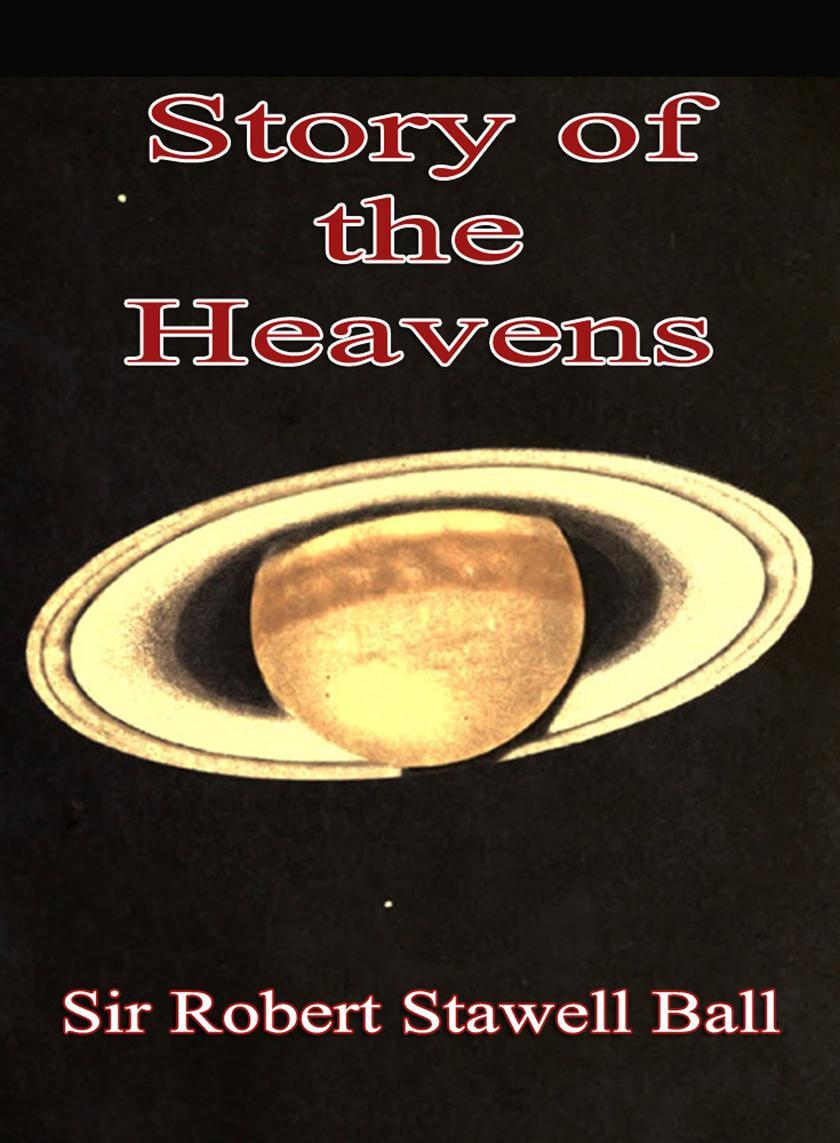
The Story of the Heavens
¥24.44
The Story of the Heavens
Universe: The Solar System and Beyond
¥24.44
Universe: The Solar System and Beyond

Nervous System: A Tutorial Study Guide
¥48.97
Nervous System: A Tutorial Study Guide
Mathematical Thaumaturgy: Doing The Math that Make You Laugh
¥32.62
Mathematical Thaumaturgy: Doing The Math that Make You Laugh
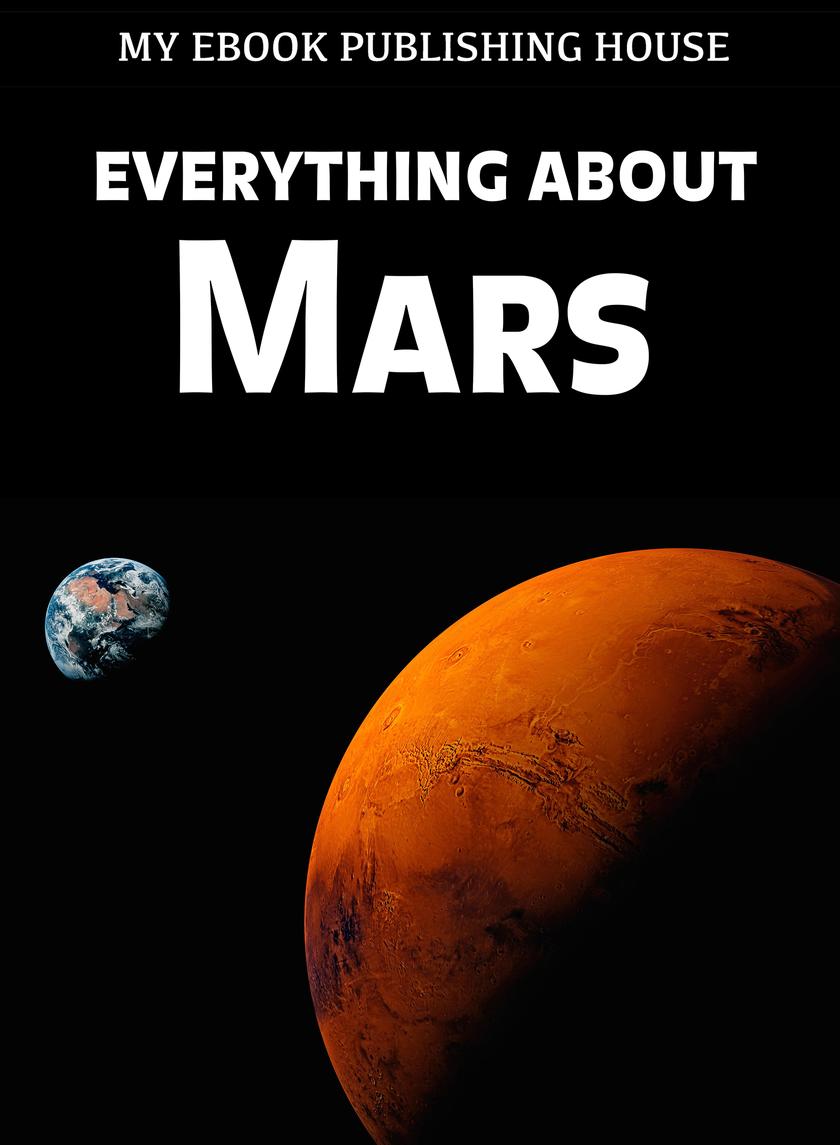
Everything About Mars
¥24.44
Everything About Mars
Brain Imaging Techniques: A Tutorial Study Guide
¥32.62
Brain Imaging Techniques: A Tutorial Study Guide
The Last of the Mohicans by James Fenimore Cooper - Delphi Classics (Illustrated
¥8.09
This eBook features the unabridged text of ‘The Last of the Mohicans by James Fenimore Cooper - Delphi Classics (Illustrated)’ from the bestselling edition of ‘The Complete Works of James Fenimore Cooper’. Having established their name as the leading publisher of classic literature and art, Delphi Classics produce publications that are individually crafted with superior formatting, while introducing many rare texts for the first time in digital print. The Delphi Classics edition of Cooper includes original annotations and illustrations relating to the life and works of the author, as well as individual tables of contents, allowing you to navigate eBooks quickly and easily. eBook features: * The complete unabridged text of ‘The Last of the Mohicans by James Fenimore Cooper - Delphi Classics (Illustrated)’ * Beautifully illustrated with images related to Cooper’s works * Individual contents table, allowing easy navigation around the eBook * Excellent formatting of the text Please visit www.delphiclassics.com to learn more about our wide range of titles


