


 购物车
购物车 个人中心
个人中心

For Parents and Teenagers
¥77.49
The author of Choice Theory and Reality Therapy offers a powerful approach for helping troubled teens. In his decades as a therapist, Dr William Glasser has often counselled parents and teenagers. His advice has healed shattered families and changed lives. Now in his first book on the lessons he has learned, he asks parents to reject the 'common sense' that tells them to 'lay down the law', ground teens, or try to coerce them into changing behaviour. These strategies have never worked, asserts Dr Glasser, and never will. Instead he offers a different approach based upon Choice Theory. Glasser spells out the seven deadly habits parents practiSe and then shows them how to accomplish their goals by changing their own behaviour. Above all, he helps parents keep their relationship with their child strong. Dr Glasser provides a groundbreaking method that any parent can use with confidence and love.
Caravaggio
¥83.03
Francine Prose's life of Caravaggio evokes the genius of this great artist through a brilliant reading of his paintings. Caravaggio defied the aesthetic conventions of his time; his use of ordinary people, realistically portrayed street boys, prostitutes, the poor, the aged was a profound and revolutionary innovation that left its mark on generations of artists. His insistence on painting from nature, on rendering the emotional truth of experience, whether religious or secular, makes him an artist who speaks across the centuries to our own time.Born in 1571 near Milan, Michelangelo Merisi (da Caravaggio) moved to Rome when he was twenty-one years old. He became a brilliant and successful artist, protected by the influential Cardinal del Monte and other patrons. But he was also a man of the streets who couldn't seem to free himself from its brawls and vendettas. In 1606 he fled Rome, apparently after killing another man in a dispute. He spent his last years in exile, in Naples, Malta, and Sicily, at once celebrated for his art and tormented by his enemies. Through it all, he produced masterpieces of astonishing complexity and power. Eventually he received a pardon from the Pope, only to die, in mysterious circumstances, on the way back to Rome in 1610.Francine Prose presents the brief but tumultuous life of one of the greatest of all painters with passion and acute sensitivity.

Do You Love Football?!
¥77.49
When Jon Gruden asks his Tampa Bay Bucs, "Do you love football?!" it's to remind them why they pull on their shoulder pads every Sunday morning. It's not about the money or the fame; it's about their passion for what they do.And passion is something that has fueled Gruden's entire career. From his college playing days and his climb through the coaching ranks -- from college to assistant coaching jobs with the NFL's elite teams, to his first head coach job with the Oakland Raiders, and finally, with the Tampa Bay Bucs -- his meteoric rise is unparalleled. Underneath it all, though, he's just a humble, hardworking, no-nonsense guy who has no hobbies: "I'm not a scratch golfer. I don't know how to bowl. I can't read the stock market. Hell, I have a hard time remembering my wife's cell phone number. But I can call 'Flip Right Double X Jet 36 Counter Naked Waggle at 7 X Quarter' in my sleep."Now, in this motivational memoir, Gruden provides insight into what makes him tick. Do You Love Football?! is an intimate look at his life as a player, coach, and head coach, as well as the principles that have made him the hottest coach in the NFL.

Porch Talk
¥83.03
Be loved American storyteller Philip Gulley evokes a time when life revolved around the front porch, where friends gathered, stories were told, and small moments took on large meaning. In today's hurry-up world, Gulley's observations are frank and funny, reminding us of the world we once shared, and can again. With poignancy and humor, Gulley writes about small-town life, things he thinks about while sitting in his Quaker meeting, and why Donald Trump should pay more taxes. Porch Talk is a tribute to common folk, including Charlie the hardware priest, the Bettys at the newspaper, and other paragons of decency not many people know, but should.
Raising Blaze
¥78.55
When you have a child that doesn't fit in, what do you doDebra Ginsberg knew that her son, Blaze, was unique from the moment he was born in 1987. What she didn't know was that Blaze's differences would be regarded by the outside world not as gifts, but as impediments to social and academic success. Blaze never crawled. He just got up and walked when he turned one. He called his mother 'Zsa Zsa' until he was three. By kindergarten, he loved the music of Miles Davis and Ella Fitzgerald. He fears butterflies and is fascinated by garbage trucks. With the same honesty that made Waiting a success, Raising Blaze: Bringing Up an Extraordinary Son in an Ordinary World chronicles Debra's experience in raising a child who has defied definition by the host of professionals who have sought to label his differences. Ginsberg introduces us to a remarkable child and her own unusual childhood. She writes about a family which shows us the redemptive power of faith, humour and love.

Smart Discipline(R)
¥78.55
Larry J. Koenig, Ph.D., creator of the hugely popular Smart Discipline seminars, explains his simple, dramatically effective system to help children follow the rules at home and at school. It is easily tailoredto differences in age, temperament, and the needs of children with ADD/ADHD. Positive results usually are seen within a few days. Best of all: instead of nagging, parents can use Dr. Koenig's powerful esteem-building strategies to affirm their children's strengths. The Smart Discipline system: Gets kids to do what you ask, the first time you ask Stops fighting, bickering, and disrespectful language Ends hassles over homework, chores, messy rooms, and bedtime Instills positive self-image and builds confidence. . . and much more!
What We Believe but Cannot Prove
¥88.56
More than one hundred of the world's leading thinkers write about things they believe in, despite the absence of concrete proofScientific theory, more often than not, is born of bold assumption, disparate bits of unconnected evidence, and educated leaps of faith. Some of the most potent beliefs among brilliant minds are based on supposition alone -- yet that is enough to push those minds toward making the theory viable.Eminent cultural impresario, editor, and publisher of Edge (www.edge.org), John Brockman asked a group of leading scientists and thinkers to answer the question: What do you believe to be true even though you cannot prove itThis book brings together the very best answers from the most distinguished contributors.Thought-provoking and hugely compelling, this collection of bite-size thought-experiments is a fascinating insight into the instinctive beliefs of some of the most brilliant minds today.

Becoming Charlemagne
¥94.10
On Christmas morning in the year 800, Pope Leo III placed the crown of imperial Rome on the brow of a Germanic king named Karl. With one gesture, the man later hailed as Charlemagne claimed his empire and forever shaped the destiny of Europe. Becoming Charlemagne tells the story of the international power struggle that led to this world-changing event.Illuminating an era that has long been overshadowed by legend, this far-ranging book shows how the Frankish king and his wise counselors built an empire not only through warfare but also by careful diplomacy. With consummate political skill, Charlemagne partnered with a scandal-ridden pope, fended off a ruthless Byzantine empress, nurtured Jewish communities in his empire, and fostered ties with a famous Islamic caliph. For 1,200 years, the deeds of Charlemagne captured the imagination of his descendants, inspiring kings and crusaders, the conquests of Napolon and Hitler, and the optimistic architects of the European Union.In this engaging narrative, Jeff Sypeck crafts a vivid portrait of Karl, the ruler who became a legend, while transporting readers far beyond Europe to the glittering palaces of Constantinople and the streets of medieval Baghdad. Evoking a long-ago world of kings, caliphs, merchants, and monks, Becoming Charlemagne brings alive an age of empire building that continues to resonate today.
I Am Not Myself These Days
¥83.92
I Am Not Myself These Days follows a glittering journey through Manhattan's dark underbelly -- a shocking and surreal world where alter egos reign and subsist (barely) on dark wit and chemicals...a tragic romantic comedy where one begins by rooting for the survival of the relationship and ends by hoping someone simply survives. Kilmer-Purcell is a terrifically gifted new literary voice who straddles the divide between absurdity and normalcy, and stitches them together with surprising humor and lonely poignancy. As Booklist raved "as tart and funny as a Noel Coward play, for Kilmer-Purcell is especially good at dialogue, and, as in Coward's best plays, under the comedy lies the sad truth that even at our best, we are all weak, fallible fools. Again and again in this rich, adventure-filled book, Kilmer-Purcell illustrates the truth of Blake's proverb, 'The road of excess leads to the palace of wisdom.'"
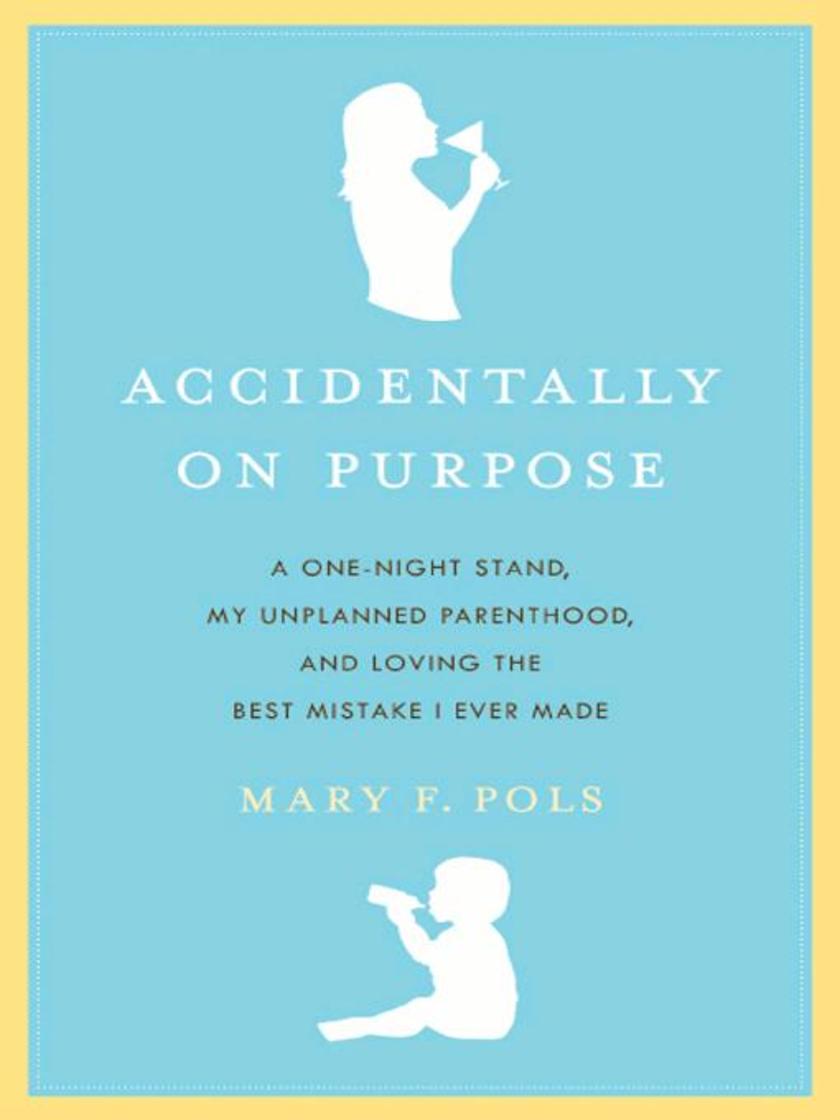
Accidentally on Purpose
¥90.77
At thirty-nine, movie critic Mary Pols knew she wanted to have a baby. But never not in a million years on her own. To take on the physical, emotional, and financial challenges of motherhood without a perfect soul mate/husband would be absurd, kind of like not bothering to use a condom during a one-night stand with an adorable but jobless guy ten years her junior. Pols spends the ensuing weeks despairing over everything, from the financial nightmare of single motherhood to the end of her hopes for a traditional life. Not the least of her worries is finding the right way to drop the bombshell on loved ones, including her five siblings and eighty-four-year-old father, who has a German temper and an Irish Catholic attitude toward babies out of wedlock. Yet faced with the frightening, lonely truth that this might be her only chance at motherhood, she plunges ahead with the pregnancy and an Odd Couple version of a co-parenting relationship that looks like one more disaster in a long line of romantic disappointments. But even as she tries to give her son's young father a radical makeover, she realizes that his devotion and love for their child matters more than his spotty or his inability to remember to put oil in the car. With humor, insight, and compelling honesty, Pols reveals what it means to compromise in the name of love and to find joy in an accidental life, suddenly brimming with purpose.
Mars and Venus in Love
¥90.77
Straight from the heart -- real-life couples share inspiring, edifying stories of Mars and Venus in love.Millions of readers have learned about relationships from John Gray's previous bestsellers, such as Men Are from Mars, Women Are from Venus, Mars and Venus on a Date; and Mars and Venus in the Bedroom. Inspired by this enthusiasm, Gray asked a number of readers to share their own stories of how they've put his principles to work in their relationships. The result is this amazing collection of first-person accounts-along with Gray's own enlightening commentary-that will have you laughing, crying, and nodding in recognition.Gray's contributors answer such questions as: What problems have you had in your relationship, and how have you overcome themWhat special things do you and your partner do for each otherHow do you best communicate with each otherHow do you practice what you've learnedHow does your love feel different now from how it felt beforeTheir answers illustrate more eloquently than any textbook how to use Gray's advice and counsel to create your own fulfilling, healthy, and loving relationships.
A Vindication of Love
¥90.73
A thinking person’s “guide” that makes the case for love in an age both cynical about and fearful of strong passion. Bold and challenging, A Vindication of Love has inspired praise and controversy, and brilliantly reinvigorated the romance debate. A perfect choice for readers of Alain de Botton’s How Proust Can Change Your Life and Pierre Bayard’s How to Talk About Books You Haven’t Read.
Not That Kind of Girl
¥77.49
A moving, witty, and intelligent memoir of one woman's quest to find the answers to life's biggest questions Raised in evangelical churches that preached apocalypse now, Carlene Bauer grows up happy to oblige the God who presides over her New Jersey girlhood. But in high school and college, her intellectual and spiritual horizons widen, and she becomes skeptical of the judgmental God she's been given. Still, she finds it hard to let go of the ideals she's been raised with, and to rebel as she knows she should. She loves rock and roll, but politely declines offers of sex and drugs; she thinks the Bible and the Norton Anthology of American Literature are equally authoritative guides to life. Since there are no churches worshipping the Jesus Paul Westerberg sang about in "Can't Hardly Wait," and no tidy categories for those who are neither riot grrrls nor altar girls, she hovers between a hunger for the world and a suspicion of it.In her twenties, however, determined to make up for lost time, Bauer undertakes a belated and often comic coming-of-age in New York City. Between late blooming at parties and staying late at work, it seems that she might become as bold as she'd hoped to be even if the late blooming is a little more hapless than highly erotic. And yet the city and its pleasures do not distract her from another hope: that she might learn how to have a faith that she can truly call her own. Enter the Catholic Church, and a conversion. But then she falls in love, and loses her religion which leaves her wondering just what it means to be good. Sharply written, hilarious, and touching, Not That Kind of Girl is the story of one young woman's efforts to define worldliness, ambition, and love on her own terms while believing in, among other things, The Smiths, Virginia Woolf, and the transformative power of New York City. Fellow restless seekers will find solace in Bauer's struggle to create meaning in the face of overwhelming doubt, and fall in love with the highly original voice at the center of this unforgettable debut.
Don't Know Much About the Universe
¥90.51
Who dug those canals on MarsWhat was the biblical Star of BethlehemWere the pyramids built by extraterrestrials?From the ancients who charted the heavens to Star Trek, The X-Files, and Apollo 13, outer space has intrigued people through the ages. Yet most of us look up at the night sky and feel totally in the dark when it comes to the basic facts about the universe.Kenneth C. Davis steps into that void with a lively and readable guide to the discoveries, theories, and real people who have shed light on the mysteries and wonders of the cosmos. Discover why Einstein was such a genius, the truth behind a blue moon or two, the amazing secrets of Stonehenge, and even how one great astronomer lost his nose.With the fun question-and-answer format that has appealed to the millions of readers of his bestselling Don't Much About? series, you'll be taking off on an exciting armchair exploration of the solar system, the Milky Way, and beyond.

Spirited
¥77.49
Popular psychic medium Rebecca Rosen's fresh and hip pre*ive program empowers readers to heighten their intuition, connect with deceased loved ones, and surpass the psychological roadblocks holding them back. In Spirited, readers learn how to dig into their past to identify the root of the "damage" that's keeping them from living their best lives. Medium-to-the-stars Rebecca Rosen shows us how to draw on the power of our intuitive gifts to connect with spirit energy loved ones who have passed to provide the clarity necessary to master real-life issues, including relationships, job fulfillment, finances, and body image.In her colorful and youthfully vibrant voice, Rosen recalls how she discovered her psychic gifts and recounts her experiences helping thousands of clients, including Jennifer Aniston and Courtney Cox Arquette. She reveals how she taps into a person's energy and relies on the spirits around him or her to gain insight, and explains how through exercises, meditations, and her special guidance we can develop similar skills to interpret the signs in our own lives and find success and contentment.Direct, down-to-earth, and sometimes sassy, Rebecca Rosen offers a unique and refreshing blend of self-help wisdom and psychic insight to help us look back and move forward.

The Universe Is Calling
¥83.03
The popular Unity minister who authored the acclaimed Discover the Power Within You offers a non-theological, non-ritualistic guide to prayer for contemporary seekers of oneness, guidance, and self-regulation.
Morning Poems
¥78.55
"Morning Poems is a sensational collection Robert Bly's best in many years. Inspired by the example of William Stafford, Bly decided to embark on the project of writing a daily poem: Every morning he would stay in bed until he had completed the day's work. These 'little adventures/In Morning longing,' as he calls them, address classic poetic subjects (childhood, the seasons, death and heaven) in a way that capitalizes fully on the pun in the book's title. These are morning poems, full of the delight and mystery of waking in a new day, and they also do their share of mourning, elegizing the deceases and capturing the 'moment of sorror before creation.' Some of the poems are dialogues where unconventional speakers include mice, maple trees, bundles of grain, the body, the 'oldest mind' and the soul. A particularly moving sequence involves Bly's imaginative transactions with a great and unlikely precursor, Wallace Stevens. The whole is a fascinating and original book from one of our most fascinating authors." David Lehman
Save Karyn
¥83.92
Drowning in $20,000 of credit card debt, shopaholic Karyn Bosnak asked strangers for money online -- and it worked! What would you do if you owed $20,000Would you: A) not tell your parentsB) start your own website that asked for money without apologyor C) stop coloring your hair, getting pedicures, and buying GucciIf you were Karyn Bosnak, you'd do all three.Karyn started a funny yet honest website, www.savekaryn.com, on which she asked for donations to help her get out of debt. Karyn received e-mails from people all over the world, either confessing their own debt-ridden lives, or criticizing hers. But after four months of Internet panhandling and selling her prized possessions on eBay, her debt was gone!In Save Karyn: One Shopaholic's Journey to Debt and Back, Karyn details the bumpy road her financial -- and personal -- life has traveled to get her where she is today: happy, grateful, and completely debt-free. In this charming cautionary tale, Karyn chronicles her glamorous rise, her embarrassing fall, and how the kindness of strangers in cyberia really can make a difference.
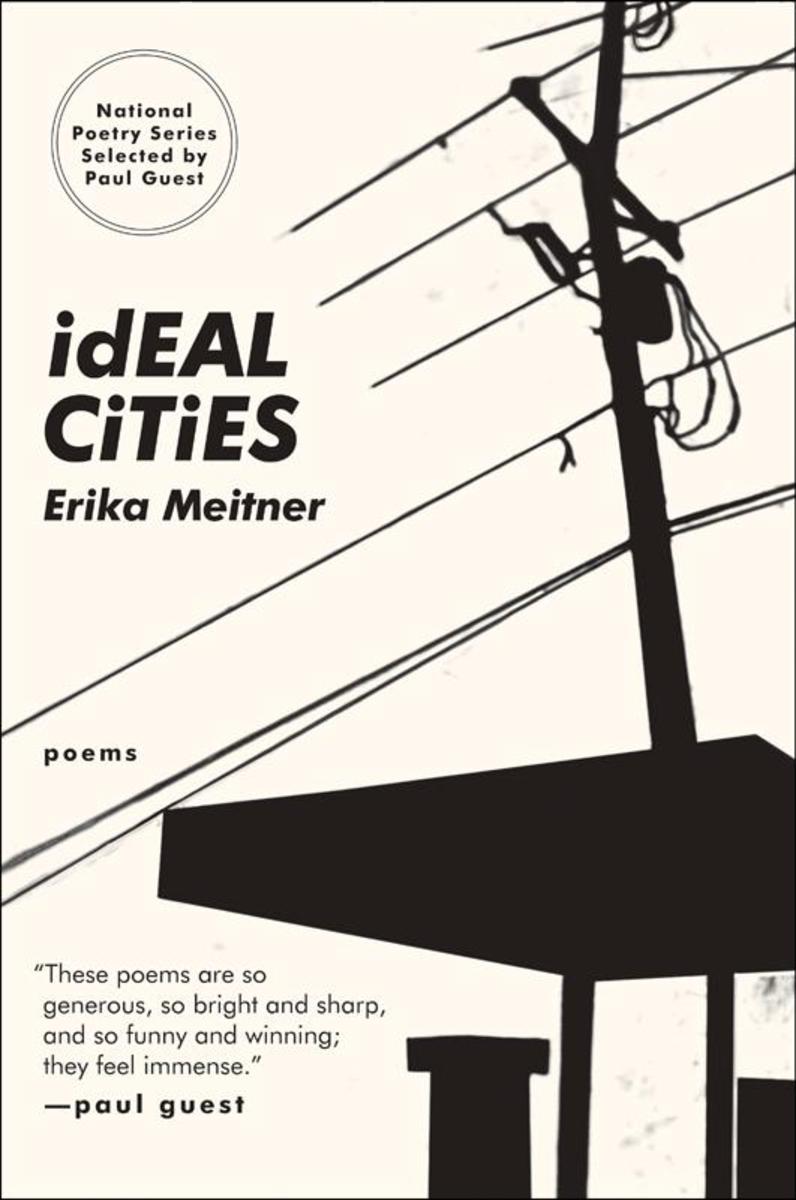
Ideal Cities
¥78.55
Exploring themes of pregnancy, motherhood, ancestry, and life in the borderline slums of Washington, DC, the richly felt and adroit poetry of Erika Meitner's Ideal Cities moves, mesmerizes, and delights. The work of an important emerging voice in contemporary American poetry a winner of the 2009 National Poetry Series Prize as selected by Paul Guest Ideal Cities gloriously perpetuates NPS's long-standing tradition of promoting exceptional poetry from lesser-known poets.

Stake Your Claim
¥77.49
In this classic text, the master teacher whose works have moved and inspired millions presents inspirational advice and simple self-help that will bring true success and happiness. These seventy-two meditative essays, each accomplished by a brief affirmation and a biblical quotation, are the keys to have a better and more prosperous life. When one becomes depressed or discouraged, nervous or frightened, when one needs to change one's mental and physical habits of living, Fox's direct and easy techniques help overcome life's difficult stretches and bring on health, happiness, and peace of mind.
To Know as We Are Known
¥83.03
This primer on authentic education explores how mind and heart can work together in the learning process. Moving beyond the bankruptcy of our current model of education, Parker Palmer finds the soul of education through a lifelong cultivation of the wisdom each of us possesses and can share to benefit others.


