


 购物车
购物车 个人中心
个人中心
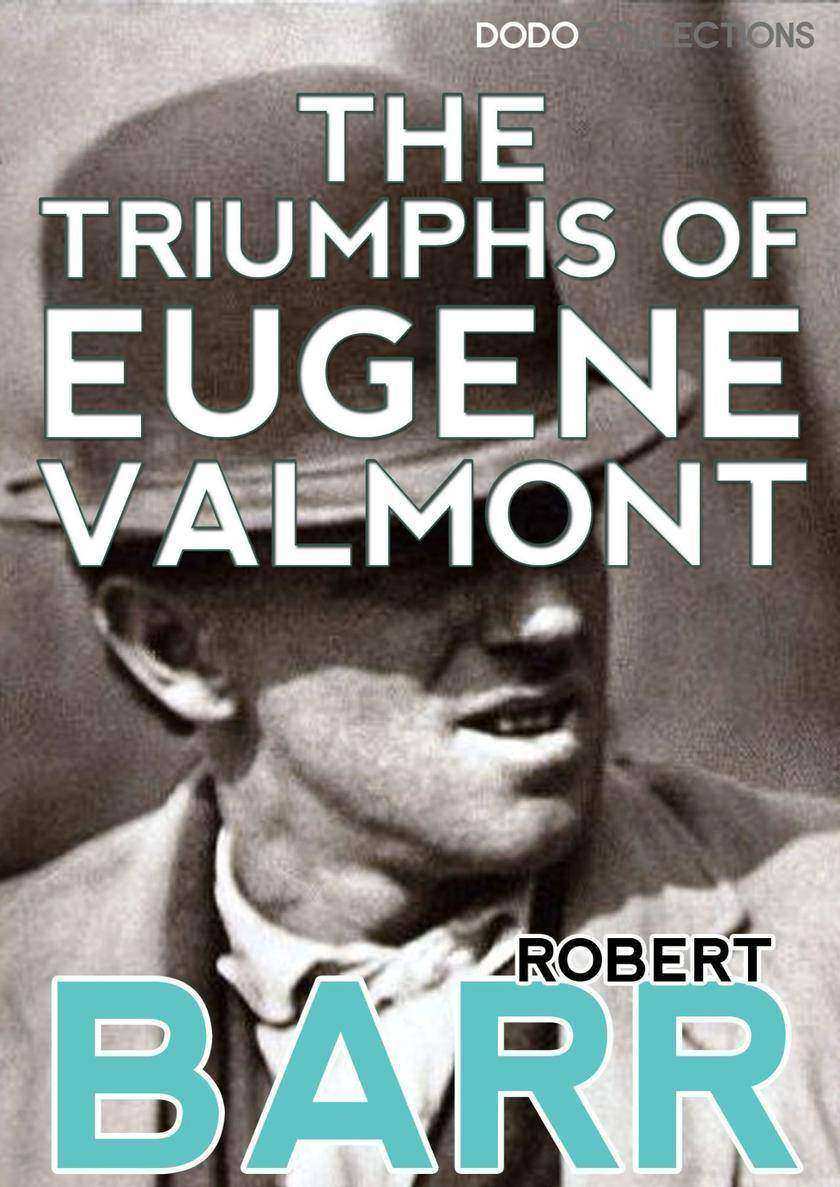
The Triumphs of Eugène Valmont
¥8.09
When I say I am called Valmont the name will convey no impression to the reader one way or another. My occupation is that of private detective in London but if you ask any policeman in Paris who Valmont was he will likely be able to tell you unless he is a recent recruit. ? The Triumphs of Eugene Valmont (1906) brings together tales of the multifarious exploits of Robert Barr's elegant and cunning sleuth, Valmont, a brilliantly ironic parody of Sherlock Holmes. Exhibiting the crucial combination of realism and imagination that characterizes the finest crime writing, the stories exude playfulness and wit, blending mystery and quasi-Gothic thrills with humorous detours and romantic adventure. A notable figure in turn-of-the-century literary London and a friend of Conan Doyle, Barr was acutely aware of style as a form of statement and the stories are full of literary effects, commentary on the detective mystery genre, and Valmont's disparaging reflections on English values. From the hilarious satire of sensationalism in 'The Siamese Twin of a Bomb-Thrower' to the bizarre and operatic melodrama of 'The Ghost with the Club-Foot', Barr's stories delight the reader with their skill, variety, and never-abandoned sense of spirited fun. This edition also includes Barr's two rare pastiches of Valmont's rival, Sherlock Holmes.

Maggie:A Girl of the Streets
¥8.09
Maggie: A Girl of the Streets is an 1893 novella by American author Stephen Crane (1871–1900). The story centers on Maggie, a young girl from the Bowery who is driven to unfortunate circumstances by poverty and solitude. The work was considered risqué by publishers because of its literary realism and strong themes. Crane – who was 22 years old at the time – financed the book's publication himself, although the original 1893 edition was printed under the pseudonym Johnston Smith. After the success of 1895's The Red Badge of Courage, Maggie was reissued in 1896 with considerable changes and re-writing.

The Wonder - Blood Red
¥8.09
In some Worlds, Society depends on Technology to expand its horizons. In the Victorian world of the Wonder, Magic is the leading light. It powers an Empire through an Industrial Revolution towards boundless possibilities, including the invasion and colonisation of any neighbours who may have reserves of Magic themselves. But the Wonder has been plumbed before, by past civilisations, and may have caused their collapse. Can a disparate group of accidental heroes made up of burnt-out dragoons, cynical mercenaries, a college professor and a nurse-cum-landlady from an Imperial backwater colony take on an entire Empire to save a world?
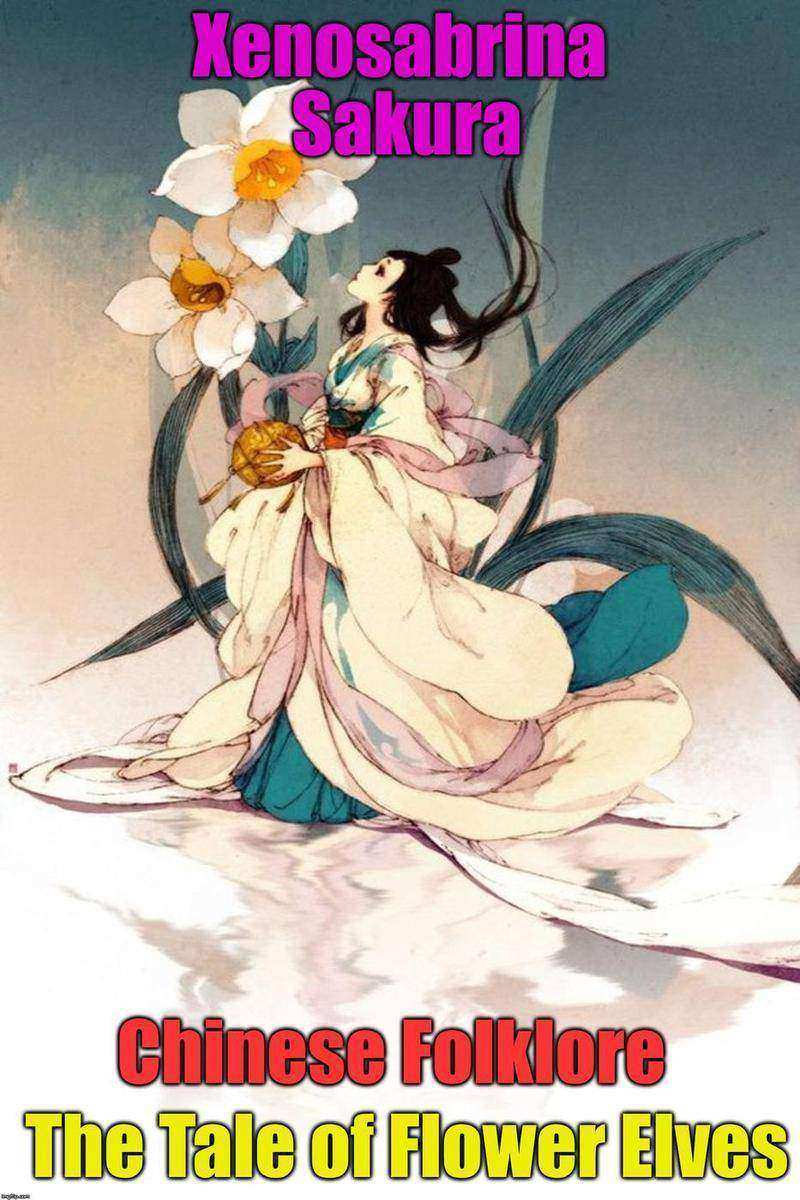
Chinese Folklore The Tale of Flower Elves
¥8.09
Once upon a time there was a scholar who lived retired from the world in order to gain hidden wisdom. He lived alone and in a secret place. And all about the little house in which he dwelt he had planted every kind of flower, and bamboos and other trees. There it lay, quite concealed in its thick grove of flowers. With him he had only a boy servant, who dwelt in a separate hut, and who carried out his orders. He was not allowed to appear before his master unless summoned. The scholar loved his flowers as he did himself. Never did he set his foot beyond the boundaries of his garden. It chanced that once there came a lovely spring evening. Flowers and trees stood in full bloom, a fresh breeze was blowing, the moon shone clearly. And the scholar sat over his goblet and was grateful for the gift of life. Suddenly he saw a maiden in dark garments come tripping up in the moonlight. She made a deep courtesy, greeted him and said: “I am your neighbor. We are a company of young maids who are on our way to visit the eighteen aunts. We should like to rest in this court for awhile, and therefore ask your permission to do so.” The scholar saw that this was something quite out of the common, and gladly gave his consent. The maiden thanked him and went away. In a short time she brought back a whole crowd of maids carrying flowers and willow branches. All greeted the scholar. They were charming, with delicate features, and slender, graceful figures. When they moved their sleeves, a delightful fragrance was exhaled. There is no fragrance known to the human world which could be compared with it.

Japanese Folktales The Haunted Temple of Kisaichi Village
¥8.09
In the year 1680 there stood an old temple on a wild pine-clad mountain near the village of Kisaichi, in the Province of Inaba. The temple was far up in a rocky ravine. So high and thick were the trees, they kept out nearly all daylight, even when the sun was at its highest. As long as the old men of the village could remember the temple had been haunted by a shito dama and the skeleton ghost (they thought) of some former priestly occupant. Many priests had tried to live in the temple and make it their home but all had died. No one could spend a night there and live. At last, in the winter of 1701, there arrived at the village of Kisaichi a priest who was on a pilgrimage. His name was Jogen, and he was a native of the Province of Kai. Jogen had come to see the haunted temple. He was fond of studying such things. Though he believed in the shito dama form of spiritual return to earth, he did not believe in ghosts. As a matter of fact, he was anxious to see a shito dama, and, moreover, wished to have a temple of his own. In this wild mountain temple, with a history which fear and death prevented people from visiting or priests inhabiting, he thought that he had ?'a real good thing.' Thus he had found his way to the village on the evening of a cold December night, and had gone to the inn to eat his rice and to hear all he could about the temple. Jogen was no coward; on the contrary, he was a brave man, and made all inquiries in the calmest manner.

Forbidden Gospels And Epistles
¥8.09
The complete suppressed Gospels and Epistles of the original New Testament of Jesus the Christ.
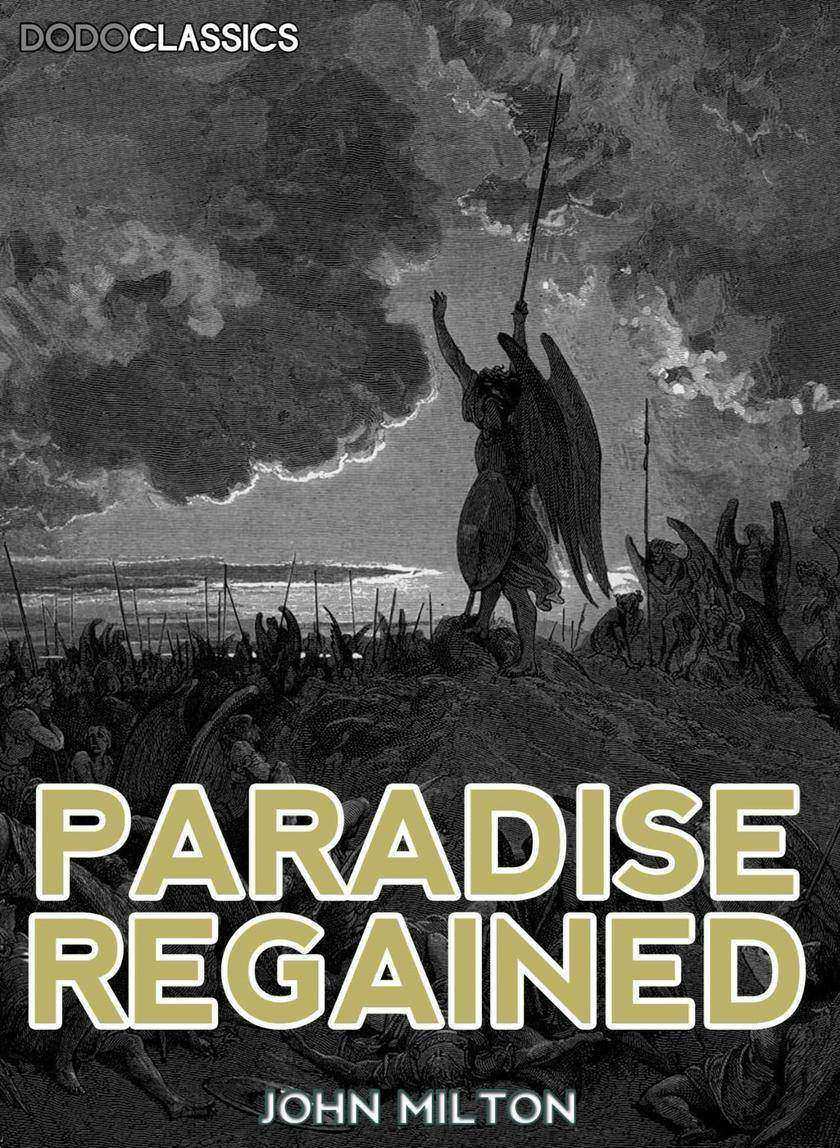
Paradise Regained
¥8.09
Paradise Regained is a poem by English poet John Milton, first published in 1671 by John Macock. The volume in which it appeared also contained the poet's closet drama Samson Agonistes. Paradise Regained is connected by name to his earlier and more famous epic poem Paradise Lost, with which it shares similar theological themes; indeed, its title, its use of blank verse, and its progression through Christian history recall the earlier work. However, this effort deals primarily with the temptation of Christ as recounted in the Gospel of Luke. ? An interesting anecdote recounted by a Quaker named Thomas Ellwood provides some insight into Paradise Regained??'?s development. After studying Latin with Milton and reading the poet's epic Paradise Lost, Ellwood remarked, "Thou hast said much here of Paradise lost, but what hast thou to say of Paradise found?" Hearing this, Milton at first "sat some time in a muse" before changing the subject; however, later on he showed to Ellwood a new manuscript entitled Paradise Regained. Some maintain that although he seemed to express gratitude to Ellwood in a letter, Milton in truth "passed on a friendly if impish fabrication" that made Ellwood feel like the inspiration for the poem. Milton composed Paradise Regained at his cottage in Chalfont St Giles in Buckinghamshire. The poem is four books long, in contrast with Paradise Lost??'?s twelve. As such, Barbara K. Lewalski has labelled the work a "brief epic." ? Whereas Paradise Lost is ornate in style and decorative in its verse, Paradise Regained is carried out in a fairly plain style. Specifically, Milton reduces his use of simile and deploys a simpler syntax in Paradise Regained than he does in Paradise Lost, and this is consistent with Jesus's sublime plainness in his life and teachings (in the epic, he prefers Hebrew psalms to Greek poetry). Modern editors believe the stylistics of Paradise Regained evince Milton's poetic maturity. No longer is the poet out to dazzle his readers with bombastic verse and lengthy epic similes. This is not to say that the poem bears no affinities with Milton's earlier work, but scholars continue to agree with Northrop Frye's suggestion that Paradise Regained is "practically sui generis" in its poetic execution. ? One major concept emphasized throughout Paradise Regained is the idea of reversals. As implied by its title, Milton sets out to reverse the "loss" of Paradise. Thus, antonyms are often found next to each other, reinforcing the idea that everything that was lost in the first epic will be regained by the end of this "brief epic." Additionally, the work focuses on the idea of "hunger", both in a literal and in a spiritual sense. After wandering in the wilderness for forty days, Jesus is starving for food. Satan, too blind to see any non-literal meanings of the term, offers Christ food and various other temptations, but Jesus continually denies him. Although Milton's Jesus is remarkably human, an exclusive focus on this dimension of his character obscures the divine stakes of Jesus’s confrontation with Satan; Jesus emerges victorious, and Satan falls, amazed.
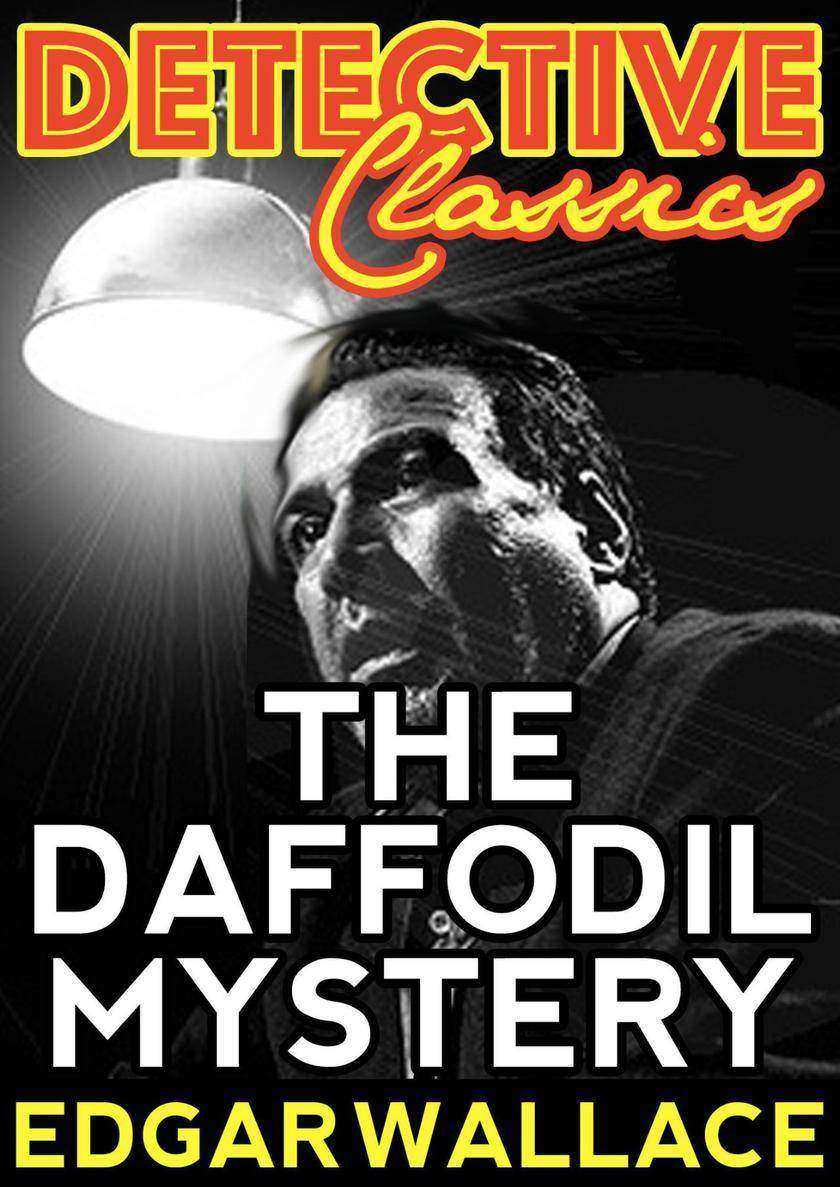
The Daffodil Mystery
¥8.09
Detective Classics presents you The Daffodil Mystery in a fantastic ebook edition. ? When Mr. Thomas Lyne, poet, poseur. and owner of Lyne's Emporium insults a cashier, Odette Rider, she resigns. Having summoned detective Jack Tarling to investigate another employee, Mr. Milburgh, Lyne now changes his plans. Tarling and his Chinese companion refuse to become involved. They pay a visit to Odette's flat. In the hall, Tarling meets Sam, convicted felon and protégé of Lyne. Next morning Tarling discovers a body. The hands are crossed on the breast, adorned with a handful of daffodils.
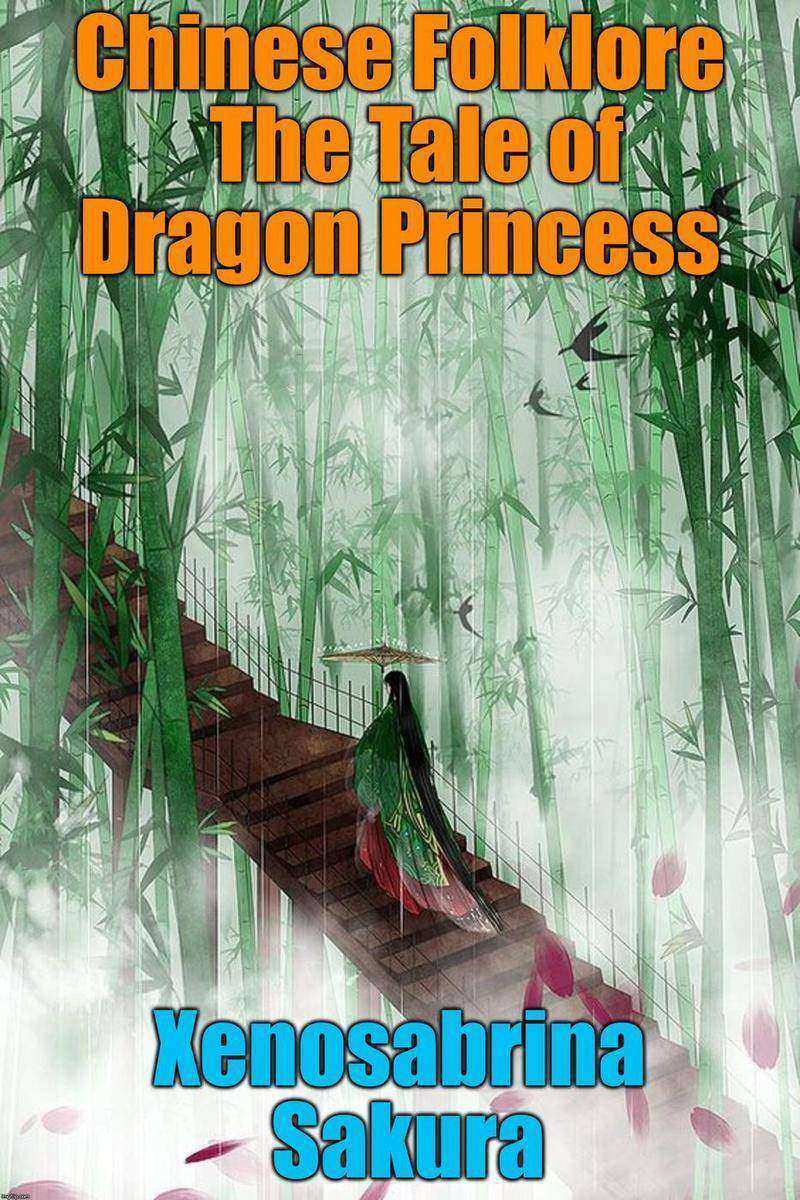
Chinese Folklore The Tale of Dragon Princess
¥8.09
In the Sea of Dungting there is a hill, and in that hill there is a hole, and this hole is so deep that it has no bottom. Once a fisherman was passing there who slipped and fell into the hole. He came to a country full of winding ways which led over hill and dale for several miles. Finally he reached a dragon-castle lying in a great plain. There grew a green slime which reached to his knees. He went to the gate of the castle. It was guarded by a dragon who spouted water which dispersed in a fine mist. Within the gate lay a small hornless dragon who raised his head, showed his claws, and would not let him in. The fisherman spent several days in the cave, satisfying his hunger with the green slime, which he found edible and which tasted like rice-mush. At last he found a way out again. He told the district mandarin what had happened to him, and the latter reported the matter to the emperor. The emperor sent for a wise man and questioned him concerning it. The wise man said: “There are four paths in this cave. One path leads to the south-west shore of the Sea of Dungting, the second path leads to a valley in the land of the four rivers, the third path ends in a cave on the mountain of Lo-Fu and the fourth in an island of the Eastern Sea. In this cave dwells the seventh daughter of the Dragon-King of the Eastern Sea, who guards his pearls and his treasure.

The Adventure of the Dying Detective
¥8.09
"The Adventure of the Dying Detective", in some editions simply titled "The Dying Detective", is one of the 56 Sherlock Holmes short stories written by British author Sir Arthur Conan Doyle. ? Dr. Watson is called to 221B Baker Street to tend Holmes, who is apparently dying of a rare Asian disease contracted while he was on a case at Rotherhithe. Watson is shocked, having heard nothing about his friend’s illness. Mrs. Hudson says that he has neither eaten nor drunk anything in three days. ? Upon arriving, Watson finds Holmes in his bed looking very ill and gaunt indeed, and Holmes proceeds to make several odd demands of Watson. He is not to come near Holmes, for the illness is highly contagious. He will seek no help save from the man whom Holmes names. He will wait until six o’clock before Holmes names him. When Watson objects and tries to leave for help, Holmes musters enough strength to leap out of bed, and lock the door, taking the key. So, Watson is forced to wait. Holmes seems delirious at times. ? Watson examines several objects in Holmes’s room while he waits. Holmes has a fit when Watson touches one item, a little black and white ivory box with a sliding lid. Holmes orders him to put it down, explaining that he does not like his things touched.

The Light Princess
¥8.09
The Light Princess is a Scottish fairy tale by George MacDonald. It was published in 1864. Drawing on inspiration from Sleeping Beauty, it tells the story of a princess afflicted by a constant weightlessness, unable to get her feet on the ground, both literally and metaphorically, until she finds a love that brings her down to earth. An animated version was released in 1978. In 2013, a musical version by Tori Amos and Samuel Adamson inspired by the original story was premiered for the Royal National Theatre in London. The stage production featured actress Rosalie Craig as the titular character. The musical was generally well-received, enjoyed an extended run in the theatre and will see its cast recording released in 2015.

Chinese Folklore The Young Man & The Magician
¥8.09
Once upon a time there was a young man named Du Dsi Tschun. In his youth he was a spendthrift and paid no heed to his property. He was given to drink and idling. When he had run through all his money, his relatives cast him out. One winter day he was walking barefoot about the city, with an empty stomach and torn clothes. Evening came on and still he had not found any food. Without end or aim he wandered about the market place. He was hungry, and the cold seemed well nigh unendurable. So he turned his eyes upward and began to lament aloud. Suddenly an ancient man stood before him, leaning on a staff, who said: “What do you lack since you complain so?” “I am dying of hunger,” replied Du Dsi Tschun, “and not a soul will take pity on me!” The ancient man said: “How much money would you need in order to live in all comfort?” “If I had fifty thousand pieces of copper it would answer my purpose,” replied Du Dsi Tschun. The ancient said: “That would not answer.” “Well, then, a million!” “That is still too little!” “Well, then, three million!” The ancient man said: “That is well spoken!” He fetched a thousand pieces of copper out of his sleeve and said: “That is for this evening. Expect me to-morrow by noon, at the Persian Bazaar!” At the time set Du Dsi Tschun went there, and, sure enough, there was the ancient, who gave him three million pieces of copper. Then he disappeared, without giving his name.

Taken Below
¥8.09
Thomas Blume is about to face his deepest fear… NYPD detective Thomas Blume stumbles into a kidnapping case that drags him into the bowels of the city. Now, in a race against time and a battle through a hidden world, he must face up to his deepest fears… Can Blume conquer his demons…before it’s too late? Find out in the Thomas Blume prequel TAKEN BELOW. If you like gripping mysteries, thrilling action and suspense, you’ll love the next installment in PT Reade’s BOOK HITS. Click and get your copy of TAKEN BELOW now! Tags: Book hits, book shots, crime, hard boiled mysteries, mystery, mysteries, noir, private investigators, hard boiled thriller, hard boiled detective fiction, hard boiled private investigator mystery series, thriller.

Electric Angels and Pink Bikies:The Expatriate Life
¥8.09
Moving away from home, leaving the nest, could be the beginning of a voyage that ends in a faraway country we would not have even considered when we set out—until we got there and discovered its secrets, its culture, its undiscovered paradises. Half a lifetime ago, the author ended his voyage of discovery in the Philippines, a country with one foot in the world of fairies and spirits, and where every event has an unusual twist, whether wedding or funeral, kidnapping or vasectomy, getting a driver’s license or getting a haircut. There are fascinating destinations far from the beaten track and a vibrant music scene that is everywhere present, even in the operating theater. Typhoons and earthquakes add a different kind of excitement. These events and experiences, sometimes comic or tragic, always compelling, are described herein.

Sometimes in Business Class
¥8.09
Here is a perfect book for airplane and armchair travelers; an alternative view of airlines, flying and destinations. Many people fly around the world from meeting to meeting, soaking up wine and the attention of airline stewards and stewardesses, clocking up free mileage, and working out tax breaks or how to sock away their travel allowances. But, as these stories about 1990s travel show, there is much to be learned along the way, from the airline wine tasters' ramblings, to the mystery of brown dogs in Dutch 17th century paintings, to the bus terminals beneath Rome's Augustine Gate, and possibly the real story behind the last tango in Paris.? ?

Japan Folklore Vol. 3 The Fisherman & Beautiful Princess
¥8.09
Long, long ago in the province of Tango there lived on the shore of Japan in the little fishing village of Mizu-no-ye a young fisherman named Urashima Taro. His father had been a fisherman before him, and his skill had more than doubly descended to his son, for Urashima was the most skillful fisher in all that country side, and could catch more Bonito and Tai in a day than his comrades could in a week.But in the little fishing village, more than for being a clever fisher of the sea was he known for his kind heart. In his whole life he had never hurt anything, either great or small, and when a boy, his companions had always laughed at him, for he would never join with them in teasing animals, but always tried to keep them from this cruel sport.One soft summer twilight he was going home at the end of a day's fishing when he came upon a group of children. They were all screaming and talking at the tops of their voices, and seemed to be in a state of great excitement about something, and on his going up to them to see what was the matter he saw that they were tormenting a tortoise. First one boy pulled it this way, then another boy pulled it that way, while a third child beat it with a stick, and the fourth hammered its shell with a stone.Now Urashima felt very sorry for the poor tortoise and made up his mind to rescue it...

Sense and Sensibility
¥8.09
This Point Blank Classics edition includes the full original text as well as an easy to use interactive table of contents.

The Turn of the Screw
¥8.09
This Housemartin Classics edition includes the full original text as well as an easy to use interactive table of contents.

David Copperfield
¥8.09
This Tribeca Press edition includes the full original text as well as exclusive images exclusive to this edition and an easy to use interactive table of contents.

All Things Considered
¥8.09
This Tribeca Press edition includes the full original text as well as exclusive images exclusive to this edition and an easy to use interactive table of contents.

The New Freedom
¥8.09
This Tribeca Press edition includes the full original text as well as an easy to use interactive table of contents.


