


 购物车
购物车 个人中心
个人中心
The Statement of Randolph Carter
¥9.00
"The Statement of Randolph Carter" is a short story by H. P. Lovecraft. Written December 1919, it was first published in The Vagrant, May 1920. It tells of a traumatic event in the life of Randolph Carter, a student of the occult loosely representing Lovecraft himself. It is the first story in which Carter appears and is part of Lovecraft's Dream Cycle.
The Shunned House
¥9.00
"The Shunned House" is a horror fiction novelette by American author H. P. Lovecraft, written on October 16–19, 1924. It was first published in the October 1937 issue of Weird Tales. The Shunned House of the title is based on an actual house in Providence, Rhode Island, built around 1763 and still standing at 135 Benefit Street. Lovecraft was familiar with the house because his aunt Lillian Clark lived there in 1919-20 as a companion to Mrs. H. C. Babbit. However, it was another house in Elizabeth, New Jersey that actually compelled Lovecraft to write the story.
The Picture in the House
¥9.00
A lone traveler seeks shelter from an approaching storm in an apparently abandoned house, only to find that it is occupied by a "loathsome old, white-bearded, and ragged man."
Poetry of the Gods
¥9.00
Poetry and the Gods is a short story by horror writer and poet H.P. Lovecraft in collaboration with writer Anna Helen Crofts. The story is very different from the vast majority of Lovecraft's other work and collaborations. It does, however, bear similar themes regarding dreams as a doorway to magic realms, and slumbering gods. The narrative follows the dream-voyage of Marcia, a young woman filled with weariness of the mundane world and all its woes. She resolves to ease her troubled soul by reading a magazine of poetry. As she does, a dream-state unfolds in which the Greek god Hermes appears and bears Marcia to the court of Zeus and the Olympians.
The Moon Bog
¥9.00
"The Moon-Bog" is a short story by American horror fiction writer H. P. Lovecraft, written in or before March 1921. The story was first published in the June 1926 issue of the pulp magazine Weird Tales. In the story, the unnamed narrator describes the final fate of his good friend, Denys Barry, an Irish-American who reclaims an ancestral estate in Kilderry, a fictional village in Ireland. Barry ignores pleas from the superstitious local peasantry not to drain the nearby bog, with unfortunate supernatural consequences.
Winnetou 4
¥9.00
Der Schriftsteller Karl May erh?lt in Radebeul Post aus Amerika und bricht daraufhin mit seiner Frau, dem Herzle, zu seiner letzten Reise dorthin auf. Seinem Blutsbruder Winnetou soll ein Denkmal gesetzt werden. Karl May / Old Shatterhand trifft alte Bekannte, deren Nachwuchs und zahlreiche symbolreiche Handlungstr?ger und kann den Bau des Monumentaldenkmals gerade noch abwenden. Der Band kommt in Gestalt der alten Reiseberichte daher, aber doch ist vieles anders geworden. Die Gewehre hat Old Shatterhand zwar immer noch (oder wieder) dabei, sie werden aber nicht mehr gebraucht und sind auch deshalb fast die ganze Zeit im Gep?ck. Nicht mehr mit der "Schmetterhand" werden die "Feinde" besiegt, sondern h?chstens noch durch List und die Gewalt des Wortes. Ganz im Friedensgedanken seiner Sp?twerke werden am Ende alle "Feindschaften" mit den alten Widersachern des Westens in Freundschaft aufgel?st. Sogar die zum Hauptschurken Santer stellvertretend mit dessen S?hnen.
The Transition of Juan Romero
¥9.00
The story involves a mine that uncovers a very deep chasm, too deep for any sounding lines to hit bottom. The night after the discovery of the abyss the narrator and one of the mine's workers, Juan Romero, venture inside the mine, drawn against their will by a mysterious rhythmical throbbing in the ground.

Durch die Wüste
¥9.00
Durch die nordafrikanische Wüste reiten Kara Ben Nemsi und Hadschi Halef Omar. Der Fund einer Leiche am Schott Dscherid wird zum Ausgangspunkt eines langen Abenteuers. Sie befreien eine Gefangene aus einem Harem, werden von Piraten überfallen, gelangen nach Mekka, lernen Sir David Lindsay kennen, lenken ein Araberheer im "Tal der Stufen" und befinden sich schlie?lich auf einer Rettungsmission.

Durch das Land der Skipetaren
¥9.00
Durch das Land der Skipetaren folgen Kara Ben Nemsi und seine Gef?hrten den Spuren der Verbrecher. Dabei begegnen sie unversehens den beiden gefürchteten "Aladschy", gelangen zur "Schluchthütte", die ihnen zur Falle werden soll, und erleben eine ebenso dramatische wie lustige Episode im "Turm der alten Mutter".
L’Art de faire des livres
¥9.00
Extrait du Livre d'esquisses (The Sketch Book of Geoffrey Crayon, 1819-1820)
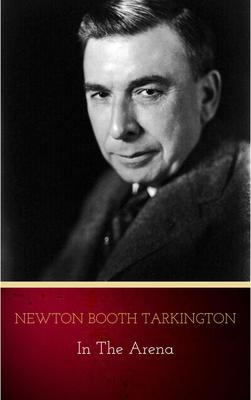
In the Arena: Stories of Political Life
¥9.00
Newton Booth Tarkington (July 29, 1869 – May 19, 1946) was an American novelist and dramatist best known for his novels The Magnificent Ambersons and Alice Adams. He is one of only three novelists to win the Pulitzer Prize for Fiction more than once, along with William Faulkner and John Updike.
The Thing on the Doorstep
¥9.00
"The Thing on the Doorstep" is a short story written by H.P. Lovecraft, part of the Cthulhu Mythos universe of horror fiction. It was written in August 1933, and first published in the January 1937 issue of Weird Tales. Daniel Upton, the story's narrator, begins by telling that he has killed his best friend, Edward Derby, and that he hopes his account will prove that he is not a murderer ...
The Rats in the Walls
¥9.00
The story is narrated by the scion of the Delapore family, who has moved from Massachusetts to his ancestral estate in England, known as Exham Priory. On several occasions, the protagonist and his cats hear the sounds of rats scurrying behind the walls. Upon investigating further, he finds that his family maintained an underground city for centuries and that the inhabitants of the city fed on human flesh, even going so far as to raise generations of human cattle, who eventually began to de-evolve due to their sub-human living conditions
In the Walls of Eryx
¥9.00
"In the Walls of Eryx" is a short story by H.P. Lovecraft, written in January 1936 and first published in Weird Tales magazine in October 1939. It is unusual among Lovecraft's work as a standard science fiction story involving space exploration in the near future. The story, written in first-person narrative, depicts the life and death of a prospector on the planet Venus who, while working for a mining company, becomes trapped in an invisible maze.
He
¥9.00
"He" is a short story by American horror writer H. P. Lovecraft. Written August 1925, it was first published in Weird Tales, September 1926.[1]
The Haunter of the Dark
¥9.00
The story takes place in Providence, Rhode Island and revolves around the Church of Starry Wisdom. The cult uses an ancient artifact known as the Shining Trapezohedron to summon a terrible being from the depths of time and space. The Shining Trapezohedron was discovered in Egyptian ruins, in a box of alien construction, by Professor Enoch Bowen before he returned to Providence, Rhode Island in 1844. Members of the Church of Starry Wisdom in Providence would awaken the Haunter of the Dark, an avatar of Nyarlathotep, by gazing into the glowing crystal. Summoned from the black gulfs of chaos, this being could show other worlds, other galaxies, and the secrets of arcane and paradoxical knowledge; but he demanded monstrous sacrifices, hinted at by disfigured skeletons that were later found in the church. The Haunter of the Dark was banished by light and could not cross a lighted area.
Ex Oblivione
¥9.00
"Ex Oblivione" is a prose poem by American horror fiction writer H. P. Lovecraft, written in late 1920 or early 1921 and first published in The United Amateur in March 1921, under the pseudonym Ward Phillips. It is written in first person and tells of the dreams of a presumably dying man. In his dreams, the man is walking through a valley and encounters a vine-covered wall with a locked bronze gate therein. He longs to know what lies beyond the gate.
Dreams in the Witch-House
¥9.00
Walter Gilman, a student of mathematics and folklore at Miskatonic University, takes a room in the Witch House, a house in Arkham thought to be accursed. The first part of the story is an account of the history of the house, which has once harboured Keziah Mason, an accused witch who disappeared mysteriously from a Salem gaol in 1692. Gilman discovers that for the better part of two centuries many if not most of its occupants have died prematurely.
Richard II
¥9.00
King Richard the Second is a history play by William Shakespeare believed to be written in approximately 1595. It is based on the life of King Richard II of England and is the first part of a tetralogy, referred to by scholars as the Henriad, followed by three plays concerning Richard's successors: Henry IV, part 1, Henry IV, part 2, and Henry V. It may not have been written as a stand-alone work.

Durchs wilde Kurdistan
¥9.00
Bei den allseits verachteten "Teufelsanbetern" wird Kara Ben Nemsi mit seinen Begleitern freundlich aufgenommen. Amad el Ghandur, der Sohn von Scheik Mohammed Emin, ihrem Gastfreund aus dem ersten Band, wird aus einer Festung in Amadijah befreit. Und Kara Ben Nemsi lernt Marah Durimeh kennen - und einen geheimnisvollen H?hlengeist
Winnetou 2
¥9.00
In diesem Band, der als wahre Reiseerz?hlung betrachtet werden kann, führt es den Ich-Erz?hler Old Shatterhand kreuz und quer durch die USA. Zun?chst verfolgen er und Winnetou noch den M?rder Santer, müssen sich dann aber trennen, und man erf?hrt dann, wie Old Shatterhand über St. Louis nach New Orleans gelangt, von wo er nach Europa zurück segeln will. Da er aber kurz nach Verlassen des Hafens in einen Hurrikan ger?t und dabei seinen gesamten Besitz verliert, verschl?gt es ihn zun?chst nach New York, wo er – um sich das Geld für die ?berfahrt zu verdienen – einen Job als Detektiv annimmt. Nach mehreren erfolgreich gel?sten F?llen, über die man nichts weiter erf?hrt, wird er damit beauftragt, einen dem Wahnsinn verfallenen Bankierssohn, der einem Betrüger in die H?nde gefallen ist, zu seinem Vater zurück zu bringen.


