


 购物车
购物车 个人中心
个人中心
The Fugitive
¥9.00
In the sixth volume of the series fitting seems that Proust's past actions conclude with a fair resolution. The captive is now the fugitive. Like in previous volumes, envy and distrusts eventually reveals unsuspected and unwanted revelations that leads Proust to reconcile himself with his melancholy. But unfortunately happiness still running away for him, and the marriage of his once good friends face him against his own misery which he tries to cover with indifference.
The Captive
¥9.00
In The Captive, Proust’s narrator describes living in his mother’s Paris apartment with his lover, Albertine, and subsequently falling out of love with her.
El spleen de París
¥9.00
Los peque?os poemas en prosa, también conocido como El spleen de París es una colección de 50 peque?os poemas escritos en prosa poética. La melancolía, el horror al paso del tiempo, el deseo de infinito, la crítica corrosiva contra la religión y la moral, así como la burla contra los ideales que mueven a las personas y una aversión enorme contra la sociedad y la hipocresía que la domina son temas recurrentes en estas poesías.
The Guermantes Way
¥9.00
After the relative intimacy of the first two volumes of In Search of Lost Time, The Guermantes Way opens up a vast, dazzling landscape of fashionable Parisian life in the late nineteenth century, as the narrator enters the brilliant, shallow world of the literary and aristocratic salons. Both a salute to and a devastating satire of a time, place, and culture, The Guermantes Way defines the great tradition of novels that follow the initiation of a young man into the ways of the world. This elegantly packaged new translation will introduce a new generation of American readers to the literary richness of Marcel Proust.
Winnetou 1
¥9.00
Der Ich-Erz?hler Charlie (vergleiche Karl May) alias Old Shatterhand arbeitet als Vermesser für die Eisenbahngesellschaft Great Western. Da seine Kollegen sehr tr?ge und trunksüchtig sind, muss er alles alleine machen. Zum Glück stehen ihm die Westm?nner Sam Hawkens, Dick Stone und Will Parker zur Seite. Die Eisenbahngesellschaft plant einen Gleisbau mitten durch das Gebiet der Apachen. Intschu-tschuna (Gute Sonne), der H?uptling aller Apachen, sein Sohn Winnetou (Brennendes Wasser) und der aus Deutschland stammende Klekih-petra (Wei?er Vater) kommen, um die Eisenbahner friedlich darauf hinzuweisen, dass dies ihr Land sei.
Der Schut
¥9.00
Nach Abenteuern in der Teufelsschlucht und bei der Juwelenh?hle treffen Kara Ben Nemsi und seine Begleiter auf das Oberhaupt der Verbrecher, den "Schut". Manche gef?hrliche Situation wird heraufbeschworen, ehe die Jagd, die in der tunesischen Wüste begann, in Albanien zu Ende geht.

A Vindication of the Rights of Woman
¥9.00
Writing in an age when the call for the rights of man had brought revolution to America and France, Mary Wollstonecraft produced her own declaration of female independence in 1792. Passionate and forthright, A Vindication of the Rights of Woman attacked the prevailing view of docile, decorative femininity, and instead laid out the principles of emancipation: an equal education for girls and boys, an end to prejudice, and for women to become defined by their profession, not their partner. Mary Wollstonecraft’s work was received with a mixture of admiration and outrage – Walpole called her ‘a hyena in petticoats’ – yet it established her as the mother of modern feminism.
Knickerbocker's History of New York
¥9.00
Published to popular acclaim in 1809, this satire, considered the first important contribution to American comic literature, was Washington Irving's first book. It begins by relating the creation and population of the world, including the discovery of what would become New York. It ends by recording the eventual fall of the Dutch dynasty.
Anne's House of Dreams
¥9.00
Book 5 in the Anne of Green Gables Series Anne's House of Dreams begins with the wedding between Anne Shirley and Gilbert Blythe. In this book, they move to a small and begin their life together with love, loss and many interesting escapades.

Love Is ...: "10 Rules of the Love"
¥9.07
Everyone in life is gonna hurt you,?You just have to figure out which people are worth the pain.?- Erica Baican??She Walks In Beauty like the night (Lord Byron)??Everybody is looking for someone they belong to. Everybody is looking for the sense of their lives. But whatever you do, nothing makes sense without love in your heart.?So, the question is "What can love do?"?Love helps to live and to survive in the hardest moments of our lives.?Love inspires you.??Love awakes good feelings in your soul. The feeling of flying in the sky...The feeling of growing wings... The feeling of real living, not existing...?Love brings harmony in your heart.?Love is belief.??Love is warmth. Warmth, which can protect you from all your fears.?Love is caring. Caring for every living being around you.?Love is giving. Giving everything you have, your joy and your sorrow, your heart and your soul, your love and your mind, offering a helping hand in hard moments to the person you love...?Love is pain. Pain that hurts you & inspires you at the same time...?Love is peace. Peace in your heart, in your mind, in your life.?Love is charity...?Love is romance. Romantic ideas, romantic acting...??And Love is the best feeling in the world. Love makes the world go round. It is the greatest mystery of all times. If you ask someone What is love?, He or she will hardly find enough words to express its meaning. Love can be different. There is love for parents, love for children, love for animals, love for friends; first love, love for husband or wife, boyfriend or girlfriend. ??When you love someone or something, your heart and soul become warmer and kinder. People, who carry love in their hearts, are always happy and in good mood. Love helps to live and survive in the hardest moments of our lives. Almost all feelings in the world have some advantages or disadvantages.??However, love has only advantages.?It brings harmony and peace. About Author: Was born in city of Kharkov in Ukraine. She graduated from the National Law Academy of Ukraine named after Yaroslav Wise, speciality "Jurisprudence" with the red diploma. Wrote 5 scientific papers at the chair of financial law, National Law Academy of Ukraine named after Yaroslav the Wise. Occupation legal science had a great influence on my literary career and enriched me with your knowledge, who were guides in life. Successfully made a career – head of the legal Department at the tax office. Happily married (with “Murat UKRAY” who CEO of “CHEAPEST BOOKs”). ?Literary works: The book is about female destination: “Next stop, Married. Let's go, girls, go!” (Следующая Остановка) Publication in Russian language in July 2016

Bebidas naturales para su salud
¥9.16
Un jugo fresco curativo o un té de hierbaspara su salud Pequea guía digital con recetas de jugos frescos de frutas y verduras y con tés de hierbas La vida está llena de simples placeres que pueden convertirse fácilmente en pura felicidad Por qué no pasar a lo natural … o más bien volver N°0 - Bebidas naturales para su salud En este número "cero" de la colección "eGuide Nature" vamos a ver cómo preparar bebidas naturales, jugos frescos o tés de hierbas para cuidar de su salud. Qué vas a encontrar en este eGuide Nature Nuestros consejos para preparar jugos frescos curativos Nuestros consejos parapreparar tés de hierbas 20recetas par su salud Atentamente, Cristina Olivier Rebiere

?zlemek Sevmekse, ?zlüyorum Seni
¥9.16
B?R DAMLA SEVG?YLE MERHABA ?Dokunan hafif bir esinti, bir damla ya?, bir kü?ük ka?amak bak??tan ve bir tatl? s?zden sonra yüre?in ?eperlerine yap???p kalan a?k?n izleriyle dolu ya?amakt?r belki de istenilen… ??zlemek sevgiyle yüre?e dokunmaksa; bir tatl? s?z, bir gidenin ard?ndan kalan iz, bir hüzün i?indeki umutsuzluklarda bile, umut arayan kalple var olmakt?r kimbilir belki de i?imizde kalan… ??zlemek; a?k?n g?zya?lar?nda, yar?n? olmayan a?klarda ve bir garip a?k?n i?inde bile mutlulu?u, sevginin kanatlar?nda ?zlemle arayarak yazmakt?r belki de sayfalarda saklanan… ?Kim bilir belki de sevgiyi i?inde bularak kanatlanmakt?r, kanats?z hallerinde bile ?zlemle a?ka u?makt?r… ?Her okunan ?iirin i?inde hissedebilmektir belki de; tarifi olmayan, tarifsiz o duyguyu, yüre?indeki bir k?v?lc?m ate?iyle canland?r?p ya?atabilmektir belki de arzulanan... ?Sevgiyle dolu sayfalarda, hissettiklerinizi bulup dolu dolu ya?aman?z dile?iyle… Cengiz ?ET?K 1964 y?l?nda Konya/Karap?nar do?du. ?lkokulu Emirgazi il?esinde okudu. Ortaokulu ve liseyi Karap?nar’da okudu. Endüstri Meslek Lisesi Torna tesviye’den mezun oldu. 1989 y?l?nda Burdur E?itim Yüksek Okulu’ndan S?n?f ??retmeni olarak mezun olduktan sonra 1990 y?l?ndan bu yana zaman zaman idarecilik yapsa da ?u an Uzman S?n?f ??retmeni olarak ?al??makta olup iki k?z babas?d?r. 1986 y?l?nda ilk ?yküsü “sonun Ba?lang?c?” bir sinema dergisinin a?t??? yar??mada birinci gelmi?tir. Finike yerel gazetelerinde 2005 y?l?ndan sonra bir?ok k??e yaz?lar? yay?nland?. 2006 y?l?nda ilk ?iir kitab? “Son S?züm Sana Gülüm” yay?nlad?. ?kinci kitab? “Siyahlarday?m Alev Bak??l?m” 2008 y?l?nda yay?nland?. Ayr?ca güfte halinde “ Siyahlarday?m” 2010 y?l?nda ve “Vazge? G?nlüm” 2016 y?l?nda iki ?iiri bestelenip ?ark? olarak hayat bulmu?tur. 2017 y?l? son ay?nda ilk bilimkurgu roman? “Pokentranl? G?kmen” okurlar?yla tan??t?.

Bebidas naturais para a sua saúde:34 sucos frescos & smoothies
¥9.16
Um suco fresco natural o um smoothie para a sua saúde? Gostaria de saber como usar frutas e legumes para fazer sucos frescos e melhorar sua saúde? A vida também é feita de prazeres simples que podem se transformar com facilidade em pura felicidade Nossa cole??o de guias práticos ? eGuide Nature ? vai provar isso para você! Desejamos compartilhar o nosso conhecimento e as nossas dicas úteis para simplesmente ? domesticar ? a natureza da qual a vida moderna às vezes nos afasta… N°0 - Bebidas naturais para a sua saúde O que você vai encontrar neste ? eGuide Nature ?? Nossas dicas para preparar seus sucos frescos & smoothies curativos Propriedades curativas de frutas e legumes 84?receitas de sucos e smoothies Ent?o, você está pronto(a) para trazer a natureza em sua vida? Vamos! Sinceramente, Cristina & Olivier Rebiere
A?ktan ve Hayattan Damlalar: Resimli Denemeler
¥9.16
A?k?n ve Hayat?n ??inden Damlalarla Merhaba ?? ?A?k?n; hafiften yüre?e dokunu?uyla, i?imizdeki tutkular?n dizginlenemez halde damla damla ak???d?r belki s?zcüklerde canlanan… Belki de sonsuz renk dans?n?n büyüsünde kaybolmakt?r bir anda hissedilen. Yeni bir y?l?n geli?iyle bir ba?ka rüzg?r?n ak???nda kendini bulmakt?r belki de hayal edilen… Bir de bakm??s?n hayaller i?inde hayat yolundaki serüvenin i?inde buluvermi?sin kendini… ?ocuklar?m?z ayr? bir yer tutarken, gidenlerin ac?s? da derin bir iz b?rakarak bizlerin ya?am?nda yerini al?r ya?ad?klar?mla birlikte. ?? K?r?lma noktam?z olur bazen hayat?n i?inden yüre?e dü?en ac? damlalar, bazen de sevgiliye d?nü?en bir ???l?k olur son s?zü vasiyet gibi yaz?lan ya da hayat ?etelesinde dola??rken, ayk?r? dü?üncelerle beyninin sol yan?yla sa? yan? ?at???r bulursun hayat yolunda… Bazen de s?yleyecek s?z bulamazs?n ve sessiz bir ???l?k g?nderirsin annene; ?aresizli?inin i?inde ?are arayarak… ? Hayat?n sorgularla, sevgilerle dolu ge?erken, gün gelir d??a kapal? dü?ünce kap?lar?n? k?rmak istersin. Kirlenmi?liklerle, ya?arken ?ürüyenlerle, kapanmayan yaralarla, maddiyatla maneviyat? yok etmeye ?al??anlarla ya?arken i?inden gelen bir sesle a?k?n ve hayat?n i?inden dü?en damlalar?n harf harf dizili?iyle ?rülü bir anlat? serüvenidir sayfalara yans?yan. ??yle bir an gelir ki seslenirsin; elveda son sayfam?n, son tümcesinin, son noktas?…?
The Life of Our Lord in Simple Language for Little Children
¥9.24
In preparing this brief account of the chief incidents in Our Lord's Life, the writer has endeavoured to keep as close as possible to the sacred text; its divine simplicity being far preferable to any other style of writing the story. The easiest words and those most familiar to children have generally been used and every effort has been made to adapt the volume to the intelligence of the young with the view of instilling into their minds the love of our Saviour for mankind as shown in the beautiful story of His life. ? KING DAVID. In ages past God made the world: the earth, the sea, the hills, the streams, the trees; the fish, birds and beasts; last of all He made Adam, the first man, and Eve his wife, and they lived in the Garden of Eden. They were quite good at first, but tempted by Satan they ate the fruit of a tree God told them not to eat, and that brought sin into the world; they could not live for ever now, they must die; but that their souls might go to heaven, God's own Son said He would come down on earth and die to save them. God said His Son should be born of Abraham's nation, and should be one of the sons of the line of King David, who sang the sweet psalms in praise of God. Abraham was a good man, so good that God called him His friend; and from him came the people called Jews. David was one of their kings. God always keeps His word, but He makes men wait till it is His time to do as He says; and it was a long, long time after Abraham and David that our Lord came to live among men. At last God sent His angel Gabriel to a young maiden, named Mary, who lived at a town called Nazareth, to tell her that God loved her, and that she should have God's Son for her own son. Our Lord would be her little babe. When Mary saw the angel she was at first afraid, but he said to her, "Fear not, Mary," and he told her that she must call the child's name Jesus—that means Saviour—for He would save the people from their sins. Then Mary must have been glad. She said, "I am God's servant; may His will be done." Mary was to be the wife of her cousin Joseph—they were both of David's family—so the angel went and told him too, that Mary should have God's Son for her own, and that he must call the child Jesus.
Little Red Riding Hood
¥9.24
LITTLE RED RIDING HOOD from "Brothers Grimm" ONCE upon a time... in the middle of a thick forest stood a small cottage, the home of a pretty little girl known to everyone as Little Red Riding Hood. One day, her Mummy waved her goodbye at the garden gate, saying, "Grandma is ill. Take her this basket of cakes, but be very careful. Keep to the path through the wood and don't ever stop. That way, you will come to no harm." Little Red Riding Hood kissed her mother and ran off. "Don't worry", she said, "I'll run all the way to Grandma's without stopping". Full of good intensions, the little girl made her way through the wood, but she was soon to forget her mother's wise words. "What lovely strawberries! And so red..."

Cinderilla: "Or, the Little Glass Slipper"
¥9.24
Cinderella, or "The Little Glass Slipper", is a folk tale embodying a myth-element of unjust oppression/triumphant reward. Thousands of variants are known throughout the world. The title character is a young woman living in unfortunate circumstances, that are suddenly changed to remarkable fortune. The oldest documented version comes from China, and the oldest European version from Italy. The most popular version was first published by Charles Perrault in Histoires ou contes du temps passé in 1697, and later by the Brothers Grimm in their folk tale collection Grimms' Fairy Tales. Although the story's title and main character's name change in different languages, in English-language folklore "Cinderella" is the archetypal name. The word "Cinderella" has, by analogy, come to mean one whose attributes were unrecognized, or one who unexpectedly achieves recognition or success after a period of obscurity and neglect. The still-popular story of "Cinderella" continues to influence popular culture internationally, lending plot elements, allusions, and tropes to a wide variety of media. ONCE there was a gentleman who married, for his second wife, the proudest and most haughty woman that was ever seen. She had, by a former husband, two daughters of her own humour and they were indeed exactly like her in all things. He had likewise, by another wife, a young daughter, but of unparalleled goodness and sweetness of temper, which she took from her mother, who was the best creature in the world. No sooner were the ceremonies of the wedding over, but the stepmother began to shew herself in her colours. She could not bear the good qualities of this pretty girl; and the less, because they made her own daughters appear the more odious. She employed her in the meanest work of the house; she scoured the dishes, tables, &c. and rubbed Madam's chamber, and those of Misses, her daughters; she lay up in a sorry garret, upon a wretched straw-bed, while her sisters lay in fine rooms, with floors all inlaid, upon beds of the very newest fashion, and where they had looking-glasses so large, that they might see themselves at their full length, from head to foot.
Penki i? vienos ank?ties
¥9.24
O carte incitant? despre unul dintre cei mai mari poe?i interbelici, taxat pe nedrept de c?tre G. C?linescu drept un poet minor. Studiul este semnat de cunoscutul exeget literar Mihai Cimpoi, pre?edinte al Uniunii Scriitorilor din R. Moldova, Membru al Academiei Rom?ne. Cartea se adreseaz? elevilor, studen?ilor, precum ?i publicului larg de cititori.
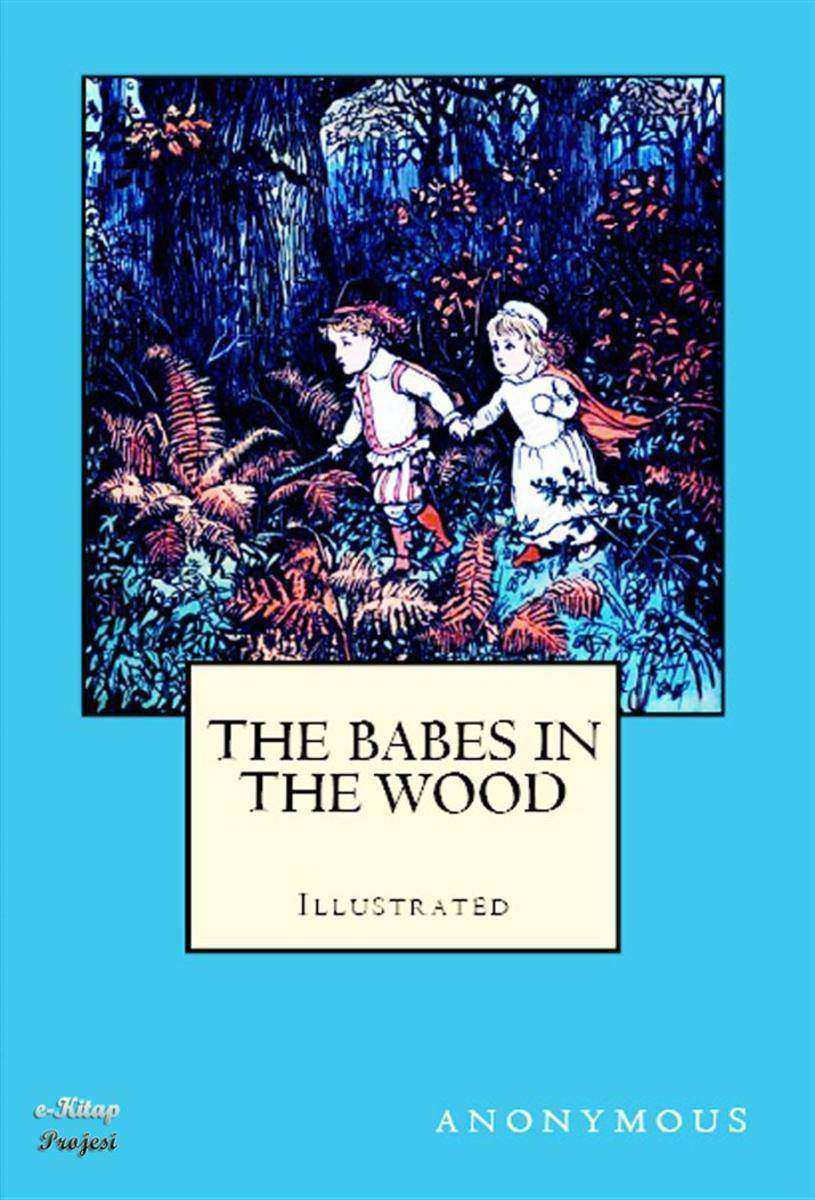
The Babes in the Wood: Illustrated
¥9.24
Now ponder well, you parents deare,?These wordes which I shall write;?A doleful story you shall heare,?In time brought forth to light.??A gentleman of good account?In Norfolke dwelt of late.?Who did in honour far surmount?Most men of his estate.??Sore sicke he was, and like to dye,?No helpe his life could save;?His wife by him as sicke did lye,?And both possest one grave.??No love between these two was lost,?Each was to other kinde;?In love they liv'd, in love they dyed,?And left two babes behinde:??The one a fine and pretty boy,?Not passing three yeares olde;?The other a girl more young than he?And fram'd in beautye's molde. Randolph Caldecott (1846 – 1886) was an English artist and illustrator, born in Chester. The Caldecott Medal was named in his honour. He exercised his art chiefly in book illustrations. His abilities as an artist were promptly and generously recognised by the Royal Academy. Caldecott gre-atly influenced illustration of children's books during the nineteenth century. Two books illustrated by him, priced at a shilling each, were published every Christmas for eight years. Caldecott also illustrated novels and accounts of foreign travel, made humorous drawings depicting hunting and fashionable life, drew cartoons and he made sketches of the Houses of Parliament inside and out, and exhibited sculptures and paintings in oil and watercolour in the Royal Academy and galleries. After six years at Whitchurch, Caldecott moved to the head office in Manchester of the Manchester & Salford Bank. He lodged variously in Aberdeen Street, Rusholme Grove and at Bowdon. He took the opportunity to study at night school at the Manchester School of Art and practised continually, with success in local papers and some London publications. It was a habit of his at this time, which he maintained all his life, to decorate his letters, papers and documents of all descriptions with marginal sketches to illustrate the content or provide amusement. A number of his letters have been reprinted with their illustrations in Yours Pictorially, a book edited by Michael Hutchings. In 1870, a painter friend in London, Thomas Armstrong, put Caldecott in touch with Henry Blackburn, the editor of London Society, who published a number of his drawings in several issues of the monthly magazine. Encouraged by this evidence of his ability to support him-self by his art, Caldecott decided to quit his job and move to London; this he did in 1872 at the age of 26. Within two years he had become a successful magazine illustrator working on commission. His work included individual sketches, illustrations of other articles and a series of illustrations of a holiday which he and Henry Blackburn took in the Harz Mountains in Germany. The latter became the first of a number of such series.
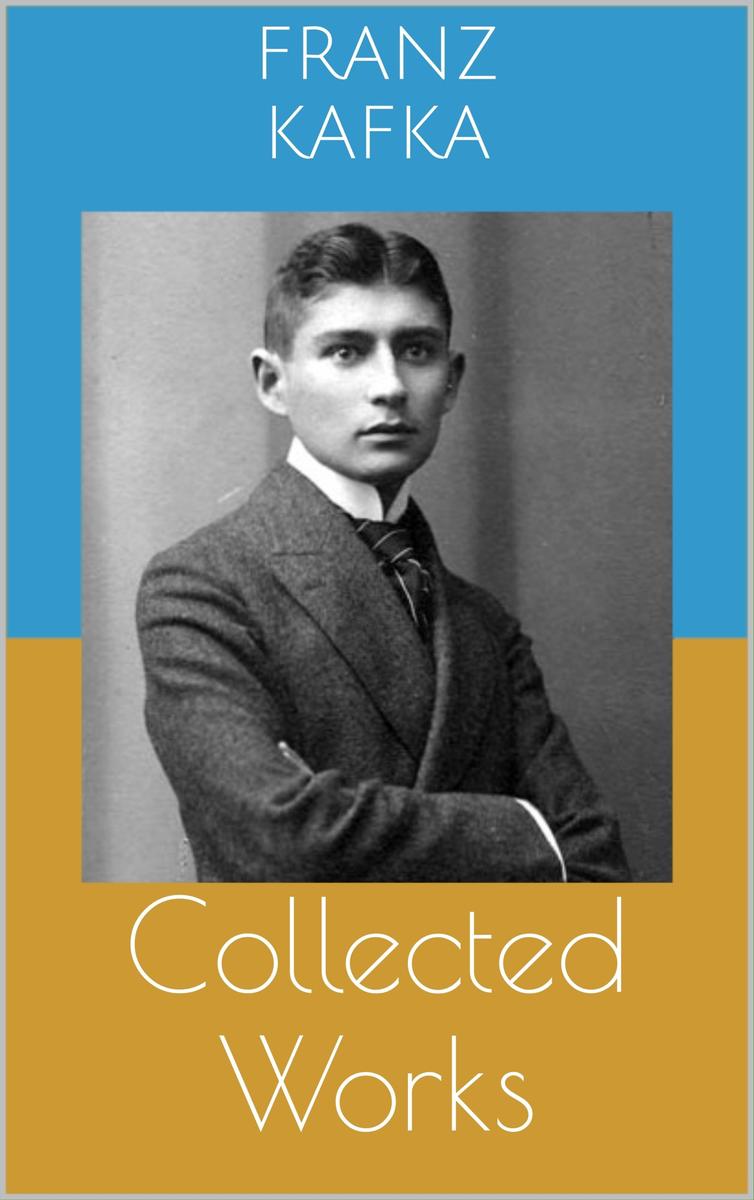
Collected Works: Complete Editions: The Metamorphosis, In the Penal Colony
¥9.24
This carefully crafted ebook is formatted with a functional and detailed table of contents.Franz Kafka (3 July 1883 – 3 June 1924) was a German-language writer of novels and short stories, regarded by critics as one of the most influential authors of the 20th century. Kafka strongly influenced genres such as existentialism. Most of his works, such as "Die Verwandlung" ("The Metamorphosis"), "Der Prozess" ("The Trial"), and "Das Schloss" ("The Castle"), are filled with the themes and archetypes of alienation, physical and psychological brutality, parent–child conflict, characters on a terrifying quest, labyrinths of bureaucracy, and mystical transformations. Kafka was born into a middle-class, German-speaking Jewish family in Prague, then part of the Austro-Hungarian Empire. In his lifetime, most of the population of Prague spoke Czech, and the division between Czech- and German-speaking people was a tangible reality, as both groups were strengthening their national identity. The Jewish community often found itself in between the two sentiments, naturally raising questions about a place to which one belongs. Kafka himself was fluent in both languages, considering German his mother tongue. Kafka trained as a lawyer and, after completing his legal education, obtained employment with an insurance company. He began to write short stories in his spare time. For the rest of his life, he complained about the little time he had to devote to what he came to regard as his calling. He regretted having to devote so much attention to his "Brotberuf" ("day job", literally "bread job"). Kafka preferred to communicate by letter; he wrote hundreds of letters to family and close female friends, including his father, his fiancée Felice Bauer, and his youngest sister Ottla. He had a complicated and troubled relationship with his father that had a major effect on his writing. He also suffered conflict over being Jewish, feeling that it had little to do with him, although critics argue that it influenced his writing.This collection contains the following works:- The Metamorphosis- A Country Doctor- A Hunger Artist- A Report for an Academy- An Imperial Message- Before the Law- In the Penal Colony- Jackals and Arabs- The Great Wall of China- The Hunter Gracchus- The Trial- Up in the Gallery
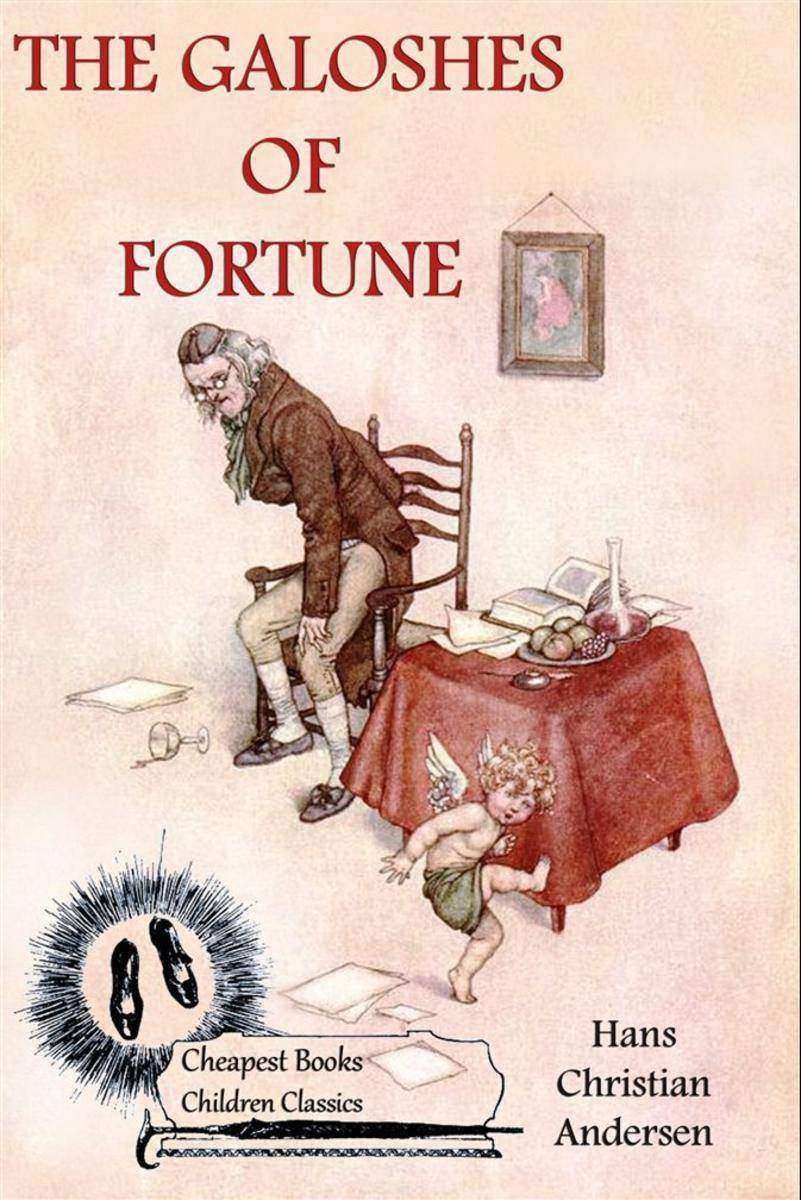
The Galoshes of Fortune
¥9.24
I t was in Copenhagen, in one of the houses on East Street, not far from King's Newmarket, that someone was giving a large party. For one must give a party once in a while, if one expects to be invited in return. Half of the guests were already at the card tables, and the rest were waiting to see what would come of their hostess's query: "What can we think up now?" Up to this point, their conversation had gotten along as best it might. Among other things, they had spoken of the Middle Ages. Some held that it was a time far better than our own. Indeed Councilor of Justice Knap defended this opinion with such spirit that his hostess sided with him at once, and both of them loudly took exception to Oersted's article in the Almanac, which contrasted old times and new, and which favored our own period. The Councilor of Justice, however, held that the time of King Hans, about 1500 A.D., was the noblest and happiest age. While the conversation ran pro and con, interrupted only for a moment by the arrival of a newspaper, in which there was nothing worth reading, let us adjourn to the cloak room, where all the wraps, canes, umbrellas, and galoshes were collected together. Here sat two maids, a young one and an old one. You might have thought they had come in attendance upon some spinster or widow, and were waiting to see their mistress home. However, a closer inspection would reveal that these were no ordinary serving women. Their hands were too well kept for that, their bearing and movements too graceful, and their clothes had a certain daring cut. They were two fairies. The younger one, though not Dame Fortune herself, was an assistant to one of her ladies in waiting, and was used to deliver the more trifling gifts of Fortune. The older one looked quite grave. She was Dame Care, who always goes in her own sublime person to see to her errands herself, for then she knows that they are well done. They were telling each other about where they had been that day. The assistant of Fortune had only attended to a few minor affairs, she said, such as saving a new bonnet from the rain, getting a civil greeting for an honest man from an exalted nincompoop, and such like matters. But her remaining errand was an extraordinary one.


