


 购物车
购物车 个人中心
个人中心
Timon of Athens
¥9.00
The Life of Timon of Athens is a play by William Shakespeare about the legendary Athenian misanthrope Timon (and probably influenced by the eponymous philosopher, as well), generally regarded as one of his most obscure and difficult works. Originally grouped with the tragedies, it is generally considered such, but some scholars group it with the problem comedies.
Romeo and Juliet
¥9.00
Romeo and Juliet is a tragic play written early in the career of William Shakespeare about two teenage "star-cross'd lovers" whose untimely deaths ultimately unite their feuding households. It was among Shakespeare's most popular plays during his lifetime and, along with Hamlet, is one of his most frequently performed plays. Today, the title characters are regarded as archetypal "young lovers".
Much Ado About Nothing
¥9.00
Much Ado About Nothing is a comedy by William Shakespeare. First published in 1600, it is likely to have been first performed in the autumn or winter of 1598-1599, and it remains one of Shakespeare's most enduring and exhilarating plays on stage. Stylistically, it shares numerous characteristics with modern romantic comedies including the two pairs of lovers, in this case the romantic leads, Claudio and Hero, and their comic counterparts, Benedick and Beatrice.
As You Like It
¥9.00
As You Like It is a pastoral comedy by William Shakespeare based on the novel Rosalynde by Thomas Lodge, believed to have been written in 1599 or early 1600. It features one of Shakespeare's most famous and oft-quoted lines, "All the world's a stage", and has been adapted for radio, film, and musical theatre.
Henry VIII
¥9.00
The Famous History of the Life of King Henry the Eighth is a history play by William Shakespeare, based on the life of Henry VIII of England. An alternative title, All is True, is recorded in contemporary documents, the title Henry VIII not appearing until the play's publication in the First Folio of 1623. Stylistic evidence indicates that the play was written by Shakespeare in collaboration with, or revised by, his successor, John Fletcher. It is also somewhat characteristic of the late romances in its structure.

Timon d'athènes.
¥9.00
Timon est un noble de d'Athènes, très (trop) généreux avec ses amis qu'il invite régulièrement à des festins somptueux, auxquels il offre des cadeaux hors de prix, à tel point qu'il se retrouve un jour sur la paille et ne peut plus payer ses créanciers. S?r de la qualité de l'amitié, il se tourne vers ceux à qui il fait moultes cadeaux pour leur demander de l'aide. Ceux-ci trouvent mille excuses pour ne pas aider Timon qui sombre dans la colère envers Athènes et ses nobles, s'exile dans les bois, et maudit la ville et ses habitants hypocrites et avilis par l'app?t de l'or. De son c?té, Alcibiade, général athénien, se voit refuser l'aide du Sénat, quitte la ville avec son armée pour mieux l'assiéger ensuite. Il essaie d'obtenir le soutien de Timon exilé qui le maudit aussi et fait finalement la paix avec les sénateurs. Timon meurt seul dans les bois laissant pour épitaphe une dernière malédiction pour qui la lira.
Titus Andronicus
¥9.00
Titus Andronicus may be Shakespeare's earliest tragedy; it is believed to have been written sometime between 1584 and the early 1590s. It depicts a Roman general who is engaged in a cycle of revenge with his enemy Tamora, the Queen of the Goths. The play is by far Shakespeare's bloodiest work. It lost popularity during the Victorian era because of its gore, and has only recently begun to revive its fortunes.
Midsummer Night's Dream
¥9.00
A Midsummer Night's Dream is a romantic comedy by William Shakespeare, suggested by "The Knight's Tale" from Geoffrey Chaucer's The Canterbury Tales, written around 1594 to 1596. It portrays the adventures of four young Athenian lovers and a group of amateur actors, their interactions with the Duke and Duchess of Athens, Theseus and Hippolyta, and with the fairies who inhabit a moonlit forest. The play is one of Shakespeare's most popular works for the stage and is widely performed across the world.

The Two Vanrevels
¥9.00
One of the most popular novels of the early twentieth century, Booth Tarkington's The Two Vanrevels is a gripping and entertaining romp that effortlessly weaves together many of the elements that define the author's oeuvre, including a passionate love triangle, a case of mistaken identity, and a look at how political and social events can often intrude on the personal sphere.
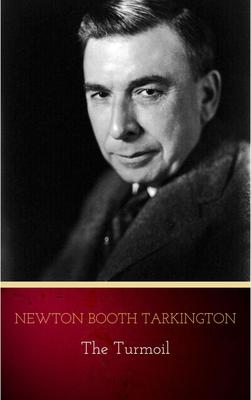
The Turmoil
¥9.00
A familiar midwestern novel in the tradition of Sherwood Anderson and Sinclair Lewis, The Turmoil was the best-selling novel of 1915. It is set in a small, quiet city--never named but closely resembling the author's hometown of Indianapolis--that is quickly being transformed into a bustling, money-making nest of competitors more or less overrun by "the worshippers of Bigness." "There is a midland city in the heart of fair, open country, a dirty and wonderful city nesting dingily in the fog of its own smoke, " begins The Turmoil, the first volume of Pulitzer Prize-winner Booth Tarkington's "Growth" trilogy. A narrative of loss and change, a love story, and a warning about the potential evils of materialism, the book chronicles two midwestern families trying to cope with the onset of industrialization. Tarkington believed that culture could flourish even as the country was increasingly fueled by material progress. The Turmoil, the first great success of his career, tells the intertwined stories of two families: the Sheridans, whose integrity wanes as their wealth increases, and the Vertrees, who remain noble but impoverished. Linked by the romance between a Sheridan son and a Vertrees daughter, the story of the two families provides a dramatic view of what America was like on the verge of a new order. An introduction by Lawrence R. Rodgers places the novel squarely in the social and cultural context of the Progressive Era.
Herbert West: Reanimator
¥9.00
"Herbert West: Reanimator" is a short story by American horror fiction writer H. P. Lovecraft. It was written between October 1921 and June 1922. It was first serialized in February through July 1922 in the amateur publication Home Brew. The story was the basis of the 1985 horror film Re-Animator and its sequels, in addition to numerous other adaptations in various media.
The Green Meadow
¥9.00
"The Green Meadow" is a short story by H. P. Lovecraft and Winifred V. Jackson written in 1918/1919 and published in the spring 1927 issue of The Vagrant. As in their other collaboration, "The Crawling Chaos", both authors used pseudonyms — the tale was published as by "Elizabeth Neville Berkeley" (Jackson) and "Lewis Theobald, Jun." (Lovecraft). Lovecraft wrote the entire text but Jackson is credited since it was based on a dream she had experienced
The Curse of Yig
¥9.00
"The Curse of Yig" is a short story by H. P. Lovecraft and Zealia Bishop in which Yig, "The Father of Serpents", is first introduced.
The Cats of Ulthar
¥9.00
The Cats of Ulthar" is a short story written by American fantasy author H. P. Lovecraft in June 1920. In the tale, an unnamed narrator relates the story of how a law forbidding the killing of cats came to be in a town called Ulthar. As the narrative goes, the city is home to an old couple who enjoy capturing and killing the townspeople's cats. When a caravan of wanderers passes through the city, the kitten of an orphan (Menes) traveling with the band disappears. Upon hearing of the couple's violent acts towards cats, Menes invokes a prayer before leaving town that causes the local felines to swarm the cat-killers' house and devour them. Upon witnessing the result, the local politicians pass a law forbidding the killing of cats.
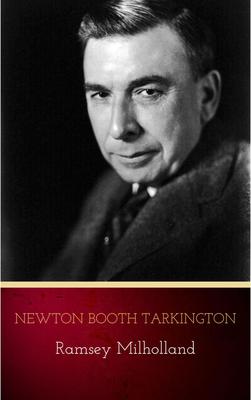
Ramsey Milholland
¥9.00
Newton Booth Tarkington (July 29, 1869 – May 19, 1946) was an American novelist and dramatist best known for his novels The Magnificent Ambersons and Alice Adams. He is one of only three novelists to win the Pulitzer Prize for Fiction more than once, along with William Faulkner and John Updike.
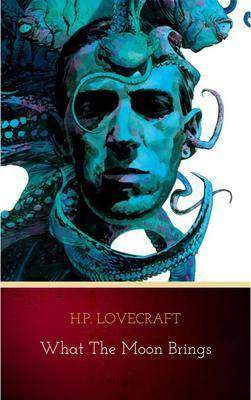
What the Moon Brings
¥9.00
What the Moon Brings is a short story by H.P. Lovecraft, written on June 5, 1922. This story was first published in the National Amateur in May 1923, and based upon a dream. This story is told in the first person; the narrator is never named. The story describes a surreal dreamscape. The narrator wanders through his garden one night and in the moonlight sees strange and bizarre things
The Tree
¥9.00
On a mountain which was a chosen haunt for the Greek God Pan is an olive grove, and a fearful, human-like olive tree within it
The Street
¥9.00
"The Street" is a short story by American horror fiction writer H. P. Lovecraft, written in late 1919 and first published in the December 1920 issue of the Wolverine amateur journal. The story traces the history of the eponymous street in a New England city, presumably Boston, from its first beginnings as a path in colonial times to a quasi-supernatural occurrence in the years immediately following World War I.
The Nameless City
¥9.00
"The Nameless City" is a horror story written by H. P. Lovecraft in January 1921 and first published in the November 1921 issue of the amateur press journal The Wolverine. It is often considered the first Cthulhu Mythos story. The Nameless City of the story's title is an ancient ruin located somewhere in the deserts of the Arabian Peninsula and is older than any human civilization
Memory
¥9.00
"Memory" is a flash fiction short story by American horror and science fiction writer H. P. Lovecraft, written in 1919 and published in May 1923 in The National Amateur. This story takes place in the ancient valley of Nis, in vegetation-covered stone ruins described by Lovecraft in great detail. These crumbling blocks of monolithic stone now serve only for grey toads and snakes to nest under. Interspersed in the ruins are large trees that are home to little apes. Through the bottom of this valley runs the great, slimy red river called Than.

Ibid
¥9.00
"Ibid" is a mock biography of the Roman scholar Ibidus (486-587), whose masterpiece was Op. Cit., "wherein all the significant undercurrents of Graeco-Roman thought were crystallized once and for all." The piece traces the skull of Ibidus, once the possession of Charlemagne, William the Conqueror and other notables, to the United States, where it travels via Salem, Massachusetts and Providence, Rhode Island to a prairie dog hole in Milwaukee, Wisconsin.


