


 购物车
购物车 个人中心
个人中心
![Sing a Song of Sixpence: [Illustrated]](https://platform-permanent.ddimg.cn/pt-media-info-soa-resource/digital/product/53/13/1901165313_ii_cover.jpg?version=72ffa993-0d82-44e1-96c7-94b432ffcec8)
Sing a Song of Sixpence: [Illustrated]
¥9.24
A brand new sixpence fresh from the Mint! How it sparkled and glittered in the dancing sunlight! Such a treasure for a small girl to possess! But then, on the other hand, what a heavy responsibility!??All day long it had been burning a hole in her pocket, and as for learning lessons, not an idea would enter her head. Everything went in at one ear and out of the other, as Miss Primmer sternly remarked when Nellie could not say her poetry. But, indeed, Nellie did try hard to learn her lessons; she squeezed her eyes together as tightly as possible, though how shutting her eyes was to prevent the lessons from coming out of her ears was not very clear. ??"But I must learn them now," she sighed, "or Miss Primmer will keep me in tomorrow, and I shan't be able to go out with Nursie and Reggie to spend my sixpence. Oh dear! I wish I could learn my poetry and keep it in, I guess I'd better get a bit of cotton wool to put in my ears and then it can't come out. There, now!
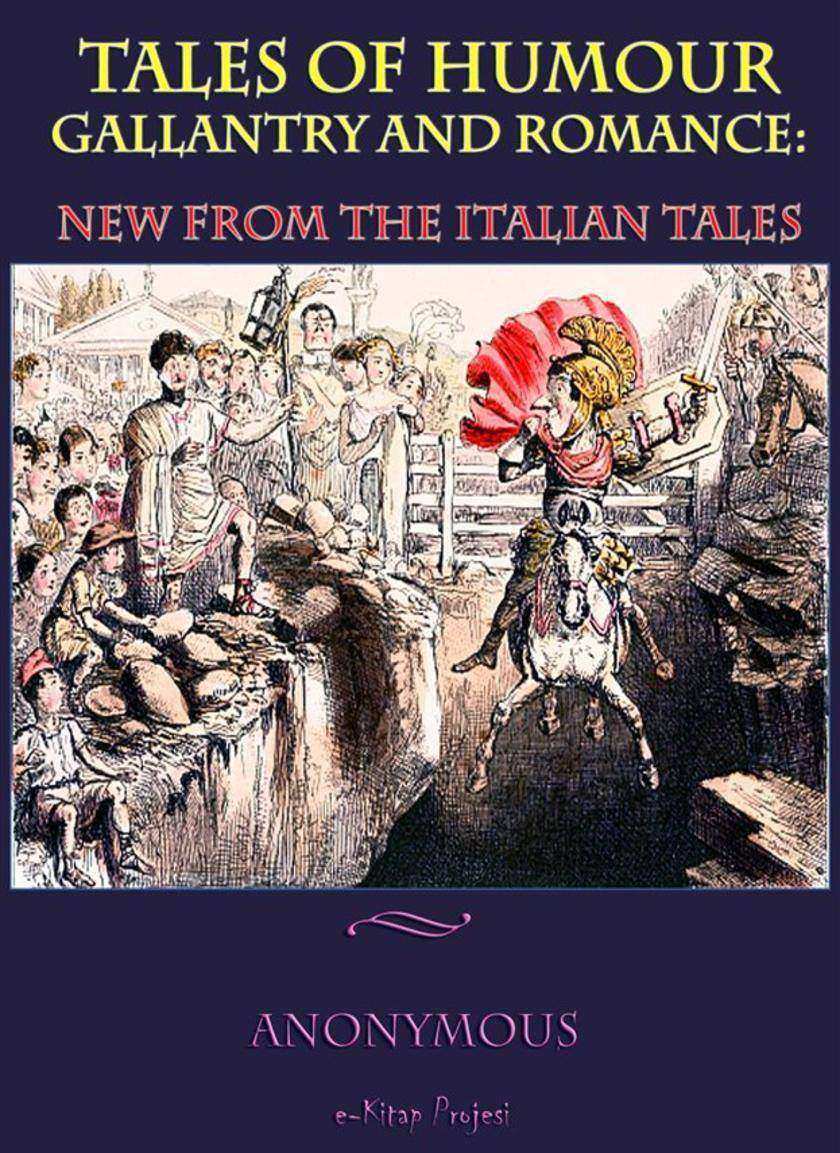
Tales Of Humour, Gallantry and Romance: New from the Italian Tales (Illustrated)
¥9.24
THE history, the features, and the most famous examples of European architecture, during a period extending from the rise of the Gothic, or pointed, style in the twelfth century to the general depression which overtook the Renaissance style at the close of the eighteenth, form the subject of this little volume. I have endeavoured to adopt as free and simple a mode of treatment as is compatible with the accurate statement of at least the outlines of so very technical a subject. Though it is to be hoped that many professional students of architecture will find this hand-book serviceable to them in their elementary studies, it has been my principal endeavour to adapt it to the requirements of those who are preparing for the professional pursuit of the sister arts, and of that large and happily increasing number of students who pursue the fine arts as a necessary part of a complete liberal education, and who know that a solid and comprehensive acquaintance with art, especially if joined to some skill in the use of the pencil, the brush, the modelling tool, or the etching needle, will open sources of pleasure and interest of the most refined description. The broad facts of all art history; the principles which underlie each of the fine arts; and the most precious or most noteworthy examples of each, ought to be familiar to every art student, whatever special branch he may follow. Beyond these limits I have not attempted to carry this account of Gothic and Renaissance architecture; within them I have endeavoured to make the work as complete as the space at my disposal permitted. THE architecture generally known as Gothic, but often described as Christian Pointed, prevailed throughout Europe to the exclusion of every rival for upwards of three centuries; and it is to be met with, more or less, during two others. Speaking broadly, it may be said that its origin took place in the twelfth century, that the thirteenth was the period of its development, the fourteenth that of its perfection, and the fifteenth that of its decline; while many examples of its employment occur in the sixteenth. In the following chapters the principal changes in the features of buildings which occurred during the progress of the style in England will be described. Subsequently, the manner in which the different stages of development were reached in different countries will be given; for architecture passed through very nearly the same phases in all European nations, though not quite simultaneously. It must be understood that through the whole Gothic period, growth or at least change was going on; the transitions from one stage to another were only periods of more rapid change than usual. The whole process may be illustrated by the progress of a language. If, for instance, we compare round-arched architecture in the eleventh century to the Anglo-Saxon form of speech of the time of Alfred the Great, and the architecture of the twelfth century to the English of Chaucer, that of the thirteenth will correspond to the richer language of Shakespeare, that of the fourteenth to the highly polished language of Addison and Pope, and that of the fifteenth to the English of our own day. We can thus obtain an apt parallel to the gradual change and growth which went on in architecture; and we shall find that the oneness of the language in the former case, and of the architecture in the latter, was maintained throughout. For an account of the Christian round-arched architecture which preceded Gothic, the reader is referred to the companion volume in this series. Here it will be only necessary briefly to review the circumstances which went before the appearance of the pointed styles.
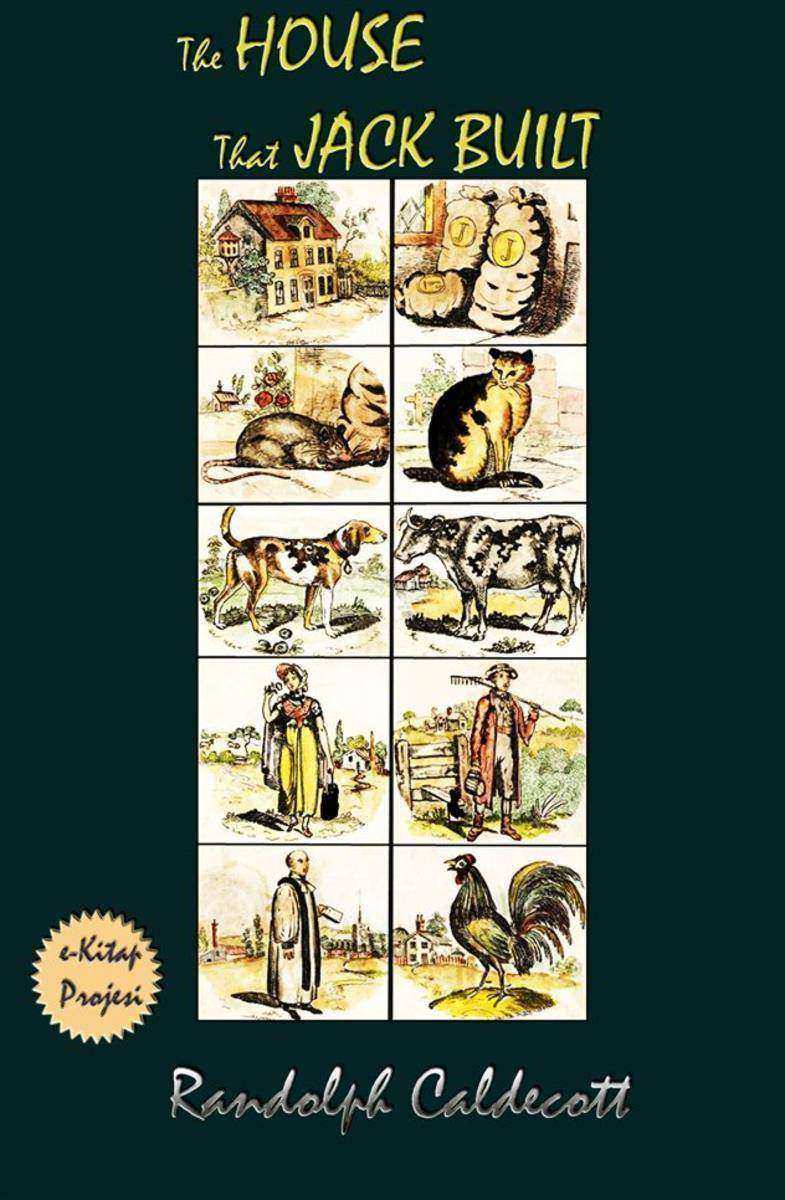
The House That Jack Built: "Illustrated"
¥9.24
Books of instruction in the practice of painting have rarely been successful. Chiefly because they have been too narrow in their point of view, and have dealt more with recipes than with principles. It is not possible to give any one manner of painting that shall be right for all men and all subjects. To say "do thus and so" will not teach any one to paint. But there are certain principles which underlie all painting, and all schools of painting; and to state clearly the most important of these will surely be helpful, and may accomplish something. It is the purpose of this book to deal practically with the problems which are the study of the painter, and to make clear, as far as may be, the principles which are involved in them. I believe that this is the only way in which written instruc-tion on painting can be of any use. It is impossible to understand principles without some statement of theory; and a book in order to be practical must therefore be to some extent theoretical. I have been as concise and brief in the theoretical parts as clearness would permit of, and I trust they are not out of proportion to the practical parts. Either to paint well, or to judge well of a painting, requires an understanding of the same things: namely, the theoretical standpoint of the painter; the technical problems of color, composition, etc.; and the practical means, processes, and materials through which and with which these are worked out. It is obvious that one cannot become a good painter without the ability to know what is good painting, and to prefer it to bad painting. Therefore, I have taken space to cover, in some sort, the whole ground, as the best way to help the student towards becoming a good painter. If, also, the student of pictures should find in this book what will help him to appreciate more truly and more critically, I shall be gratified. There is a false implication in the saying that "a poor workman blames his tools." It is not true that a good workman can do good work with bad tools. On the contrary, the good workman sees to it that he has good tools, and makes it a part of his good workmanship that they are in good condition. In painting there is nothing that will cause you more trouble than bad materi-als. You can get along with few materials, but you cannot get along with bad ones. That is not the place to economize. To do good work is difficult at best. Econo-mize where it will not be a hindrance to you. Your tools can make your work harder or easier according to your selection of them. The relative cost of good and bad materials is of slight importance compared with the relative effect on your work.The way to economize is not to get anything which you do not need. Save on the non-essentials, and get as good a quality as you can of the essentials. Save on the number of things you get, not on the quantity you use. You must feel free in your use of material. There is nothing which hampers you more than parsimony in the use of things needful to your painting. If it is worth your while to paint at all, it is worth your while to be generous enough with yourself to insure ordinary freedom of use of material.The essentials of painting are few, but these cannot be dispensed with. Put it out of your mind that any one of these five things can be got along without:—You must have something to paint on, canvas or panel. Have plenty of these.
Euthyphro
¥9.24
On the Origin of Species, published on 24 November 1859, is a work of scientific literature by Charles Darwin which is considered to be the foundation of evolutionary biology. Its full title was On the Origin of Species by Means of Natural Selection, or the Preservation of Favoured Races in the Struggle for Life. For the sixth edition of 1872, the short title was changed to The Origin of Species. Darwin's book introduced the scientific theory that populations evolve over the course of generations through a process of natural selection. It presented a body of evidence that the diversity of life arose by common descent through a branching pattern of evolution. Darwin included evidence that he had gathered on the Beagle expedition in the 1830s and his subsequent findings from research, correspondence, and experimentation. Various evolutionary ideas had already been proposed to explain new findings in biology. There was growing support for such ideas among dissident anatomists and the general public, but during the first half of the 19th century the English scientific establishment was closely tied to the Church of England, while science was part of natural theology. Ideas about the transmutation of species were controversial as they conflicted with the beliefs that species were unchanging parts of a designed hierarchy and that humans were unique, unrelated to other animals. The political and theological implications were intensely debated, but transmutation was not accepted by the scientific mainstream. The book was written for non-specialist readers and attracted widespread interest upon its publication. As Darwin was an eminent scientist, his findings were taken seriously and the evidence he presented generated scientific, philosophical, and religious discussion. The debate over the book contributed to the campaign by T. H. Huxley and his fellow members of the X Club to secularise science by promoting scientific naturalism. Within two decades there was widespread scientific agreement that evolution, with a branching pattern of common descent, had occurred, but scientists were slow to give natural selection the significance that Darwin thought appropriate. During the "eclipse of Darwinism" from the 1880s to the 1930s, various other mechanisms of evolution were given more credit. With the development of the modern evolutionary synthesis in the 1930s and 1940s, Darwin's concept of evolutionary adaptation through natural selection became central to modern evolutionary theory, and it has now become the unifying concept of the life sciences. Summary of Darwin's theory: Darwin's theory of evolution is based on key facts and the inferences drawn from them, which biologist Ernst Mayr summarised as follows: ? Every species is fertile enough that if all offspring survived to reproduce the population would grow (fact).? Despite periodic fluctuations, populations remain roughly the same size (fact).? Resources such as food are limited and are relatively stable over time (fact).? A struggle for survival ensues (inference).? Individuals in a population vary significantly from one another (fact).? Much of this variation is inheritable (fact).? Individuals less suited to the environment are less likely to survive and less likely to reproduce; individuals more suited to the environment are more likely to survive and more likely to reproduce and leave their inheritable traits to future generations, which produces the process of natural selection (inference).? This slowly effected process results in populations changing to adapt to their environments, and ultimately, these variations accumulate over time to form new species (inference).
Lords of the Stratosphere
¥9.24
It is a cumulative tale that does not tell the story of Jack's house, or even of Jack who built the house, but instead shows how the house is indirectly linked to other things and people, and through this method tells the story of "The man all tattered and torn", and the "Maiden all forlorn", as well as other smaller events, showing how these are interlinked. Origins: It has been argued that the rhyme is derived from an Aramaic hymn Chad Gadya (lit., "One Young Goat") in Sepher Haggadah, first printed in 1590; but although this is an early cumulative tale that may have inspired the form, the lyrics bear little relationship. It was suggested by James Orchard Halliwell that the reference to the "priest all shaven and shorn" indicates that the English version is probably very old, presumably as far back as the mid-sixteenth century. There is a possible reference to the song in The Boston New Letter of 12 April 1739 and the line: "This is the man all forlorn, &c". However, it did not appear in print until it was included in Nurse Truelove's New-Year's-Gift, or the Book of Books for Children, printed in London in 1755. It was printed in numerous collections in the late eighteenth and early nineteenth centuries. Randolph Caldecott produced an illustrated version in 1878. Cherrington Manor, a handsome timber-framed house in North East Shropshire, England, is reputed to be the actual house that Jack built. There is a former malt house in the grounds. Syntactic structure: Each sentence in the story is an example of an increasingly deeply nested relative clause. The last version, "This is the horse...", would be quite difficult to untangle if the previous ones were not present. See the Noun Phrase for more details about postmodification of the noun phrase in this manner. References in popular culture: The rhyme continues to be a popular choice for illustrated children's books, with recent examples by Simms Taback and Quentin Blake showing how illustrators can introduce a fresh angle and humour into a familiar tale. The popularity of the rhyme can be seen in its use in a variety of other cultural contexts..

Metamorphosis: {Illustrated}
¥9.24
The third novel, The Vicomte de Bragelonne (serialized October, 1847—January, 1850), has enjoyed a strange history in its English translation. It has been split into three, four, or five volumes at various points in its history. The five-volume edition generally does not give titles to the smaller portions, but the others do. In the three-volume edition, the novels are entitled The Vicomte de Bragelonne, Louise de la Valliere, and The Man in the Iron Mask. For the purposes of this etext, I have chosen to split the novel as the four-volume edition does, with these titles: The Vicomte de Bragelonne, Ten Years Later, Louise de la Valliere, and The Man in the Iron Mask. In the first three etexts: The Vicomte de Bragelonne (Etext 2609): It is the year 1660, and D'Artagnan, after thirty-five years of loyal service, has become disgusted with serving King Louis XIV while the real power resides with the Cardinal Mazarin, and has tendered his resignation. He embarks on his own project, that of restoring Charles II to the throne of England, and, with the help of Athos, succeeds, earning himself quite a fortune in the process. D'Artagnan returns to Paris to live the life of a rich citizen, and Athos, after negotiating the marriage of Philip, the king's brother, to Princess Henrietta of England, likewise retires to his own estate, La Fere. Meanwhile, Mazarin has finally died, and left Louis to assume the reigns of power, with the assistance of M. Colbert, formerly Mazarin's trusted clerk. Colbert has an intense hatred for M. Fouquet, the king's superintendent of finances, and has resolved to use any means necessary to bring about his fall. With the new rank of intendant bestowed on him by Louis, Colbert succeeds in having two of Fouquet's loyal friends tried and executed. He then brings to the king's attention that Fouquet is fortifying the island of Belle-Ile-en-Mer, and could possibly be planning to use it as a base for some military operation against the king. Louis calls D'Artagnan out of retirement and sends him to investigate the island, promising him a tremendous salary and his long-promised promotion to captain of the musketeers upon his return. At Belle-Isle, D'Artagnan discovers that the engineer of the fortifications is, in fact, Porthos, now the Baron du Vallon, and that's not all. The blueprints for the island, although in Porthos's handwriting, show evidence of another script that has been erased, that of Aramis. D'Artagnan later discovers that Aramis has become the bishop of Vannes, which is, coincidentally, a parish belonging to M. Fouquet. Suspecting that D'Artagnan has arrived on the king's behalf to investigate, Aramis tricks D'Artagnan into wandering around Vannes in search of Porthos, and sends Porthos on an heroic ride back to Paris to warn Fouquet of the danger. Fouquet rushes to the king, and gives him Belle-Isle as a present, thus allaying any suspicion, and at the same time humiliating Colbert, just minutes before the usher announces someone else seeking an audience with the king. Ten Years Later (Etext 2681): As 1661 approaches, Princess Henrietta of England arrives for her marriage, and throws the court of France into complete disorder. The jealousy of the Duke of Buckingham, who is in love with her, nearly occasions a war on the streets of Le Havre, thankfully prevented by Raoul's timely and tactful intervention. After the marriage, though, Monsieur Philip becomes horribly jealous of Buckingham, and has him exiled. Before leaving, however, the duke fights a duel with M. de Wardes at Calais. De Wardes is a malicious and spiteful man, the sworn enemy of D'Artagnan, and, by the same token, that of Athos, Aramis, Porthos, and Raoul as well. Both men are seriously wounded, and the duke is taken back to England to recover. Raoul's friend, the Comte de Guiche, is the next to succumb to Henrietta's charms, and Monsieur obtains his exile as well, though De Guiche soon effects a reconciliation.

Fraude en rojo: Los misterios de Katerina Carter: Misterio Negra y Suspense
¥9.24
Fraude en rojo - relatoCuando la auditora contable e investigadora de fraudes Katerina Carter y novio periodista Jace Burton aceptan una invitación extemporánea a una fiesta, el crimen es la última cosa que pasa por sus mentes. Pronto, una inversión exitosa en vino dejará un regusto amargo en la boca de Kat, al tiempo que se verá enfrentada a una estafa de un millón de dólares en vinos. ¡Y todo esto antes de la cena!Sobre la autoraColleen Cross es la autora de los la serie de misterio Katerina Carter Fraude y de su homóloga Katerina Carter Color of Money. Sus dos populares series de misterio giran en torno al mismo personaje. Katerina Carter es contable forense e investigadora de fraudes, con un buen conocimiento de las calles. Siempre hace lo correcto, aunque sus métodos poco ortodoxos con frecuencia ponen los pelos de punta y el corazón en la garganta.Colleen también es contable forense e investigadora de fraudes, así como autora de libros sobre crímenes reales. En Anatomy of a Ponzi: Scams Past and Present desenmascara a los mayores perpetradores de la estafa Ponzi de la historia y explica cómo consiguieron llevar a cabo sus crímenes sin ser condenados. Colleen predice el lugar y el momento exactos en el que se descubrirá el mayor fraude de Ponzi de la historia, y nos da las pistas necesarias para estar sobreaviso.Enlaces de Colleen en las redes sociales:Facebook: www.facebook.com/colleenxcrossTwitter: @colleenxcrosso también en GoodreadsPara conocer las novedades literarias de Colleen, por favor visita su sitio web: http://www.colleencross.com.¡Inscríbete su boletín para estar al tanto de sus nuevos lanzamientos!

Pufi. Pisicu?a r?t?cit? ?n z?pad?
¥9.24
Ce ar fi dac? to?i cei patru pre?edin?i americani asasina?i de-a lungul timpului ar fi fost uci?i din acela?i motiv ?ocant: o clauz? din Constitu?ia Statelor Unite? C?nd pre?edintele Danny Daniels este ?inta unui atentat ?n inima Manhattan-ului, Cotton Malone, fost agent secret al Departamentului de Justi?ie, ??i risc? via?a pentru a-l salva ?i intr? astfel ?n conflict cu Commonwealth, o organiza?ie secret? ?nfiin?at? ?n vremea Revolu?iei Americane. Malone ?i Cassiopeia Vitt str?bat ?ara ?n lung ?i ?n lat ca s? sparg? cifrul secret al lui Thomas Jefferson, s? dezlege puzzle-ul lui Andrew Jackson ?i s? dezgroape un document semnat de ?n?i?i P?rin?ii Fondatori ai na?iei ?i suficient de puternic pentru a face din Commonwealth o for?? de neoprit. ?O intrig? ingenioas?, plin? de r?sturn?ri de situa?ie ?i scene de ac?iune, pe un fundal istoric care st?rne?te imagina?ia cititorilor.“ – Publishers Weekly ?Constitu?ia american?, coduri secrete, istorie c?t cuprinde ?i, ?n plus, pira?i! Ce altceva ?i-ai mai putea dori? Codul Jefferson te va b?ntui nu numai c?teva nop?i, ci toat? via?a. Cotton Malone se ?ntoarce ?n cel mai ?nfrico??tor loc de pe p?m?nt: acas?.“ – Brad Meltzer
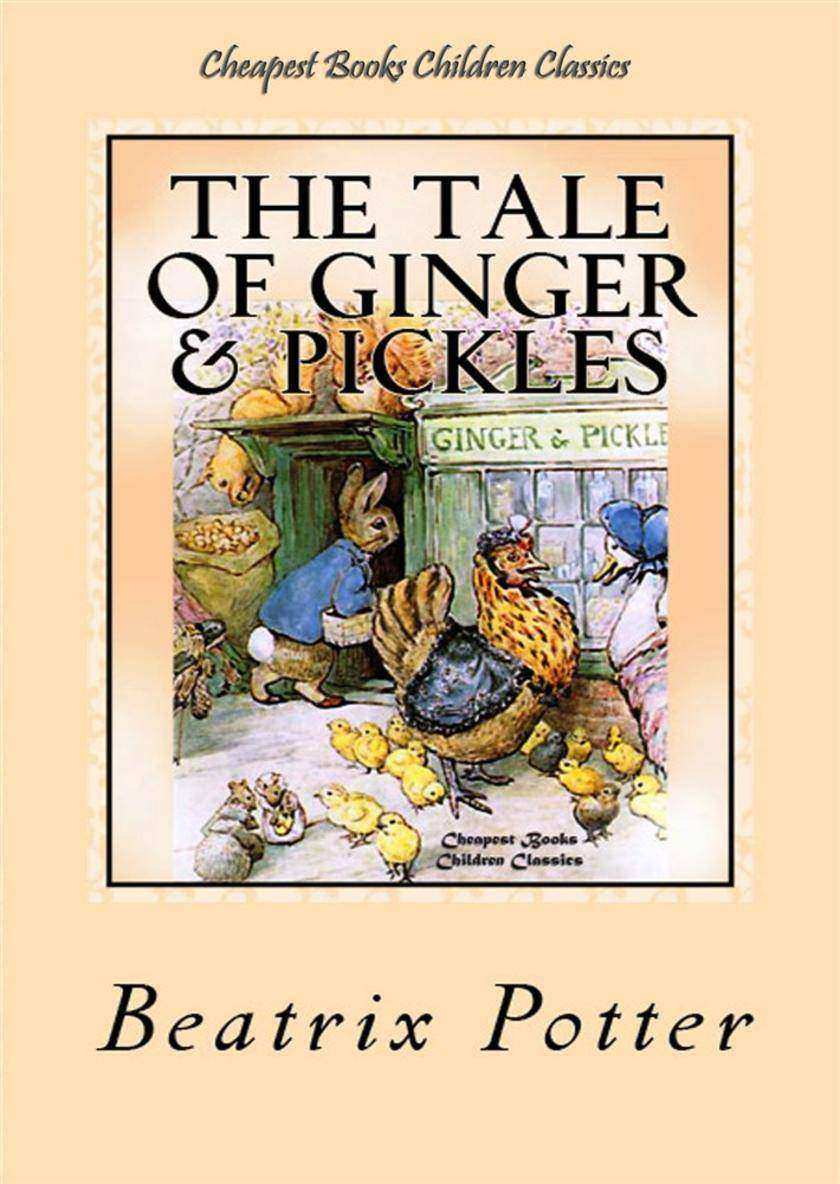
The Tale of Ginger and Pickles: "Three Years in Bed and Never a Grumble!"
¥9.24
ONCE upon a time there was a village shop. The name over the window was "Ginger and Pickles."??It was a little small shop just the right size for Dolls??”Lucinda and Jane Doll-cook always bought their groceries at Ginger and Pickles.??The counter inside was a convenient height for rabbits. Ginger and Pickles sold red spotty pocket-handkerchiefs at a penny three farthings.??They also sold sugar, and snuff and galoshes.?In fact, although it was such a small shop it sold nearly everything -except a few things that you want in a hurry like bootlaces-, hair-pins and mutton chops.?Ginger and Pickles were the people who kept the shop. Ginger was a yellow tom-cat, and Pickles was a terrier.??The rabbits were always a little bit afraid of Pickles.

Ratón Pérez
¥9.24
Sembrad en los ni?os la idea, aunque no la entiendan: los a?os se encargarán de descifrarla en su entendimiento y hacerla florecer en su corazón.??Entre la muerte del rey que rabió y el advenimiento al trono de la reina Mari-Casta?a existe un largo y obscuro período en las crónicas, de que quedan pocas memorias. Consta, sin embargo, que floreció en aquella época un rey Buby I, grande amigo de los ni?os pobres y protector decidido de los ratones.??Fundó una fábrica de mu?ecos y caballos de cartón para los primeros, y sábese de cierto, que de esta fábrica procedían los tres caballitos cuatralbos, que regaló el rey D. Bermudo el Diácono á los ni?os de Hissén I, después de la batalla de Bureva. ? AUTOR: Luis Coloma Roldán (1851 - 1915), conocido también como el padre Coloma, fue un escritor, periodista y jesuita espa?ol. En su faceta de autor de literatura infantil y juvenil creó el personaje del Ratoncito Pérez. ? Biografía:Fue hijo de un célebre médico, Ramón Co-loma Garcés casado en segundas nupcias con Concepción Roldán. A los doce a?os entró en la Escuela Naval preparatoria de San Fernando (1863), pero lo dejó para licenciarse en Derecho en la Universidad de Sevilla coincidiendo con la trascenden-tal revolución de 1868, hacia la cual el joven jerezano mantuvo una actitud hostil que reflejaría en sus escritos. De esta época data su amistad con Fernán Caballero, ya anciana entonces, sobre la que escribiría unos Recuerdos. Luego se trasladó a Madrid, donde trabaja como pasante en el bufete del abogado Hilario Pina. Empezó a frecuentar tertulias elegantes y a colaborar en distintos periódicos defendiendo la Restauración de los Borbones (El Tiempo. Periódico político de la tarde de Madrid y El Porvenir de Jerez).

Mr. Icky
¥9.24
The SCENE is the Exterior of a Cottage in West Issacshire on a desperately Arcadian afternoon in August. MR. ICKY, quaintly dressed in the costume of an Elizabethan peasant, is pottering and doddering among the pots and dods. He is an old man, well past the prime of life, no longer young, From the fact that there is a burr in his speech and that he has absent-mindedly put on his coat wrongside out, we surmise that he is either above or below the ordinary superficialities of life. Near him on the grass lies PETER, a little boy. PETER, of course, has his chin on his palm like the pictures of the young Sir Walter Raleigh. He has a complete set of features, including serious, sombre, even funereal, gray eyes—and radiates that alluring air of never having eaten food. This air can best be radiated during the afterglow of a beef dinner. Be is looking at MR. ICKY, fascinated. SILENCE… . The song of BIRDS.. .
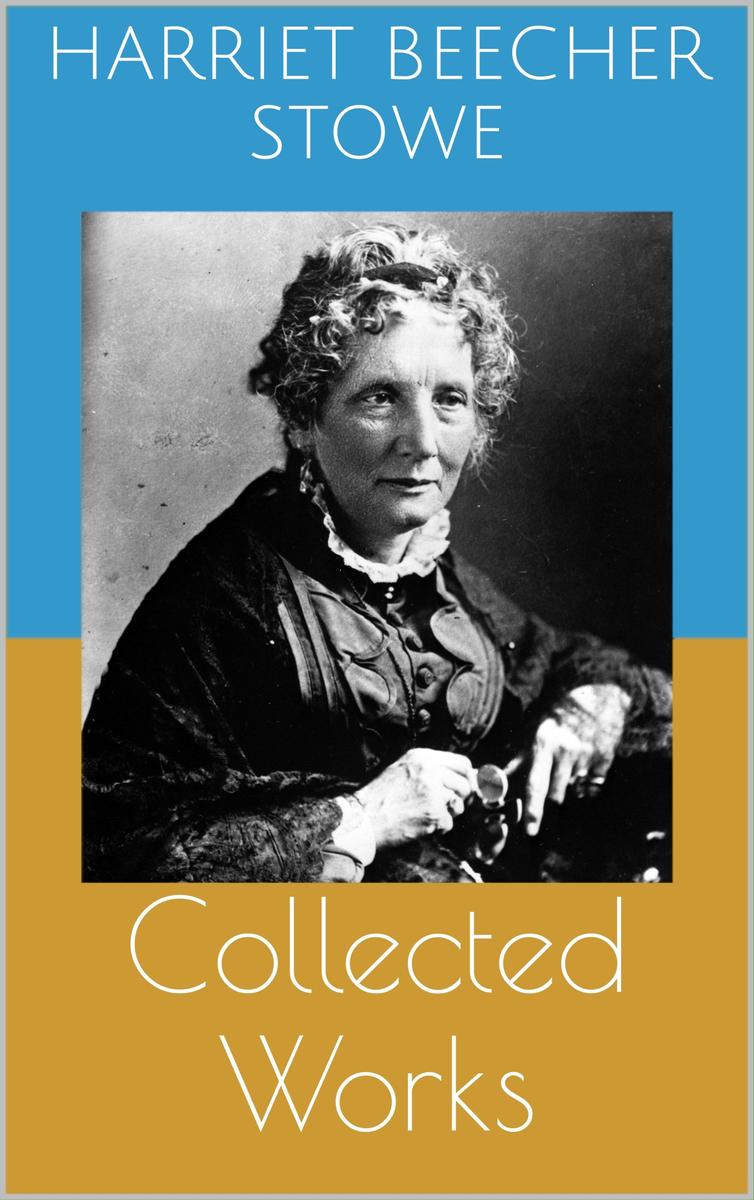
Collected Works: Complete and Illustrated Editions: Uncle Tom's Cabin
¥9.24
This carefully crafted ebook is formatted with a functional and detailed table of contents.Harriet Elisabeth Beecher Stowe (June 14, 1811 – July 1, 1896) was an American abolitionist and author. Her novel "Uncle Tom's Cabin" (1852) was a depiction of life for African Americans under slavery; it reached millions as a novel and play, and became influential in the United States and United Kingdom. It energized anti-slavery forces in the American North, while provoking widespread anger in the South. She wrote more than 20 books, including novels, three travel memoirs, and collections of articles and letters. She was influential for both her writings and her public stands on social issues of the day.This collection contains the following works:- Uncle Tom's Cabin- Uncle Tom's Cabin. Young Folks' Edition- Queer Little Folks- The Chimney-Corner- The First Christmas of New England- The Ghost in the Cap'n Brown House- The Minister's Wooing- The Tea Rose- Poetry: The Other World / The Twelve Months: A New Year's Dream / Lines... / Knocking / The Crocus / Consolation / Mary at the Cross / The Old Psalm Tune- Letters: Letter to her friend, Georgiana May / Letters to her husband, Calvin / Letter to congressman Horace Mann / Letter to William Lloyd Garrison
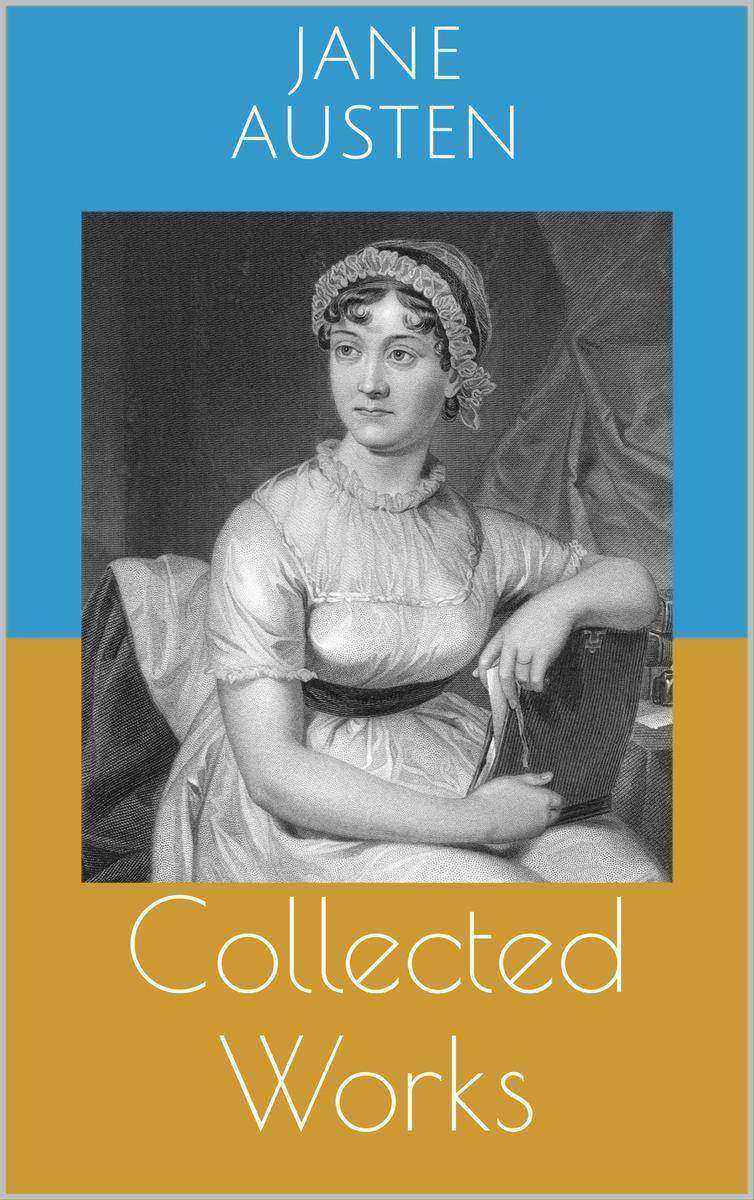
Collected Works: Complete Editions: Sense and Sensibility, Pride and Prejudice
¥9.24
This carefully crafted ebook is formatted with a functional and detailed table of contents.Jane Austen (16 December 1775 – 18 July 1817) was an English novelist whose works of romantic fiction, set among the landed gentry, earned her a place as one of the most widely read writers in English literature. Her realism, biting irony and social commentary as well as her acclaimed plots have gained her historical importance among scholars and critics. Austen lived her entire life as part of a close-knit family located on the lower fringes of the English landed gentry. She was educated primarily by her father and older brothers as well as through her own reading. The steadfast support of her family was critical to her development as a professional writer. From her teenage years into her thirties she experimented with various literary forms, including an epistolary novel which she then abandoned, wrote and extensively revised three major novels and began a fourth. From 1811 until 1816, with the release of "Sense and Sensibility" (1811), "Pride and Prejudice" (1813), "Mansfield Park" (1814) and "Emma" (1815), she achieved success as a published writer. She wrote two additional novels, "Northanger Abbey" and "Persuasion", both published posthumously in 1818, and began a third, which was eventually titled "Sanditon", but died before completing it. Austen's works critique the novels of sensibility of the second half of the 18th century and are part of the transition to 19th-century realism. Her plots, though fundamentally comic, highlight the dependence of women on marriage to secure social standing and economic security. Her works, though usually popular, were first published anonymously and brought her little personal fame and only a few positive reviews during her lifetime, but the publication in 1869 of her nephew's "A Memoir of Jane Austen" introduced her to a wider public, and by the 1940s she had become widely accepted in academia as a great English writer. The second half of the 20th century saw a proliferation of Austen scholarship and the emergence of a Janeite fan culture.This collection contains the following works:- Sense and Sensibility- Pride and Prejudice- Mansfield Park- Emma- Northanger Abbey- Persuasion- Cancelled Chapter of 'Persuasion'- Lady Susan- The Watsons- Plan of a Novel- Sandition- Poems: Happy the Lab'rer / I've a Pain in my Head / Miss Lloyd has now went to Miss Green / Mock Panegyric on a Young Friend / My Dearest Frank, I Wish You Joy / Ode to Pity / Of A Ministry Pitiful, Angry, Mean / Oh! Mr Best You're Very Bad / See they come, post haste from Thanet / This Little Bag / To the Memory of Mrs. Lefroy / When Stretch'd on One's Bed / When Winchester races- Prayers

Kü?ük Kara Bal?k
¥9.24
'Küük Kara Balk' kitab, yediden yetmie herkesin okuyup bir eyler bulabilecei 'dünyaca ünlü' klasik bir masal kitabdr. Masal kitab deyip gemeyin. Zira bu kitapta adalet, sorgulama, eitlik ve direnme gibi insanla ait temel temalar baaryla ilenmitir. Bu temalar siyasi adan tehlikeli olarak grüldüü iin, Kitap Türkiye’de 12 Eylül darbesi ile yasaklanr, ran’da isehala okunmas yasakl kitaplar listesinde yer alr. Hatta bu masal kitaplar gencecik yanda Samed Behrengi’nin hayatna mal olur. Yazar, 28 yanda hayatn kaybeder. Aras Irma’nn kar kysnda lü olarak bulunur. Küük Kara Balk kitabnn zeti u ekildedir: Bir zamanlar küük bir kara balk vardr. Küük kara balk bir sabah erkenden uyanr ve annesini de uyandrr. Sabah sabah ne olduunu anlayamayan anne balk yavrusuna kendisini neden uyandrdn sorar. Küük kara balk ise annesine yuvasna uzak olan bir yere gitmek istediini syler. Annesi yavrusunun byle bir fikirden vazgemesini ister. Küük kara balk ok kararldr fikrinden vazgemez. Küük kara baln annesiyle konumalarn duyan komular da gelir. Küük kara baln fikrini duyan komular kzar. Farkl akarsular, denizleri, okyanuslar kefetmek de ne demektir. Bilinmeyen yerlere gitmemek gerekir. Komular küük kara bala buradan gitmemesini eer giderse de buraya tekrar dnemeyeceini dnerse de onu ldüreceklerini sylerler. Küük kara balk her eye ramen yola kar. Bakalarn korkutan bu plan onu heyecanlandrr, mutlu eder. Küük kara balk yüzerek alayann en ucuna gelir ve kendini aaya brakr. Bir bakar ki bir glün iindedir. Etrafna baknca bir sürü küük kara balkklarn suyun iinde olduunu grür. Kurbaalar kendilerini ok üstün ve güzel grür. Küük kara bal küümserler. Küük kara balk balkklara kendilerini bu kadar beenmemeleri gerektiini, daha bir sürü güzel baln olduunu syler. Kocaman bir kurbaa gelir ve küük kara bal uyarr. Balkklarla bu ekilde konumamasn syler ve onu kovalar. Küük kara balk kaar ve kendini bir dere yatanda bulur. Burada da bir yenge ve kertenkele ile tanr. Yengeten uzak durmaya alr; ünkü yenge her an kskala onu yakalamaya alr. Kertenkele ile sohbete balayan küük kara balk ona pelikanlar, testerebalklar ve balkllar hakknda bildiklerini sorar. Kertenkele bunlar hakknda bilgi sahibi olmadn sylemekle birlikte eer bir pelikana yakalanrsa onun kesesini yrtabilecei bir bak hediye eder. Küük kara balk teekkür ederek yola kar. nce bir rmaa urar sonra da denize ular. Yolculuu srasnda ok farkl canllarla karlar. Küük kara balk Kepeli Ku’a rastlar. Kepeli ku korkun bir kutur. Küük kara bal yutar. Küük kara balk yanndaki bakla kepeli kuu en zayf yerinden bakla deler ve onun iinden kar, yani kepeli kutan kurtulmu olur. O günden sonra da küük kara bal gren olmaz.
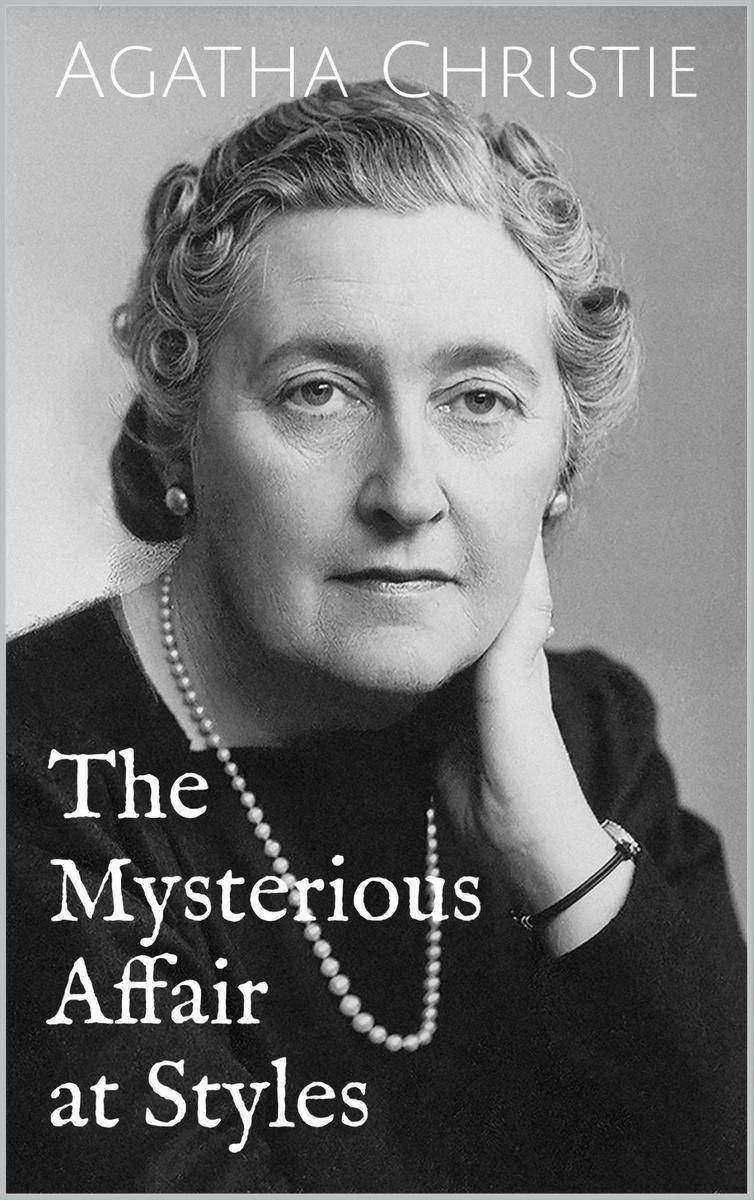
The Mysterious Affair at Styles
¥9.24
"The Mysterious Affair at Styles" is a detective novel by Agatha Christie. It was written in the middle of the First World War, in 1916, and first published by John Lane in the United States in October 1920 and in the United Kingdom by The Bodley Head (John Lane's UK company) on 21 January 1921. The US edition retailed at $2.00 and the UK edition at seven shillings and sixpence (7/6).Styles was Christie's first published novel. It introduced Hercule Poirot, Inspector (later, Chief Inspector) Japp, and Arthur Hastings. Poirot, a Belgian refugee of the Great War, is settling in England near the home of Emily Inglethorp, who helped him to his new life. His friend Hastings arrives as a guest at her home. When the woman is killed, Poirot uses his detective skills to solve the mystery. This is also the setting of "Curtain", Poirot's last case.The book includes maps of the house, the murder scene, and a drawing of a fragment of a will. The true first publication of the novel was as a weekly serial in the "The Times", including the maps of the house and other illustrations included in the book. This novel was one of the first ten books published by Penguin Books when it began in 1935.
The Secret Adversary
¥9.24
"The Secret Adversary" is the second published detective fiction novel by Agatha Christie, first published in January 1922 in the United Kingdom by The Bodley Head and in the United States by Dodd, Mead and Company later in that same year. The UK edition retailed at seven shillings and sixpence (7/6) and the US edition at $1.75.The book introduces the characters of Tommy and Tuppence who feature in three other Christie novels and one collection of short stories; the five Tommy and Tuppence books span Agatha Christie's writing career. The Great War is over, and jobs are scarce. Tommy Beresford and Prudence "Tuppence" Cowley meet and agree to start their own business as The Young Adventurers. They are hired for a job that leads them both to many dangerous situations, meeting allies as well, including an American millionaire in search of his cousin.

Na??llar Alemi: Yoxsul ??h?r
¥9.24
Biri var idi, biri yox idi. Bir yoxsul ?eher var idi. Bu ?eherin insanlari ?ox mehriban v? k?m?ksever idil?r. Amma pad?ah ??h?rd?ki insanlarin bütün var-d?vl?tl?rini ?l? kecirmi?di .Bu k?ndd? bir sirrli ma?ara var idi.?fsan?l?r? g?r? bu ma?ara 3 qarda? div t?r?find?n qorunurdu. Ora getmeye he? k?sin hün?ri ?atmirdi.Bir gün ??h?r ?halisinin yarisi s?zü bir yere qoydular ki,bu ma?araya gedey. Onlar yaraqlanin-yasaqlanib yola dü?dül?r. N?hay?t ma?araya g?lib ?atdilar. Ma?aranin sahibi 3 divin burada olmad???n? g?r?n ??h?rlil?r ma?araya girdil?r. Ancaq bunlardan biri ma?araya girm?yib da??n arxas?nda gizl?ndi. ??h?rlil?r ala bil?c?kl?ri q?d?r q?z?l g?türüb ma?aradan ?ixmaq ist?y?nd? divl?r g?ldi. Ma?aran?n ??x???n? b?yük da?la ba?ladilar v? ??h?rlil?r i??rid? qald?. Da??n arxas?nda gizl?n?n ??h?rli divl?r? g?rünm?d?n buradan getdi. O tez g?lib ??h?rin dig?r yar?s?na ?hvalat? na??l etdi. ??h?rlil?r silahlan?b ma?araya getdil?r ve 3 divl? mübariz? apard?lar. ?

Ge?mi?ten Gelece?e Emirda?
¥9.24
Foto?raf makinesi, insan o?lunun en ?nemli icatlar?ndan biridir. Bir foto?raf, ‘’an’’ denilen k?sac?k bir zaman?n tan???d?r. Ancak onda bir tarihi yakalamak da mümkündür. Bu bak?mdan foto?raf? sadece g?rsel bir obje olarak g?rmemek gerekir. Bakmas?n? bilenler i?in foto?raf; tarih, sosyoloji, psikoloji, kültürel yap?, sosyal de?i?im… konular?n ?nemli ip u?lar? i?erir. Foto?raf; g?rüp g?sterme, ger?e?i g?rünür k?lma, ger?e?i kavratmad?r. Her foto?raf?n bir dili vard?r. O dili anlayabilenler, nice güzellikleri ke?federler. Foto?rafta sadece g?rüneni de?il, g?sterilmek isteneni de bilmek ve alg?lamak gerekir. Her foto?raf bir ‘’an’’? yakalasa da onun i?inde sakl? bir hik?ye bulunur. Foto?raf, g?rselli?iyle beraber; topluma, zamana, mekana ve bireylere ili?kin bilgi ve belgelerle doludur. Foto?raf bireylerin ve toplumun aynas?d?r. Bu albüm-kitapta siz kendinizi bulacaks?n?z. Mahalleniz, k?yünüz, hat?ralar?n?z, akraba ve dostlar?n?z burada, sizin kar??n?zda olacakt?r. Sizleri ‘’Ge?mi?ten Gelece?e Emirda? ‘’ gezintisine ??kar?yoruz. Bu albüm-kitap Emirda?’?n tarihi süre? i?inde ge?ti?i a?amalar? da yans?tarak, gelece?imize ???k tutacakt?r. Emirda?’?n sosyal de?i?imini kitapta g?rmek mümkündür Foto?raflar grupla?t?r?larak okuyucuya kolayl?k sa?lanm??t?r. Genel, askerlik, ?ar??-pazar, bayramlar, spor, e?itim, tar?m-hayvanc?l?k, otobüs?ülük, aile, k?yler, ?ehreler, g??, yayla, bina-yap?lar, milli mücadele ve yat?rlara ait foto?raflar bir araya toplanm??t?r. “Ge?mi?ten Gelece?e Emirda?”?n olu?mas?nda eme?i ge?en, katk? sa?layan tüm Emirda?’l?lara te?ekkür ederim.. ? Ak?n A?CA Emirda? Kaymakam?
May Day
¥9.24
At nine o'clock on the morning of the first of May, 1919, a young man spoke to the room clerk at the Bilt-more Hotel, asking if Mr. Philip Dean were registered there, and if so, could he be connected with Mr. Dean's rooms. The inquirer was dressed in a well-cut, shabby suit. He was small, slender, and darkly handsome; his eyes were framed above with unusually long eyelashes and below with the blue semicircle of ill health, this latter effect heightened by an unnatural glow which colored his face like a low, incessant fever. Mr. Dean was staying there. The young man was directed to a telephone at the side. After a second his connection was made; a sleepy voice hello'd from somewhere above.
![Peter Pan: [Peter & Wendy]](https://platform-permanent.ddimg.cn/pt-media-info-soa-resource/digital/product/79/89/1901167989_ii_cover.jpg?version=7f9a87f9-aff2-4171-a843-94f15661aa0c)
Peter Pan: [Peter & Wendy]
¥9.24
THE WORLD SET FREE was written in 1913 and published early in 1914, and it is the latest of a series of three fantasias of possibility, stories which all turn on the possible developments in the future of some contemporary force or group of forces. The World Set Free was written under the immediate shadow of the Great War. Every intelligent person in the world felt that disaster was impending and knew no way of averting it, but few of us realised in the earlier half of 1914 how near the crash was to us. The reader will be amused to find that here it is put off until the year 1956. He may naturally want to know the reason for what will seem now a quite extraordinary delay. As a prophet, the author must confess he has always been inclined to be rather a slow prophet. The war aeroplane in the world of reality, for example, beat the forecast in Anticipations by about twenty years or so. I suppose a desire not to shock the sceptical reader's sense of use and wont and perhaps a less creditable disposition to hedge, have something to do with this dating forward of one's main events, but in the particular case of The World Set Free there was, I think, another motive in holding the Great War back, and that was to allow the chemist to get well forward with his discovery of the release of atomic energy. 1956—or for that matter 2056—may be none too late for that crowning revolution in human potentialities. And apart from this procrastination of over forty years, the guess at the opening phase of the war was fairly lucky; the forecast of an alliance of the Central Empires, the opening campaign through the Netherlands, and the despatch of the British Expeditionary Force were all justified before the book had been published six months. And the opening section of Chapter the Second remains now, after the reality has happened, a fairly adequate diagnosis of the essentials of the matter. One happy hit (in Chapter the Second, Section 2), on which the writer may congratulate himself, is the forecast that under modern conditions it would be quite impossible for any great general to emerge to supremacy and concentrate the enthusiasm of the armies of either side. There could be no Alexanders or Napoleons. And we soon heard the scientific corps muttering, 'These old fools,' exactly as it is here foretold. These, however, are small details, and the misses in the story far outnumber the hits. It is the main thesis which is still of interest now; the thesis that because of the development of scientific knowledge, separate sovereign states and separate sovereign empires are no longer possible in the world, that to attempt to keep on with the old system is to heap disaster upon disaster for mankind and perhaps to destroy our race altogether. The remaining interest of this book now is the sustained validity of this thesis and the discussion of the possible ending of war on the earth.
The Mind Master
¥9.24
To Rosamund, chief among those for whom these tales are told, The Book of Dragons is dedicated in the confident hope that she, one of these days, will dedicate a book of her very own making to the one who now bids eight dreadful dragons crouch in all humbleness at those little brown feet. ? To Rosamund, chief among those for whom these tales are told, The Book of Dragons is dedicated in the confident hope that she, one of these days, will dedicate a book of her very own making to the one who now bids eight dreadful dragons crouch in all humbleness at those little brown feet. The Book of Beasts: He happened to be building a Palace when the news came, and he left all the bricks kicking about the floor for Nurse to clear up—but then the news was rather remarkable news. You see, there was a knock at the front door and voices talking downstairs, and Lionel thought it was the man come to see about the gas, which had not been allowed to be lighted since the day when Lionel made a swing by tying his skipping rope to the gas bracket. And then, quite suddenly, Nurse came in and said, "Master Lionel, dear, they've come to fetch you to go and be King." Then she made haste to change his smock and to wash his face and hands and brush his hair, and all the time she was doing it Lionel kept wriggling and fidgeting and saying, "Oh, don't, Nurse," and, "I'm sure my ears are quite clean," or, "Never mind my hair, it's all right," and, "That'll do." "You're going on as if you was going to be an eel instead of a King," said Nurse. The minute Nurse let go for a moment Lionel bolted off without waiting for his clean handkerchief, and in the drawing room there were two very grave-looking gentlemen in red robes with fur, and gold coronets with velvet sticking up out of the middle like the cream in the very expensive jam tarts. They bowed low to Lionel, and the gravest one said: "Sire, your great-great-great-great-great-grandfather, the King of this country, is dead, and now you have got to come and be King." "Yes, please, sir," said Lionel, "when does it begin?" "You will be crowned this afternoon," said the grave gentleman who was not quite so grave-looking as the other. "Would you like me to bring Nurse, or what time would you like me to be fetched, and hadn't I better put on my velvet suit with the lace collar?" said Lionel, who had often been out to tea. "Your Nurse will be removed to the Palace later. No, never mind about changing your suit; the Royal robes will cover all that up." The grave gentlemen led the way to a coach with eight white horses, which was drawn up in front of the house where Lionel lived. It was No. 7, on the left-hand side of the street as you go up. Lionel ran upstairs at the last minute, and he kissed Nurse and said: "Thank you for washing me. I wish I'd let you do the other ear. No—there's no time now. Give me the hanky. Good-bye, Nurse."


