


 购物车
购物车 个人中心
个人中心
What Shall We Do?
¥8.09
According to Wikipedia: "What Is to be Done? (sometimes translated as What Then Must We Do?) is a non-fiction work by Leo Tolstoy, in which Tolstoy describes the social conditions of Russia in his day. Tolstoy completed the book in 1886, and the first English language publication came in 1887. The English title was also used for two better-known works by Nikolai Chernyshevsky and Vladimir Lenin; Tolstoy's Russian title is similar but not identical to Chernyshevsky's (and Lenin's), both of them sharing the same Biblical reference (Luke 3:10-14)."
Books and Persons: Being Comments on a Past Epoch (1908-1911)
¥8.09
Dodo Collections brings you another classic from Arnold Bennett, ‘"Books and Persons; Being Comments on a Past Epoch, 1908-1911".’ ? The contents of this book have been chosen from a series of weekly articles which enlivened the?New Ageduring the years 1908, 1909, 1910, and 1911, under the pseudonym "Jacob Tonson." The man responsible for the republication is the dedicatee, who, having mysteriously demanded from me back numbers of theNew Age, sat in my house one Sunday afternoon and in four hours read through the entire series. He then announced that he had made a judicious selection, and that the selection must positively be issued in volume form. Mr. Frank Swinnerton approved the selection and added to it slightly. In my turn I suggested a few more additions. The total amounts to one-third of the original matter. Beyond correcting misprints, softening the crudity of several epithets, and censoring lines here and there which might give offence without helping the sacred cause, I have not altered the articles. They appear as they were journalistically written in Paris, London, Switzerland, and the Forest of Fontainebleau. In particular I have left the critical judgments alone, for the good reason that I stand by nearly all of them, though perhaps with a less challenging vivacity, to this day. ARNOLD BENNETT February 1917 Enoch Arnold Bennett (always known as Arnold Bennett) was one of the most remarkable literary figures of his time, a product of the English Potteries that he made famous as the Five Towns. Yet he could hardly wait to escape his hometown, and he did so by the sheer force of his ambition to succeed as an author. In his time he turned his hand to every kind of writing, but he will be remembered for such novels as The Old Wives' Tale, the Clayhanger trilogy (Clayhanger, Hilda Lessways, and These Twain), and The Card. He also wrote such intriguing self-improvement books as Literary Taste, How To Live on 24 Hours a Day, The Human Machine, etc.

Memoirs, Criticism, and Letters
¥8.09
This book-collection file includes five books: The Mirror of the Sea, Notes on Life and Letters, Notes on My Books, A Personal Record, and Some Reminiscences. According to Wikipedia: "Joseph Conrad (born Józef Teodor Konrad Korzeniowski, 3 December 1857 – 3 August 1924) was a Polish-born English novelist. Many critics regard him as one of the greatest novelists in the English language—a fact that is remarkable as he did not learn to peak English fluently until he was in his twenties (and always with a Polish accent). Conrad is recognized as a master prose stylist. Some of his works have a strain of romanticism, but more importantly he is recognized as an important forerunner of modernist literature. His narrative style and anti-heroic characters have influenced many writers, including Ernest Hemingway, D. H. Lawrence, F. Scott Fitzgerald, Graham Greene, William S. Burroughs, Joseph Heller, V.S. Naipaul, Italo Calvino and J. M. Coetzee."
German Romantics
¥8.09
This collection, first published in 1914, includes short works by and about Jean Paul, Wilhelm von Humboldt, August Wilhelm Schlegel, Friedrich Schlegel, Novalis, Holderlin, Ludwig Tieck, and Kleist. The German Classics Of The Nineteenth And Twentieth Centuries, Volume 4.
The Path of a King by John Buchan - Delphi Classics (Illustrated)
¥8.09
This eBook features the unabridged text of ‘The Path of a King by John Buchan - Delphi Classics (Illustrated)’ from the bestselling edition of ‘The Complete Works of John Buchan’. Having established their name as the leading publisher of classic literature and art, Delphi Classics produce publications that are individually crafted with superior formatting, while introducing many rare texts for the first time in digital print. The Delphi Classics edition of Buchan includes original annotations and illustrations relating to the life and works of the author, as well as individual tables of contents, allowing you to navigate eBooks quickly and easily. eBook features: * The complete unabridged text of ‘The Path of a King by John Buchan - Delphi Classics (Illustrated)’ * Beautifully illustrated with images related to Buchan’s works * Individual contents table, allowing easy navigation around the eBook * Excellent formatting of the text Please visit www.delphiclassics.com to learn more about our wide range of titles
John Macnab by John Buchan - Delphi Classics (Illustrated)
¥8.09
This eBook features the unabridged text of ‘John Macnab by John Buchan - Delphi Classics (Illustrated)’ from the bestselling edition of ‘The Complete Works of John Buchan’. Having established their name as the leading publisher of classic literature and art, Delphi Classics produce publications that are individually crafted with superior formatting, while introducing many rare texts for the first time in digital print. The Delphi Classics edition of Buchan includes original annotations and illustrations relating to the life and works of the author, as well as individual tables of contents, allowing you to navigate eBooks quickly and easily. eBook features: * The complete unabridged text of ‘John Macnab by John Buchan - Delphi Classics (Illustrated)’ * Beautifully illustrated with images related to Buchan’s works * Individual contents table, allowing easy navigation around the eBook * Excellent formatting of the text Please visit www.delphiclassics.com to learn more about our wide range of titles
The Son of Tarzan by Edgar Rice Burroughs - Delphi Classics (Illustrated)
¥8.09
This eBook features the unabridged text of ‘The Son of Tarzan by Edgar Rice Burroughs - Delphi Classics (Illustrated)’ from the bestselling edition of ‘The Complete Works of Edgar Rice Burroughs’. Having established their name as the leading publisher of classic literature and art, Delphi Classics produce publications that are individually crafted with superior formatting, while introducing many rare texts for the first time in digital print. The Delphi Classics edition of Burroughs includes original annotations and illustrations relating to the life and works of the author, as well as individual tables of contents, allowing you to navigate eBooks quickly and easily. eBook features: * The complete unabridged text of ‘The Son of Tarzan by Edgar Rice Burroughs - Delphi Classics (Illustrated)’ * Beautifully illustrated with images related to Burroughs’s works * Individual contents table, allowing easy navigation around the eBook * Excellent formatting of the text Please visit www.delphiclassics.com to learn more about our wide range of titles
Familiar Studies of Men and Books
¥8.09
This collection of essays includes: VICTOR HUGO'S ROMANCES, SOME ASPECTS OF ROBERT BURNS, WALT WHITMAN, HENRY DAVID THOREAU: HIS CHARACTER AND OPINIONS, YOSHIDA-TORAJIRO, FRANCOIS VILLON, STUDENT, POET, AND HOUSE-BREAKER, CHARLES OF ORLEANS, SAMUEL PEPYS, and JOHN KNOX AND WOMEN. According to Wikipedia: "Robert Louis (Balfour) Stevenson ( 1850 - 1894), was a Scottish novelist, poet, and travel writer, and a leading representative of Neo-romanticism in English literature. He was the man who "seemed to pick the right word up on the point of his pen, like a man playing spillikins", as G. K. Chesterton put it. He was also greatly admired by many authors, including Jorge Luis Borges, Ernest Hemingway, Rudyard Kipling, Vladimir Nabokov, and J. M. Barrie. Most modernist writers dismissed him, however, because he was popular and did not write within their definition of modernism. It is only recently that critics have begun to look beyond Stevenson's popularity and allow him a place in the canon."

The English Governess at the Siamese Court
¥8.09
First published in 1870. "Being recollections of six years in the royal palace at Bangkok." According to Wikipedia: "Anna Harriette Leonowens (6 November 1831 – 19 January 1915) born Anna Harriet Emma Edwards, was an Anglo-Indian or Indian-born British travel writer, educator, and social activist. Her experiences in Siam (Thailand) were fictionalised in Margaret Landon's 1944 best-selling novel Anna and the King of Siam, as well as films and television series based on the book, most notably Rodgers and Hammerstein's 1951 hit musical The King and I. During the course of her life, Leonowens also lived in Aden, Australia, Singapore, the United States and Canada. Among other achievements, she co-founded the Nova Scotia College of Art and Design."
The New Jerusalem
¥8.09
Travelogue and related essays. According to Wikipedia: "Gilbert Keith Chesterton (1874 - 1936) was an influential English writer of the early 20th century. His prolific and diverse output included journalism, philosophy, poetry, biography, Christian apologetics, fantasy and detective fiction. Chesterton has been called the "prince of paradox."[1] He wrote in an off-hand, whimsical prose studded with startling formulations. For example: "Thieves respect property. They merely wish the property to become their property that they may more perfectly respect it."[2] He is one of the few Christian thinkers who are equally admired and quoted by both liberal and conservative Christians, and indeed by many non-Christians. Chesterton's own theological and political views were far too nuanced to fit comfortably under the "liberal" or "conservative" banner."
The Journal of a Tour to the Hebrides
¥8.09
According to Wikipedia: "James Boswell, 9th Laird of Auchinleck (October 29, 1740 – May 19, 1795) was a lawyer, diarist, and author born in Edinburgh, Scotland; he is best known for his biography of Samuel Johnson. His name has passed into the English language as a term (Boswell, Boswellian, Boswellism) for a constant companion and observer. Boswell is also known for the detailed and frank journals that he wrote for long periods of his life, which remained undiscovered until the 1920s. These included voluminous notes on the grand tour of Europe that he took as a young man and, subsequently, of his tour of Scotland with Johnson. His journals also record meetings and conversations with eminent individuals belonging to The Club, including Lord Monboddo, David Garrick, Edmund Burke, Reynolds and Oliver Goldsmith. His written works focus chiefly on others, but he was admitted as a good companion and accomplished conversationalist in his own right."
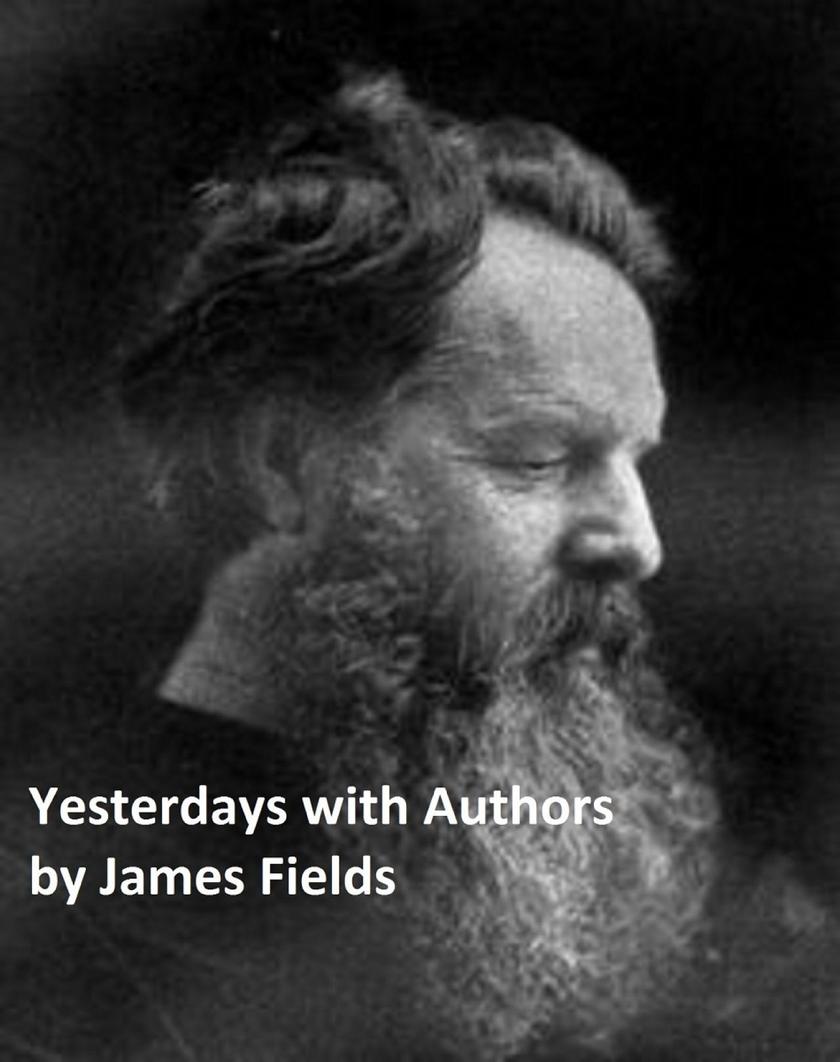
Yesterdays with Authors
¥8.09
Accounts of personal contacts with well-known authors. Chapters include: Thackeray, Hawthorne, Dickens, Wordsworth, and Miss Mitford. According to Wikipedia: "James Thomas Fields (December 31, 1817 – April 24, 1881) was an American publisher and author." Husband of author Annie Fields.
On the Significance of Science and Art
¥8.09
Classic long essay. According to Wikipedia: " As a fiction writer, Tolstoy is widely regarded as one of the greatest of all novelists, particularly noted for his masterpieces War and Peace and Anna Karenina. In their scope, breadth and realistic depiction of 19th-century Russian life, the two books stand at the peak of realist fiction. As a moral philosopher Tolstoy was notable for his ideas on nonviolent resistance through works such as The Kingdom of God is Within You, which in turn influenced such twentieth-century figures as Mohandas K. Gandhi and Martin Luther King, Jr."
Mark Twain's Speeches
¥8.09
Comprehensive collection, first published in 1910. According to Wikipedia: "Samuel Langhorne Clemens (November 30, 1835 - April 21, 1910), better known by the pen name Mark Twain, was a humorist, satirist, lecturer and writer from the United States of America. Twain is most noted for his novels Adventures of Huckleberry Finn, which has since been called the Great American Novel, and The Adventures of Tom Sawyer. He is also known for his quotations. During his lifetime, Twain became a friend to presidents, artists, leading industrialists and European royalty. Twain enjoyed immense public popularity, and his keen wit and incisive satire earned him praise from both critics and peers. American author William Faulkner called Twain 'the father of American literature.'"
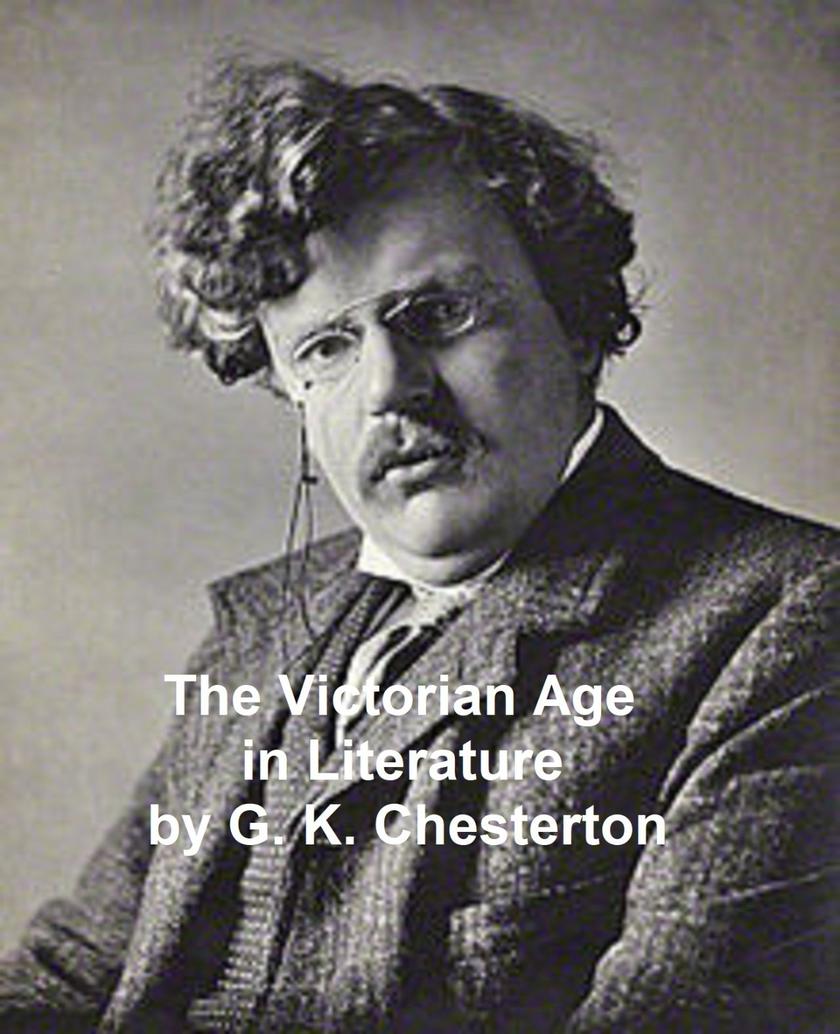
The Victorian Age in Literature
¥8.09
Criticism and literary history by a great novelist and essayist. According to Wikipedia: "Gilbert Keith Chesterton (1874 - 1936) was an influential English writer of the early 20th century. His prolific and diverse output included journalism, philosophy, poetry, biography, Christian apologetics, fantasy and detective fiction. Chesterton has been called the "prince of paradox."[1] He wrote in an off-hand, whimsical prose studded with startling formulations. For example: "Thieves respect property. They merely wish the property to become their property that they may more perfectly respect it."[2] He is one of the few Christian thinkers who are equally admired and quoted by both liberal and conservative Christians, and indeed by many non-Christians. Chesterton's own theological and political views were far too nuanced to fit comfortably under the "liberal" or "conservative" banner."
Sketches and Studies
¥8.09
This book includes: Life of Franklin Pierce, Chiefly about War Matters, Alice Doane's Appeal, and The Ancestral Footstep. According to Wikipedia: "Nathaniel Hawthorne (1804 –1864) was an American novelist and short story writer... Much of Hawthorne's writing centers around New England and many feature moral allegories with a Puritan inspiration. His fiction works are considered part of the Romantic movement and, more specifically, dark romanticism. His themes often center on the inherent evil and sin of humanity and his works often have moral messages and deep psychological complexity. His published works include novels, short stories, and a biography of his friend Franklin Pierce."
The German Novel of Provincial Life
¥8.09
This collection includes works by Little Barefoot by Berthold Auerbach and works by Jeremias Gotthelf, Fritz Euter, Adabert Stifter, and Wilhelm Heinrich Riehl. The German Classics Of The Nineteenth And Twentieth Centuries, Volume 8, edited by Kuno Francke.

Works of Hebbel and Ludwig
¥8.09
This collection includes works by Hebbel and Ludwig. The German Classics Of The Nineteenth And Twentieth Centuries, Volume 9, edited by Kuno Francke.
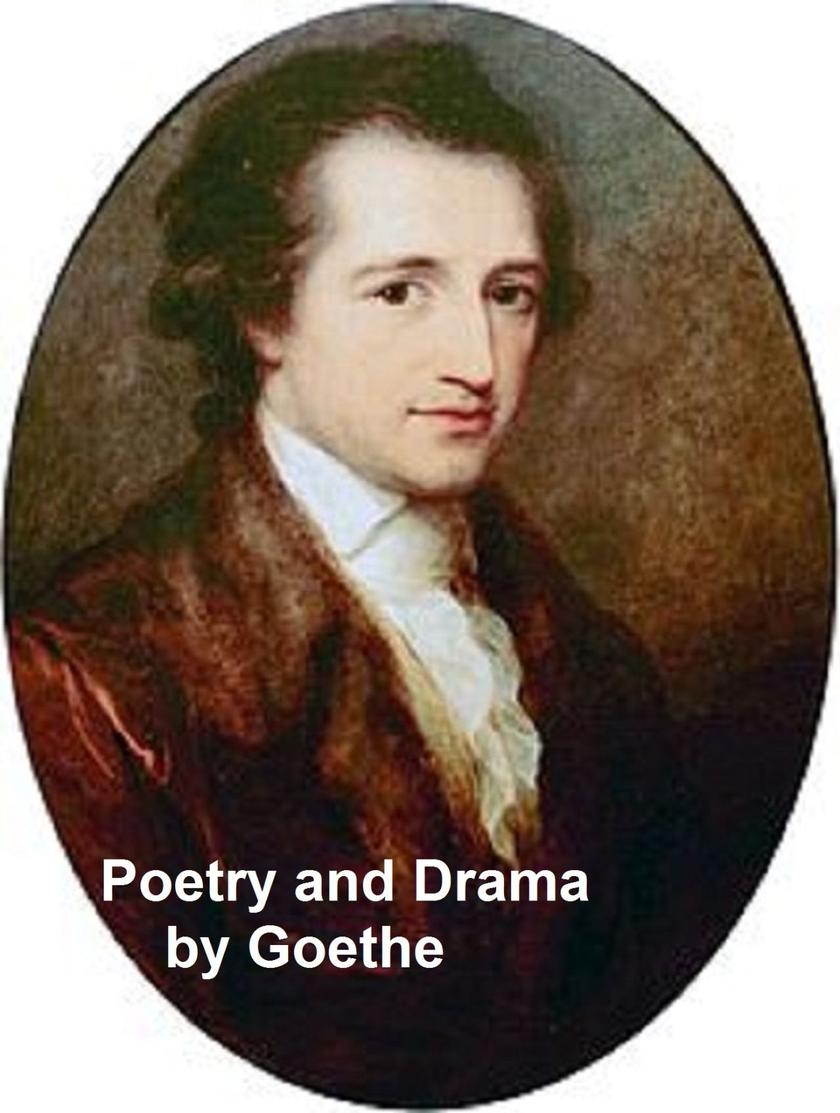
Poetry and Drama
¥8.09
This collection includes: Life of Goethe by Calvin Thomas, Hermann and Dorothea, Iphigenia in Tauris, Faust Parts 1 and selections from Part 2. The German Classics Of The Nineteenth And Twentieth Centuries, Volume 1, edited by Kuno Francke.
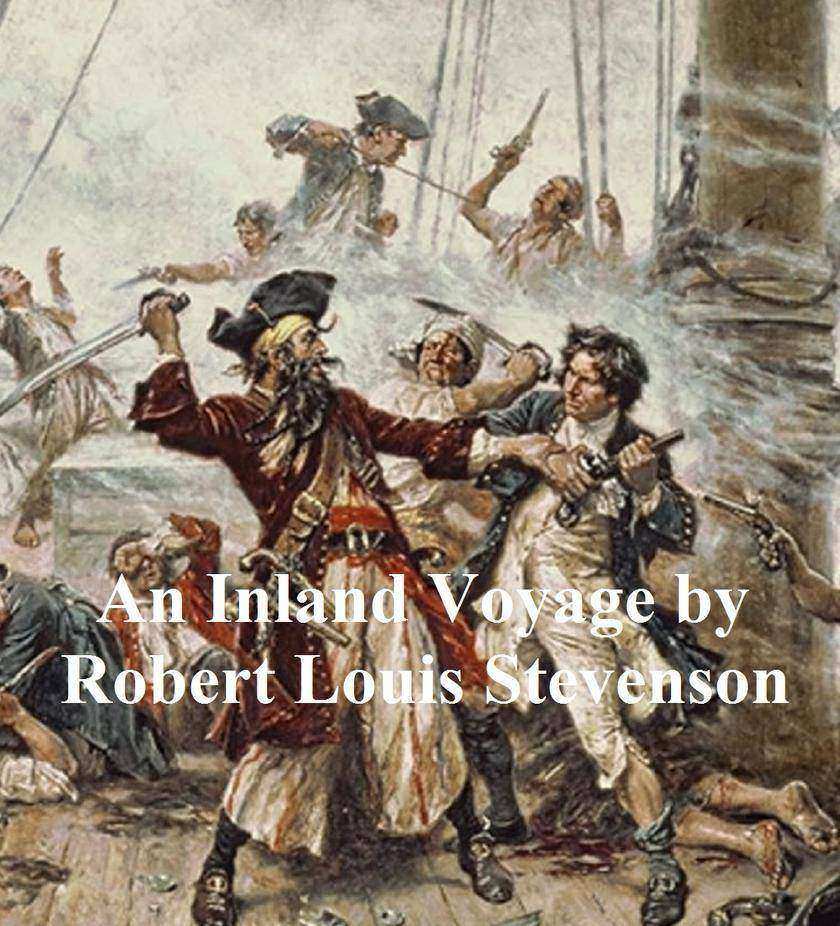
An Inland Voyage
¥8.09
Classic travelogue/memoir. According to Wikipedia: "Robert Louis (Balfour) Stevenson ( 1850 - 1894), was a Scottish novelist, poet, and travel writer, and a leading representative of Neo-romanticism in English literature. He was the man who "seemed to pick the right word up on the point of his pen, like a man playing spillikins", as G. K. Chesterton put it. He was also greatly admired by many authors, including Jorge Luis Borges, Ernest Hemingway, Rudyard Kipling, Vladimir Nabokov, and J. M. Barrie. Most modernist writers dismissed him, however, because he was popular and did not write within their definition of modernism. It is only recently that critics have begun to look beyond Stevenson's popularity and allow him a place in the canon."

Essays of Montaigne
¥8.09
The complete essays, translated by Charles Cotton (1630-1687) and edited by William Hazlitt. From the Preface: "This great French writer deserves to be regarded as a classic, not only in the land of his birth, but in all countries and in all literatures. His Essays, which are at once the most celebrated and the most permanent of his productions, form a magazine out of which such minds as those of Bacon and Shakespeare did not disdain to help themselves; and, indeed, as Hallam observes, the Frenchman's literary importance largely results from the share which his mind had in influencing other minds, coeval and subsequent."


