


 购物车
购物车 个人中心
个人中心
Little Magazine in Contemporary America
¥229.55
Little magazines have often showcased the best new writing in America. Historically, these idiosyncratic, small-circulation outlets have served the dual functions of representing the avant-garde of literary expression while also helping many emerging writers become established authors. Although changing technology and the increasingly harsh financial realities of publishing over the past three decades would seem to have pushed little magazines to the brink of extinction, their story is far more complicated.In this collection, Ian Morris and Joanne Diaz gather the reflections of twenty-three prominent editors whose little magazines have flourished over the past thirty-five years. Highlighting the creativity and innovation driving this diverse and still vital medium, contributors offer insights into how their publications sometimes succeeded, sometimes reluctantly folded, but mostly how they evolved and persevered. Other topics discussed include the role of little magazines in promoting the work and concerns of minority and women writers, the place of universities in supporting and shaping little magazines, and the online and offline future of these publications.Selected contributorsBetsy Sussler, BOMB; Lee Gutkind, Creative Nonfiction; Bruce Andrews, L=A=N=G=U=A=G=E; Dave Eggers, McSweeney's; Keith Gessen, n+1; Don Share, Poetry; Jane Friedman, VQR; Amy Hoffman, Women's Review of Books; and more.?

What Did the Romans Know?
¥229.55
What did the Romans know about their worldQuite a lot, as Daryn Lehoux makes clear in this fascinating and much-needed contribution to the history and philosophy of ancient science. Lehoux contends that even though many of the Romans' views about the natural world have no place in modern science-the umbrella-footed monsters and dog-headed people that roamed the earth and the stars that foretold human destinies-their claims turn out not to be so radically different from our own.?Lehoux draws upon a wide range of sources from what is unquestionably the most prolific period of ancient science, from the first century BC to the second century AD. He begins with Cicero's theologico-philosophical trilogy On the Nature of the Gods, On Divination, and On Fate, illustrating how Cicero's engagement with nature is closely related to his concerns in politics, religion, and law. Lehoux then guides readers through highly technical works by Galen and Ptolemy, as well as the more philosophically oriented physics and cosmologies of Lucretius, Plutarch, and Seneca, all the while exploring the complex interrelationships between the objects of scientific inquiry and the norms, processes, and structures of that inquiry. This includes not only the tools and methods the Romans used to investigate nature, but also the Romans' cultural, intellectual, political, and religious perspectives. Lehoux concludes by sketching a methodology that uses the historical material he has carefully explained to directly engage the philosophical questions of incommensurability, realism, and relativism.?By situating Roman arguments about the natural world in their larger philosophical, political, and rhetorical contexts, What Did the Romans Knowdemonstrates that the Romans had sophisticated and novel approaches to nature, approaches that were empirically rigorous, philosophically rich, and epistemologically complex.
Urban Blues
¥211.90
Charles Keil examines the expressive role of blues bands and performers and stresses the intense interaction between performer and audience. Profiling bluesmen Bobby Bland and B. B. King, Keil argues that they are symbols for the black community, embodying important attitudes and roles-success, strong egos, and close ties to the community. While writing Urban Blues in the mid-1960s, Keil optimistically saw this cultural expression as contributing to the rising tide of raised political consciousness in Afro-America. His new Afterword examines black music in the context of capitalism and black culture in the context of worldwide trends toward diversification."e;Enlightening. . . . [Keil] has given a provocative indication of the role of the blues singer as a focal point of ghetto community expression."e;-John S. Wilson, New York Times Book Review"e;A terribly valuable book and a powerful one. . . . Keil is an original thinker and . . . has offered us a major breakthrough."e;-Studs Terkel, Chicago Tribune"e;[Urban Blues] expresses authentic concern for people who are coming to realize that their past was . . . the source of meaningful cultural values."e;-Atlantic"e;An achievement of the first magnitude. . . . He opens our eyes and introduces a world of amazingly complex musical happening."e;-Robert Farris Thompson, Ethnomusicology?"e;[Keil's] vigorous, aggressive scholarship, lucid style and sparkling analysis stimulate the challenge. Valuable insights come from treating urban blues as artistic communication."e;-James A. Bonar, Boston Herald?
Commentary on The Complete Greek Tragedies. Aeschylus
¥211.90
This commentary offers a rich introduction and useful guide to the seven surviving plays attributed to Aeschylus. Though it may profitably be used with any translation of Aeschylus, the commentary is based on the acclaimed Chicago translations, The Complete Greek Tragedies, edited by David Grene and Richmond Lattimore.James C. Hogan provides a general introduction to Aeschylean theater and drama, followed by a line-by-line commentary on each of the seven plays. He places Aeschylus in the historical, cultural, and religious context of fifth-century Athens, showing how the action and metaphor of Aeschylean theater can be illuminated by information on Athenian law athletic contests, relations with neighboring states, beliefs about the underworld, and countless other details of Hellenic life. Hogan clarifies terms that might puzzle modern readers, such as place names and mythological references, and gives special attention to textual and linguistic issues: controversial questions of interpretation; difficult or significant Greek words; use of style, rhetoric, and commonplaces in Greek poetry; and Aeschylus's place in the poetic tradition of Homer, Hesiod, and the elegiac poets. Practical information on staging and production is also included, as are maps and illustrations, a bibliography, indexes, and extensive cross-references between the seven plays. Forthcoming volumes will cover the works of Sophocles and Euripides.
"e;Do You Know...?"e;
¥211.90
Every night, somewhere in the world, three or four musicians will climb on stage together. Whether the gig is at a jazz club, a bar, or a bar mitzvah, the performance never begins with a note, but with a question. The trumpet player might turn to the bassist and ask, "e;Do you know 'Body and Soul'?"e;-and from there the subtle craft of playing the jazz repertoire is tested in front of a live audience. These ordinary musicians may never have played together-they may never have met-so how do they smoothly put on a show without getting booed offstage.In "e;Do You Know . . . ?"e; Robert R. Faulkner and Howard S. Becker-both jazz musicians with decades of experience performing-present the view from the bandstand, revealing the array of skills necessary for working musicians to do their jobs. While learning songs from sheet music or by ear helps, the jobbing musician's lexicon is dauntingly massive: hundreds of thousands of tunes from jazz classics and pop standards to more exotic fare. Since it is impossible for anyone to memorize all of these songs, Faulkner and Becker show that musicians collectively negotiate and improvise their way to a successful performance. Players must explore each others' areas of expertise, develop an ability to fake their way through unfamiliar territory, and respond to the unpredictable demands of their audience-whether an unexpected gang of polka fanatics or a tipsy father of the bride with an obscure favorite song."e;Do You Know . . . ?"e; dishes out entertaining stories and sharp insights drawn from the authors' own experiences and observations as well as interviews with a range of musicians. Faulkner and Becker's vivid, detailed portrait of the musician at work holds valuable lessons for anyone who has to think on the spot or under a spotlight.
Wittgenstein's Lectures on the Foundations of Mathematics, Cambridge, 1939
¥211.90
For several terms at Cambridge in 1939, Ludwig Wittgenstein lectured on the philosophical foundations of mathematics. A lecture class taught by Wittgenstein, however, hardly resembled a lecture.He sat on a chair in the middle of the room, with some of the class sitting in chairs, some on the floor. He never used notes. He paused frequently, sometimes for several minutes, while he puzzled out a problem. He often asked his listeners questions and reacted to their replies. Many meetings were largely conversation.These lectures were attended by, among others, D. A. T. Gasking, J. N. Findlay, Stephen Toulmin, Alan Turing, G. H. von Wright, R. G. Bosanquet, Norman Malcolm, Rush Rhees, and Yorick Smythies. Notes taken by these last four are the basis for the thirty-one lectures in this book.The lectures covered such topics as the nature of mathematics, the distinctions between mathematical and everyday languages, the truth of mathematical propositions, consistency and contradiction in formal systems, the logicism of Frege and Russell, Platonism, identity, negation, and necessary truth. The mathematical examples used are nearly always elementary.
Music between Us
¥206.01
From our first social bonding as infants to the funeral rites that mark our passing, music plays an important role in our lives, bringing us closer to one another. In?The Music between Us, philosopher Kathleen Marie Higgins investigates this role, examining the features of human perception that enable music's uncanny ability to provoke, despite its myriad forms across continents and throughout centuries, the sense of a shared human experience.Drawing on disciplines such as philosophy, psychology, musicology, linguistics, and anthropology, Higgins's richly researched study showcases the ways music is used in rituals, education, work, healing, and as a source of security and-perhaps most importantly-joy. By participating so integrally in such meaningful facets of society, Higgins argues, music situates itself as one of the most fundamental bridges between people, a truly cross-cultural form of communication that can create solidarity across political divides. Moving beyond the well-worn takes on music's universality,?The Music between Us?provides a new understanding of what it means to be musical and, in turn, human.?
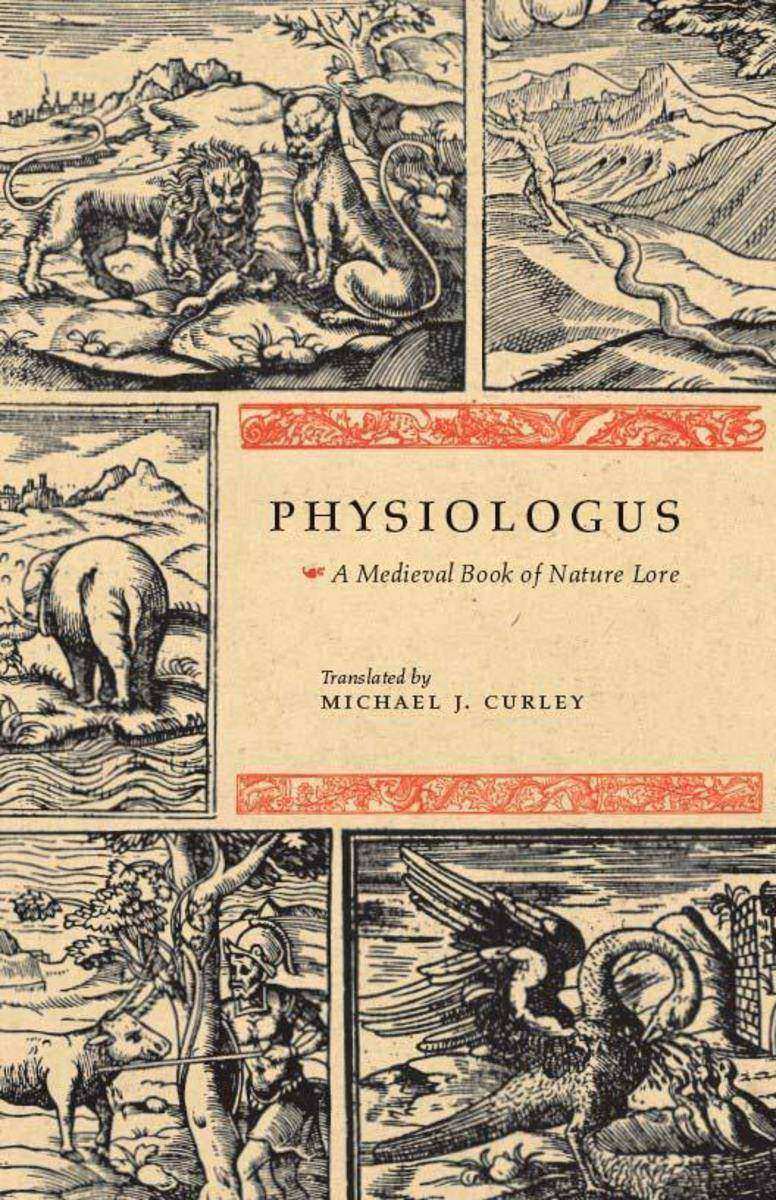
Physiologus
¥188.35
One of the most popular and widely read books of the Middle Ages, Physiologus contains allegories of beasts, stones, and trees both real and imaginary, infused by their anonymous author with the spirit of Christian moral and mystical teaching.Accompanied by an introduction that explains the origins, history, and literary value of this curious text, this volume also reproduces twenty woodcuts from the 1587 version. Originally composed in the fourth century in Greek, and translated into dozens of versions through the centuries, Physiologus will delight readers with its ancient tales of ant-lions, centaurs, and hedgehogs-and their allegorical significance."e;An elegant little book . . . still diverting to look at today. . . . The woodcuts reproduced from the 1587 Rome edition are alone worth the price of the book."e;-Raymond A. Sokolov, New York Times Book Review
Erring
¥188.35
"e;Erring is a thoughtful, often brilliant attempt to describe and enact what remains of (and for) theology in the wake of deconstruction. Drawing on Hegel, Nietzsche, Derrida, and others, Mark Taylor extends-and goes well beyond-pioneering efforts. . . . The result is a major book, comprehensive and well-informed."e;-G. Douglas Atkins, Philosophy and Literature"e;Many have felt the need for a study which would explicate in coherent and accessible fashion the principal tenets of deconstruction, with particular attention to their theological implications. This need the author has addressed in a most impressive manner. The book's effect upon contemporary discussion is apt to be, and deserves to be, far-reaching."e;-Walter Lowe, Journal of Religion
Senses of Walden
¥165.81
Stanley Cavell, one of America's most distinguished philosophers, has written an invaluable companion volume to Walden, a seminal book in our cultural heritage. This expanded edition includes two essays on Emerson.
Crossing the Postmodern Divide
¥165.81
In this eloquent guide to the meanings of the postmodern era, Albert Borgmann charts the options before us as we seek alternatives to the joyless and artificial culture of consumption. Borgmann connects the fundamental ideas driving his understanding of society's ills to every sphere of contemporary social life, and goes beyond the language of postmodern discourse to offer a powerfully articulated vision of what this new era, at its best, has in store."e;[This] thoughtful book is the first remotely realistic map out of the post modern labyrinth."e;-Joseph Coates, The Chicago Tribune"e;Rather astoundingly large-minded vision of the nature of humanity, civilization and science."e;-Kirkus Reviews
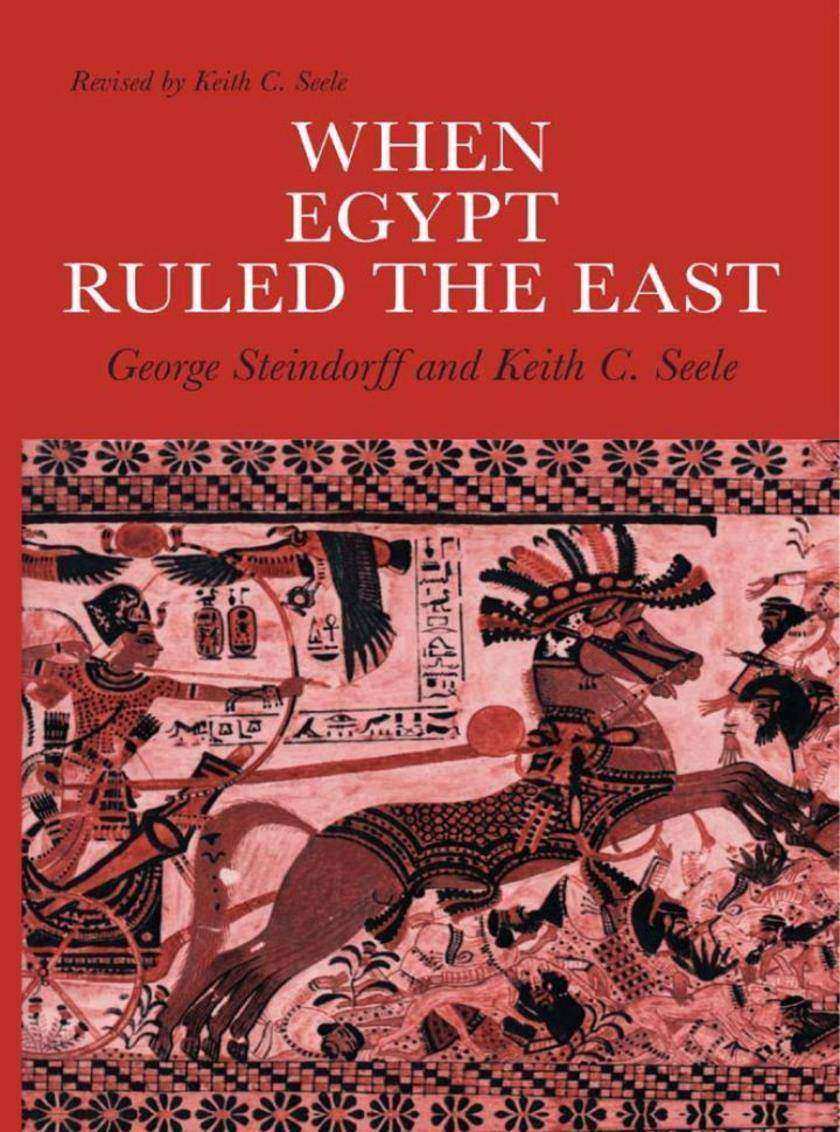
When Egypt Ruled the East
¥165.81
Here, adequately presented for the first time in English, is the fascinating story of a splendid culture that flourished thirty-five hundred years ago in the empire on the Nile: kings and conquests, gods and heroes, beautiful art, sculpture, poetry, architecture.Significant archeological discoveries are constantly being made in Egypt. In this revision Professor Steele has rewritten whole chapters on the basis of these new finds and offers several new conclusions to age-old problems.

Accounts
¥147.15
The death of a mother alters forever a family's story of itself. Indeed, it taxes the ability of a family to tell that story at all. The Accounts narrates the struggle to speak with any clear understanding in the wake of that loss. The title poem attempts three explanations of the departure of a life from the earth-a physical account, a psychological account, and a spiritual account. It is embedded in a long narrative sequence that tries to state plainly the facts of the last days of the mother's life, in a room that formerly housed a television, next to a California backyard. The visual focus of that sequence, a robin's nest, poised above the family home, sings in a kind of lament, giving its own version of ways we can see the transformation of the dying into the dead. In other poems, called "e;Arguments,"e; two voices exchange uncertain truths about subjects as high as heaven and as low as crime. Grief is a problem that cannot be solved by thinking, but that doesn't stop the mind, which relentlessly carries on, trying in vain to settle its accounts. The death of a well-loved person creates a debt that can never be repaid. It reminds the living of our own psychological debts to each other, and to the dead. In this sense, the death of this particular mother and the transformation of this particular family are evocative of a greater struggle against any changing reality, and the loss of all beautiful and passing forms of order.

El Dorado
¥147.15
In El Dorado, Peter Campion explores what it feels like to live in America right now, at the beginning of the twenty-first century. Splicing cell-phone chatter with translations of ancient poems, jump-cutting from traditional to invented forms, and turning his high-res lens on everything from box stores to trout streams to airport lounges, Campion renders both personal and collective experience with capacious and subtle skill.
Reel to Reel
¥147.15
Reel to Reel, Alan Shapiro's twelfth collection of poetry, moves outward from the intimate spaces of family and romantic life to embrace not only the human realm of politics and culture but also the natural world, and even the outer spaces of the cosmos itself. In language richly nuanced yet accessible, these poems inhabit and explore fundamental questions of existence, such as time, mortality, consciousness, and matter. How did we get hereWhy is there something rather than nothingHow do we live fully and lovingly as conscious creatures in an unconscious universe with no ultimate purpose or destination beyond returning to the abyss that spawned usShapiro brings his humor, imaginative intensity, characteristic syntactical energy, and generous heart to bear on these ultimate mysteries. In ways few poets have done, he writes from a premodern, primal sense of wonder about our postmodern world.

Anyone
¥147.15
Milton's GodWhere I-95 meets The Pike,a ponderous thunderhead flowered-?stewed a minute, then flippedlike a flash card, tatterededges crinkling in, linings so darkwith excessive bright?that, standing, waiting, at the overpass edge,the onlooker couldn't decide?until the end, or even then,what was revealed and what had been hidden.Using a variety of forms and achieving a range of musical effects, Nate Klug's Anyone traces the unraveling of astonishment upon small scenes-natural and domestic, political and religious-across America's East and Midwest. The book's title foregrounds the anonymity it seeks through several means: first, through close observation (a concrete saw, a goshawk, a bicyclist); and, second, via translation (satires from Horace and Catullus, and excerpts from Virgil's Aeneid). Uniquely among contemporary poetry volumes, Anyone demonstrates fluency in the paradoxes of a religious existence: "e;To stand sometime / outside my faith . . . or keep waiting / to be claimed in it."e; Engaged with theology and the classics but never abstruse, all the while the poems remain grounded in the phenomenal, physical world of "e;what it is to feel: /moods, half moods, / swarming, then darting loose."e;
Disorder
¥147.15
MidsummerCambridge, MA, 2008?Midsummer. Finally, you are used to disappointment.A baby touches phlox. Many failures, many botched attempts,?A little success in unexpected forms. This is how the rest will go:The gravel raked, bricks ashen, bees fattened-honey not for babes.?All at once, a rustling, whole trees in shudder, clouds pulledWestward. You are neither here nor there, neither right nor?Wrong. The world is indifferent, tired of your insistence.Garter snakes swallow frogs. The earthworms coil.?On your fingers, the residue of red pistils. What have you made?What have you kept aliveGreen, a secret, occult,?Grass veining the hands. Someone's baby toddling.And the phlox white. For now. Midsummer.A remarkable first book, Disorder tells the story, by turns poignant and outrageous, of a family's dislocation over four continents during the course of a hundred years. In short lyrics and longer narrative poems, Vanesha Pravin takes readers on a kaleidoscopic trek, from Bombay to Uganda, from England to Massachusetts and North Carolina, tracing the path of familial love, obsession, and the passage of time as filtered through the perceptions of family members and a host of supporting characters, including ubiquitous paparazzi, amorous vicars, and a dubious polygamist. We experience throughout a speaker forged by a deep awareness of intergenerational, multicontinental consciousness. At once global and personal, crossing ethnic, linguistic, and national boundaries in ways that few books of poetry do, Disorder bristles with quiet authority backed by a skeptical intelligence.
Great Prince Died
¥147.15
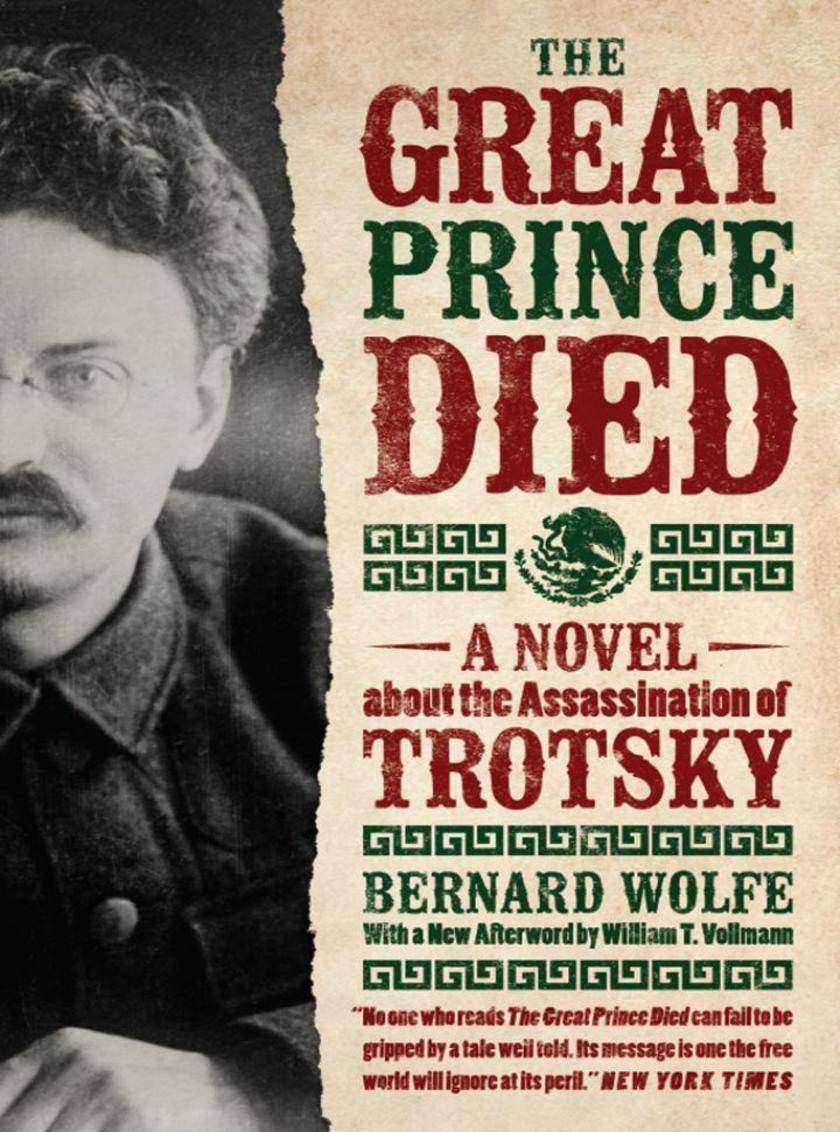
On August 20, 1940, Marxist philosopher, politician, and revolutionary Leon Trotsky was attacked with an ice axe in his home in Coyoacan, Mexico. He died the next day.In The Great Prince Died, Bernard Wolfe offers his lyrical, fictionalized account of Trotsky's assassination as witnessed through the eyes of an array of characters: the young American student helping to translate the exiled Trotsky's work (and to guard him), the Mexican police chief, a Rumanian revolutionary, the assassin and his handlers, a poor Mexican "e;pen,"e; and Trotsky himself. Drawing on his own experiences working as the exiled Trotsky's secretary and bodyguard and mixing in digressions on Mexican culture, Stalinist tactics, and Bolshevik history, Wolfe interweaves fantasy and fact, delusion and journalistic reporting to create one of the great political novels of the past century.
Lectures on Kant's Political Philosophy
¥141.26
Hannah Arendt's last philosophical work was an intended three-part project entitled The Life of the Mind. Unfortunately, Arendt lived to complete only the first two parts, Thinking and Willing. Of the third, Judging, only the title page, with epigraphs from Cato and Goethe, was found after her death. As the titles suggest, Arendt conceived of her work as roughly parallel to the three Critiques of Immanuel Kant. In fact, while she began work on The Life of the Mind, Arendt lectured on "e;Kant's Political Philosophy,"e; using the Critique of Judgment as her main text. The present volume brings Arendt's notes for these lectures together with other of her texts on the topic of judging and provides important clues to the likely direction of Arendt's thinking in this area.
Culture of Ancient Egypt
¥129.49
The story of Egypt is the story of history itself-the endless rise and fall, the life and death and life again of the eternal human effort to endure, enjoy, and understand the mystery of our universe. Emerging from the ancient mists of time, Egypt met the challenge of the mystery in a glorious evolution of religious, intellectual, and political institutions and for two millenniums flourished with all the vigor that the human heart can invest in a social and cultural order. Then Egypt began to crumble into the desert sands and the waters of the Nile, and her remarkable achievements in civilization became her lingering epitaph. John A. Wilson has written a rich and interpretive biography of one of the greatest cultural periods in human experience. He answers-as best the modern Egyptologist can-the questions inevitably asked concerning the dissolution of Egypt's glory. Here is scholarship in its finest form, concerned with the humanity that has preceded us, and finding in man's past grandeur and failure much meaning for men of today.
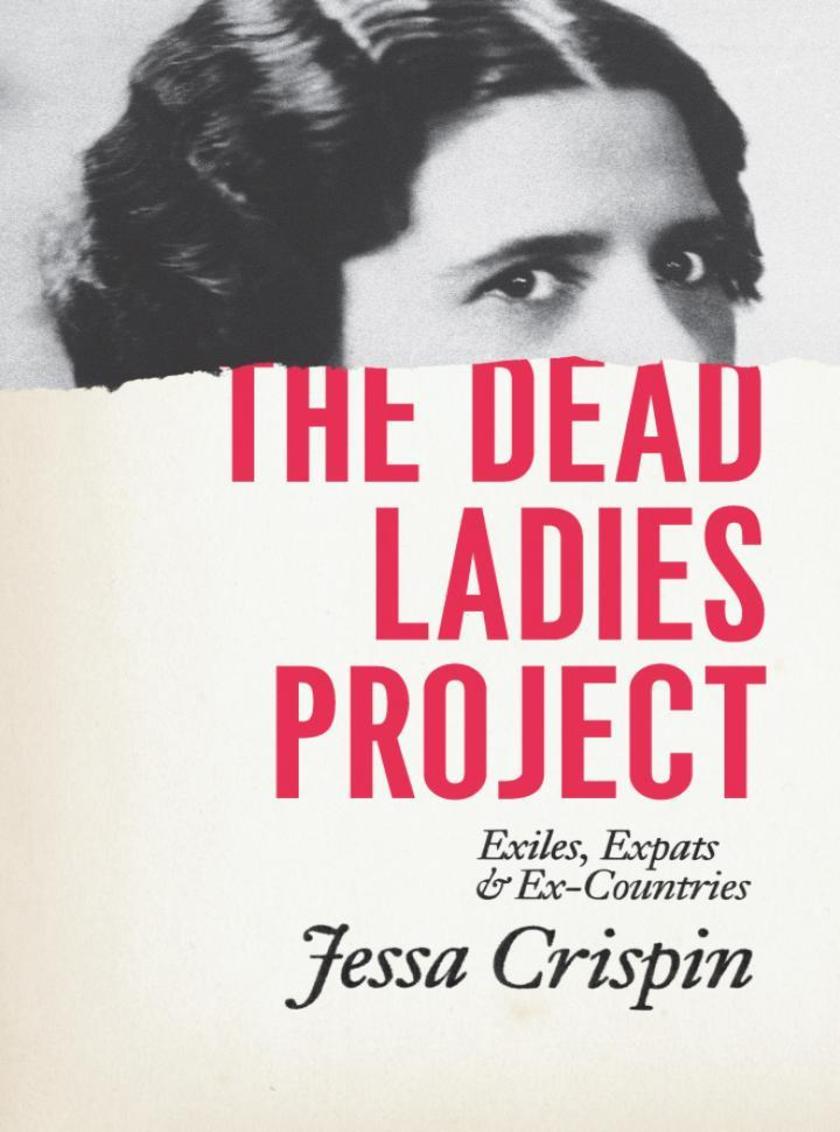
Dead Ladies Project
¥129.49
When Jessa Crispin was thirty, she burned her settled Chicago life to the ground and took off for Berlin with a pair of suitcases and no plan beyond leaving. Half a decade later, she's still on the road, in search not so much of a home as of understanding, a way of being in the world that demands neither constant struggle nor complete surrender.The Dead Ladies Project is an account of that journey-but it's also much, much more. Fascinated by exile, Crispin travels an itinerary of key locations in its literary map, of places that have drawn writers who needed to break free from their origins and start afresh. As she reflects on William James struggling through despair in Berlin, Nora Barnacle dependant on and dependable for James Joyce in Trieste, Maud Gonne fomenting revolution and fostering myth in Dublin, or Igor Stravinsky starting over from nothing in Switzerland, Crispin interweaves biography, incisive literary analysis, and personal experience into a rich meditation on the complicated interactions of place, personality, and society that can make escape and reinvention such an attractive, even intoxicating proposition.?Personal and profane, funny and fervent, The Dead Ladies Project ranges from the nineteenth century to the present, from historical figures to brand-new hangovers, in search, ultimately, of an answer to a bedrock question: How does a person decide how to live their life?


