万本电子书0元读

万本电子书0元读

The Champdoce Mystery
Emile Gaboriau
¥8.09
Sequel to Caught in the Net. According to Wikipedia: "?mile Gaboriau (November 9, 1832 – September 28, 1873) was a French writer, novelist, journalist, and a pioneer of detective fiction... after publishing some novels and miscellaneous writings, found his real gift in L'Affaire Lerouge (1866). The book, which was Gaboriau's first detective novel, introduced an amateur detective. It also introduced a young police officer named Monsieur Lecoq, who was the hero in three of Gaboriau's later detective novels. The character of Lecoq was based on a real-life thief turned police officer, Eugène Fran?ois Vidocq (1775–1857)."
Affinities and Other Stories
Mary Roberts Rinehart
¥8.09
According to Wikipedia: "Mary Roberts Rinehart (August 12, 1876-September 22, 1958) was a prolific author often called the American Agatha Christie.[1] She is considered the source of the phrase "The butler did it", although she did not actually use the phrase herself, and also considered to have invented the "Had-I-But-Known" school of mystery writing.... Rinehart wrote hundreds of short stories, poems, travelogues and special articles. Many of her books and plays, such as The Bat (1920) were adapted for movies, such as The Bat (1926), The Bat Whispers (1930), and The Bat (1959). While many of her books were best-sellers, critics were most appreciative of her murder mysteries. Rinehart, in The Circular Staircase (1908), is credited with inventing the "Had-I-But-Known" school of mystery writing. The Circular Staircase is a novel in which "a middle-aged spinster is persuaded by her niece and nephew to rent a country house for the summer. The house they choose belonged to a bank defaulter who had hidden stolen securities in the walls. The gentle, peace-loving trio is plunged into a series of crimes solved with the help of the aunt. This novel is credited with being the first in the "Had-I-But-Known" school."[3] The Had-I-But-Known mystery novel is one where the principal character (frequently female) does less than sensible things in connection with a crime which have the effect of prolonging the action of the novel. Ogden Nash parodied the school in his poem Don't Guess Let Me Tell You: "Sometimes the Had I But Known then what I know now I could have saved at least three lives by revealing to the Inspector the conversation I heard through that fortuitous hole in the floor." The phrase "The butler did it", which has become a cliché, came from Rinehart's novel The Door, in which the butler actually did do it, although that exact phrase does not actually appear in the work."
Bull Hunter
Bull Hunter
Max Brand
¥8.09
Dodo Collections brings you another classic from Max Brand, ‘Bull Hunter.’ Hunter was a man who could rip a tree trunk from the ground with his bare hands or tame the wildest stallion with his kind manner. Nobody west of the Pecos would have dared run afoul of the mighty frontiersman. But Pete Reeve didn't have the reputation of a dead shot because he relied on his common sense. Then Bull and Pete crossed paths, and townsfolk from Cheyenne to San Antonio braced for the battle. Frederick Schiller Faust (1892-1944) was an American fiction author known primarily for his thoughtful and literary Westerns. Faust wrote mostly under pen names, and today he is primarily known by one, Max Brand. Others include George Owen Baxter, Martin Dexter, Evin Evans, David Manning, Peter Dawson, John Frederick, and Pete Morland. Faust was born in Seattle. He grew up in central California and later worked as a cowhand on one of the many ranches of the San Joaquin Valley. Faust attended the University of California, Berkeley, where he began to write frequently. During the 1910s, Faust started to sell stories to the many emerging pulp magazines of the era. In the 1920s, Faust wrote furiously in many genres, achieving success and fame, first in the pulps and later in the upscale "slick" magazines. His love for mythology was, however, a constant source of inspiration for his fiction and his classical and literary inclinations. The classical influences are particularly noticeable in his first novel The Untamed (1919), which was also made into a motion picture starring Tom Mix in 1920.
The Untamed
The Untamed
Max Brand
¥8.09
Dodo Collections brings you another classic from Max Brand, ‘The Untamed.’ The mysterious Whistlin' Dan Barry rides a black stallion named Satan, followed by a wolf dog named Black Bart. Dan has his own problems, but they multiply when he encounters Jim Silent and his outlaw gang. Frederick Schiller Faust (1892-1944) was an American fiction author known primarily for his thoughtful and literary Westerns. Faust wrote mostly under pen names, and today he is primarily known by one, Max Brand. Others include George Owen Baxter, Martin Dexter, Evin Evans, David Manning, Peter Dawson, John Frederick, and Pete Morland. Faust was born in Seattle. He grew up in central California and later worked as a cowhand on one of the many ranches of the San Joaquin Valley. Faust attended the University of California, Berkeley, where he began to write frequently. During the 1910s, Faust started to sell stories to the many emerging pulp magazines of the era. In the 1920s, Faust wrote furiously in many genres, achieving success and fame, first in the pulps and later in the upscale "slick" magazines. His love for mythology was, however, a constant source of inspiration for his fiction and his classical and literary inclinations. The classical influences are particularly noticeable in his first novel The Untamed (1919), which was also made into a motion picture starring Tom Mix in 1920.
Letters of Travel (1892-1913)
Rudyard Kipling
¥8.09
Dodo Collections brings you another classic from Rudyard Kipling, ‘Letters of Travel (1892-1913).’ ? Letters of Travel, 1892-1913, originally published in 1920, is a collection of articles on Japan, the United States, Canada and Egypt. ? Kipling's works of fiction include The Jungle Book (1894), Kim (1901), and many short stories, including "The Man Who Would Be King" (1888). His poems include "Mandalay" (1890), "Gunga Din" (1890), "The Gods of the Copybook Headings" (1919), "The White Man's Burden" (1899), and "If—" (1910). He is regarded as a major innovator in the art of the short story; his children's books are classics of children's literature; and one critic described his work as exhibiting "a versatile and luminous narrative gift". ? Kipling was one of the most popular writers in England, in both prose and verse, in the late 19th and early 20th centuries. Henry James said: "Kipling strikes me personally as the most complete man of genius (as distinct from fine intelligence) that I have ever known." In 1907, he was awarded the Nobel Prize in Literature, making him the first English-language writer to receive the prize, and its youngest recipient to date Among other honours, he was sounded out for the British Poet Laureateship and on several occasions for a knighthood, all of which he declined
Cleopatra
Cleopatra
H. Rider Haggard
¥8.09
Dodo Collections brings you another classic from H. Rider Haggard, ‘Cleopatra.’ ? The story is set in the Ptolemaic era of ancient Egyptian history and revolves around the survival of a dynasty bloodline protected by the Priesthood of Isis. The main character Harmachis (the living descendant of this bloodline) is charged by the Priesthood to overthrow the supposed impostor Cleopatra, drive out the Romans, and restore Egypt to its golden era. As is the case with the majority of Haggard's works, the story draws heavily upon adventure and exotic concepts. The story, told from the point of view of the Egyptian priest Harmachis, is recounted in biblical language, being in the form of papyrus scrolls found in a tomb. Haggard's portrait of Cleopatra is quite stunning, revealing her wit, her treachery, and her overwhelming presence. All of the characters are mixtures of good and evil, and evoke both sympathy and loathing. ? Sir Henry Rider Haggard was an English writer of adventure novels set in exotic locations, predominantly Africa, and the creator of the Lost World literary genre. His stories, situated at the lighter end of the scale of Victorian literature, continue to be popular and influential. He was also involved in agricultural reform and improvement in the British Empire.? His breakout novel was?King Solomon's Mines(1885), which was to be the first in a series telling of the multitudinous adventures of its protagonist, Allan Quatermain. Haggard was made a Knight Bachelor in 1912 and a Knight Commander of the Order of the British Empire in 1919. He stood unsuccessfully for Parliament as a Conservative candidate for the Eastern division of Norfolk in 1895. The locality of Rider, British Columbia, was named in his memory.
The Ghost Kings
The Ghost Kings
H. Rider Haggard
¥8.09
Dodo Collections brings you another classic from H. Rider Haggard, ‘The Ghost Kings.’ "The Zulus have a strange story of a white girl who in Dingaan's day was supposed to 'hold the spirit' of some legendary goddess of theirs who is also white. This girl, they say, was very beautiful and brave, and had great power in the land before the battle of the Blood River, which they fought with the emigrant Boers. Her title was Lady of the Zulus, or more shortly, Zoola, which means Heaven." This is her story. Sir Henry Rider Haggard was an English writer of adventure novels set in exotic locations, predominantly Africa, and the creator of the Lost World literary genre. His stories, situated at the lighter end of the scale of Victorian literature, continue to be popular and influential. He was also involved in agricultural reform and improvement in the British Empire. His breakout novel was King Solomon's Mines (1885), which was to be the first in a series telling of the multitudinous adventures of its protagonist, Allan Quatermain. Haggard was made a Knight Bachelor in 1912 and a Knight Commander of the Order of the British Empire in 1919. He stood unsuccessfully for Parliament as a Conservative candidate for the Eastern division of Norfolk in 1895. The locality of Rider, British Columbia, was named in his memory.
Hawthorne
Hawthorne
Henry James
¥8.09
Dodo Collections brings you another classic from Henry James, ‘Hawthorne’. ? Hawthorne is a book of literary criticism by Henry James published in 1879. The book was an insightful study of James' great predecessor, Nathaniel Hawthorne. James gave extended consideration to each of Hawthorne's novels and a selection of his short stories. He also reviewed Hawthorne's life and some of his nonfiction. The book became somewhat controversial for a famous section where James enumerated the items of novelistic interest he thought were absent from American life. ? Henry James, OM (15 April 1843 – 28 February 1916) was an American writer who spent most of his writing career in Britain. He is regarded as one of the key figures of 19th-century literary realism. He was the son of Henry James, Sr. and the brother of philosopher and psychologist William James and diarist Alice James. ? He is best known for a number of novels showing Americans encountering Europe and Europeans. His method of writing from a character's point of view allowed him to explore issues related to consciousness and perception, and his style in later works has been compared to impressionist painting. His imaginative use of point of view, interior monologue and unreliable narrators brought a new depth to narrative fiction. ? James contributed significantly to literary criticism, particularly in his insistence that writers be allowed the greatest possible freedom in presenting their view of the world. James claimed that a text must first and foremost be realistic and contain a representation of life that is recognizable to its readers. Good novels, to James, show life in action and are, most importantly, interesting. In addition to his voluminous works of fiction he published articles and books of travel, biography, autobiography, and criticism, and wrote plays. James alternated between America and Europe for the first twenty years of his life; eventually he settled in England, becoming a British subject in 1915, one year before his death. James was nominated for the Nobel Prize in Literature in 1911, 1912, and 1916.
In the Cage
In the Cage
Henry James
¥8.09
Dodo Collections brings you another classic from Henry James, ‘In the Cage’. ? This long story centers on an unnamed London telegrapher. She deciphers clues to her clients' personal lives from the often cryptic telegrams they submit to her as she sits in the "cage" at the post office. Sensitive and intelligent, the telegrapher eventually finds out more than she may want to know. Henry James, OM (15 April 1843 – 28 February 1916) was an American writer who spent most of his writing career in Britain. He is regarded as one of the key figures of 19th-century literary realism. He was the son of Henry James, Sr. and the brother of philosopher and psychologist William James and diarist Alice James. ? He is best known for a number of novels showing Americans encountering Europe and Europeans. His method of writing from a character's point of view allowed him to explore issues related to consciousness and perception, and his style in later works has been compared to impressionist painting. His imaginative use of point of view, interior monologue and unreliable narrators brought a new depth to narrative fiction. ? James contributed significantly to literary criticism, particularly in his insistence that writers be allowed the greatest possible freedom in presenting their view of the world. James claimed that a text must first and foremost be realistic and contain a representation of life that is recognizable to its readers. Good novels, to James, show life in action and are, most importantly, interesting. In addition to his voluminous works of fiction he published articles and books of travel, biography, autobiography, and criticism, and wrote plays. James alternated between America and Europe for the first twenty years of his life; eventually he settled in England, becoming a British subject in 1915, one year before his death. James was nominated for the Nobel Prize in Literature in 1911, 1912, and 1916.
The American
The American
Henry James
¥8.09
Dodo Classics brings you another classic from Henry James, ‘The American’. ? The novel is an uneasy combination of social comedy and melodrama concerning the adventures and misadventures of Christopher Newman, an essentially good-hearted but rather gauche American businessman on his first tour of Europe. Newman is looking for a world different from the simple, harsh realities of 19th-century American business. He encounters both the beauty and the ugliness of Europe, and learns not to take either for granted. The core of the novel concerns Newman's courtship of a young widow from an aristocratic Parisian family. Henry James, OM (15 April 1843 – 28 February 1916) was an American writer who spent most of his writing career in Britain. He is regarded as one of the key figures of 19th-century literary realism. He was the son of Henry James, Sr. and the brother of philosopher and psychologist William James and diarist Alice James. ? He is best known for a number of novels showing Americans encountering Europe and Europeans. His method of writing from a character's point of view allowed him to explore issues related to consciousness and perception, and his style in later works has been compared to impressionist painting. His imaginative use of point of view, interior monologue and unreliable narrators brought a new depth to narrative fiction. ? James contributed significantly to literary criticism, particularly in his insistence that writers be allowed the greatest possible freedom in presenting their view of the world. James claimed that a text must first and foremost be realistic and contain a representation of life that is recognizable to its readers. Good novels, to James, show life in action and are, most importantly, interesting. In addition to his voluminous works of fiction he published articles and books of travel, biography, autobiography, and criticism, and wrote plays. James alternated between America and Europe for the first twenty years of his life; eventually he settled in England, becoming a British subject in 1915, one year before his death. James was nominated for the Nobel Prize in Literature in 1911, 1912, and 1916.
Washington Square
Washington Square
Henry James
¥8.09
Dodo Classics brings you another classic from Henry James, ‘Washington Square’. ? Washington Square is a short novel by Henry James. Originally published in 1880 as a serial in Cornhill Magazine and Harper's New Monthly Magazine, it is a structurally simple tragicomedy that recounts the conflict between a dull but sweet daughter and her brilliant, unemotional father. The plot of the novel is based upon a true story told to James by his close friend, British actress Fanny Kemble. The book is often compared with Jane Austen's work for the clarity and grace of its prose and its intense focus on family relationships. James was hardly a great admirer of Jane Austen, so he might not have regarded the comparison as flattering. In fact, James was not a great fan of Washington Square itself. He tried to read it over for inclusion in the New York Edition of his fiction (1907–1909) but found that he could not, and the novel was not included. Other readers, though, have sufficiently enjoyed the book to make it one of the more popular works of the Jamesian canon. Henry James, OM (15 April 1843 – 28 February 1916) was an American writer who spent most of his writing career in Britain. He is regarded as one of the key figures of 19th-century literary realism. He was the son of Henry James, Sr. and the brother of philosopher and psychologist William James and diarist Alice James. ? He is best known for a number of novels showing Americans encountering Europe and Europeans. His method of writing from a character's point of view allowed him to explore issues related to consciousness and perception, and his style in later works has been compared to impressionist painting. His imaginative use of point of view, interior monologue and unreliable narrators brought a new depth to narrative fiction. ? James contributed significantly to literary criticism, particularly in his insistence that writers be allowed the greatest possible freedom in presenting their view of the world. James claimed that a text must first and foremost be realistic and contain a representation of life that is recognizable to its readers. Good novels, to James, show life in action and are, most importantly, interesting. In addition to his voluminous works of fiction he published articles and books of travel, biography, autobiography, and criticism, and wrote plays. James alternated between America and Europe for the first twenty years of his life; eventually he settled in England, becoming a British subject in 1915, one year before his death. James was nominated for the Nobel Prize in Literature in 1911, 1912, and 1916.
The Portrait of a Lady
Henry James
¥8.09
Dodo Classics brings you another classic from Henry James, ‘The Portrait of a Lady’. The Portrait of a Lady is a novel by Henry James, first published as a serial in The Atlantic Monthly and Macmillan's Magazine in 1880–81 and then as a book in 1881. It is one of James's most popular long novels, and is regarded by critics as one of his finest. The Portrait of a Lady is the story of a spirited young American woman, Isabel Archer, who in "affronting her destiny", finds it overwhelming. She inherits a large amount of money and subsequently becomes the victim of Machiavellian scheming by two American expatriates. Like many of James's novels, it is set in Europe, mostly England and Italy. Generally regarded as the masterpiece of James's early period, this novel reflects James's continuing interest in the differences between the New World and the Old, often to the detriment of the former. It also treats in a profound way the themes of personal freedom, responsibility, and betrayal. James's first idea for The Portrait of a Lady was simple: a young American woman affronting her destiny, whatever it might be. Only then did he begin to form a plot to bring out the character of his central figure. This was the uncompromising story of the free-spirited Isabel losing her freedom—despite (or because of) suddenly coming into a great deal of money—and getting "ground in the very mill of the conventional”. It is a rather existentialist novel, as Isabel is very committed to living with the consequences of her choice with integrity but also a sort of stubbornness. Henry James, OM (15 April 1843 – 28 February 1916) was an American writer who spent most of his writing career in Britain. He is regarded as one of the key figures of 19th-century literary realism. He was the son of Henry James, Sr. and the brother of philosopher and psychologist William James and diarist Alice James. He is best known for a number of novels showing Americans encountering Europe and Europeans. His method of writing from a character's point of view allowed him to explore issues related to consciousness and perception, and his style in later works has been compared to impressionist painting. His imaginative use of point of view, interior monologue and unreliable narrators brought a new depth to narrative fiction. James contributed significantly to literary criticism, particularly in his insistence that writers be allowed the greatest possible freedom in presenting their view of the world. James claimed that a text must first and foremost be realistic and contain a representation of life that is recognizable to its readers. Good novels, to James, show life in action and are, most importantly, interesting. In addition to his voluminous works of fiction he published articles and books of travel, biography, autobiography, and criticism, and wrote plays. James alternated between America and Europe for the first twenty years of his life; eventually he settled in England, becoming a British subject in 1915, one year before his death. James was nominated for the Nobel Prize in Literature in 1911, 1912, and 1916.
Captains All and Others
W.W. Jacobs
¥8.09
Dodo Collections brings you another classic from Jacobs W.W, ‘Captains All and Others.’ ? William Wymark Jacobs was an English author of short stories and novels. Quite popular in his lifetime primarily for his amusing maritime tales of life along the London docks (many of them humorous as well as sardonic in tone). Today he is best known for a few short works of horror fiction. One being "The Monkey's Paw"(published 1902). It has in its own right become a well-known and widely anthologized classic. ? In 1879, Jacobs began work as a clerk in the civil service, in the Post Office Savings Bank, and by 1885 he had his first short story published. His road to success was relatively slow: Arnold Bennett writing in 1898 was astonished that Jacobs turned down the sum of ?500 for six short stories. Jacobs was financially secure enough to be able to leave the Post Office in 1899.
In Pastures New
In Pastures New
George Ade
¥8.09
Dodo Collections brings you another classic from George Ade ‘In Pastures New.’ ‘In Pastures New’ is a humorous account of travels, chiefly in London and Egypt. Many of the letters appearing in this volume were printed in a syndicate of newspapers in the early months of 1906. With these letters have been incorporated extracts from letters written to the Chicago Record in 1895 and 1898. George Ade (February 9, 1866 – May 16, 1944) was an American writer, newspaper columnist, and playwright.? Ade's literary reputation rests upon his achievements as a great humorist of American character during an important era in American history: the first large wave of migration from the countryside to burgeoning cities like Chicago, where, in fact, Ade produced his best fiction. He was a practicing realist during the Age of (William Dean) Howells and a local colorist of Chicago and the Midwest. His work constitutes a vast comedy of Midwestern manners and, indeed, a comedy of late 19th-century American manners. In 1915, Sir Walter Raleigh, Oxford professor and man of letters, while on a lecture tour in America, called George Ade "the greatest living American writer. Ade's fiction dealt consistently with the "little man," the common, undistinguished, average American, usually a farmer or lower middle class citizen. (He sometimes skewered women, too, especially women with laughable social pretensions.) Ade followed in the footsteps of his idol Mark Twain by making expert use of the American language. A striking and unique feature of Ade's essays was the creative and liberal use of capitalization. George Ade is one of the American writers whose publications made him rich.
A House of Pomegranates
Oscar Wilde
¥8.09
Dodo Collections brings you another classic from Oscar Wilde, ‘A House of Pomegranates’. A House of Pomegranates is a collection of fairy tales, written by Oscar Wilde, which was published in 1891 as a second collection for The Happy Prince and Other Tales (1888). Wilde once said that this collection was "intended neither for the British child nor the British public." The stories included in this collection are as follows: ????????? The Young King ????????? The Birthday of the Infanta ????????? The Fisherman and his Soul ????????? The Star-Child Oscar Fingal O'Flahertie Wills Wilde (16 October 1854 – 30 November 1900) was an Irish author, playwright and poet. After writing in different forms throughout the 1880s, he became one of London's most popular playwrights in the early 1890s. He is remembered for his epigrams, his novel The Picture of Dorian Gray, his plays, as well as the circumstances of his imprisonment and early death. At the height of his fame and success, while his masterpiece, The Importance of Being Earnest (1895), was still on stage in London, Wilde had the Marquess of Queensberry prosecuted for libel. The Marquess was the father of Wilde's lover, Lord Alfred Douglas. The charge carried a penalty of up to two years in prison. The trial unearthed evidence that caused Wilde to drop his charges and led to his own arrest and trial for gross indecency with other men. After two more trials he was convicted and imprisoned for two years' hard labour. In 1897, in prison, he wrote De Profundis, which was published in 1905, a long letter which discusses his spiritual journey through his trials, forming a dark counterpoint to his earlier philosophy of pleasure. Upon his release he left immediately for France, never to return to Ireland or Britain. There he wrote his last work, The Ballad of Reading Gaol (1898), a long poem commemorating the harsh rhythms of prison life. He died destitute in Paris at the age of 46.
Strictly Business: More Stories of the Four Million
O. Henry
¥8.09
According to Wikipedia: "O. Henry was the pen name of American writer William Sydney Porter (September 11, 1862 – June 5, 1910). O. Henry short stories are known for wit, wordplay, warm characterization and clever twist endings…. Most of O. Henry's stories are set in his own time, the early years of the 20th century. Many take place in New York City, and deal for the most part with ordinary people: clerks, policemen, waitresses. Fundamentally a product of his time, O. Henry's work provides one of the best English examples of catching the entire flavor of an age. Whether roaming the cattle-lands of Texas, exploring the art of the "gentle grafter," or investigating the tensions of class and wealth in turn-of-the-century New York, O. Henry had an inimitable hand for isolating some element of society and describing it with an incredible economy and grace of language. Some of his best and least-known work resides in the collection Cabbages and Kings, a series of stories which each explore some individual aspect of life in a paralytically sleepy Central American town while each advancing some aspect of the larger plot and relating back one to another in a complex structure which slowly explicates its own background even as it painstakingly erects a town which is one of the most detailed literary creations of the period. The Four Million is another collection of stories. It opens with a reference to Ward McAllister's "assertion that there were only 'Four Hundred' people in New York City who were really worth noticing. But a wiser man has arisen—the census taker—and his larger estimate of human interest has been preferred in marking out the field of these little stories of the 'Four Million.'" To O. Henry, everyone in New York counted. He had an obvious affection for the city, which he called "Bagdad-on-the-Subway,"
Some Short Stories
Some Short Stories
Henry James
¥8.09
Collection of classic Henry James short stories, including Brooksmith, The Real Thing, The Story of It, Flickerbridge, and Mrs. Medwin. According to Wikipedia: "Henry James, (1843 – 1916), son of theologian Henry James Sr., brother of the philosopher and psychologist William James and diarist Alice James, was an American-born British author. He is one of the key figures of 19th century literary realism; the fine art of his writing has led many academics to consider him the greatest master of the novel and novella form. He spent much of his life in England and became a British subject shortly before his death. He is primarily known for a series of major novels in which he portrayed the encounter of America with Europe. His plots centered on personal relationships, the proper exercise of power in such relationships, and other moral questions. His method of writing from the point of view of a character within a tale allowed him to explore the phenomena of consciousness and perception, and his style in later works has been compared to impressionist painting."
Varied Types
Varied Types
G. K. Chesterton
¥8.09
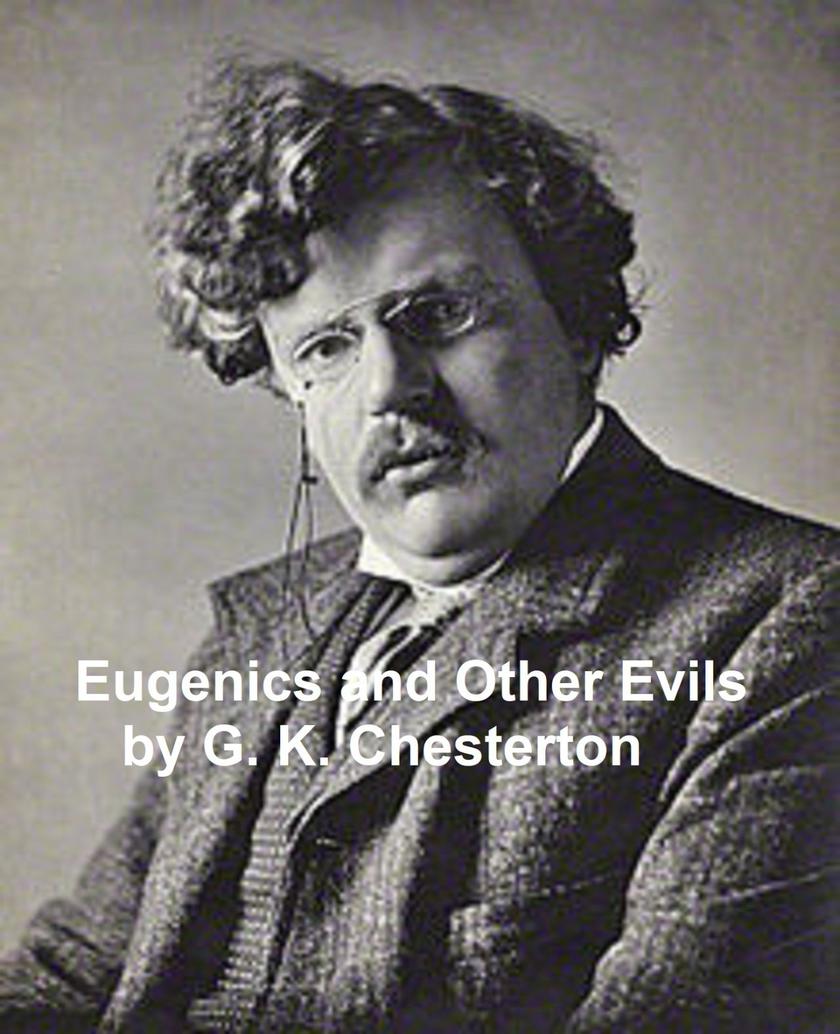
Collection of essays (many of the essays from the collection "Twelve Types", plus more). According to Wikipedia: "Gilbert Keith Chesterton (1874 - 1936) was an influential English writer of the early 20th century. His prolific and diverse output included journalism, philosophy, poetry, biography, Christian apologetics, fantasy and detective fiction. Chesterton has been called the "prince of paradox."[1] He wrote in an off-hand, whimsical prose studded with startling formulations. For example: "Thieves respect property. They merely wish the property to become their property that they may more perfectly respect it."[2] He is one of the few Christian thinkers who are equally admired and quoted by both liberal and conservative Christians, and indeed by many non-Christians. Chesterton's own theological and political views were far too nuanced to fit comfortably under the "liberal" or "conservative" banner."
Complete Poetical Works
Bret Harte
¥8.09
Collection of poetry. According to Wikipedia: "Bret Harte (August 25, 1836[2] – May 6, 1902) was an American author and poet, best remembered for his accounts of pioneering life in California. He was born in Albany, New York. ... He moved to California in 1853, later working there in a number of capacities, including miner, teacher, messenger, and journalist. He spent part of his life in the northern California coast town now known as Arcata, then just a mining camp on Humboldt Bay. His first literary efforts, including poetry and prose, appeared in The Californian, an early literary journal edited by Charles Henry Webb. In 1868 he became editor of The Overland Monthly, another new literary magazine, but this one more in tune with the pioneering spirit of excitement in California. His story, "The Luck of Roaring Camp," appeared in the magazine's second edition, propelling Harte to nationwide fame... Determined to pursue his literary career, in 1871 he and his family traveled back East, to New York and eventually to Boston, where he contracted with the publisher of The Atlantic Monthly for an annual salary of $10,000, "an unprecedented sum at the time." His popularity waned, however, and by the end of 1872 he was without a publishing contract and increasingly desperate. He spent the next few years struggling to publish new work (or republish old), delivering lectures about the gold rush, and even selling an advertising jingle to a soap company. In 1878 Harte was appointed to the position of United States Consul in the town of Krefeld, Germany and then to Glasgow in 1880. In 1885 he settled in London. During the thirty years he spent in Europe, he never abandoned writing, and maintained a prodigious output of stories that retained the freshness of his earlier work. He died in England in 1902 of throat cancer and is buried at Frimley."
The Portrait of a Lady: both volumes
Henry James
¥8.09
According to Wikipedia: "The Portrait of a Lady is a novel by Henry James, first published as a serial in The Atlantic Monthly and Macmillan's Magazine in 1880–81 and then as a book in 1881. It is one of James's most popular long novels, and is regarded by critics as one of his finest. The Portrait of a Lady is the story of a spirited young American woman, Isabel Archer, who "affronts her destiny" and finds it overwhelming. She inherits a large amount of money and subsequently becomes the victim of Machiavellian scheming by two American expatriates. Like many of James's novels, it is set in Europe, mostly England and Italy. Generally regarded as the masterpiece of James's early period, this novel reflects James's continuing interest in the differences between the New World and the Old, often to the detriment of the former. It also treats in a profound way the themes of personal freedom, responsibility, and betrayal."
Frank's Campaign
Frank's Campaign
Horatio Alger
¥8.09
According to Wikipedia: "Horatio Alger, Jr. (January 13, 1832 – July 18, 1899) was a prolific 19th-century American author whose principal output was formulaic juvenile novels that followed the adventures of bootblacks, newsboys, peddlers, buskers, and other impoverished children in their rise from humble backgrounds to lives of respectable middle-class security and comfort. His novels were hugely popular in their day. Born in Chelsea, Massachusetts, the son of a Unitarian minister, Alger entered Harvard at the age of 16. Following graduation, he briefly worked in education before touring Europe for almost a year. He then entered the Harvard Divinity School, and, in 1864, took a position at a Unitarian church in Brewster, Massachusetts. Two years later, he resigned following a pederastic scandal involving two teenage boys. He subsequently retired from the ministry entirely and moved to New York City where he formed an association with the Newsboys Lodging House and other agencies offering aid to impoverished children. His empathy for the working boys of the city, coupled with the moral values learned at home, were the basis of his many juvenile "[rags to riches]" novels. He died in 1899. The first Alger biography was published in 1928, and later proved to be heavily fictionalized. Other biographies followed, sometimes citing the 1928 hoax as fact. In the last decades of the twentieth century however, a few reliable biographies were published that corrected the errors and fictionalizations of the past. Many of Alger's works have been described as rags to riches stories, illustrating how down-and-out boys might be able to achieve the American Dream of wealth and success through hard work, courage, determination, and concern for others. This widely held view involves Alger's characters achieving extreme wealth and the subsequent remediation of their "old ghosts." Alger is noted as a significant figure in the history of American cultural and social ideals."