


 购物车
购物车 个人中心
个人中心

Niebla
¥9.00
No es una novela. Es una "nivola", según su autor. Nuevo género creado por Unamuno, no tuvo mucho arraigo, pero aún así Niebla es una de las obras de ficción más importantes del escritor vasco. El libro aborda la inseguridad del hombre moderno que se preocupa por su destino y su mortalidad. El título está cargado de significado, dado que el libro difumina la línea entre la ficción y la realidad. También son nebulosas las descripciones físicas de los personajes y lugares, y hasta pone en duda la naturaleza de la existencia humana.

La tía Tula
¥9.00
La tía Tula, es, según su autor, ?la historia de una joven que, rechazando novios, se queda soltera para cuidar a unos sobrinos, hijos de una hermana que se le muere. Vive con el cu?ado, a quien rechaza para marido, pues no quiere manchar con el débito conyugal el recinto en que respiran aire de castidad sus hijos. Satisfecho el instinto de maternidad, ?para qué perder su virginidad? Es virgen madre?. Pero sobre este ca?amazo argumental teje Unamuno una obra cargada de sentidos plurales: Tula, la protagonista, que encarna la concepción tradicional de la familia y de la mujer y que es, a al vez, víctima de ella, ejemplifica la figura del agonista unamuniano dividido en mil contradicciones.

Obras de Emilia Pardo Bazán
¥9.00
Obras Contenidas: Un viaje de novios La tribuna El cisne de Vilamorta Los pazos de Ulloa La madre naturaleza Insolación La prueba Una cristiana La piedra angular Do?a Milagros Memorias de un solterón: Adán y Eva El tesoro de Gastón El saludo de las brujas El Ni?o de Guzmán Misterio La sirena negra Dulce sue?o La última fada Cuentos de amor
Misterio
¥9.00
Londres, 1824, el relojero Dorff es asaltado por dos emboscados y recibe la ayuda de Renato de Giac, marqués de Brezé. Más tarde, ya en casa de Dorff, éste le entrega a Renato un manuscrito y un cofre con documentos importantísimos que los que están en el poder en Francia, Luis XVIII y su jefe de policía Lecazes, pretenden arrebatarle. La autora aborda por primera vez el género de la novela histórica mediante la recreación de la compleja historia de Luis XVII, el delfín perdido, el hijo de Luis XVI y María Antonieta. Asistiremos también a la intriga amorosa de Renato de Giac y Amelia, la hija mayor de Dorff. Este es un excepcional relato que aspira, como nos dice la autora en su novela, “a proyectar un rayo de luz en las lobregueces históricas por medio de la lámpara caprichosa de la fantasía”.

El Ni?o de Guzmán
¥9.00
El ni?o de Guzmán narra una historia costumbrista.Pedro, un joven espa?ol que ha sido educado en el extranjero en las buenas maneras del continente y con una gran nostalgia de su país. Es el típico joven de mundo. Fue educado por un fraile irlandés fascinado por una Espa?a irreal ( La de la Gaviota de Faber).
Othello, The Moor of Venice
¥9.00
Othello, The Moor of Venice is a tragedy by William Shakespeare based on the short story "Moor of Venice" by Cinthio, believed to have been written in approximately 1603. The work revolves around four central characters: Othello, his wife Desdemona, his lieutenant Cassio, and his trusted advisor Iago. Attesting to its enduring popularity, the play appeared in 7 editions between 1622 and 1705. Because of its varied themes — racism, love, jealousy and betrayal — it remains relevant to the present day and is often performed in professional and community theatres alike. The play has also been the basis for numerous operatic, film and literary adaptations.
Henry IV, Part 1
¥9.00
Henry IV, Part 1 is a history play by William Shakespeare, believed to have been written no later than 1597. It is the second of Shakespeare's tetralogy that deals with the successive reigns of Richard II, Henry IV (2 plays), and Henry V. Henry IV, Part 1 depicts a span of history that begins with Hotspur's battle at Homildon against the Douglas late in 1402 and ends with the defeat of the rebels at Shrewsbury in the middle of 1403. From the start it has been an extremely popular play both with the public and the critics.

Rilla of Ingleside
¥9.00
Anne Shirley has left Redmond College behind to begin a new job and a new chapter of her life away from Green Gables. Now she faces a new challenge: the Pringles. They're known as the royal family of Summerside - and they quickly let Anne know she is not the person they had wanted as principal of Summerside High School. But as she settles into the cozy tower room at Windy Poplars, Anne finds she has great allies in the widows Aunt Kate and Aunt Chatty – and in their irrepressible housekeeper, Rebecca Dew. As Anne learns Summerside's strangest secrets, winning the support of the prickly Pringles becomes only the first of her delicious triumphs.

Anne of Avonlea
¥9.00
Following Anne of Green Gables (1908), the book covers the second chapter in the life of Anne Shirley. This book follows Anne from the age of 16 to 18, during the two years that she teaches at Avonlea school. It includes many of the characters from Anne of Green Gables, as well as new ones like Mr Harrison, Miss Lavendar Lewis, Paul Irving, and the twins Dora and Davy.
Seventeen: A Tale of Youth and Summer Time and the Baxter Family Especially Will
¥9.00
Seventeen: A Tale of Youth and Summer Time and the Baxter Family Especially William is a humorous novel by Booth Tarkington that gently satirizes first love, in the person of a callow 17-year-old, William Sylvanus Baxter. Seventeen takes place in a small city in the Midwestern United States shortly before World War I. It was published as sketches in the Metropolitan Magazine in 1914, and collected in a single volume in 1916, when it was the bestselling novel in the United States.
Penrod
¥9.00
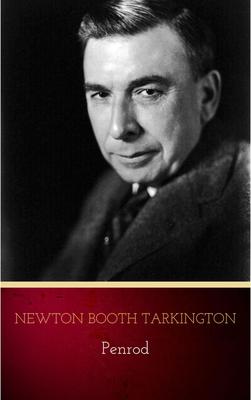
Penrod is a collection of comic sketches by Booth Tarkington that was first published in 1914. The book follows the misadventures of Penrod Schofield, an eleven-year-old boy growing up in the pre-World War I Midwestern United States, in a similar vein to The Adventures of Tom Sawyer. In Penrod, Tarkington established characters who appeared in two further books, Penrod and Sam (1916) and Penrod Jashber (1929). The three books were published together in one volume, Penrod: His Complete Story, in 1931.

Alexander's Bridge
¥9.00
Alexander's Bridge is the first novel by American author Willa Cather. First published in 1912, it was re-released with an author's preface in 1922. It also ran as a serial in McClure's, giving Cather some free time from her work for that magazine.
The Whisperer in Darkness
¥9.00
The story is told by Albert N. Wilmarth, an instructor of literature at Miskatonic University in Arkham. When local newspapers report strange things seen floating in rivers during a historic Vermont flood, Wilmarth becomes embroiled in a controversy about the reality and significance of the sightings, though he sides with the skeptics. Wilmarth uncovers old legends about monsters living in the uninhabited hills who abduct people who venture or settle too close to their territory.
The Unnamable
¥9.00
"The Unnamable" is a horror short story by American author H. P. Lovecraft. It was written in September 1923, first published in the July 1925 issue of Weird Tales, and first collected in Beyond the Wall of Sleep. Carter, a weird fiction writer, who is likely the Randolph Carter who features in some of Lovecraft's other tales such as The Statement of Randolph Carter, meets with his close friend, Joel Manton, in a cemetery near an old, dilapidated house on Meadow Hill in the town of Arkham, Massachusetts. As the two sit upon a weathered tomb, Carter tells Manton the tale of an indescribable entity that allegedly haunts the house and surrounding area. He contends that because such an entity cannot be perceived by the five senses, it becomes impossible to quantify and accurately describe, thus earning itself the term unnamable.
The Tree on the Hill
¥9.00
The story is written in first person. It depicts the main character going outside Hampden and finding a special tree. The tree makes him day dream about a big temple in a land with three suns. The temple was half-violet, half-blue. Some shadows attracted him into the inside. He thought he saw three flaming eyes watching him and he shouted twice and the vision was gone.
The Strange High House in the Mist
¥9.00
"The Strange High House in the Mist" is a short story by H. P. Lovecraft. Written on November 9, 1926, it was first published in the October 1931 issue of Weird Tales. It concerns a character traveling to the titular house which is perched on the top of cliff which seems inaccessible both by land and sea, yet is apparently inhabited. Thomas Olney, a "philosopher" visiting the town of Kingsport, Massachusetts with his family, is intrigued by a strange house on a cliff overlooking the ocean. It is unaccountably high and old and the locals have a generations-long dread of the place which no one is known to have visited.
The Statement of Randolph Carter
¥9.00
"The Statement of Randolph Carter" is a short story by H. P. Lovecraft. Written December 1919, it was first published in The Vagrant, May 1920. It tells of a traumatic event in the life of Randolph Carter, a student of the occult loosely representing Lovecraft himself. It is the first story in which Carter appears and is part of Lovecraft's Dream Cycle.
The Shunned House
¥9.00
"The Shunned House" is a horror fiction novelette by American author H. P. Lovecraft, written on October 16–19, 1924. It was first published in the October 1937 issue of Weird Tales. The Shunned House of the title is based on an actual house in Providence, Rhode Island, built around 1763 and still standing at 135 Benefit Street. Lovecraft was familiar with the house because his aunt Lillian Clark lived there in 1919-20 as a companion to Mrs. H. C. Babbit. However, it was another house in Elizabeth, New Jersey that actually compelled Lovecraft to write the story.
The Picture in the House
¥9.00
A lone traveler seeks shelter from an approaching storm in an apparently abandoned house, only to find that it is occupied by a "loathsome old, white-bearded, and ragged man."
Poetry of the Gods
¥9.00
Poetry and the Gods is a short story by horror writer and poet H.P. Lovecraft in collaboration with writer Anna Helen Crofts. The story is very different from the vast majority of Lovecraft's other work and collaborations. It does, however, bear similar themes regarding dreams as a doorway to magic realms, and slumbering gods. The narrative follows the dream-voyage of Marcia, a young woman filled with weariness of the mundane world and all its woes. She resolves to ease her troubled soul by reading a magazine of poetry. As she does, a dream-state unfolds in which the Greek god Hermes appears and bears Marcia to the court of Zeus and the Olympians.
The Moon Bog
¥9.00
"The Moon-Bog" is a short story by American horror fiction writer H. P. Lovecraft, written in or before March 1921. The story was first published in the June 1926 issue of the pulp magazine Weird Tales. In the story, the unnamed narrator describes the final fate of his good friend, Denys Barry, an Irish-American who reclaims an ancestral estate in Kilderry, a fictional village in Ireland. Barry ignores pleas from the superstitious local peasantry not to drain the nearby bog, with unfortunate supernatural consequences.


