


 购物车
购物车 个人中心
个人中心
In the Vault
¥9.00
An undertaker finds himself trapped in the vault where coffins are stored during winter for burial in the spring, and is mysteriously injured when he escapes.
Hypnos
¥9.00
"Hypnos" is a short story by H.P. Lovecraft, penned in March 1922 and first published in the May 1923 issue of National Amateur. The narrator, a sculptor, recounts meeting a mysterious man in a railway station. The moment the man opened his "immense, sunken and widely luminous eyes", the narrator knew that the stranger would become his friend-–"the only friend of one who had never possessed a friend before". In the eyes of the stranger he saw the knowledge of the mysteries he always sought to learn
The Dunwich Horror
¥9.00
In H.P. Lovecraft’s, "The Dunwich Horror", we are told the story of Wilbur Whateley, the son of a deformed albino mother and an unknown father (alluded to in passing by the mad Old Whateley as "Yog-Sothoth"), and the strange events surrounding his birth and precocious development. Wilbur matures at an abnormal rate, reaching manhood within a decade. All the while, his sorcerer grandfather indoctrinates him into certain dark rituals and the study of witchcraft.
The Descendant
¥9.00
"The Descendant" is a story fragment by American horror fiction writer H. P. Lovecraft, believed to have been written in 1927.[1] It was first published in the journal Leaves in 1938, after Lovecraft's death.

Dagon
¥9.00
The story is the testament of a tortured, morphine-addicted man who relates an incident that occurred during his service as an officer during World War I. In the unnamed narrator's account, his cargo ship is captured by an Imperial German sea-raider in "one of the most open and least frequented parts of the broad Pacific"
The Colour Out of Space
¥9.00
"The Colour Out of Space" is a first-person narrative written from the perspective of an unnamed surveyor from Boston. In order to prepare for the construction of a new reservoir in Massachusetts, he surveys a rural area that is to be flooded near Lovecraft's fictional town of Arkham. He comes across a mysterious patch of land, an abandoned five-acre farmstead, which is completely devoid of all life.
The Book
¥9.00
"The Book" is an unfinished short story by American horror fiction writer H. P. Lovecraft, believed to have been written in late 1933. It was first published in the journal Leaves in 1938, after Lovecraft's death. In the story fragment, the narrator is given an ancient book by a strange bookseller, and when he takes it home and examines it, weird and sinister events ensue.

La última fada
¥9.00
Novela basada en dos leyendas artúricas: "Tristán e Isolda" y "Merlín y Viviana", entreteje textos conocidos con versiones nuevas con el objetivo de moralizar a un público lector, presumiblemente de fe única, poseedor de prejuicios religiosos arraigados en la cultura de la época.

El cisne de Vilamorta
¥9.00
EL CISNE DE VILAMORTA : Leocadia, la maestra de Vilamorta, ama apasionadamente al joven y apuesto Segundo ( el cisne ) al que recibe en su casa y de vez en cuando hace algún obsequio, ya que Segundo aunque estudió derecho , no trabaja. Leocadia tiene un hijo deficiente producto de una violación incestuosa de un tío con el que vivía en Ourense. Segundo aspira a conseguir una colocación en Madrid que le permita darse a conocer en el mundo literario de la capital. Llega a Vilamorta un político influyente ( don Victoriano ). Viene a curarse con las aguas del balneario. El poeta se enamora de la joven mujer del político ( Nieves ) y ella coquetea con él , pero el marido muere y la viuda marcha a Madrid sin querer saber nada de Segundo ...

El tesoro de Gastón
¥9.00
Una novela que sigue siendo de actualidad. Gastón,un joven adinerado que despilfarra gran parte de la fortuna que le ha heredadosu madre, descubre que puede vivir de una manera distinta, recuperar lo que ha perdido y de paso, encontrarse con el amor y honestidad que no había experimentado antes. Escrita de forma sencilla y accesible, "El tesoro de Gastón" es una de las muchas fabulosas obras escritas por la condesa Emilia Pardo Bazán.
The Crawling Chaos
¥9.00
"The Crawling Chaos" is a short story by American writers H. P. Lovecraft and Winifred V. Jackson (first published April 1921 in the United Cooperative. As in their other collaboration, "The Green Meadow", the tale was credited to "Elizabeth Berkeley" (Jackson) and "Lewis Theobald, Jun" (Lovecraft). The story begins with the narrator describing the effects of opium and the fantastical vistas it can inspire. The narrator then tells of his sole experience with opium in which he was accidentally administered an overdose by a doctor during the "year of the plague".
The Magnificent Ambersons
¥9.00
The Magnificent Ambersons is a 1918 novel by Booth Tarkington which won the 1919 Pulitzer Prize. It was the second novel in the Growth trilogy, which included The Turmoil (1915) and The Midlander (1923, retitled National Avenue in 1927). In 1942 Orson Welles directed a film version, also titled The Magnificent Ambersons. The novel and trilogy traces the growth of the United States through the declining fortunes of three generations of the aristocratic Amberson family in a fictional Mid-Western town, between the end of the Civil War and the early part of the 20th century, a period of rapid industrialization and socio-economic change in America. The decline of the Ambersons is contrasted with the rising fortunes of industrial tycoons and other new-money families, which did not derive power from family names but by "doing things". As George Amberson's friend (name unspecified) says, "don't you think being things is 'rahthuh bettuh' than doing things?" "The Magnificent Ambersons is perhaps Tarkington's best novel," said Van Wyck Brooks. "[It is] a typical story of an American family and town—the great family that locally ruled the roost and vanished virtually in a day as the town spread and darkened into a city. This novel no doubt was a permanent page in the social history of the United States, so admirably conceived and written was the tale of the Ambersons, their house, their fate and the growth of the community in which they were submerged in the end." Even though the story is set in a fictitious city, it was inspired by Tarkington's hometown of Indianapolis and the neighborhood he once lived in, Woodruff Place.
The Gentleman from Indiana
¥9.00
There is a fertile stretch of flat lands in Indiana where unagrarian Eastern travellers, glancing from car-windows, shudder and return their eyes to interior upholstery, preferring even the swaying caparisons of a Pullman to the monotony without. The landscape lies interminably level: bleak in winter, a desolate plain of mud and snow; hot and dusty in summer, in its flat lonesomeness, miles on miles with not one cool hill slope away from the sun.
The Conquest of Canaan
¥9.00
Newton Booth Tarkington (July 29, 1869 – May 19, 1946) was an American novelist and dramatist best known for his novels The Magnificent Ambersons and Alice Adams. He is one of only three novelists to win the Pulitzer Prize for Fiction more than once, along with William Faulkner and John Updike.
The Beautiful Lady
¥9.00
"The Beautiful Lady", is another of the short novels from Booth Tarkington's early career. It was originally published in two parts, December of 1904 and January of 1905, in "Harper's Magazine", and then as Tarkington's fifth book in May of 1905. As with many of Tarkington's other works, it is a bit too predictable, though in this case that doesn't detract too much from the story. The story appears to sets up a love triangle (or in this case it may be a love square), but it does deviate from that a bit. The story is told from the point of the Italian, Ansolini from Naples, living in Paris who due to being down on his luck is forced into a most embarrassing position of acting as a billboard by shaving his head and having an advertisement for a show placed on the back of his bald head. It is while performing this job, that he nearly meets the "beautiful lady", though he keeps his head down and sees only her feet and the hem of her skirt and hears her lovely voice as it has sympathy for his plight. In fact, Ansolini's feelings are appreciative of her beautiful soul, and not that of romance.
Beasley's Christmas Party
¥9.00
A young newspaperman who has just moved to a new town overhears the wealthy politician in the house next door talking aloud to nonexistent figures. Has David Beasley gone mad, or is his imagination simply greater than his friends and ex-fiancée believe?
Youth and the Bright Medusa
¥9.00
Youth and the Bright Medusa is a collection of short stories by Willa Cather, published in 1920. Several were published in an earlier collection, The Troll Garden. This collection contains the following stories: "Coming, Aphrodite!" a.k.a. "Coming, Eden Bower!" "The Diamond Mine" "A Gold Slipper" "Scandal" "Paul's Case" "A Wagner Matinee" "The Sculptor's Funeral" "A Death in the Desert"
O Pioneers!
¥9.00
The first of her renowned prairie novels--a story that expresses Cather's conviction that "the history of every country begins in the heart of a man or a woman." When Alexandra Bergson takes over the family farm after her father's death, she falls under the spell of the rich, forbidding Nebraska prairie.
The White Ship
¥9.00
"The White Ship" is a short story written by H.P. Lovecraft. It was first published in The United Amateur (Volume 19) #2, November 1919. A lighthouse keeper named Basil Elton engages upon a peculiar fantasy in which a bearded man piloting a mystical white ship is found sailing upon a bridge of moonlight. Elton joins the bearded man on this ship, and together they explore a mystical chain of islands unlike anything that can be found on Earth.
Medusa's Coil
¥9.00
"Medusa's Coil" is a short story by H. P. Lovecraft and Zealia Bishop. It was first published in Weird Tales magazine in January 1939, two years after Lovecraft's death. The story concerns the son of an American plantation owner who brings back from Paris a new wife. It mixes elements of Lovecraft's Cthulhu Mythos with the ancient Greek myth of Medusa, but it has also been noted for its racist aspects.
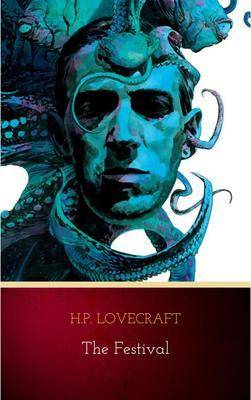
The Festival
¥9.00
"The Festival" is a short story by H. P. Lovecraft written in October 1923 and published in the January 1925 issue of Weird Tales. The story is set at Christmas time: "It was the Yuletide, that men call Christmas though they know in their hearts it is older than Bethlehem and Babylon, older than Memphis and mankind." An unnamed narrator is making his first visit to Kingsport, Massachusetts, an "ancient sea town where my people had dwelt and kept festival in the elder time when festival was forbidden; where also they had commanded their sons to keep festival once every century, that the memory of primal secrets might not be forgotten."


