


 购物车
购物车 个人中心
个人中心

The Adventures of Sherlock Holmes
¥16.27
THE PRINCE was written by Niccolo' Machiavelli in the 1500s. It has continued to be a best seller in many languages. Presently, it is translated into modern English, with illustrations by Benjamin Martinez and an Introduction by Adolph Cso.The Prince is a classic book that explores the attainment, maintenance, and utilization of political power in the western world. Machiavelli wrote The Prince to demonstrate his skill in the art of the state, presenting advice on how a prince might acquire and hold power. Machiavelli defended the notion of rule by force rather than by law. Accordingly, The Prince seems to rationalize a number of actions done solely to perpetuate power. It is an examination of power-its attainment, development, and successful use.
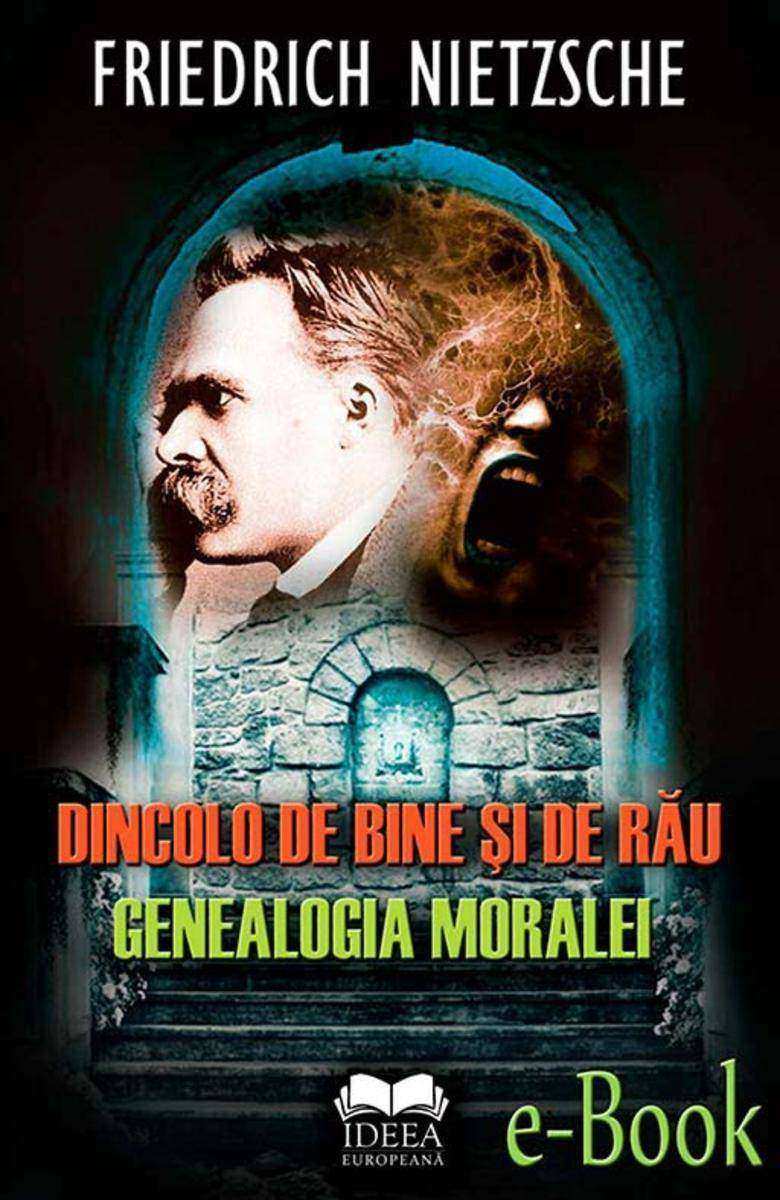
Dincolo de bine ?i de r?u. Genealogia moralei
¥98.02
Doamna Marusia CIRSTEA, doctor in stiinte istorice, a investigat, in baza cercetarii unei extrem de bogate bibliografii si a unor studii intense in arhivele diplomatice si militare interne (Arhiva Ministerului de Externe al Romaniei - Bucuresti, Arhivele Militare Nationale – Bucuresti si Pitesti, Arhivele Nationale ale Romaniei - Bucuresti, Biblioteca Nationala si Biblioteca Academiei Romane, ambele din Bucuresti), o problema de mare interes, abordata pana acum de numerosi istorici romani si straini (Paul D. Quinlan, Elisabeth Barker, V. F. Dobrinescu, Gh. Pascalau, Ion Patroiu s.a.). Tocmai de aceea, meritul autoarei este cu totul deosebit, intrucat, bazandu-se pe rezultatele cercetarilor anterioare, dar, aprofundandu-le si completandu-le substantial cu documente inedite, este in masura sa realizeze o contributie stiintifica de reala valoare pe marginea evolutiei raporturilor politico-diplomatice intre Romania si Marea Britanie intr-una din perioadele cele mai captivante si mai dificile ale epocii contemporane – ajunul conflagratiei mondiale din 1939-1945. Asa dupa cum se subliniaza in ampla Introducere, problema cercetata ?constituie o tema de studiu si de reflectie importanta, interesanta si plina de invataminte, nu numai pentru istoricul de astazi, dar si pentru omul simplu, pasionat de istorie si, indeosebi, pentru politicianul si diplomatul care trebuie sa gaseasca solutii practice unor aspecte interesand raporturile internationale“ (p. 3). Astfel, dupa o pertinenta si documentata Introducere, care elucideaza si aspectele istoriografice ale cercetarii, autoarea realizeaza o consistenta monografie privind relatiile dintre Bucuresti si Londra intre 1936 si 1939, in cuprinsul a patru capitole judicios repartizate pentru a se asigura tratarea globala si unitara a materiei. De un mare interes si cu o importanta pondere in economia lucrarii se dovedesc, nu mai putin, Concluziile (pp. 200-213), Bibliografia (pp. 214-232) si cele 25 de Anexe (pp. 233-350).Ultimele luni de pace si inceputul celui de-al doilea razboi mondial, evolutia raporturilor anglo-romane in context fac obiectul celui de-al IV-lea capitol. Principalele evenimente tratate sunt, in ordine cronologica, faimosul caz Tilea; garantiile franceze si britanice acordate Poloniei, Greciei si Romaniei; rostul pactului sovieto-german din 23 august 1939 in politica europeana; declansarea razboiului si atitudinea Romaniei si, in sfarsit, proclamarea neutralitatii Romaniei in razboi vizavi de implicarea Marii Britanii in ostilitati. Temeinicia cercetarii este atestata de o bogata si sistematica Bibliografíe, care, fara indoiala, intregeste, in chip fericit, textul lucrarii. In acelasi timp, Anexele ingaduie specialistului si cititorului interesat sa aprecieze amploarea si seriozitatea investigatiilor arhivistice.

Peisaje interioare
¥57.14
Volumul de fa?? reune?te portretele sclipitoare ale celor mai ilustre favorite. Apropiate puterii, exercit?ndu??i influen?a adesea ?ntr?o manier? clandestin?, ele alc?tuiesc un galant cortegiu de femei c?rora importan?i b?rba?i de stat le datoreaz? mult. Ce este o favorit?? Cuv?ntul, ne?ndoielnic originar din italian?, se refer? la o femeie care ?se bucur? de favorurile" unei persoane de rang foarte ?nalt. Spre deosebire de o amant?, favorita nu se mul?ume?te s? fie obiectul unei pasiuni amoroase, fie aceasta efemer? ori durabil?. Ea are putere, exercit? influen?? politic?, economic? sau artistic?; ob?ine rezultate, fericite sau dezastruoase. Fie c? e iubit? de popula?ie, tolerat? sau detestat?, nimic nu se face ?i nu se desface f?r? ea. Muzele prezentate de autor ?n acest periplu prin istoria Europei au jucat toate un rol propor?ional cu influen?a exercitat? asupra monarhului, prin?ului mo?tenitor, regelui sau ?mp?ratului l?ng? care s-au aflat, fie el c?s?torit, v?duv sau celibatar: Agnes Sorel, Diana de Poitiers, Gabrielle d’Estrées, Louise de La Valliere, marchiza de Montespan, doamna de Maintenon, surorile de Nesle, marchiza de Pompadour, doamna du Barry, Zoé du Cayla, Lol Montez, Miss Howard, Katia Dolgorukova, Blanche Delacroix, Magda Lupescu ?i Wallis Simpson. Optsprezece portrete de femei care au influen?at cursul istoriei. ?n bine ?i ?n r?u.?

Abaddon kapuja
¥73.49
ARCHITECTURE seems to me to be the most wonderful of all the arts. We may not love it as much as others, when we are young perhaps we cannot do so, because it is so great and so grand; but at any time of life one can see that in Architecture some of the most marvellous achievements of men are displayed. The principal reason for saying this is that Architecture is not an imitative art, like Painting and Sculpture. The first picture that was ever painted was a portrait or an imitation of something that the painter had seen. So in Sculpture, the first statue or bas-relief was an attempt to reproduce some being or object that the sculptor had seen, or to make a work which combined portions of several things that he had observed; but in Architecture this was not true. No temples or tombs or palaces existed until they had first taken form in the mind and imagination of the builders, and were created out of space and nothingness, so to speak. Thus Painting and Sculpture are imitative arts, but Architecture is a constructive art; and while one may love pictures or statues more than the work of the architect, it seems to me that one must wonder most at the last. We do not know how long the earth has existed, and in studying the most ancient times of which we have any accurate knowledge, we come upon facts which prove that men must have lived and died long before the dates of which we can speak exactly. The earliest nations of whose Architecture we can give an account are called heathen nations, and their art is called Ancient or Heathen Art, and this comes down to the time when the Roman Emperor Constantine was converted to Christianity, and changed the Roman Capitol from Rome to Constantinople in the year of our Lord 328. The buildings and the ruins which still remain from these ancient times are in Egypt, Assyria, Persia, Judea, Asia Minor, Greece, Etruria, and Rome. Many of these have been excavated or uncovered, as, during the ages that have passed since their erection, they had been buried away from sight by the accumulation of earth about them. These excavations are always going on in various countries, and men are ever striving to learn more about the wonders of ancient days; and we may hope that in the future as marvellous things may be revealed to us as have been shown in the past. EGYPT: As we consider the Architecture of Egypt, the Great Pyramid first attracts attention on account of its antiquity and its importance. This was built by Cheops, who is also called Suphis, about 3000 years before Christ. At that distant day the Egyptians seem to have been a nation of pyramid-builders, for even now, after all the years that have rolled between them and us, we know of more than sixty of these mysterious monuments which have been opened and explored. Of all these the three pyramids at Ghizeh are best known, and that of Cheops is the most remarkable among them. Those of you who have studied the history of the wars of Napoleon I. will remember that it was near this spot that he fought the so-called Battle of the Pyramids, and that in addressing his soldiers he reminded them that here the ages looked down upon them, thus referring to the many years during which this great pyramid had stood on the border of the desert, as if watching the flight of Time and calmly waiting to see what would happen on the final day of all earthly things. There have been much speculation and many opinions as to the use for which these pyramids were made, but the most general belief is that they were intended for the tombs of the powerful kings who reigned in Egypt and caused them to be built.The pyramid of Cheops was four hundred and eighty feet and nine inches high, and its base was seven hundred and sixty-four feet square. It is so difficult to understand. CLARA ERSKINE CLEMENTAUTHOR OF "HANDBOOK OF LEGENDARY AND MYTHOLOGICAL ART," "PAINTERS, SCULPTORS, ENGRAVERS, ARCHITECTS AND THEIR WORKS," "ARTISTS OF THE NINETEENTH CENTURY"
ДНК особистост?
¥33.03
Na prostorima nekada?nje Jugoslavije u posljednjih sto godina dogodile su se vi?estruke promjene, nastajale su? i nestajale dr?ave i politi?ki sistemi, doga?ali su se brojni ratovi i prevrati, povijest je nemilice mar?irala ulicama razdvajaju?i obitelji i tra?e?i od pojedinca da joj se povinuje ili suprotstavi. O jednoj takvoj povijesti pi?e Igor ?tiks? u svojoj kapitalnoj knjizi Dr?avljanin, gra?anin, stranac, neprijatelj. Nastala kao plod dugogodi?njeg bavljenja temama dr?avljanstva i gra?anstva na doktorskim? i postdoktorskim studijima, niza predavanja i referata te iznimnoga terenskog rada, ova knjiga kao nijedna do sada propituje pravo pojedinca i njegovu ulogu unutar dr?ave. ?tiks iz pojma dr?avljanina i gra?anina razvija i dokazuje tezu o mijenama politi?kih sistema i zajednica te koliko su i kako utjecali na poziciju i ?ivot pojedinca. Odgovara na pitanja ?to uop?e zna?i biti dr?avljanin, biti uklju?en ili pak isklju?en, kako se osje?ati u poziciji gra?anina i ?to se doga?a kada se ona mijenja u onu stranca ili pak neprijatelja. Knjiga Dr?avljanin, gra?anin, stranac, nepri?jatelj povijesna je, kulturolo?ka i sociolo?ka, ali prije svega politi?ka studija koja pokazuje koliko su krhki identiteti, kako se lako stvaraju i grade novi te koliko je pitanje dr?avljanstva i gra?anstva va?no i danas.
Кап?тал?зм ? свобода
¥28.61
Europa, 1900.–1914.: svijet u tra?enju, pulsiraju?e razdoblje kreativ?nosti i suprotnosti. Glavne su teme terorizam, globalizacija, imigranti, konzumerizam, propast moralnih vrijednosti i suparni?tvo velikih sila. Dvadeseto stolje?e nije se rodilo u rovovima kod Somme ili Passchendaela, nego u petnaest vrtoglavih godina koje su prethodile Prvome svjetskom ratu. U kratkom razdoblju novi svjetski poredak proiza?ao je iz tragi?nih suprotnosti staroga. Posljedice industrijske revolucije, na politi?kom i osobnom planu, osje?ale su se u cijelom svijetu: gradovi rastu zbog pristizanja seoskog stanovni?tva koje napu?ta svoje tradicionalne vrijednosti, znanost donosi napredak, ali i izume iz no?nih mora, obrazovanje je milijunima ljudi otvorilo nove mogu?nosti, masovno proizvedeni predmeti promijenili su svakodnevni ?ivot, radnici zahtijevaju udio u politi?koj vlasti, ?ene ?ele promijeniti svoj polo?aj u dru?tvu i prirodu seksualnih odnosa. Od nevjerojatne nade u novo stolje?e koju je utjelovio Svjetski sajam u Parizu 1900. do atentata na austrijskog nadvojvodu u Sarajevu 1914., povjesni?ar Philipp Blom ovo razdoblje istra?uje godinu po godinu. Premijeri i seljaci, anarhisti i glumice, znanstvenici i psihopati susre?u se na pozornici novoga stolje?a u ovom prikazu rasko?noga, nestabilnog doba na rubu katastrofe. Prelijepo napisana i puna vje?to ispri?anih anegdota, knjiga Vrtoglave godine o?ivljava ?udesa, u?ase i strahove ranoga dvadesetog stolje?a.
У л?с?-л?с? темному
¥24.93
The Interrelation Between Art Worlds is a part of PhD thesis and it deals with the simultaneous and successive art using the illustrations of Bhagavad Gita, in 18 chapters, where each chapter has two versions. The substance of the author's interest is a transfer of thoughts and feelings from the ancient Indian epic, through visual elements, that is, the visualization of temporal arts. She tried to explain the philosophy of Bhagavad Gita?through composition, color, contrast, third dimension, structure, texture, proportion, rhythm and dynamics, which is particular because in India philosophy equals religion, and vice versa. Described is also the analogy between temporal and spatial arts, such as color (valeur), music (chord). Through the synergy of meaning and radiation on the illustrations, we can achieve experience of "reading the image". ? Tatjana Burzanovi? is a writer, artist, graphics designer, and interior designer, professor at the Faculty of Culture and Tourism, where she teaches Indian culture, and Faculty of Design and Multimedia, at the University of Donja Gorica in Podgorica, Montenegro. She graduated from Academy of Fine Arts in Sarajevo, and acquired her PhD at Faculty of Art and Design at the University of Belgrade. She presented her works in numerous solo and group exhibitions, and took part in several artistic and pedagogical colonies. She received several awards for her book designs. The book The Interrelation Between Art Worlds?was awarded at 11th Book Fair in Podgorica for the best designed art book.
Джерело
¥34.83
Idu?i ?enskom stranom hrvatske knji?evnosti Lidija Duji? sla?e koncizan i zanimljiv pregled izabranog segmenta doma?e knji?evne povijesti. Ocrtava sociolo?ke krokije hrvatskih knji?evnica, iznosi kratke karakterizacije, uzgred problematiziraju?i ?enski geto didakti?ke i dje?je knji?evnosti. Analiziraju?i i ponovno vrednuju?i neka djela, prihva?ena pod etiketom ??enskog pisma“, autorica dovodi u pitanje mnoga op?a mjesta, ne ?tite?i se krinkom autoriteta znanstvene objektivnosti – pi?u?i u prvom licu. Knjiga se temelji na njezinoj doktorskoj disertaciji, ali je pisana popularno te je namijenjena ?iroj publici.

Just Still Breathing
¥39.14
This book is a collection of jokes, wonderfully illustrated by Mike Payne, the original creator of Tatty Teddy. Mike's unique view of the world is shown in a humorous manner, with more than forty hilarious cartoons. Cheeky (but never rude), this book is sure to bring a smile to your face.

A-Z of Atari Jaguar Games - Volume 1
¥19.52
The A-Z of Atari Jaguar Games: Volume 1 features reviews of three different games for each letter of the alphabet. The games range from the very earliest releases in 1993 to the modern homebrew games of today. This book shows you just how diverse the library of titles is for this highly collectable console and how it doesn't deserve the poor reputation that many people quote.

A-Z of Sega Saturn Games
¥19.52
The A-Z of Sega Saturn Games: Volume 1 features reviews of three different games for each letter of the alphabet. The games range from the very earliest releases in Europe to some really obscure Japanese imports. This book shows you just how diverse the library of titles is for the Sega Saturn and how it's become one of the most popular consoles to collect for in the modern era.

A-Z of Sega Game Gear Games
¥19.52
The A-Z of Sega Game Gear Games: Volume 1 features reviews of three different games for each letter of the alphabet. The games range from the very earliest releases at the end of the eighties to the modern homebrew games of today. This book shows you just how diverse the library of titles is for the Sega Game Gear and how it Sega on the path to handheld success.
У полум’?: 7 крок?в до найяскрав?шого життя
¥22.74
Aganetha Smart, a 104 éves egykori olimpikon futón? elfeledve él egy nyugdíjasotthonban. Gy?zelmével annak idején mindenkit leny?g?z?tt: a kanadai versenyz? abban az évben nyert aranyat, amikor el?sz?r szerepelhettek n?i atléták az olimpián. Sorsát azonban legalább ennyire meghatározták az els? világháború komor évei, valamint vágya, hogy szembeszálljon korának konvencióival. Egy napon két idegen keresi fel, akik dokumentumfilmet készítenek a régi id?k n?i sportolóiról. A múlt eseményeit megismerve lassan megértjük, miként segített az aranyérem Aganethának megszabadulni a titkokkal terhelt családi ház béklyóitól. ?m a hajdani bajnokn?nek még egy kihívással szembe kell néznie: a filmesek talán nem is azok, mint akiknek mutatják magukat… Carrie Snydert valós t?rténelmi helyzetek inspirálták, hogy megírja fordulatokban gazdag regényét, a becsvágy és a n?i emancipáció t?rténetét, amelyb?l kiderül, hogyan képes határait átlépve a saját életét élni egy n?.
Mashi, and Other Stories
¥18.74
L'art pour tous was written in the year 1862 by Stéphane Mallarmé. This book is one of the most popular novels of Stéphane Mallarmé, and has been translated into several other languages around the world.This book is published by Booklassic which brings young readers closer to classic literature globally.
Aesop Fables: {Illustrated}
¥24.44
This book, re-edited and illustrated by e-kitap projesi and published again in ebook format. In this book, telling that Boyhood stories of the Most famous persons in the world, and so These 21 famous persons lay out from Christopher Colombus –The pre-founder of the America- to Otto von Bismarc. For example: “When he was sixteen Napoleon and his best friend, a boy named Desmazis, were ordered to join the regiment of La Fère which was then quartered in the south of France. Napoleon was glad of this change which brought him nearer to his island home, and he also felt that he would now learn something of actual warfare. The two boys were taken to their regiment in charge of an officer who stayed with them from the time they left Paris until the carriage set them down at the garrison town. The regiment of La Fère was one of the best in the French army, and the boy immediately took a great liking to everything connected with it. He found the officers well educated and anxious to help him. He declared the blue uniform with red facings to be the most beautiful uniform in the world. He had to work hard, still studying mathematics, chemistry, and the laws of fortification, mounting guard with the other subalterns, and looking after his own company of men. He seemed very young to be put in charge of grown soldiers, but his great ability had brought about this extraordinarily rapid promotion. He had a room in a boarding-house kept by an old maid, but took his meals at the Inn of the Three Pigeons. Now that he was an officer he began to be more interested in making a good appearance before people. He took dancing lessons and suddenly blossomed out into much popularity among the garrison. Older people could not help but see his great strength of character, and time and again it was predicted that he would rise high in the army.”
The Arabian Nights: "The Orient Magic"
¥27.55
AUTHOR OF "POOR BOYS WHO BECAME FAMOUS," "GIRLS WHO BECAME FAMOUS," "STORIES FROM LIFE," "FAMOUS AMERICAN AUTHORS," "FAMOUS AMERICAN STATESMEN," "SOCIAL STUDIES IN?ENGLAND," "FROM HEART AND NATURE,"?"FAMOUS MEN OF SCIENCE," ETC. "Do not act as if you had ten thousand years to throw away. Death stands at your elbow. Be good for something while you live, and it is in your power." —Marcus Aurelius. "Every line, every road, every gable, every tower, has some story of the past present in it. Every tocsin that sounds is a chronicle; every bridge that unites the two banks of the river, unites also the crowds of the living with the heroism of the dead."The beauty of the past goes with you at every step in Florence. Buy eggs in the market, and you buy them where Donatello bought those which fell down in a broken heap before the wonder of the crucifix. Pause in a narrow by-street in a crowd, and it shall be that Borgo Allegri, which the people so baptized for love of the old painter and the new-born art. Stray into a great dark church at evening time, where peasants tell their beads in the vast marble silence, and you are where the whole city flocked, weeping, at midnight, to look their last upon the dead face of their Michael Angelo. Buy a knot of March anemones or April arum lilies, and you may bear them with you through the same city ward in which the child Ghirlandaio once played amidst the gold and silver garlands that his father fashioned for the young heads of the Renaissance. Ask for a shoemaker, and you shall find the cobbler sitting with his board in the same old twisting, shadowy street-way where the old man Toscanelli drew his charts that served a fair-haired sailor of Genoa, called Columbus." Florence, Shelley's "Smokeless City," was the ardently loved home of Michael Angelo. He was born March 6, 1475, or, according to some authorities, 1474, the Florentines reckoning time from the incarnation of Christ, instead of his birth. Lodovico Buonarotti, the father of Michael Angelo, had been appointed governor of Caprese and Chiusi, and had moved from Florence to the Castle of Caprese, where this boy, his second child, was born. The mother, Francesca, was, like her husband, of noble family, and but little more than half his age, being nineteen and he thirty-one. After two years they returned to Florence, leaving the child at Settignano, three miles from the city, on an estate of the Buonarottis'. He was intrusted to the care of a stone-mason's wife, as nurse. Living among the quarrymen and sculptors of this picturesque region, he began to draw as soon as he could use his hands. He took delight in the work of the masons, and they in turn loved the bright, active child. On the walls of the stone-mason's house he made charcoal sketches, which were doubtless praised by the foster-parents.
The Colonists
¥9.24
Leonardo Da Vinci, the many-sided genius of the Italian Renaissance, was born, as his name implies, at the little town of Vinci, which is about six miles from Empoli and twenty miles west of Florence. Vinci is still very inaccessible, and the only means of conveyance is the cart of a general carrier and postman, who sets out on his journey from Empoli at sunrise and sunset. Outside a house in the middle of the main street of Vinci to-day a modern and white-washed bust of the great artist is pointed to with much pride by the inhabitants. Leonardo's traditional birthplace on the outskirts of the town still exists, and serves now as the headquarters of a farmer and small wine exporter.Leonardo di Ser Piero d'Antonio di Ser Piero di Ser Guido da Vinci—for that was his full legal name—was the natural and first-born son of Ser Piero, a country notary, who, like his father, grandfather, and great-grandfather, followed that honourable vocation with distinction and success, and who subsequently—when Leonardo was a youth—was appointed notary to the Signoria of Florence. Leonardo's mother was one Caterina, who afterwards married Accabriga di Piero del Vaccha of Vinci. His BirthLeonardo Da Vinci, the many-sided genius of the Italian Renaissance, was born, as his name implies, at the little town of Vinci, which is about six miles from Empoli and twenty miles west of Florence. Vinci is still very inaccessible, and the only means of conveyance is the cart of a general carrier and postman, who sets out on his journey from Empoli at sunrise and sunset. Outside a house in the middle of the main street of Vinci to-day a modern and white-washed bust of the great artist is pointed to with much pride by the inhabitants. Leonardo's traditional birthplace on the outskirts of the town still exists, and serves now as the headquarters of a farmer and small wine exporter. His ArtLeonardo, whose birth antedates that of Michelangelo and Raphael by twenty three and thirty-one years respectively, was thus in the forefront of the Florentine Renaissance, his life coinciding almost exactly with the best period of Tuscan painting.Leonardo was the first to investigate scientifically and to apply to art the laws of light and shade, though the preliminary investigations of Piero della Francesca deserve to be recorded.He observed with strict accuracy the subtleties of chiaroscuro—light and shade apart from colour; but, as one critic has pointed out, his gift of chiaroscuro cost the colour-life of many a noble picture. Leonardo was "a tonist, not a colourist," before whom the whole book of nature lay open. His MindWe can readily believe the statements of Benvenuto Cellini, the sixteenth-century Goldsmith, that Francis I. "did not believe that any other man had come into the world who had attained so great a knowledge as Leonardo, and that not only as sculptor, painter, and architect, for beyond that he was a profound philosopher." Leonardo anticipated many eminent scientists and inventors in the methods of investigation which they adopted to solve the many problems with which their names are coupled. Among these may be cited Copernicus' theory of the earth's movement, Lamarck's classification of vertebrate and invertebrate animals, the laws of friction, the laws of combustion and respiration, the elevation of the continents, the laws of gravitation, the undulatory theory of light and heat, steam as a motive power in navigation, flying machines, the invention of the camera obscura, magnetic attraction, the use of the stone saw, the system of canalisation, breech loading cannon, the construction of fortifications, the circulation of the blood, the swimming belt, the wheelbarrow, the composition of explosives, the invention of paddle wheels, the smoke stack, the mincing machine! It is, therefore, easy to see why he called "Mechanics the Paradise of the Sciences."Leonardo was a SUPERMAN.
The Life and Adventures of Nicholas Nickleby
¥28.04
The Winter's Tale is a play by William Shakespeare, originally published in the First Folio of 1623. Although it was grouped among the comedies, some modern editors have relabelled the play as one of Shakespeare's late romances. Some critics consider it to be one of Shakespeare's "problem plays", because the first three acts are filled with intense psychological drama, while the last two acts are comedic and supply a happy ending. The play has been intermittently popular, revived in productions in various forms and adaptations by some of the leading theatre practitioners in Shakespearean performance history, beginning after a long interval with David Garrick in his adaptation called Florizel and Perdita (first performed in 1754 and published in 1756). The Winter's Tale was revived again in the 19th century, when the third "pastoral" act was widely popular. In the second half of the 20th century The Winter's Tale in its entirety, and drawn largely from the First Folio text, was often performed, with varying degrees of success. Short Summary of the Tale: John Fawcett as Autolycus in "The Winter's Tale" (1828) by Thomas Charles WagemanFollowing a brief setup scene the play begins with the appearance of two childhood friends: Leontes, King of Sicilia, and Polixenes, the King of Bohemia. Polixenes is visiting the kingdom of Sicilia, and is enjoying catching up with his old friend. However, after nine months, Polixenes yearns to return to his own kingdom to tend to affairs and see his son. Leontes desperately attempts to get Polixenes to stay longer, but is unsuccessful. Leontes then decides to send his wife, Queen Hermione, to try to convince Polixenes. Hermione agrees and with three short speeches is successful. Leontes is puzzled as to how Hermione convinced Polixenes so easily, and Leontes suddenly goes insane and suspects that his pregnant wife has been having an affair with Polixenes and that the child is a bastard. Leontes orders Camillo, a Sicilian Lord, to poison Polixenes. Camillo instead warns Polixenes and they both flee to Bohemia. Furious at their escape, Leontes now publicly accuses his wife of infidelity, and declares that the child she is bearing must be illegitimate. He throws her in prison, over the protests of his nobles, and sends two of his lords, Cleomenes and Dion, to the Oracle at Delphi for what he is sure will be confirmation of his suspicions. Meanwhile, the queen gives birth to a girl, and her loyal friend Paulina takes the baby to the king, in the hopes that the sight of the child will soften his heart. He grows angrier, however, and orders Paulina's husband, Lord Antigonus, to take the child and abandon it in a desolate place. Cleomenes and Dion return from Delphi with word from the Oracle and find Hermione publicly and humiliatingly put on trial before the king. She asserts her innocence, and asks for the word of the Oracle to be read before the court. The Oracle states categorically that Hermione and Polixenes are innocent, Camillo an honest man, and that Leontes will have no heir until his lost daughter is found. Leontes shuns the news, refusing to believe it as the truth. As this news is revealed, word comes that Leontes' son, Mamillius, has died of a wasting sickness brought on by the accusations against his mother. Hermione, meanwhile, falls in a swoon, and is carried away by Paulina, who subsequently reports the queen's death to her heartbroken and repentant husband. Leontes vows to spend the rest of his days atoning for the loss of his son and his queen.
Приют. Похитители костей (Prijut. Pohititeli kostej)
¥26.65
Йшов четвертий р?к св?тово? в?йни. Втомлений под?ями генерал-лейтенант рос?йсько? ?мператорсько? арм?? Павло Петрович Скоропадський, нащадок старовинно? старшинсько? фам?л??, ще не знав, що стане гетьманом незалежно? Укра?нсько? Держави.??Епоха зм?н, яку самовбивчо наближали революц?онери вс?х мастей, перетворилася на апокал?псис, в?йну вс?х проти вс?х, але Скоропадському стало духу взяти на себе невдячну ношу державного буд?вництва. Спроба зак?нчилася ц?лковитим ? оч?куваним провалом, але окрем? починання гетьмана дотривали до наших дн?в: саме йому Укра?на завдячу?, наприклад, Академ??ю наук.
The Eyes Have It
¥4.58
MODERN scientific publications, although they may in some or even many cases equal in their scientific quality the memoirs of earlier workers, do not, on the average, reach a high standard as regards illustration. For instance, in Great Britain botany is pre-eminent in its morphological aspects; it should therefore follow that the illustrations, which form so important a part of such papers, should be beyond reproach. This is not always so, a fact which must be patent to anyone with the slightest critical knowledge who looks through a typical journal. This is a fact much to be regretted, since many of the earlier scientists were accomplished draughtsmen and, indeed, often artists; in this connection the Hookers and Pro-fessor Daniel Oliver may be mentioned. The implication is not intended that there are no good amateur draughtsmen nowadays; there are, and in some cases pos-sessed of great ability. The beautiful work of Church in his Floral Mechanisms may be cited as an example. It may, of course, be argued that any picture which serves to illustrate the particu-lar feature is good enough; this is the contention of one who takes an insufficient pride in his work. A feature worthy of an illustration deserves the best the author can produce, more especially as a literary form is still, fortunately, preserved or, at any rate, aimed at.The reason for indifferent illustrations is primarily due to bad or mediocre draw-ings, or to their unsuitability for the kind of reproduction in view. With regard to the first point: this lack of draughtsmanship often obtains; when education entirely replaces mere instruction, it is to be hoped that all students of science will be trained in the rudiments of drawing. Meanwhile the difficulty can be partly overcome, as will be seen later on, by the simple means of drawing on an enlarged scale, in order that in reproduction reduction can be made. The second reason, the onus of which also falls on the authors, is a lack of knowledge regarding the kind of drawing suitable for the different modes of re-production; this is a very important point, for "technical conditions govern even genius itself."Authors, however, are not always to blame; it would appear that even editors sometimes are wanting in the requisite knowledge, for we have known straight-forward line drawings reproduced by half-tone; in other cases the paper used is unsuitable for the reproduction and, at other times, the printers are at fault. With a view to remedying, at any rate in part, these deficiencies, a course of lec-tures, arranged by the Board of Studies in Botany of the University of London, was delivered in the Lent term of 1913 in the Department of Botany of University College, London. In gratifying the wish expressed by some that these lectures should be given a more permanent dress, the author feels that some apology is necessary, for he can lay no claim to authoritative knowledge of much of the subject-matter; questions relating to the graphic arts and to illustrations, however, have always been of in-terest to him, so that he has tried various experiments, often with disastrous re-sults, and thus has gained some experience. In these matters the author has benefited much through his association with Pro-fessor F. W. Oliver, who, characteristically, has been ever ready to discuss these problems with, and to place his knowledge and experience at the disposal of the author.
The Last of the Mohicans
¥18.74
ROMANCE and the HISTORY of walled cities are inseparable. Who has not felt this to be so at the sight of hoary ruins lichen-clad and ivy-mantled, that proudly rear their battered crests despite the ravages of time and man’s destructive instincts. It is within walled cities that the life of civilized man began: the walls guarded him against barbarian foes, behind their shelter he found the security necessary to his cultural development, in their defence he showed his finest qualities. And such a city—and such a history is that of Ancient Byzantium, the City of Constantine, the Castle of C?sar. What wonder then that man should endeavour to express by pen and pencil his sense of the greatness and beauty, the Romance of a Walled City such as Constantinople. The more so that a movement is on foot to remove these ancient landmarks of the history of Europe and Asia. True there are other works on this same subject, works by men deeply learned in the history of this fair city, works that bid fair to outlive the city walls if the fell intent of destroying them is carried into execution, and from these men and their works I derived inspiration and information, and so wish to chronicle my gratitude to them—Sir Edwin Pears and Professor van Millingen of Robert College, Constantinople. There are many others too in Constantinople to whom my thanks are due—His Majesty’s Vice-Consul, my host, his colleagues, now my friends, and many others too numerous to mention. They all have helped me in this work, and I am grateful for the opportunity offered me of here recording my thankfulness for their kind offices.B. Granville Baker.


