


 购物车
购物车 个人中心
个人中心
Building Microservices with Spring
¥90.46
Learn and use the design patterns and best practices in Spring to solve common design problems and build user-friendly microservices Key Features *Study the benefits of using the right design pattern in your toolkit *Manage your code easily with Spring's dependency injection pattern *Explore the features of Docker and Mesos to build successful microservices Book Description Getting Started with Spring Microservices begins with an overview of the Spring Framework 5.0, its design patterns, and its guidelines that enable you to implement responsive microservices at scale. You will learn how to use GoF patterns in application design. You will understand the dependency injection pattern, which is the main principle behind the decoupling process of the Spring Framework and makes it easier to manage your code. Then, you will learn how to use proxy patterns in aspect-oriented programming and remoting. Moving on, you will understand the JDBC template patterns and their use in abstracting database access. After understanding the basics, you will move on to more advanced topics, such as reactive streams and concurrency. Written to the latest specifications of Spring that focuses on Reactive Programming, the Learning Path teaches you how to build modern, internet-scale Java applications in no time. Next, you will understand how Spring Boot is used to deploying serverless autonomous services by removing the need to have a heavyweight application server. You’ll also explore ways to deploy your microservices to Docker and managing them with Mesos. By the end of this Learning Path, you will have the clarity and confidence for implementing microservices using Spring Framework. This Learning Path includes content from the following Packt products: *Spring 5 Microservices by Rajesh R V *Spring 5 Design Patterns by Dinesh Rajput What you will learn *Develop applications using dependency injection patterns *Build web applications using traditional Spring MVC patterns *Utilize the reactive programming pattern to build reactive web apps *Learn concurrency and handle multiple connections inside a web server *Use Spring Boot and Spring Cloud to develop microservices *Leverage reactive programming to build cloud-native applications Who this book is for Getting Started with Spring Microservices is ideal for Spring developers who want to use design patterns to solve common design problems and build cloud-ready, Internet-scale applications, and simple RESTful services.
Modern C++: Efficient and Scalable Application Development
¥90.46
Create apps in C++ and leverage its latest features using modern programming techniques. Key Features *Develop strong C++ skills to build a variety of applications *Explore features of C++17, such as containers, algorithms, and threads *Grasp the standard support for threading and concurrency and use them in basic daily tasks Book Description C++ is one of the most widely used programming languages. It is fast, flexible, and used to solve many programming problems. This Learning Path gives you an in-depth and hands-on experience of working with C++, using the latest recipes and understanding most recent developments. You will explore C++ programming constructs by learning about language structures, functions, and classes, which will help you identify the execution flow through code. You will also understand the importance of the C++ standard library as well as memory allocation for writing better and faster programs. Modern C++: Efficient and Scalable Application Development deals with the challenges faced with advanced C++ programming. You will work through advanced topics such as multithreading, networking, concurrency, lambda expressions, and many more recipes. By the end of this Learning Path, you will have all the skills to become a master C++ programmer. This Learning Path includes content from the following Packt products: *Beginning C++ Programming by Richard Grimes *Modern C++ Programming Cookbook by Marius Bancila *The Modern C++ Challenge by Marius Bancila What you will learn *Become familiar with the structure of C++ projects *Identify the main structures in the language: functions and classes *Learn to debug your programs *Leverage C++ features to obtain increased robustness and performance *Explore functions and callable objects with a focus on modern features *Serialize and deserialize JSON and XML data *Create client-server applications that communicate over TCP/IP *Use design patterns to solve real-world problems Who this book is for This Learning Path is designed for developers who want to gain a solid foundation in C++. The desire to learn how to code in C++ is all you need to get started with this Learning Path
Hands-On System Programming with C++
¥90.46
A hands-on guide to making system programming with C++ easy Key Features *Write system-level code leveraging C++17 *Learn the internals of the Linux Application Binary Interface (ABI) and apply it to system programming *Explore C++ concurrency to take advantage of server-level constructs Book Description C++ is a general-purpose programming language with a bias toward system programming as it provides ready access to hardware-level resources, efficient compilation, and a versatile approach to higher-level abstractions. This book will help you understand the benefits of system programming with C++17. You will gain a firm understanding of various C, C++, and POSIX standards, as well as their respective system types for both C++ and POSIX. After a brief refresher on C++, Resource Acquisition Is Initialization (RAII), and the new C++ Guideline Support Library (GSL), you will learn to program Linux and Unix systems along with process management. As you progress through the chapters, you will become acquainted with C++'s support for IO. You will then study various memory management methods, including a chapter on allocators and how they benefit system programming. You will also explore how to program file input and output and learn about POSIX sockets. This book will help you get to grips with safely setting up a UDP and TCP server/client. Finally, you will be guided through Unix time interfaces, multithreading, and error handling with C++ exceptions. By the end of this book, you will be comfortable with using C++ to program high-quality systems. What you will learn *Understand the benefits of using C++ for system programming *Program Linux/Unix systems using C++ *Discover the advantages of Resource Acquisition Is Initialization (RAII) *Program both console and file input and output *Uncover the POSIX socket APIs and understand how to program them *Explore advanced system programming topics, such as C++ allocators *Use POSIX and C++ threads to program concurrent systems *Grasp how C++ can be used to create performant system applications Who this book is for If you are a fresh developer with intermediate knowledge of C++ but little or no knowledge of Unix and Linux system programming, this book will help you learn system programming with C++ in a practical way.
Blockchain Quick Start Guide
¥54.49
Learn quick and effective techniques to get up and running with building blockchain including Ethereum and Hyperledger Fabric. Key Features *Understand the key concepts of decentralized applications and consensus algorithms *Learn key concepts of Ethereum and Solidity programming *Practical guide to get started with build efficient Blockchain applications with Ethereum and Hyperledger Book Description Blockchain is a technology that powers the development of decentralized applications.This technology allows the construction of a network with no single control that enables participants to make contributions to and receive benefits from the network directly. This book will give you a thorough overview of blockchain and explain how a blockchain works.You will begin by going through various blockchain consensus mechanisms and cryptographic hash functions. You will then learn the fundamentals of programming in Solidity – the defacto language for developing decentralize, applications in Ethereum. After that, you will set up an Ethereum development environment and develop, package, build, and test campaign-decentralized applications.The book also shows you how to set up Hyperledger composer tools, analyze business scenarios, design business models, and write a chain code. Finally, you will get a glimpse of how blockchain is actually used in different real-world domains. By the end of this guide, you will be comfortable working with basic blockchain frameworks, and develop secure, decentralized applications in a hassle-free manner. What you will learn *Understand how blockchain hashing works *Write and test a smart contract using Solidity *Develop and test a decentralized application *Build and test your application using Hyperledger Fabric *Implement business network using Hyperledger Composer *Test and interact with business network applications Who this book is for The book is for developers, analysts, or anyone looking to learn about Blockchain in a quick and easy manner.
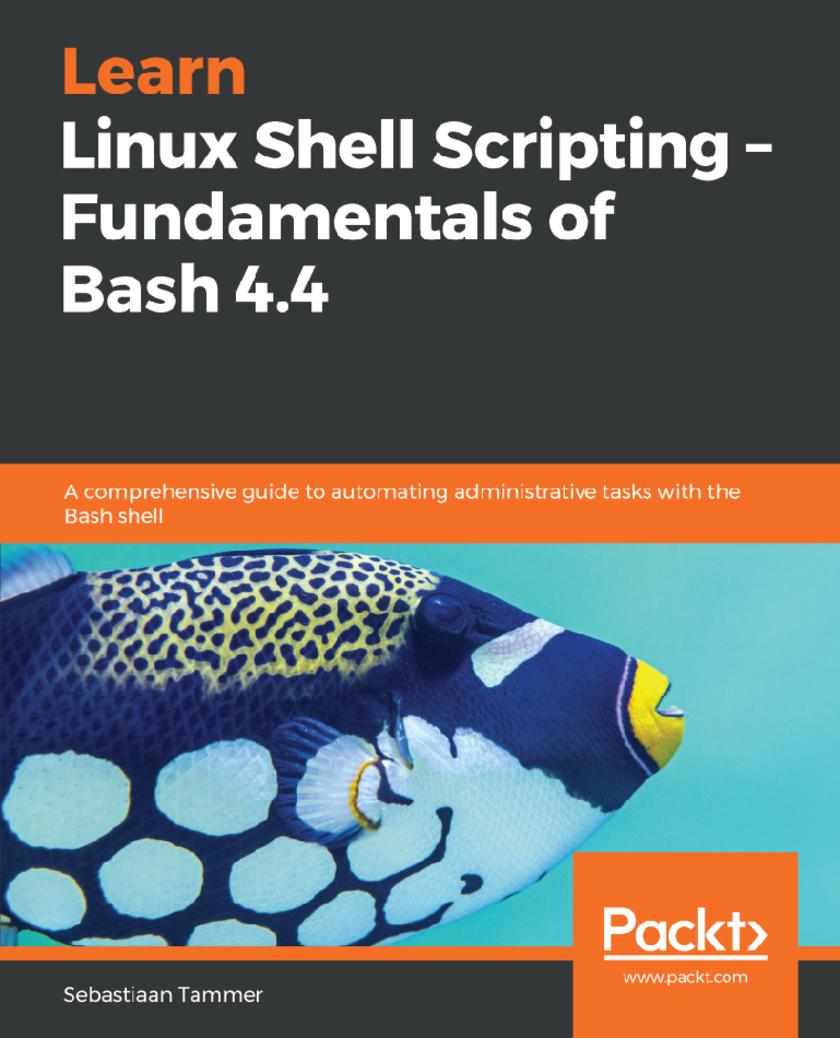
Learn Linux Shell Scripting – Fundamentals of Bash 4.4
¥71.93
Create and maintain powerful Bash scripts for automation and administration. Key Features *Get up and running with Linux shell scripting using real-world examples *Leverage command-line techniques and methodologies to automate common yet complex administration tasks *A practical guide with exposure to scripting constructs and common scripting patterns Book Description Shell scripts allow us to program commands in chains and have the system execute them as a scripted event, just like batch files. This book will start with an overview of Linux and Bash shell scripting, and then quickly deep dive into helping you set up your local environment, before introducing you to tools that are used to write shell scripts. The next set of chapters will focus on helping you understand Linux under the hood and what Bash provides the user. Soon, you will have embarked on your journey along the command line. You will now begin writing actual scripts instead of commands, and will be introduced to practical applications for scripts. The final set of chapters will deep dive into the more advanced topics in shell scripting. These advanced topics will take you from simple scripts to reusable, valuable programs that exist in the real world. The final chapter will leave you with some handy tips and tricks and, as regards the most frequently used commands, a cheat sheet containing the most interesting flags and options will also be provided. After completing this book, you should feel confident about starting your own shell scripting projects, no matter how simple or complex the task previously seemed. We aim to teach you how to script and what to consider, to complement the clear-cut patterns that you can use in your daily scripting challenges. What you will learn *Understand Linux and Bash basics as well as shell scripting fundamentals *Learn to write simple shell scripts that interact with Linux operating system *Build, maintain, and deploy scripts in a Linux environment *Learn best practices for writing shell scripts *Avoid common pitfalls associated with Bash scripting *Gain experience and the right toolset to write your own complex shell scripts Who this book is for This book targets new and existing Linux system administrators, Windows system administrators or developers who are interested in automating administrative tasks. No prior shell scripting experience is needed but in case you do this book will make a pro quickly. Readers should have a basic understanding of the command line.
Hands-On Full Stack Development with Go
¥73.02
Create a real-world application in Go and explore various frameworks and methodologies for full-stack development Key Features * Organize your isomorphic codebase to enhance the maintainability of your application * Build web APIs and middleware in the Go language by making use of the popular Gin framework * Implement real-time web application functionality with WebSockets Book Description The Go programming language has been rapidly adopted by developers for building web applications. With its impressive performance and ease of development, Go enjoys the support of a wide variety of open source frameworks, for building scalable and high-performant web services and apps. Hands-On Full Stack Development with Go is a comprehensive guide that covers all aspects of full stack development with Go. This clearly written, example-rich book begins with a practical exposure to Go development and moves on to build a frontend with the popular React framework. From there, you will build RESTful web APIs utilizing the Gin framework. After that, we will dive deeper into important software backend concepts, such as connecting to the database via an ORM, designing routes for your services, securing your services, and even charging credit cards via the popular Stripe API. We will also cover how to test, and benchmark your applications efficiently in a production environment. In the concluding chapters, we will cover isomorphic developments in pure Go by learning about GopherJS. As you progress through the book, you'll gradually build a musical instrument online store application from scratch. By the end of the book, you will be confident in taking on full stack web applications in Go. What you will learn * Understand Go programming by building a real-world application * Learn the React framework to develop a frontend for your application * Understand isomorphic web development utilizing the GopherJS framework * Explore methods to write RESTful web APIs in Go using the Gin framework * Learn practical topics such as ORM layers, secure communications, and Stripe's API * Learn methods to benchmark and test web APIs in Go Who this book is for Hands-On Full Stack Development with Go will appeal to developers who are looking to start building amazing full stack web applications in Go. Basic knowhow of Go language and JavaScript is expected. The book targets web developers who are looking to move to the Go language.
Hands-On Machine Learning with IBM Watson
¥73.02
Learn how to build complete machine learning systems with IBM Cloud and Watson Machine learning services Key Features * Implement data science and machine learning techniques to draw insights from real-world data * Understand what IBM Cloud platform can help you to implement cognitive insights within applications * Understand the role of data representation and feature extraction in any machine learning system Book Description IBM Cloud is a collection of cloud computing services for data analytics using machine learning and artificial intelligence (AI). This book is a complete guide to help you become well versed with machine learning on the IBM Cloud using Python. Hands-On Machine Learning with IBM Watson starts with supervised and unsupervised machine learning concepts, in addition to providing you with an overview of IBM Cloud and Watson Machine Learning. You'll gain insights into running various techniques, such as K-means clustering, K-nearest neighbor (KNN), and time series prediction in IBM Cloud with real-world examples. The book will then help you delve into creating a Spark pipeline in Watson Studio. You will also be guided through deep learning and neural network principles on the IBM Cloud using TensorFlow. With the help of NLP techniques, you can then brush up on building a chatbot. In later chapters, you will cover three powerful case studies, including the facial expression classification platform, the automated classification of lithofacies, and the multi-biometric identity authentication platform, helping you to become well versed with these methodologies. By the end of this book, you will be ready to build efficient machine learning solutions on the IBM Cloud and draw insights from the data at hand using real-world examples. What you will learn * Understand key characteristics of IBM machine learning services * Run supervised and unsupervised techniques in the cloud * Understand how to create a Spark pipeline in Watson Studio * Implement deep learning and neural networks on the IBM Cloud with TensorFlow * Create a complete, cloud-based facial expression classification solution * Use biometric traits to build a cloud-based human identification system Who this book is for This beginner-level book is for data scientists and machine learning engineers who want to get started with IBM Cloud and its machine learning services using practical examples. Basic knowledge of Python and some understanding of machine learning will be useful.
Mastering OpenCV 4 with Python
¥81.74
Create advanced applications with Python and OpenCV, exploring the potential of facial recognition, machine learning, deep learning, web computing and augmented reality. Key Features * Develop your computer vision skills by mastering algorithms in Open Source Computer Vision 4 (OpenCV 4)and Python * Apply machine learning and deep learning techniques with TensorFlow, Keras, and PyTorch * Discover the modern design patterns you should avoid when developing efficient computer vision applications Book Description OpenCV is considered to be one of the best open source computer vision and machine learning software libraries. It helps developers build complete projects in relation to image processing, motion detection, or image segmentation, among many others. OpenCV for Python enables you to run computer vision algorithms smoothly in real time, combining the best of the OpenCV C++ API and the Python language. In this book, you'll get started by setting up OpenCV and delving into the key concepts of computer vision. You'll then proceed to study more advanced concepts and discover the full potential of OpenCV. The book will also introduce you to the creation of advanced applications using Python and OpenCV, enabling you to develop applications that include facial recognition, target tracking, or augmented reality. Next, you'll learn machine learning techniques and concepts, understand how to apply them in real-world examples, and also explore their benefits, including real-time data production and faster data processing. You'll also discover how to translate the functionality provided by OpenCV into optimized application code projects using Python bindings. Toward the concluding chapters, you'll explore the application of artificial intelligence and deep learning techniques using the popular Python libraries TensorFlow, and Keras. By the end of this book, you'll be able to develop advanced computer vision applications to meet your customers' demands. What you will learn * Handle files and images, and explore various image processing techniques * Explore image transformations, including translation, resizing, and cropping * Gain insights into building histograms * Brush up on contour detection, filtering, and drawing * Work with Augmented Reality to build marker-based and markerless applications * Work with the main machine learning algorithms in OpenCV * Explore the deep learning Python libraries and OpenCV deep learning capabilities * Create computer vision and deep learning web applications Who this book is for This book is designed for computer vision developers, engineers, and researchers who want to develop modern computer vision applications. Basic experience of OpenCV and Python programming is a must.
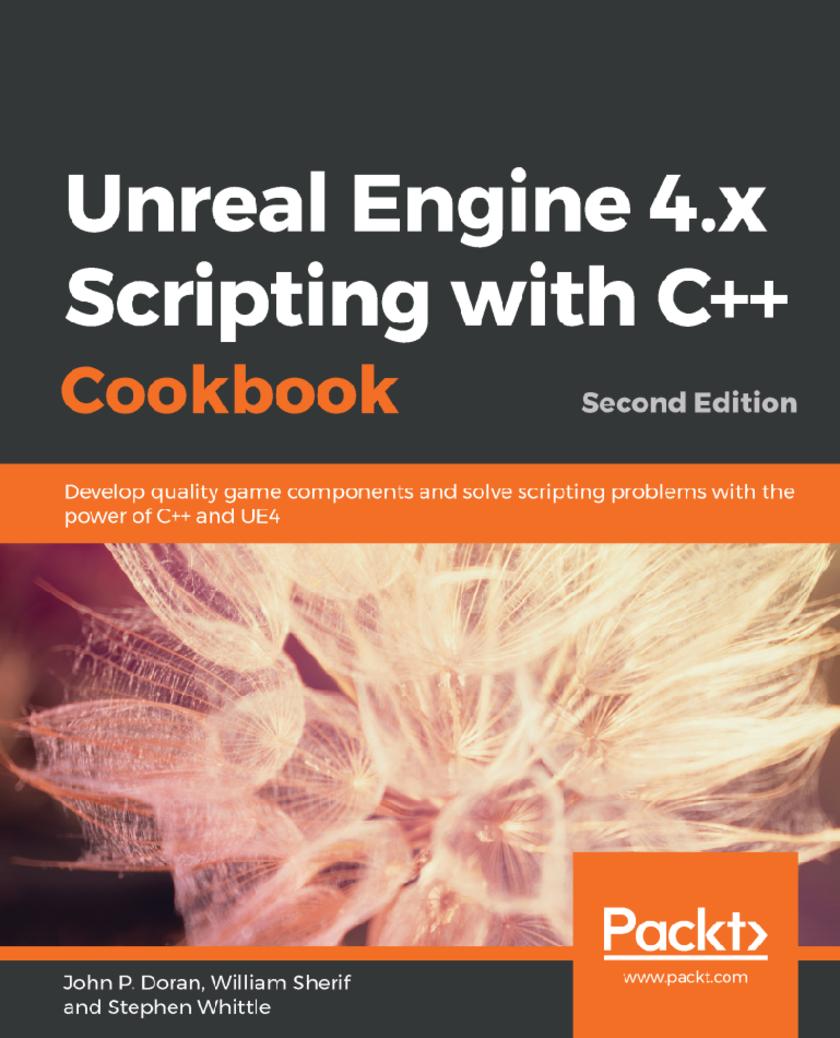
Unreal Engine 4.x Scripting with C++ Cookbook
¥73.02
Write efficient, reusable scripts to build custom characters, game environments, and control enemy AI Key Features * Build captivating multiplayer games using Unreal Engine and C++ * Incorporate existing C++ libraries into your game to add extra functionality such as hardware integration * Practical solutions for memory management, error handling, inputs, and collision for your game codebase Book Description Unreal Engine 4 (UE4) is a popular and award-winning game engine that powers some of the most popular games. A truly powerful tool for game development, there has never been a better time to use it for both commercial and independent projects. With more than 100 recipes, this book shows how to unleash the power of C++ while developing games with Unreal Engine. This book takes you on a journey to jumpstart your C++ and UE4 development skills. You will start off by setting up UE4 for C++ development and learn how to work with Visual Studio, a popular code editor. You will learn how to create C++ classes and structs the Unreal way. This will be followed by exploring memory management, smart pointers, and debugging your code. You will then learn how to make your own Actors and Components through code and how to handle input and collision events. You will also get exposure to many elements of game development including creating user interfaces, artificial intelligence, and writing code with networked play in mind. You will also learn how to add on to the Unreal Editor itself. With a range of task-oriented recipes, this book provides actionable information about writing code for games with UE4 using C++. By the end of the book, you will be empowered to become a top-notch developer with UE4 using C++ as your scripting language! What you will learn * Create C++ classes and structs that integrate well with UE4 and the Blueprints editor * Discover how to work with various APIs that Unreal Engine already contains * Utilize advanced concepts such as events, delegates, and interfaces in your UE4 projects * Build user interfaces using Canvas and UMG through C++ * Extend the Unreal Editor by creating custom windows and editors * Implement AI tasks and services using C++, Blackboard, and Behavior Trees * Write C++ code with networking in mind and replicate properties and functions Who this book is for If you are really passionate game developer looking for solutions to common scripting problems, then this is the book for you. Understanding of the fundamentals of game design and C++ is expected to get the most from this book.
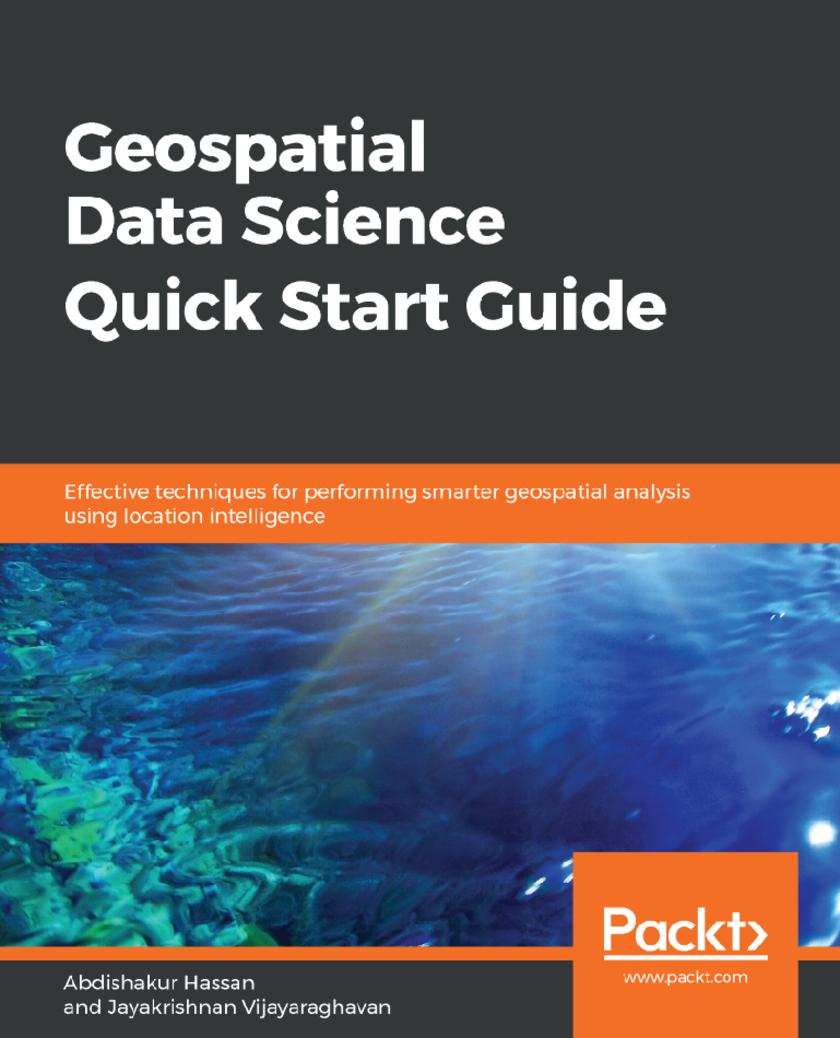
Geospatial Data Science Quick Start Guide
¥53.40
Discover the power of location data to build effective, intelligent data models with Geospatial ecosystems Key Features * Manipulate location-based data and create intelligent geospatial data models * Build effective location recommendation systems used by popular companies such as Uber * A hands-on guide to help you consume spatial data and parallelize GIS operations effectively Book Description Data scientists, who have access to vast data streams, are a bit myopic when it comes to intrinsic and extrinsic location-based data and are missing out on the intelligence it can provide to their models. This book demonstrates effective techniques for using the power of data science and geospatial intelligence to build effective, intelligent data models that make use of location-based data to give useful predictions and analyses. This book begins with a quick overview of the fundamentals of location-based data and how techniques such as Exploratory Data Analysis can be applied to it. We then delve into spatial operations such as computing distances, areas, extents, centroids, buffer polygons, intersecting geometries, geocoding, and more, which adds additional context to location data. Moving ahead, you will learn how to quickly build and deploy a geo-fencing system using Python. Lastly, you will learn how to leverage geospatial analysis techniques in popular recommendation systems such as collaborative filtering and location-based recommendations, and more. By the end of the book, you will be a rockstar when it comes to performing geospatial analysis with ease. What you will learn * Learn how companies now use location data * Set up your Python environment and install Python geospatial packages * Visualize spatial data as graphs * Extract geometry from spatial data * Perform spatial regression from scratch * Build web applications which dynamically references geospatial data Who this book is for Data Scientists who would like to leverage location-based data and want to use location-based intelligence in their data models will find this book useful. This book is also for GIS developers who wish to incorporate data analysis in their projects. Knowledge of Python programming and some basic understanding of data analysis are all you need to get the most out of this book.
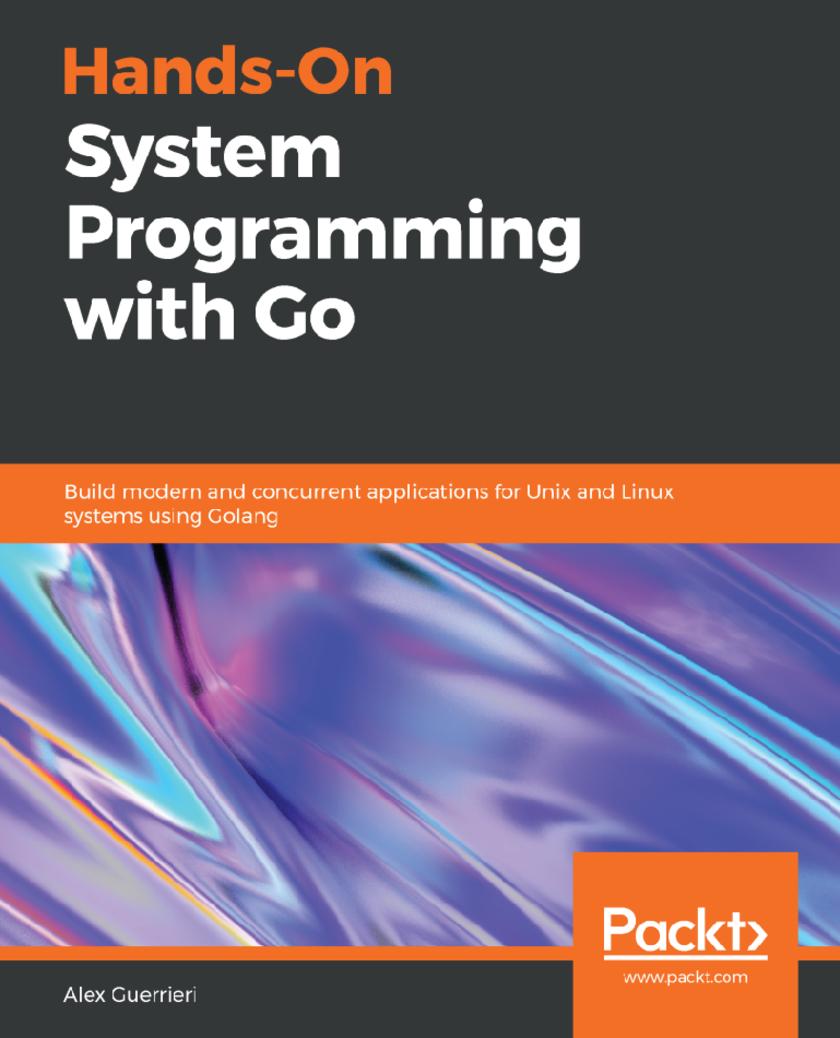
Hands-On System Programming with Go
¥70.84
Explore the fundamentals of systems programming starting from kernel API and filesystem to network programming and process communications Key Features * Learn how to write Unix and Linux system code in Golang v1.12 * Perform inter-process communication using pipes, message queues, shared memory, and semaphores * Explore modern Go features such as goroutines and channels that facilitate systems programming Book Description System software and applications were largely created using low-level languages such as C or C++. Go is a modern language that combines simplicity, concurrency, and performance, making it a good alternative for building system applications for Linux and macOS. This Go book introduces Unix and systems programming to help you understand the components the OS has to offer, ranging from the kernel API to the filesystem, and familiarize yourself with Go and its specifications. You'll also learn how to optimize input and output operations with files and streams of data, which are useful tools in building pseudo terminal applications. You'll gain insights into how processes communicate with each other, and learn about processes and daemon control using signals, pipes, and exit codes. This book will also enable you to understand how to use network communication using various protocols, including TCP and HTTP. As you advance, you'll focus on Go's best feature-concurrency helping you handle communication with channels and goroutines, other concurrency tools to synchronize shared resources, and the context package to write elegant applications. By the end of this book, you will have learned how to build concurrent system applications using Go What you will learn * Explore concepts of system programming using Go and concurrency * Gain insights into Golang's internals, memory models and allocation * Familiarize yourself with the filesystem and IO streams in general * Handle and control processes and daemons' lifetime via signals and pipes * Communicate with other applications effectively using a network * Use various encoding formats to serialize complex data structures * Become well-versed in concurrency with channels, goroutines, and sync * Use concurrency patterns to build robust and performant system applications Who this book is for If you are a developer who wants to learn system programming with Go, this book is for you. Although no knowledge of Unix and Linux system programming is necessary, intermediate knowledge of Go will help you understand the concepts covered in the book
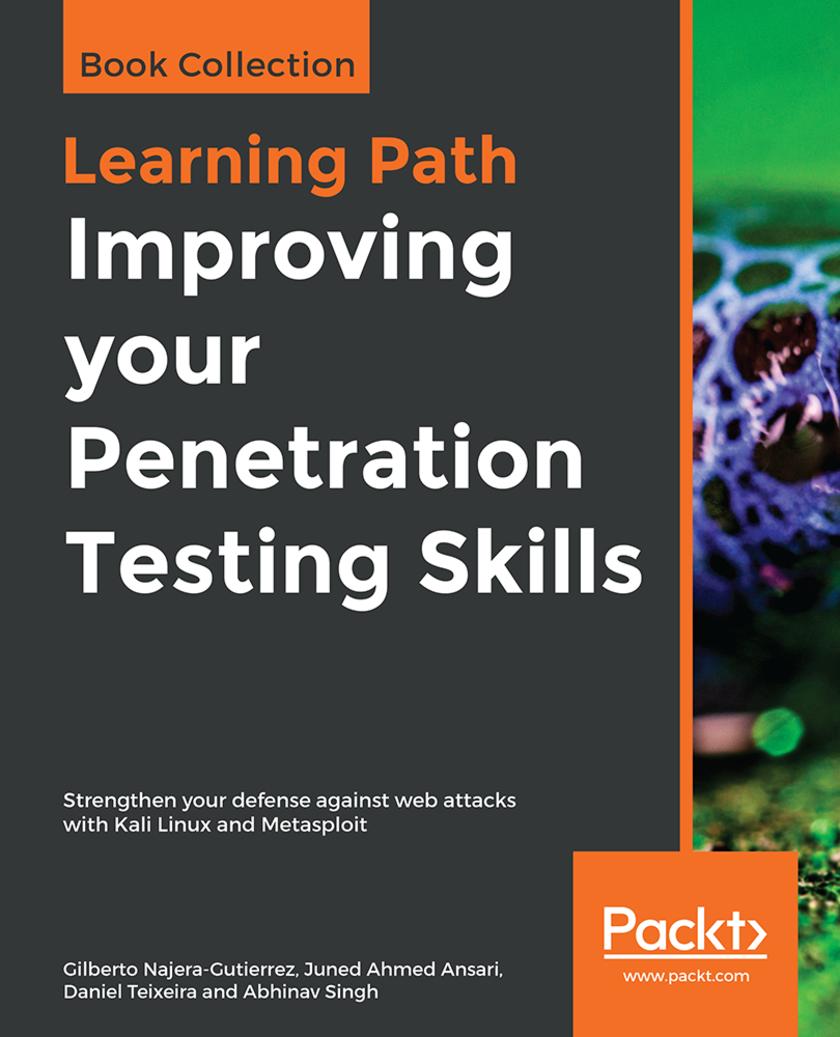
Improving your Penetration Testing Skills
¥88.28
Evade antiviruses and bypass firewalls with the most widely used penetration testing frameworks Key Features * Gain insights into the latest antivirus evasion techniques * Set up a complete pentesting environment using Metasploit and virtual machines * Discover a variety of tools and techniques that can be used with Kali Linux Book Description Penetration testing or ethical hacking is a legal and foolproof way to identify vulnerabilities in your system. With thorough penetration testing, you can secure your system against the majority of threats. This Learning Path starts with an in-depth explanation of what hacking and penetration testing is. You’ll gain a deep understanding of classical SQL and command injection flaws, and discover ways to exploit these flaws to secure your system. You'll also learn how to create and customize payloads to evade antivirus software and bypass an organization's defenses. Whether it’s exploiting server vulnerabilities and attacking client systems, or compromising mobile phones and installing backdoors, this Learning Path will guide you through all this and more to improve your defense against online attacks. By the end of this Learning Path, you'll have the knowledge and skills you need to invade a system and identify all its vulnerabilities. This Learning Path includes content from the following Packt products: * Web Penetration Testing with Kali Linux - Third Edition by Juned Ahmed Ansari and Gilberto Najera-Gutierrez * Metasploit Penetration Testing Cookbook - Third Edition by Abhinav Singh , Monika Agarwal, et al What you will learn * Build and analyze Metasploit modules in Ruby * Integrate Metasploit with other penetration testing tools * Use server-side attacks to detect vulnerabilities in web servers and their applications * Explore automated attacks such as fuzzing web applications * Identify the difference between hacking a web application and network hacking * Deploy Metasploit with the Penetration Testing Execution Standard (PTES) * Use MSFvenom to generate payloads and backdoor files, and create shellcode Who this book is for This Learning Path is designed for security professionals, web programmers, and pentesters who want to learn vulnerability exploitation and make the most of the Metasploit framework. Some understanding of penetration testing and Metasploit is required, but basic system administration skills and the ability to read code are a must.

Blockchain for Decision Makers
¥63.21
Understand how blockchain works and explore a variety of strategies to implement it in your organization effectively Key Features * Become familiar with business challenges faced by companies when using blockchain * Discover how companies implement blockchain to monetize and secure their data * Study real-world examples to understand blockchain and its use in organizations Book Description In addition to cryptocurrencies, blockchain-based apps are being developed in different industries such as banking, supply chain, and healthcare to achieve digital transformation and enhance user experience. Blockchain is not only about Bitcoin or cryptocurrencies, but also about different technologies such as peer-to-peer networks, consensus mechanisms, and cryptography. These technologies together help sustain trustless environments in which digital value can be transferred between individuals without intermediaries. This book will help you understand the basics of blockchain such as consensus protocols, decentralized applications, and tokenization. You'll focus on how blockchain is used today in different industries and the technological challenges faced while implementing a blockchain strategy. The book also enables you, as a decision maker, to understand blockchain from a technical perspective and evaluate its applicability in your business. Finally, you'll get to grips with blockchain frameworks such as Hyperledger and Quorum and their usability. By the end of this book, you'll have learned about the current use cases of blockchain and be able to implement a blockchain strategy on your own. What you will learn * Become well-versed with how blockchain works * Understand the difference between blockchain and Bitcoin * Learn how blockchain is being used in different industry verticals such as finance and retail * Delve into the technological and organizational challenges of implementing blockchain * Explore the possibilities that blockchain can unlock for decision makers * Choose a blockchain framework best suited for your projects from options such as Ethereum and Hyperledger Fabric Who this book is for This book is for CXOs, business professionals, organization leaders, decision makers, technology enthusiasts, and managers who wish to understand how blockchain is implemented in different organizations, its impact, and how it can be customized according to business needs. Prior experience with blockchain is not required.
Refactoring TypeScript
¥54.49
Discover various techniques to develop maintainable code and keep it in shape. Key Features * Learn all about refactoring - why it is important and how to do it * Discover easy ways to refactor code with examples * Explore techniques that can be applied to most other programming languages Book Description Refactoring improves your code without changing its behavior. With refactoring, the best approach is to apply small targeted changes to a codebase. Instead of doing a huge sweeping change to your code, refactoring is better as a long-term and continuous enterprise. Refactoring TypeScript explains how to spot bugs and remove them from your code. You’ll start by seeing how wordy conditionals, methods, and null checks make code unhealthy and unstable. Whether it is identifying messy nested conditionals or removing unnecessary methods, this book will show various techniques to avoid these pitfalls and write code that is easier to understand, maintain, and test. By the end of the book, you’ll have learned some of the main causes of unhealthy code, tips to identify them and techniques to address them. What you will learn * Spot and fix common code smells to create code that is easier to read and understand * Discover ways to identify long methods and refactor them * Create objects that keep your code flexible, maintainable, and testable * Apply the Single Responsibility Principle to develop less-coupled code * Discover how to combine different refactoring techniques * Learn ways to solve the issues caused by overusing primitives Who this book is for This book is designed for programmers who are looking to explore various refactoring techniques to develop healthy and maintainable code. Some experience in JavaScript and TypeScript can help you easily grasp the concepts explained in this book.
Microsoft Azure Administrator – Exam Guide AZ-103
¥70.84
Manage Microsoft Azure cloud services that span storage, security, networking, and compute cloud capabilities and ace the AZ-103 Exam Key Features * Master features and concepts pertaining to Azure's Administration services * Gain a deep understanding of various Azure services related to infrastructure, applications, and environments * Gauge yourself by giving mock tests with up-to-date exam questions Book Description Microsoft Azure Administrator – Exam Guide AZ-103 will cover all the exam objectives that will help you earn Microsoft Azure Administrator certification. Whether you want to clear AZ-103 exam or want hands-on experience in administering Azure, this study guide will help you achieve your objective. It covers the latest features and capabilities around configuring, managing, and securing Azure resources. Following Microsoft's AZ-103 exam syllabus, this guide is divided into five modules. The first module talks about how to manage Azure subscriptions and resources. You will be able to configure Azure subscription policies at Azure subscription level and learn how to use Azure policies for resource groups. Later, the book covers techniques related to implementing and managing storage in Azure. You will be able to create and configure backup policies and perform restore operations. The next module will guide you to create, configure, and deploy virtual machines for Windows and Linux. In the last two modules, you will learn about configuring and managing virtual networks and managing identities. The book concludes with effective mock tests along with answers so that you can confidently crack this exam. By the end of this book, you will acquire the skills needed to pass Exam AZ-103. What you will learn * Configure Azure subscription policies and manage resource groups * Monitor activity log by using Log Analytics * Modify and deploy Azure Resource Manager (ARM) templates * Protect your data with Azure Site Recovery * Learn how to manage identities in Azure * Monitor and troubleshoot virtual network connectivity * Manage Azure Active Directory Connect, password sync, and password writeback Who this book is for This book is for Azure administrators, systems administrators or anyone preparing for AZ 103 exam and wants to master Azure's various administration features. Readers should have proficiency in working with PowerShell, CLI and other day-to-day Azure administration tasks.
Hands-On Infrastructure Monitoring with Prometheus
¥62.12
Build Prometheus ecosystems with metric-centric visualization, alerting, and querying Key Features * Integrate Prometheus with Alertmanager and Grafana for building a complete monitoring system * Explore PromQL, Prometheus' functional query language, with easy-to-follow examples * Learn how to deploy Prometheus components using Kubernetes and traditional instances Book Description Prometheus is an open source monitoring system. It provides a modern time series database, a robust query language, several metric visualization possibilities, and a reliable alerting solution for traditional and cloud-native infrastructure. This book covers the fundamental concepts of monitoring and explores Prometheus architecture, its data model, and how metric aggregation works. Multiple test environments are included to help explore different configuration scenarios, such as the use of various exporters and integrations. You’ll delve into PromQL, supported by several examples, and then apply that knowledge to alerting and recording rules, as well as how to test them. After that, alert routing with Alertmanager and creating visualizations with Grafana is thoroughly covered. In addition, this book covers several service discovery mechanisms and even provides an example of how to create your own. Finally, you’ll learn about Prometheus federation, cross-sharding aggregation, and also long-term storage with the help of Thanos. By the end of this book, you’ll be able to implement and scale Prometheus as a full monitoring system on-premises, in cloud environments, in standalone instances, or using container orchestration with Kubernetes. What you will learn * Grasp monitoring fundamentals and implement them using Prometheus * Discover how to extract metrics from common infrastructure services * Find out how to take full advantage of PromQL * Design a highly available, resilient, and scalable Prometheus stack * Explore the power of Kubernetes Prometheus Operator * Understand concepts such as federation and cross-shard aggregation * Unlock seamless global views and long-term retention in cloud-native apps with Thanos Who this book is for If you’re a software developer, cloud administrator, site reliability engineer, DevOps enthusiast or system admin looking to set up a fail-safe monitoring and alerting system for sustaining infrastructure security and performance, this book is for you. Basic networking and infrastructure monitoring knowledge will help you understand the concepts covered in this book.
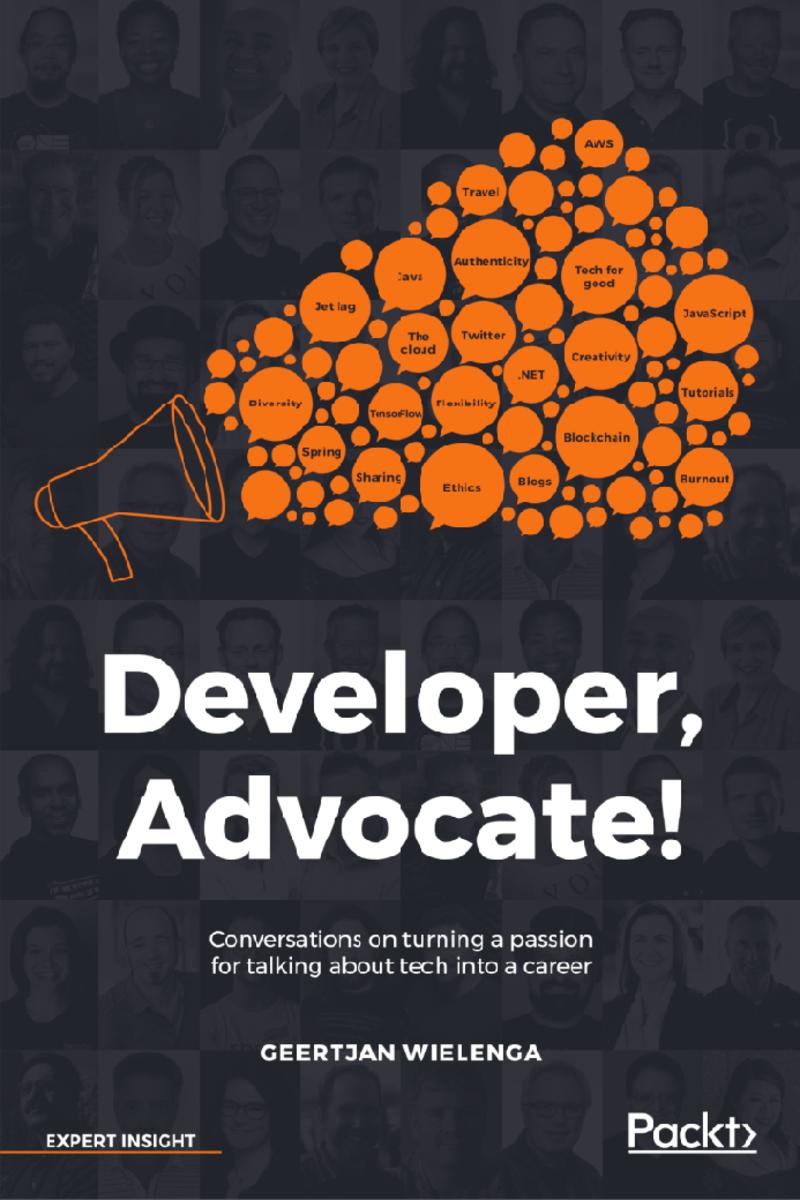
Developer, Advocate!
¥71.93
A collection of in-depth conversations with leading developer advocates that reveal the world of developer relations today Key Features * Top developer advocates reveal the work they’re doing at the center of their tech communities and the impact their advocacy is having on the tech industry as a whole * Discover the best practices of developer advocacy and get the inside story on working at some of the world’s largest tech companies * Features contributions from noted developer advocates, including Scott Hanselman, Sally Eaves, Venkat Subramaniam, Jono Bacon, Ted Neward, and more Book Description What exactly is a developer advocate, and how do they connect developers and companies around the world? Why is the area of developer relations set to explode? Can anybody with a passion for tech become a developer advocate? What are the keys to success on a global scale? How does a developer advocate maintain authenticity when balancing the needs of their company and their tech community? What are the hot topics in areas including Java, JavaScript, "tech for good," artificial intelligence, blockchain, the cloud, and open source? These are just a few of the questions addressed by developer advocate and author Geertjan Wielenga in Developer, Advocate!. 32 of the industry's most prominent developer advocates, from companies including Oracle, Microsoft, Google, and Amazon, open up about what it's like to turn a lifelong passion for knowledge sharing about tech into a rewarding career. These advocates run the gamut from working at large software vendors to small start-ups, along with independent developer advocates who work within organizations or for themselves. In Developer, Advocate!, readers will see how developer advocates are actively changing the world, not only for developers, but for individuals and companies navigating the fast-changing tech landscape. More importantly, Developer, Advocate! serves as a rallying cry to inspire and motivate tech enthusiasts and burgeoning developer advocates to get started and take their first steps within their tech community. What you will learn * Discover how developer advocates are putting developer interests at the heart of the software industry in companies including Microsoft and Google * Gain the confidence to use your voice in the tech community * Immerse yourself in developer advocacy techniques * Understand and overcome the challenges and obstacles facing developer advocates today * Hear predictions from the people at the cutting edge of tech * Explore your career options in developer advocacy Who this book is for Anybody interested in developer advocacy, the impact it is having, and how to build developer advocacy capabilities
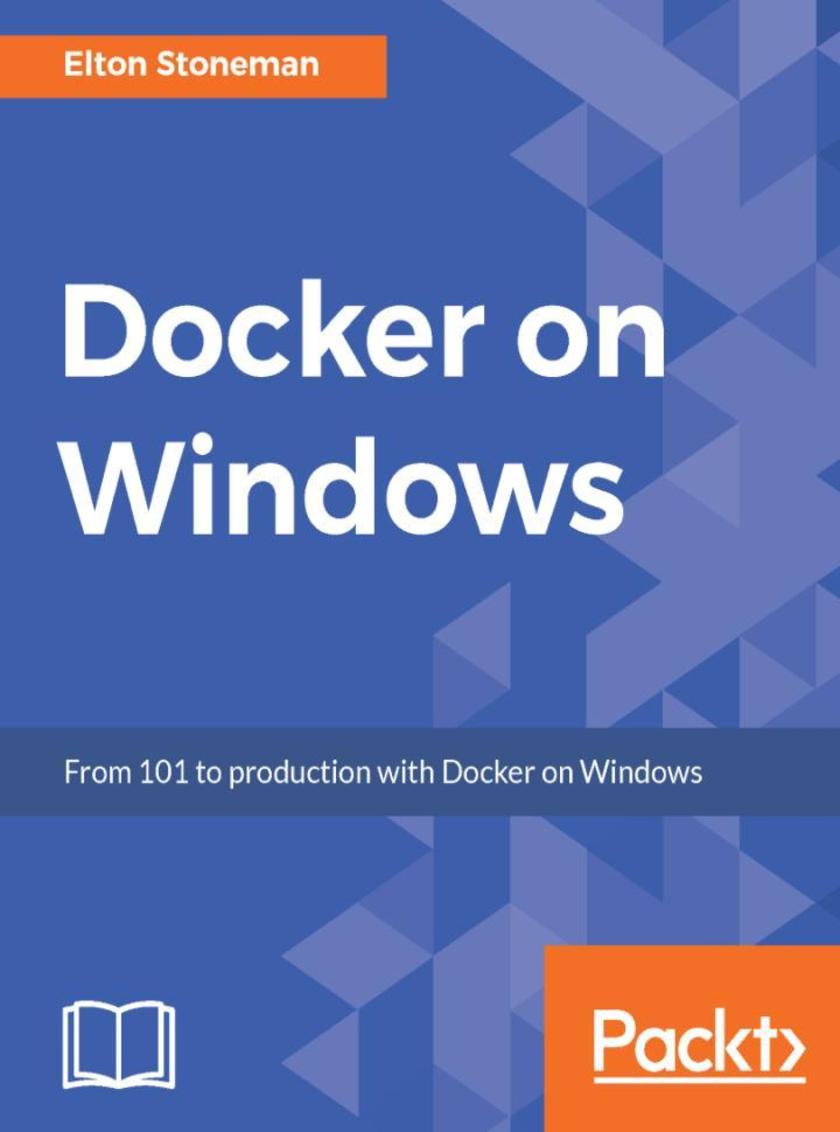
Docker on Windows
¥90.46
Learn how to run new and old Windows applications in Docker containers. About This Book ? Package traditional .NET Frameworks apps and new .NET Core apps as Docker images, and run them in containers for increased efficiency, portability, and security ? Design and implement distributed applications that run across connected containers, using enterprise-grade open source software from public Docker images ? Build a full Continuous Deployment pipeline for a .NET Framework application, and deploy it to a highly-available Docker swarm running in the cloud Who This Book Is For If you want to modernize an old monolithic application without rewriting it, smooth the deployment to production, or move to DevOps or the cloud, then Docker is the enabler for you. This book gives you a solid grounding in Docker so you can confidently approach all of these scenarios. What You Will Learn ? Comprehend key Docker concepts: images, containers, registries, and swarms ? Run Docker on Windows 10, Windows Server 2016, and in the cloud ? Deploy and monitor distributed solutions across multiple Docker containers ? Run containers with high availability and fail-over with Docker Swarm ? Master security in-depth with the Docker platform, making your apps more secure ? Build a Continuous Deployment pipeline by running Jenkins in Docker ? Debug applications running in Docker containers using Visual Studio ? Plan the adoption of Docker in your own organization In Detail Docker is a platform for running server applications in lightweight units called containers. You can run Docker on Windows Server 2016 and Windows 10, and run your existing apps in containers to get significant improvements in efficiency, security, and portability. This book teaches you all you need to know about Docker on Windows, from 101 to deploying highly-available workloads in production. This book takes you on a Docker journey, starting with the key concepts and simple examples of how to run .NET Framework and .NET Core apps in Windows Docker containers. Then it moves on to more complex examples—using Docker to modernize the architecture and development of traditional ASP.NET and SQL Server apps. The examples show you how to break up monoliths into distributed apps and deploy them to a clustered environment in the cloud, using the exact same artifacts you use to run them locally. To help you move confidently to production, it then explains Docker security, and the management and support options. The book finishes with guidance on getting started with Docker in your own projects, together with some real-world case studies for Docker implementations, from small-scale on-premises apps to very large-scale apps running on Azure. Style and approach Using a step-by-step approach, this book shows you how to use Docker on Windows. It includes practical examples and real-world technical and business scenarios that will help you effectively implement Docker in your environment.There are over 50 examples of Dockerized applications, using C# .NET projects as the source and packaging them into Docker images.
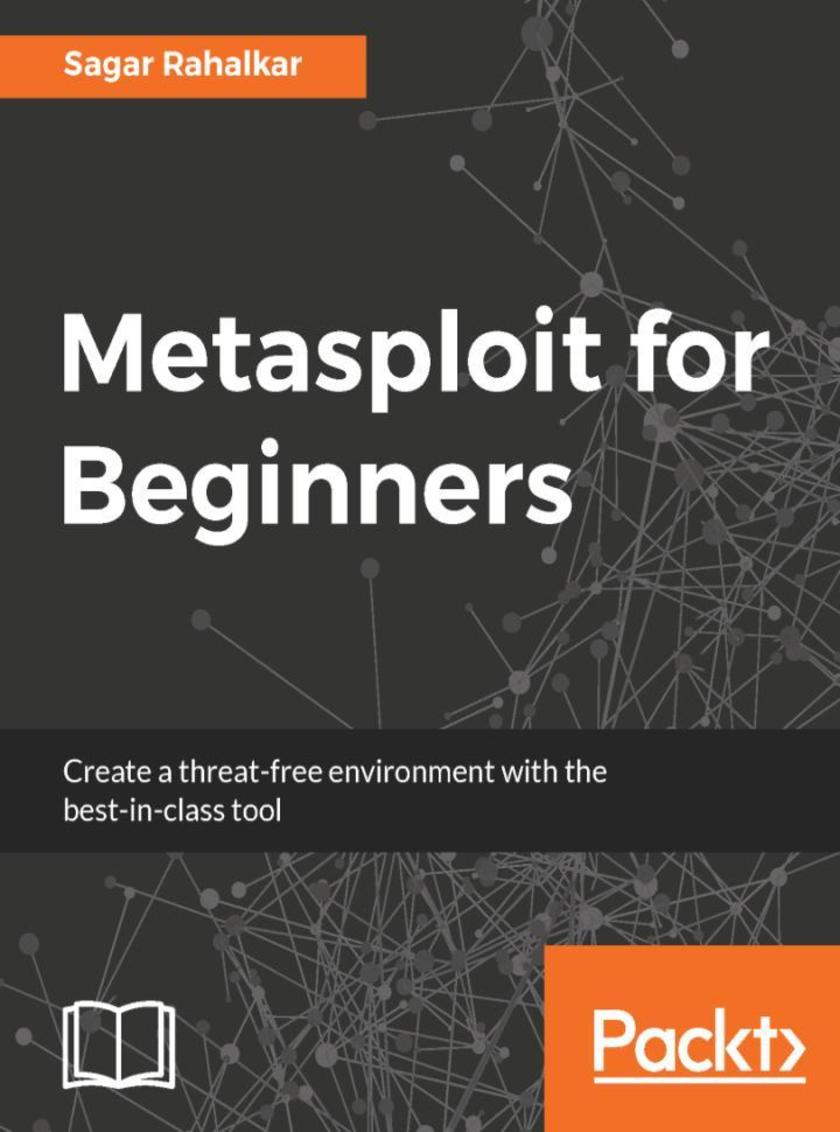
Metasploit for Beginners
¥63.21
An easy to digest practical guide to Metasploit covering all aspects of the framework from installation, configuration, and vulnerability hunting to advanced client side attacks and anti-forensics. About This Book ? Carry out penetration testing in highly-secured environments with Metasploit ? Learn to bypass different defenses to gain access into different systems. ? A step-by-step guide that will quickly enhance your penetration testing skills. Who This Book Is For If you are a penetration tester, ethical hacker, or security consultant who wants to quickly learn the Metasploit framework to carry out elementary penetration testing in highly secured environments then, this book is for you. What You Will Learn ? Get to know the absolute basics of the Metasploit framework so you have a strong foundation for advanced attacks ? Integrate and use various supporting tools to make Metasploit even more powerful and precise ? Set up the Metasploit environment along with your own virtual testing lab ? Use Metasploit for information gathering and enumeration before planning the blueprint for the attack on the target system ? Get your hands dirty by firing up Metasploit in your own virtual lab and hunt down real vulnerabilities ? Discover the clever features of the Metasploit framework for launching sophisticated and deceptive client-side attacks that bypass the perimeter security ? Leverage Metasploit capabilities to perform Web application security scanning In Detail This book will begin by introducing you to Metasploit and its functionality. Next, you will learn how to set up and configure Metasploit on various platforms to create a virtual test environment. You will also get your hands on various tools and components used by Metasploit. Further on in the book, you will learn how to find weaknesses in the target system and hunt for vulnerabilities using Metasploit and its supporting tools. Next, you'll get hands-on experience carrying out client-side attacks. Moving on, you'll learn about web application security scanning and bypassing anti-virus and clearing traces on the target system post compromise. This book will also keep you updated with the latest security techniques and methods that can be directly applied to scan, test, hack, and secure networks and systems with Metasploit. By the end of this book, you'll get the hang of bypassing different defenses, after which you'll learn how hackers use the network to gain access into different systems. Style and approach This tutorial is packed with step-by-step instructions that are useful for those getting started with Metasploit. This is an easy-to-read guide to learning Metasploit from scratch that explains simply and clearly all you need to know to use this essential IT power tool.
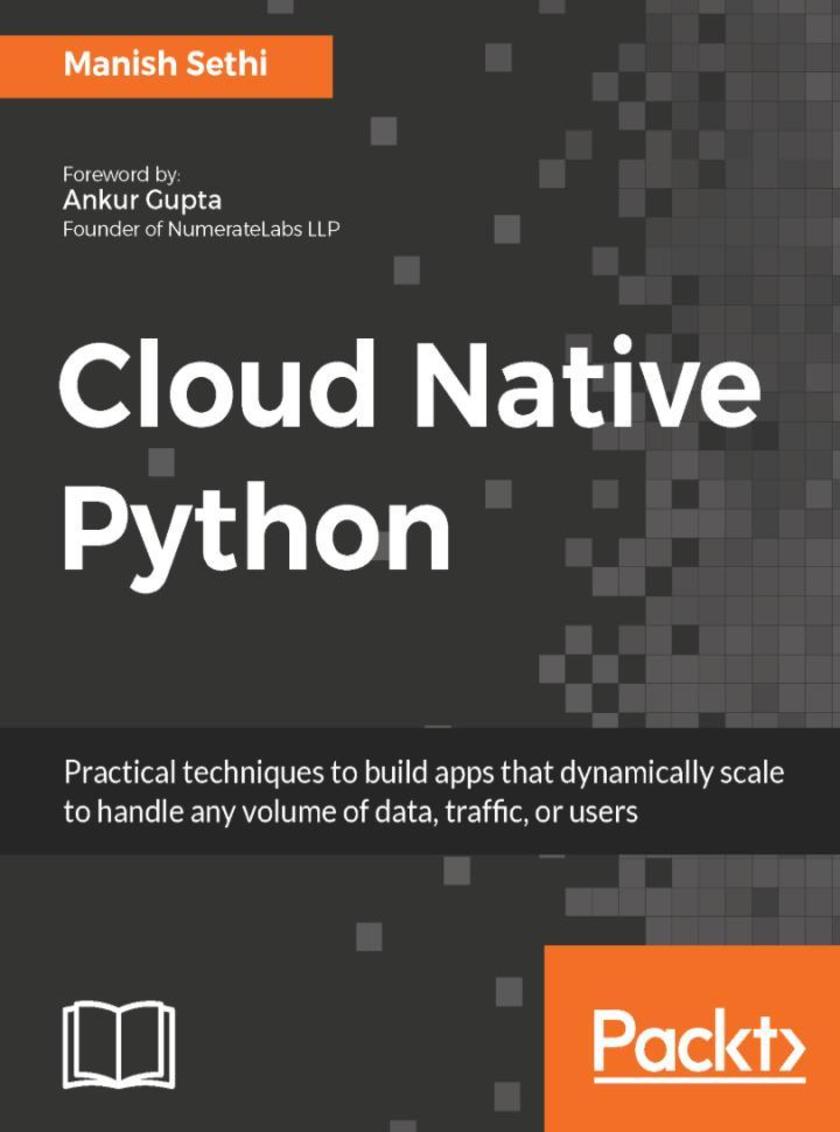
Cloud Native Python
¥90.46
Build cloud native applications in Python About This Book ? This is the only reliable resource that showcases the tools and techniques you need build robust and resilient cloud native applications in Python ? Learn how to architect your application on both, the AWS and Azure clouds for high availability ? Assess, monitor, and troubleshoot your applications in the cloud Who This Book Is For This book is ideal for developers with a basic knowledge of Python who want to learn to build, test, and scale their Python-based applications. No prior experience of writing microservices in Python is required. What You Will Learn ? Get to know “the way of the cloud”, including why developing good cloud software is fundamentally about mindset and discipline ? Know what microservices are and how to design them ? Create reactive applications in the cloud with third-party messaging providers ? Build massive-scale, user-friendly GUIs with React and Flux ? Secure cloud-based web applications: the do’s, don’ts, and options ? Plan cloud apps that support continuous delivery and deployment In Detail Businesses today are evolving so rapidly that having their own infrastructure to support their expansion is not feasible. As a result, they have been resorting to the elasticity of the cloud to provide a platform to build and deploy their highly scalable applications. This book will be the one stop for you to learn all about building cloud-native architectures in Python. It will begin by introducing you to cloud-native architecture and will help break it down for you. Then you’ll learn how to build microservices in Python using REST APIs in an event driven approach and you will build the web layer. Next, you’ll learn about Interacting data services and building Web views with React, after which we will take a detailed look at application security and performance. Then, you’ll also learn how to Dockerize your services. And finally, you’ll learn how to deploy the application on the AWS and Azure platforms. We will end the book by discussing some concepts and techniques around troubleshooting problems that might occur with your applications after you’ve deployed them. This book will teach you how to craft applications that are built as small standard units, using all the proven best practices and avoiding the usual traps. It's a practical book: we're going to build everything using Python 3 and its amazing tooling ecosystem. The book will take you on a journey, the destination of which, is the creation of a complete Python application based on microservices over the cloud platform Style and approach Filled with examples, this book takes a step-by-step approach to teach you each and every configuration you need to make your application highly available and fault tolerant.
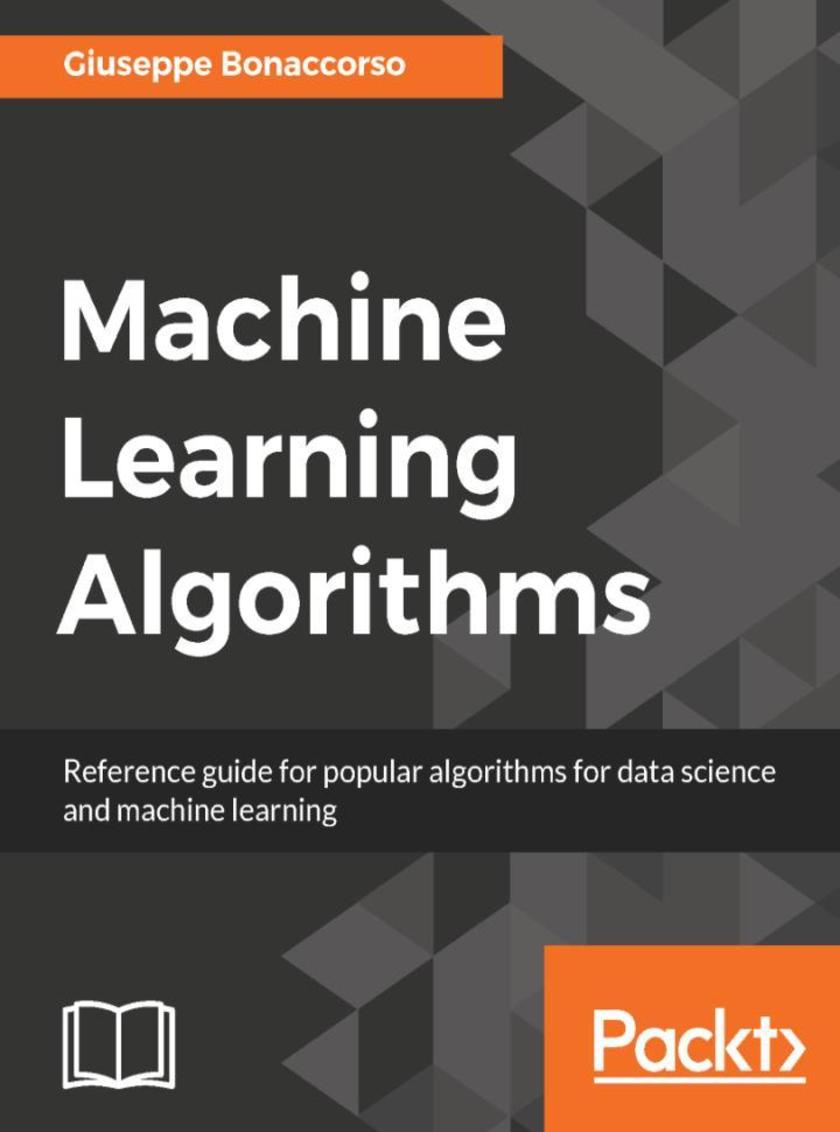
Machine Learning Algorithms
¥90.46
Build strong foundation for entering the world of Machine Learning and data science with the help of this comprehensive guide About This Book ? Get started in the field of Machine Learning with the help of this solid, concept-rich, yet highly practical guide. ? Your one-stop solution for everything that matters in mastering the whats and whys of Machine Learning algorithms and their implementation. ? Get a solid foundation for your entry into Machine Learning by strengthening your roots (algorithms) with this comprehensive guide. Who This Book Is For This book is for IT professionals who want to enter the field of data science and are very new to Machine Learning. Familiarity with languages such as R and Python will be invaluable here. What You Will Learn ? Acquaint yourself with important elements of Machine Learning ? Understand the feature selection and feature engineering process ? Assess performance and error trade-offs for Linear Regression ? Build a data model and understand how it works by using different types of algorithm ? Learn to tune the parameters of Support Vector machines ? Implement clusters to a dataset ? Explore the concept of Natural Processing Language and Recommendation Systems ? Create a ML architecture from scratch. In Detail As the amount of data continues to grow at an almost incomprehensible rate, being able to understand and process data is becoming a key differentiator for competitive organizations. Machine learning applications are everywhere, from self-driving cars, spam detection, document search, and trading strategies, to speech recognition. This makes machine learning well-suited to the present-day era of Big Data and Data Science. The main challenge is how to transform data into actionable knowledge. In this book you will learn all the important Machine Learning algorithms that are commonly used in the field of data science. These algorithms can be used for supervised as well as unsupervised learning, reinforcement learning, and semi-supervised learning. A few famous algorithms that are covered in this book are Linear regression, Logistic Regression, SVM, Naive Bayes, K-Means, Random Forest, TensorFlow, and Feature engineering. In this book you will also learn how these algorithms work and their practical implementation to resolve your problems. This book will also introduce you to the Natural Processing Language and Recommendation systems, which help you run multiple algorithms simultaneously. On completion of the book you will have mastered selecting Machine Learning algorithms for clustering, classification, or regression based on for your problem. Style and approach An easy-to-follow, step-by-step guide that will help you get to grips with real -world applications of Algorithms for Machine Learning.


