


 购物车
购物车 个人中心
个人中心
Infrastructure as Code (IAC) Cookbook
¥90.46
Over 90 practical, actionable recipes to automate, test, and manage your infrastructure quickly and effectively About This Book Bring down your delivery timeline from days to hours by treating your server configurations and VMs as code, just like you would with software code. Take your existing knowledge and skill set with your existing tools (Puppet, Chef, or Docker) to the next level and solve IT infrastructure challenges. Use practical recipes to use code to provision and deploy servers and applications and have greater control of your infrastructure. Who This Book Is For This book is for DevOps engineers and developers working in cross-functional teams or operations and would now switch to IAC to manage complex infrastructures. What You Will Learn Provision local and remote development environments with Vagrant Automate production infrastructures with Terraform, Ansible and Cloud-init on AWS, OpenStack, Google Cloud, Digital Ocean, and more Manage and test automated systems using Chef and Puppet Build, ship, and debug optimized Docker containers Explore the best practices to automate and test everything from cloud infrastructures to operating system configuration In Detail Infrastructure as Code (IAC) is a key aspect of the DevOps movement, and this book will show you how to transform the way you work with your infrastructure—by treating it as software. This book is dedicated to helping you discover the essentials of infrastructure automation and its related practices; the over 90 organized practical solutions will demonstrate how to work with some of the very best tools and cloud solutions. You will learn how to deploy repeatable infrastructures and services on AWS, OpenStack, Google Cloud, and Digital Ocean. You will see both Ansible and Terraform in action, manipulate the best bits from cloud-init to easily bootstrap instances, and simulate consistent environments locally or remotely using Vagrant. You will discover how to automate and test a range of system tasks using Chef or Puppet. You will also build, test, and debug various Docker containers having developers’ interests in mind. This book will help you to use the right tools, techniques, and approaches to deliver working solutions for today’s modern infrastructure challenges. Style and approach This is a recipe-based book that allows you to venture into some of the most cutting-edge practices and techniques about IAC and solve immediate problems when trying to implement them.
Mastering Elasticsearch 5.x - Third Edition
¥90.46
Master the intricacies of Elasticsearch 5 and use it to create flexible and scalable search solutions About This Book Master the searching, indexing, and aggregation features in ElasticSearch Improve users’ search experience with Elasticsearch’s functionalities and develop your own Elasticsearch plugins A comprehensive, step-by-step guide to master the intricacies of ElasticSearch with ease Who This Book Is For If you have some prior working experience with Elasticsearch and want to take your knowledge to the next level, this book will be the perfect resource for you.If you are a developer who wants to implement scalable search solutions with Elasticsearch, this book will also help you. Some basic knowledge of the query DSL and data indexing is required to make the best use of this book. What You Will Learn Understand Apache Lucene and Elasticsearch 5’s design and architecture Use and configure the new and improved default text scoring mechanism in Apache Lucene 6 Know how to overcome the pitfalls while handling relational data in Elasticsearch Learn about choosing the right queries according to the use cases and master the *ing module including new default *ing language, painlessly Explore the right way of scaling production clusters to improve the performance of Elasticsearch Master the searching, indexing, and aggregation features in Elasticsearch Develop your own Elasticsearch plugins to extend the functionalities of Elasticsearch In Detail Elasticsearch is a modern, fast, distributed, scalable, fault tolerant, and open source search and analytics engine. Elasticsearch leverages the capabilities of Apache Lucene, and provides a new level of control over how you can index and search even huge sets of data. This book will give you a brief recap of the basics and also introduce you to the new features of Elasticsearch 5. We will guide you through the intermediate and advanced functionalities of Elasticsearch, such as querying, indexing, searching, and modifying data. We’ll also explore advanced concepts, including aggregation, index control, sharding, replication, and clustering. We’ll show you the modules of monitoring and administration available in Elasticsearch, and will also cover backup and recovery. You will get an understanding of how you can scale your Elasticsearch cluster to contextualize it and improve its performance. We’ll also show you how you can create your own analysis plugin in Elasticsearch. By the end of the book, you will have all the knowledge necessary to master Elasticsearch and put it to efficient use. Style and approach This comprehensive guide covers intermediate and advanced concepts in Elasticsearch as well as their implementation. An easy-to-follow approach means you’ll be able to master even advanced querying, searching, and administration tasks with ease.
Go Design Patterns
¥90.46
Learn idiomatic, efficient, clean, and extensible Go design and concurrency patterns by using TDD About This Book A highly practical guide filled with numerous examples unleashing the power of design patterns with Go. Discover an introduction of the CSP concurrency model by explaining GoRoutines and channels. Get a full explanation, including comprehensive text and examples, of all known GoF design patterns in Go. Who This Book Is For The target audience is both beginner- and advanced-level developers in the Go programming language. No knowledge of design patterns is expected. What You Will Learn All basic syntax and tools needed to start coding in Go Encapsulate the creation of complex objects in an idiomatic way in Go Create unique instances that cannot be duplicated within a program Understand the importance of object encapsulation to provide clarity and maintainability Prepare cost-effective actions so that different parts of the program aren’t affected by expensive tasks Deal with channels and GoRoutines within the Go context to build concurrent application in Go in an idiomatic way In Detail Go is a multi-paradigm programming language that has built-in facilities to create concurrent applications. Design patterns allow developers to efficiently address common problems faced during developing applications. Go Design Patterns will provide readers with a reference point to software design patterns and CSP concurrency design patterns to help them build applications in a more idiomatic, robust, and convenient way in Go. The book starts with a brief introduction to Go programming essentials and quickly moves on to explain the idea behind the creation of design patterns and how they appeared in the 90’s as a common "language" between developers to solve common tasks in object-oriented programming languages. You will then learn how to apply the 23 Gang of Four (GoF) design patterns in Go and also learn about CSP concurrency patterns, the "killer feature" in Go that has helped Google develop software to maintain thousands of servers. With all of this the book will enable you to understand and apply design patterns in an idiomatic way that will produce concise, readable, and maintainable software. Style and approach This book will teach widely used design patterns and best practices with Go in a step-by-step manner. The code will have detailed examples, to allow programmers to apply design patterns in their day-to-day coding.
Containerization with LXC
¥90.46
Get acquainted with the world of LXC About This Book Get the most practical and up-to-date resource on LXC and take full advantage of what Linux containers can offer in the day-to-day operations of large-scale applications Learn how to deploy and administer various workloads such as web applications inside LXC Save your organization time and money by building robust and secure containers and by speeding the deployment process of your software Who This Book Is For This book is for Linux engineers and software developers who are looking to deploy applications in a fast, secure, and scalable way for use in testing and production. What You Will Learn Deep dive into the foundations of Linux containers with kernel namespaces and cgroups Install, configure, and administer Linux containers with LXC and libvirt Begin writing applications using Python libvirt bindings Take an in-depth look at container networking Set up monitoring and security with LXC Build and deploy a highly available application with LXC in the cloud In Detail In recent years, containers have gained wide adoption by businesses running a variety of application loads. This became possible largely due to the advent of kernel namespaces and better resource management with control groups (cgroups). Linux containers (LXC) are a direct implementation of those kernel features that provide operating system level virtualization without the overhead of a hypervisor layer. This book starts by introducing the foundational concepts behind the implementation of LXC, then moves into the practical aspects of installing and configuring LXC containers. Moving on, you will explore container networking, security, and backups. You will also learn how to deploy LXC with technologies like Open Stack and Vagrant. By the end of the book, you will have a solid grasp of how LXC is implemented and how to run production applications in a highly available and scalable way. Style and approach A practical guide that introduces the core technologies behind Linux containers and provides a deep dive into installation, configuration, and operations of LXC.
Mastering Elastic Stack
¥99.18
Get the most out of the Elastic Stack for various complex analytics using this comprehensive and practical guide About This Book Your one-stop solution to perform advanced analytics with Elasticsearch, Logstash, and Kibana Learn how to make better sense of your data by searching, analyzing, and logging data in a systematic way This highly practical guide takes you through an advanced implementation on the ELK stack in your enterprise environment Who This Book Is For This book cater to developers using the Elastic stack in their day-to-day work who are familiar with the basics of Elasticsearch, Logstash, and Kibana, and now want to become an expert at using the Elastic stack for data analytics. What You Will Learn Build a pipeline with help of Logstash and Beats to visualize Elasticsearch data in Kibana Use Beats to ship any type of data to the Elastic stack Understand Elasticsearch APIs, modules, and other advanced concepts Explore Logstash and it’s plugins Discover how to utilize the new Kibana UI for advanced analytics See how to work with the Elastic Stack using other advanced configurations Customize the Elastic Stack and plugin development for each of the component Work with the Elastic Stack in a production environment Explore the various components of X-Pack in detail. In Detail Even structured data is useless if it can’t help you to take strategic decisions and improve existing system. If you love to play with data, or your job requires you to process custom log formats, design a scalable analysis system, and manage logs to do real-time data analysis, this book is your one-stop solution. By combining the massively popular Elasticsearch, Logstash, Beats, and Kibana, elastic.co has advanced the end-to-end stack that delivers actionable insights in real time from almost any type of structured or unstructured data source. If your job requires you to process custom log formats, design a scalable analysis system, explore a variety of data, and manage logs, this book is your one-stop solution. You will learn how to create real-time dashboards and how to manage the life cycle of logs in detail through real-life scenarios. This book brushes up your basic knowledge on implementing the Elastic Stack and then dives deeper into complex and advanced implementations of the Elastic Stack. We’ll help you to solve data analytics challenges using the Elastic Stack and provide practical steps on centralized logging and real-time analytics with the Elastic Stack in production. You will get to grip with advanced techniques for log analysis and visualization. Newly announced features such as Beats and X-Pack are also covered in detail with examples. Toward the end, you will see how to use the Elastic stack for real-world case studies and we’ll show you some best practices and troubleshooting techniques for the Elastic Stack. Style and approach This practical guide shows you how to perform advanced analytics with the Elastic stack through real-world use cases. It includes common and some not so common scenarios to use the Elastic stack for data analysis.
VMware vRealize Orchestrator Cookbook - Second Edition
¥107.90
Over 90 recipes to satisfy all your automation needs and leverage vRealize Orchestrator 7.1 for your projects About This Book Unleash the power of VMware vRealize Orchestrator 7 and automate your VMware infrastructure Customize and tune your orchestrator by programming and working with plugins Work through enticing recipes that can be implemented in your organization Explore the new and upcoming plugins of Puppet, Docker, Chef, and VMware Replication for VMware vRealize Orchestrator Who This Book Is For This book is for system administrators who are into VMware administration and are looking to automate their infrastructure. Basic knowledge about programming is needed. No previous knowledge of Orchestrator is required. This book will also be good for you if you have just a basic knowledge with vRealize Orchestrator, as you can pick up any recipe and implement it for your enterprise. What You Will Learn Install, configure, and optimize Orchestrator installations (Windows, Appliance, and vRA integrated) Explore all the visual programming elements without needing additional infrastructure Work with plugins such as SSH, mail, SQL, PowerShell, AD, SOAP, SNMP, AMQP, and REST Discover how to create VMware automation Get to know about user management, import/export, and synchronization as well as the packaging application Understand policies, resources, and web views Troubleshoot vRO Appliance In Detail VMware vRealize Orchestrator is a powerful automation tool designed for system administrators and IT operations staff who are planning to streamline their tasks and are waiting to integrate the functions with third-party operations software. This book is an update to VMware vRealize Orchestrator Cookbook and is blend of numerous recipes on vRealize Orchestrator 7. This book starts with installing and configuring vRealize Orchestrator. We will demonstrate how to upgrade from previous versions to vRealize Orchestrator 7. You will be taught all about orchestrator plugins and how to use and develop various plugins that have been enhanced in Orchestrator 7. Throughout this book, you will explore the new features of Orchestrator 7, such as the introduction of the control center, along with its uses. You will also come to understand visual programming, how to integrate base plugins into workflows, and how to automate VMware. You will also get to know how to troubleshoot vRealize Orchestrator. By the end of this book, you will be able to get the most out of your Orchestrator installation, and will be able to develop complex workflows and create your own highly integrated automations of vRealize environments. Style and approach This practical guide provides exciting and practical recipes on VMware vRealize Orchestrator 7 for those who are waiting to automate their infrastructure.
Learning ASP.NET Core MVC Programming
¥80.65
Learn the fundamentals of ASP.NET MVC and build real-world web applications using ASP.NET Core MVC About This Book Get a first-principles coverage of ASP.NET MVC and the latest release, Core This book is uniquely designed for developers who are looking to transition their skills into the .NET development field The standalone chapter structure leaves you free to explore ASP.NET MVC to immediately solve your pain points Who This Book Is For This book is for developers who want to learn to build web applications using ASP.NET Core, developers who want to make a career building web applications using Microsoft technology, and developers who are working in Ruby on Rails or other web frameworks and want to learn ASP.NET Core MVC. No knowledge of the ASP.NET platform or the .NET platform is required. Even though you do not need to have experience in C#, an understanding of the basic constructs (loops, conditionals, classes, and objects) of any modern programming language would be helpful. What You Will Learn Get to know the concepts of ASP.NET MVC and build a new static web page using HTML, CSS, and jQuery Set up a development environment and run a sample application using the template Create a Controller with action methods Build a view using several features of the Razor View engine Construct a Model for ASP.NET Core MVC application Devise a custom mechanism to provide maximum flexibility to your application through routing Validate the user input on the client side using jQuery Enhance your applications using Bootstrap Explore new configuration and deployment scenarios—step by step guide to deploying ASP.NET Core web application in Linux In Detail ASP.NET Core MVC helps you build robust web applications using the Model-View-Controller design. This guide will help you in building applications which can be deployed on non-windows platforms such as Linux. In today’s age, it is crucial that you possess the ability to separate the programming and business logic, and this is exactly what ASP.NET Core MVC application will help you achieve. This version comes with a number of improvements that enable fast, TDD-friendly development to create sophisticated applications. You would also learn the fundamentals of Entity framework and on how to use the same in ASP.NET Core web applications. The book presents the fundamentals and philosophies of ASP.NET Core. Starting with an overview of the MVC pattern, we quickly dive into the aspects that you need to know to get started with ASP.NET. You will learn about the core architecture of model, view, and control. Integrating your application with Bootstrap, validating user input, interacting with databases, and deploying your application are some of the things that you will be able to execute with this fast-paced guide. The end of the book will test your knowledge as you build a fully working sample application using the skills you’ve learned throughout the book. Style and approach This book takes a first-principles approach to help you understand and implement ASP.NET MVC solutions. It is focused primarily on giving you practical skills rather than the old conventional theoretical teaching.
Swift Data Structure and Algorithms
¥71.93
Master the most common algorithms and data structures, and learn how to implement them efficiently using the most up-to-date features of Swift 3 About This Book Develop a deep understanding of the collections in the Swift Standard Library with this step-by-step guide Develop native Swift data structures and algorithms for use in mobile, desktop, and server-based applications Learn about performance efficiency between different data structures and algorithms Who This Book Is For This book is for developers who want to learn how to implement and use common data structures and algorithms natively in Swift. Whether you are a self-taught developer without a formal technical background or you have a degree in Computer Science, this book will provide with the knowledge you need to develop advanced data structures and algorithms in Swift using the latest language features. What You Will Learn Get to know about the basic data structures and how to use the Swift REPL Use the Swift Standard Library collections bridging to Objective-C collections, and find out about protocol-oriented programming Find out about Swift generators and sequences, and see how to use them to implement advanced data structures such as Stack, StackList, Queue, and LinkedList Implement sorting algorithms such as Insertion Sort, Merge Sort, and Quick Sort and understand the performance trade-offs between them See how to implement various binary trees, B-Tree, and Splay Trees Perform advanced searching methods using Red-Black trees, AVL trees, and Trie trees, and take a look at several substring search algorithms Get to know about the data structures used in graphs and how to implement graphs such as depth-first search, breadth-first search, directed graphs, spanning tree, and shortest path Explore algorithm efficiency and see how to measure it In Detail Apple’s Swift language has expressive features that are familiar to those working with modern functional languages, but also provides backward support for Objective-C and Apple’s legacy frameworks. These features are attracting many new developers to start creating applications for OS X and iOS using Swift. Designing an application to scale while processing large amounts of data or provide fast and efficient searching can be complex, especially running on mobile devices with limited memory and bandwidth. Learning about best practices and knowing how to select the best data structure and algorithm in Swift is crucial to the success of your application and will help ensure your application is a success. That’s what this book will teach you. Starting at the beginning, this book will cover the basic data structures and Swift types, and introduce asymptotic analysis. You’ll learn about the standard library collections and bridging between Swift and Objective-C collections. You will see how to implement advanced data structures, sort algorithms, work with trees, advanced searching methods, use graphs, and performance and algorithm efficiency. You’ll also see how to choose the perfect algorithm for your problem. Style and approach This easy-to-follow yet comprehensive guide can either be read from beginning to end, or depending on your current knowledge level, you can jump to the specific chapter that interests you. Each chapter topic starts with an introduction to the topic and algorithm before moving on to the hands-on implementation and analysis.
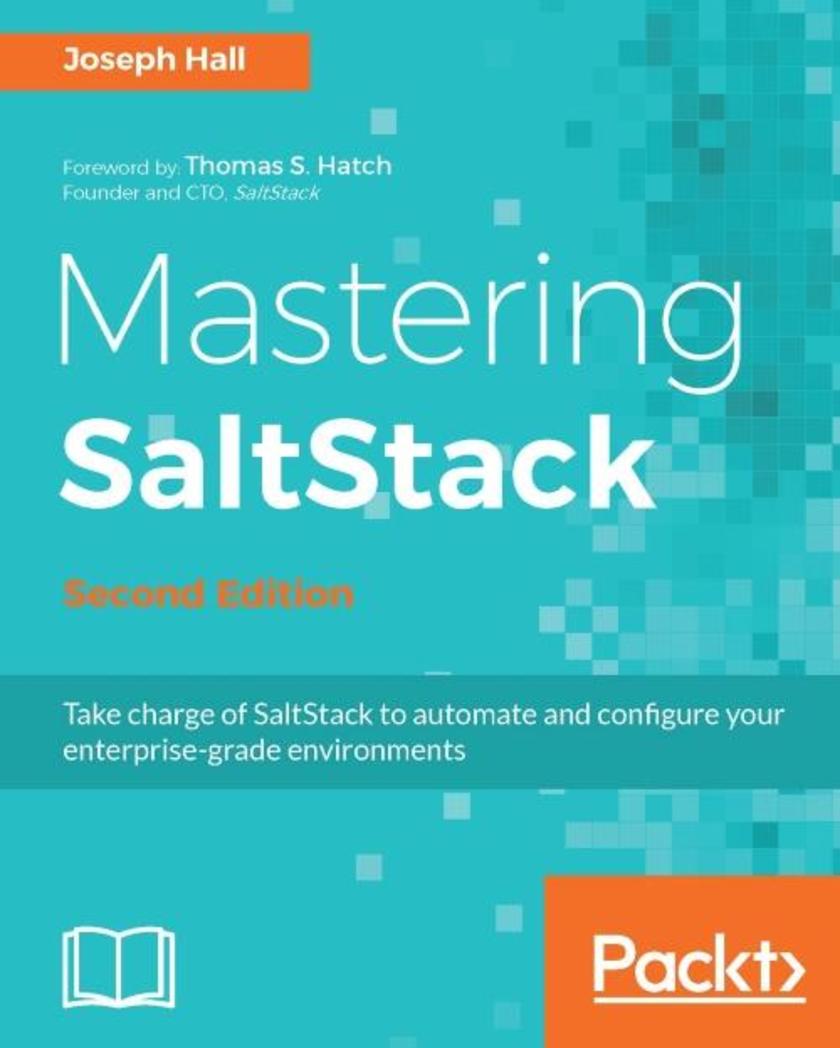
Mastering SaltStack - Second Edition
¥90.46
Take charge of SaltStack to automate and configure your enterprise-grade environments About This Book Automate tasks effectively and take charge of your infrastructure Effectively scale Salt to manage thousands of machines and tackle everyday problems Explore Salt’s inner workings and advance your knowledge of it Who This Book Is For This book is ideal for IT professionals and ops engineers who already manage groups of servers, but would like to expand their knowledge and gain expertise with SaltStack. This book explains the advanced features and concepts of Salt. A basic knowledge of Salt is required in order to get to grips with advanced Salt features. What You Will Learn Automate tasks effectively, so that your infrastructure can run itself Start building more complex concepts Master user-level internals Build scaling strategies Explore monitoring strategies Learn how to troubleshoot Salt and its subcomponents Explore best practices for Salt In Detail SaltStack is a powerful configuration management and automation suite designed to manage servers and tens of thousands of nodes. This book showcases Salt as a very powerful automation framework. We will review the fundamental concepts to get you in the right frame of mind, and then explore Salt in much greater depth. You will explore Salt SSH as a powerful tool and take Salt Cloud to the next level. Next, you’ll master using Salt services with ease in your infrastructure. You will discover methods and strategies to scale your infrastructure properly. You will also learn how to use Salt as a powerful monitoring tool. By the end of this book, you will have learned troubleshooting tips and best practices to make the entire process of using Salt pain-free and easy. Style and approach This book follows a step-by-step conversational tone. Topics are covered in detail through examples and a user-friendly approach.
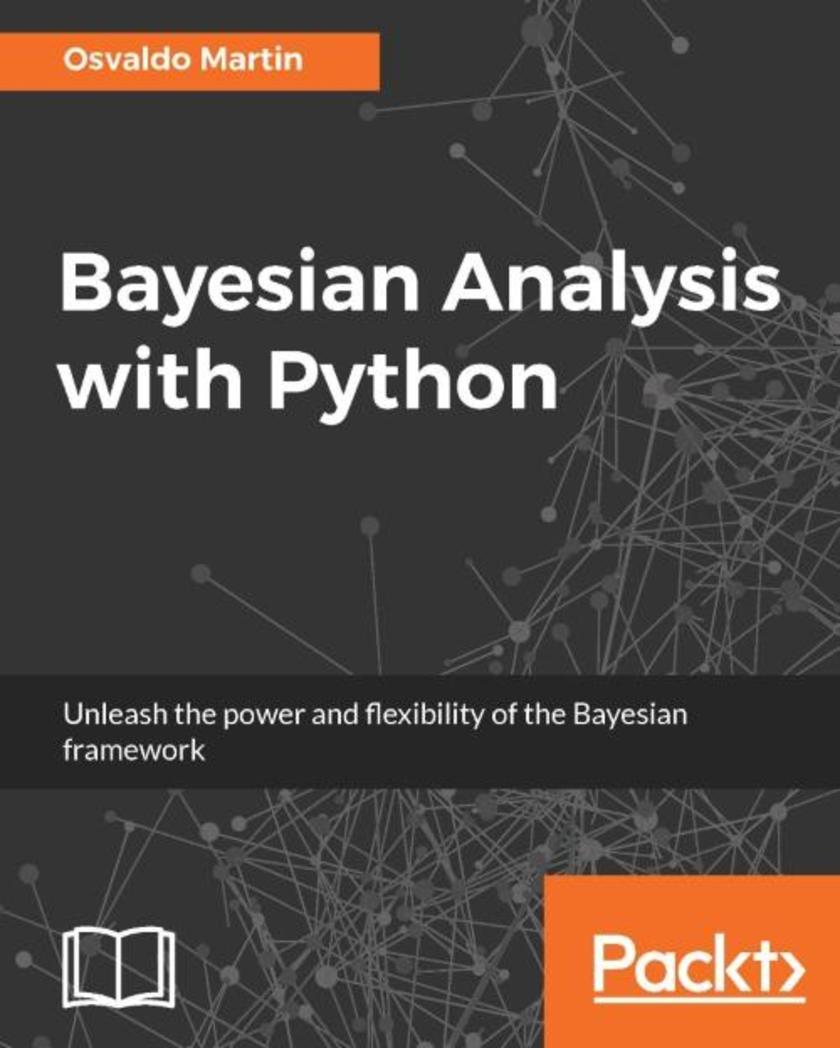
Bayesian Analysis with Python
¥90.46
Unleash the power and flexibility of the Bayesian framework About This Book Simplify the Bayes process for solving complex statistical problems using Python; Tutorial guide that will take the you through the journey of Bayesian analysis with the help of sample problems and practice exercises; Learn how and when to use Bayesian analysis in your applications with this guide. Who This Book Is For Students, researchers and data scientists who wish to learn Bayesian data analysis with Python and implement probabilistic models in their day to day projects. Programming experience with Python is essential. No previous statistical knowledge is assumed. What You Will Learn Understand the essentials Bayesian concepts from a practical point of view Learn how to build probabilistic models using the Python library PyMC3 Acquire the skills to sanity-check your models and modify them if necessary Add structure to your models and get the advantages of hierarchical models Find out how different models can be used to answer different data analysis questions When in doubt, learn to choose between alternative models. Predict continuous target outcomes using regression analysis or assign classes using logistic and softmax regression. Learn how to think probabilistically and unleash the power and flexibility of the Bayesian framework In Detail The purpose of this book is to teach the main concepts of Bayesian data analysis. We will learn how to effectively use PyMC3, a Python library for probabilistic programming, to perform Bayesian parameter estimation, to check models and validate them. This book begins presenting the key concepts of the Bayesian framework and the main advantages of this approach from a practical point of view. Moving on, we will explore the power and flexibility of generalized linear models and how to adapt them to a wide array of problems, including regression and classification. We will also look into mixture models and clustering data, and we will finish with advanced topics like non-parametrics models and Gaussian processes. With the help of Python and PyMC3 you will learn to implement, check and expand Bayesian models to solve data analysis problems. Style and approach Bayes algorithms are widely used in statistics, machine learning, artificial intelligence, and data mining. This will be a practical guide allowing the readers to use Bayesian methods for statistical modelling and analysis using Python.
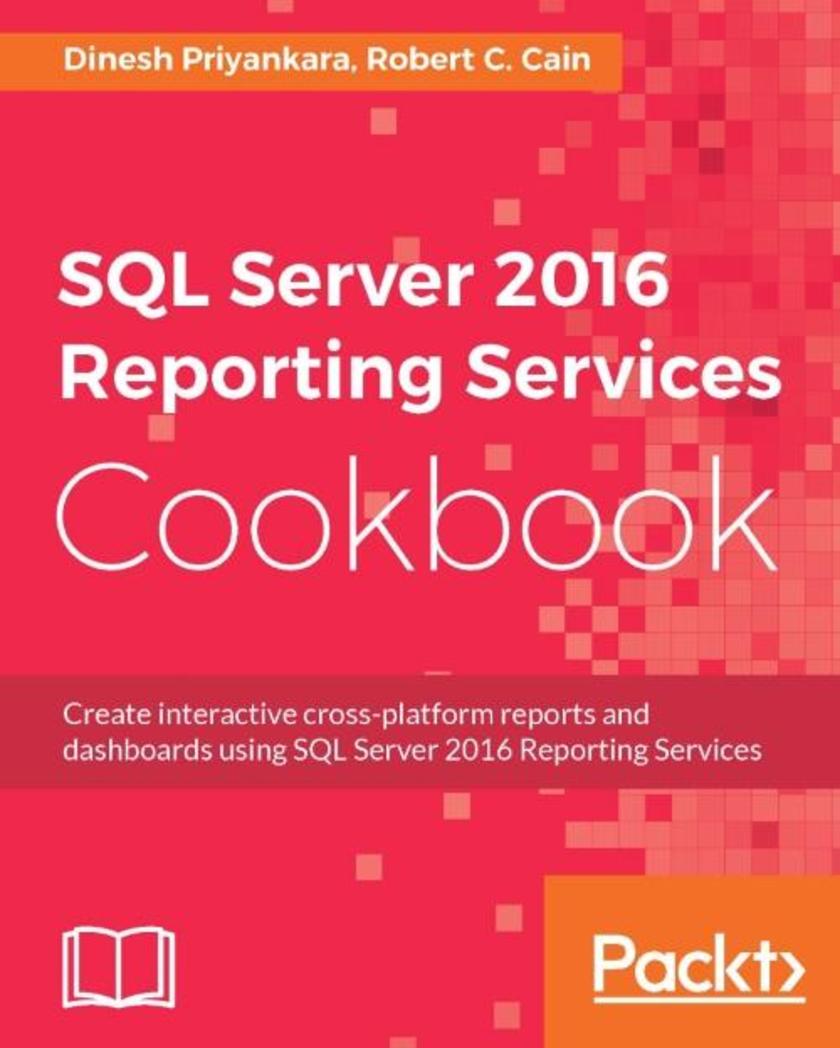
SQL Server 2016 Reporting Services Cookbook
¥99.18
Create interactive cross-platform reports and dashboards using SQL Server 2016 Reporting Services About This Book Get up to speed with the newly-introduced enhancements and the more advanced query and reporting features Easily access your important data by creating visually appealing dashboards in the Power BI practical recipe Create cross-browser and cross-platform reports using SQL Server 2016 Reporting Services Who This Book Is For This book is for software professionals who develop and implement reporting solutions using Microsoft SQL Server. It is especially relevant for professionals who are software engineers, software architects, DW/BI engineers, and DW/BI architects who perform simple to complex report authoring implementations. This book is also suitable for those who develop software solutions that integrate reporting solutions and are keen to learn about Microsoft SQL Server 2016’s features and capabilities. What You Will Learn Key capabilities, architecture, and components of Reporting Services New features that have been added to Reporting Services Design the architecture for reporting solutions Design the architecture for BI solutions Implement reporting solutions using Reporting Services Improve the performance, availability, and scalability of the reporting solution Enhance reporting solutions with custom programming and improved security In Detail Microsoft SQL Server 2016 Reporting Services comes with many new features. It offers different types of reporting such as Production, Ad-hoc, Dashboard, Mash-up, and Analytical. SQL Server 2016 also has a surfeit of new features including Mobile Reporting, and Power BI integration. This book contains recipes that explore the new and advanced features added to SQL Server 2016. The first few chapters cover recipes on configuring components and how to explore these new features. You’ll learn to build your own reporting solution with data tools and report builder, along with learning techniques to create visually appealing reports. This book also has recipes for enhanced mobile reporting solutions, accessing these solutions effectively, and delivering interactive business intelligence solutions. Towards the end of the book, you’ll get to grips with running reporting services in SharePoint integrated mode and be able to administer, monitor, and secure your reporting solution. This book covers about the new offerings of Microsoft SQL Server 2016 Reporting Services in comprehensive detail and uses examples of real-world problem-solving business scenarios. Style and approach This comprehensive cookbook follows a problem-solution approach to help you overcome any obstacle when creating interactive, visually-appealing reports using SQL Server 2016 Reporting Services. Each recipe focuses on a specific task and is written in a clear, solution-focused style.
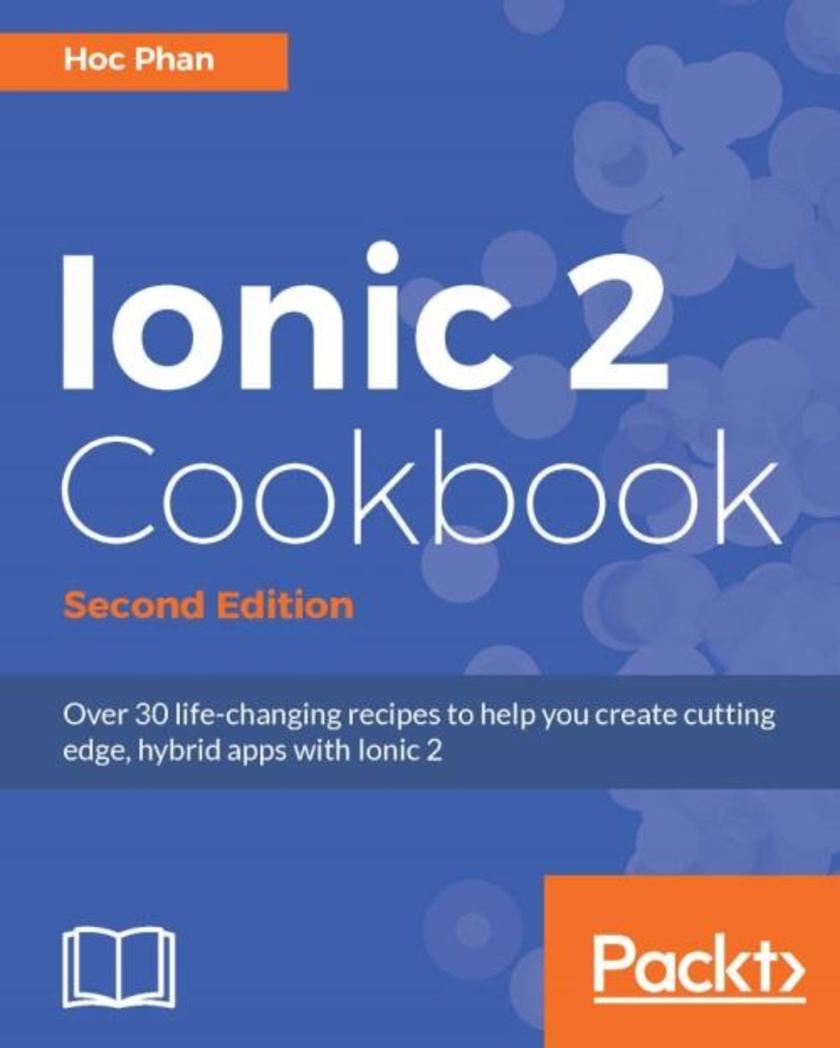
Ionic 2 Cookbook - Second Edition
¥80.65
Over 30 life-changing recipes to help you create cutting edge, hybrid apps with Ionic 2 About This Book Leverage Ionic 2 and its exciting new features to create cutting edge real-time apps Work through simple recipes to address your problems directly and solve them effectively Get examples at each step to guide you on your learning curve Who This Book Is For This book is for front end JavaScript developers who know the basics of JavaScript programming. No prior knowledge of Ionic is required to get the most of this book. What You Will Learn Create custom UIs using Angular 2 directives Make the best use of REST APIs to submit forms Create beautiful animations and graphics in the application Embed videos and other media into the app Access native device functionalities such as a camera and maps using ngCordova Theme the application based on the various platform styles available Publish your application to a variety of platforms Leverage Angular 2 events and Ionic-specific events to communicate In Detail Developing real-time apps is the need of the hour, and apps that deal with humongous amounts of user data and real-time information that needs to be updated frequently are in high demand. Currently, one of the most popular frameworks for this task is Ionic Framework, which is undergoing a major makeover. This book will get you started with Ionic and help you create Angular 2 components that interact with templates. From there, you’ll work with Ionic components and find out how to share data efficiently between them. You’ll discover how to make the best use of the REST API to handle back-end services and then move on to animating the application to make it look pretty. You’ll learn to add in a local push notification in order to test the app. You’ll work with Cordova to support native functionalities on both iOS and Android. From there, you’ll get to grips with using the default themes for each platform as well as customizing your own. Finally, you’ll see how best to deploy your app to different platforms. This book will solve all your Ionic-related issues through dedicated recipes that will help you get the best out of Ionic. Style and approach This book is a recipe-based solution to all your Ionic 2 related problems and will help you create cutting edge real-time apps with ease through simple-to-understand step-by-step recipes.
Internet of Things Programming with JavaScript
¥71.93
Learn the art of bringing the Internet of Things into your projects with the power of JavaScript About This Book This is a practical guide to help you configure and build a complete distributed IoT system from scratch using JavaScript Utilize the power of Node and HTML5 to develop web services and a centralized web server, enabling high-level communication between connected devices Control all your connected devices from the browser by setting up a common dashboard Who This Book Is For This book is for developers who are interested in learning how to communicate with connected devices in JavaScript to set up an IoT system. Some basic knowledge of JavaScript is expected. Hobbyists who want to explore the potential of IoT in JavaScript will also find this book useful. What You Will Learn Develop the skills to connected devices prepared the field to interact with the devices in a network system Internet of Things Find out how to connect sensors and actuators to the devices Send data to a web server connected devices Understand Internet of things using web services and database Configure a dashboard using HTML5 and JavaScript Control devices connected from a dashboard Monitor different devices from the dashboard Build an app for a smartphone to control different devices In Detail The Internet of Things (IoT) is an entirely new platform for developers and engineers, but one thing that remains consistent as we move into this new world, are the programming languages. JavaScript is the most widely used language over the Internet, and with IoT gaining momentum, you will learn how to harness the power of JavaScript to interact with connected devices. This book will teach you how to interact with endpoint devices by developing web services in JavaScript and also set up an interface to control all connected devices. This book begins with setting up a centralized web server that serves as a hub for all connected devices. The book then progresses further towards building web services to facilitate high-level communication between connected devices. Using Arduino and Raspberry Pi Zero as endpoint devices, the book will show you how devices can communicate with each other, perform a wide range of tasks, and also be controlled from a centralized location using JavaScript. The book ends with creating a hybrid app to control the devices that can be run from a browser or installed on a smartphone. Style and approach This book offers step-by-step guidance on how to set up a distributed IoT system using JavaScript. It will teach you how to interact with endpoint devices by developing web services in JavaScript and also set up an interface for controlling all connected devices.
Implementing Modern DevOps
¥71.93
Help your organization join the DevOps revolution About This Book ? Helps you skill up your DevOps knowledge without a strong set of prerequisites ? Deliver continuously improved software by showcasing the most advanced tools and techniques ? Acquire a deeper insight into implementing DevOps in your organization and deliver results from day 1 Who This Book Is For This book is written for engineers and companies that want to learn the minimum set of required technologies and processes to be successful in the DevOps world. This book also targets system administrators, developers, and IT professionals who would like to employ DevOps techniques and best practices to manage IT infrastructures or would like to acquire the necessary skills needed to work in DevOps teams. What You Will Learn ? Master development best practices. ? Understand how the Agile Delivery Methodology helps you ensure accuracy and quality. ? Analyze branching strategies such as branch creation, merging, and synchronization. ? Learn to automate builds to deploy and deliver code faster and more often ? Explore testing frameworks and how to automate testing ? Learn to put specific metrics in place to measure ROI of DevOps and monitor logs and events in a system In Detail This book follows a unique approach to modern DevOps using cutting-edge tools and technologies such as Ansible, Kubernetes, and Google Cloud Platform. This book starts by explaining the organizational alignment that has to happen in every company that wants to implement DevOps in order to be effective, and the use of cloud datacenters in combination with the most advanced DevOps tools to get the best out of a small team of skilled engineers. It also delves into how to use Kubernetes to run your applications in Google Cloud Platform, minimizing the friction and hassle of maintaining a cluster but ensuring its high availability. By the end of this book, you will be able to realign teams in your company and create a Continuous Delivery pipeline with Kubernetes and Docker. With strong monitoring in place, you will also be able to react to adverse events in your system, minimizing downtime and improving the overall up-time and stability of your system. Style and approach This book takes a step-by-step practical approach to the implementation of DevOps. This book will teach you how to enable IT organizations to deliver faster and smarter through a unique approach using Code-Build-Test-Release-Configure-Monitor (CBTRCM).
Spring 5 Design Patterns
¥80.65
Learn various design patterns and best practices in Spring 5 and use them to solve common design problems. About This Book ? Explore best practices for designing an application ? Manage your code easily with Spring's Dependency Injection pattern ? Understand the benefits that the right design patterns can offer your toolkit Who This Book Is For This book is for developers who would like to use design patterns to address common problems while designing an app using the Spring Framework and Reactive Programming approach. A basic knowledge of the Spring Framework and Java is assumed. What You Will Learn ? Develop applications using dependency injection patterns ? Learn best practices to design enterprise applications ? Explore Aspect-Oriented Programming relating to transactions, security, and caching. ? Build web applications using traditional Spring MVC patterns ? Learn to configure Spring using XML, annotations, and Java. ? Implement caching to improve application performance. ? Understand concurrency and handle multiple connections inside a web server. ? Utilizing Reactive Programming Pattern to build Reactive web applications. In Detail Design patterns help speed up the development process by offering well tested and proven solutions to common problems. These patterns coupled with the Spring framework offer tremendous improvements in the development process. The book begins with an overview of Spring Framework 5.0 and design patterns. You will understand the Dependency Injection pattern, which is the main principle behind the decoupling process that Spring performs, thus making it easier to manage your code. You will learn how GoF patterns can be used in Application Design. You will then learn to use Proxy patterns in Aspect Oriented Programming and remoting. Moving on, you will understand the JDBC template patterns and their use in abstracting database access. Then, you will be introduced to MVC patterns to build Reactive web applications. Finally, you will move on to more advanced topics such as Reactive streams and Concurrency. At the end of this book, you will be well equipped to develop efficient enterprise applications using Spring 5 with common design patterns Style and approach The book takes a pragmatic approach, showing various design patterns and best-practice considerations, including the Reactive programming approach with the Spring 5 Framework and ways to solve common development and design problems for enterprise applications.
Architecting Modern Java EE Applications
¥90.46
Find out how to craft effective, business-oriented Java EE 8 applications that target customer’s demands in the age of Cloud platforms and container technology. About This Book ? Understand the principles of modern Java EE and how to realize effective architectures ? Gain knowledge of how to design enterprise software in the age of automation, Continuous Delivery and Cloud platforms ? Learn about the reasoning and motivations behind state-of-the-art enterprise Java technology, that focuses on business Who This Book Is For This book is for experienced Java EE developers who are aspiring to become the architects of enterprise-grade applications, or software architects who would like to leverage Java EE to create effective blueprints of applications. What You Will Learn ? What enterprise software engineers should focus on ? Implement applications, packages, and components in a modern way ? Design and structure application architectures ? Discover how to realize technical and cross-cutting aspects ? Get to grips with containers and container orchestration technology ? Realize zero-dependency, 12-factor, and Cloud-native applications ? Implement automated, fast, reliable, and maintainable software tests ? Discover distributed system architectures and their requirements In Detail Java EE 8 brings with it a load of features, mainly targeting newer architectures such as microservices, modernized security APIs, and cloud deployments. This book will teach you to design and develop modern, business-oriented applications using Java EE 8. It shows how to structure systems and applications, and how design patterns and Domain Driven Design aspects are realized in the age of Java EE 8. You will learn about the concepts and principles behind Java EE applications, and how to effect communication, persistence, technical and cross-cutting concerns, and asynchronous behavior. This book covers Continuous Delivery, DevOps, infrastructure-as-code, containers, container orchestration technologies, such as Docker and Kubernetes, and why and especially how Java EE fits into this world. It also covers the requirements behind containerized, zero-dependency applications and how modern Java EE application servers support these approaches. You will also learn about automated, fast, and reliable software tests, in different test levels, scopes, and test technologies. This book covers the prerequisites and challenges of distributed systems that lead to microservice, shared-nothing architectures. The challenges and solutions of consistency versus scalability will further lead us to event sourcing, event-driven architectures, and the CQRS principle. This book also includes the nuts and bolts of application performance as well as how to realize resilience, logging, monitoring and tracing in a modern enterprise world. Last but not least the demands of securing enterprise systems are covered. By the end, you will understand the ins and outs of Java EE so that you can make critical design decisions that not only live up to, but also surpass your clients' expectations. Style and approach This book focuses on solving business problems and meeting customer demands in the enterprise world. It covers how to create enterprise applications with reasonable technology choices, free of cargo-cult and over-engineering. The aspects shown in this book not only demonstrate how to realize a certain solution, but also explain its motivations and reasoning.
Augmented Reality for Developers
¥90.46
Build exciting AR applications on mobile and wearable devices with Unity 3D, Vuforia, ARToolKit, Microsoft Mixed Reality HoloLens, Apple ARKit, and Google ARCore About This Book ? Create unique AR applications from scratch, from beginning to end, with step-by-step tutorials ? Use Unity 3D to efficiently create AR apps for Android, iOS, and Windows platforms ? Use Vuforia, ARTookKit, Windows Mixed Reality, and Apple ARKit to build AR projects for a variety of markets ? Learn best practices in AR user experience, software design patterns, and 3D graphics Who This Book Is For The ideal target audience for this book is developers who have some experience in mobile development, either Android or iOS. Some broad web development experience would also be beneficial. What You Will Learn ? Build Augmented Reality applications through a step-by-step, tutorial-style project approach ? Use the Unity 3D game engine with the Vuforia AR platform, open source ARToolKit, Microsoft's Mixed Reality Toolkit, Apple ARKit, and Google ARCore, via the C# programming language ? Implement practical demo applications of AR including education, games, business marketing, and industrial training ? Employ a variety of AR recognition modes, including target images, markers, objects, and spatial mapping ? Target a variety of AR devices including phones, tablets, and wearable smartglasses, for Android, iOS, and Windows HoloLens ? Develop expertise with Unity 3D graphics, UIs, physics, and event systems ? Explore and utilize AR best practices and software design patterns In Detail Augmented Reality brings with it a set of challenges that are unseen and unheard of for traditional web and mobile developers. This book is your gateway to Augmented Reality development—not a theoretical showpiece for your bookshelf, but a handbook you will keep by your desk while coding and architecting your first AR app and for years to come. The book opens with an introduction to Augmented Reality, including markets, technologies, and development tools. You will begin by setting up your development machine for Android, iOS, and Windows development, learning the basics of using Unity and the Vuforia AR platform as well as the open source ARToolKit and Microsoft Mixed Reality Toolkit. You will also receive an introduction to Apple's ARKit and Google's ARCore! You will then focus on building AR applications, exploring a variety of recognition targeting methods. You will go through multiple complete projects illustrating key market sectors including business marketing, education, industrial training, and gaming. By the end of the book, you will have gained the necessary knowledge to make quality content appropriate for a range of AR devices, platforms, and intended uses. Style and approach This book adopts a practical, step-by-step, tutorial-style approach. The design principles and methodology will be explained by creating different modules of the AR app.
Mastering Linux Kernel Development
¥90.46
Explore Implementation of core kernel subsystems About This Book ? Master the design, components, and structures of core kernel subsystems ? Explore kernel programming interfaces and related algorithms under the hood ? Completely updated material for the 4.12.10 kernel Who This Book Is For If you are a kernel programmer with a knowledge of kernel APIs and are looking to build a comprehensive understanding, and eager to explore the implementation, of kernel subsystems, this book is for you. It sets out to unravel the underlying details of kernel APIs and data structures, piercing through the complex kernel layers and gives you the edge you need to take your skills to the next level. What You Will Learn ? Comprehend processes and fles—the core abstraction mechanisms of the Linux kernel that promote effective simplification and dynamism ? Decipher process scheduling and understand effective capacity utilization under general and real-time dispositions ? Simplify and learn more about process communication techniques through signals and IPC mechanisms ? Capture the rudiments of memory by grasping the key concepts and principles of physical and virtual memory management ? Take a sharp and precise look at all the key aspects of interrupt management and the clock subsystem ? Understand concurrent execution on SMP platforms through kernel synchronization and locking techniques In Detail Mastering Linux Kernel Development looks at the Linux kernel, its internal arrangement and design, and various core subsystems, helping you to gain significant understanding of this open source marvel. You will look at how the Linux kernel, which possesses a kind of collective intelligence thanks to its scores of contributors, remains so elegant owing to its great design. This book also looks at all the key kernel code, core data structures, functions, and macros, giving you a comprehensive foundation of the implementation details of the kernel’s core services and mechanisms. You will also look at the Linux kernel as well-designed software, which gives us insights into software design in general that are easily scalable yet fundamentally strong and safe. By the end of this book, you will have considerable understanding of and appreciation for the Linux kernel. Style and approach Each chapter begins with the basic conceptual know-how for a subsystem and extends into the details of its implementation. We use appropriate code excerpts of critical routines and data structures for subsystems.
Learning Ceph - Second Edition
¥90.46
Implement and manage your software-defined, massively scalable storage system About This Book ? Explore Ceph's architecture in order to achieve scalability and high availability ? Learn to utilize Ceph efficiently with the help of practical examples ? Successfully implement Ceph clusters to scale-out storage solutions along with outstanding data protection Who This Book Is For A basic knowledge of GNU/Linux, and storage systems, and server components is assumed. If you have no experience of software-defined storage solutions and Ceph, but are eager to learn about them, this is the book for you. What You Will Learn ? The limitations of existing systems and why you should use Ceph as a storage solution ? Familiarity with Ceph's architecture, components, and services ? Instant deployment and testing of Ceph within a Vagrant and VirtualBox environment ? Ceph operations including maintenance, monitoring, and troubleshooting ? Storage provisioning of Ceph's block, object, and filesystem services ? Integrate Ceph with OpenStack ? Advanced topics including erasure coding, CRUSH maps, and performance tuning ? Best practices for your Ceph clusters In Detail Learning Ceph, Second Edition will give you all the skills you need to plan, deploy, and effectively manage your Ceph cluster. You will begin with the first module, where you will be introduced to Ceph use cases, its architecture, and core projects. In the next module, you will learn to set up a test cluster, using Ceph clusters and hardware selection. After you have learned to use Ceph clusters, the next module will teach you how to monitor cluster health, improve performance, and troubleshoot any issues that arise. In the last module, you will learn to integrate Ceph with other tools such as OpenStack, Glance, Manila, Swift, and Cinder. By the end of the book you will have learned to use Ceph effectively for your data storage requirements. Style and approach This step-by-step guide, including use cases and examples, not only helps you to easily use Ceph but also demonstrates how you can use it to solve any of your server or drive storage issues.
Kali Linux - An Ethical Hacker's Cookbook
¥80.65
Over 120 recipes to perform advanced penetration testing with Kali Linux About This Book ? Practical recipes to conduct effective penetration testing using the powerful Kali Linux ? Leverage tools like Metasploit, Wireshark, Nmap, and many more to detect vulnerabilities with ease ? Confidently perform networking and application attacks using task-oriented recipes Who This Book Is For This book is aimed at IT security professionals, pentesters, and security analysts who have basic knowledge of Kali Linux and want to conduct advanced penetration testing techniques. What You Will Learn ? Installing, setting up and customizing Kali for pentesting on multiple platforms ? Pentesting routers and embedded devices ? Bug hunting 2017 ? Pwning and escalating through corporate network ? Buffer over?ows 101 ? Auditing wireless networks ? Fiddling around with software-defned radio ? Hacking on the run with NetHunter ? Writing good quality reports In Detail With the current rate of hacking, it is very important to pentest your environment in order to ensure advanced-level security. This book is packed with practical recipes that will quickly get you started with Kali Linux (version 2016.2) according to your needs, and move on to core functionalities. This book will start with the installation and configuration of Kali Linux so that you can perform your tests. You will learn how to plan attack strategies and perform web application exploitation using tools such as Burp, and Jexboss. You will also learn how to perform network exploitation using Metasploit, Sparta, and Wireshark. Next, you will perform wireless and password attacks using tools such as Patator, John the Ripper, and airo*-ng. Lastly, you will learn how to create an optimum quality pentest report! By the end of this book, you will know how to conduct advanced penetration testing thanks to the book’s crisp and task-oriented recipes. Style and approach This is a recipe-based book that allows you to venture into some of the most cutting-edge practices and techniques to perform penetration testing with Kali Linux.
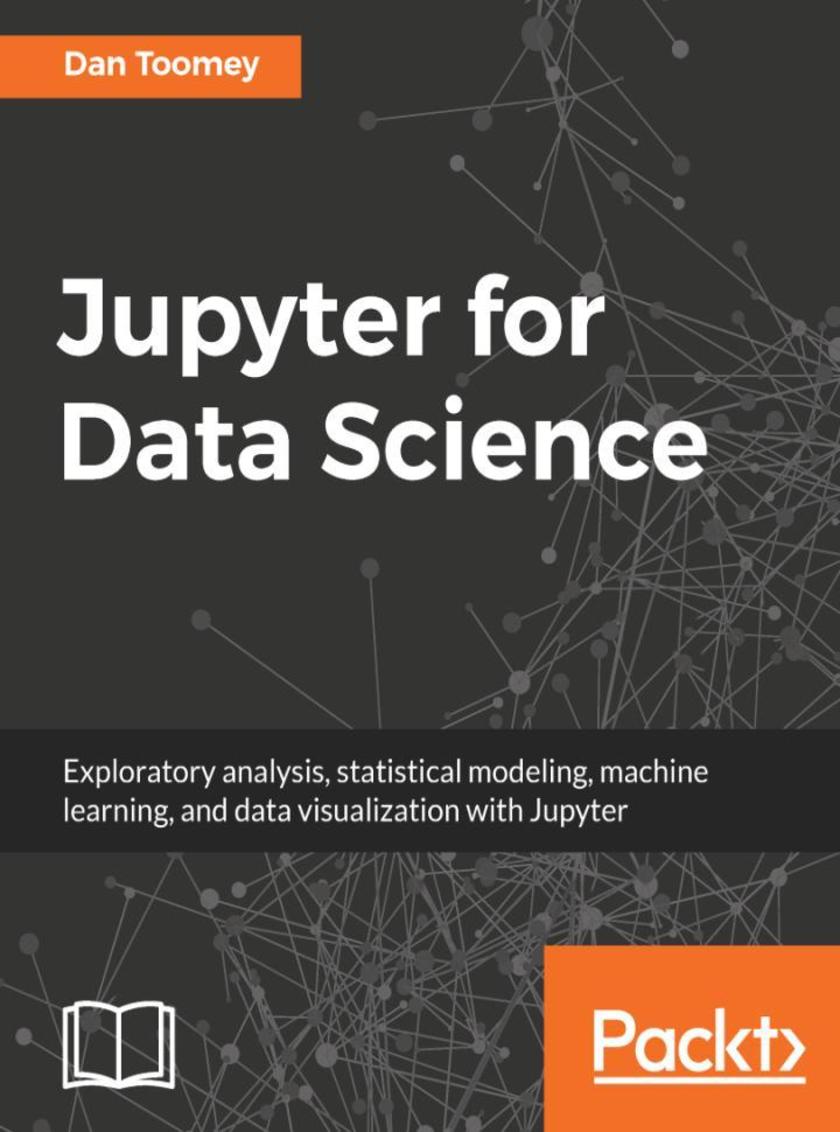
Jupyter for Data Science
¥71.93
Your one-stop guide to building an efficient data science pipeline using Jupyter About This Book ? Get the most out of your Jupyter notebook to complete the trickiest of tasks in Data Science ? Learn all the tasks in the data science pipeline—from data acquisition to visualization—and implement them using Jupyter ? Get ahead of the curve by mastering all the applications of Jupyter for data science with this unique and intuitive guide Who This Book Is For This book targets students and professionals who wish to master the use of Jupyter to perform a variety of data science tasks. Some programming experience with R or Python, and some basic understanding of Jupyter, is all you need to get started with this book. What You Will Learn ? Understand why Jupyter notebooks are a perfect fit for your data science tasks ? Perform scientific computing and data analysis tasks with Jupyter ? Interpret and explore different kinds of data visually with charts, histograms, and more ? Extend SQL's capabilities with Jupyter notebooks ? Combine the power of R and Python 3 with Jupyter to create dynamic notebooks ? Create interactive dashboards and dynamic presentations ? Master the best coding practices and deploy your Jupyter notebooks efficiently In Detail Jupyter Notebook is a web-based environment that enables interactive computing in notebook documents. It allows you to create documents that contain live code, equations, and visualizations. This book is a comprehensive guide to getting started with data science using the popular Jupyter notebook. If you are familiar with Jupyter notebook and want to learn how to use its capabilities to perform various data science tasks, this is the book for you! From data exploration to visualization, this book will take you through every step of the way in implementing an effective data science pipeline using Jupyter. You will also see how you can utilize Jupyter's features to share your documents and codes with your colleagues. The book also explains how Python 3, R, and Julia can be integrated with Jupyter for various data science tasks. By the end of this book, you will comfortably leverage the power of Jupyter to perform various tasks in data science successfully. Style and approach This book is a perfect blend of concepts and practical examples, written in a way that is very easy to understand and implement. It follows a logical flow where you will be able to build on your understanding of the different Jupyter features with every chapter.


