


 购物车
购物车 个人中心
个人中心
Mastering Machine Learning on AWS
¥62.12
Gain expertise in ML techniques with AWS to create interactive apps using SageMaker, Apache Spark, and TensorFlow. Key Features * Build machine learning apps on Amazon Web Services (AWS) using SageMaker, Apache Spark and TensorFlow * Learn model optimization, and understand how to scale your models using simple and secure APIs * Develop, train, tune and deploy neural network models to accelerate model performance in the cloud Book Description AWS is constantly driving new innovations that empower data scientists to explore a variety of machine learning (ML) cloud services. This book is your comprehensive reference for learning and implementing advanced ML algorithms in AWS cloud. As you go through the chapters, you’ll gain insights into how these algorithms can be trained, tuned and deployed in AWS using Apache Spark on Elastic Map Reduce (EMR), SageMaker, and TensorFlow. While you focus on algorithms such as XGBoost, linear models, factorization machines, and deep nets, the book will also provide you with an overview of AWS as well as detailed practical applications that will help you solve real-world problems. Every practical application includes a series of companion notebooks with all the necessary code to run on AWS. In the next few chapters, you will learn to use SageMaker and EMR Notebooks to perform a range of tasks, right from smart analytics, and predictive modeling, through to sentiment analysis. By the end of this book, you will be equipped with the skills you need to effectively handle machine learning projects and implement and evaluate algorithms on AWS. What you will learn * Manage AI workflows by using AWS cloud to deploy services that feed smart data products * Use SageMaker services to create recommendation models * Scale model training and deployment using Apache Spark on EMR * Understand how to cluster big data through EMR and seamlessly integrate it with SageMaker * Build deep learning models on AWS using TensorFlow and deploy them as services * Enhance your apps by combining Apache Spark and Amazon SageMaker Who this book is for This book is for data scientists, machine learning developers, deep learning enthusiasts and AWS users who want to build advanced models and smart applications on the cloud using AWS and its integration services. Some understanding of machine learning concepts, Python programming and AWS will be beneficial.
Salesforce Platform Developer I Certification Guide
¥70.84
Build and deploy scalable applications on the Salesforce Lightning Platform using the latest features of Spring '19 Key Features * An end-to end-guide with practice tests to help you achieve the Salesforce Platform Developer certification * Design data models, user interfaces, and business logic for your custom applications * Understand the complete development life cycle from designing to testing Book Description Salesforce Lightning Platform, used to build enterprise apps, is being increasingly adopted by admins, business analysts, consultants, architects, and especially developers. With this Salesforce certification, you'll be able to enhance your development skills and become a valuable member of your organization. This certification guide is designed to be completely aligned with the official exam study guide for the latest Salesforce Certified Platform Developer I release and includes updates from Spring '19. Starting with Salesforce fundamentals and performing data modeling and management, you’ll progress to automating logic and processes and working on user interfaces with Salesforce components. Finally, you'll learn how to work with testing frameworks, perform debugging, and deploy metadata, and get to grips with useful tips and tricks. Each chapter concludes with sample questions that are commonly found in the exam, and the book wraps up with mock tests to help you prepare for the DEV501 certification exam. By the end of the book, you’ll be ready to take the exam and earn your Salesforce Certified Platform Developer I certification. What you will learn * Solve sample questions and mock tests and work with exam patterns * Gain an understanding of declarative Salesforce tools such as Process Builder, flows, and many more * Code in Salesforce using the Developer Console and IDEs * Grasp the basics of object-oriented programming * Write Apex classes, Visualforce pages, and Apex test classes with easy-to-follow steps * Explore the different deployment tools that you can use to push metadata to different environments * Build custom declarative apps and programs on Force.com platforms Who this book is for The Salesforce Platform Developer I Certification Guide is for you if you want to learn how to develop and deploy business logic and user interfaces using the capabilities of the Lightning Platform. No prior knowledge of Apex programming is required.
Unreal Engine 4 Shaders and Effects Cookbook
¥70.84
Build optimized, efficient, and real-time applications that are production-ready using Unreal Engine's Material Editor Key Features * Create stunning visual effects for 3D games and high-quality graphics * Design efficient Shaders for mobile platforms without sacrificing their realism * Discover what goes into the structure of Shaders and why lighting works the way it does Book Description Unreal Engine 4 is a powerful game engine, one which has seen a recent boost in widespread adoption thanks to its ease of use and the powerful rendering pipeline that it packs. Seeing as how it's relatively easy to create stunning presentations and visuals, Unreal has quickly become a strong contender in industries where this kind of software had been previously denied entry. With that in mind, this book aims to help you get the most out of Unreal Engine 4 - from creating awe-inspiring graphics to delivering optimized experiences to your users. This is possible thanks to a mixture of hands-on experience with real materials and the theory behind them. You will immediately know how to create that material that you want to display, and you'll also end up with the knowledge that will let you know how to control it. All of this will be done without losing sight of two key components of any real-time application - optimization, and efficiency. The materials that you create will be light and efficient, and they will vary depending on your target platform. You'll know which techniques can be used in any kind of device and which ones should be kept to high-end machines, giving you the confidence to tackle any material-related task that you can imagine. Hop onboard and discover how! What you will learn * Master Unreal Engine's rendering pipeline for developing real-time graphics * Use physically based rendering (PBR) for building materials and lighting solutions * Build optimized materials for games targeting multiple platforms * Understand Unreal Engine's node and functions for creating desirable effects * Design and build production-ready shaders * Explore Unreal Engine's Material Editor for building complex materials and textures Who this book is for This book is for developers who want to create their first Shaders in Unreal Engine 4 or wish to take their game to a whole new level by adding professional post-processing effects. A solid understanding of Unreal is required to get the most from this book.
Hands-On Mobile Development with .NET Core
¥70.84
Develop native applications for multiple mobile and desktop platforms including but not limited to iOS, Android, and UWP with the Xamarin framework and Xamarin.Forms Key Features * Understand .NET Core and its cross-platform development philosophy * Build Android, iOS, and Windows mobile applications with C#, .NET Core, and Azure Cloud Services * Bring Artificial Intelligence capabilities into your mobile applications with Azure AI Book Description .NET Core is the general umbrella term used for Microsoft’s cross-platform toolset. Xamarin used for developing mobile applications, is one of the app model implementations for .NET Core infrastructure. In this book, you will learn how to design, architect, and develop highly attractive, maintainable, efficient, and robust mobile applications for multiple platforms, including iOS, Android, and UWP, with the toolset provided by Microsoft using Xamarin, .NET Core, and Azure Cloud Services. This book will take you through various phases of application development with Xamarin, from environment setup, design, and architecture to publishing, using real-world scenarios. Throughout the book, you will learn how to develop mobile apps using Xamarin, Xamarin.Forms and .NET Standard; implement a webbased backend composed of microservices with .NET Core using various Azure services including but not limited to Azure App Services, Azure Active Directory, Notification Hub, Logic Apps, and Azure Functions, Cognitive Services; create data stores using popular database technologies such as Cosmos DB, SQL and Realm. Towards the end, the book will help developers to set up an efficient and maintainable development pipeline to manage the application life cycle using Visual Studio App Center and Visual Studio Services. What you will learn * Implement native applications for multiple mobile and desktop platforms * Understand and use various Azure Services with .NET Core * Make use of architectural patterns designed for mobile and web applications * Understand the basic Cosmos DB concepts * Understand how different app models can be used to create an app service * Explore the Xamarin and Xamarin.Forms UI suite with .NET Core for building mobile applications Who this book is for This book is for mobile developers who wish to develop cross-platform mobile applications. Programming experience with C# is required. Some knowledge and understanding of core elements and cross-platform application development with .NET is required.
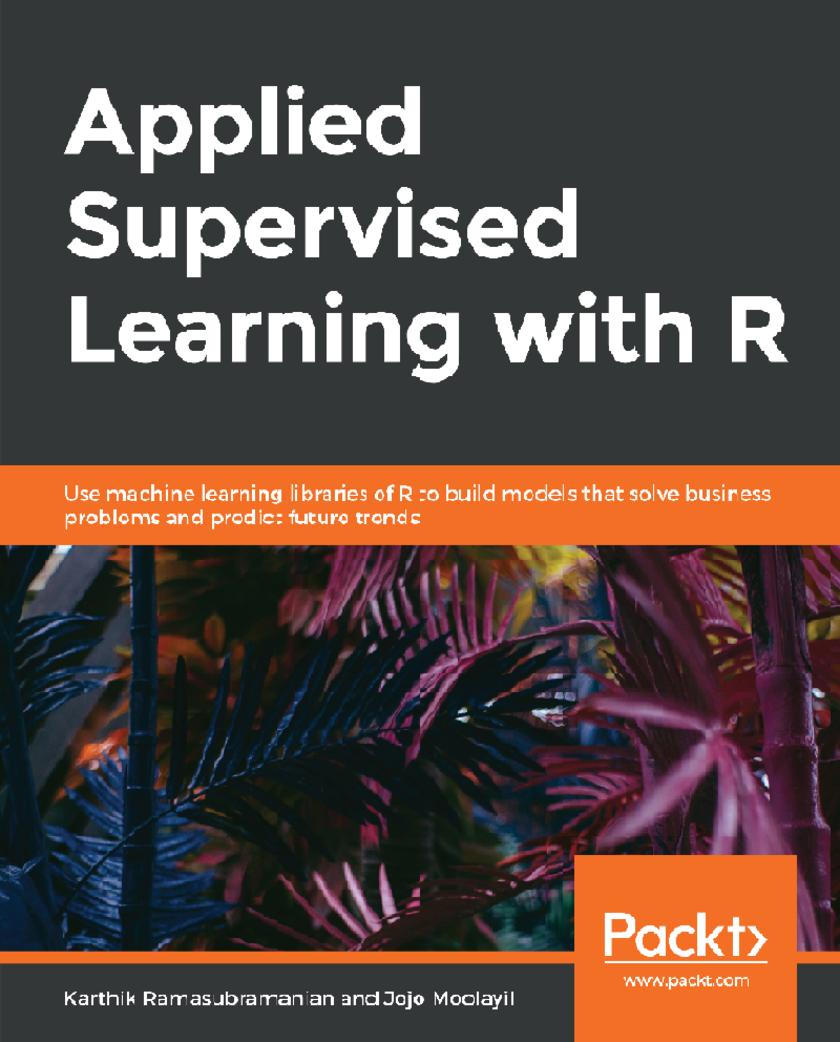
Applied Supervised Learning with R
¥79.56
Explore supervised machine learning with R by studying popular real-world uses cases such as object detection in driverless cars, customer churn, and default prediction Key Features * Study supervised learning algorithms by using real-world datasets * Fine tune optimal parameters with hyperparameter optimization * Select the best algorithm using the model evaluation framework Book Description R provides excellent visualization features that are essential for exploring data before using it in automated learning. Applied Supervised Learning with R helps you cover the complete process of employing R to develop applications using supervised machine learning algorithms for your business needs. The book starts by helping you develop your analytical thinking to create a problem statement using business inputs and domain research. You will then learn different evaluation metrics that compare various algorithms, and later progress to using these metrics to select the best algorithm for your problem. After finalizing the algorithm you want to use, you will study the hyperparameter optimization technique to fine-tune your set of optimal parameters. To prevent you from overfitting your model, a dedicated section will even demonstrate how you can add various regularization terms. By the end of this book, you will have the advanced skills you need for modeling a supervised machine learning algorithm that precisely fulfills your business needs. What you will learn * Develop analytical thinking to precisely identify a business problem * Wrangle data with dplyr, tidyr, and reshape2 * Visualize data with ggplot2 * Validate your supervised machine learning model using k-fold * Optimize hyperparameters with grid and random search, and Bayesian optimization * Deploy your model on Amazon Web Services (AWS) Lambda with plumber * Improve your model’s performance with feature selection and dimensionality reduction Who this book is for This book is specially designed for novice and intermediate-level data analysts, data scientists, and data engineers who want to explore different methods of supervised machine learning and its various use cases. Some background in statistics, probability, calculus, linear algebra, and programming will help you thoroughly understand and follow the content of this book.
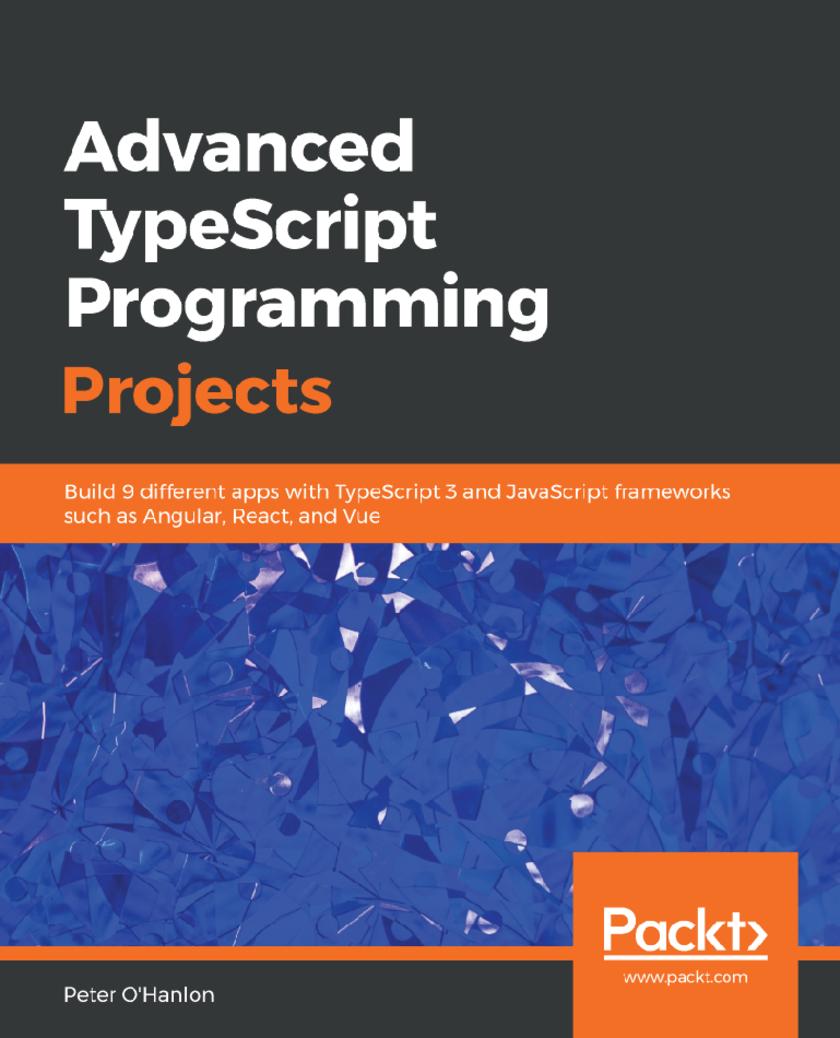
Advanced TypeScript Programming Projects
¥70.84
Gain in-depth knowledge of TypeScript and the latest ECMAScript standards by building robust web applications across different domains Key Features * Apply the cutting-edge features of TypeScript 3.0 to build high-performance, maintainable applications * Learn through practical examples of using TypeScript with popular frameworks, such as Angular and React * Focus on building high-quality applications that are modular, scalable and adaptable Book Description With the demand for ever more complex websites, the need to write robust, standard-compliant JavaScript has never been greater. TypeScript is modern JavaScript with the support of a first-class type system, which makes it simpler to write complex web systems. With this book, you’ll explore core concepts and learn by building a series of websites and TypeScript apps. You’ll start with an introduction to TypeScript features that are often overlooked in other books, before moving on to creating a simple markdown parser. You’ll then explore React and get up to speed with creating a client-side contacts manager. Next, the book will help you discover the Angular framework and use the MEAN stack to create a photo gallery. Later sections will assist you in creating a GraphQL Angular Todo app and then writing a Socket.IO chatroom. The book will also lead you through developing your final Angular project which is a mapping app. As you progress, you’ll gain insights into React with Docker and microservices. You’ll even focus on how to build an image classification program with machine learning using TensorFlow. Finally, you’ll learn to combine TypeScript and C# to create an ASP.NET Core-based music library app. By the end of this book, you’ll be able to confidently use TypeScript 3.0 and different JavaScript frameworks to build high-quality apps. What you will learn * Discover how to use TypeScript to write code using common patterns * Get to grips with using popular frameworks and libraries with TypeScript * Leverage the power of both server and client using TypeScript * Learn how to apply exciting new paradigms such as GraphQL and TensorFlow * Use popular cloud-based authenticated services * Combine TypeScript with C# to create ASP.NET Core applications Who this book is for This book is for programmers and web developers who are familiar with TypeScript and want to put their knowledge to work by building real-world complex applications. Prior experience with any other web framework is not required.
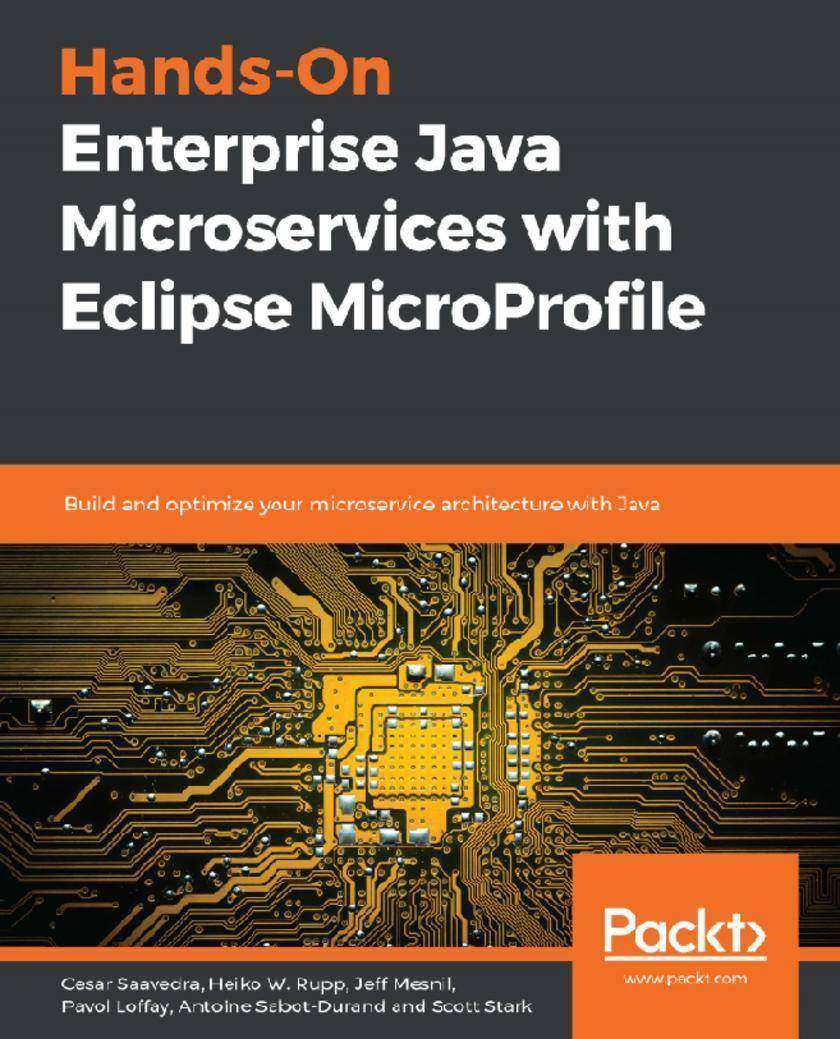
Hands-On Enterprise Java Microservices with Eclipse MicroProfile
¥63.21
An effective guide to designing, building, and deploying enterprise Java microservices with Eclipse MicroProfile Key Features * Create cloud-native microservices with ease using this detailed guide * Avoid vendor lock-in when implementing microservices using Eclipse MicroProfile * Discover why MicroProfile is a great specification for building microservices in multi-cloud environments Book Description Eclipse MicroProfile has gained momentum in the industry as a multi-vendor, interoperable, community-driven specification. It is a major disruptor that allows organizations with large investments in enterprise Java to move to microservices without spending a lot on retraining their workforce. This book is based on MicroProfile 2.2, however, it will guide you in running your applications in MicroProfile 3.0. You'll start by understanding why microservices are important in the digital economy and how MicroProfile addresses the need for enterprise Java microservices. You'll learn about the subprojects that make up a MicroProfile, its value proposition to organizations and developers, and its processes and governance. As you advance, the book takes you through the capabilities and code examples of MicroProfile’s subprojects - Config, Fault Tolerance, Health Check, JWT Propagation, Metrics, and OpenTracing. Finally, you’ll be guided in developing a conference application using Eclipse MicroProfile, and explore possible scenarios of what’s next in MicroProfile with Jakarta EE. By the end of this book, you'll have gained a clear understanding of Eclipse MicroProfile and its role in enterprise Java microservices. What you will learn * Understand why microservices are important in the digital economy * Analyze how MicroProfile addresses the need for enterprise Java microservices * Test and secure your applications with Eclipse MicroProfile * Get to grips with various MicroProfile capabilities such as OpenAPI and Typesafe REST Client * Explore reactive programming with MicroProfile Stream and Messaging candidate APIs * Discover and implement coding best practices using MicroProfile Who this book is for If you’re a Java developer who wants to create enterprise microservices, this book is for you. Familiarity with Java EE and the concept of microservices will help you get the most out of this book.
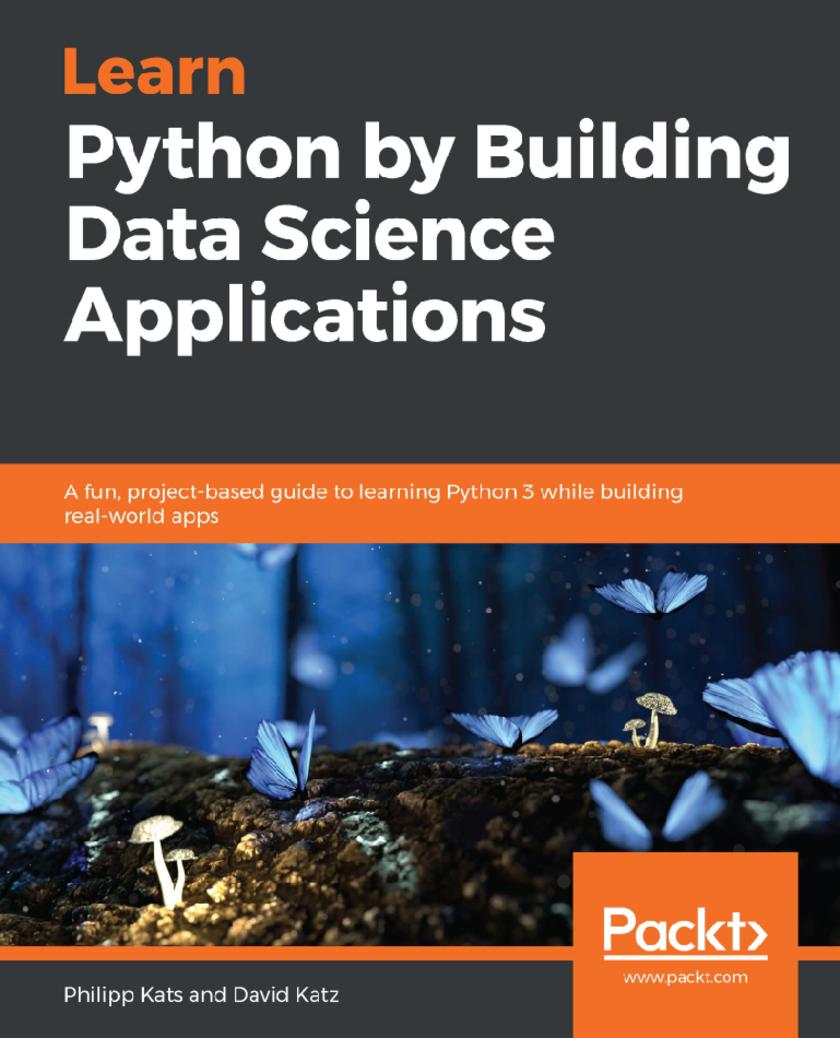
Learn Python by Building Data Science Applications
¥63.21
Understand the constructs of the Python programming language and use them to build data science projects Key Features * Learn the basics of developing applications with Python and deploy your first data application * Take your first steps in Python programming by understanding and using data structures, variables, and loops * Delve into Jupyter, NumPy, Pandas, SciPy, and sklearn to explore the data science ecosystem in Python Book Description Python is the most widely used programming language for building data science applications. Complete with step-by-step instructions, this book contains easy-to-follow tutorials to help you learn Python and develop real-world data science projects. The “secret sauce” of the book is its curated list of topics and solutions, put together using a range of real-world projects, covering initial data collection, data analysis, and production. This Python book starts by taking you through the basics of programming, right from variables and data types to classes and functions. You’ll learn how to write idiomatic code and test and debug it, and discover how you can create packages or use the range of built-in ones. You’ll also be introduced to the extensive ecosystem of Python data science packages, including NumPy, Pandas, scikit-learn, Altair, and Datashader. Furthermore, you’ll be able to perform data analysis, train models, and interpret and communicate the results. Finally, you’ll get to grips with structuring and scheduling scripts using Luigi and sharing your machine learning models with the world as a microservice. By the end of the book, you’ll have learned not only how to implement Python in data science projects, but also how to maintain and design them to meet high programming standards. What you will learn * Code in Python using Jupyter and VS Code * Explore the basics of coding – loops, variables, functions, and classes * Deploy continuous integration with Git, Bash, and DVC * Get to grips with Pandas, NumPy, and scikit-learn * Perform data visualization with Matplotlib, Altair, and Datashader * Create a package out of your code using poetry and test it with PyTest * Make your machine learning model accessible to anyone with the web API Who this book is for If you want to learn Python or data science in a fun and engaging way, this book is for you. You’ll also find this book useful if you’re a high school student, researcher, analyst, or anyone with little or no coding experience with an interest in the subject and courage to learn, fail, and learn from failing. A basic understanding of how computers work will be useful.
Learn Ethereum
¥63.21
Explore the blockchain-based decentralized platform and understand how Ethereum works with Dapps examples Key Features * Explore the Ethereum ecosystem and understand the latest research on the platform * Build decentralized apps (Dapps) using smart contracts and Ethereum with the help of practical examples * Learn to make your decentralized applications fast and highly secure Book Description Ethereum is a blockchain-based, decentralized computing platform that allows running smart contracts. This book provides a basic overview of how Ethereum works, its ecosystem, mining process, and the consensus mechanism. It also demonstrates a step-by-step approach for building decentralized applications. This book begins with the very basics of Blockchain technology. Then it dives deep into the Ethereum architecture, framework and tools in its ecosystem. It also provides you an overview of ongoing research on Ethereum, for example, Layer 1 and 2 scaling solution, Stablecoin, ICO/STO/IEO, etc. Next, it explains Solidity language in detail, and provides step-by-step instructions for designing, developing, testing, deploying, and monitoring decentralized applications. In addition, you’ll learn how to use Truffle, Remix, Infura, Metamask, and many other Ethereum technologies. It’ll also help you develop your own cryptocurrency by creating ERC20, and ERC721 smart contracts from scratch. Finally, we explain private blockchains, and you learn how to interact with smart contracts through wallets. What you will learn * Understand the concepts of blockchain and cryptocurrency * Master Ethereum development tools such as Truffle, Remix IDE and Infura * Delve into smart contract development * Develop DApps frontend using Node.js, React.js, and Web3js API * Learn Etherscan and other tools to secure and monitor smart contracts * Develop and debug smart contracts by working with Remix * Apply Truffle suite to compile, migrate, and unit test smart contracts * Explore smart contracts such as ERC20 token and decentralized digital market Who this book is for This book is for all developers and architects who want to explore Ethereum blockchain fundamentals and get started with building real-world decentralized applications. Knowledge of an object-oriented programming language such as JavaScript will be useful but not mandatory.
Hands-On Artificial Intelligence on Amazon Web Services
¥80.65
Perform cloud-based machine learning and deep learning using Amazon Web Services such as SageMaker, Lex, Comprehend, Translate, and Polly Key Features * Explore popular machine learning and deep learning services with their underlying algorithms * Discover readily available artificial intelligence(AI) APIs on AWS like Vision and Language Services * Design robust architectures to enable experimentation, extensibility, and maintainability of AI apps Book Description From data wrangling through to translating text, you can accomplish this and more with the artificial intelligence and machine learning services available on AWS. With this book, you’ll work through hands-on exercises and learn to use these services to solve real-world problems. You’ll even design, develop, monitor, and maintain machine and deep learning models on AWS. The book starts with an introduction to AI and its applications in different industries, along with an overview of AWS artificial intelligence and machine learning services. You’ll then get to grips with detecting and translating text with Amazon Rekognition and Amazon Translate. The book will assist you in performing speech-to-text with Amazon Transcribe and Amazon Polly. Later, you’ll discover the use of Amazon Comprehend for extracting information from text, and Amazon Lex for building voice chatbots. You will also understand the key capabilities of Amazon SageMaker such as wrangling big data, discovering topics in text collections, and classifying images. Finally, you’ll cover sales forecasting with deep learning and autoregression, before exploring the importance of a feedback loop in machine learning. By the end of this book, you will have the skills you need to implement AI in AWS through hands-on exercises that cover all aspects of the ML model life cycle. What you will learn * Gain useful insights into different machine and deep learning models * Build and deploy robust deep learning systems to production * Train machine and deep learning models with diverse infrastructure specifications * Scale AI apps without dealing with the complexity of managing the underlying infrastructure * Monitor and Manage AI experiments efficiently * Create AI apps using AWS pre-trained AI services Who this book is for This book is for data scientists, machine learning developers, deep learning researchers, and artificial intelligence enthusiasts who want to harness the power of AWS to implement powerful artificial intelligence solutions. A basic understanding of machine learning concepts is expected.
OpenCV 4 for Secret Agents
¥70.84
Turn futuristic ideas about computer vision and machine learning into demonstrations that are both functional and entertaining Key Features * Build OpenCV 4 apps with Python 2 and 3 on desktops and Raspberry Pi, Java on Android, and C# in Unity * Detect, classify, recognize, and measure real-world objects in real-time * Work with images from diverse sources, including the web, research datasets, and various cameras Book Description OpenCV 4 is a collection of image processing functions and computer vision algorithms. It is open source, supports many programming languages and platforms, and is fast enough for many real-time applications. With this handy library, you’ll be able to build a variety of impressive gadgets. OpenCV 4 for Secret Agents features a broad selection of projects based on computer vision, machine learning, and several application frameworks. To enable you to build apps for diverse desktop systems and Raspberry Pi, the book supports multiple Python versions, from 2.7 to 3.7. For Android app development, the book also supports Java in Android Studio, and C# in the Unity game engine. Taking inspiration from the world of James Bond, this book will add a touch of adventure and computer vision to your daily routine. You’ll be able to protect your home and car with intelligent camera systems that analyze obstacles, people, and even cats. In addition to this, you’ll also learn how to train a search engine to praise or criticize the images that it finds, and build a mobile app that speaks to you and responds to your body language. By the end of this book, you will be equipped with the knowledge you need to advance your skills as an app developer and a computer vision specialist. What you will learn * Detect motion and recognize gestures to control a smartphone game * Detect car headlights and estimate their distance * Detect and recognize human and cat faces to trigger an alarm * Amplify motion in a real-time video to show heartbeats and breaths * Make a physics simulation that detects shapes in a real-world drawing * Build OpenCV 4 projects in Python 3 for desktops and Raspberry Pi * Develop OpenCV 4 Android applications in Android Studio and Unity Who this book is for If you are an experienced software developer who is new to computer vision or machine learning, and wants to study these topics through creative projects, then this book is for you. The book will also help existing OpenCV users who want upgrade their projects to OpenCV 4 and new versions of other libraries, languages, tools, and operating systems. General familiarity with object-oriented programming, application development, and usage of operating systems (OS), developer tools, and the command line is required.
Delphi Programming Projects
¥70.84
Improve your Delphi programming skills by building robust applications for Android, iOS, and Windows platform Key Features * Build responsive user interfaces (UIs) for desktop and mobile with FireMonkey * Implement a microservices architecture using the Rapid Application Development(RAD) server * Create clones of popular applications like Instagram and Facebook using Delphi 10.3 Book Description Delphi is a cross-platform programming language and software development kit that supports rapid application development for Microsoft Windows, Apple Mac OS X, Android, and iOS. With the help of seven practical projects, this book will guide you through the best practices, Delphi Run-Time Library (RTL) resources, and design patterns. Whether you use the Visual Component Library (VCL) or FireMonkey (FMX) framework, these design patterns will be implemented in the same way in Delphi, using Object Pascal. In the first few chapters, you will explore advanced features that will help you build rich applications using the same code base for both mobile and desktop projects. In addition to this, you’ll learn how to implement microservice architecture in Delphi. As you get familiar with the various aspects of Delphi, you will no longer need to maintain source code for similar projects, program business rules on screens, or fill your forms with data access components. By the end of this book, you will have gained an understanding of the principles of clean code and become proficient in building robust and scalable applications in Delphi. What you will learn * Get to grips with the advanced features of RTL * Understand how to deal with the paradigm change between multiplatform projects * Build rich interfaces with Google's Material Design features * Understand how to implement design patterns in Delphi * Turn a mobile device into a remote controller with app tethering technology * Build a multi-database system using VCL Who this book is for This book is for developers, programmers, and IT professionals who want to learn the best market practices by implementing practical projects. Prior knowledge of the Delphi language is a must.
Apache Superset Quick Start Guide
¥54.49
Integrate open source data analytics and build business intelligence on SQL databases with Apache Superset. The quick, intuitive nature for data visualization in a web application makes it easy for creating interactive dashboards. Key Features *Work with Apache Superset's rich set of data visualizations *Create interactive dashboards and data storytelling *Easily explore data Book Description Apache Superset is a modern, open source, enterprise-ready business intelligence (BI) web application. With the help of this book, you will see how Superset integrates with popular databases like Postgres, Google BigQuery, Snowflake, and MySQL. You will learn to create real time data visualizations and dashboards on modern web browsers for your organization using Superset. First, we look at the fundamentals of Superset, and then get it up and running. You'll go through the requisite installation, configuration, and deployment. Then, we will discuss different columnar data types, analytics, and the visualizations available. You'll also see the security tools available to the administrator to keep your data safe. You will learn how to visualize relationships as graphs instead of coordinates on plain orthogonal axes. This will help you when you upload your own entity relationship dataset and analyze the dataset in new, different ways. You will also see how to analyze geographical regions by working with location data. Finally, we cover a set of tutorials on dashboard designs frequently used by analysts, business intelligence professionals, and developers. What you will learn *Get to grips with the fundamentals of data exploration using Superset *Set up a working instance of Superset on cloud services like Google Compute Engine *Integrate Superset with SQL databases *Build dashboards with Superset *Calculate statistics in Superset for numerical, categorical, or text data *Understand visualization techniques, filtering, and grouping by aggregation *Manage user roles and permissions in Superset *Work with SQL Lab Who this book is for This book is for data analysts, BI professionals, and developers who want to learn Apache Superset. If you want to create interactive dashboards from SQL databases, this book is what you need. Working knowledge of Python will be an advantage but not necessary to understand this book.
Learn Clip Studio Paint
¥71.93
Take your comics and illustrations to the next level with the powerful art tools in Clip Studio Paint 1.8 Key Features *Overcome “interface overwhelm” with a practical breakdown of the Clip Studio interface *Comprehensive guide on the Clip Studio Paint with detailed coverage of all the tools and concepts of designing comics *Streamline your workflow to create faster and easier using Clip Studio’s features Book Description Clip Studio Paint, the successor to Manga Studio, is used by over four million illustrators and comic creators around the world. This book will guide you through every step of learning this software, from system requirements and installation, all the way through to exporting your work for print or the web. Learn how to create new documents, customize tools to fit your working style, use ruler tools to create anything from straight lines to intricate backgrounds, add 3D elements, create comic panels using the specialized panel tools, utilize screentones and materials, add text and word balloons to your comics, create sound effects, easily flat and color your comics using reference layers, and bring your drawings to life using the animation features. By the end of this book, you will be able to navigate the Clip Studio Interface and program preferences, customize the various tools, and be able to create your own black-and-white and color illustrations and comics from start to finish. What you will learn *Understand the differences between Clip Studio Paint Pro and EX *Discover how to navigate and customize the user interface *Creating custom tools that fit your unique style of illustration *Using the ruler tools to create intricate perspective shots and complex symmetry *Discover how to use 3D elements in your work *Learn how to create lettering and word balloons to bring your comic stories to life *Understand the process of digital art creation from pencils to inks to color *Understand how to use the animation tools available in Clip Studio Paint Who this book is for If you are a beginning digital artist or are switching to Clip Studio from another graphics software, this book is for you. This book is excellent for those with no knowledge of digital art up to intermediate users looking to explore the unique features of Clip Studio Paint.
Learn Type-Driven Development
¥63.21
A fast paced guide for JavaScript developers for writing safe, fast, and reusable code by leveraging ResaonML's strong static type system Key Features *Reduce code errors with the power of type systems *Employ static typechecking and genericity to promote code reuse and consistency *Understand functional programming which is the foundation of type-driven development Book Description Type-driven development is an approach that uses a static type system to achieve results including safety and efficiency. Types are used to express relationships and other assumptions directly in the code, and these assumptions are enforced by the compiler before the code is run. Learn Type-Driven Development covers how to use these type systems to check the logical consistency of your code. This book begins with the basic idea behind type-driven development. You’ll learn about values (or terms) and how they contrast with types. As you progress through the chapters, you’ll cover how to combine types and values inside modules and build structured types out of simpler ones. You’ll then understand how to express choices or alternatives directly in the type system using variants, polymorphic variants, and generalized algebraic data types. You’ll also get to grips with sum types, build sophisticated data types from generics, and explore functions that express change in the types of values. In the concluding chapters, you’ll cover advanced techniques for code reuse, such as parametric polymorphism and subtyping. By end of this book, you will have learned how to iterate through a type-driven process of solving coding problems using static types, together with dynamic behavior, to obtain more safety and speed. What you will learn *Use static types to capture information, making programs safer and faster *Learn ReasonML from experienced type-driven developers *Enhance safety by simply using basic types *Understand the most important type-driven concepts with simple examples *Explore a design space using static typing and find the best way to express your system rules *Use static types and dynamic runtime in harmony to write even safer and faster code Who this book is for If you’re a programmer working with dynamically typed languages and are looking for ways to mitigate production runtime errors, Learn Type-Driven Development is for you. You’ll also find this book helpful if you’re a programmer working with statically typed languages looking for increased safety and improved performance.
Learn Microsoft Azure
¥81.74
Explore various Azure services to build solutions that leverage effective design patterns Key Features *Create, deploy, and host cloud applications on Azure *Understand various Azure services that help you host serverless applications *Explore practical examples to help you secure and troubleshoot your cloud environment Book Description Azure is one of the leading public cloud service providers. Thanks to a number of Azure service updates, it continues to make advances in the realm of cloud computing. Learn Microsoft Azure starts with the fundamentals of cloud computing. You will learn to configure and set up the Azure infrastructure. As you make your way through the book, you'll explore Azure services, along with working on virtual memory systems (VMS) and deployment models. You will understand various services in the Azure ecosystem, such as Azure IoT and Azure Analytics, among others. An easy-to-follow introduction to various cloud design patterns will also add to your efficiency in designing cloud solutions. In the concluding chapters, you'll secure your virtual networks using Network security groups and configure Azure Active Directory (Azure AD) to set a custom domain name and company profile. By the end of this book, you will have learned to secure and troubleshoot your Azure cloud environment and be fully aware of best practices for Azure cloud administration. What you will learn *Understand the cloud services offered by Azure *Design storage and networks in Azure for your Azure VM *Work with web apps and Azure SQL databases *Build your identity management solutions on Azure using Azure AD *Monitor, protect, and automate your Azure services using Operation Management Suite (OMS) *Implement OMS for Azure services Who this book is for Learn Microsoft Azure is for administrators, cloud engineers, and developers who want to get started with using Azure as their cloud platform and build cloud-based applications for their enterprises.
Blockchain Developer's Guide
¥90.46
Build real-world projects like a smart contract deployment platform, betting apps, wallet services, and much more using blockchain Key Features *Apply blockchain principles and features for making your life and business better *Understand Ethereum for smart contracts and DApp deployment *Tackle current and future challenges and problems relating to blockchain Book Description Blockchain applications provide a single-shared ledger to eliminate trust issues involving multiple stakeholders. It is the main technical innovation of Bitcoin, where it serves as the public ledger for Bitcoin transactions. Blockchain Developer's Guide takes you through the electrifying world of blockchain technology. It begins with the basic design of a blockchain and elaborates concepts, such as Initial Coin Offerings (ICOs), tokens, smart contracts, and other related terminologies. You will then explore the components of Ethereum, such as Ether tokens, transactions, and smart contracts that you need to build simple DApps. Blockchain Developer's Guide also explains why you must specifically use Solidity for Ethereum-based projects and lets you explore different blockchains with easy-to-follow examples. You will learn a wide range of concepts - beginning with cryptography in cryptocurrencies and including ether security, mining, and smart contracts. You will learn how to use web sockets and various API services for Ethereum. By the end of this Learning Path, you will be able to build efficient decentralized applications. This Learning Path includes content from the following Packt products: *Blockchain Quick Reference by Brenn Hill, Samanyu Chopra, Paul Valencourt *Building Blockchain Projects by Narayan Prusty What you will learn *Understand how various components of the blockchain architecture work *Get familiar with cryptography and the mechanics behind blockchain *Apply consensus protocol to determine the business sustainability *Understand what ICOs and crypto-mining are, and how they work Who this book is for Blockchain Developer's Guide is for you if you want to get to grips with the blockchain technology and develop your own distributed applications. It is also designed for those who want to polish their existing knowledge regarding the various pillars of the blockchain ecosystem. Prior exposure to an object-oriented programming language such as JavaScript is needed.
AI Blueprints
¥71.93
The essential blueprints and workflow you need to build successful AI business applications Key Features *Learn and master the essential blueprints to program AI for real-world business applications *Gain insights into how modern AI and machine learning solve core business challenges *Acquire practical techniques and a workflow that can build AI applications using state-of-the-art software libraries *Work with a practical, code-based strategy for creating successful AI solutions in your business Book Description AI Blueprints gives you a working framework and the techniques to build your own successful AI business applications. You’ll learn across six business scenarios how AI can solve critical challenges with state-of-the-art AI software libraries and a well thought out workflow. Along the way you’ll discover the practical techniques to build AI business applications from first design to full coding and deployment. The AI blueprints in this book solve key business scenarios. The first blueprint uses AI to find solutions for building plans for cloud computing that are on-time and under budget. The second blueprint involves an AI system that continuously monitors social media to gauge public feeling about a topic of interest - such as self-driving cars. You’ll learn how to approach AI business problems and apply blueprints that can ensure success. The next AI scenario shows you how to approach the problem of creating a recommendation engine and monitoring how those recommendations perform. The fourth blueprint shows you how to use deep learning to find your business logo in social media photos and assess how people interact with your products. Learn the practical techniques involved and how to apply these blueprints intelligently. The fifth blueprint is about how to best design a ‘trending now’ section on your website, much like the one we know from Twitter. The sixth blueprint shows how to create helpful chatbots so that an AI system can understand customers’ questions and answer them with relevant responses. This book continuously demonstrates a working framework and strategy for building AI business applications. Along the way, you’ll also learn how to prepare for future advances in AI. You’ll gain a workflow and a toolbox of patterns and techniques so that you can create your own smart code. What you will learn *An essential toolbox of blueprints and advanced techniques for building AI business applications *How to design and deploy AI applications that meet today’s business needs *A workflow from first design stages to practical code solutions in your next AI projects *Solutions for AI projects that involve social media analytics and recommendation engines *Practical projects and techniques for sentiment analysis and helpful chatbots *A blueprint for AI projects that recommend products based on customer purchasing habits *How to prepare yourself for the next decade of AI and machine learning advancements Who this book is for Programming AI Business Applications provides an introduction to AI with real-world examples. This book can be read and understood by programmers and students without requiring previous AI experience. The projects in this book make use of Java and Python and several popular and state-of-the-art opensource AI libraries.
Hands-On Machine Learning for Cybersecurity
¥81.74
Get into the world of smart data security using machine learning algorithms and Python libraries Key Features *Learn machine learning algorithms and cybersecurity fundamentals *Automate your daily workflow by applying use cases to many facets of security *Implement smart machine learning solutions to detect various cybersecurity problems Book Description Cyber threats today are one of the costliest losses that an organization can face. In this book, we use the most efficient tool to solve the big problems that exist in the cybersecurity domain. The book begins by giving you the basics of ML in cybersecurity using Python and its libraries. You will explore various ML domains (such as time series analysis and ensemble modeling) to get your foundations right. You will implement various examples such as building system to identify malicious URLs, and building a program to detect fraudulent emails and spam. Later, you will learn how to make effective use of K-means algorithm to develop a solution to detect and alert you to any malicious activity in the network. Also learn how to implement biometrics and fingerprint to validate whether the user is a legitimate user or not. Finally, you will see how we change the game with TensorFlow and learn how deep learning is effective for creating models and training systems What you will learn *Use machine learning algorithms with complex datasets to implement cybersecurity concepts *Implement machine learning algorithms such as clustering, k-means, and Naive Bayes to solve real-world problems *Learn to speed up a system using Python libraries with NumPy, Scikit-learn, and CUDA *Understand how to combat malware, detect spam, and fight financial fraud to mitigate cyber crimes *Use TensorFlow in the cybersecurity domain and implement real-world examples *Learn how machine learning and Python can be used in complex cyber issues Who this book is for This book is for the data scientists, machine learning developers, security researchers, and anyone keen to apply machine learning to up-skill computer security. Having some working knowledge of Python and being familiar with the basics of machine learning and cybersecurity fundamentals will help to get the most out of the book
Linux Administration Cookbook
¥81.74
Over 100 recipes to get up and running with the modern Linux administration ecosystem Key Features *Understand and implement the core system administration tasks in Linux *Discover tools and techniques to troubleshoot your Linux system *Maintain a healthy system with good security and backup practices Book Description Linux is one of the most widely used operating systems among system administrators,and even modern application and server development is heavily reliant on the Linux platform. The Linux Administration Cookbook is your go-to guide to get started on your Linux journey. It will help you understand what that strange little server is doing in the corner of your office, what the mysterious virtual machine languishing in Azure is crunching through, what that circuit-board-like thing is doing under your office TV, and why the LEDs on it are blinking rapidly. This book will get you started with administering Linux, giving you the knowledge and tools you need to troubleshoot day-to-day problems, ranging from a Raspberry Pi to a server in Azure, while giving you a good understanding of the fundamentals of how GNU/Linux works. Through the course of the book, you’ll install and configure a system, while the author regales you with errors and anecdotes from his vast experience as a data center hardware engineer, systems administrator, and DevOps consultant. By the end of the book, you will have gained practical knowledge of Linux, which will serve as a bedrock for learning Linux administration and aid you in your Linux journey. What you will learn *Install and manage a Linux server, both locally and in the cloud *Understand how to perform administration across all Linux distros *Work through evolving concepts such as IaaS versus PaaS, containers, and automation *Explore security and configuration best practices *Troubleshoot your system if something goes wrong *Discover and mitigate hardware issues, such as faulty memory and failing drives Who this book is for If you are a system engineer or system administrator with basic experience of working with Linux, this book is for you.
Hands-On Data Structures and Algorithms with Rust
¥73.02
Design and implement professional level programs by exploring modern data structures and algorithms in Rust. Key Features * Use data structures such as arrays, stacks, trees, lists and graphs with real-world examples * Learn the functional and reactive implementations of the traditional data structures * Explore illustrations to present data structures and algorithms, as well as their analysis, in a clear, visual manner. Book Description Rust has come a long way and is now utilized in several contexts. Its key strengths are its software infrastructure and resource-constrained applications, including desktop applications, servers, and performance-critical applications, not forgetting its importance in systems' programming. This book will be your guide as it takes you through implementing classic data structures and algorithms in Rust, helping you to get up and running as a confident Rust programmer. The book begins with an introduction to Rust data structures and algorithms, while also covering essential language constructs. You will learn how to store data using linked lists, arrays, stacks, and queues. You will also learn how to implement sorting and searching algorithms. You will learn how to attain high performance by implementing algorithms to string data types and implement hash structures in algorithm design. The book will examine algorithm analysis, including Brute Force algorithms, Greedy algorithms, Divide and Conquer algorithms, Dynamic Programming, and Backtracking. By the end of the book, you will have learned how to build components that are easy to understand, debug, and use in different applications. What you will learn * Design and implement complex data structures in Rust * Analyze, implement, and improve searching and sorting algorithms in Rust * Create and use well-tested and reusable components with Rust * Understand the basics of multithreaded programming and advanced algorithm design * Become familiar with application profiling based on benchmarking and testing * Explore the borrowing complexity of implementing algorithms Who this book is for This book is for developers seeking to use Rust solutions in a practical/professional setting; who wants to learn essential Data Structures and Algorithms in Rust. It is for developers with basic Rust language knowledge, some experience in other programming languages is required.


