


 购物车
购物车 个人中心
个人中心
Hybrid Cloud Management with Red Hat CloudForms
¥71.93
If you are an existing Red Hat administrator who is new to the Red Hat cloud infrastructure and would like to manage and deploy hybrid clouds, then this book is for you. Red Hat Linux administration experience is assumed.
Arduino Wearable Projects
¥80.65
This book is intended for readers who are familiar with the Arduino platform and want to learn more about creating wearable projects. No previous experience in wearables is expected, although a basic knowledge of Arduino will help.
Appcelerator Titanium Smartphone App Development Cookbook - Second Edition
¥80.65
Over 100 recipes to help you develop cross-platform, native applications in JavaScript About This Book Leverage your JavaScript skills to write mobile applications using Titanium Studio tools with the native advantage Deploy your application on the App Store and Google Play Add your own IOS native modules in objective-C, in an easy-to-follow step-by-step format Who This Book Is For This book is an essential for any developer learning or using JavaScript who wants to write native UI applications for iOS and Android. No knowledge of Objective-C, Swift and Java is required and you’ll quickly be developing native, cross-platform apps, in JavaScript! What You Will Learn Transfer data between applications with URL schemes, and make your application accessible to other mobile applications and services Connect with remote services using JSON Work with Google Maps and Apple Maps, GPS and annotate routes Create animations and special effects Integrate notifications and connect with social media services such as Facebook and Twitter Build applications with Alloy MVC – a rapid application development framework Design native APIs and use local databases In Detail The mobile web has paved the way but many users want to have “native” applications installed. Using Appcelerator as a platform it’s now possible to write iOS, Android, and Windows phone applications in JavaScript! It allows developers to develop fully native UI applications using Appcelerator studio tools without any knowledge of Objective-C, Swift or Java. This book will take you through the process of building cross-platform, native UI applications for the mobile from scratch. You will learn how to develop apps, how to use GPS, cameras and photos and how to build socially connected apps. You will also learn how to package them for submission to the App Store and Google Play. This cookbook takes a pragmatic approach to creating applications in JavaScript from putting together basic UIs, to handling events and implementation of third party services such as Twitter, Facebook and Push notifications. The book shows you how to integrate datasources and server APIs, and how to use local databases. The topics covered will guide you to use Appcelerator Studio tools for all the mobile features such as Geolocation, Accelerometer, animation and more. You’ll also learn about Alloy, the Appcelerator MVC framework for rapid app development, and how to transfer data between applications using URLSchemes, enabling other developers to access and launch specific parts of your app. Finally, you will learn how to register developer accounts and publish your very own applications on the App Store and Google Play. Style and approach This book offers a set of practical recipes with a step-by-step approach for building native applications for both the iOS and Android using JavaScript. This hands-on guide shows you exactly how to use the Appcelerator platform to rapidly develop cross-platform, native apps.
Test-Driven Machine Learning
¥71.93
Control your machine learning algorithms using test-driven development to achieve quantifiable milestones About This Book Build smart extensions to pre-existing features at work that can help maximize their value Quantify your models to drive real improvement Take your knowledge of basic concepts, such as linear regression and Na?ve Bayes classification, to the next level and productionalize their models Play what-if games with your models and techniques by following the test-driven exploration process Who This Book Is For This book is intended for data technologists (scientists, analysts, or developers) with previous machine learning experience who are also comfortable reading code in Python. You may be starting, or have already started, a machine learning project at work and are looking for a way to deliver results quickly to enable rapid iteration and improvement. Those looking for examples of how to isolate issues in models and improve them will find ideas in this book to move forward. What You Will Learn Get started with an introduction to test-driven development and familiarize yourself with how to apply these concepts to machine learning Build and test a neural network deterministically, and learn to look for niche cases that cause odd model behaviour Learn to use the multi-armed bandit algorithm to make optimal choices in the face of an enormous amount of uncertainty Generate complex and simple random data to create a wide variety of test cases that can be codified into tests Develop models iteratively, even when using a third-party library Quantify model quality to enable collaboration and rapid iteration Adopt simpler approaches to common machine learning algorithms Take behaviour-driven development principles to articulate test intent In Detail Machine learning is the process of teaching machines to remember data patterns, using them to predict future outcomes, and offering choices that would appeal to individuals based on their past preferences. Machine learning is applicable to a lot of what you do every day. As a result, you can’t take forever to deliver your first iteration of software. Learning to build machine learning algorithms within a controlled test framework will speed up your time to deliver, quantify quality expectations with your clients, and enable rapid iteration and collaboration. This book will show you how to quantifiably test machine learning algorithms. The very different, foundational approach of this book starts every example algorithm with the simplest thing that could possibly work. With this approach, seasoned veterans will find simpler approaches to beginning a machine learning algorithm. You will learn how to iterate on these algorithms to enable rapid delivery and improve performance expectations. The book begins with an introduction to test driving machine learning and quantifying model quality. From there, you will test a neural network, predict values with regression, and build upon regression techniques with logistic regression. You will discover how to test different approaches to na?ve bayes and compare them quantitatively, along with how to apply OOP (Object-Oriented Programming) and OOP patterns to test-driven code, leveraging SciKit-Learn. Finally, you will walk through the development of an algorithm which maximizes the expected value of profit for a marketing campaign by combining one of the classifiers covered with the multiple regression example in the book. Style and approach An example-driven guide that builds a deeper knowledge and understanding of iterative machine learning development, test by test. Each topic develops solutions using failing tests to illustrate problems; these are followed by steps to pass the tests, simply and straightforwardly. Topics which use generated data explore how the data was generated, alongside explanations of the assumptions behind different machine learning techniques.
Oracle SOA Suite 12c Administrator's Guide
¥107.90
A guide to everything an Oracle SOA Suite 12c administrator needs to hit the ground running About This Book Understand core administrative tasks such as deployments, purging, startup and shutdown, configuration, and backup and recovery Manage, monitor, and troubleshoot SOA composites and OSB services Follow step-by-step instructions to easily and quickly install a highly available two-node cluster Who This Book Is For With topic areas ranging from the simple to the complex, this book is intended for novice, mid-level, and experienced administrators of the Oracle SOA Suite 12c platform as well as Oracle WebLogic Server and Oracle Database administrators interested in diving into the product. What You Will Learn Navigate Oracle Enterprise Manager Fusion Middleware Control Monitor and manage the Oracle SOA Suite 12 c infrastructure Deploy and promote code Monitor and manage services Configure and administer the environment Manage the dehydration store and enterprise scheduler service Troubleshoot Oracle SOA Suite 12c infrastructure Set up backups, recovery, and high availability In Detail Oracle SOA Suite 12 c is the most comprehensive and integrated infrastructure on the market today that is used for building applications based on service-oriented architecture. With the vast number of features and capabilities that Oracle SOA Suite 12c has to offer comes numerous complexities and challenges for administration. Oracle SOA Suite 12c Administrator's Guide covers all the core areas of administration needed for you to effectively manage and monitor the Oracle SOA Suite environment and its transactions, from deployments, to monitoring, to performance tuning, and much, much more. Manage, monitor, and troubleshoot SOA composites and OSB services from a single product set. Understand core administrative activities such as deployments, purging, startup and shutdown, configuration, backup, and recovery. Also learn about new features such as Oracle Enterprise Scheduler, lazy loading, work manager groups, high availability, and more. Style and approach Presented in a reference guide format where chapters can be read in any sequence, this book explains the core concepts while providing real-world implementation specifics, detailing the what, why, and how of all the administration-related activities that involve Oracle SOA Suite 12c. We take a step-by-step approach and offers tips, instructions, and examples that you can easily follow and execute.
Creating Data Stories with Tableau Public
¥63.21
Illustrate your data in a more interactive and interesting way using Tableau Public About This Book Learn the basics of creating visualizations with Tableau using this concise reference book Understand how to join and aggregate your data sources using Tableau It is a step by step guide that uses examples to help you understand the key concepts and feature of Tableau Public Who This Book Is For This book is targeted at investigative journalists and bloggers with an interest in making rich and interactive data visualizations. Intermediate Tableau Public users and organizations can also use this book as a reference guide and teaching aid. Members of the media team, such as data specialists, web developers, editors, producers, and managers can also benefit from an understanding of the structure and challenges of writing an interactive and interesting data visualization using Tableau Public. What You Will Learn Connect to various data sources and understand what data is appropriate for Tableau Public Understand chart types and when to use specific chart types with different types of data Join and aggregate data for use in Tableau Public data stories Discover features of Tableau Public, from basic to advanced Involve calculations in Tableau Public Build geographic maps to bring context to data Create dashboards from one or more separate data visualizations Create filters and actions to allow greater interactivity to Tableau Public visualizations and dashboards Publish and embed Tableau visualizations and dashboards in articles In Detail Tableau Public is a very useful tool in anyone's data reporting toolbox that allows authors to add an interactive data element to any article. It allows investigative journalists and bloggers to tell a “data story”, allowing others to explore your data visualization. The relative ease of Tableau Public visualization creation allows data stories to be developed rapidly. It allows readers to explore data associations in multiple-sourced public data, and uses state-of-the-art dashboard and chart graphics to immerse the users in an interactive experience. This book offers investigative journalists, bloggers, and other data story tellers a rich discussion of visualization creation topics, features, and functions. This book allows data story tellers to quickly gain confidence in understanding and expanding their visualization-creation knowledge, and allows them to quickly create interesting, interactive data visualizations to bring a richness and vibrancy to complex articles. The book takes you from basic concepts in visualization creation, like connecting to data sources, cleansing data, chart types, common functions, map creation, and publishing to the Web, to more advanced functions. It is a great overview and reference guide for beginner to intermediate Tableau Public data story tellers, and covers creation of Tableau Public visualizations of varying complexities. Style and approach This book is a crisp, systematic, and tutorial-styled guide to building interactive Tableau visualizations.
Building a Game with Unity and Blender
¥80.65
Learn how to build a complete 3D game using the industry-leading Unity game development engine and Blender, the graphics software that gives life to your ideas About This Book Learn the fundamentals of two powerful tools and put the concepts into practice Find out how to designand buildall the core elements required for a great game - from characters to environments, to props— Learn how to integrate Artificial Intelligence (AI) into your game for sophisticated and engaging gameplay Who This Book Is For This book has been created for anyone who wants to learn how to develop their own game using Blender and Unity, both of which are freely available, yet very popular and powerful, tools. Not only will you be able to master the tools, but you will also learn the entire process of creating a game from the ground up. What You Will Learn Design and create a game concept that will determine how your game will look and how it will be played Construct 3D models of your game characters and create animations for them before importing them into the game Build the game environment from scratch by constructing the terrain and props, and eventually put it all together to form a scene Import and integrate game assets created in Blender into Unity—for example, setting up textures, materials, animation states, and prefabs Develop game structures including a game flow, user interface diagram, game logic, and a state machine Make the game characters move around and perform certain actions either through player inputs or fully controlled by artificial intelligence Create particles and visual effects to enhance the overall visual aesthetic Deploy the game for various types of platforms In Detail In the wake of the indie game development scene, game development tools are no longer luxury items costing up to millions of dollars but are now affordable by smaller teams or even individual developers. Among these cutting-edge applications, Blender and Unity stand out from the crowd as a powerful combination that allows small-to-no budget indie developers or hobbyists alike to develop games that they have always dreamt of creating. Starting from the beginning, this book will cover designing the game concept, constructing the gameplay, creating the characters and environment, implementing game logic and basic artificial intelligence, and finally deploying the game for others to play. By sequentially working through the steps in each chapter, you will quickly master the skills required to develop your dream game from scratch. Style and approach A step-by-step approach with tons of screenshots and sample code for readers to follow and learn from. Each topic is explained sequentially and placed in context so that readers can get a better understanding of every step in the process of creating a fully functional game.
Blender Cycles: Materials and Textures Cookbook - Third Edition
¥90.46
This book is aimed at those familiar with the basics of Blender, looking to delve into the depths of the Cycles rendering engine to create an array of breath-taking materials and textures.
SoapUI Cookbook
¥80.65
This book is aimed at developers and technical testers who are looking for a quick way to take their SoapUI skills and understanding to the next level. Even if you are new to SoapUI but have basic Java skills and a reasonable grasp of RESTFul and Soap web services, then you should have no problem making use of this book.
Raspberry Pi Blueprints
¥80.65
If you have already undertaken some simple projects with the Raspberry Pi and are looking to enter the exciting work of hardware interaction, then this book is ideal for you.
Functional Python Programming
¥90.46
This book is for developers who want to use Python to write programs that lean heavily on functional programming design patterns. You should be comfortable with Python programming, but no knowledge of functional programming paradigms is needed.
Arduino Essentials
¥54.49
If you are a hobbyist who wants to develop projects based on Arduino as the main microcontroller platform or an engineer interested in finding out what the Arduino platform offers, then this book is ideal for you. Some prior knowledge of the C programming language is required.
Optimizing Citrix? XenDesktop? for High Performance
¥90.46
Successfully deploy XenDesktop sites for a high performance Virtual Desktop Infrastructure (VDI) About This Book Size the VDI environment so the administrator has breathing room to design and build their XenDesktop systems efficiently Use desktop virtualization tools to provide users fast, convenient access to their Windows Desktops Understand the key pinch points in the resource layers such as; the Client layer, Network Layer, Access Layer, Control Layer, Services Layer and Resources Layer Who This Book Is For Citrix XenDesktop High Performance is written for administrators who would like to deploy Citrix XenDesktop in their enterprises with the aim of providing high efficiency. Basic familiarity with Citrix XenDesktop is assumed. What You Will Learn Understand key concepts, terminology, and system requirements Discover how components work in regards to virtualization and performance Identify architectural resource layers and components Explore the hypervisor virtualization software that runs on top of the hardware and learn how to tune it for maximum performance Analyze client hardware and software, including thin clients and mobile devices In Detail Citrix XenDesktop is a suite of desktop virtualization tools designed to provide users with fast and convenient access to their Windows desktops and applications through any device. Virtual desktops mean that rather than setting up hundreds or thousands of individual computers in an enterprise, companies can instead opt to create servers with large amounts of memory, disk, and processing resources, and use virtualization to offer these resources to end users. The result of this is that users are provided with an experience that appears to be identical to having an individual desktop PC. Each user has some disk space, processor time, and memory allocated to them, as though it is present on their own physical machine, when in reality, the resources are physically present on a centralized server. This book starts by answering the basic questions you need to ask when considering XenDesktop, followed by methods of how you can properly size your server infrastructure for XenDesktop. You’ll discover how to optimize the virtual machines used in XenDesktop, how to optimize your network for XenDesktop, and how to optimize the hypervisor and the cloud. You’ll also learn how to monitor XenDesktop to maximize performance. By the end of the book, you will be able to plan, design, build, and deploy high performance XenDesktop Virtualization systems in enterprises. You will also know how to monitor and maintain your systems to ensure smooth operation. Style and approach This book is an all-inclusive guide that uncovers hidden and previously unpublished performance improvement areas for any XenDesktop site.
SQL Server 2014 with PowerShell v5 Cookbook
¥107.90
Over 150 real-world recipes to simplify database management, automate repetitive tasks, and enhance your productivity About This Book This book helps you build a strong foundation to get you comfortable using PowerShell with SQL Server, empowering you to create more complex *s for your day-to-day job The book provides numerous guidelines, tips, and explanations on how and when to use PowerShell cmdlets, WMI, SMO, .NET classes, or other components It offers easy-to-follow, practical recipes to help you get the most out of SQL Server and PowerShell Who This Book Is For If you are a SQL Server database professional (DBA, developer, or BI developer) who wants to use PowerShell to automate, integrate, and simplify database tasks, this books is for you. Prior knowledge of *ing would be helpful, but it is not necessary. What You Will Learn Explore database objects and execute queries on multiple servers Manage and monitor the running of SQL Server services and accounts Back up and restore databases Create an inventory of database properties and server configuration settings Maintain permissions and security for users Work with CLR assemblies, XML, and BLOB objects in SQL Manage and deploy SSIS packages and SSRS reports In Detail PowerShell can be leveraged when automating and streamlining SQL Server tasks. PowerShell comes with a rich set of cmdlets, and integrates tightly with the .NET framework. Its *ing capabilities are robust and flexible, allowing you to simplify automation and integration across different Microsoft applications and components. The book starts with an introduction to the new features in SQL Server 2014 and PowerShell v5 and the installation of SQL Server. You will learn about basic SQL Server administration tasks and then get to know about some security-related topics such as the authentication mode and assigning permissions. Moving on, you will explore different methods to back up and restore your databases and perform advanced administration tasks such as working with Policies, Filetables, and SQL audits. The next part of the book covers more advanced HADR tasks such as log shipping and data mirroring, and then shows you how to develop your server to work with BLOB, XML, and JSON. Following on from that, you will learn about SQL Server's BI stack, which includes SSRS reports, the SSIS package, and the SSAS cmdlet and database. Snippets not specific to SQL Server will help you perform tasks quickly on SQL servers. Towards the end of the book, you will find some useful information, which includes a PowerShell tutorial for novice users, some commonly-used PowerShell and SQL Server syntax, and a few online resources. Finally, you will create your own SQL Server Sandbox VMs. All these concepts will help you to efficiently manage your administration tasks. Style and approach SQL Server 2014 with PowerShell v5 Cookbook is an example-focused book that provides step-by-step instructions on how to accomplish specific SQL Server tasks using PowerShell. Each recipe is followed by an analysis of the steps or design decisions taken and additional information about the task at hand. Working *s are provided for all examples so that you can dive in right away. You can read this book sequentially by chapter or you can pick and choose which topics you need right away.
Mastering RStudio – Develop, Communicate, and Collaborate with R
¥90.46
Harness the power of RStudio to create web applications, R packages, markdown reports and pretty data visualizationsAbout This BookDiscover the multi-functional use of RStudio to support your daily work with R codeLearn to create stunning, meaningful, and interactive graphs and learn to embed them into easy communicable reports using multiple R packagesDevelop your own R packages and Shiny web apps to share your knowledge and collaborate with others.Who This Book Is ForThis book is aimed at R developers and analysts who wish to do R statistical development while taking advantage of RStudio’s functionality to ease their development efforts. R programming experience is assumed as well as being comfortable with R’s basic structures and a number of functions.What You Will LearnDiscover the RStudio IDE and details about the user interfaceCommunicate your insights with R Markdown in static and interactive waysLearn how to use different graphic systems to visualize your dataBuild interactive web applications with the Shiny framework to present and share your resultsUnderstand the process of package development and assemble your own R packagesEasily collaborate with other people on your projects by using Git and GitHubManage the R environment for your organization with RStudio and Shiny serverApply your obtained knowledge about RStudio and R development to create a real-world dashboard solutionIn DetailRStudio helps you to manage small to large projects by giving you a multi-functional integrated development environment, combined with the power and flexibility of the R programming language, which is becoming the bridge language of data science for developers and analyst worldwide. Mastering the use of RStudio will help you to solve real-world data problems.This book begins by guiding you through the installation of RStudio and explaining the user interface step by step. From there, the next logical step is to use this knowledge to improve your data analysis workflow. We will do this by building up our toolbox to create interactive reports and graphs or even web applications with Shiny. To collaborate with others, we will explore how to use Git and GitHub with RStudio and how to build your own packages to ensure top quality results. Finally, we put it all together in an interactive dashboard written with R.Style and approachAn easy-to-follow guide full of hands-on examples to master RStudio.Beginning from explaining the basics, each topic is explained with a lot of details for every feature.
SAP Data Services 4.x Cookbook
¥107.90
Delve into the SAP Data Services environment to efficiently prepare, implement, and develop ETL processes About This Book Install and configure the SAP Data Services environment Develop ETL techniques in the Data Services environment Implement real-life examples of Data Services uses through step-by-step instructions to perform specific ETL development tasks Who This Book Is For This book is for IT technical engineers who want to get familiar with the EIM solutions provided by SAP for ETL development and data quality management. The book requires familiarity with basic programming concepts and basic knowledge of the SQL language. What You Will Learn Install, configure, and administer the SAP Data Services components Run through the ETL design basics Maximize the performance of your ETL with the advanced patterns in Data Services Extract methods from various databases and systems Get familiar with the transformation methods available in SAP Data Services Load methods into various databases and systems Code with the Data Services *ing language Validate and cleanse your data, applying the Data quality methods of the Information Steward In Detail Want to cost effectively deliver trusted information to all of your crucial business functionsSAP Data Services delivers one enterprise-class solution for data integration, data quality, data profiling, and text data processing. It boosts productivity with a single solution for data quality and data integration. SAP Data Services also enables you to move, improve, govern, and unlock big data. This book will lead you through the SAP Data Services environment to efficiently develop ETL processes. To begin with, you’ll learn to install, configure, and prepare the ETL development environment. You will get familiarized with the concepts of developing ETL processes with SAP Data Services. Starting from smallest unit of work- the data flow, the chapters will lead you to the highest organizational unit—the Data Services job, revealing the advanced techniques of ETL design.You will learn to import XML files by creating and implementing real-time jobs. It will then guide you through the ETL development patterns that enable the most effective performance when extracting, transforming, and loading data. You will also find out how to create validation functions and transforms.Finally, the book will show you the benefits of data quality management with the help of another SAP solution—Information Steward.Style and approach This book is an easy-to-follow guide with step-by-step instructions to perform specific ETL development tasks.
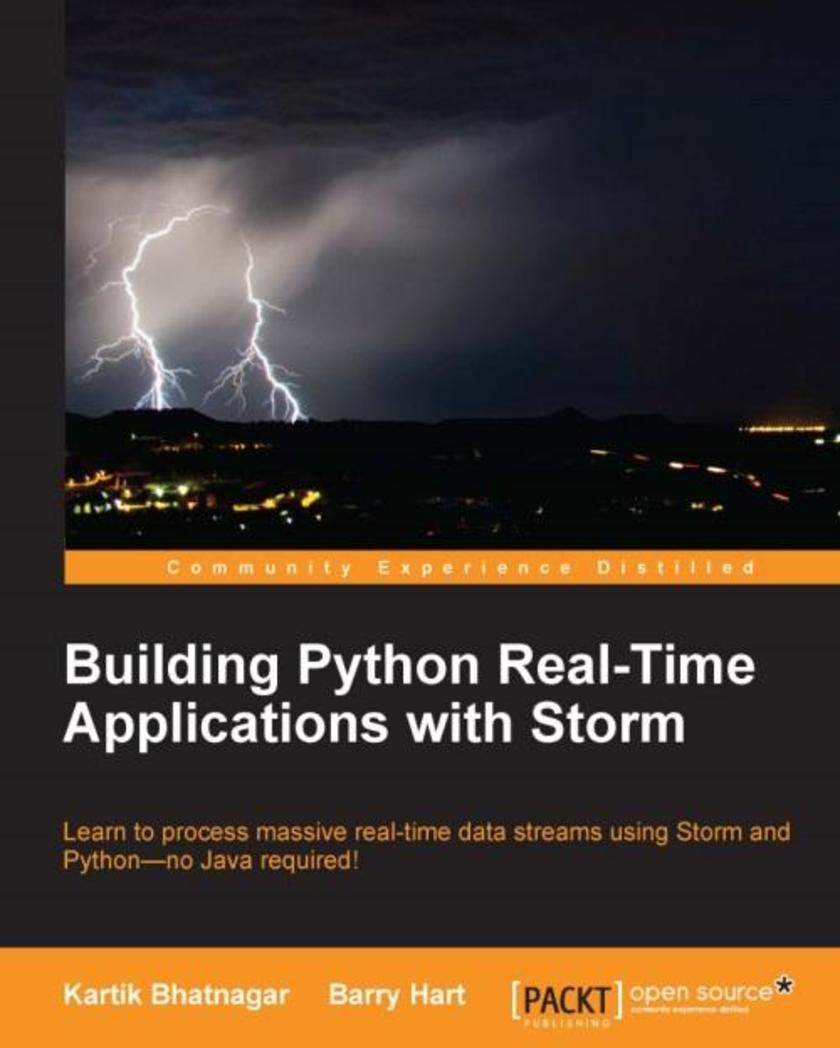
Building Python Real-Time Applications with Storm
¥54.49
Learn to process massive real-time data streams using Storm and Python—no Java required!About This Book Learn to use Apache Storm and the Python Petrel library to build distributed applications that process large streams of data Explore sample applications in real-time and analyze them in the popular NoSQL databases MongoDB and Redis Discover how to apply software development best practices to improve performance, productivity, and quality in your Storm projects Who This Book Is For This book is intended for Python developers who want to benefit from Storm’s real-time data processing capabilities. If you are new to Python, you’ll benefit from the attention to key supporting tools and techniques such as automated testing, virtual environments, and logging. If you’re an experienced Python developer, you’ll appreciate the thorough and detailed examples What You Will Learn Install Storm and learn about the prerequisites Get to know the components of a Storm topology and how to control the flow of data between them Ingest Twitter data directly into Storm Use Storm with MongoDB and Redis Build topologies and run them in Storm Use an interactive graphical debugger to debug your topology as it’s running in Storm Test your topology components outside of Storm Configure your topology using YAML In Detail Big data is a trending concept that everyone wants to learn about. With its ability to process all kinds of data in real time, Storm is an important addition to your big data “bag of tricks.” At the same time, Python is one of the fastest-growing programming languages today. It has become a top choice for both data science and everyday application development. Together, Storm and Python enable you to build and deploy real-time big data applications quickly and easily. You will begin with some basic command tutorials to set up storm and learn about its configurations in detail. You will then go through the requirement scenarios to create a Storm cluster. Next, you’ll be provided with an overview of Petrel, followed by an example of Twitter topology and persistence using Redis and MongoDB. Finally, you will build a production-quality Storm topology using development best practices. Style and approach This book takes an easy-to-follow and a practical approach to help you understand all the concepts related to Storm and Python.
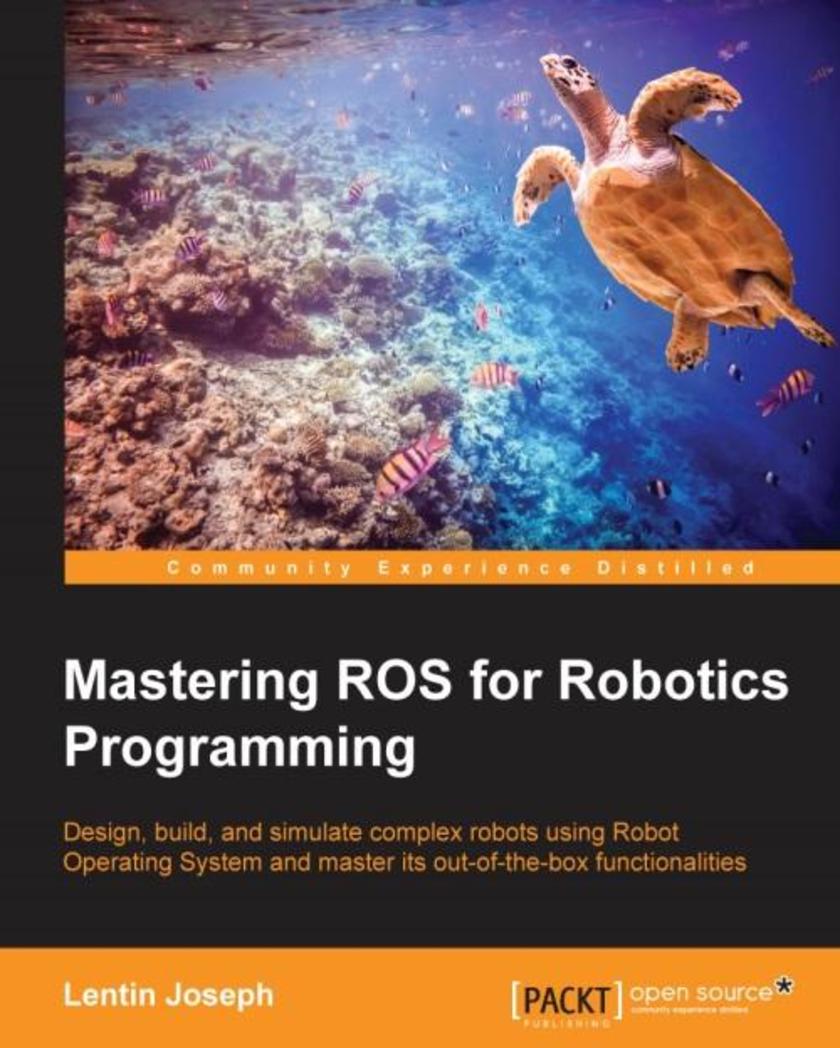
Mastering ROS for Robotics Programming
¥99.18
Design, build and simulate complex robots using Robot Operating System and master its out-of-the-box functionalities About This Book Develop complex robotic applications using ROS for interfacing robot manipulators and mobile robots with the help of high end robotic sensors Gain insights into autonomous navigation in mobile robot and motion planning in robot manipulators Discover the best practices and troubleshooting solutions everyone needs when working on ROS Who This Book Is For If you are a robotics enthusiast or researcher who wants to learn more about building robot applications using ROS, this book is for you. In order to learn from this book, you should have a basic knowledge of ROS, GNU/Linux, and C++ programming concepts. The book will also be good for programmers who want to explore the advanced features of ROS. What You Will Learn Create a robot model of a Seven-DOF robotic arm and a differential wheeled mobile robot Work with motion planning of a Seven-DOF arm using MoveIt! Implement autonomous navigation in differential drive robots using SLAM and AMCL packages in ROS Dig deep into the ROS Pluginlib, ROS nodelets, and Gazebo plugins Interface I/O boards such as Arduino, Robot sensors, and High end actuators with ROS Simulation and motion planning of ABB and Universal arm using ROS Industrial Explore the ROS framework using its latest version In Detail The area of robotics is gaining huge momentum among corporate people, researchers, hobbyists, and students. The major challenge in robotics is its controlling software. The Robot Operating System (ROS) is a modular software platform to develop generic robotic applications.This book discusses the advanced concepts in robotics and how to program using ROS. It starts with deep overview of the ROS framework, which will give you a clear idea of how ROS really works. During the course of the book, you will learn how to build models of complex robots, and simulate and interface the robot using the ROS MoveIt motion planning library and ROS navigation stacks.After discussing robot manipulation and navigation in robots, you will get to grips with the interfacing I/O boards, sensors, and actuators of ROS. One of the essential ingredients of robots are vision sensors, and an entire chapter is dedicated to the vision sensor, its interfacing in ROS, and its programming.You will discuss the hardware interfacing and simulation of complex robot to ROS and ROS Industrial (Package used for interfacing industrial robots).Finally, you will get to know the best practices to follow when programming using ROS.Style and approach This is a simplified guide to help you learn and master advanced topics in ROS using hands-on examples.
Mastering Linux Kernel Development
¥90.46
Explore Implementation of core kernel subsystems About This Book ? Master the design, components, and structures of core kernel subsystems ? Explore kernel programming interfaces and related algorithms under the hood ? Completely updated material for the 4.12.10 kernel Who This Book Is For If you are a kernel programmer with a knowledge of kernel APIs and are looking to build a comprehensive understanding, and eager to explore the implementation, of kernel subsystems, this book is for you. It sets out to unravel the underlying details of kernel APIs and data structures, piercing through the complex kernel layers and gives you the edge you need to take your skills to the next level. What You Will Learn ? Comprehend processes and fles—the core abstraction mechanisms of the Linux kernel that promote effective simplification and dynamism ? Decipher process scheduling and understand effective capacity utilization under general and real-time dispositions ? Simplify and learn more about process communication techniques through signals and IPC mechanisms ? Capture the rudiments of memory by grasping the key concepts and principles of physical and virtual memory management ? Take a sharp and precise look at all the key aspects of interrupt management and the clock subsystem ? Understand concurrent execution on SMP platforms through kernel synchronization and locking techniques In Detail Mastering Linux Kernel Development looks at the Linux kernel, its internal arrangement and design, and various core subsystems, helping you to gain significant understanding of this open source marvel. You will look at how the Linux kernel, which possesses a kind of collective intelligence thanks to its scores of contributors, remains so elegant owing to its great design. This book also looks at all the key kernel code, core data structures, functions, and macros, giving you a comprehensive foundation of the implementation details of the kernel’s core services and mechanisms. You will also look at the Linux kernel as well-designed software, which gives us insights into software design in general that are easily scalable yet fundamentally strong and safe. By the end of this book, you will have considerable understanding of and appreciation for the Linux kernel. Style and approach Each chapter begins with the basic conceptual know-how for a subsystem and extends into the details of its implementation. We use appropriate code excerpts of critical routines and data structures for subsystems.
Linux Device Drivers Development
¥80.65
Learn to develop customized device drivers for your embedded Linux system About This Book ? Learn to develop customized Linux device drivers ? Learn the core concepts of device drivers such as memory management, kernel caching, advanced IRQ management, and so on. ? Practical experience on the embedded side of Linux Who This Book Is For This book will help anyone who wants to get started with developing their own Linux device drivers for embedded systems. Embedded Linux users will benefit highly from this book. This book covers all about device driver development, from char drivers to network device drivers to memory management. What You Will Learn ? Use kernel facilities to develop powerful drivers ? Develop drivers for widely used I2C and SPI devices and use the regmap API ? Write and support devicetree from within your drivers ? Program advanced drivers for network and frame buffer devices ? Delve into the Linux irqdomain API and write interrupt controller drivers ? Enhance your skills with regulator and PWM frameworks ? Develop measurement system drivers with IIO framework ? Get the best from memory management and the DMA subsystem ? Access and manage GPIO subsystems and develop GPIO controller drivers In Detail Linux kernel is a complex, portable, modular and widely used piece of software, running on around 80% of servers and embedded systems in more than half of devices throughout the World. Device drivers play a critical role in how well a Linux system performs. As Linux has turned out to be one of the most popular operating systems used, the interest in developing proprietary device drivers is also increasing steadily. This book will initially help you understand the basics of drivers as well as prepare for the long journey through the Linux Kernel. This book then covers drivers development based on various Linux subsystems such as memory management, PWM, RTC, IIO, IRQ management, and so on. The book also offers a practical approach on direct memory access and network device drivers. By the end of this book, you will be comfortable with the concept of device driver development and will be in a position to write any device driver from scratch using the latest kernel version (v4.13 at the time of writing this book). Style and approach A set of engaging examples to develop Linux device drivers
GeoServer Beginner's Guide - Second Edition
¥90.46
This step-by-step guide will teach you how to use GeoServer to build custom and interactive maps using your data. About This Book ? Exploit the power of GeoServer to provide agile, flexible, and low -cost community projects ? Share real-time maps quickly ? Boost your map server's performance using the power and flexibility of GeoServer Who This Book Is For If you are a web developer with knowledge of server side *ing, have experience in installing applications on the server, and want to go beyond Google Maps by offering dynamically built maps on your site with your latest geospatial data stored in MySQL, PostGIS, MySQL, or Oracle, this is the book for you. What You Will Learn ? Install GeoServer quickly ? Access dynamic real-time geospatial data that you can easily integrate into your own web-based application ? Create custom styles for lines, points, and polygons for great-looking maps ? Command GeoServer remotely using REST ? Tune your GeoServer instance for performance ? Move GeoServer into production ? Learn advanced topics to extend GeoServer's capabilities In Detail GeoServer is an opensource server written in Java that allows users to share, process, and edit geospatial data. This book will guide you through the new features and improvements of GeoServer and will help you get started with it. GeoServer Beginner's Guide gives you the impetus to build custom maps using your data without the need for costly commercial software licenses and restrictions. Even if you do not have prior GIS knowledge, you will be able to make interactive maps after reading this book. You will install GeoServer, access your data from a database, and apply style points, lines, polygons, and labels to impress site visitors with real-time maps. Then you follow a step-by-step guide that installs GeoServer in minutes. You will explore the web-based administrative interface to connect to backend data stores such as PostGIS, and Oracle. Going ahead, you can display your data on web-based interactive maps, use style lines, points, polygons, and embed images to visualize this data for your web visitors. You will walk away from this book with a working application ready for production. After reading GeoServer Beginner's Guide, you will be able to build beautiful custom maps on your website using your geospatial data. Style and approach Step-by-step instructions are included and the needs of a beginner are totally satisfied by the book. The book consists of plenty of examples with accompanying screenshots and code for an easy learning curve.


