


 购物车
购物车 个人中心
个人中心
Learn Python in One Hour:Programming by Example
¥40.79
You're already a smart person, you don't need a 1000+ page book to get you started on the web's fastest growing programming platform. Instead, Learn Python in One Hour delivers on the promise of code literacy while saving your most precious commodity - time itself. Volkman's innovative programming-by-example approach means you focus on usage, not mindless detail. Based on the author's sold-out live seminars, you'll see Python's flexible coding technique in action as we refactor from script to procedural to object-oriented during actual problem solving. In a seven-lesson progression, you'll be exposed to this and more: Basic file input and output operations Exception handling with try/except Using functions to compute and return multiple values Basic elements of a class definition and how to call methods Lists, dictionaries, sets, and other collections Iteration through collections, files, sorted sets Converting lists to strings and vice-versa Six most common Python pitfalls Take the One Hour challenge and see if you too can pick up 90% of syntax and semantics in less time than you probably spend commuting each day.About the Author Victor R. Volkman graduated cum laude from Michigan Technological University with a BS in Computer Science in 1986. Since then, he has written for numerous publications, including The C Gazette, C++ Users Journal, Windows Developers Journal, and many others. He has taught college-level programming courses at Washtenaw Community College and has served on its Computer Information Science (CIS) Faculty Advisory Board for more than a decade. Volkman says Python helped him "rediscover the joy of programming again." www.volkman.org From Modern Software Press
Mastering MongoDB 3.x:An expert's guide to building fault-tolerant MongoDB appli
¥259.95
An expert's guide to build fault tolerant MongoDB applicationAbout This Book·Master the advanced modeling, querying, and administration techniques in MongoDB and become a MongoDB expert·Covers the latest updates and Big Data features frequently used by professional MongoDB developers and administrators·If your goal is to become a certified MongoDB professional, this book is your perfect companionWho This Book Is ForMastering MongoDB is a book for database developers, architects, and administrators who want to learn how to use MongoDB more effectively and productively.If you have experience in, and are interested in working with, NoSQL databases to build apps and websites, then this book is for you.What You Will Learn·Get hands-on with advanced querying techniques such as indexing, expressions, arrays, and more.·Configure, monitor, and maintain highly scalable MongoDB environment like an expert.·Master replication and data sharding to optimize read/write performance.·Design secure and robust applications based on MongoDB.·Administer MongoDB-based applications on-premise or in the cloud·Scale MongoDB to achieve your design goals·Integrate MongoDB with big data sources to process huge amounts of dataIn DetailMongoDB has grown to become the de facto NoSQL database with millions of users—from small startups to Fortune 500 companies. Addressing the limitations of SQL schema-based databases, MongoDB pioneered a shift of focus for DevOps and offered sharding and replication maintainable by DevOps teams. The book is based on MongoDB 3.x and covers topics ranging from database querying using the shell, built in drivers, and popular ODM mappers to more advanced topics such as sharding, high availability, and integration with big data sources.You will get an overview of MongoDB and how to play to its strengths, with relevant use cases. After that, you will learn how to query MongoDB effectively and make use of indexes as much as possible. The next part deals with the administration of MongoDB installations on-premise or in the cloud. We deal with database internals in the next section, explaining storage systems and how they can affect performance. The last section of this book deals with replication and MongoDB scaling, along with integration with heterogeneous data sources. By the end this book, you will be equipped with all the required industry skills and knowledge to become a certified MongoDB developer and administrator.Style and approachThis book takes a practical, step-by-step approach to explain the concepts of MongoDB. Practical use-cases involving real-world examples are used throughout the book to clearly explain theoretical concepts.
Learning Angular 2
¥297.10
Your quick, no-nonsense guide to building real-world apps with Angular 2About This Book·The first and best overview of Angular 2 on the market—this guide gathers together everything there is to know about Angular 2 and groups it into intuitive sections.·This book is your detailed map of every feature and its use cases.·The author has done all the hard work of fitting everything Angular 2 means for developers together for you, making this book the quickest way to learn Angular 2 from scratch.Who This Book Is ForThis book is targeted at web developers who want to build the next generation of state-of-the-art mobile and desktop web applications with Angular 2. This book does not require you to have prior exposure to either Angular 1.x or 2, although comprehensive knowledge of JavaScript is assumed. It's great for newcomers to Angular who learn best through clear explanations and definitions of concepts.What You Will Learn·Set up your working environment in order to have all the tools you need to start building Angular 2 components with minimum effort·Get up to speed with TypeScript, a powerful typed superset of JavaScript that compiles to plain JavaScript·Take full control of how your data is rendered and updated upon data changes·Build powerful web applications based on structured component hierarchies that emit and listen to events and data changes throughout the elements tree·Explore how to consume external APIs and data services and allow data editing by harnessing the power of web forms made with Angular 2·Deliver seamless web navigation experiences with application routing and state handling common features with ease·Discover how to bulletproof your applications by introducing smart unit testing techniques and debugging toolsIn DetailAngular 2 was conceived as a complete rewrite in order to fulfill the expectations of modern developers who demand blazing fast performance and responsiveness from their web applications.This book will help you learn the basics of how to design and build Angular 2 components right from the beginning, providing full coverage of the TypeScript syntax required to follow the examples included. From that point on, we will build upon our first components, interconnect them, and give shape to larger web applications. We will then move to implementing routing in Angular 2, analyzing how to handle application states, and navigating from one component to another in depth. After this, the book features full coverage of web forms and user input validation, later leveraging all of this information to go through the basics of implementing user authentication in Angular 2 and providing a bird's eye view of the different strategies at hand to secure pages and areas of your website. Animating components and DOM elements with Angular 2 is also covered in this book. The final part of this book provides broad insights into how to unit test components and other modules such as services, directives, routes or pipes.Style and approachThis book covers everything there is to know about getting well-acquainted with Angular without bogging you down. Everything is neatly laid out under clear headings for quick consultation, offering you the information required to understand a concept immediately, with short relevant examples of each feature.
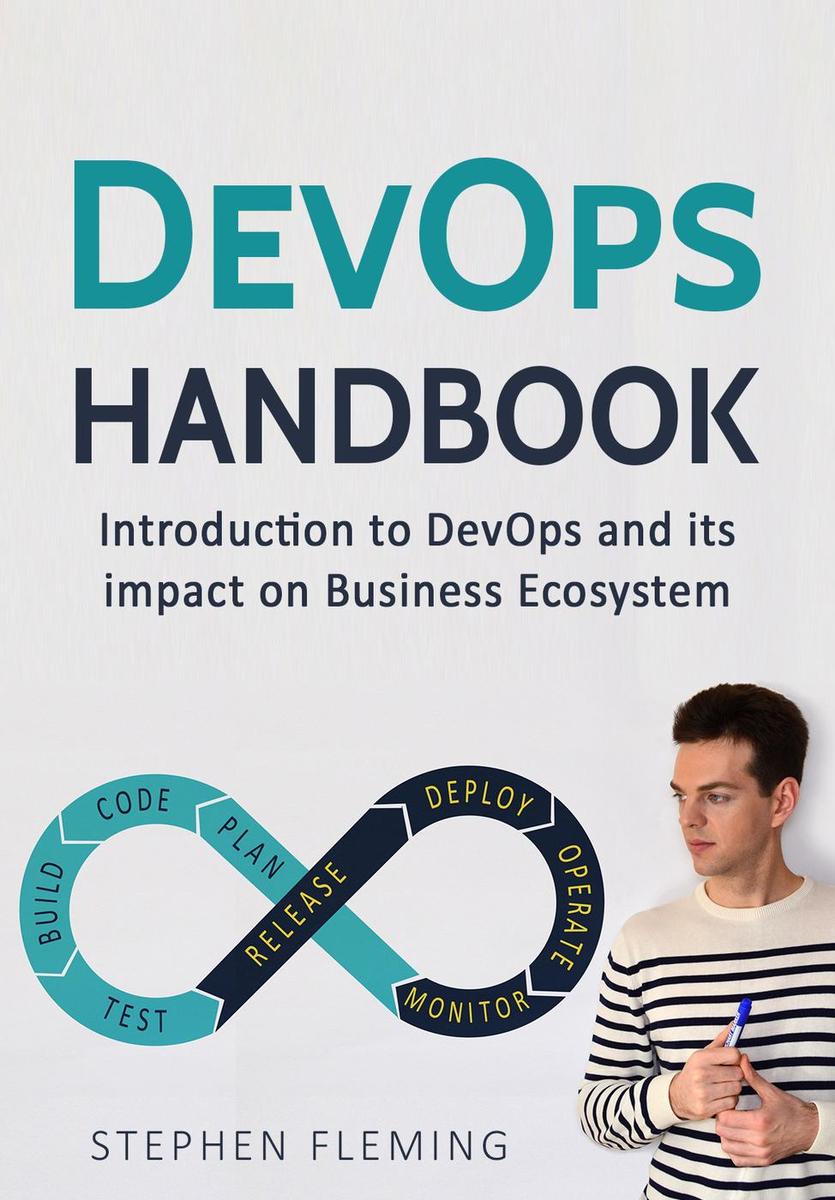
DevOps:Introduction to DevOps and its impact on Business Ecosystem
¥32.62
“It is not the strongest of the species that survive, nor the most intelligent, but the one most responsive to change.”-?Charles Darwin As the industry is moving towards maximum digitization there is a consensus that DevOps practices help you deliver software faster, more reliable, and with fewer errors. DevOps is set of practices and cultural values that have been proven to help organizations of all sizes improve their software release cycles, software quality, security, and ability to get rapid feedback on product development. This book is aimed at Consultant, Project Manager and people from techno-commercial profiles who would be explaining the benefits of DevOps to the client, internal leadership or project teams. As the crux of DevOps methodology lies in the cultural transformation of the organization, people who are stakeholders in shaping this change must understand the overall alignment of business goals with this methodology. You would get to explore: ·What is DevOps·Relationship between Agile, Scrum, Kanban and DevOps·DevOps Adoption:? Organizational cultural Change·DevOps Ecosystem·Emerging Trends·DevOps success stories In the Bonus Booklet you will find out: ·DevOps Job Market overview·Insights into DevOps job application·People to follow on twitter “Grab your copy today along with Bonus DevOps Booklet”
Javascript: Javascript Programming For Absolute Beginners
¥32.62
☆★☆ Javascript: Javascript Programming For Absolute Beginners☆★☆ The best starter guide for javascript!The fundamentals of javascript are often missed, however, this book's primary focus and emphasis is learning the essentials and to build from the ground up.? What You'lll Learn The history of JavaScript and its uses Setting Up Your Environment The Vital Basics of HTML and CSS Statements, Comments & Variables How to properly use jQuery String Operators JavaScript Array Methods Loops and Iteration How To Use Functions And much, much more! ? Within this book you will learn various mechanisms of javascript programming: variables, conditional statements, and why learning these core principles lead to success.Once you gain knowledge of the fundamental building blocks of javascript you will gain confidence to tackle more complex topics down the road.Programming books can easily retail for 100s of dollars, why not start with an expert you can trust and for an affordable price?The immense value of this book cannot be understated, and this is a once in a life time opportunity for you to take advantage of and invest in yourself by empowering yourself with the right tools and knowledge for success.What are you waiting for?Includes: 21 practice questions! Note* For best visual experience of diagrams it is highly recommend you purchases the paperback version for best image quality.☆★☆ Grab your copy now!☆★☆
Practical Data Wrangling
¥222.81
Turn your noisy data into relevant, insight-ready information by leveraging the data wrangling techniques in Python and RAbout This Book·This easy-to-follow guide takes you through every step of the data wrangling process in the best possible way·Work with different types of datasets, and reshape the layout of your data to make it easier for analysis·Get simple examples and real-life data wrangling solutions for data pre-processingWho This Book Is ForIf you are a data scientist, data analyst, or a statistician who wants to learn how to wrangle your data for analysis in the best possible manner, this book is for you. As this book covers both R and Python, some understanding of them will be beneficial.What You Will Learn·Read a csv file into python and R, and print out some statistics on the data·Gain knowledge of the data formats and programming structures involved in retrieving API data·Make effective use of regular expressions in the data wrangling process·Explore the tools and packages available to prepare numerical data for analysis·Find out how to have better control over manipulating the structure of the data·Create a dexterity to programmatically read, audit, correct, and shape data·Write and complete programs to take in, format, and output data setsIn DetailAround 80% of time in data analysis is spent on cleaning and preparing data for analysis. This is, however, an important task, and is a prerequisite to the rest of the data analysis workflow, including visualization, analysis and reporting. Python and R are considered a popular choice of tool for data analysis, and have packages that can be best used to manipulate different kinds of data, as per your requirements. This book will show you the different data wrangling techniques, and how you can leverage the power of Python and R packages to implement them.You'll start by understanding the data wrangling process and get a solid foundation to work with different types of data. You'll work with different data structures and acquire and parse data from various locations. You'll also see how to reshape the layout of data and manipulate, summarize, and join data sets. Finally, we conclude with a quick primer on accessing and processing data from databases, conducting data exploration, and storing and retrieving data quickly using databases.The book includes practical examples on each of these points using simple and real-world data sets to give you an easier understanding. By the end of the book, you'll have a thorough understanding of all the data wrangling concepts and how to implement them in the best possible way.Style and approachThis is a practical book on data wrangling designed to give you an insight into the practical application of data wrangling. It takes you through complex concepts and tasks in an accessible way, featuring information on a wide range of data wrangling techniques with Python and R
Secrets Every Author Should Know: Indie Publishing Basics
¥23.14
Frustrated with the plethora of conflicting information on how to self-publish? Wouldn’t it be wonderful to sit down with someone who has already made the mistakes, done the analysis, and will provide you the short cuts—the secrets about the things that work? Now you have that chance with the Career Author Secrets series.Indie Publishing (Self Publishing) has changed dramatically in the past five years. There are now new, easier tools to use for every part of the process—editing, formatting, distribution, sales, and analysis. This first book in the Career Author Secrets series provides a foundation for navigating the indie publishing process and staying away from the scammers. It breaks down the requirements for self-publishing successfully, protecting your rights for the future, and YES I do share all the secrets I’ve learned. It contains everything a DIY author needs to get her book from manuscript to professional publication in both ebook and print, including: Why books don’t sell Options for DIY or contracting professionals The truth about ISBNs & Copyright Registration Secrets for formatting your book the easy way Creating book covers that sell Making decisions about distribution This book is especially valuable for those with limited technical skills who want to produce a quality professional book for the least amount of cost. Learn the secrets to easier implementation and how to make good decisions on what is worth your time and money.
React 16 Essentials - Second Edition
¥222.81
Everything you need to start working with React 16 and assess React FiberAbout This Book·Hands-on examples and tutorials for the latest React 16 release·Assess the impact of React Fiber for your future web development·Build maintainable and high performance React 16 web applicationsWho This Book Is ForIf you're a frontend developer with some knowledge of native JavaScript development and frontend frameworks, wishing to learn the fastest web user interface library there is, then this book is ideal for you.What You Will Learn·Learn to code React 16 with hands-on examples and clear tutorials·Install powerful React 16 tools to make development much more efficient·Understand the impact of React Fiber today and the future of your web development·Utilize the Redux application architecture with your React components·Create React 16 elements with properties and children·Get started with stateless and stateful React components·Use JSX to speed up your React 16 development process·Add reactivity to your React 16 components with lifecycle methods·Test your React 16 components with the Jest test frameworkIn DetailReact 16 Essentials, Second Edition, fully updated for React 16, takes you on a fast-paced journey through building your own maintainable React 16 applications. React experts Artemij Fedosejev and Adam Boduch give you all the essentials you need to know and start working with React 16, in this new edition of the best-selling React.js Essentials title. You'll find the latest React 16 code updates, assessment of React Fiber, new coverage of Redux, and how to work as a modern React developer.The authors offer you their current assessment of React Fiber, and you'll soon be exploring React 16 hands on, creating your own single and multiple user interface elements with React 16. You'll then see how to create stateless and stateful components and make them reactive. You'll also learn to interact between your components and lifecycle methods, and gauge how to effectively integrate your user interface components with other JavaScript libraries. Delve deep into the core elements of the Redux architecture and learn how to manage your application and data persistence. Then go the extra mile with the Jest test framework, and run multiple tests on your applications and find solutions to scale without complexity.Today React is used by Facebook, Instagram, Khan Academy, and Imperial College London, to name a few. Many new users recognize the benefits of React and adopt it in their own projects, forming a fast-growing community. The speed at which React has evolved promises a bright future for anyone who invests in learning it today. Let Artemij and Adam bring you a brand new look at React 16 and React Fiber, and move your web development into the future.Style and approachReact 16 Essentials, Second Edition, will take you on a fast-paced, hands-on journey through building your own maintainable React 16 applications.
Reactive Programming in Kotlin
¥80.65
Learn how to implement Reactive Programming paradigms with Kotlin, and apply them to web programming with Spring Framework 5.0 and in Android Application Development. About This Book ? Learn how to solve blocking user experience with Reactive Programming and get deep insights into RxKotlin ? Integrate Reactive Kotlin with Spring and build fantastic Android Apps with RxKotlin and RxAndroid ? Build reactive architectures that reduce complexity throughout the development process and make your apps(web and Android) scalable Who This Book Is For This book is for Kotlin developers who would like to build fault-tolerant, scalable, and distributed systems. A basic knowledge of Kotlin is required, but no prior knowledge of reactive programming. What You Will Learn ? Learn about reactive programming paradigms and how reactive programming can improve your existing projects ? Gain in-depth knowledge in RxKotlin 2.0 and the ReactiveX Framework ? Use RxKotlin with Android ? Create your own custom operators in RxKotlin ? Use Spring Framework 5.0 with Kotlin ? Use the reactor-kotlin extension ? Build Rest APIs with Spring,Hibernate, and RxKotlin ? Use testSubscriber to test RxKotlin applications ? Use backpressure management and Flowables In Detail In today’s app-driven era, when programs are asynchronous, and responsiveness is so vital, reactive programming can help you write code that’s more reliable, easier to scale, and better-performing. Reactive programming is revolutionary. With this practical book, Kotlin developers will first learn how to view problems in the reactive way, and then build programs that leverage the best features of this exciting new programming paradigm. You will begin with the general concepts of Reactive programming and then gradually move on to working with asynchronous data streams. You will dive into advanced techniques such as manipulating time in data-flow, customizing operators and provider and how to Use the concurrency model to control asynchronicity of code and process event handlers effectively. You will then be introduced to functional reactive programming and will learn to apply FRP in practical use cases in Kotlin. This book will also take you one step forward by introducing you to spring 5 and spring boot 2 using Kotlin. By the end of the book, you will be able to build real-world applications with reactive user interfaces as well as you’ll learn to implement reactive programming paradigms in Android. Style and Approach Loaded with numerous code examples and real-life projects, this book helps you delve into Reactive Programming with Kotlin, and apply it to real-world Spring-web and Android projects, thus making all your apps reactive.
SciPy Recipes
¥63.21
Tackle the most sophisticated problems associated with scientific computing and data manipulation using SciPy About This Book ? Covers a wide range of data science tasks using SciPy, NumPy, pandas, and matplotlib ? Effective recipes on advanced scientific computations, statistics, data wrangling, data visualization, and more ? A must-have book if you're looking to solve your data-related problems using SciPy, on-the-go Who This Book Is For Python developers, aspiring data scientists, and analysts who want to get started with scientific computing using Python will find this book an indispensable resource. If you want to learn how to manipulate and visualize your data using the SciPy Stack, this book will also help you. A basic understanding of Python programming is all you need to get started. What You Will Learn ? Get a solid foundation in scientific computing using Python ? Master common tasks related to SciPy and associated libraries such as NumPy, pandas, and matplotlib ? Perform mathematical operations such as linear algebra and work with the statistical and probability functions in SciPy ? Master advanced computing such as Discrete Fourier Transform and K-means with the SciPy Stack ? Implement data wrangling tasks efficiently using pandas ? Visualize your data through various graphs and charts using matplotlib In Detail With the SciPy Stack, you get the power to effectively process, manipulate, and visualize your data using the popular Python language. Utilizing SciPy correctly can sometimes be a very tricky proposition. This book provides the right techniques so you can use SciPy to perform different data science tasks with ease. This book includes hands-on recipes for using the different components of the SciPy Stack such as NumPy, SciPy, matplotlib, and pandas, among others. You will use these libraries to solve real-world problems in linear algebra, numerical analysis, data visualization, and much more. The recipes included in the book will ensure you get a practical understanding not only of how a particular feature in SciPy Stack works, but also of its application to real-world problems. The independent nature of the recipes also ensure that you can pick up any one and learn about a particular feature of SciPy without reading through the other recipes, thus making the book a very handy and useful guide. Style and approach This book consists of hands-on recipes where you’ll deal with real-world problems. You’ll execute a series of tasks as you walk through scientific computing challenges using SciPy. Your one-stop solution for common and not-so-common pain points, this is a book that you must have on the shelf.
Building Microservices with .NET Core 2.0 - Second Edition
¥80.65
Architect your .NET applications by breaking them into really small pieces - microservices -using this practical, example-based guide. About This Book ? Start your microservices journey and get a broader perspective on microservices development using C# 7.0 with .NET Core 2.0 ? Build, deploy, and test microservices using ASP.Net Core, ASP.NET Core API, and Microsoft Azure Cloud ? Get the basics of reactive microservices Who This Book Is For This book is for .NET Core developers who want to learn and understand the microservices architecture and implement it in their .NET Core applications. It’s ideal for developers who are completely new to microservices or just have a theoretical understanding of this architectural approach and want to gain a practical perspective in order to better manage application complexities. What You Will Learn ? Get acquainted with Microsoft Azure Service Fabric ? Compare microservices with monolithic applications and SOA ? Learn Docker and Azure API management ? Define a service interface and implement APIs using ASP.NET Core 2.0 ? Integrate services using a synchronous approach via RESTful APIs with ASP.NET Core 2.0 ? Implement microservices security using Azure Active Directory, OpenID Connect, and OAuth 2.0 ? Understand the operation and scaling of microservices in .NET Core 2.0 ? Understand the key features of reactive microservices and implement them using reactive extensions In Detail The microservices architectural style promotes the development of complex applications as a suite of small services based on business capabilities. This book will help you identify the appropriate service boundaries within your business. We'll start by looking at what microservices are and their main characteristics. Moving forward, you will be introduced to real-life application scenarios; after assessing the current issues, we will begin the journey of transforming this application by splitting it into a suite of microservices using C# 7.0 with .NET Core 2.0. You will identify service boundaries, split the application into multiple microservices, and define service contracts. You will find out how to configure, deploy, and monitor microservices, and configure scaling to allow the application to quickly adapt to increased demand in the future. With an introduction to reactive microservices, you’ll strategically gain further value to keep your code base simple, focusing on what is more important rather than on messy asynchronous calls. Style and approach This guide serves as a stepping stone that helps .NET Core developers in their microservices architecture. This book provides just enough theory to understand the concepts and apply the examples.
R Programming By Example
¥90.46
This step-by-step guide demonstrates how to build simple-to-advanced applications through examples in R using modern tools. About This Book ? Get a firm hold on the fundamentals of R through practical hands-on examples ? Get started with good R programming fundamentals for data science ? Exploit the different libraries of R to build interesting applications in R Who This Book Is For This books is for aspiring data science professionals or statisticians who would like to learn about the R programming language in a practical manner. Basic programming knowledge is assumed. What You Will Learn ? Discover techniques to leverage R’s features, and work with packages ? Perform a de*ive analysis and work with statistical models using R ? Work efficiently with objects without using loops ? Create diverse visualizations to gain better understanding of the data ? Understand ways to produce good visualizations and create reports for the results ? Read and write data from relational databases and REST APIs, both packaged and unpackaged ? Improve performance by writing better code, delegating that code to a more efficient programming language, or making it parallel In Detail R is a high-level statistical language and is widely used among statisticians and data miners to develop analytical applications. Often, data analysis people with great analytical skills lack solid programming knowledge and are unfamiliar with the correct ways to use R. Based on the version 3.4, this book will help you develop strong fundamentals when working with R by taking you through a series of full representative examples, giving you a holistic view of R. We begin with the basic installation and configuration of the R environment. As you progress through the exercises, you'll become thoroughly acquainted with R's features and its packages. With this book, you will learn about the basic concepts of R programming, work efficiently with graphs, create publication-ready and interactive 3D graphs, and gain a better understanding of the data at hand. The detailed step-by-step instructions will enable you to get a clean set of data, produce good visualizations, and create reports for the results. It also teaches you various methods to perform code profiling and performance enhancement with good programming practices, delegation, and parallelization. By the end of this book, you will know how to efficiently work with data, create quality visualizations and reports, and develop code that is modular, expressive, and maintainable. Style and Approach This is an easy-to-understand guide filled with real-world examples, giving you a holistic view of R and practical, hands-on experience.
Learning C# 7 By Developing Games with Unity 2017 - Third Edition
¥90.46
Develop your first interactive 2D and 3D platformer game by learning the fundamentals of C# About This Book ? This is a step-by-step guide to learn the fundamentals of C# 7 *ing to develop GameObjects and master the basics of the new UI system in Unity ? Build and develop your 2D game right from scratch while implementing the principles of object-oriented programming and coding in C# 7 ? Get to grips with the fundamentals of optimizing your game using the latest features of Unity 2017 Who This Book Is For The book is targeted at beginner level Unity developers with no programming experience. If you are a Unity developer and you wish to learn how to write C# *s and code by creating games, then this book is for you. What You Will Learn ? Learn C# 7 using new features like tuples, variables, and non-nullable reference types while building games ? Understand the fundamentals of variables, methods, and code syntax in C# ? Use loops and collections efficiently in Unity to reduce the amount of code ? Develop a game using the object-oriented programming principles ? Implement simple enemy characters into the game to learn point to point movement and Tree behaviors ? Avoid performance mistakes by implementing different optimization techniques ? Export 3D models and 3D animations and import them inside a Unity project ? With your new knowledge of coding, you will be able to look at Unity's Scripting Reference code examples with confidence In Detail With the latest version of Unity 2017 released, are you interested in developing creative and interactive games while learning C# alongside? Then this is the book that you are looking for. Its all about offering you a fun introduction to the world of game programming with C#. You’ll start with the basics to get started with C# 7 and its latest features. Then you’ll see how to use C# 7 and its latest functional programming capabilities to create amazing games with Unity 2017. You’ll create your first C# * for Unity, add objects into it, and learn how to create game elements with them. Then you’ll work with the latest functional programming features of C# and how to leverage them for great game *ing. Throughout the book, you’ll learn to use the new Unity 2017 2D tool set and create an interactive 2D game with it. You will make enemies appear to challenge your player, and go through some optimization techniques to ensure great game performance. At the end, your 2D game will be transformed into 3D, and you’ll be able to skill up to become a pro C# programmer with Unity 2017! Style and approach The book takes a practical, step-by-step approach where you learn C# coding while developing fun and interactive games.
Vue.js 2.x by Example
¥90.46
Learn the fundamentals of vue.js by creating complex SPAs with Vuex, vue-router and more About This Book ? We bridge the gap between "learning" and "doing" by providing real-world examples that will improve your web development skills with Vue.js ? Explore the exciting features of Vue.js 2 through practical and interesting examples ? Explore modern development tools and learn how to utilize them by building applications with Vue.js Who This Book Is For This book is for developers who know the basics of JavaScript and are looking to learn Vue.js with real examples. You should understand the basics of JavaScript functions and variables and be comfortable with using CSS or a CSS framework for styling your projects. What You Will Learn ? Looping through data with Vue.js ? Searching and filtering data ? Using components to display data ? Getting a list of files using the dropbox API ? Navigating through a file tree and loading folders from a URL ? Caching with Vuex ? Pre-caching for faster navigation ? Introducing vue-router and loading components ? Using vue-router dynamic routes to load data ? Using vue-router and Vuex to create an ecommerce store In Detail Vue.js is a frontend web framework which makes it easy to do just about anything, from displaying data up to creating full-blown web apps, and has become a leading tool for web developers. This book puts Vue.js into a real-world context, guiding you through example projects that helps you build Vue.js applications from scratch. With this book, you will learn how to use Vue.js by creating three Single Page web applications. Throughout this book, we will cover the usage of Vue, for building web interfaces, Vuex, an official Vue plugin which makes caching and storing data easier, and Vue-router, a plugin for creating routes and URLs for your application. Starting with a JSON dataset, the first part of the book covers Vue objects and how to utilize each one. This will be covered by exploring different ways of displaying data from a JSON dataset. We will then move on to manipulating the data with filters and search and creating dynamic values. Next, you will see how easy it is to integrate remote data into an application by learning how to use the Dropbox API to display your Dropbox contents in an application In the final section, you will see how to build a product catalog and dynamic shopping cart using the Vue-router, giving you the building blocks of an e-commerce store. Style and approach This book takes you three projects, with step-by-step instructions to help you understand the concepts of Vue and put it into practice.
Python: Advanced Predictive Analytics
¥179.84
Gain practical insights by exploiting data in your business to build advanced predictive modeling applications About This Book ? A step-by-step guide to predictive modeling including lots of tips, tricks, and best practices ? Learn how to use popular predictive modeling algorithms such as Linear Regression, Decision Trees, Logistic Regression, and Clustering ? Master open source Python tools to build sophisticated predictive models Who This Book Is For This book is designed for business analysts, BI analysts, data scientists, or junior level data analysts who are ready to move on from a conceptual understanding of advanced analytics and become an expert in designing and building advanced analytics solutions using Python. If you are familiar with coding in Python (or some other programming/statistical/*ing language) but have never used or read about predictive analytics algorithms, this book will also help you. What You Will Learn ? Understand the statistical and mathematical concepts behind predictive analytics algorithms and implement them using Python libraries ? Get to know various methods for importing, cleaning, sub-setting, merging, joining, concatenating, exploring, grouping, and plotting data with pandas and NumPy ? Master the use of Python notebooks for exploratory data analysis and rapid prototyping ? Get to grips with applying regression, classification, clustering, and deep learning algorithms ? Discover advanced methods to analyze structured and unstructured data ? Visualize the performance of models and the insights they produce ? Ensure the robustness of your analytic applications by mastering the best practices of predictive analysis In Detail Social Media and the Internet of Things have resulted in an avalanche of data. Data is powerful but not in its raw form; it needs to be processed and modeled, and Python is one of the most robust tools out there to do so. It has an array of packages for predictive modeling and a suite of IDEs to choose from. Using the Python programming language, analysts can use these sophisticated methods to build scalable analytic applications. This book is your guide to getting started with predictive analytics using Python. You'll balance both statistical and mathematical concepts, and implement them in Python using libraries such as pandas, scikit-learn, and NumPy. Through case studies and code examples using popular open-source Python libraries, this book illustrates the complete development process for analytic applications. Covering a wide range of algorithms for classification, regression, clustering, as well as cutting-edge techniques such as deep learning, this book illustrates explains how these methods work. You will learn to choose the right approach for your problem and how to develop engaging visualizations to bring to life the insights of predictive modeling. Finally, you will learn best practices in predictive modeling, as well as the different applications of predictive modeling in the modern world. The course provides you with highly practical content from the following Packt books: 1. Learning Predictive Analytics with Python 2. Mastering Predictive Analytics with Python Style and approach This course aims to create a smooth learning path that will teach you how to effectively perform predictive analytics using Python. Through this comprehensive course, you’ll learn the basics of predictive analytics and progress to predictive modeling in the modern world.
Cloud Native programming with Golang
¥80.65
Discover practical techniques to build cloud-native apps that are scalable, reliable, and always available. About This Book ? Build well-designed and secure microservices. Enrich your microservices with continous integration and monitoring. ? Containerize your application with Docker ? Deploy your application to AWS. Learn how to utilize the powerful AWS services from within your application Who This Book Is For This book is for developers who want to begin building secure, resilient, robust, and scalable Go applications that are cloud native. Some knowledge of the Go programming language should be sufficient.To build the front-end application, you will also need some knowledge of JavaScript programming. What You Will Learn ? Understand modern software applications architectures ? Build secure microservices that can effectively communicate with other services ? Get to know about event-driven architectures by diving into message queues such as Kafka, Rabbitmq, and AWS SQS. ? Understand key modern database technologies such as MongoDB, and Amazon’s DynamoDB ? Leverage the power of containers ? Explore Amazon cloud services fundamentals ? Know how to utilize the power of the Go language to access key services in the Amazon cloud such as S3, SQS, DynamoDB and more. ? Build front-end applications using ReactJS with Go ? Implement CD for modern applications In Detail Cloud computing and microservices are two very important concepts in modern software architecture. They represent key skills that ambitious software engineers need to acquire in order to design and build software applications capable of performing and scaling. Go is a modern cross-platform programming language that is very powerful yet simple; it is an excellent choice for microservices and cloud applications. Go is gaining more and more popularity, and becoming a very attractive skill.. The book will take you on a journey into the world of microservices and cloud computing with the help of Go. It will start by covering the software architectural patterns of cloud applications, as well as practical concepts regarding how to scale, distribute, and deploy those applications. You will also learn how to build a JavaScript-based front-end for your application, using TypeScript and React. From there, we dive into commercial cloud offerings by covering AWS. Finally, we conclude our book by providing some overviews of other concepts and technologies that the reader can explore to move from where the book leaves off. Style and approach This book provides practical techniques, code examples, and architectural patterns required to build cloud native microservices in the Go language. It progresses through the subjects in a step-by-step manner. In each step, we cover the technical concepts behind it, the design considerations, and the code needed to build it.
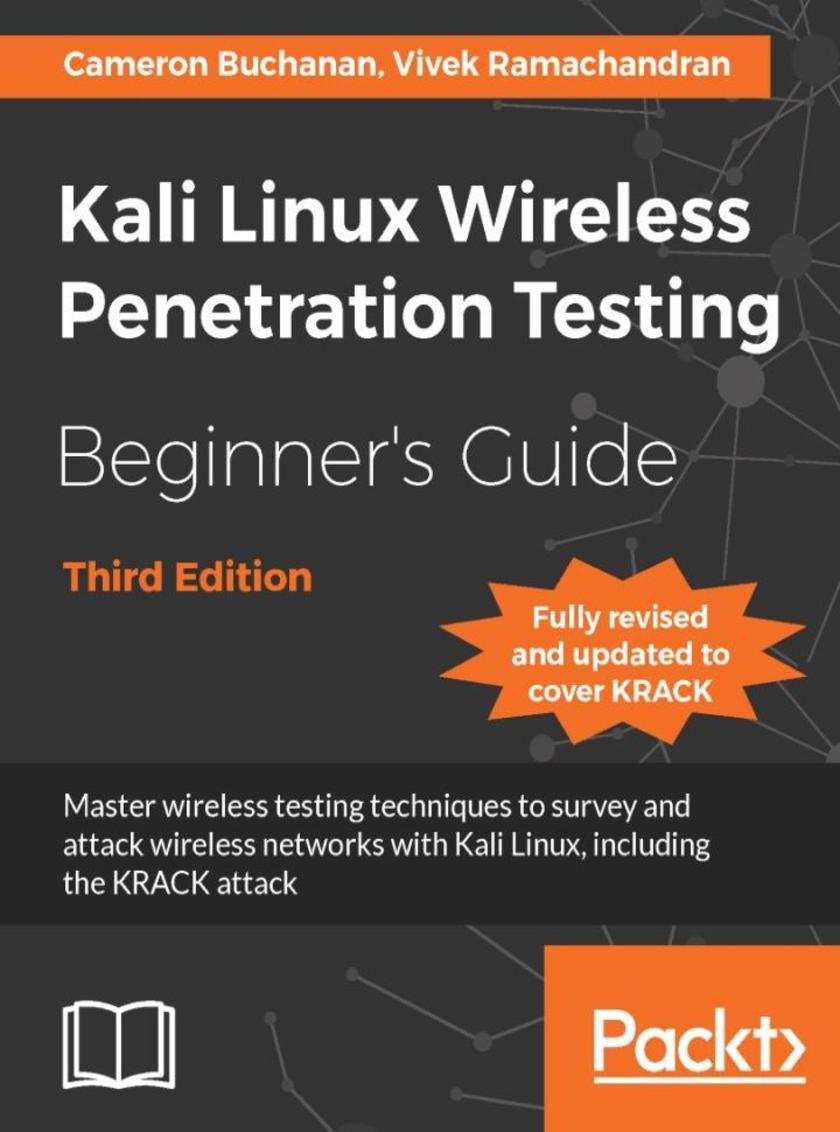
Kali Linux Wireless Penetration Testing Beginner's Guide - Third Edition
¥63.21
Kali Linux Wireless Penetration Testing Beginner's Guide, Third Edition presents wireless pentesting from the ground up, and has been updated with the latest methodologies, including full coverage of the KRACK attack. About This Book ? Learn wireless penetration testing with Kali Linux ? Detect hidden wireless networks and discover their names ? Explore advanced Wi-Fi hacking techniques including rogue access point hosting and probe sniffing ? Develop your encryption cracking skills and gain an insight into the methods used by attackers and the underlying technologies that facilitate these attacks Who This Book Is For Kali Linux Wireless Penetration Testing Beginner's Guide, Third Edition is suitable for anyone who wants to learn more about pentesting and how to understand and defend against the latest wireless network attacks. What You Will Learn ? Understand the KRACK attack in full detail ? Create a wireless lab for your experiments ? Sniff out wireless packets, hidden networks, and SSIDs ? Capture and crack WPA-2 keys ? Sniff probe requests and track users through their SSID history ? Attack radius authentication systems ? Sniff wireless traffic and collect interesting data ? Decrypt encrypted traffic with stolen keys In Detail As wireless networks become ubiquitous in our lives, wireless penetration testing has become a key skill in the repertoire of the professional penetration tester. This has been highlighted again recently with the discovery of the KRACK attack which enables attackers to potentially break into Wi-Fi networks encrypted with WPA2. The Kali Linux security distribution comes with a myriad of tools used for networking attacks and detecting security loopholes. Kali Linux Wireless Penetration Testing Beginner's Guide, Third Edition has been updated to Kali Linux 2017.3 with the latest methodologies, including full coverage of the KRACK attack and how to defend against it. The book presents wireless pentesting from the ground up, introducing all elements of penetration testing with each new technology. You'll learn various wireless testing methodologies by example, from the basics of wireless routing and encryption through to detailed coverage of hacking methods and attacks such as the Hirte and Caffe Latte. Style and approach Kali Linux Wireless Penetration Testing Beginner's Guide, Third Edition is a practical, hands-on guide to modern wi-fi network hacking. It covers both the theory and practice of wireless pentesting, offering detailed, real-world coverage of the latest vulnerabilities and attacks.
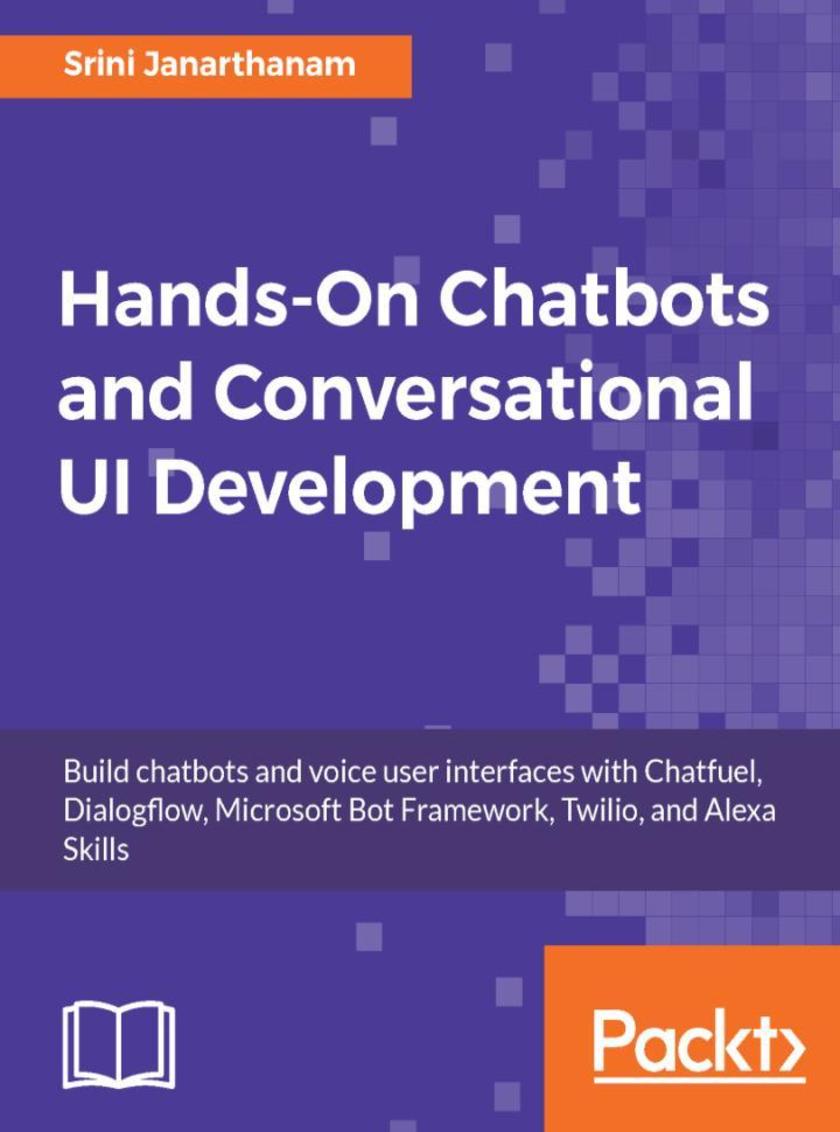
Hands-On Chatbots and Conversational UI Development
¥71.93
Build over 8 chatbots and conversational user interfaces with leading tools such as Chatfuel, Dialogflow, Microsoft Bot Framework, Twilio, Alexa Skills, and Google Actions and deploying them on channels like Facebook Messenge, Amazon Alexa and Google Home About This Book ? Understand the different use cases of Conversational UIs with this project-based guide ? Build feature-rich Chatbots and deploy them on multiple platforms ? Get real-world examples of voice-enabled UIs for personal and home assistance Who This Book Is For This book is for developers who are interested in creating interactive conversational UIs/Chatbots. A basic understanding of JavaScript and web APIs is required. What You Will Learn ? Design the flow of conversation between the user and the chatbot ? Create Task model chatbots for implementing tasks such as ordering food ? Get new toolkits and services in the chatbot ecosystem ? Integrate third-party information APIs to build interesting chatbots ? Find out how to deploy chatbots on messaging platforms ? Build a chatbot using MS Bot Framework ? See how to tweet, listen to tweets, and respond using a chatbot on Twitter ? Publish chatbots on Google Assistant and Amazon Alexa In Detail Conversation as an interface is the best way for machines to interact with us using the universally accepted human tool that is language. Chatbots and voice user interfaces are two flavors of conversational UIs. Chatbots are real-time, data-driven answer engines that talk in natural language and are context-aware. Voice user interfaces are driven by voice and can understand and respond to users using speech. This book covers both types of conversational UIs by leveraging APIs from multiple platforms. We'll take a project-based approach to understand how these UIs are built and the best use cases for deploying them. We'll start by building a simple messaging bot from the Facebook Messenger API to understand the basics of bot building. Then we move on to creating a Task model that can perform complex tasks such as ordering and planning events with the newly-acquired-by-Google Dialogflow and Microsoft Bot framework. We then turn to voice-enabled UIs that are capable of interacting with users using speech with Amazon Alexa and Google Home. By the end of the book, you will have created your own line of chatbots and voice UIs for multiple leading platforms. Style and approach This is a practical book, where each chapter focuses on a chatbot project. The chapters take a step-by-step approach to help you build intelligent chatbots that act as personal assistants.
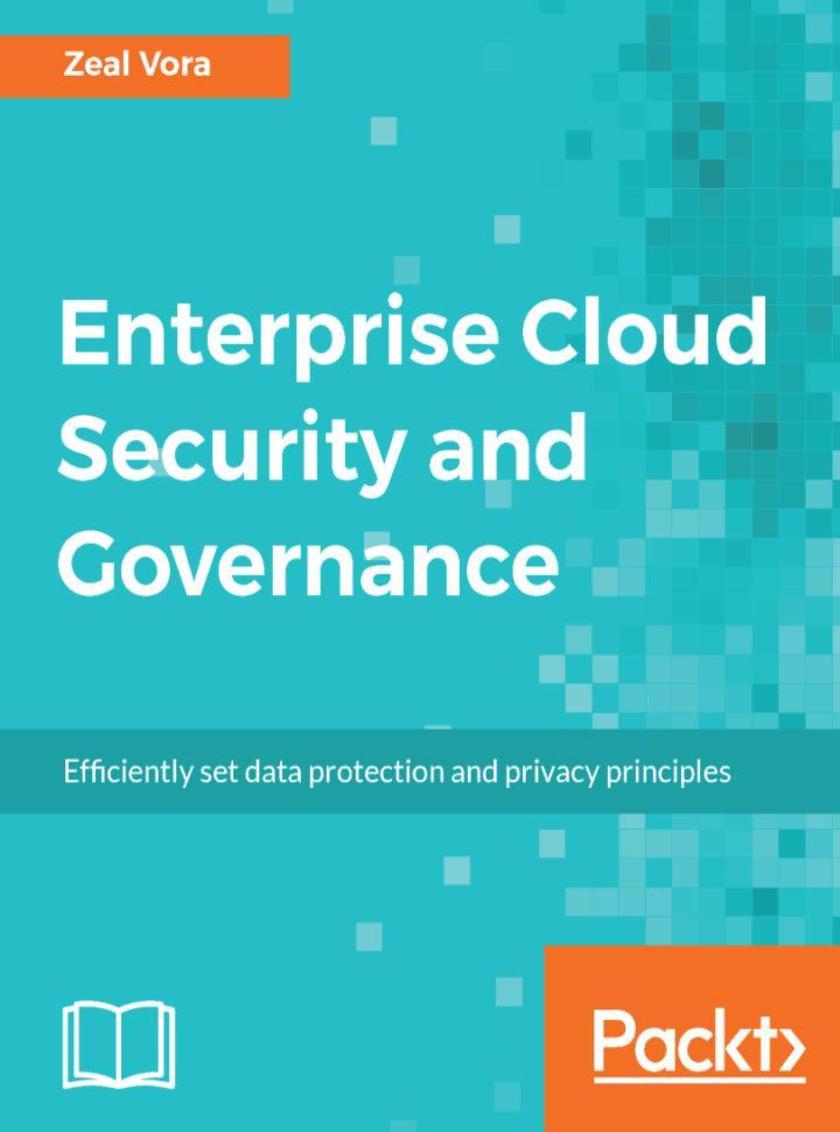
Enterprise Cloud Security and Governance
¥80.65
Build a resilient cloud architecture to tackle data disasters with ease About This Book ? Gain a firm grasp of Cloud data security and governance, irrespective of your Cloud platform ? Practical examples to ensure you secure your Cloud environment efficiently ? A step-by-step guide that will teach you the unique techniques and methodologies of Cloud data governance Who This Book Is For If you are a cloud security professional who wants to ensure cloud security and data governance no matter the environment, then this book is for you. A basic understanding of working on any cloud platform would be beneficial. What You Will Learn ? Configure your firewall and Network ACL ? Protect your system against DDOS and application-level attacks ? Explore cryptography and data security for your cloud ? Get to grips with configuration management tools to automate your security tasks ? Perform vulnerability scanning with the help of the standard tools in the industry ? Learn about central log management In Detail Modern day businesses and enterprises are moving to the Cloud, to improve efficiency and speed, achieve flexibility and cost effectiveness, and for on-demand Cloud services. However, enterprise Cloud security remains a major concern because migrating to the public Cloud requires transferring some control over organizational assets to the Cloud provider. There are chances these assets can be mismanaged and therefore, as a Cloud security professional, you need to be armed with techniques to help businesses minimize the risks and misuse of business data. The book starts with the basics of Cloud security and offers an understanding of various policies, governance, and compliance challenges in Cloud. This helps you build a strong foundation before you dive deep into understanding what it takes to design a secured network infrastructure and a well-architected application using various security services in the Cloud environment. Automating security tasks, such as Server Hardening with Ansible, and other automation services, such as Monit, will monitor other security daemons and take the necessary action in case these security daemons are stopped maliciously. In short, this book has everything you need to secure your Cloud environment with. It is your ticket to obtain industry-adopted best practices for developing a secure, highly available, and fault-tolerant architecture for organizations. Style and approach This book follows a step-by-step, practical approach to secure your applications and data when they are located remotely.
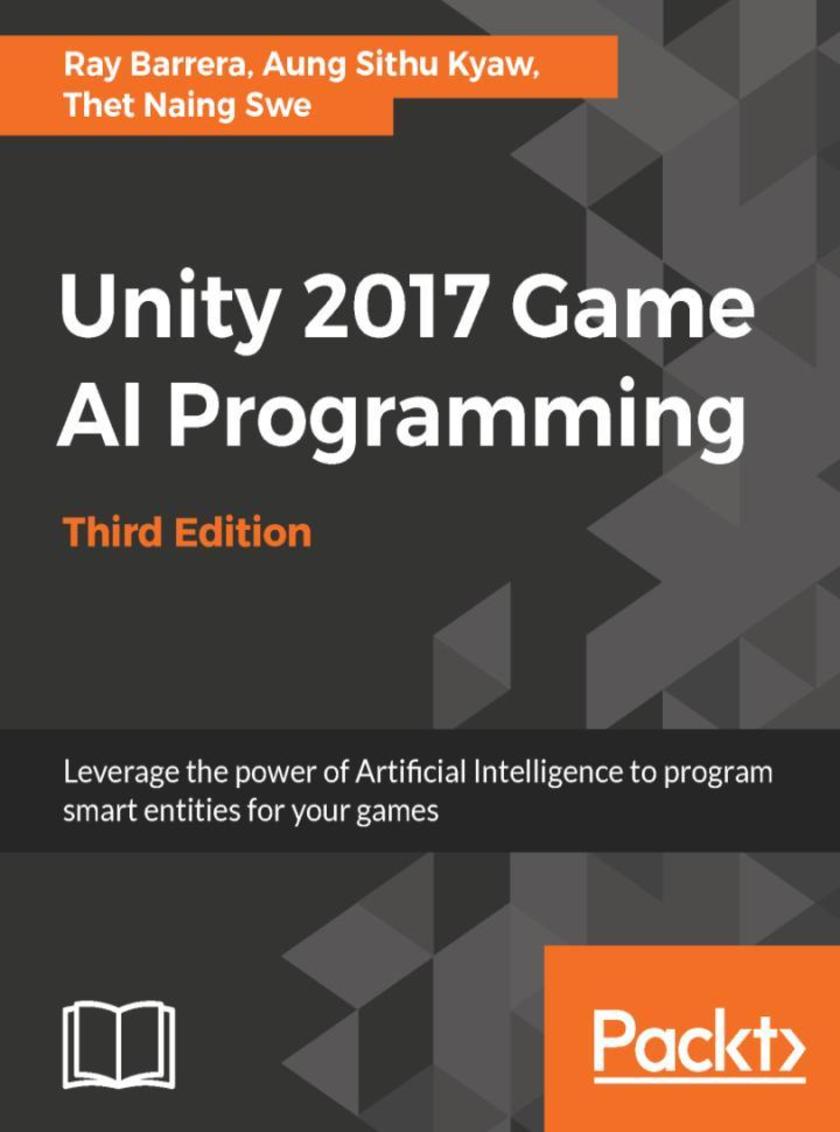
Unity 2017 Game AI Programming - Third Edition
¥90.46
Use Unity 2017 to create fun and unbelievable AI entities in your games with A*, Fuzzy logic and NavMesh About This Book ? Explore the brand-new Unity 2017 features that makes implementing Artificial Intelligence in your game easier than ever ? Use fuzzy logic concepts in your AI decision-making to make your characters more engaging ? Build exciting and richer games by mastering advanced Artificial Intelligence concepts such as Neural Networks Who This Book Is For This book is intended for Unity developers with a basic understanding of C# and the Unity editor. Whether you're looking to build your first game or are looking to expand your knowledge as a game programmer, you will find plenty of exciting information and examples of game AI in terms of concepts and implementation. What You Will Learn ? Understand the basic terminology and concepts in game AI ? Explore advanced AI Concepts such as Neural Networks ? Implement a basic finite state machine using state machine behaviors in Unity 2017 ? Create sensory systems for your AI and couple it with a Finite State Machine ? Wok with Unity 2017's built-in NavMesh features in your game ? Build believable and highly-efficient artificial flocks and crowds ? Create a basic behavior tree to drive a character's actions In Detail Unity 2017 provides game and app developers with a variety of tools to implement Artificial Intelligence. Leveraging these tools via Unity's API or built-in features allows limitless possibilities when it comes to creating your game's worlds and characters. This third edition with Unity will help you break down Artificial Intelligence into simple concepts to give you a fundamental understanding of the topic to build upon. Using a variety of examples, the book then takes those concepts and walks you through actual implementations designed to highlight key concepts, and features related to game AI in Unity 5. Further on you will learn to distinguish the state machine pattern and implement one of your own. This is followed by learning how to implement a basic sensory system for your AI agent and coupling it with a Finite State Machine (FSM). Next you'll learn how to use Unity's built-in NavMesh feature and implement your own A* pathfinding system. You will then learn how to implement simple flocks and crowd's dynamics, key AI concepts. Moving on, you will learn how to implement a behavior tree through a game-focused example. Lastly, you'll combine fuzzy logic concepts with state machines and apply all the concepts in the book to build a simple tank game. Style and approach A self-explanatory practical guide with a series of tips and tricks on creating AI games with ease.
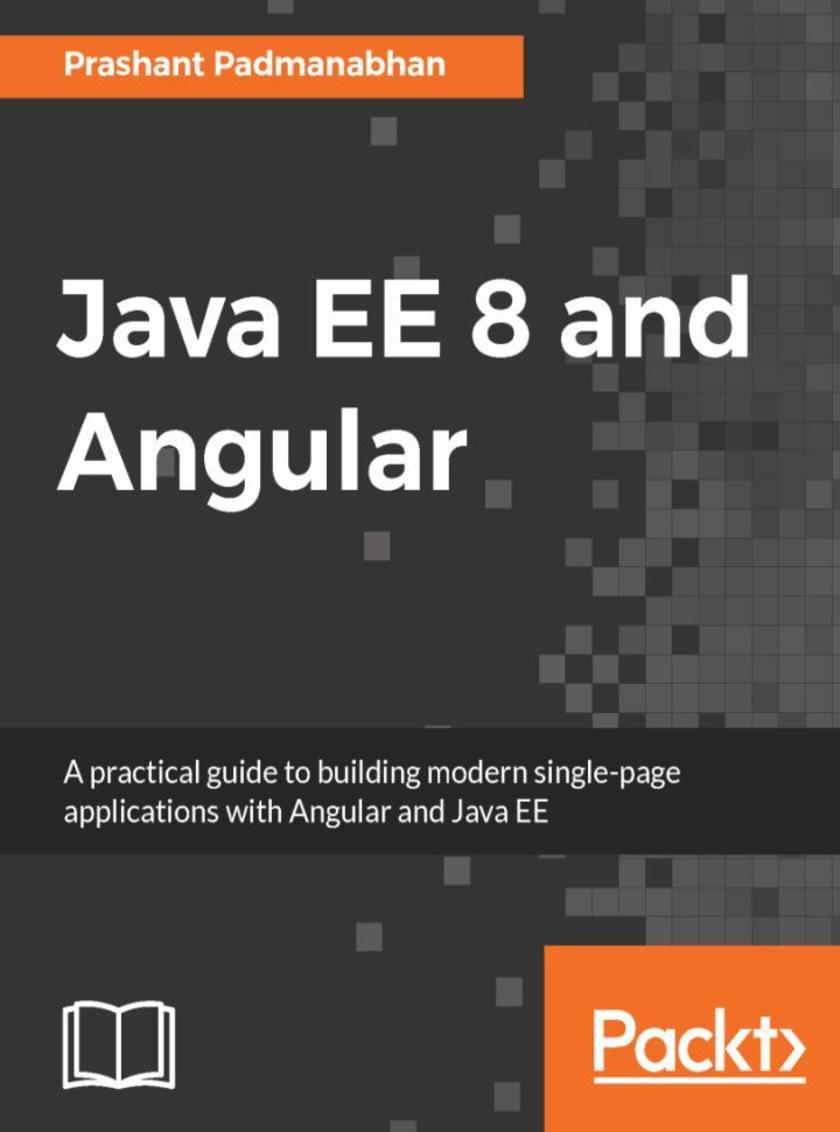
Java EE 8 and Angular
¥81.74
Learn how to build high-performing enterprise applications using Java EE powered by Angular at the frontend About This Book ? Leverage Java EE 8 features to build robust back end for your enterprise applications ? Use Angular to build a single page frontend and combine it with the Java EE backend ? Practical guide filled with ample real-world examples Who This Book Is For This book is for Java EE developers who would like to build modern enterprise web applications using Angular. No prior knowledge of Angular is expected. What You Will Learn ? Write CDI-based code in Java EE 8 applications ? Build an understanding of Microservices and what they mean in Java EE context ? Use Docker to build and run a microservice application ? Use configuration options to work effectively with JSON documents ? Understand asynchronous task handling and writing REST API clients ? Explore the fundamentals of TypeScript, which sets the foundation for working on Angular projects ? Use Angular CLI to add and manage new features ? Use JSON Web tokens to secure Angular applications against malicious attacks In Detail The demand for modern and high performing web enterprise applications is growing rapidly. No more is a basic HTML front-end enough to meet customer demands. This book will be your one stop guide to build outstanding enterprise web applications with Java EE and Angular. It will teach you how to harness the power of Java EE to build sturdy back ends while applying Angular on the front end. Your journey to building excellent web enterprise applications starts here! The book starts with a brief introduction to the fundamentals of Java EE and all the new APIs offered in the latest release. Armed with the knowledge of Java EE 8, you will go over what it’s like to build an end to end application, configure database connection for JPA, and build scalable microservice using RESTful APIs running in docker containers. Taking advantage of Payara Micro capabilities, you will build an Issue Management System, which will have various features exposed as services using Java EE backend. With a detailed coverage of Angular fundamentals, the book will expand the Issue Management System by building a modern single page application frontend. Moving forward you will learn to fit both the pieces together i.e. the frontend Angular application with the backend java EE microservices. As each unit in a microservice promotes high cohesion, you will learn different ways in which independent units can be tested efficiently. Finishing off with concepts on securing your enterprise applications, this book is a hands on guide to building Modern Web Applications. Style and approach This is a step-by-step tutorial that explains to building modern web enterprise applications.


