


 购物车
购物车 个人中心
个人中心
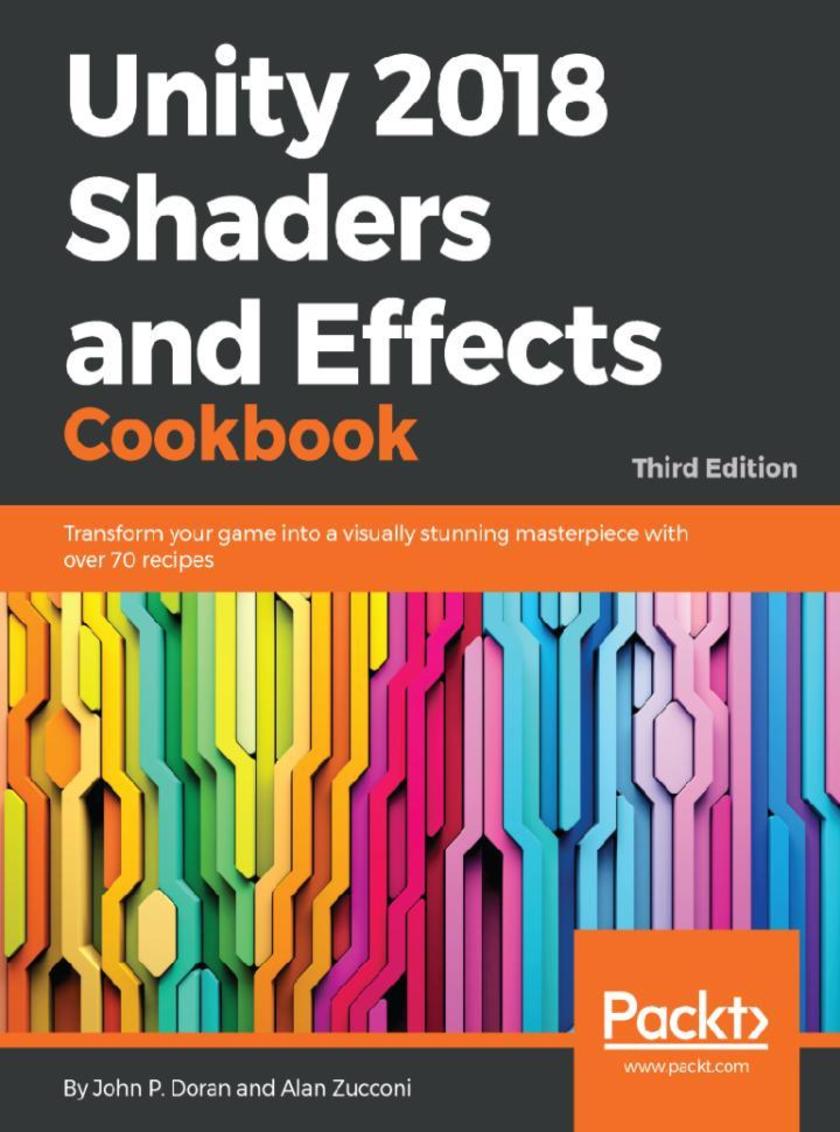
Unity 2018 Shaders and Effects Cookbook
¥90.46
Bring realism to your games by mastering post-processing effects and advanced shading techniques in Unity 2018 About This Book ? Learn the secrets of creating AAA quality shaders without writing long algorithms ? Master shader programming through easy-to-follow examples ? Create stunning visual effects that can be used in 3D games Who This Book Is For Unity Shaders and Effects Cookbook is for developers who want to create their first shaders in Unity 2018 or wish to take their game to a whole new level by adding professional post-processing effects. A solid understanding of Unity is required to get the most from this book. What You Will Learn ? Understand physically based rendering to fit the aesthetic of your game ? Write shaders from scratch in ShaderLab and HLSL/Cg ? Combine shader programming with interactive scripts to add life to your materials ? Design efficient shaders for mobile platforms without sacrificing their realism ? Use state-of-the-art techniques, such as volumetric explosions and fur shading ? Master the math and algorithms behind the most used lighting models ? Understand how shader models have evolved and how you can create your own In Detail Since their introduction to Unity, shaders have been seen as notoriously difficult to understand and implement in games. Complex mathematics has always stood in the way of creating your own shaders and attaining the level of realism you crave. Unity 2018 Shaders and Effects Cookbook changes that by giving you a recipe-based guide to creating shaders using Unity. It will show you everything you need to know about vectors, how lighting is constructed with them, and how textures are used to create complex effects without the heavy math. This book starts by teaching you how to use shaders without writing code with the post-processing stack. Then, you’ll learn how to write shaders from scratch, build up essential lighting, and finish by creating stunning screen effects just like those in high-quality 3D and mobile games. You'll discover techniques, such as normal mapping, image-based lighting, and animating your models inside a shader. We'll explore how to use physically based rendering to treat light the way it behaves in the real world. At the end, we’ll even look at Unity 2018’s new Shader Graph system. With this book, what seems like a dark art today will be second nature by tomorrow. Style and approach The recipes in this book contain step-by-step instructions, complemented with screenshots, code, and real-world examples.
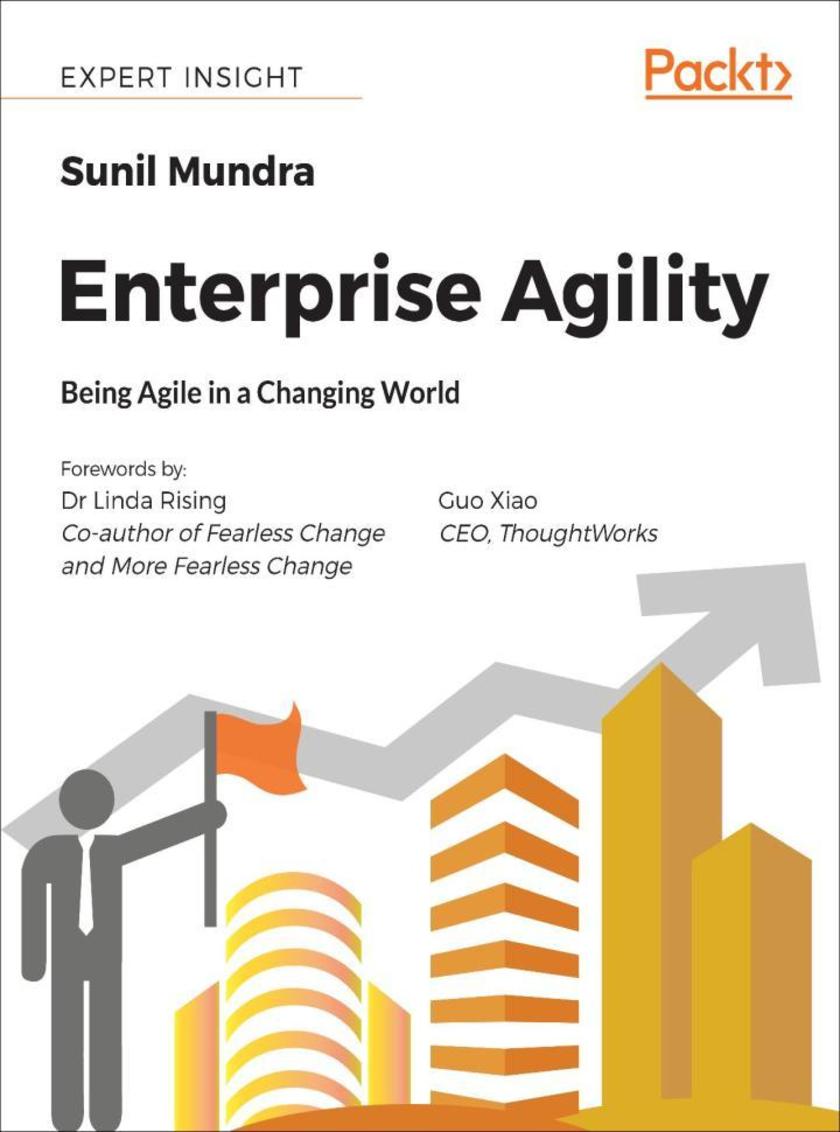
Enterprise Agility
¥63.21
Enterprise Agility is practical framework for enhancing Agility and equipping your company with the tools to survive. About This Book ? Prepare your company to navigate the rapidly-moving business world ? Enhance Agility in every component of your organization ? Build a framework that meets the unique requirements of your enterprise Who This Book Is For Enterprise Agility is a tool for anyone with the motivation to influence outcomes in an enterprise, who aspires to improve Agility. Readers from the following backgrounds will benefit: chief executive officer, chief information officer, people/human resource director, information technology director, head of change program, head of transformation, and Agile coach/consultant. What You Will Learn ? Drive agility-oriented change across the enterprise ? Understand why agility matters (more than ever) to modern enterprises ? Adopt and influence an Agile mindset in your teams and in your organization ? Understand the concept of a CAS and how to model enterprise and leadership behaviors on CAS characteristics to enhance enterprise agility ? Understand and convey the differences between Agile and true enterprise agility ? Create an enterprise-specific action plan to enhance agility ? Become a champion for enterprise agility ? Recognize the advantages and challenges of distributed teams, and how Agile ways of working can remedy the rough spots ? Enable and motivate your IT partners to adopt Agile ways of working In Detail The biggest challenge enterprises face today is dealing with fast-paced change in all spheres of business. Enterprise Agility shows how an enterprise can address this challenge head on and thrive in the dynamic environment. Avoiding the mechanistic construction of existing enterprises that focus on predictability and certainty, Enterprise Agility delivers practical advice for responding and adapting to the scale and accelerating pace of disruptive change in the business environment. Agility is a fundamental shift in thinking about how enterprises work to effectively deal with disruptive changes in the business environment. The core belief underlying agility is that enterprises are open and living systems. These living systems, also known as complex adaptive systems (CAS), are ideally suited to deal with change very effectively. Agility is to enterprises what health is to humans. There are some foundational principles that can be broadly applied, but the definition of healthy is very specific to each individual. Enterprise Agility takes a similar approach with regard to agility: it suggests foundational practices to improve the overall health of the body—culture, mindset, and leadership—and the health of its various organs: people, process, governance, structure, technology, and customers. The book also suggests a practical framework to create a plan to enhance agility. Style and approach Enterprise Agility is a step-by-step guide to facing change and uncertainty head-on. The books provides practical ways to apply Agile methodologies and boost Agility throughout a business.
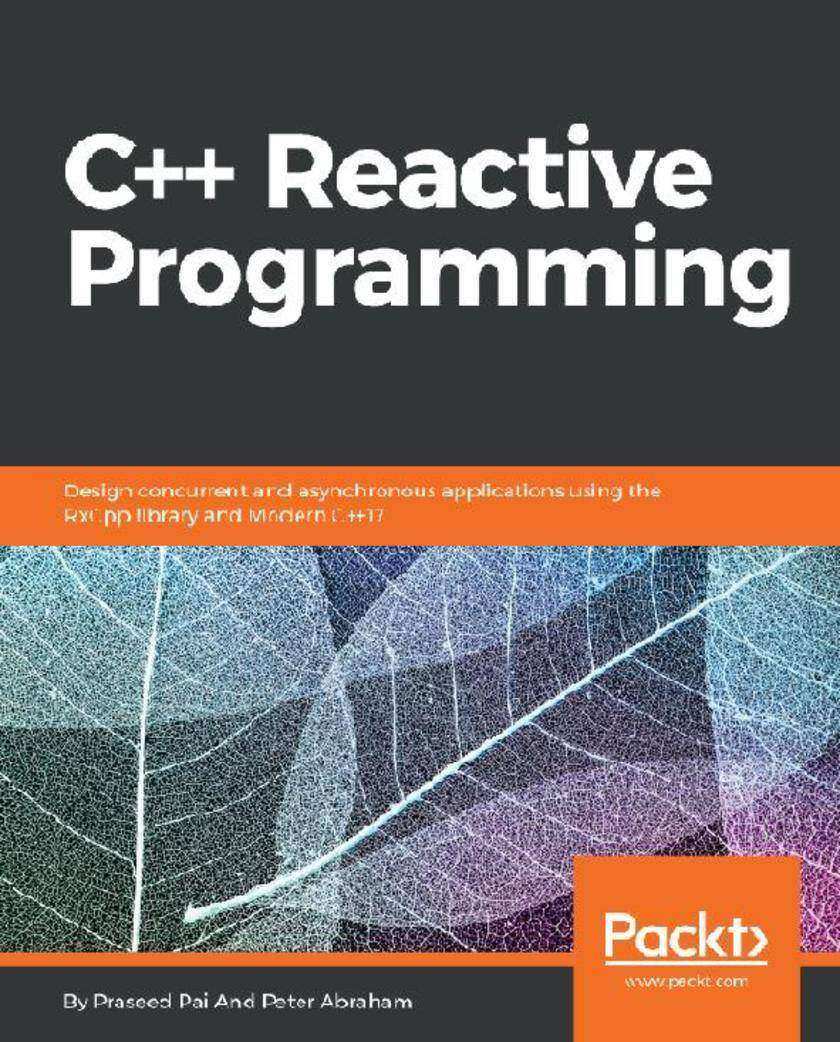
C++ Reactive Programming
¥81.74
Learn how to implement the reactive programming paradigm with C++ and build asynchronous and concurrent applications About This Book ? Efficiently exploit concurrency and parallelism in your programs ? Use the Functional Reactive programming model to structure programs ? Understand reactive GUI programming to make your own applications using Qt Who This Book Is For If you’re a C++ developer interested in using reactive programming to build asynchronous and concurrent applications, you’ll find this book extremely useful. This book doesn’t assume any previous knowledge of reactive programming. What You Will Learn ? Understand language-level concurrency in C++ ? Explore advanced C++ programming for the FRP ? Uncover the RxCpp library and its programming model ? Mix the FP and OOP constructs in C++ 17 to write well-structured programs ? Master reactive microservices in C++ ? Create custom operators for RxCpp ? Learn advanced stream processing and error handling In Detail Reactive programming is an effective way to build highly responsive applications with an easy-to-maintain code base. This book covers the essential functional reactive concepts that will help you build highly concurrent, event-driven, and asynchronous applications in a simpler and less error-prone way. C++ Reactive Programming begins with a discussion on how event processing was undertaken by different programming systems earlier. After a brisk introduction to modern C++ (C++17), you’ll be taken through language-level concurrency and the lock-free programming model to set the stage for our foray into the Functional Programming model. Following this, you’ll be introduced to RxCpp and its programming model. You’ll be able to gain deep insights into the RxCpp library, which facilitates reactive programming. You’ll learn how to deal with reactive programming using Qt/C++ (for the desktop) and C++ microservices for the Web. By the end of the book, you will be well versed with advanced reactive programming concepts in modern C++ (C++17). Style and approach The book includes real-world problems that you will solve with the reactive programming model. It highlights the way event processing has evolved in the programming world.
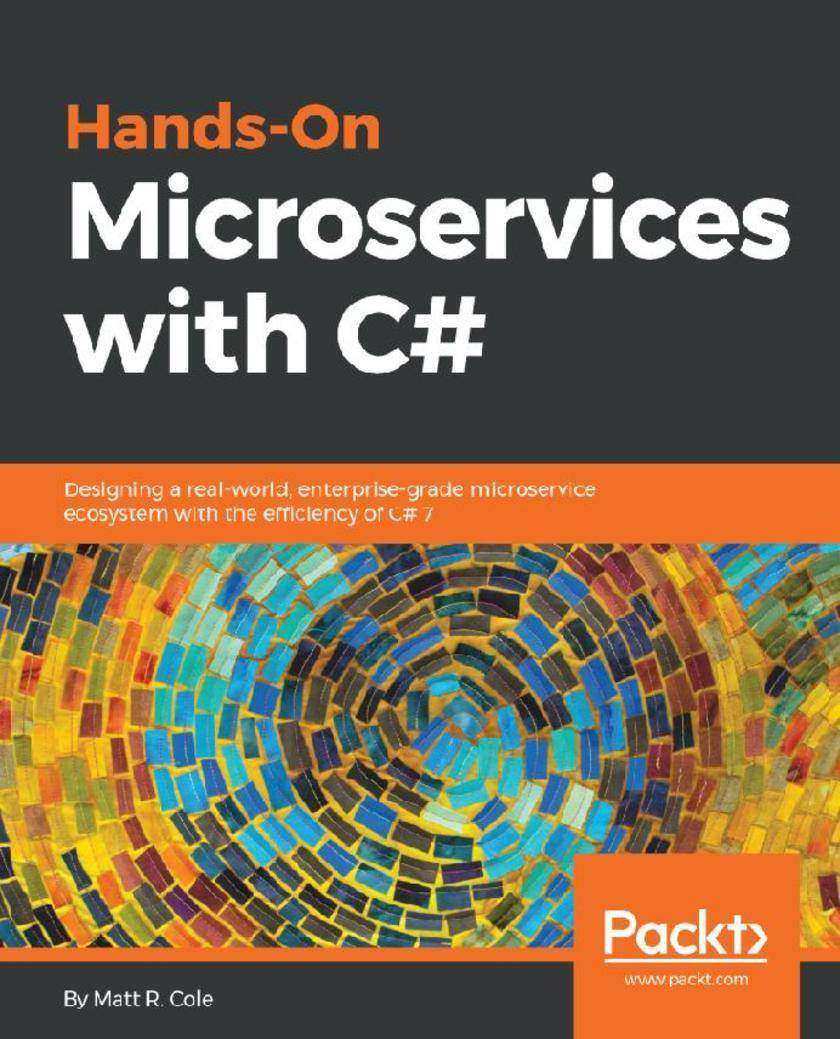
Hands-On Microservices with C#
¥81.74
Build enterprise-grade microservice ecosystems with intensive case studies using C# About This Book ? Learn to build message-based microservices ? Packed with case studies to explain the intricacies of large-scale microservices ? Build scalable, modular, and robust architectures with C# Who This Book Is For C# developers, software architects, and professionals who want to master the art of designing the microservice architecture that is scalable based on environment. Developers should have a basic understanding of.NET application development using C# and Visual Studio What You Will Learn ? Explore different open source tools within the context of designing microservices ? Learn to provide insulation to exception-prone function calls ? Build common messages used between microservices for communication ? Learn to create a microservice using our base class and interface ? Design a quantitative financial machine microservice ? Learn to design a microservice that is capable of using Blockchain technology In Detail C# is a powerful language when it comes to building applications and software architecture using rich libraries and tools such as .NET. This book will harness the strength of C# in developing microservices architectures and applications. This book shows developers how to develop an enterprise-grade, event-driven, asynchronous, message-based microservice framework using C#, .NET, and various open source tools. We will discuss how to send and receive messages, how to design many types of microservice that are truly usable in a corporate environment. We will also dissect each case and explain the code, best practices, pros and cons, and more. Through our journey, we will use many open source tools, and create file monitors, a machine learning microservice, a quantitative financial microservice that can handle bonds and credit default swaps, a deployment microservice to show you how to better manage your deployments, and memory, health status, and other microservices. By the end of this book, you will have a complete microservice ecosystem you can place into production or customize in no time. Style and approach A step-by-step guide that enables readers to create a complete microservice ecosystem they can place into production or customize in no time.
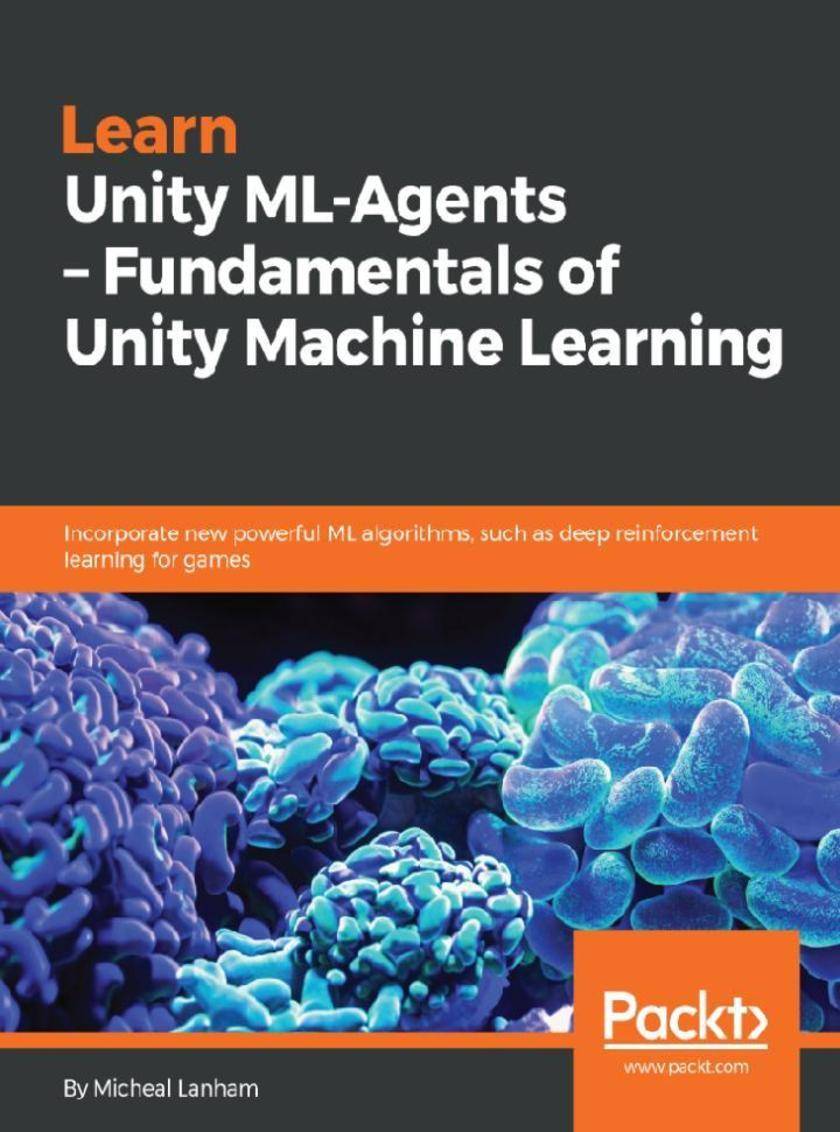
Learn Unity ML-Agents – Fundamentals of Unity Machine Learning
¥54.49
Transform games into environments using machine learning and Deep learning with Tensorflow, Keras, and Unity About This Book ? Learn how to apply core machine learning concepts to your games with Unity ? Learn the Fundamentals of Reinforcement Learning and Q-Learning and apply them to your games ? Learn How to build multiple asynchronous agents and run them in a training scenario Who This Book Is For This book is intended for developers with an interest in using Machine learning algorithms to develop better games and simulations with Unity. The reader will be required to have a working knowledge of C# and a basic understanding of Python. What You Will Learn ? Develop Reinforcement and Deep Reinforcement Learning for games. ? Understand complex and advanced concepts of reinforcement learning and neural networks ? Explore various training strategies for cooperative and competitive agent development ? Adapt the basic script components of Academy, Agent, and Brain to be used with Q Learning. ? Enhance the Q Learning model with improved training strategies such as Greedy-Epsilon exploration ? Implement a simple NN with Keras and use it as an external brain in Unity ? Understand how to add LTSM blocks to an existing DQN ? Build multiple asynchronous agents and run them in a training scenario In Detail Unity Machine Learning agents allow researchers and developers to create games and simulations using the Unity Editor, which serves as an environment where intelligent agents can be trained with machine learning methods through a simple-to-use Python API. This book takes you from the basics of Reinforcement and Q Learning to building Deep Recurrent Q-Network agents that cooperate or compete in a multi-agent ecosystem. You will start with the basics of Reinforcement Learning and how to apply it to problems. Then you will learn how to build self-learning advanced neural networks with Python and Keras/TensorFlow. From there you move o n to more advanced training scenarios where you will learn further innovative ways to train your network with A3C, imitation, and curriculum learning models. By the end of the book, you will have learned how to build more complex environments by building a cooperative and competitive multi-agent ecosystem. Style and approach This book focuses on the foundations of ML, RL and DL for building agents in a game or simulation
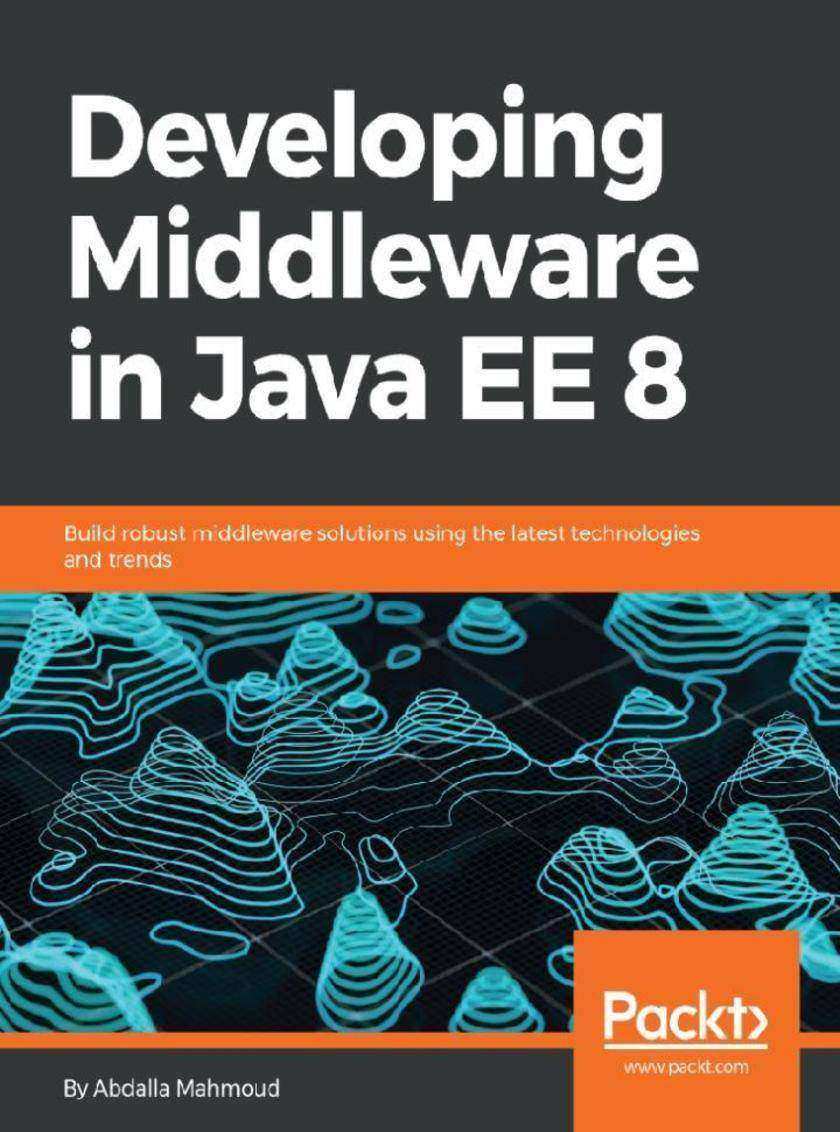
Developing Middleware in Java EE 8
¥81.74
Use Java features such as JAX-RS, EJBs, and JPAs to build powerful middleware for newer architectures such as the cloud About This Book ? Explore EJBs to build middleware solutions for enterprise and distributed applications ? Understand middleware designs such as event-based and message-driven web services ? Learn to design and maintain large-scale systems and vendor disputes Who This Book Is For Enterprise architects, designers, developers, and programmers who are interested in learning how to build robust middleware solutions for enterprise software will find this book useful. Prior knowledge of Java EE is essential What You Will Learn ? Implement the latest Java EE 8 APIs and manage dependencies with CDI 2.0 ? Perform CRUD operations and access databases with JPA 2.1 ? Use bean validation API 2.0 to validate data ? Develop business logic with EJB 3.2 ? Incorporate the REST architecture and RESTful API design patterns ? Perform serialization and deserialization on JSON documents using JSON-B ? Utilize JMS for messaging and queuing models and securing applications ? Test applications using JUnit and Mockito and deploy them using Docker In Detail Middleware is the infrastructure in software based applications that enables businesses to solve problems, operate more efficiently, and make money. As the use of middleware extends beyond a single application, the importance of having it written by experts increases substantially. This book will help you become an expert in developing middleware for a variety of applications. The book starts off by exploring the latest Java EE 8 APIs with newer features and managing dependencies with CDI 2.0. You will learn to implement object-to-relational mapping using JPA 2.1 and validate data using bean validation. You will also work with different types of EJB to develop business logic, and with design RESTful APIs by utilizing different HTTP methods and activating JAX-RS features in enterprise applications. You will learn to secure your middleware with Java Security 1.0 and implement various authentication techniques, such as OAuth authentication. In the concluding chapters, you will use various test technologies, such as JUnit and Mockito, to test applications, and Docker to deploy your enterprise applications. By the end of the book, you will be proficient in developing robust, effective, and distributed middleware for your business. Style and approach Learn how to design and implement professional enterprise middleware solutions using the latest techniques and features provided by the Java EE 8 platform.
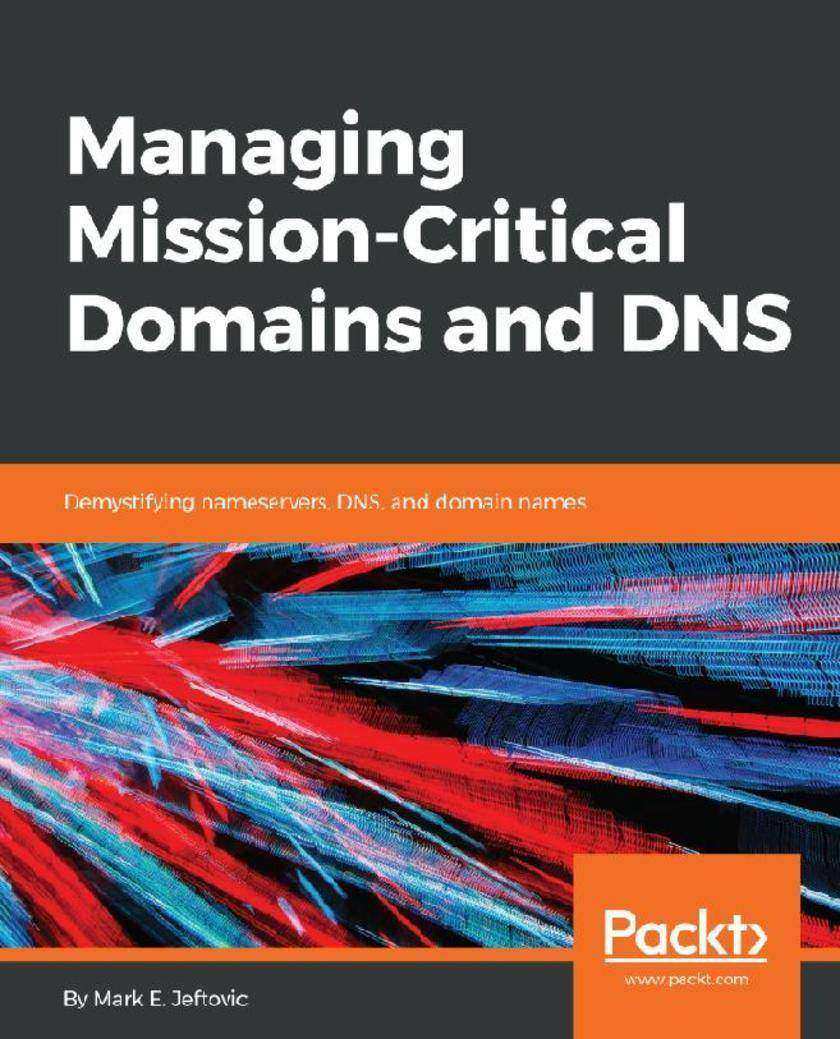
Managing Mission - Critical Domains and DNS
¥81.74
This book will give you an all encompassing view of the domain name ecosystem combined with a comprehensive set of operations strategies. About This Book ? Manage infrastructure, risk, and management of DNS name servers. Get hands-on with factors like types of name servers, DNS queries and and so on. ? Practical guide for system administrators to manage mission-critical servers ? Based on real-world experience - Written by an industry veteran who has made every possible mistake within this field. Who This Book Is For Ideal for sysadmins, webmasters, IT consultants, and developers-anyone responsible for maintaining your organization's core DNS What You Will Learn ? Anatomy of a domain - how a domain is the sum of both its DNS zone and its registration data, and why that matters. ? The domain name ecosystem - the role of registries, registrars and oversight bodies and their effect on your names. ? How DNS queries work - queries and responses are examined including debugging techniques to zero in on problems. ? Nameserver considerations - alternative nameserver daemons, numbering considerations, and deployment architectures. ? DNS use cases - the right way for basic operations such as domain transfers, large scale migrations, GeoDNS, Anycast DNS. ? Securing your domains - All aspects of security from registrar vendor selection, to DNSSEC and DDOS mitigation strategies. In Detail Managing your organization's naming architecture and mitigating risks within complex naming environments is very important. This book will go beyond looking at “how to run a name server” or “how to DNSSEC sign a domain”, Managing Mission Critical Domains & DNS looks across the entire spectrum of naming; from external factors that exert influence on your domains to all the internal factors to consider when operating your DNS. The readers are taken on a comprehensive guided tour through the world of naming: from understanding the role of registrars and how they interact with registries, to what exactly is it that ICANN does anyway? Once the prerequisite knowledge of the domain name ecosystem is acquired, the readers are taken through all aspects of DNS operations. Whether your organization operates its own nameservers or utilizes an outsourced vendor, or both, we examine the complex web of interlocking factors that must be taken into account but are too frequently overlooked. By the end of this book, our readers will have an end to end to understanding of all the aspects covered in DNS name servers. Style and approach The book is divided into two parts, the first part looks at the wider domain name ecosystem: registries, registrars and oversight policies. The second and larger part goes into operations. Every aspect of naming is considered from the viewpoint of how this affects ones domains, what are the ramifications of different operating methods as portfolios scale.
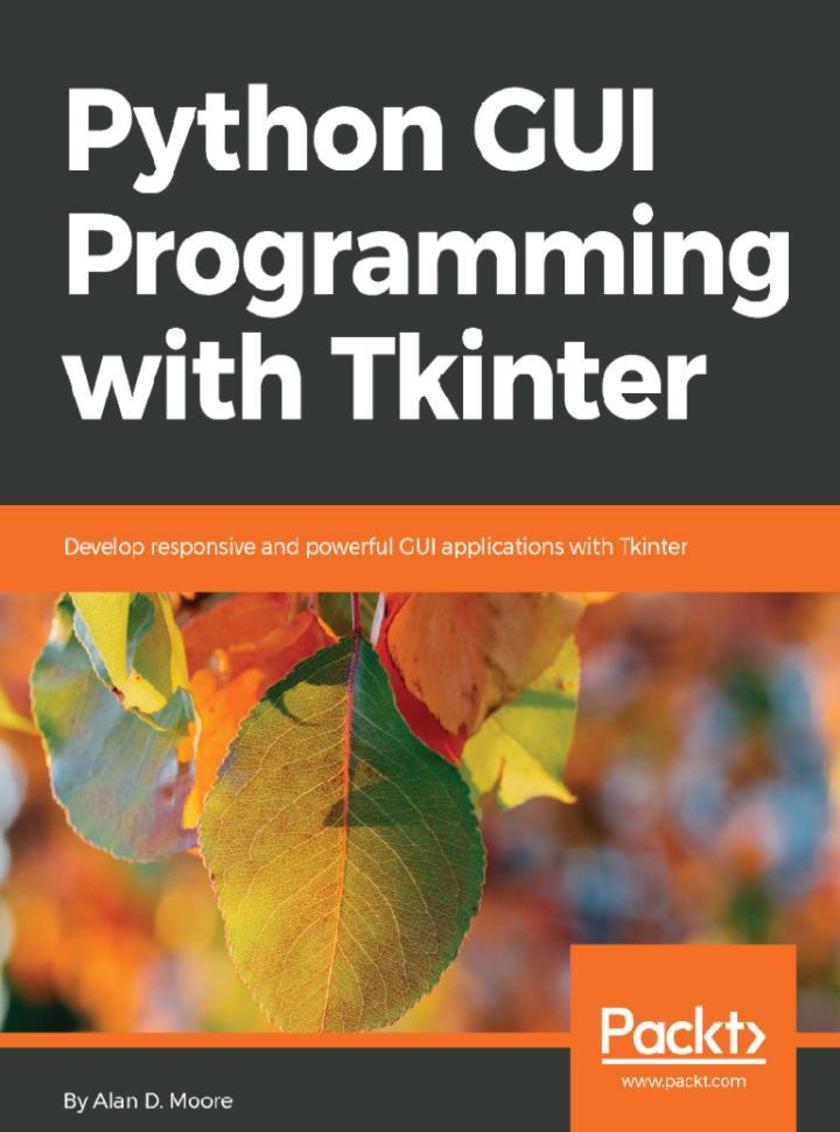
Python GUI Programming with Tkinter
¥81.74
Find out how to create visually stunning and feature-rich applications by empowering Python's built-in Tkinter GUI toolkit About This Book ? Explore Tkinter's powerful features to easily design and customize your GUI application ? Learn the basics of 2D and 3D animation in GUI applications. ? Learn to integrate stunning Data Visualizations using Tkinter Canvas and Matplotlib. Who This Book Is For This book will appeal to developers and programmers who would like to build GUI-based applications. Knowledge of Python is a prerequisite. What You Will Learn ? Implement the tools provided by Tkinter to design beautiful GUIs ? Discover cross-platform development through minor customizations in your existing application ? Visualize graphs in real time as data comes in using Tkinter's animation capabilities ? Use PostgreSQL authentication to ensure data security for your application ? Write unit tests to avoid regressions when updating code In Detail Tkinter is a lightweight, portable, and easy-to-use graphical toolkit available in the Python Standard Library, widely used to build Python GUIs due to its simplicity and availability. This book teaches you to design and build graphical user interfaces that are functional, appealing, and user-friendly using the powerful combination of Python and Tkinter. After being introduced to Tkinter, you will be guided step-by-step through the application development process. Over the course of the book, your application will evolve from a simple data-entry form to a complex data management and visualization tool while maintaining a clean and robust design. In addition to building the GUI, you'll learn how to connect to external databases and network resources, test your code to avoid errors, and maximize performance using asynchronous programming. You'll make the most of Tkinter's cross-platform availability by learning how to maintain compatibility, mimic platform-native look and feel, and build executables for deployment across popular computing platforms. By the end of this book, you will have the skills and confidence to design and build powerful high-end GUI applications to solve real-world problems. Style and approach This is a comprehensive guide that explores the essential Tkinter features and modules and implements them in building real-world cross-platform GUI applications
Building Applications with Spring 5 and Kotlin
¥81.74
Learn to build a full-fledged application in Spring and Kotlin taking a reactive, microservice-based approach for scalability and robustness in the cloud About This Book ? Build a full-fledged application in Spring and Kotlin ? Architect your application to take a microservice-based approach in the cloud ? Integrate your application with a variety of Spring components Who This Book Is For Developers comfortable using Spring who have basic knowledge of Kotlin and want to take their development skills to the next level and build enterprise-grade applications will benefit from this book. What You Will Learn ? Explore Spring 5 concepts with Kotlin ? Learn both dependency injections and complex configurations ? Utilize Spring Data, Spring Cloud, and Spring Security in your applications ? Create efficient reactive systems with Project Reactor ? Write unit tests for your Spring/Kotlin applications ? Deploy applications on cloud platforms like AWS In Detail Kotlin is being used widely by developers because of its light weight, built-in null safety, and functional and reactive programming aspects. Kotlin shares the same pragmatic, innovative and opinionated mindset as Spring, so they work well together. Spring when combined with Kotlin helps you to reach a new level of productivity. This combination has helped developers to create Functional Applications using both the tools together. This book will teach you how to take advantage of these developments and build robust, scalable and reactive applications with ease. In this book, you will begin with an introduction to Spring and its setup with Kotlin. You will then dive into assessing the design considerations of your application. Then you will learn to use Spring (with Spring Boot) along with Kotlin to build a robust backend in a microservice architecture with a REST based collaboration, and leverage Project Reactor in your application. You’ll then learn how to integrate Spring Data and Spring Cloud to manage configurations for database interaction and cloud deployment. You’ll also learn to use Spring Security to beef up security of your application before testing it with the JUnit framework and then deploying it on a cloud platform like AWS. Style and approach Everything you learn will be demonstrated on real-world Spring project. In each chapter we will cover some of Spring features and apply it on our project. We will guide you from the project initialization till the project deployment.
Learn Red – Fundamentals of Red
¥63.21
Discover how to use the next-generation language Red for full-stack development, from systems coding over user-interfaces to blockchain programming About This Book ? Explore the latest features of Red to build scalable, fast, and secure applications ? Learn graphical programming and build highly sophisticated reactive applications ? Get familiar with the specific concepts and techniques of Red development, like working with series, viewing code as data, and using dialects. Who This Book Is For This book is for software developers and architects who want to learn Red because of its conciseness, flexibility, and expressiveness, and more specifically for its possibilities in GUI apps and blockchain / smart contracts programming. Some knowledge of the basic concepts and experience of any programming language is assumed. What You Will Learn ? Set up your Red environment to achieve the highest productivity ? Get grounded in Red, gaining experience and insight through many examples and exercises ? Build simple, compact, and portable applications ? Analyze streams of data through Parse ? Compose GUI applications with View and Draw ? Get prepared for smart contract blockchain programming in Red In Detail A key problem of software development today is software bloat, where huge toolchains and development environments are needed in software coding and deployment. Red significantly reduces this bloat by offering a minimalist but complete toolchain. This is the first introductory book about it, and it will get you up and running with Red as quickly as possible. This book shows you how to write effective functions, reduce code redundancies, and improve code reuse. It will be helpful for new programmers who are starting out with Red to explore its wide and ever-growing package ecosystem and also for experienced developers who want to add Red to their skill set. The book presents the fundamentals of programming in Red and in-depth informative examples using a step-by-step approach. You will be taken through concepts and examples such as doing simple metaprogramming, functions, collections, GUI applications, and more. By the end of the book, you will be fully equipped to start your own projects in Red. Style and approach This book will gently guide you step by step into the fascinating programming universe of the Red language, offering real-world examples and practical exercises to sharpen your insight.
Architecting Angular Applications with Redux, RxJS, and NgRx
¥81.74
Manage state in Angular to write high performing web apps by combining the power of Flux, RxJS, and NgRx About This Book ? Learn what makes an excellent Angular application architecture ? Use Redux to write performant, consistent Angular applications ? Incorporate Reactive Programming principles and RxJS to make it easier to develop, test, and debug your Angular applications Who This Book Is For If you have been developing Angular applications and want to dive deeper into the Angular architecture with Redux, RxJS, and NgRx to write robust web apps, then this book is for you. What You Will Learn ? Understand the one-way data flow and Flux pattern ? Work with functional programming and asynchronous data streams ? Figure out how RxJS can help us address the flaws in promises ? Set up different versions of cascading calls ? Explore advanced operators ? Get familiar with the Redux pattern and its principles ? Test and debug different features of your application ? Build your own lightweight app using Flux, Redux, and NgRx In Detail Managing the state of large-scale web applications is a highly challenging task with the need to align different components, backends, and web workers harmoniously. When it comes to Angular, you can use NgRx, which combines the simplicity of Redux with the reactive programming power of RxJS to build your application architecture, making your code elegant and easy to reason about, debug, and test. In this book, we start by looking at the different ways of architecting Angular applications and some of the patterns that are involved in it. This will be followed by a discussion on one-way data flow, the Flux pattern, and the origin of Redux. The book introduces you to declarative programming or, more precisely, functional programming and talks about its advantages. We then move on to the reactive programming paradigm. Reactive programming is a concept heavily used in Angular and is at the core of NgRx. Later, we look at RxJS, as a library and master it. We thoroughly describe how Redux works and how to implement it from scratch. The two last chapters of the book cover everything NgRx has to offer in terms of core functionality and supporting libraries, including how to build a micro implementation of NgRx. This book will empower you to not only use Redux and NgRx to the fullest, but also feel confident in building your own version, should you need it. Style and approach This book covers everything there is to know to get well-acquainted with Angular without bogging you down. Everything is neatly laid out under clear headings for quick consultation, giving you the information required to understand a concept immediately.
Spring: Microservices with Spring Boot
¥73.02
Unlock the power of Spring Boot to build and deploy production-ready microservices About This Book ? Get to know the advanced features of Spring Boot in order to develop and monitor applications ? Use Spring cloud to deploy and manage microservices on the cloud ? Look at embedded servers and deploy a test application to a PaaS Cloud platform ? Embedded with assessments that will help you revise the concepts you have learned in this book Who This Book Is For This book is aimed at Java developers who knows the basics of Spring programming and want to build microservices with Spring Boot. What You Will Learn ? Use Spring Initializr to create a basic spring project ? Build a basic microservice with Spring Boot ? Implement caching and exception handling ? Secure your microservice with Spring security and OAuth2 ? Deploy microservices using self-contained HTTP server ? Monitor your microservices with Spring Boot actuator ? Learn to develop more effectively with developer tools In Detail Microservices helps in decomposing applications into small services and move away from a single monolithic artifact. It helps in building systems that are scalable, flexible, and high resilient. Spring Boot helps in building REST-oriented, production-grade microservices. This book is a quick learning guide on how to build, monitor, and deploy microservices with Spring Boot. You'll be first familiarized with Spring Boot before delving into building microservices. You will learn how to document your microservice with the help of Spring REST docs and Swagger documentation. You will then learn how to secure your microservice with Spring Security and OAuth2. You will deploy your app using a self-contained HTTP server and also learn to monitor a microservice with the help of Spring Boot actuator. This book is ideal for Java developers who knows the basics of Spring programming and want to build microservices with Spring Boot. This book is embedded with useful assessments that will help you revise the concepts you have learned in this book. Style and approach This book follows a practical approach to teach you how to build, monitor, and deploy microservices with Spring Boot. Note: This book is a blend of text and quizzes, all packaged up keeping your journey in mind. It includes content from the following Packt product: ? Mastering Spring 5.0 by Ranga Rao Karanam
SQL Server 2017 Developer’s Guide
¥99.18
Build smarter and efficient database application systems for your organization with SQL Server 2017 About This Book ? Build database applications by using the development features of SQL Server 2017 ? Work with temporal tables to get information stored in a table at any time ? Use adaptive querying to enhance the performance of your queries Who This Book Is For Database developers and solution architects looking to design efficient database applications using SQL Server 2017 will find this book very useful. In addition, this book will be valuable to advanced analysis practitioners and business intelligence developers. Database consultants dealing with performance tuning will get a lot of useful information from this book as well. Some basic understanding of database concepts and T-SQL is required to get the best out of this book. What You Will Learn ? Explore the new development features introduced in SQL Server 2017 ? Identify opportunities for In-Memory OLTP technology ? Use columnstore indexes to get storage and performance improvements ? Exchange JSON data between applications and SQL Server ? Use the new security features to encrypt or mask the data ? Control the access to the data on the row levels ? Discover the potential of R and Python integration ? Model complex relationships with the graph databases in SQL Server 2017 In Detail Microsoft SQL Server 2017 is the next big step in the data platform history of Microsoft as it brings in the power of R and Python for machine learning and containerization-based deployment on Windows and Linux. Compared to its predecessor, SQL Server 2017 has evolved into Machine Learning with R services for statistical analysis and Python packages for analytical processing. This book prepares you for more advanced topics by starting with a quick introduction to SQL Server 2017’s new features and a recapitulation of the possibilities you may have already explored with previous versions of SQL Server. The next part introduces you to enhancements in the Transact-SQL language and new database engine capabilities and then switches to a completely new technology inside SQL Server: JSON support. We also take a look at the Stretch database, security enhancements, and temporal tables. Furthermore, the book focuses on implementing advanced topics, including Query Store, columnstore indexes, and In-Memory OLTP. Towards the end of the book, you’ll be introduced to R and how to use the R language with Transact-SQL for data exploration and analysis. You’ll also learn to integrate Python code in SQL Server and graph database implementations along with deployment options on Linux and SQL Server in containers for development and testing. By the end of this book, you will have the required information to design efficient, high-performance database applications without any hassle. Style and approach This book is a detailed guide to mastering the development features offered by SQL Server 2017, with a unique learn-as-you-do approach. All the concepts are explained in a very easy-to-understand manner and are supplemented with examples to ensure that you—the developer—are able to take that next step in building more powerful, robust applications for your organization with ease.
Learning Robotic Process Automation
¥90.46
Design RPA solutions to perform a wide range of transactional tasks with minimal cost and maximum ROI About This Book ? A beginner's guide to learn Robotic Process Automation and its impact on the modern world ? Design, test, and perform enterprise automation task with UiPath ? Create Automation apps and deploy them to all the computers in your department. Who This Book Is For If you would like to pursue a career in Robotic Process Automation or improve the efficiency of your businesses by automating common tasks, then this book is perfect for you. Prior programming knowledge of either Visual Basic or C# will be useful. What You Will Learn ? Understand Robotic Process Automation technology ? Learn UiPath programming techniques to deploy robot configurations ? Explore various data extraction techniques ? Learn about integrations with various popular applications such as SAP and MS Office ? Debug a programmed robot including logging and exception handling ? Maintain code version and source control ? Deploy and control Bots with UiPath Orchestrator In Detail Robotic Process Automation (RPA) enables automating business processes using software robots. Software robots interpret, trigger responses, and communicate with other systems just like humans do. Robotic processes and intelligent automation tools can help businesses improve the effectiveness of services faster and at a lower cost than current methods. This book is the perfect start to your automation journey, with a special focus on one of the most popular RPA tools: UiPath. Learning Robotic Process Automation takes you on a journey from understanding the basics of RPA to advanced implementation techniques. You will become oriented in the UiPath interface and learn about its workflow. Once you are familiar with the environment, we will get hands-on with automating different applications such as Excel, SAP, Windows and web applications, screen and web scraping, working with user events, as well as understanding exceptions and debugging. By the end of the book, you'll not only be able to build your first software bot, but also you'll wire it to perform various automation tasks with the help of best practices for bot deployment. Style and approach This book will help you kick-start your automation journey with a special focus on one of the most popular RPA tools: UiPath.
Kotlin Programming By Example
¥90.46
Enhance your Kotlin programming skills by building 3 real-world applications About This Book ? Build three full-fledged, engaging applications from scratch and learn to deploy them ? Enhance your app development and programming activities with Kotlin’s powerful and intuitive tools and utilities. ? Experience the gentle learning curve, expressiveness, and intuitiveness of Kotlin, as you develop your own applications Who This Book Is For This book is for those who are new to Kotlin or are familiar with the basics, having dabbled with Java until now. Basic programming knowledge is mandatory. What You Will Learn ? Learn the building blocks of the Kotlin programming language ? Develop powerful RESTful microservices for Android applications ? Create reactive Android applications efficiently ? Implement an MVC architecture pattern and dependency management using Kotlin ? Centralize, transform, and stash data with Logstash ? Secure applications using Spring Security ? Deploy Kotlin microservices to AWS and Android applications to the Play Store In Detail Kotlin greatly reduces the verbosity of source code. With Google having announced their support for Kotlin as a first-class language for writing Android apps, now's the time learn how to create apps from scratch with Kotlin Kotlin Programming By Example takes you through the building blocks of Kotlin, such as functions and classes. You’ll explore various features of Kotlin by building three applications of varying complexity. For a quick start to Android development, we look at building a classic game, Tetris, and elaborate on object-oriented programming in Kotlin. Our next application will be a messenger app, a level up in terms of complexity. Before moving onto the third app, we take a look at data persistent methods, helping us learn about the storage and retrieval of useful applications. Our final app is a place reviewer: a web application that will make use of the Google Maps API and Place Picker. By the end of this book, you will have gained experience of of creating and deploying Android applications using Kotlin. Style and approach Here we will build three exciting projects in Kotlin which will demonstrate how to effectively use Kotlin language constructs
Hands-On Cloud Development with WildFly
¥81.74
Create microservices using Java EE technologies using WildFly Swarm,deploy them in the OpenShift cloud, make them resilient to network failures using Hystrix, configure continuous integration using Jenkins, and security using Keycloak. About This Book ? Create functional microservices with WildFly Swarm ? Use OpenShift to deploy your microservices in the cloud ? Make your application production-ready using Jenkins, Hystrix, and Keycloak Who This Book Is For If you're an experienced developer familiar with Java EE technologies and would like to learn how you can use those technologies in the cloud with WildFly and OpenShift, then this book is for you. What You Will Learn ? Utilize Java EE technology to develop modern cloud-enabled applications ? Easily create microservices with WildFly Swarm using proven Java EE technologies ? See the benefits of OpenShift – easy deployment of your services, out of the box scalability and healing, and integration with Continuous Integration tools ? Integrate the sample application with Jenkins’ Continuous Integration server ? Utilize Netflix OSS to connect your services and provide resilience to your application ? Provide security to your application using Keycloak In Detail The book starts by introducing you to WildFly Swarm—a tool that allows you to create runnable microservices from Java EE components. You’ll learn the basics of Swarm operation—creating a microservice containing only the parts of enterprise runtime needed in a specific case. Later, you’ll learn how to configure and test those services. In order to deploy our services in the cloud, we’ll use OpenShift. You’ll get to know basic information on its architecture, features, and relationship to Docker and Kubernetes. Later, you’ll learn how to deploy and configure your services to run in the OpenShift cloud. In the last part of the book, you’ll see how to make your application production-ready. You’ll find out how to configure continuous integration for your services using Jenkins, make your application resistant to network failures using Hystrix, and how to secure them using Keycloak. By the end of the book, you’ll have a fully functional example application and will have practical knowledge of Java EE cloud development that can be used as a reference in your other projects. Style and approach This example-based tutorial guides you step by step through creating an application based on well-known Java EE technologies (JAX-RS, CDI, JPA, and JSF) and modern architectural patterns.
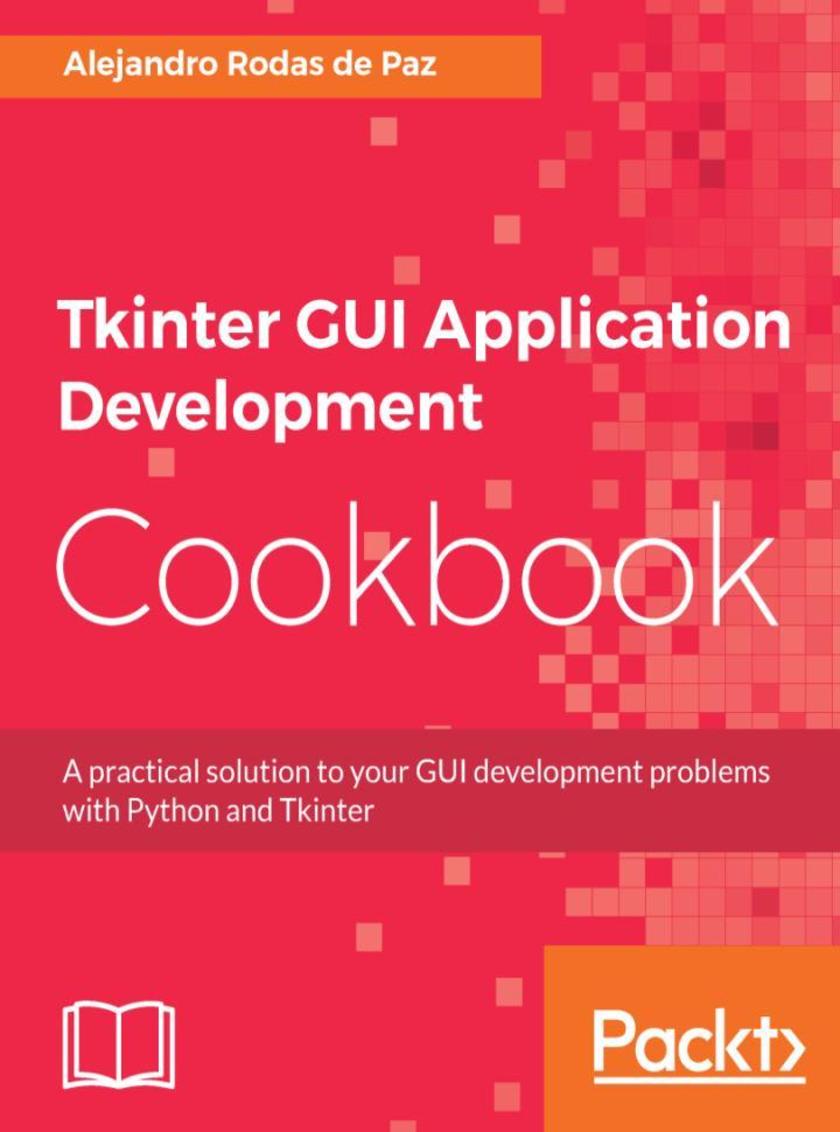
Tkinter GUI Application Development Cookbook
¥73.02
Discover solutions to all your Tkinter and Python GUI development problems About This Book ? Integrate efficient Python GUI programming techniques with Tkinter ? Efficiently implement advanced MVC architectures in your Python GUI apps ? Solve all your problems related to Tkinter and Python GUI development Who This Book Is For This book is for Python developers who are familiar with the basics of the language syntax, data structures, and OOP. You do not need previous experience with Tkinter or other GUI development libraries. What You Will Learn ? Add widgets and handle user events ? Lay out widgets within windows using frames and the different geometry managers ? Configure widgets so that they have a customized appearance and behavior ? Improve the navigation of your apps with menus and dialogs ? Apply object-oriented programming techniques in Tkinter applications ? Use threads to achieve responsiveness and update the GUI ? Explore the capabilities of the canvas widget and the types of items that can be added to it ? Extend Tkinter applications with the TTK (themed Tkinter) module In Detail As one of the more versatile programming languages, Python is well-known for its batteries-included philosophy, which includes a rich set of modules in its standard library; Tkinter is the library included for building desktop applications. Due to this, Tkinter is a common choice for rapid GUI development, and more complex applications can benefit from the full capabilities of this library. This book covers all of your Tkinter and Python GUI development problems and solutions. Tkinter GUI Application Development Cookbook starts with an overview of Tkinter classes and at the same time provides recipes for basic topics, such as layout patterns and event handling. Next, we cover how to develop common GUI patterns, such as entering and saving data, navigating through menus and dialogs, and performing long-running actions in the background. You will then make your apps leverage network resources effectively, perform 2D and 3D animation-related tasks, create 3D objects, and perform advanced graphical operations. Finally, this book covers using the canvas and themed widgets. By the end of the book, you will have an in-depth knowledge of Tkinter classes, and will know how to use them to build efficient and rich GUI applications. Style and approach A practical recipe-based guide that will help you find solutions to all your Tkinter and Python GUI development-related problems.
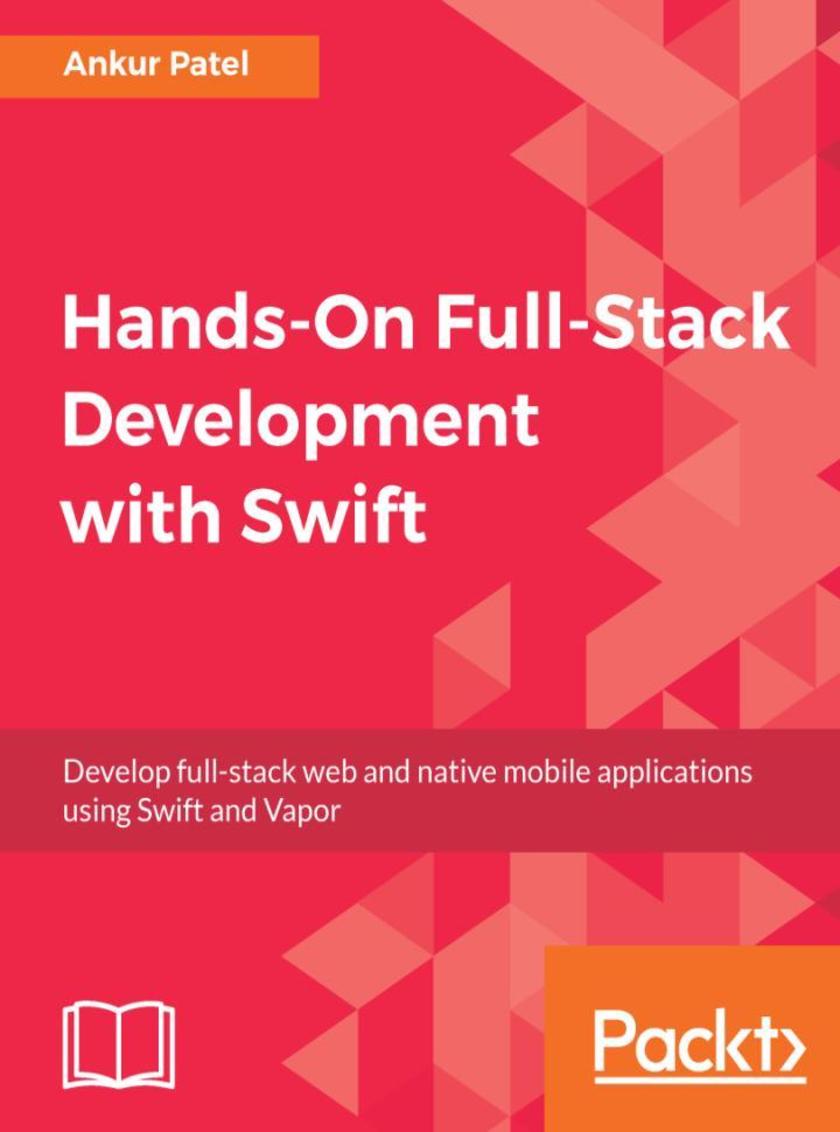
Hands-On Full-Stack Development with Swift
¥81.74
Build full-stack shopping list applications from scratch for web and mobile platforms using Xcode, Vapor, and Swift About This Book ? Build, package, and deploy an end-to-end app solution for mobile and web with Swift 4 ? Increase developer productivity by creating reusable client and server components ? Develop backend services for your apps and websites using Vapor framework Who This Book Is For This book is for developers who are looking to build full-stack web and native mobile applications using Swift. An understanding of HTML, CSS, and JavaScript would be beneficial when building server-rendered pages with Vapor. What You Will Learn ? Get accustomed to server-side programming as well as the Vapor framework ? Learn how to build a RESTful API ? Make network requests from your app and handle error states when a network request fails ? Deploy your app to Heroku using the CLI command ? Write a test for the Vapor backend ? Create a tvOS version of your shopping list app and explore code-sharing with an iOS platform ? Add registration and authentication so that users can have their own shopping lists In Detail Making Swift an open-source language enabled it to share code between a native app and a server. Building a scalable and secure server backend opens up new possibilities, such as building an entire application written in one language—Swift. This book gives you a detailed walk-through of tasks such as developing a native shopping list app with Swift and creating a full-stack backend using Vapor (which serves as an API server for the mobile app). You'll also discover how to build a web server to support dynamic web pages in browsers, thereby creating a rich application experience. You’ll begin by planning and then building a native iOS app using Swift. Then, you'll get to grips with building web pages and creating web views of your native app using Vapor. To put things into perspective, you'll learn how to build an entire full-stack web application and an API server for your native mobile app, followed by learning how to deploy the app to the cloud, and add registration and authentication to it. Once you get acquainted with creating applications, you'll build a tvOS version of the shopping list app and explore how easy is it to create an app for a different platform with maximum code shareability. Towards the end, you’ll also learn how to create an entire app for different platforms in Swift, thus enhancing your productivity. Style and approach A step-by-step tutorial-based approach that teaches you full-stack Swift through the development of a single application on several platforms.
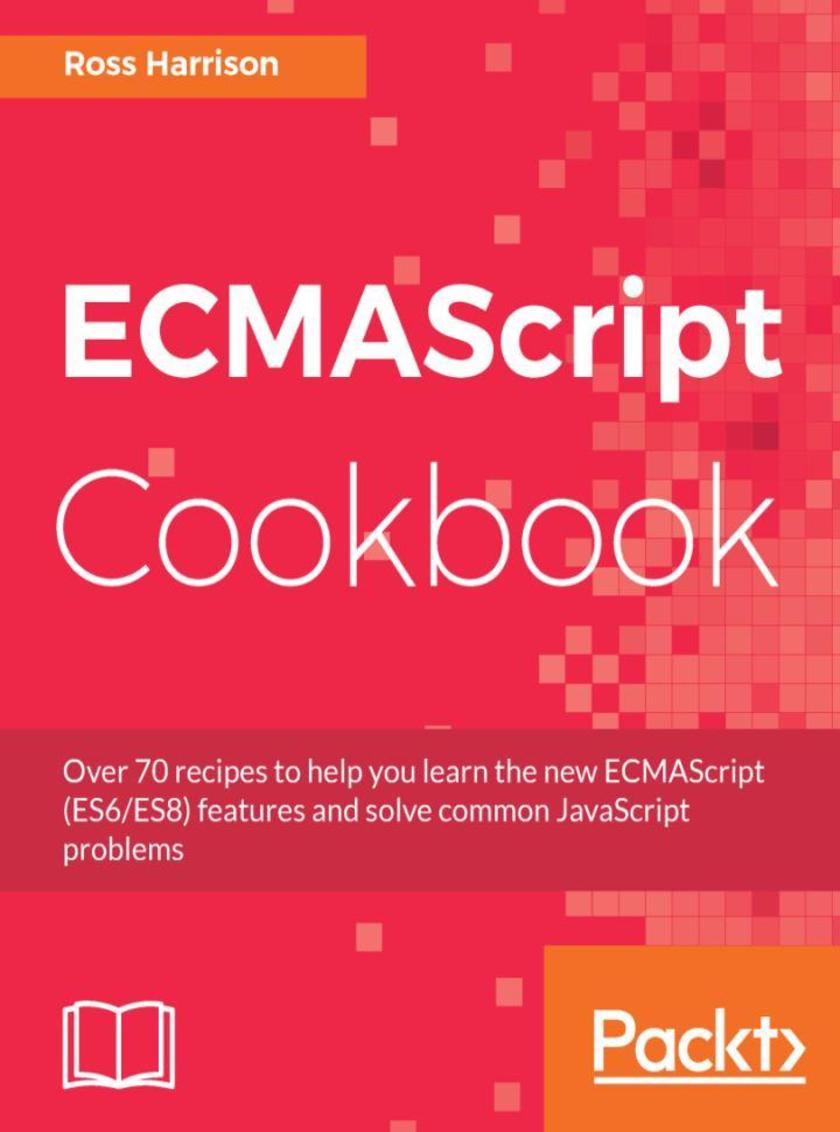
ECMAScript Cookbook
¥73.02
Become a better web programmer by writing efficient and modular code using ES6 and ES8 About This Book ? Learn to write asynchronous code and improve the readability of your web applications ? Explore advanced concepts such as closures, Proxy, generators, Promise, async functions, and Atomics ? Use different design patterns to create structures to solve common organizational and processing issues Who This Book Is For If you’re a web developer with a basic understanding of JavaScript and wish to learn the latest features of ECMAScript for developing efficient web applications, this book is for you. What You Will Learn ? Organize JavaScript programs across multiple files, using ES modules ? Create and work with promises using the Promise object and methods ? Compose async functions to propagate and handle errors ? Solve organizational and processing issues with structures using design patterns ? Use classes to encapsulate and share behavior ? Orchestrate parallel programs using WebWorkers, SharedMemory, and Atomics ? Use and extend Map, Set, and Symbol to work with user-defined classes and simulate data types ? Explore new array methods to avoid looping with arrays and other collections In Detail ECMAScript Cookbook follows a modular approach with independent recipes covering different feature sets and specifications of ECMAScript to help you become an efficient programmer. This book starts off with organizing your JavaScript applications as well as delivering those applications to modem and legacy systems. You will get acquainted with features of ECMAScript 8 such as async, SharedArrayBuffers, and Atomic operations that enhance asynchronous and parallel operations. In addition to this, this book will introduce you to SharedArrayBuffers, which allow web workers to share data directly, and Atomic operations, which help coordinate behavior across the threads. You will also work with OOP and Collections, followed by new functions and methods on the built-in Object and Array types that make common operations more manageable and less error-prone. You will then see how to easily build more sophisticated and expressive program structures with classes and inheritance. In the end, we will cover Sets, Maps, and Symbols, which are the new types introduced in ECMAScript 6 to add new behaviors and allow you to create simple and powerful modules. By the end of the book, you will be able to produce more efficient, expressive, and simpler programs using the new features of ECMAScript. Style and approach This book will follow a modular approach covering independent recipes on different features of ECMAScript throughout the book.
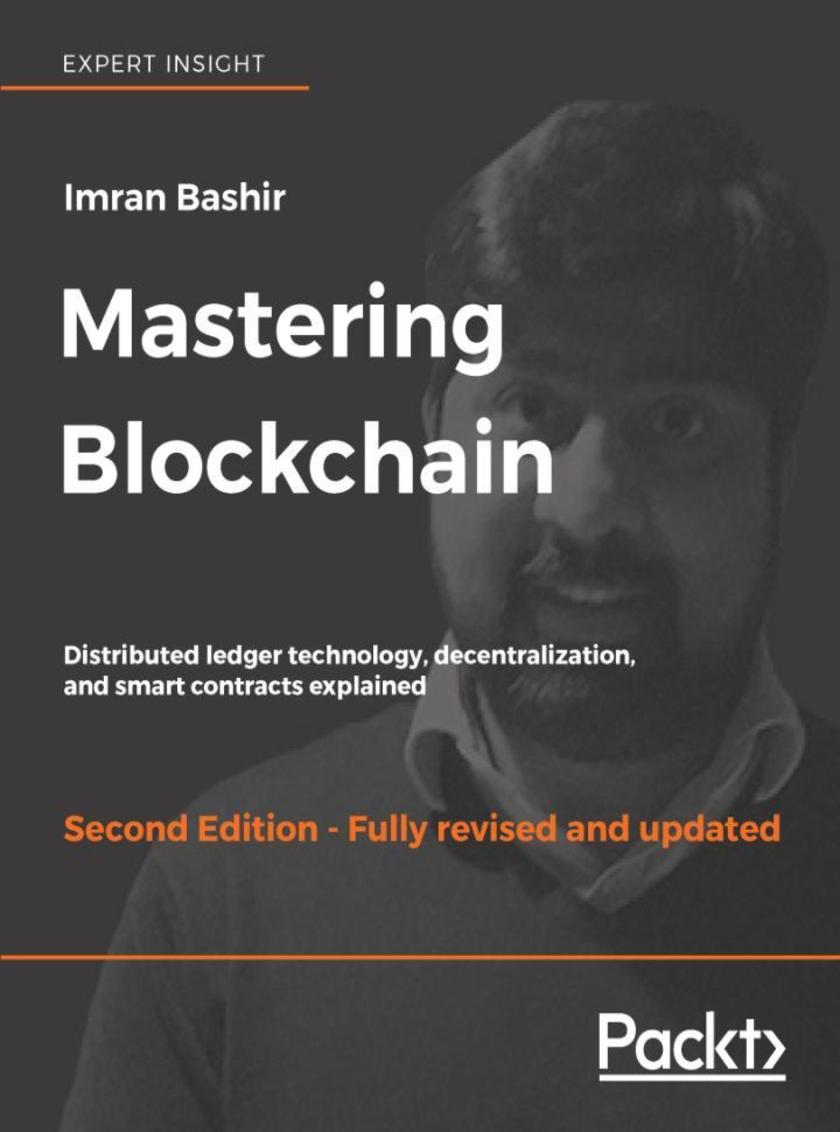
Mastering Blockchain - Second Edition
¥81.74
Learn about cryptography and cryptocurrencies, so you can build highly secure, decentralized applications and conduct trusted in-app transactions. About This Book ? Get to grips with the underlying technical principles and implementations of blockchain ? Build powerful applications using Ethereum to secure transactions and create smart contracts ? Explore cryptography, mine cryptocurrencies, and solve scalability issues with this comprehensive guide Who This Book Is For This book will appeal to those who wish to build fast, highly secure, transactional applications. It targets people who are familiar with the concept of blockchain and are comfortable with a programming language. What You Will Learn ? Master the theoretical and technical foundations of the blockchain technology ? Understand the concept of decentralization, its impact, and its relationship with blockchain technology ? Master how cryptography is used to secure data - with practical examples ? Grasp the inner workings of blockchain and the mechanisms behind bitcoin and alternative cryptocurrencies ? Understand the theoretical foundations of smart contracts ? Learn how Ethereum blockchain works and how to develop decentralized applications using Solidity and relevant development frameworks ? Identify and examine applications of the blockchain technology - beyond currencies ? Investigate alternative blockchain solutions including Hyperledger, Corda, and many more ? Explore research topics and the future scope of blockchain technology In Detail A blockchain is a distributed ledger that is replicated across multiple nodes and enables immutable, transparent and cryptographically secure record-keeping of transactions. The blockchain technology is the backbone of cryptocurrencies, and it has applications in finance, government, media and almost all other industries. Mastering Blockchain, Second Edition has been thoroughly updated and revised to provide a detailed description of this leading technology and its implementation in the real world. This book begins with the technical foundations of blockchain technology, teaching you the fundamentals of distributed systems, cryptography and how it keeps data secure. You will learn about the mechanisms behind cryptocurrencies and how to develop applications using Ethereum, a decentralized virtual machine. You will also explore different other blockchain solutions and get an introduction to business blockchain frameworks under Hyperledger, a collaborative effort for the advancement of blockchain technologies hosted by the Linux Foundation. You will also be shown how to implement blockchain solutions beyond currencies, Internet of Things with blockchain, blockchain scalability, and the future scope of this fascinating and powerful technology. Style and approach This comprehensive guide allows you to build smart blockchain applications and explore the power of this database. The book will let you quickly brush up on the basics of the blockchain database, followed by advanced implementations of blockchain in currency, smart contracts, decentralization, and so on.
Modern Big Data Processing with Hadoop
¥73.02
A comprehensive guide to design, build and execute effective Big Data strategies using Hadoop About This Book ? Get an in-depth view of the Apache Hadoop ecosystem and an overview of the architectural patterns pertaining to the popular Big Data platform ? Conquer different data processing and analytics challenges using a multitude of tools such as Apache Spark, Elasticsearch, Tableau and more ? A comprehensive, step-by-step guide that will teach you everything you need to know, to be an expert Hadoop Architect Who This Book Is For This book is for Big Data professionals who want to fast-track their career in the Hadoop industry and become an expert Big Data architect. Project managers and mainframe professionals looking forward to build a career in Big Data Hadoop will also find this book to be useful. Some understanding of Hadoop is required to get the best out of this book. What You Will Learn ? Build an efficient enterprise Big Data strategy centered around Apache Hadoop ? Gain a thorough understanding of using Hadoop with various Big Data frameworks such as Apache Spark, Elasticsearch and more ? Set up and deploy your Big Data environment on premises or on the cloud with Apache Ambari ? Design effective streaming data pipelines and build your own enterprise search solutions ? Utilize the historical data to build your analytics solutions and visualize them using popular tools such as Apache Superset ? Plan, set up and administer your Hadoop cluster efficiently In Detail The complex structure of data these days requires sophisticated solutions for data transformation, to make the information more accessible to the users.This book empowers you to build such solutions with relative ease with the help of Apache Hadoop, along with a host of other Big Data tools. This book will give you a complete understanding of the data lifecycle management with Hadoop, followed by modeling of structured and unstructured data in Hadoop. It will also show you how to design real-time streaming pipelines by leveraging tools such as Apache Spark, and build efficient enterprise search solutions using Elasticsearch. You will learn to build enterprise-grade analytics solutions on Hadoop, and how to visualize your data using tools such as Apache Superset. This book also covers techniques for deploying your Big Data solutions on the cloud Apache Ambari, as well as expert techniques for managing and administering your Hadoop cluster. By the end of this book, you will have all the knowledge you need to build expert Big Data systems. Style and approach Comprehensive guide with a perfect blend of theory, examples and implementation of real-world use-cases


