


 购物车
购物车 个人中心
个人中心
Java for Data Science
¥90.46
Examine the techniques and Java tools supporting the growing field of data science About This Book Your entry ticket to the world of data science with the stability and power of Java Explore, analyse, and visualize your data effectively using easy-to-follow examples Make your Java applications more capable using machine learning Who This Book Is For This book is for Java developers who are comfortable developing applications in Java. Those who now want to enter the world of data science or wish to build intelligent applications will find this book ideal. Aspiring data scientists will also find this book very helpful. What You Will Learn Understand the nature and key concepts used in the field of data science Grasp how data is collected, cleaned, and processed Become comfortable with key data analysis techniques See specialized analysis techniques centered on machine learning Master the effective visualization of your data Work with the Java APIs and techniques used to perform data analysis In Detail Data science is concerned with extracting knowledge and insights from a wide variety of data sources to analyse patterns or predict future behaviour. It draws from a wide array of disciplines including statistics, computer science, mathematics, machine learning, and data mining. In this book, we cover the important data science concepts and how they are supported by Java, as well as the often statistically challenging techniques, to provide you with an understanding of their purpose and application. The book starts with an introduction of data science, followed by the basic data science tasks of data collection, data cleaning, data analysis, and data visualization. This is followed by a discussion of statistical techniques and more advanced topics including machine learning, neural networks, and deep learning. The next section examines the major categories of data analysis including text, visual, and audio data, followed by a discussion of resources that support parallel implementation. The final chapter illustrates an in-depth data science problem and provides a comprehensive, Java-based solution. Due to the nature of the topic, simple examples of techniques are presented early followed by a more detailed treatment later in the book. This permits a more natural introduction to the techniques and concepts presented in the book. Style and approach This book follows a tutorial approach, providing examples of each of the major concepts covered. With a step-by-step instructional style, this book covers various facets of data science and will get you up and running quickly.
Mastering Zendesk
¥90.46
Master the art of providing effective IT services to your customers by leveraging Zendesk About This Book Deep dive into the functionalities of Zendesk and improve your organization's customer services Learn how to expand the capabilities of Zendesk by integrating and extending it with third-party tools A master level guide that manages tickets, channels, and workflows along with advanced security features Who This Book Is For This book is for proficient Zendesk administrators who want to unlock the full potential of their Zendesk environment by gaining a deeper understanding of Zendesk's advanced customization options. What You Will Learn Customize ticket channels such as Email, Twitter, Facebook, and Web-Widget Add business rules to create a more effective and automated Zendesk environment Use Zendesk apps to add more functionality to the Zendesk setup Extend Zendesk with JIRA and Salesforce Create custom metrics within GoodData in order to set up customized and automated reports Learn how to secure and troubleshoot Zendesk In Detail Zendesk is a cloud-based customer service solution that is widely used because it is easy, efficienct, flexible, and low cost. It is highly scalable and is great for organizations of all sizes. If you're a Zendesk administrator and are looking to explore advanced-level concepts, then this book is for you. It covers the core functionalities such as managing users, groups, and the organization, and creating and adding custom fields. You will learn how to add customized ticket channels to your account. Then, you will focus on customizing business rules and extending Zendesk with JIRA and Salesforce. Towards the end, the book emphasizes security and troubleshooting aspects as well as providing tips and tricks to create a more efficient support environment. By the end of this book, you will be able to turn a basic Zendesk setup into a highly customized working environment. Style and approach This advanced guide provides easy to understand examples to ensure you gain expertise with Zendesk.
Programming Kotlin
¥80.65
Familiarize yourself with all of Kotlin’s features with this in-depth guide About This Book Get a thorough introduction to Kotlin Learn to use Java code alongside Kotlin without any hiccups Get a complete overview of null safety, Generics, and many more interesting features Who This Book Is For The book is for existing Java developers who want to learn more about an alternative JVM language. If you want to see what Kotlin has to offer, this book is ideal for you. What You Will Learn Use new features to write structured and readable object-oriented code Find out how to use lambdas and higher order functions to write clean, reusable, and simple code Write unit tests and integrate Kotlin tests with Java code in a transitioning code base Write real-world production code in Kotlin in the style of microservices Leverage Kotlin’s extensions to the Java collections library Use destructuring expressions and find out how to write your own Write code that avoids null pointer errors and see how Java-nullable code can integrate with features in a Kotlin codebase Discover how to write functions in Kotlin, see the new features available, and extend existing libraries Learn to write an algebraic data types and figure out when they should be used In Detail Kotlin has been making waves ever since it was open sourced by JetBrains in 2011; it has been praised by developers across the world and is already being adopted by companies. This book provides a detailed introduction to Kotlin that shows you all its features and will enable you to write Kotlin code to production. We start with the basics: get you familiar with running Kotlin code, setting up, tools, and instructions that you can use to write basic programs. Next, we cover object oriented code: functions, lambdas, and properties – all while using Kotlin’s new features. Then, we move on to null safety aspects and type parameterization. We show you how to destructure expressions and even write your own. We also take you through important topics like testing, concurrency, microservices, and a whole lot more. By the end of this book you will be able to compose different services and build your own applications. Style and approach An easy to follow guide that covers the full set of features in Kotlin programming.
F# High Performance
¥80.65
Build powerful and fast applications with F# About This Book· Explore the advanced concurrency support in F# and .NET TPL·Covers major optimization techniques in F# to improve the performance of applications·Use Struct, Class and Record model, Interop with C# and VB without sacrificing performance. Who This Book Is For This book is for F# developers who want to build high-performance applications. Knowledge of functional programming would be helpful. What You Will Learn· Understand how the execution of functions in F# works·Identify common performance bottlenecks·Implement best practices to optimize performance·Use the available tooling to help measure performance·Combine the best practice of asynchronous and synchronous·Optimize further using various F# language constructs In Detail F# is a functional programming language and is used in enterprise applications that demand high performance. It has its own unique trait: it is a functional programming language and has OOP support at the same time. This book will help you make F# applications run faster with examples you can easily break down and take into your own work. You will be able to assess the performance of the program and identify bottlenecks. Beginning with a gentle overview of concurrency features in F#, you will get to know the advanced topics of concurrency optimizations in F#, such as F# message passing agent of MailboxProcessor and further interoperation with .NET TPL. Based on this knowledge, you will be able to enhance the performance optimizations when implementing and using other F# language features. The book also covers optimization techniques by using F# best practices and F# libraries. You will learn how the concepts of concurrency and parallel programming will help in improving the performance. With this, you would be able to take advantage of multi-core processors and track memory leaks, root causes, and CPU issues. Finally, you will be able to test their applications to achieve scalability. Style and approach This easy-to-follow guide is full of hands-on examples of real-world multithreading tasks. Each topic is explained and placed in context, and for the more inquisitive, there are also more in-depth details of the concepts used.
Artificial Intelligence with Python
¥90.46
Build real-world Artificial Intelligence applications with Python to intelligently interact with the world around you About This Book Step into the amazing world of intelligent apps using this comprehensive guide Enter the world of Artificial Intelligence, explore it, and create your own applications Work through simple yet insightful examples that will get you up and running with Artificial Intelligence in no time Who This Book Is For This book is for Python developers who want to build real-world Artificial Intelligence applications. This book is friendly to Python beginners, but being familiar with Python would be useful to play around with the code. It will also be useful for experienced Python programmers who are looking to use Artificial Intelligence techniques in their existing technology stacks. What You Will Learn Realize different classification and regression techniques Understand the concept of clustering and how to use it to automatically segment data See how to build an intelligent recommender system Understand logic programming and how to use it Build automatic speech recognition systems Understand the basics of heuristic search and genetic programming Develop games using Artificial Intelligence Learn how reinforcement learning works Discover how to build intelligent applications centered on images, text, and time series data See how to use deep learning algorithms and build applications based on it In Detail Artificial Intelligence is becoming increasingly relevant in the modern world where everything is driven by technology and data. It is used extensively across many fields such as search engines, image recognition, robotics, finance, and so on. We will explore various real-world scenarios in this book and you’ll learn about various algorithms that can be used to build Artificial Intelligence applications. During the course of this book, you will find out how to make informed decisions about what algorithms to use in a given context. Starting from the basics of Artificial Intelligence, you will learn how to develop various building blocks using different data mining techniques. You will see how to implement different algorithms to get the best possible results, and will understand how to apply them to real-world scenarios. If you want to add an intelligence layer to any application that’s based on images, text, stock market, or some other form of data, this exciting book on Artificial Intelligence will definitely be your guide! Style and approach This highly practical book will show you how to implement Artificial Intelligence. The book provides multiple examples enabling you to create smart applications to meet the needs of your organization. In every chapter, we explain an algorithm, implement it, and then build a smart application.
Microservices Deployment Cookbook
¥90.46
Master over 60 recipes to help you deliver complete, scalable, microservice-based solutions and see the improved business results immediately About This Book Adopt microservices-based architecture and deploy it at scale Build your complete microservice architecture using different recipes for different solutions Identify specific tools for specific scenarios and deliver immediate business results, correlate use cases, and adopt them in your team and organization Who This Book Is For This book is for developers, ops, and DevOps professionals who would like to put microservices to work and improve products, services, and operations. Those looking to build and deploy microservices will find this book useful, as well as managers and people at CXO level looking to adopt microservices in their organization. Prior knowledge of Java is expected. No prior knowledge of microservices is assumed. What You Will Learn Build microservices using Spring Boot, Wildfly Swarm, Dropwizard, and SparkJava Containerize your microservice using Docker Deploy microservices using Mesos/Marathon and Kubernetes Implement service discovery and load balancing using Zookeeper, Consul, and Nginx Monitor microservices using Graphite and Grafana Write stream programs with Kafka Streams and Spark Aggregate and manage logs using Kafka Get introduced to DC/OS, Docker Swarm, and YARN In Detail This book will help any team or organization understand, deploy, and manage microservices at scale. It is driven by a sample application, helping you gradually build a complete microservice-based ecosystem. Rather than just focusing on writing a microservice, this book addresses various other microservice-related solutions: deployments, clustering, load balancing, logging, streaming, and monitoring. The initial chapters offer insights into how web and enterprise apps can be migrated to scalable microservices. Moving on, you’ll see how to Dockerize your application so that it is ready to be shipped and deployed. We will look at how to deploy microservices on Mesos and Marathon and will also deploy microservices on Kubernetes. Next, you will implement service discovery and load balancing for your microservices. We’ll also show you how to build asynchronous streaming systems using Kafka Streams and Apache Spark. Finally, we wind up by aggregating your logs in Kafka, creating your own metrics, and monitoring the metrics for the microservice. Style and approach This book follows a recipe-driven approach and shows you how to plug and play with all the various pieces, putting them together to build a complete scalable microservice ecosystem. You do not need to study the chapters in order, as you can directly refer to the content you need for your situation.
HBase High Performance Cookbook
¥90.46
Exciting projects that will teach you how complex data can be exploited to gain maximum insights About This Book Architect a good HBase cluster for a very large distributed system Get to grips with the concepts of performance tuning with HBase A practical guide full of engaging recipes and attractive screenshots to enhance your system’s performance Who This Book Is For This book is intended for developers and architects who want to know all about HBase at a hands-on level. This book is also for big data enthusiasts and database developers who have worked with other NoSQL databases and now want to explore HBase as another futuristic scalable database solution in the big data space. What You Will Learn Configure HBase from a high performance perspective Grab data from various RDBMS/Flat files into the HBASE systems Understand table design and perform CRUD operations Find out how the communication between the client and server happens in HBase Grasp when to use and avoid MapReduce and how to perform various tasks with it Get to know the concepts of scaling with HBase through practical examples Set up Hbase in the Cloud for a small scale environment Integrate HBase with other tools including ElasticSearch In Detail Apache HBase is a non-relational NoSQL database management system that runs on top of HDFS. It is an open source, disturbed, versioned, column-oriented store and is written in Java to provide random real-time access to big Data. We’ll start off by ensuring you have a solid understanding the basics of HBase, followed by giving you a thorough explanation of architecting a HBase cluster as per our project specifications. Next, we will explore the scalable structure of tables and we will be able to communicate with the HBase client. After this, we’ll show you the intricacies of MapReduce and the art of performance tuning with HBase. Following this, we’ll explain the concepts pertaining to scaling with HBase. Finally, you will get an understanding of how to integrate HBase with other tools such as ElasticSearch. By the end of this book, you will have learned enough to exploit HBase for boost system performance. Style and approach This book is intended for software quality assurance/testing professionals, software project managers, or software developers with prior experience in using Selenium and Java to test web-based applications. This books also provides examples for C#, Python, and Ruby users.
Mastering Tableau
¥90.46
Master the intricacies of Tableau to create effective data visualizations About This Book Arm yourself with an arsenal of advanced chart types and geocoding to efficiently and engagingly present information Map a grid over a network node diagram and use that grid to demonstrate loads, processing time, and more in Tableau Integrate R with Tableau by utilizing R functions, libraries, and saved models Who This Book Is For If you are a business analyst without developer-level programming skills, then this book is for you. You are expected to have at least a fundamental understanding of Tableau and basic knowledge of joins, however SQL knowledge is not assumed. You should have basic computer skills, including at least moderate Excel proficiency. What You Will Learn Create a worksheet that can display the current balance for any given period in time Recreate a star schema from in a data warehouse in Tableau Combine level of detail calculations with table calculations, sets, and parameters Create custom polygons to build filled maps for area codes in the USA Visualize data using a set of analytical and advanced charting techniques Know when to use Tableau instead of PowerPoint Build a dashboard and export it to PowerPoint In Detail Tableau has emerged as one of the most popular Business Intelligence solutions in recent times, thanks to its powerful and interactive data visualization capabilities. This book will empower you to become a master in Tableau by exploiting the many new features introduced in Tableau 10.0. You will embark on this exciting journey by getting to know the valuable methods of utilizing advanced calculations to solve complex problems. These techniques include creative use of different types of calculations such as row-level, aggregate-level, and more. You will discover how almost any data visualization challenge can be met in Tableau by getting a proper understanding of the tool’s inner workings and creatively exploring possibilities. You’ll be armed with an arsenal of advanced chart types and techniques to enable you to efficiently and engagingly present information to a variety of audiences through the use of clear, efficient, and engaging dashboards. Explanations and examples of efficient and inefficient visualization techniques, well-designed and poorly designed dashboards, and compromise options when Tableau consumers will not embrace data visualization will build on your understanding of Tableau and how to use it efficiently. By the end of the book, you will be equipped with all the information you need to create effective dashboards and data visualization solutions using Tableau. Style and approach This book takes a direct approach, to systematically evolve to more involved functionalities such as advanced calculation, parameters & sets, data blending and R integration. This book will help you gain skill in building visualizations previously beyond your capacity.
Mastering Android Wear Application Development
¥71.93
Master the future of mobile devices in wearable technology About This Book Mastering Android Wear Development is a complete guide to wearable technology for experienced Android developers Notifications, voice input, coping with round screens – all the key challenges of wearable technology are covered This book describes not just how to write code for wearables, but also how to think about wearable technology and design apps that work well with the physical limitations of wearable devices Who This Book Is For This book is for application developers (the web, mobile, and desktop) who are interested in building new wearable apps, and mobile developers who already have apps on iTunes or Google Play Store and are looking to provide Android Wear support for their existing Android or iOS apps. What You Will Learn Understand the Wearable computing technology Set up a development environment to build Android Wear apps using Android Studio Master the Android Wear SDK and APIs Understand the UI patterns and UX principles to build Android Wear apps Work with the different form factors of wearable devices (round and square) Take advantage of the sensors available on Android Wear devices Develop Android Wear sample apps Communicate between Android mobile and Android Wear apps Get to know the steps involved in publishing Android Wear apps to the Play store In Detail Wearable technology is the future of mobile devices. It looks set to be a breakthrough technology, just like the iPad was before it. With the Apple Watch being widely regarded as a success, all eyes are now on Google to provide a similar device for its users. Keep your skills ahead of the competition and be one of the first to fully understand this powerful new trend. This book will give you a very solid understanding of the philosophy, thought process, development details, and methodologies involved in building well-designed, robust Android Wear applications. We cover the advantages and disadvantages of the wearable computing paradigm and provide a good foundational knowledge for you to build practical, real-world wearable apps. You will learn about the various tools, platforms, libraries, SDKs, and technology needed to build Android Wear apps. By the end of the book, you will be an expert in building Android wearable apps. Style and approach This one-stop professional tutorial will teach you everything you need to know to begin designing and developing applications for this exciting new technology. Every step from development through testing to deployment is explained in depth.
Principles of Data Science
¥80.65
Learn the techniques and math you need to start making sense of your data About This Book Enhance your knowledge of coding with data science theory for practical insight into data science and analysis More than just a math class, learn how to perform real-world data science tasks with R and Python Create actionable insights and transform raw data into tangible value Who This Book Is For You should be fairly well acquainted with basic algebra and should feel comfortable reading snippets of R/Python as well as pseudo code. You should have the urge to learn and apply the techniques put forth in this book on either your own data sets or those provided to you. If you have the basic math skills but want to apply them in data science or you have good programming skills but lack math, then this book is for you. What You Will Learn Get to know the five most important steps of data science Use your data intelligently and learn how to handle it with care Bridge the gap between mathematics and programming Learn about probability, calculus, and how to use statistical models to control and clean your data and drive actionable results Build and evaluate baseline machine learning models Explore the most effective metrics to determine the success of your machine learning models Create data visualizations that communicate actionable insights Read and apply machine learning concepts to your problems and make actual predictions In Detail Need to turn your skills at programming into effective data science skillsPrinciples of Data Science is created to help you join the dots between mathematics, programming, and business analysis. With this book, you’ll feel confident about asking—and answering—complex and sophisticated questions of your data to move from abstract and raw statistics to actionable ideas. With a unique approach that bridges the gap between mathematics and computer science, this books takes you through the entire data science pipeline. Beginning with cleaning and preparing data, and effective data mining strategies and techniques, you’ll move on to build a comprehensive picture of how every piece of the data science puzzle fits together. Learn the fundamentals of computational mathematics and statistics, as well as some pseudocode being used today by data scientists and analysts. You’ll get to grips with machine learning, discover the statistical models that help you take control and navigate even the densest datasets, and find out how to create powerful visualizations that communicate what your data means. Style and approach This is an easy-to-understand and accessible tutorial. It is a step-by-step guide with use cases, examples, and illustrations to get you well-versed with the concepts of data science. Along with explaining the fundamentals, the book will also introduce you to slightly advanced concepts later on and will help you implement these techniques in the real world.
Salesforce CRM - The Definitive Admin Handbook - Fourth Edition
¥107.90
Learn how to successfully administer, build, and manage Salesforce CRM and Salesforce mobile solutions using real-world and best practice techniques About This Book See the latest best practice Salesforce administration principles, gain real-world advice, and understand critical design considerations to set up and customize Salesforce CRM This is a pragmatic guide to the key functions of customizing and setting up the application for enterprise security, user and data management, process automation, analytics, and mobile features Step-by-step navigation and de*ions of the features of Salesforce CRM platform and clear guidance on the customization and administration of the application Identify what is covered to create your own improved study guide for the certified administrator examination Who This Book Is For This book is for administrators who want to develop and strengthen their Salesforce CRM skills in the areas of configuration and system management. Whether you are a new administrator or a more experienced professional, this book will enhance your knowledge and understanding of the features of Salesforce CRM. What You Will Learn Manage and administer user records and password policies Configure and control the various organization-wide user interface features in Salesforce CRM Set up and maintain users, profiles, and permission sets and administer appropriate security and login access mechanisms Apply organization security Understand the capabilities of the Salesforce CRM sharing model Create, delete, and customize fields, page layout, and list views for custom and standard objects Find out how Apex and Visualforce coding can be used in Salesforce CRM Implement the mechanisms for data management Discover the tools to import, update, transfer, and mass delete data In Detail Salesforce CRM’s Winter ’17 release offers a host of new features for CRM designed to transform your sales and marketing requirements. With this comprehensive guide to implementing Salesforce CRM, administrators of all levels can easily acquire deep knowledge of the platform. The book begins by guiding you through setting up users and the security settings and then progresses to configuration, data management, and data analytics. We swiftly move on to the setting up of organization wide features that affect the look and feel of the application. Process automation and approval mechanisms are covered next, along with the functional areas of Sales Cloud, Service Cloud, Marketing Cloud, and Salesforce Chatter. This book details Salesforce CRM system administration in a practical way and is an invaluable reference for both new administrators and experienced professionals. At the end of the book, techniques to further enhance the system and improve the return on investment Salesforce mobile apps and mobile administration are covered, along with Salesforce Adoption Manager. Every chapter is complete with a section containing example questions of the type that you might encounter in the certification examination. Style and approach This book takes a straightforward, no-nonsense approach to working with the Salesforce CRM platform. Filled with examples and use cases, the book presents the facts along with seasoned advice and real-world examples to ensure you have all the resources you need to become a more informed Salesforce Administrator.
Practical Business Intelligence
¥90.46
Learn to get the most out of your business data to optimize your business About This Book This book will enable and empower you to break free of the shackles of spreadsheets Learn to make informed decisions using the data at hand with this highly practical, comprehensive guide This book includes real-world use cases that teach you how analytics can be put to work to optimize your business Using a fictional transactional dataset in raw form, you’ll work your way up to ultimately creating a fully-functional warehouse and a fleshed-out BI platform Who This Book Is For This book is for anyone who has wrangled with data to try to perform automated data analysis through visualizations for themselves or their customers. This highly-customized guide is for developers who know a bit about analytics but don't know how to make use of it in the field of business intelligence. What You Will Learn Create a BI environment that enables self-service reporting Understand SQL and the aggregation of data Develop a data model suitable for analytical reporting Connect a data warehouse to the analytic reporting tools Understand the specific benefits behind visualizations with D3.js, R, Tableau, QlikView, and Python Get to know the best practices to develop various reports and applications when using BI tools Explore the field of data analysis with all the data we will use for reporting In Detail Business Intelligence (BI) is at the crux of revolutionizing enterprise. Everyone wants to minimize losses and maximize profits. Thanks to Big Data and improved methodologies to analyze data, Data Analysts and Data Scientists are increasingly using data to make informed decisions. Just knowing how to analyze data is not enough, you need to start thinking how to use data as a business asset and then perform the right analysis to build an insightful BI solution. Efficient BI strives to achieve the automation of data for ease of reporting and analysis. Through this book, you will develop the ability to think along the right lines and use more than one tool to perform analysis depending on the needs of your business. We start off by preparing you for data analytics. We then move on to teach you a range of techniques to fetch important information from various databases, which can be used to optimize your business. The book aims to provide a full end-to-end solution for an environment setup that can help you make informed business decisions and deliver efficient and automated BI solutions to any company. It is a complete guide for implementing Business intelligence with the help of the most powerful tools like D3.js, R, Tableau, Qlikview and Python that are available on the market. Style and approach Packed with real-world examples, this pragmatic guide helps you polish your data and make informed decisions for your business. We cover both business and data analysis perspectives, blending theory and practical hands-on work so that you perceive data as a business asset.
Android Design Patterns and Best Practice
¥80.65
Create reliable, robust, and efficient Android apps with industry-standard design patterns About This Book Create efficient object interaction patterns for faster and more efficient Android development Get into efficient and fast app development and start making money from your android apps Implement industry-standard design patterns and best practices to reduce your app development time drastically Who This Book Is For This book is intended for Android developers who have some basic android development experience. Basic Java programming knowledge is a must to get the most out of this book. What You Will Learn Build a simple app and run it on real and emulated devices Explore the WYSIWYG and XML approaches to material design provided within Android Studio Detect user activities by using touch screen listeners, gesture detection, and reading sensors Apply transitions and shared elements to employ elegant animations and efficiently use the minimal screen space of mobile devices Develop apps that automatically apply the best layouts for different devices by using designated directories Socialize in the digital word by connecting your app to social media Make your apps available to the largest possible audience with the AppCompat support library In Detail Are you an Android developer with some experience under your beltAre you wondering how the experts create efficient and good-looking appsThen your wait will end with this book! We will teach you about different Android development patterns that will enable you to write clean code and make your app stand out from the crowd. The book starts by introducing the Android development environment and exploring the support libraries. You will gradually explore the different design and layout patterns and get to know the best practices of how to use them together. Then you’ll then develop an application that will help you grasp activities, services, and broadcasts and their roles in Android development. Moving on, you will add user-detecting classes and APIs such as gesture detection, touch screen listeners, and sensors to your app. You will also learn to adapt your app to run on tablets and other devices and platforms, including Android Wear, auto, and TV. Finally, you will see how to connect your app to social media and explore deployment patterns as well as the best publishing and monetizing practices. The book will start by introducing the Android development environment and exploring the support libraries. You will gradually explore the different Design and layout patterns and learn the best practices on how to use them together. You will then develop an application that will help you grasp Activities, Services and Broadcasts and their roles in Android development. Moving on, you will add user detecting classes and APIs such as at gesture detection, touch screen listeners and sensors to our app. You will also learn to adapt your app to run on tablets and other devices and platforms, including Android Wear, Auto, and TV. Finally, you will learn to connect your app to social media and explore deployment patterns and best publishing and monetizing practices. Style and approach This book takes a step-by-step approach. The steps are explained using real-world practical examples. Each chapter uses case studies where we show you how using design patterns will help in your development process.

Oracle Database 12c Security Cookbook
¥99.18
Secure your Oracle Database 12c with this valuable Oracle support resource, featuring more than 100 solutions to the challenges of protecting your data About This Book Explore and learn the new security features introduced in Oracle Database 12c, to successfully secure your sensitive data Learn how to identify which security strategy is right for your needs – and how to apply it Each ‘recipe’ provides you with a single step-by-step solution, making this book a vital resource, delivering Oracle support in one accessible place Who This Book Is For This book is for DBAs, developers, and architects who are keen to know more about security in Oracle Database 12c. This book is best suited for beginners and intermediate-level database security practitioners. Basic knowledge of Oracle Database is expected, but no prior experience of securing a database is required. What You Will Learn Analyze application privileges and reduce the attack surface Reduce the risk of data exposure by using Oracle Data Redaction and Virtual Private Database Control data access and integrity in your organization using the appropriate database feature or option Learn how to protect your databases against application bypasses Audit user activity using the new auditing architecture Restrict highly privileged users from accessing data Encrypt data in Oracle Database Work in a real-world environment where a multi-layer security strategy is applied In Detail Businesses around the world are paying much greater attention toward database security than they ever have before. Not only does the current regulatory environment require tight security, particularly when dealing with sensitive and personal data, data is also arguably a company’s most valuable asset - why wouldn’t you want to protect it in a secure and reliable databaseOracle Database lets you do exactly that. It’s why it is one of the world’s leading databases – with a rich portfolio of features to protect data from contemporary vulnerabilities, it’s the go-to database for many organizations. Oracle Database 12c Security Cookbook helps DBAs, developers, and architects to better understand database security challenges. Let it guide you through the process of implementing appropriate security mechanisms, helping you to ensure you are taking proactive steps to keep your data safe. Featuring solutions for common security problems in the new Oracle Database 12c, with this book you can be confident about securing your database from a range of different threats and problems. Style and approach Each chapter explains the different aspects of security through a series of recipes. Each recipe presents instructions in a step-by-step manner, supported by explanations of the topic.
Practical Machine Learning Cookbook
¥107.90
Machine learning has become the new black. The challenge in today's world is the explosion of data from existing legacy data and incoming new structured and unstructured data. The complexity of discovering, understanding, performing analysis, and predicting outcomes on the data using machine learning algorithms is a challenge. This cookbook will help solve everyday challenges you face as a data scientist. The application of various data science techniques and on multiple data sets based on real-world challenges you face will help you appreciate a variety of techniques used in various situations. The first half of the book provides recipes on fairly complex machine-learning systems, where you'll learn to explore new areas of applications of machine learning and improve its efficiency. That includes recipes on classifications, neural networks, unsupervised and supervised learning, deep learning, reinforcement learning, and more. The second half of the book focuses on three different machine learning case studies, all based on real-world data, and offers solutions and solves specific machine-learning issues in each one. What You Will Learn ?Get equipped with a deeper understanding of how to apply machine-learning techniques ?Implement each of the advanced machine-learning techniques ?Solve real-life problems that are encountered in order to make your applications produce improved results ?Gain hands-on experience in problem solving for your machine-learning systems ?Understand the methods of collecting data, preparing data for usage, training the model, evaluating the model's performance, and improving the model's performance
Oracle Business Intelligence Enterprise Edition 12c - Second Edition
¥116.62
comprehensive guide from Oracle experts, that will act as your single point of reference for building an Oracle BI 12c system that turns data in actionable insight. About This Book ?Come, start your first Oracle Business intelligence system and excel in BI with this exhaustive guide ?An all-encompassing guide for your Oracle business intelligence needs ?Learn from the self-paced professional guidance and implement Oracle business intelligence using this easy-to-follow guide by our experts Who This Book Is For If your job includes working on data, improving the financial or operational performance of your organization or you are a consultant for the above, then this book is for you. If you have been placed on a business intelligence project, then this book is for you. If you are the Project Manager, Business Analyst or Data Scientist then this book is for you. If you are an end user of Oracle Business Intelligence, then this book is for you too. Having a basic understanding of databases and the use of Business Intelligence is expected, but no knowledge of Oracle BI is required. What You Will Learn ?Install OBIEE in Windows, including how to create the underlying Weblogic Application server and the required database ?Build the BI system repository, the vital engine connecting your data to the front end of Oracle BI ?Develop effective analysis, draw out meaning from the data, and present it to end users on interactive dashboards ?Build pixel-perfect, printable reports using the embedded BI Publisher feature ?Build agents for actionable insight and enable your users to act on Business Intelligence at their desktop or
Deep Learning with TensorFlow
¥90.46
Delve into neural networks, implement deep learning algorithms, and explore layers of data abstraction with the help of this comprehensive TensorFlow guide About This Book ?Learn how to implement advanced techniques in deep learning with Google's brainchild, TensorFlow ?Explore deep neural networks and layers of data abstraction with the help of this comprehensive guide ?Real-world contextualization through some deep learning problems concerning research and application Who This Book Is For The book is intended for a general audience of people interested in machine learning and machine intelligence. A rudimentary level of programming in one language is assumed, as is a basic familiarity with computer science techniques and technologies, including a basic awareness of computer hardware and algorithms. Some competence in mathematics is needed to the level of elementary linear algebra and calculus. What You Will Learn ?Learn about machine learning landscapes along with the historical development and progress of deep learning ?Learn about deep machine intelligence and GPU computing with the latest TensorFlow 1.x ?Access public datasets and utilize them using TensorFlow to load, process, and transform data ?Use TensorFlow on real-world datasets, including images, text, and more ?Learn how to evaluate the performance of your deep learning models ?Using deep learning for scalable object detection and mobile computing ?Train machines quickly to learn from data by exploring reinforcement learning techniques ?Explore active areas of deep learning research and applications
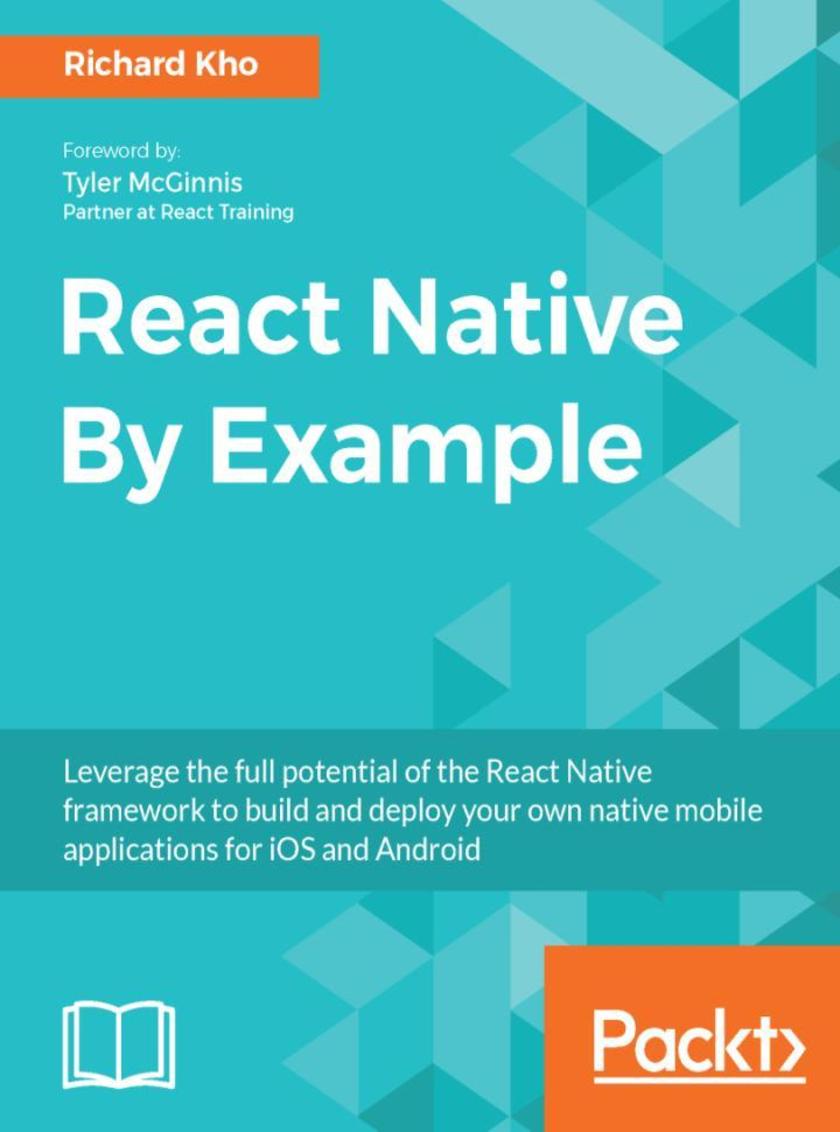
React Native By Example
¥80.65
React Native's ability to build performant mobile applications with JavaScript has resulted in its popularity amongst developers. Developers now have the luxury to create incredible mobile experiences that look and feel native to their platforms with the comfort of a well-known language and the popular React.js library. This book will show you how to build your own native mobile applications for the iOS and Android platforms while leveraging the finesse and simplicity of JavaScript and React. Throughout the book you will build three projects, each of increasing complexity. You will also link up with the third-party Facebook SDK, convert an app to support the Redux architecture, and learn the process involved in making your apps available for sale on the iOS App Store and Google Play. At the end of this book, you will have learned and implemented a wide breadth of core APIs and components found in the React Native framework that are necessary in creating great mobile experiences. What you will learn ?How to create mobile-performant iOS and Android apps using JavaScript and React ?The potential of each API and component, putting them into practice throughout the course of three projects ?The process of integrating the Facebook SDK to build an app that connects to third-party data ?Every step taken to implement Redux, a popular state management library, in your mobile apps
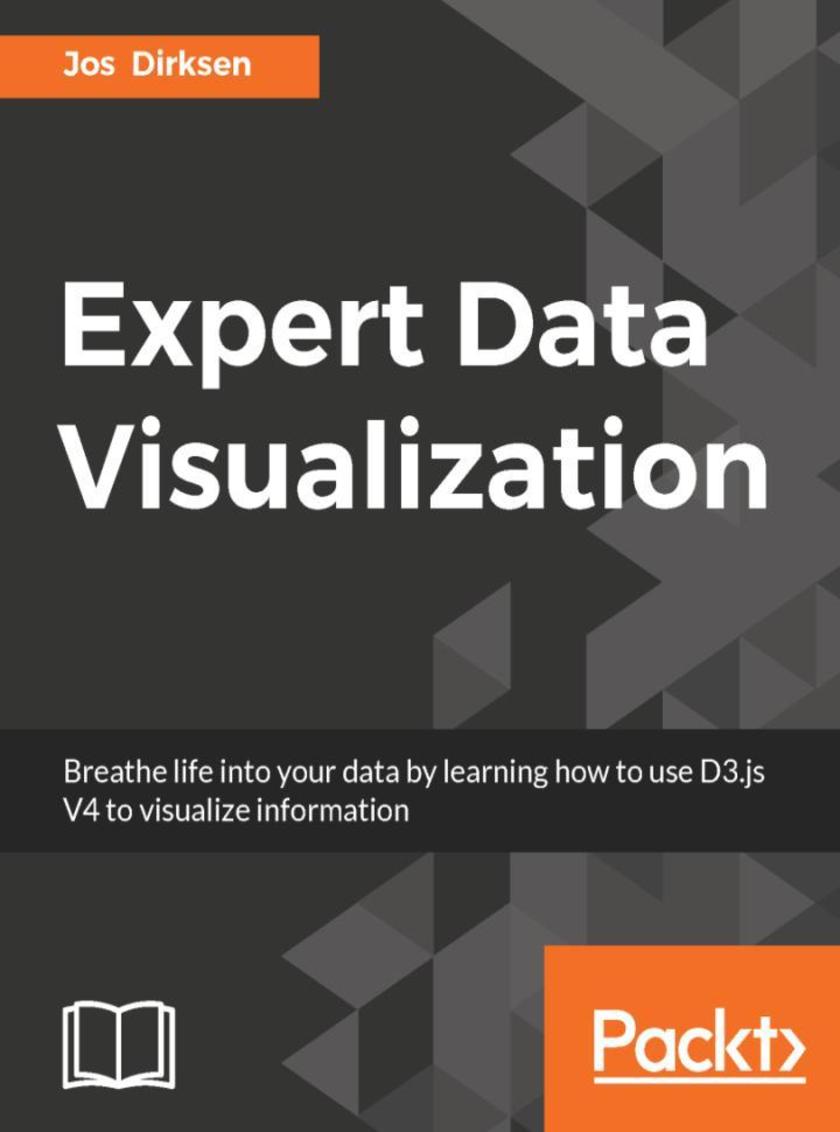
Expert Data Visualization
¥90.46
Do you want to make sense of your data? Do you want to create interactive charts, data trees, info-graphics, geospatial charts, and maps efficiently? This book is your ideal choice to master interactive data visualization with D3.js V4. The book includes a number of extensive examples that to help you hone your skills with data visualization. Throughout nine chapters these examples will help you acquire a clear practical understanding of the various techniques, tools and functionality provided by D3.js. You will first setup your D3.JS development environment and learn the basic patterns needed to visualize your data. After that you will learn techniques to optimize different processes such as working with selections; animating data transitions; creating graps and charts, integrating external resources (static as well as streaming); visualizing information on maps; working with colors and scales; utilizing the different D3.js APIs; and much more. The book will also guide you through creating custom graphs and visualizations, and show you how to go from the raw data to beautiful visualizations. The extensive examples will include working with complex and realtime data streams, such as seismic data, geospatial data, scientific data, and more. Towards the end of the book, you will learn to add more functionality on top of D3.js by using it with other external libraries and integrating it with Ecma* 6 and Type*
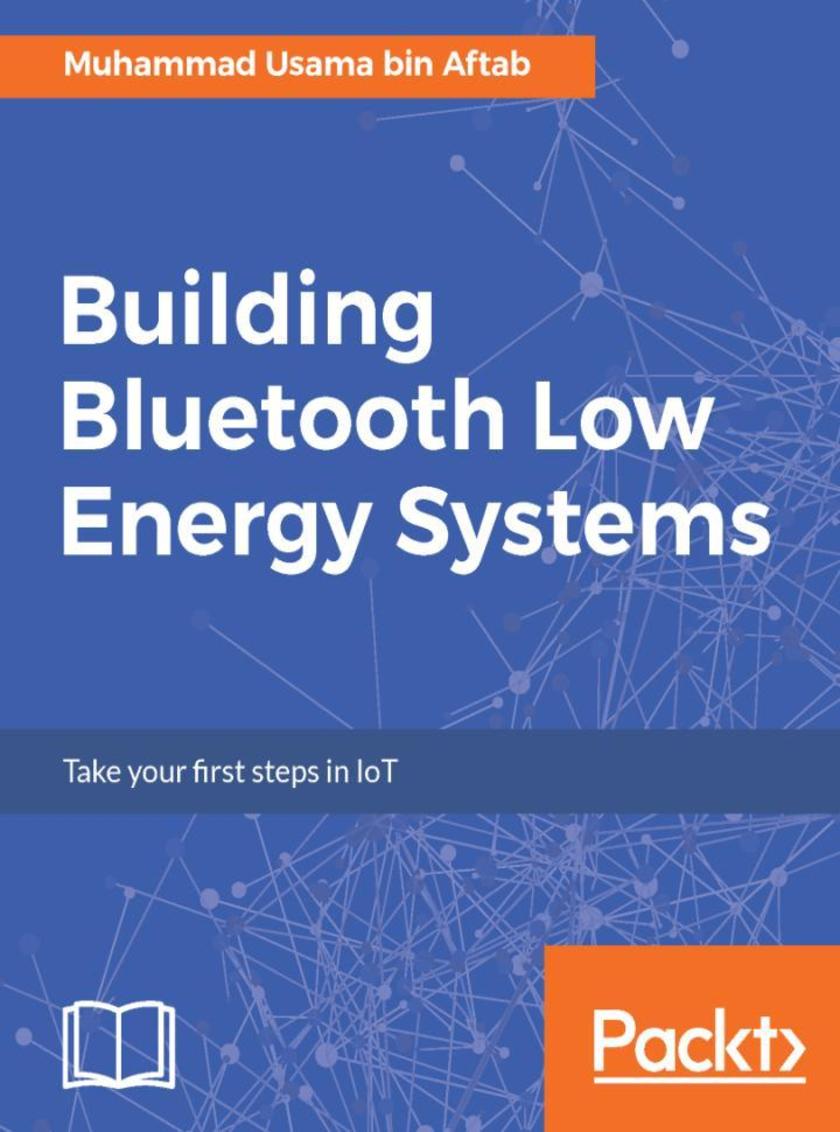
Building Bluetooth Low Energy Systems
¥63.21
Bluetooth Low Energy (BLE) is a Wireless Personal Area network technology aimed at novel applications for smart devices. High-tech BLE profiles and services are being increasingly used by application developers and hardware enthusiasts to allow devices to interact with the surrounding world. This book will focus on a technical introduction to BLE and how it is reshaping small-distance communication. We will start with IoT, where many technologies such as BLE, Zigbee, and IEEE 802.15.4 Mesh will be introduced. The book will present BLE from an engineering perspective, from which the protocol stack, architecture, and layers are discussed. You will learn to implement customized projects for Peripheral/Central communication, BLE Beacons, indoor navigation using triangulation, and the Internet gateway for Bluetooth Low Energy Personal Network, all using various code samples and APIs on Android, iOS, and the Web. Finally, the book will conclude with a glimpse into future technologies destined to be prominent in years to come. What you will learn ?Bluetooth Low Energy in theory. ?Bluetooth Low Energy Hardware and Software Development Kits. ?Implement Bluetooth low energy communication (central and peripheral) using Android. ?Master BLE Beacons with examples implemented over Eddystone and iBeacons.
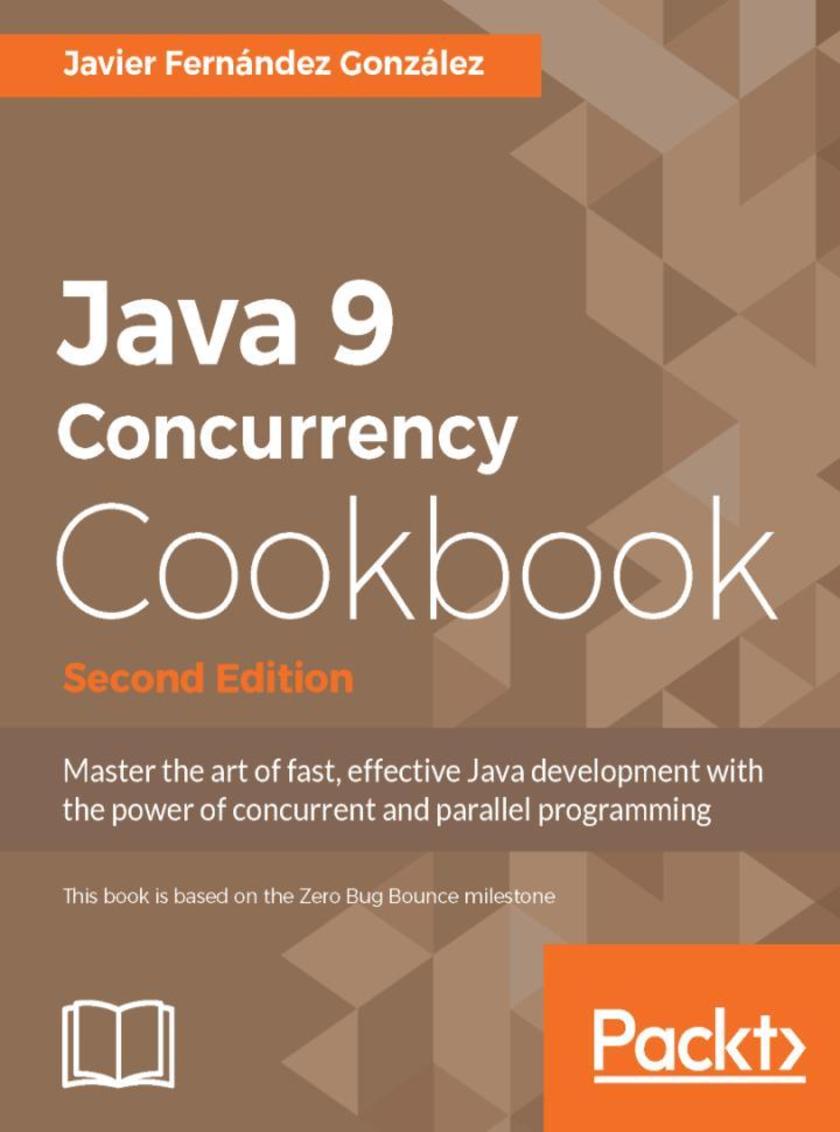
Java 9 Concurrency Cookbook - Second Edition
¥90.46
Writing concurrent and parallel programming applications is an integral skill for any Java programmer. Java 9 comes with a host of fantastic features, including significant performance improvements and new APIs. This book will take you through all the new APIs, showing you how to build parallel and multi-threaded applications. The book covers all the elements of the Java Concurrency API, with essential recipes that will help you take advantage of the exciting new capabilities. You will learn how to use parallel and reactive streams to process massive data sets. Next, you will move on to create streams and use all their intermediate and terminal operations to process big collections of data in a parallel and functional way. Further, you ll discover a whole range of recipes for almost everything, such as thread management, synchronization, executors, parallel and reactive streams, and many more. At the end of the book, you will learn how to obtain information about the status of some of the most useful components of the Java Concurrency API and how to test concurrent applications using different tools. What you will learn ?Find out to manage the basic components of the Java Concurrency API ?Use synchronization mechanisms to avoid data race conditions and other problems of concurrent applications ?Separate the thread management from the rest of the application with the Executor framework ?Solve problems using a parallelized version of the divide and conquer paradigm with the Fork / Join framework ?Process massive data sets in an optimized way using streams and reactive streams ?See which data structures we can use in concurrent applications and how to use them ?Practice efficient techniques to test concurrent applications ?Get to know tips and tricks to design concurrent applications


