


 购物车
购物车 个人中心
个人中心
TypeScript Design Patterns
¥71.93
Boost your development efficiency by learning about design patterns in TypeScript About This Book This step-by-step guide will would demonstrate all the important design patterns in practice This book is the only documentation on the market focusing on design patterns in TypeScript This book is packed with rich examples that will improve your efficiency and encourage code reuse Who This Book Is For If you are a TypeScript developer, this book is for you. No knowledge of design patterns is required to read this book. What You Will Learn Understand the challenges and implications of developing an enterprise application Install and configure the necessary tools in order to start developing an application Identify the challenges when developing an application Apply GoF patterns in an application with a testing approach Use and utilize design patterns while developing a TypeScript application or during JavaScript application development Reference to SOLID principles and what their benefits do to your projects Apply various principles in a TypeScript application Improve code quality and development speed In Detail In programming, there are several problems that occur frequently. To solve these problems, there are various repeatable solutions that are known as design patterns. Design patterns are a great way to improve the efficiency of your programs and improve your productivity. This book is a collection of the most important patterns you need to improve your applications’ performance and your productivity. The journey starts by explaining the current challenges when designing and developing an application and how you can solve these challenges by applying the correct design pattern and best practices. Each pattern is accompanied with rich examples that demonstrate the power of patterns for a range of tasks, from building an application to code testing. We’ll introduce low-level programming concepts to help you write TypeScript code, as well as work with software architecture, best practices, and design aspects. Style and approach In this book, design patterns are explained in a step-by-step manner. All the major patterns covered will improve your understanding of TypeScript and the patterns associated with TypeScript.
Service Worker Development Cookbook
¥90.46
Build highly available and performant native web applications that seamlessly integrate with third-party APIs About This Book Get straight into the action with step-by-step recipes that show you how to put Service Workers to work Find out what Service Workers can do for your app, then do it! Get the first in-depth look at this important new feature for web developers Who This Book Is For Web developers, mobile application developers, and software engineers with any level of knowledge can use this book. You should be familiar with JavaScript and HTML. What You Will Learn Display a custom offline page Cache critical resources for offline use Implement offline Google Analytics Get network responses offline Implement push notifications Improve performance of your app In Detail It would be nice to have web apps that work offline and send push notifications. This is now possible with Service Workers, which can add native-like functionality to your web apps without requiring a download. This book will get your mobile and web apps functioning without Internet connectivity, improve performance and network interaction in order to increase the level of availability, and show you how to build performant applications that seamlessly integrate with third-party APIs. We’ll show you how to add Service Worker functionality to web apps and sites, access offline content through basic and advanced techniques, and build powerful interactive system notifications. We’ll also teach you about cache functionality and assets to provide immediate load even over narrow connections. We conclude by giving you various tips to improve app performance, including the background sync technique. By the end of this book, you’ll know build high performing and faster web and mobile applications with Service Workers. Style and approach This book provides lots of task-oriented, practical, and inspiring ways to put Service Workers to work. Step-by-step instructions will guide you through every task.
Learning Splunk Web Framework
¥71.93
Take your analytics online with the ease and power of the Splunk Web Framework About This Book Want to build rich applications on the Web using SplunkThis book will be your ultimate guide! Learn to use web framework components with the help of this highly practical, example-rich guide Perform excellent Splunk analytics on the Web and bring that knowledge to your own projects Who This Book Is For This book will cater to Splunk developers and administrators who now wish to further their knowledge with Splunk Web Framework and learn to improve the way they present and visualize data in Splunk. A basic knowledge of JavaScript will be beneficial but is not a prerequisite. What You Will Learn Master the fundamentals of Splunk Web Framework Start thinking of Splunk as a complete development platform to build user-friendly apps Extend the functionality of your apps using SimpleXML techniques Set up dashboard layouts, navigation, and menus in your apps Create simple dashboard elements including charts and tables Master the art of interacting with searches and dashboards Integrate SplunkJS to add visual appeal to your website In Detail Building rich applications on the Web using Splunk is now simpler than ever before with the Splunk Web Framework. It empowers developers to build their own web applications with custom dashboards, tables, charts, form searches, and other functionalities in the datasets at their disposal. The book will start with the fundamentals of the Splunk Web Framework, teaching you the secrets of building interesting and user-friendly applications. In the first application, you will learn to analyze and monitor traffic hitting the NASA website and learn to create dashboards for it. You will then learn additional, and more detailed, techniques to enhance the functionalities of the app such as dashboards and forms, editing simple XML, using simple XML extensions, tokens, post-process searches, dynamic drill-downs, the Splunk Web Framework and REST API, and much more. The second app will use historical stock market data and will create custom dashboards using Splunk Web Framework; the book will now cover important topics such as creating HTML dashboards, enhancing the visual appeal of the app using CSS, and moving your app with SplunkJS. The book will provide different and interesting examples instead of the usual “Log, Index, Search, and Graph” so that Splunk will be the first tool readers think of to resolve a problem. Style and approach This book will follow a step-by-step approach whereby every new concept is built on top of the previous chapter, and will be highly practical in nature; the reader will learn to build apps while reading about the Splunk Web framework.
Data Visualization: Representing Information on Modern Web
¥179.84
Unleash the power of data by creating interactive, engaging, and compelling visualizations for the web About This Book Get a portable, versatile, and flexible data visualization design approach that will help you navigate the complex path towards success Get thorough explanation of the many visual variables and visualization taxonomy to provide you with a menu of creative options A comprehensive and contemporary introduction to data-driven visualization design and the most effective approaches to designing impact-maximizing and cognition-amplifying visualizations Who This Book Is For This course is for developers who are excited about data and who want to share that excitement with others and it will be handy for the web developers or data scientists who want to create interactive visualizations for the web. Prior knowledge of developing web applications is required. You should have a working knowledge of both JavaScript and HTML. What You Will Learn Harness the power of D3 by building interactive and real-time data-driven web visualizations Find out how to use JavaScript to create compelling visualizations of social data Identify the purpose of your visualization and your project's parameters to determine overriding design considerations across your project's execution Apply critical thinking to visualization design and get intimate with your dataset to identify its potential visual characteristics Explore the various features of HTML5 to design creative visualizations Discover what data is available on Stack Overflow, Facebook, Twitter, and Google+ Gain a solid understanding of the common D3 development idioms Find out how to write basic D3 code for server using Node.js In Detail Do you want to create more attractive chartsOr do you have huge data sets and need to unearth the key insights in a visual mannerData visualization is the representation and presentation of data, using proven design techniques to bring alive the patterns, stories, and key insights that are locked away. This learning path is divided into three modules. The first module will equip you with the key techniques required to overcome contemporary data visualization challenges. In the second module, Social Data Visualization with HTML5 and JavaScript, it teaches you how to leverage HTML5 techniques through JavaScript to build visualizations. In third module, Learning d3.js Data Visualization, will lead you to D3, which has emerged as one of the leading platforms to develop beautiful, interactive visualizations over the web. By the end of this course, you will have unlocked the mystery behind successful data visualizations. This Learning Path combines some of the best that Packt has to offer in one complete, curated package. It includes content from the following Packt products: ● Data Visualization: a successful design process by Andy Kirk ● Social Data Visualization with HTML5 and JavaScript by Simon Timms ● Learning d3.js Data Visualization, Second Edition by ?ndrew Rininsland and Swizec Teller Style and approach This course includes all the resources that will help you jump into creating interactive and engaging visualizations for the web. Through this comprehensive course, you’ll learn how to create engaging visualizations for the web to represent your data from start to finish!
Splunk Best Practices
¥80.65
Design, implement, and publish custom Splunk applications by following best practices About This Book This is the most up-to-date guide on the market and will help you finish your tasks faster, easier, and more efficiently. Highly practical guide that addresses common and not-so-common pain points in Splunk. Want to explore shortcuts to perform tasks more efficiently with SplunkThis is the book for you! Who This Book Is For This book is for administrators, developers, and search ninjas who have been using Splunk for some time. A comprehensive coverage makes this book great for Splunk veterans and newbies alike. What You Will Learn Use Splunk effectively to gather, analyze, and report on operational data throughout your environment Expedite your reporting, and be empowered to present data in a meaningful way Create robust searches, reports, and charts using Splunk Modularize your programs for better reusability. Build your own Splunk apps and learn why they are important Learn how to integrate with enterprise systems Summarize data for longer term trending, reporting, and analysis In Detail This book will give you an edge over others through insights that will help you in day-to-day instances. When you're working with data from various sources in Splunk and performing analysis on this data, it can be a bit tricky. With this book, you will learn the best practices of working with Splunk. You'll learn about tools and techniques that will ease your life with Splunk, and will ultimately save you time. In some cases, it will adjust your thinking of what Splunk is, and what it can and cannot do. To start with, you'll get to know the best practices to get data into Splunk, analyze data, and package apps for distribution. Next, you'll discover the best practices in logging, operations, knowledge management, searching, and reporting. To finish off, we will teach you how to troubleshoot Splunk searches, as well as deployment, testing, and development with Splunk. Style and approach If you're stuck or want to find a better way to work with Splunk environment, this book will come handy. This easy-to-follow, insightful book contains step-by-step instructions and examples and scenarios that you will connect to.
VMware NSX Network Essentials
¥80.65
Learn how to virtualize your network and discover the full potential of a Software Defined Data Center. A smarter way to use network resources begins here About This Book Experience the dynamism and flexibility of a virtualized software defined data center with NSX Find out how to design your network infrastructure based on what your organization needs From security to automation, discover how NSX’s impressive range of features can unlock a more effective and intelligent approach to system administration Who This Book Is For If you’re a network administrator and want a simple but powerful solution to your network virtualization headaches, look no further than this fast-paced, practical guide. What You Will Learn Deep dive into NSX-v Manager, Controller deployment, and design decisions Get to know the strategies needed to make decisions on each mode of VXLAN that is based on physical network design Deploy Edge Gateway and leverage all the gateway features and design decisions Get to grips with NSX-v Security features and automate security Leverage Cross VC, identify the benefits, and work through a few deployment scenarios Troubleshoot an NSX-v to isolate problems and identify solutions through a step-by-step process In Detail VMware NSX is at the forefront of the software-defined networking revolution. It makes it even easier for organizations to unlock the full benefits of a software-defined data center – scalability, flexibility – while adding in vital security and automation features to keep any sysadmin happy. Software alone won’t power your business – with NSX you can use it more effectively than ever before, optimizing your resources and reducing costs. Getting started should be easy – this guide makes sure it is. It takes you through the core components of NSX, demonstrating how to set it up, customize it within your current network architecture. You’ll learn the principles of effective design, as well as some things you may need to take into consideration when you’re creating your virtual networks. We’ll also show you how to construct and maintain virtual networks, and how to deal with any tricky situations and failures. By the end, you’ll be confident you can deliver, scale and secure an exemplary virtualized network with NSX. Style and approach This book provides you with an introduction to software-defined networking with VMware NSX. Focusing on the most essential elements, so you can put your knowledge into practice quickly, it’s a guide dedicated to anyone who understands that sometimes real-world problems require virtualized solutions.
Embedded Linux for Developers
¥179.84
Leverage the power of Linux to develop captivating and powerful embedded Linux projects About This Book Explore the best practices for all embedded product development stages Learn about the compelling features offered by the Yocto Project, such as customization, virtualization, and many more Minimize project costs by using open source tools and programs Who This Book Is For If you are a developer who wants to build embedded systems using Linux, this book is for you. It is the ideal guide for you if you want to become proficient and broaden your knowledge. A basic understanding of C programming and experience with systems programming is needed. Experienced embedded Yocto developers will find new insight into working methodologies and ARM specific development competence. What You Will Learn Use the Yocto Project in the embedded Linux development process Get familiar with and customize the bootloader for a board Discover more about real-time layer, security, virtualization, CGL, and LSB See development workflows for the U-Boot and the Linux kernel, including debugging and optimization Understand the open source licensing requirements and how to comply with them when cohabiting with proprietary programs Optimize your production systems by reducing the size of both the Linux kernel and root filesystems Understand device trees and make changes to accommodate new hardware on your device Design and write multi-threaded applications using POSIX threads Measure real-time latencies and tune the Linux kernel to minimize them In Detail Embedded Linux is a complete Linux distribution employed to operate embedded devices such as smartphones, tablets, PDAs, set-top boxes, and many more. An example of an embedded Linux distribution is Android, developed by Google. This learning path starts with the module Learning Embedded Linux Using the Yocto Project. It introduces embedded Linux software and hardware architecture and presents information about the bootloader. You will go through Linux kernel features and source code and get an overview of the Yocto Project components available. The next module Embedded Linux Projects Using Yocto Project Cookbook takes you through the installation of a professional embedded Yocto setup, then advises you on best practices. Finally, it explains how to quickly get hands-on with the Freescale ARM ecosystem and community layer using the affordable and open source Wandboard embedded board. Moving ahead, the final module Mastering Embedded Linux Programming takes you through the product cycle and gives you an in-depth de*ion of the components and options that are available at each stage. You will see how functions are split between processes and the usage of POSIX threads. By the end of this learning path, your capabilities will be enhanced to create robust and versatile embedded projects. This Learning Path combines some of the best that Packt has to offer in one complete, curated package. It includes content from the following Packt products: Learning Embedded Linux Using the Yocto Project by Alexandru Vaduva Embedded Linux Projects Using Yocto Project Cookbook by Alex González Mastering Embedded Linux Programming by Chris Simmonds Style and approach This comprehensive, step-by-step, pragmatic guide enables you to build custom versions of Linux for new embedded systems with examples that are immediately applicable to your embedded developments. Practical examples provide an easy-to-follow way to learn Yocto project development using the best practices and working methodologies. Coupled with hints and best practices, this will help you understand embedded Linux better.
Big Data Analytics
¥90.46
A handy reference guide for data analysts and data scientists to help to obtain value from big data analytics using Spark on Hadoop clusters About This Book This book is based on the latest 2.0 version of Apache Spark and 2.7 version of Hadoop integrated with most commonly used tools. Learn all Spark stack components including latest topics such as DataFrames, DataSets, GraphFrames, Structured Streaming, DataFrame based ML Pipelines and SparkR. Integrations with frameworks such as HDFS, YARN and tools such as Jupyter, Zeppelin, NiFi, Mahout, HBase Spark Connector, GraphFrames, H2O and Hivemall. Who This Book Is For Though this book is primarily aimed at data analysts and data scientists, it will also help architects, programmers, and practitioners. Knowledge of either Spark or Hadoop would be beneficial. It is assumed that you have basic programming background in Scala, Python, SQL, or R programming with basic Linux experience. Working experience within big data environments is not mandatory. What You Will Learn Find out and implement the tools and techniques of big data analytics using Spark on Hadoop clusters with wide variety of tools used with Spark and Hadoop Understand all the Hadoop and Spark ecosystem components Get to know all the Spark components: Spark Core, Spark SQL, DataFrames, DataSets, Conventional and Structured Streaming, MLLib, ML Pipelines and Graphx See batch and real-time data analytics using Spark Core, Spark SQL, and Conventional and Structured Streaming Get to grips with data science and machine learning using MLLib, ML Pipelines, H2O, Hivemall, Graphx, SparkR and Hivemall. In Detail Big Data Analytics book aims at providing the fundamentals of Apache Spark and Hadoop. All Spark components – Spark Core, Spark SQL, DataFrames, Data sets, Conventional Streaming, Structured Streaming, MLlib, Graphx and Hadoop core components – HDFS, MapReduce and Yarn are explored in greater depth with implementation examples on Spark + Hadoop clusters. It is moving away from MapReduce to Spark. So, advantages of Spark over MapReduce are explained at great depth to reap benefits of in-memory speeds. DataFrames API, Data Sources API and new Data set API are explained for building Big Data analytical applications. Real-time data analytics using Spark Streaming with Apache Kafka and HBase is covered to help building streaming applications. New Structured streaming concept is explained with an IOT (Internet of Things) use case. Machine learning techniques are covered using MLLib, ML Pipelines and SparkR and Graph Analytics are covered with GraphX and GraphFrames components of Spark. Readers will also get an opportunity to get started with web based notebooks such as Jupyter, Apache Zeppelin and data flow tool Apache NiFi to analyze and visualize data. Style and approach This step-by-step pragmatic guide will make life easy no matter what your level of experience. You will deep dive into Apache Spark on Hadoop clusters through ample exciting real-life examples. Practical tutorial explains data science in simple terms to help programmers and data analysts get started with Data Science
Mastering PHP Design Patterns
¥80.65
Develop robust and reusable code using a multitude of design patterns for PHP 7 About This Book Learn about advanced design patterns in PHP 7 Understand enhanced architectural patterns Learn to implement reusable design patterns to address common recurring problems Who This Book Is For This book is for PHP developers who wish to have better organization structure over their code through learning common methodologies to solve architectural problems against a backdrop of learning new functionality in PHP 7. What You Will Learn Recognize recurring problems in your code with Anti-Patterns Uncover object creation mechanisms using Creational Patterns Use Structural design patterns to easily access your code Address common issues encountered when linking objects using the splObserver classes in PHP 7 Achieve a common style of coding with Architectural Patterns Write reusable code for common MVC frameworks such as Zend, Laravel, and Symfony Get to know the best practices associated with design patterns when used with PHP 7 In Detail Design patterns are a clever way to solve common architectural issues that arise during software development. With an increase in demand for enhanced programming techniques and the versatile nature of PHP, a deep understanding of PHP design patterns is critical to achieve efficiency while coding. This comprehensive guide will show you how to achieve better organization structure over your code through learning common methodologies to solve architectural problems. You’ll also learn about the new functionalities that PHP 7 has to offer. Starting with a brief introduction to design patterns, you quickly dive deep into the three main architectural patterns: Creational, Behavioral, and Structural popularly known as the Gang of Four patterns. Over the course of the book, you will get a deep understanding of object creation mechanisms, advanced techniques that address issues concerned with linking objects together, and improved methods to access your code. You will also learn about Anti-Patterns and the best methodologies to adopt when building a PHP 7 application. With a concluding chapter on best practices, this book is a complete guide that will equip you to utilize design patterns in PHP 7 to achieve maximum productivity, ensuring an enhanced software development experience. Style and approach The book covers advanced design patterns in detail in PHP 7 with the help of rich code-based examples.
Mastering Bootstrap 4
¥80.65
Learn how to build beautiful and highly customizable web interfaces by leveraging the power of Bootstrap 4 About This Book Adapt and customize Bootstrap to produce enticing websites that fit your needs Explore Bootstrap's grid system, helper classes, and responsive utilities Extend Bootstrap with jQuery plugins and learn how to create your own custom plugins Who This Book Is For This book targets intermediate-level front-end web-developers. The book is not intended to be an introduction to web development. As such, the book assumes that readers have a firm grasp on the basic concepts behind web-development, as well as essential HTML, JavaScript and CSS skills. What You Will Learn Create a professional Bootstrap-based website from scratch without using third-party templates Apply the Bootstrap mobile-first grid system and add responsiveness and aesthetic touches to image elements Style various types of content and learn how to build a page’s layout from scratch by applying the power of Bootstrap 4 Take advantage of Bootstrap’s form helper and contextual classes Infuse your web pages with life and movement using Bootstrap jQuery plugins Customize the behavior and features of Bootstrap’s jQuery Plugins extensively Optimize your Bootstrap-based project before deployment Incorporate Bootstrap into an AngularJS or React application and use Bootstrap components as AngularJS directives or React components In Detail Bootstrap 4 is a free CSS and JavaScript framework that allows developers to rapidly build responsive web-interfaces. Right from the first chapter, dive into building a customized Bootstrap website from scratch. Get to grips with Bootstrap’s key features and quickly discover the various ways in which Bootstrap can help you develop web-interfaces. Then take walk through the fundamental features, such as its grid system, helper classes, and responsive utilities. When you have mastered these, you will discover how to structure page layouts, use forms, style different types of content and utilize Bootstrap’s various navigation components. Among other things, you will also tour the anatomy of a Bootstrap plugin, creating your own custom components and extending Bootstrap using jQuery. Finally, you will discover how to optimize your website and integrate it with third-party frameworks. By the end of this book, you will have a thorough knowledge of the framework’s ins and outs, and be able to build highly customizable and optimized web interfaces. Style and approach This comprehensive step-by-step guide walks you through building a complete website using Bootstrap 4. Each chapter is accompanied by source code and screenshots, and focuses on a distinct set of lessons that are illustrated within the context of a demo project.
Mastering Metasploit - Second Edition
¥90.46
Take your penetration testing and IT security skills to a whole new level with the secrets of Metasploit About This Book Gain the skills to carry out penetration testing in complex and highly-secured environments Become a master using the Metasploit framework, develop exploits, and generate modules for a variety of real-world scenarios Get this completely updated edition with new useful methods and techniques to make your network robust and resilient Who This Book Is For This book is a hands-on guide to penetration testing using Metasploit and covers its complete development. It shows a number of techniques and methodologies that will help you master the Metasploit framework and explore approaches to carrying out advanced penetration testing in highly secured environments. What You Will Learn Develop advanced and sophisticated auxiliary modules Port exploits from PERL, Python, and many more programming languages Test services such as databases, SCADA, and many more Attack the client side with highly advanced techniques Test mobile and tablet devices with Metasploit Perform social engineering with Metasploit Simulate attacks on web servers and systems with Armitage GUI Script attacks in Armitage using CORTANA *ing In Detail Metasploit is a popular penetration testing framework that has one of the largest exploit databases around. This book will show you exactly how to prepare yourself against the attacks you will face every day by simulating real-world possibilities. We start by reminding you about the basic functionalities of Metasploit and its use in the most traditional ways. You’ll get to know about the basics of programming Metasploit modules as a refresher, and then dive into carrying out exploitation as well building and porting exploits of various kinds in Metasploit. In the next section, you’ll develop the ability to perform testing on various services such as SCADA, databases, IoT, mobile, tablets, and many more services. After this training, we jump into real-world sophisticated scenarios where performing penetration tests are a challenge. With real-life case studies, we take you on a journey through client-side attacks using Metasploit and various *s built on the Metasploit framework. By the end of the book, you will be trained specifically on time-saving techniques using Metasploit. Style and approach This is a step-by-step guide that provides great Metasploit framework methodologies. All the key concepts are explained details with the help of examples and demonstrations that will help you understand everything you need to know about Metasploit.
Teaching with Google Classroom
¥80.65
Put Google Classroom to work while teaching your students and make your life easier About This Book This is the first book to guide educators step by step through teaching with Google Classroom It’s focused on you, your students, and providing great learning experiences easily It’s easy to follow, with everything you need to get started and keep going even if you’re not a technology fan Who This Book Is For This is a book for educators who want to use Google Classroom to teach better. It’s not for geeks. There are rich examples, clear instructions, and enlightening explanations to help you put this platform to work. What You Will Learn Create a Google Classroom and add customized information for each individual class Add students to a Google Classroom Send announcements and questions to students Create, distribute, collect, and grade assignments through Google Classroom Add events to and share a Google Classroom’s calendar with parents to track a student's progress Reuse posts, archive classrooms, and perform other administrative tasks in Google Classroom Use Google Docs Add-ons, and Google Chrome Webstore Apps and Extensions to enhance assignments Set up Google Classroom’s mobile app In Detail Google Classroom helps teachers bring their work online. According to Google Trends, it’s already bigger than Moodle after barely a year in the wild. This book is a complete start-to-finish guide for teachers using Google Classroom for the first time. It explains what Google Classroom is, what it can do, how to set it up, and how to use it to enhance student learning while making your life as a teacher easier. It shows you how to place resources and activities online, gather assignments, and develop group and individual activities. It’s not just a manual, you’ll also discover inspiring, easy ways to put Google Classroom to work for you and your class. Style and approach This is a step-by-step guide to using Google Classroom, the rapidly emerging platform for education, effectively.
Julia Cookbook
¥71.93
Over 40 recipes to get you up and running with programming using Julia About This Book Follow a practical approach to learn Julia programming the easy way Get an extensive coverage of Julia’s packages for statistical analysis This recipe-based approach will help you get familiar with the key concepts in Juli Who This Book Is For This book is for data scientists and data analysts who are familiar with the basics of the Julia language. Prior experience of working with high-level languages such as MATLAB, Python, R, or Ruby is expected. What You Will Learn Extract and handle your data with Julia Uncover the concepts of metaprogramming in Julia Conduct statistical analysis with StatsBase.jl and Distributions.jl Build your data science models Find out how to visualize your data with Gadfly Explore big data concepts in Julia In Detail Want to handle everything that Julia can throw at you and get the most of it every dayThis practical guide to programming with Julia for performing numerical computation will make you more productive and able work with data more efficiently. The book starts with the main features of Julia to help you quickly refresh your knowledge of functions, modules, and arrays. We’ll also show you how to utilize the Julia language to identify, retrieve, and transform data sets so you can perform data analysis and data manipulation. Later on, you’ll see how to optimize data science programs with parallel computing and memory allocation. You’ll get familiar with the concepts of package development and networking to solve numerical problems using the Julia platform. This book includes recipes on identifying and classifying data science problems, data modelling, data analysis, data manipulation, meta-programming, multidimensional arrays, and parallel computing. By the end of the book, you will acquire the skills to work more effectively with your data. Style and approach This book has a recipe-based approach to help you grasp the concepts of Julia programming.
Phalcon Cookbook
¥71.93
Master Phalcon by implementing hands-on recipes using industry best practices with the Web and CLI interfaces About This Book Create quick prototypes with the Phalcon Developer Tools Learn to use the powerful and uniquely efficient Phalcon ORM Reuse codes in real projects Who This Book Is For If you are a beginner-to-intermediate Phalcon developer who wants to level up or an advanced user who is seeking some new techniques and insight, then this book is perfect for you. This book will be relevant to you over a long period of time due to the mixed nature of this book in providing both abstract comprehension as well as specific examples meant to be usable in your projects. You will be able to experiment with each new aspect of integration in prebuilt recipes meant to best illustrate each specific feature. This will save you lots of time getting up to speed before attempting to integrate into a real application. What You Will Learn Install the Phalcon extension from both premade packages and source code Create a normal and micro application structure Understand the dispatcher event cycle and create custom plugins Get hands-on using the Phalcon Query Language and ORM Create flexible views with the Volt template system Leverage Phalcon to prevent common security vulnerabilities Optimize an application with focused solutions Profile and debug an application to get increased reliability In Detail Phalcon is a high-performance PHP framework delivered as a PHP extension. This provides new opportunities for speed and application design, which until recently have been unrealized in the PHP ecosystem. Packed with simple learning exercises, technology prototypes, and real-world usable code, this book will guide you from the beginner and setup stage all the way to advanced usage. You will learn how to avoid niche pitfalls, how to use the command-line developer tools, how to integrate with new web standards, as well as how to set up and customize the MVC application structure. You will see how Phalcon can be used to quickly set up a single file web application as well as a complex multi-module application suitable for long-term projects. Some of the recipes focus on abstract concepts that are vital to get a deep comprehension of Phalcon and others are designed as a vehicle to deliver real-world usable classes and code snippets to solve advanced problems. You’ll start out with basic setup and application structure and then move onto the Phalcon MVC and routing implementation, the power of the ORM and Phalcon Query Language, and Phalcon’s own Volt templating system. Finally, you will move on to caching, security, and optimization. Style and approach An easy-to-start guide that provides
Julia: High Performance Programming
¥179.84
Leverage the power of Julia to design and develop high performing programs About This Book Get to know the best techniques to create blazingly fast programs with Julia Stand out from the crowd by developing code that runs faster than your peers' code Complete an extensive data science project through the entire cycle from ETL to analytics and data visualization Who This Book Is For This learning path is for data scientists and for all those who work in technical and scientific computation projects. It will be great for Julia developers who are interested in high-performance technical computing. This learning path assumes that you already have some basic working knowledge of Julia's syntax and high-level dynamic languages such as MATLAB, R, Python, or Ruby. What You Will Learn Set up your Julia environment to achieve the highest productivity Solve your tasks in a high-level dynamic language and use types for your data only when needed Apply Julia to tackle problems concurrently and in a distributed environment Get a sense of the possibilities and limitations of Julia's performance Use Julia arrays to write high performance code Build a data science project through the entire cycle of ETL, analytics, and data visualization Display graphics and visualizations to carry out modeling and simulation in Julia Develop your own packages and contribute to the Julia Community In Detail In this learning path, you will learn to use an interesting and dynamic programming language—Julia! You will get a chance to tackle your numerical and data problems with Julia. You’ll begin the journey by setting up a running Julia platform before exploring its various built-in types. We’ll then move on to the various functions and constructs in Julia. We’ll walk through the two important collection types—arrays and matrices in Julia. You will dive into how Julia uses type information to achieve its performance goals, and how to use multiple dispatch to help the compiler emit high performance machine code. You will see how Julia’s design makes code fast, and you’ll see its distributed computing capabilities. By the end of this learning path, you will see how data works using simple statistics and analytics, and you’ll discover its high and dynamic performance—its real strength, which makes it particularly useful in highly intensive computing tasks. This learning path combines some of the best that Packt has to offer in one complete, curated package. It includes content from the following Packt products: Getting Started with Julia by Ivo Balvaert Julia High Performance by Avik Sengupta Mastering Julia by Malcolm Sherrington Style and approach This hands-on manual will give you great explanations of the important concepts related to Julia programming.
Learning Ansible 2 - Second Edition
¥80.65
Learn everything you need to manage and handle your systems with ease with Ansible 2 using this comprehensive guide About This Book Simplify the automation of applications and systems using the newest version of Ansible Get acquainted with fundamentals of Ansible such as playbooks, modules, and various testing strategies A comprehensive, learning guide that provides you with great skills to automate your organization’s infrastructure using Ansible 2 Who This Book Is For The book is for sys admins who want to automate their organization’s infrastructure using Ansible 2. No prior knowledge of Ansible is required. What You Will Learn Set up Ansible 2 and an Ansible 2 project in a future-proof way Perform basic operations with Ansible 2 such as creating, copying, moving, changing, and deleting files, and creating and deleting users Deploy complete cloud environments using Ansible 2 on AWS and DigitalOcean Explore complex operations with Ansible 2 (Ansible vault, e-mails, and Nagios) Develop and test Ansible playbooks Write a custom module and test it In Detail Ansible is an open source automation platform that assists organizations with tasks such as configuration management, application deployment, orchestration, and task automation. With Ansible, even complex tasks can be handled easier than before. In this book, you will learn about the fundamentals and practical aspects of Ansible 2 by diving deeply into topics such as installation (Linux, BSD, and Windows Support), playbooks, modules, various testing strategies, provisioning, deployment, and orchestration. In this book, you will get accustomed with the new features of Ansible 2 such as cleaner architecture, task blocks, playbook parsing, new execution strategy plugins, and modules. You will also learn how to integrate Ansible with cloud platforms such as AWS. The book ends with the enterprise versions of Ansible, Ansible Tower and Ansible Galaxy, where you will learn to interact Ansible with different OSes to speed up your work to previously unseen levels By the end of the book, you’ll able to leverage the Ansible parameters to create expeditious tasks for your organization by implementing the Ansible 2 techniques and paradigms. Style and approach This book is a step-by-step learning guide on the all new Ansible 2, which is an ideal configuration management tool.
Angular 2 Components
¥54.49
A quick and concise guide to Angular 2 Components About This Book First look to the Angular 2 Components architecture Creating your own Angular 2 Component Integrating your components with third party components Who This Book Is For If you are a front-end developer with some experience in Angular and want to understand Angular 2 Components, and easily put it to use to create powerful user interfaces and views, then this book is for you What You Will Learn Break your application into reusable dynamic components Take advantage of TypeScript in Angular 2 Migrate your Angular 1 directive to an Angular 2 Component Understand the Angular 2 component structure and APIs Hook to component life cycle events Bind dynamic data to your component properties Communicate with other components using events Compose complicated UIs from simple components In Detail This book is a concise guide to Angular 2 Components and is based on the stable version of Angular 2. You will start with learning about the Angular 2 Components architecture and how components differ from Angular directives in Angular 1. You will then move on to quickly set up an Angular 2 development environment and grasp the basics of TypeScript. With this strong foundation in place, you will start building components. The book will teach you, with an example, how to define component behavior, create component templates, and use the controller of your component. You will also learn how to make your components communicate with each other. Once you have built a component, you will learn how to extend it by integrating third-party components with it. By the end of the book, you will be confident with building and using components for your applications. Style and approach A step-by-step guide covering features and working of Angular 2 Components along with the process for creating your own components.
MDX with Microsoft SQL Server 2016 Analysis Services Cookbook - Third Edition
¥99.18
Over 70 practical recipes to analyze multi-dimensional data in SQL Server 2016 Analysis Services cubes About This Book Updated for SQL Server 2016, this book helps you take advantage of the new MDX commands and the new features introduced in SSAS Perform time-related, context-aware, and business related-calculations with ease to enrich your Business Intelligence solutions Collection of techniques to write flexible and high performing MDX queries in SSAS with carefully structured examples Who This Book Is For This book is for anyone who has been involved in working with multidimensional data. If you are a multidimensional cube developer, a multidimensional database administrator, or a report developer who writes MDX queries to access multidimensional cube, this book will help you. If you are a power cube user or an experienced business analyst, you will also find this book invaluable in your data analysis. This book is for you are interested in doing more data analysis so that the management can make timely and accurate business decisions. What You Will Learn Grasp the fundamental MDX concepts, features, and techniques Work with sets Work with Time dimension and create time-aware calculations Make analytical reports compact, concise, and efficient Navigate cubes Master MDX for reporting with Reporting Services (new) Perform business analytics Design efficient cubes and efficient MDX queries Create metadata-driven calculations (new) Capture MDX queries and many other techniques In Detail If you're often faced with MDX challenges, this is a book for you. It will teach you how to solve various real-world business requirements using MDX queries and calculations. Examples in the book introduce an idea or a problem and then guide you through the process of implementing the solution in a step-by-step manner, inform you about the best practices and offer a deep knowledge in terms of how the solution works. Recipes are organized by chapters, each covering a single topic. They start slowly and logically progress to more advanced techniques. In case of complexity, things are broken down. Instead of one, there are series of recipes built one on top of another. This way you are able to see intermediate results and debug potential errors faster. Finally, the cookbook format is here to help you quickly identify the topic of interest and in it a wide range of practical solutions, that is – MDX recipes for your success. Style and approach This book is written in a cookbook format, where you can browse through and look for solutions to a particular problem in one place. Each recipe is short, to the point and grouped by relevancy. All the recipes are sequenced in a logical progression; you will be able to build up your understanding of the topic incrementally.
Chef Cookbook - Third Edition
¥80.65
Master over 80 incredibly effective recipes to manage the day-to-day complications in your infrastructure About This Book Immediately apply Devops techniques and methods, then combine them with powerful Chef tools to manage and automate your infrastructure Address the growing challenges of code management, cloud, and virtualization with Chef quickly Explore and implement the important aspects of Chef Automate using this recipe-based guide Who This Book Is For This book is for system engineers and administrators who have a fundamental understanding of information management systems and infrastructure. It is also for DevOps Engineers, IT professionals, and organizations who want to automate and gain greater control of their infrastructures with Chef. No experience with Chef is needed, but may help. What You Will Learn Test your cookbooks with Test Kitchen Manage cookbook dependencies with Berkshelf Use reporting to keep track of what happens during the execution of chef-client runs across all of the machines Create custom Ohai and Knife plugins Build a high-availability service using Heartbeat Use a HAProxy to load-balance multiple web servers In Detail Chef is a configuration management tool that lets you automate your more cumbersome IT infrastructure processes and control a large network of computers (and virtual machines) from one master server. This book will help you solve everyday problems with your IT infrastructure with Chef. It will start with recipes that show you how to effectively manage your infrastructure and solve problems with users, applications, and automation. You will then come across a new testing framework, InSpec, to test any node in your infrastructure. Further on, you will learn to customize plugins and write cross-platform cookbooks depending on the platform. You will also install packages from a third-party repository and learn how to manage users and applications. Toward the end, you will build high-availability services and explore what Habitat is and how you can implement it. Style and approach This book follows a recipe-based approach and covers all the important topics you need to know. If you don't want to dig through a whole book before you get started, this book is for you, as it features a set of independent recipes you can try out immediately.
Elasticsearch 5.x Cookbook - Third Edition
¥99.18
Over 170 advanced recipes to search, analyze, deploy, manage, and monitor data effectively with Elasticsearch 5.x About This Book Deploy and manage simple Elasticsearch nodes as well as complex cluster topologies Write native plugins to extend the functionalities of Elasticsearch 5.x to boost your business Packed with clear, step-by-step recipes to walk you through the capabilities of Elasticsearch 5.x Who This Book Is For If you are a developer who wants to get the most out of Elasticsearch for advanced search and analytics, this is the book for you. Some understanding of JSON is expected. If you want to extend Elasticsearch, understanding of Java and related technologies is also required. What You Will Learn Choose the best Elasticsearch cloud topology to deploy and power it up with external plugins Develop tailored mapping to take full control of index steps Build complex queries through managing indices and documents Optimize search results through executing analytics aggregations Monitor the performance of the cluster and nodes Install Kibana to monitor cluster and extend Kibana for plugins Integrate Elasticsearch in Java, Scala, Python and Big Data applications In Detail Elasticsearch is a Lucene-based distributed search server that allows users to index and search unstructured content with petabytes of data. This book is your one-stop guide to master the complete Elasticsearch ecosystem. We’ll guide you through comprehensive recipes on what’s new in Elasticsearch 5.x, showing you how to create complex queries and analytics, and perform index mapping, aggregation, and *ing. Further on, you will explore the modules of Cluster and Node monitoring and see ways to back up and restore a snapshot of an index. You will understand how to install Kibana to monitor a cluster and also to extend Kibana for plugins. Finally, you will also see how you can integrate your Java, Scala, Python, and Big Data applications such as Apache Spark and Pig with Elasticsearch, and add enhanced functionalities with custom plugins. By the end of this book, you will have an in-depth knowledge of the implementation of the Elasticsearch architecture and will be able to manage data efficiently and effectively with Elasticsearch. Style and approach This book follows a problem-solution approach to effectively use and manage Elasticsearch. Each recipe focuses on a particular task at hand, and is explained in a very simple, easy to understand manner.
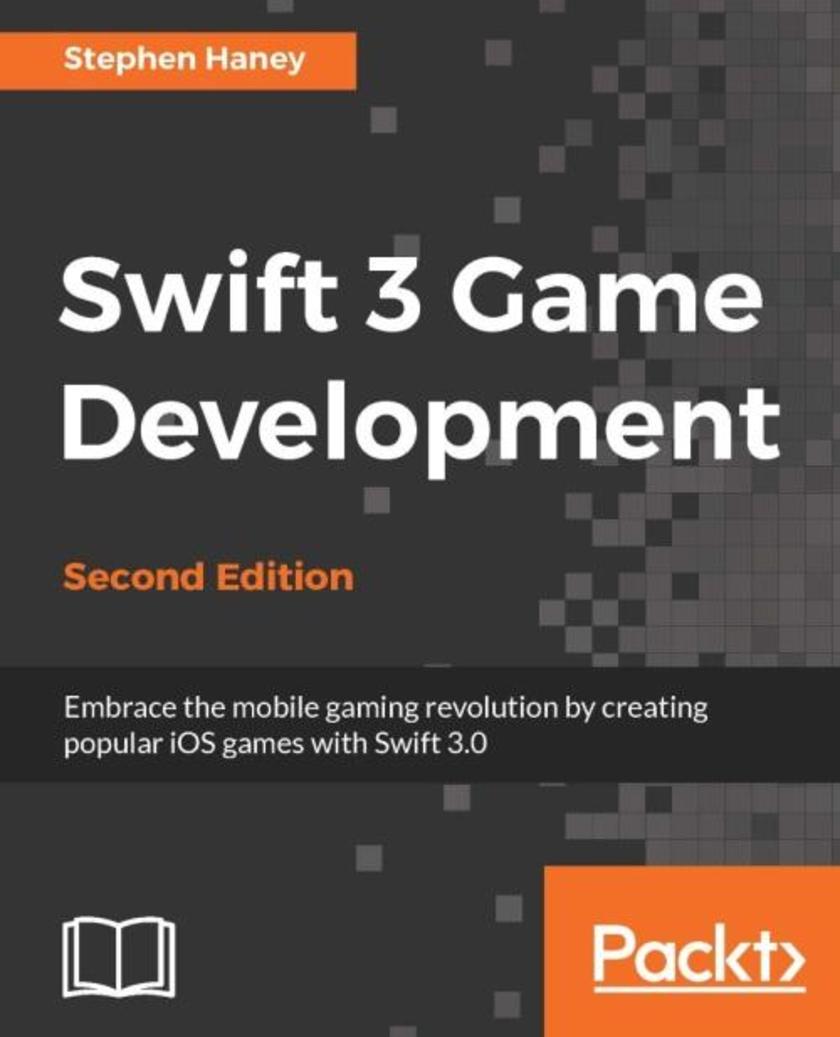
Swift 3 Game Development - Second Edition
¥71.93
Embrace the mobile gaming revolution by creating popular iOS games with Swift 3.0 About This Book Create and design games for iPhone and iPad using SpriteKit and Swift 3.0 Learn the core fundamentals of SpriteKit game development and mix and match techniques to customize your game This step-by-step practical guide will teach you to build games from scratch using little-known tips and strategies for maximum fun Who This Book Is For If you wish to create and publish fun iOS games using Swift, then this book is for you. You should be familiar with basic programming concepts. However, no prior game development or Apple ecosystem experience is required. What You Will Learn Deliver powerful graphics, physics, and sound in your game by using SpriteKit Set up the scene using the new capabilities of the scene editor and custom classes Maximize gameplay with little-known tips and strategies for fun and repeatable action Make use of animations, graphics, and particles to polish your game Understand the current mobile monetization landscape to choose the best option for your own situation Integrate your game with Game Center so that your players can share their high scores and achievements Publish your game to the App Store and enjoy people playing your games In Detail Swift is the perfect choice for game development. Developers are intrigued by Swift 3.0 and want to make use of new features to develop their best games yet. Packed with best practices and easy-to-use examples, this book leads you step by step through the development of your first Swift game. This book starts by introducing SpriteKit and Swift's new features that can be used for game development. After setting up your first Swift project, you will build your first custom class, learn how to draw and animate your game, and add physics simulations. Then, you will add the player character, NPCs, and powerups. To make your game more fun and engaging, you will learn how to set up scenes and backgrounds, build fun menus, and integrate with Apple Game Center to add leaderboards and achievements. You will then make your game stand out by adding animations when game objects collide, and incorporate proven techniques such as the advanced particle system and graphics. Finally, you will explore the various options available to start down the path towards monetization and publish your finished games to the App Store. By the end of this book, you will be able to create your own iOS games using Swift and SpriteKit. Style and approach This project-based guide is engaging with a visually-rich approach rather than a text-heavy approach. With every chapter containing practical examples, you will understand how Swift programming works and make the most of the new features in version 3.0.


