


 购物车
购物车 个人中心
个人中心
The Price of Love
¥8.09
Dodo Collections brings you another classic from Arnold Bennett, ‘The Price of Love’. A story of small-town intrigue, that begins with a large sum of money being entrusted and then mysteriously disappearing. The novel was extremely popular and one of Bennett's greatest successes. Bennett (1867-1931) was a British novelist. He was born in a modest house in Hanley in the Potteries district of Staffordshire. At age 21 he went to London as a solicitor's clerk. He won a literary competition in Tit Bits magazine in 1889 and was encouraged to take up journalism full time. From 1900 he devoted himself full time to writing, giving up the editorship and writing much serious criticism, and also theatre journalism, one of his special interests. In 1902 Anna of the Five Towns, the first of a succession of stories which detailed life in the Potteries appeared. In 1908 The Old Wives' Tale was published, and was an immediate success throughout the English-speaking world. His most famous works are the Clayhanger (1910) trilogy and The Old Wives' Tale. These books draw on his experience of life in the Potteries, as did most of his best work. Among his other books are: The Grand Babylon Hotel (1902), The Grim Smile of the Five Towns (1907), Hilda Lessways (1911), The Author's Craft (1914), The Lion's Share (1916), and The Roll-Call (1919).
Roundabout Papers
¥8.09
Classic novel. According to Wikipedia: "Thackeray is most often compared to one other great novelist of Victorian literature, Charles Dickens. During the Victorian era, he was ranked second only to Dickens, but he is now much less read and is known almost exclusively for Vanity Fair. In that novel he was able to satirize whole swaths of humanity while retaining a light touch. It also features his most memorable character, the engagingly roguish Becky Sharp. As a result, unlike Thackeray's other novels, it remains popular with the general reading public; it is a standard fixture in university courses and has been repeatedly adapted for movies and television. In Thackeray's own day, some commentators, such as Anthony Trollope, ranked his History of Henry Esmond as his greatest work, perhaps because it expressed Victorian values of duty and earnestness, as did some of his other later novels. It is perhaps for this reason that they have not survived as well as Vanity Fair, which satirizes those values."
Sylvia's Marriage
¥8.09
Classic novel. According to Wikipedia: "Upton Beall Sinclair, Jr. (1878 - 1968), was a prolific American author who wrote over 90 books in many genres and was widely considered to be one of the best investigators advocating socialist views. He achieved considerable popularity in the first half of the 20th century. He gained particular fame for his 1906 novel The Jungle, which dealt with conditions in the U.S. meat packing industry and caused a public uproar that partly contributed to the passage of the Pure Food and Drug Act and the Meat Inspection Act in 1906."
Markheim
¥8.09
Classic short story about a deal with the Devil. According to Wikipedia: "Robert Louis (Balfour) Stevenson ( 1850 - 1894), was a Scottish novelist, poet, and travel writer, and a leading representative of Neo-romanticism in English literature. He was the man who "seemed to pick the right word up on the point of his pen, like a man playing spillikins", as G. K. Chesterton put it. He was also greatly admired by many authors, including Jorge Luis Borges, Ernest Hemingway, Rudyard Kipling, Vladimir Nabokov, and J. M. Barrie. Most modernist writers dismissed him, however, because he was popular and did not write within their definition of modernism. It is only recently that critics have begun to look beyond Stevenson's popularity and allow him a place in the canon."
Thrawn Janet
¥8.09
Classic short story. According to Wikipedia: "Robert Louis (Balfour) Stevenson ( 1850 - 1894), was a Scottish novelist, poet, and travel writer, and a leading representative of Neo-romanticism in English literature. He was the man who "seemed to pick the right word up on the point of his pen, like a man playing spillikins", as G. K. Chesterton put it. He was also greatly admired by many authors, including Jorge Luis Borges, Ernest Hemingway, Rudyard Kipling, Vladimir Nabokov, and J. M. Barrie. Most modernist writers dismissed him, however, because he was popular and did not write within their definition of modernism. It is only recently that critics have begun to look beyond Stevenson's popularity and allow him a place in the canon."
Alonzo Fitz and Other Stories
¥8.09
Classic Twain humor. The stories include: THE LOVES OF ALONZO FITZ CLARENCE AND ROSANNAH ETHELTON, ON THE DECAY OF THE ART OF LYING, ABOUT MAGNANIMOUS-INCIDENT LITERATURE, THE GRATEFUL POODLE, THE BENEVOLENT AUTHOR, THE GRATEFUL HUSBAND, PUNCH, BROTHERS, PUNCH; THE GREAT REVOLUTION IN PITCAIRN, THE CANVASSER'S TALE, AN ENCOUNTER WITH AN INTERVIEWER, PARIS NOTES, LEGEND OF SAGENFELD, IN GERMANY; SPEECH ON THE BABIES, SPEECH ON THE WEATHER, CONCERNING THE AMERICAN LANGUAGE, and ROGERS.
Devil's Ford
¥8.09
Classic western novel. According to Wikipedia: "Bret Harte (August 25, 1836[2] – May 6, 1902) was an American author and poet, best remembered for his accounts of pioneering life in California. He was born in Albany, New York. ... He moved to California in 1853, later working there in a number of capacities, including miner, teacher, messenger, and journalist. He spent part of his life in the northern California coast town now known as Arcata, then just a mining camp on Humboldt Bay. His first literary efforts, including poetry and prose, appeared in The Californian, an early literary journal edited by Charles Henry Webb. In 1868 he became editor of The Overland Monthly, another new literary magazine, but this one more in tune with the pioneering spirit of excitement in California. His story, "The Luck of Roaring Camp," appeared in the magazine's second edition, propelling Harte to nationwide fame... Determined to pursue his literary career, in 1871 he and his family traveled back East, to New York and eventually to Boston, where he contracted with the publisher of The Atlantic Monthly for an annual salary of $10,000, "an unprecedented sum at the time." His popularity waned, however, and by the end of 1872 he was without a publishing contract and increasingly desperate. He spent the next few years struggling to publish new work (or republish old), delivering lectures about the gold rush, and even selling an advertising jingle to a soap company. In 1878 Harte was appointed to the position of United States Consul in the town of Krefeld, Germany and then to Glasgow in 1880. In 1885 he settled in London. During the thirty years he spent in Europe, he never abandoned writing, and maintained a prodigious output of stories that retained the freshness of his earlier work. He died in England in 1902 of throat cancer and is buried at Frimley."
The Military Memoirs of Captain George Carleton
¥8.09
Fictionalized history or historical novel in the form of memoirs. The To the Reader begins: "The Author of these Memoirs began early to distinguish himself in martial Affairs, otherwise he could not have seen such Variety of Actions both by Sea and Land. After the last Dutch War he went into Flanders, where he not only serv'd under the Command of his Highness the Prince of Orange, whilst he was Generalissimo of the Dutch Forces, but likewise all the time he reign'd King of Great Britain. Most of the considerable Passages and Events, which happened during that time, are contained in the former Part of this Book." According to Wikipedia: Daniel Defoe (1659/1661 [?] — 1731), born Daniel Foe, was an English writer, journalist, and pamphleteer, who gained enduring fame for his novel Robinson Crusoe. Defoe is notable for being one of the earliest practitioners of the novel, as he helped to popularise the form in Britain, and is even referred to by some as one of the founders of the English novel. A prolific and versatile writer, he wrote more than five hundred books, pamphlets, and journals on various topics (including politics, crime, religion, marriage, psychology and the supernatural). He was also a pioneer of economic journalism."
Santa Claus's Partner (Illustrated)
¥8.09
According to Wikipedia: "Thomas Nelson Page (April 23, 1853 – November 1, 1922) was a lawyer and American writer. He also served as the U.S. ambassador to Italy during the administration of President Woodrow Wilson, including the important period of World War I."
The Adventures of Jimmy Skunk, Illustrated
¥8.09
With 8 black-and-white illustations. According to Wikipedia: "Thornton Waldo Burgess (January 14, 1874 – June 5, 1965). Born in Sandwich, Cape Cod, Massachusetts, he was a conservationist and author of children's stories. Thornton Waldo Burgess loved the beauty of nature and its living creatures so much that he wrote about them for 50 years. By the time he retired, he had written more than 170 books and 15,000 stories for daily columns in newspapers."
Phineas Finn
¥8.09
First published in serial form in "St. Paul's Magazine" beginning in 1867 and in book form in 1869. The books of the Palliser series are: Can You Forgive Her? Phineas Finn, The Eustace Diamonds, Phineas Redux, The Prime Minister, and The Duke's Children. According to Wikipedia: "Anthony Trollope ( 1815 – 1882 ) became one of the most successful, prolific and respected English novelists of the Victorian era. Some of Trollope's best-loved works, known as the Chronicles of Barsetshire, revolve around the imaginary county of Barsetshire; he also wrote penetrating novels on political, social, and gender issues and conflicts of his day. Trollope has always been a popular novelist. Noted fans have included Sir Alec Guinness (who never travelled without a Trollope novel), former British Prime Ministers Harold Macmillan and Sir John Major, economist John Kenneth Galbraith, American novelists Sue Grafton and Dominick Dunne and soap opera writer Harding Lemay. Trollope's literary reputation dipped somewhat during the last years of his life, but he regained the esteem of critics by the mid-twentieth century. "Of all novelists in any country, Trollope best understands the role of money. Compared with him even Balzac is a romantic." — W. H. Auden"
La Comédie de la mort
¥8.09
Selon Wikipédia: "Pierre Jules Théophile Gautier (30 ao?t 1811 - 23 octobre 1872), poète, dramaturge, romancier, journaliste et critique littéraire fran?ais, défenseur ardent du romantisme, est difficile à classer et à classer. point de référence pour de nombreuses traditions littéraires ultérieures telles que le parnassianisme, le symbolisme, la décadence et le modernisme, il a été largement estimé par des écrivains aussi divers que Baudelaire, les frères Goncourt, Flaubert et Oscar Wilde."

Los Cuatro Jinetes del Apocalipsis
¥8.09
Según Wikipedia: "Vicente Blasco Ibá?ez (29 de enero de 1867 - 28 de enero de 1928) fue un novelista realista espa?ol que escribía en espa?ol, guionista y ocasionalmente director de cine. Nacido en Valencia, hoy es más conocido en el mundo de habla inglesa. para su novela de la Primera Guerra Mundial, Los cuatro jinetes del apocalipsis, filmada en 1921 como Los cuatro jinetes del Apocalipsis, fue filmada nuevamente en 1962, reiniciada en la Segunda Guerra Mundial. Sin embargo, en su tiempo fue un autor de best-sellers dentro y fuera de Espa?a, y también conocido por sus controvertidas actividades políticas. Mientras que Sangre y arena y Los cuatro jinetes del apocalipsis son sus novelas más populares, especialmente fuera de Espa?a, sus novelas valencianas como La barraca y Ca?as y barro son los más valorados por los estudiosos
The Dolliver Romance
¥8.09
Fragments of an unfinished novel. According to Wikipedia: "Nathaniel Hawthorne (1804 –1864) was an American novelist and short story writer... Much of Hawthorne's writing centers around New England and many feature moral allegories with a Puritan inspiration. His fiction works are considered part of the Romantic movement and, more specifically, dark romanticism. His themes often center on the inherent evil and sin of humanity and his works often have moral messages and deep psychological complexity. His published works include novels, short stories, and a biography of his friend Franklin Pierce."
Old Christmas
¥8.09
According to Wikipedia: "Washington Irving (April 3, 1783 – November 28, 1859) was an American author, essayist, biographer and historian of the early 19th century. He was best known for his short stories "The Legend of Sleepy Hollow" and "Rip Van Winkle", both of which appear in his book The Sketch Book of Geoffrey Crayon, Gent. His historical works include biographies of George Washington, Oliver Goldsmith and Muhammad, and several histories of 15th-century Spain dealing with subjects such as Christopher Columbus, the Moors, and the Alhambra. Irving also served as the U.S. minister to Spain from 1842 to 1846. He made his literary debut in 1802 with a series of observational letters to the Morning Chronicle, written under the pseudonym Jonathan Oldstyle. After moving to England for the family business in 1815, he achieved international fame with the publication of The Sketch Book of Geoffrey Crayon, Gent. in 1819. He continued to publish regularly—and almost always successfully—throughout his life, and completed a five-volume biography of George Washington just eight months before his death, at age 76, in Tarrytown, New York."
Fanshawe
¥8.09
Hawthorne's first "romance", first published three years after he graduated from Bowdoin College. According to Wikipedia: "Nathaniel Hawthorne (1804 –1864) was an American novelist and short story writer... Much of Hawthorne's writing centers around New England and many feature moral allegories with a Puritan inspiration. His fiction works are considered part of the Romantic movement and, more specifically, dark romanticism. His themes often center on the inherent evil and sin of humanity and his works often have moral messages and deep psychological complexity. His published works include novels, short stories, and a biography of his friend Franklin Pierce."

Erewhon Revisited
¥8.09
According to Wikipedia: "Samuel Butler (4 December 1835 - 18 June 1902) was an iconoclastic Victorian author who published a variety of works, including the Utopian satire Erewhon and the posthumous novel The Way of All Flesh, his two best-known works, but also extending to examinations of Christian orthodoxy, substantive studies of evolutionary thought, studies of Italian art, and works of literary history and criticism . Butler also made prose translations of The Iliad and The Odyssey which remain in use to this day."
The Shades of the Wilderness
¥8.09
Historical novel from the Civil War series. "The Shades of the Wilderness" is the seventh volume of the Civil War Series, of which the predecessors have been "The Guns of Bull Run," "The Guns of Shiloh," "The Scouts of Stonewall," "The Sword of Antietam", "The Star of Gettysburg" and "The Rock of Chickamauga." The romance in this story reverts to the Southern side and deals with the fortunes of Harry Kenton and his friends. It takes them on the retreat from Gettysburg, gives the hero a short period of social life in Richmond, describes the great battles of the Wilderness and Spottsylvania, and ends with the deadlock in the trenches before Petersburg. According to Wikipedia: "Joseph Alexander Altsheler (1862 - 1919), was an American author of popular juvenile historical fiction. Altsheler was born in Three Springs, Kentucky to Joseph and Louise Altsheler. In 1885, he took a job at the Louisville Courier-Journal as a reporter and later, an editor. He started working for the New York World in 1892, first as the paper's Hawaiian correspondent and then as the editor of the World's tri-weekly magazine. Due to a lack of suitable stories, he began writing children's stories for the magazine."
The Sword of Antietam
¥8.09
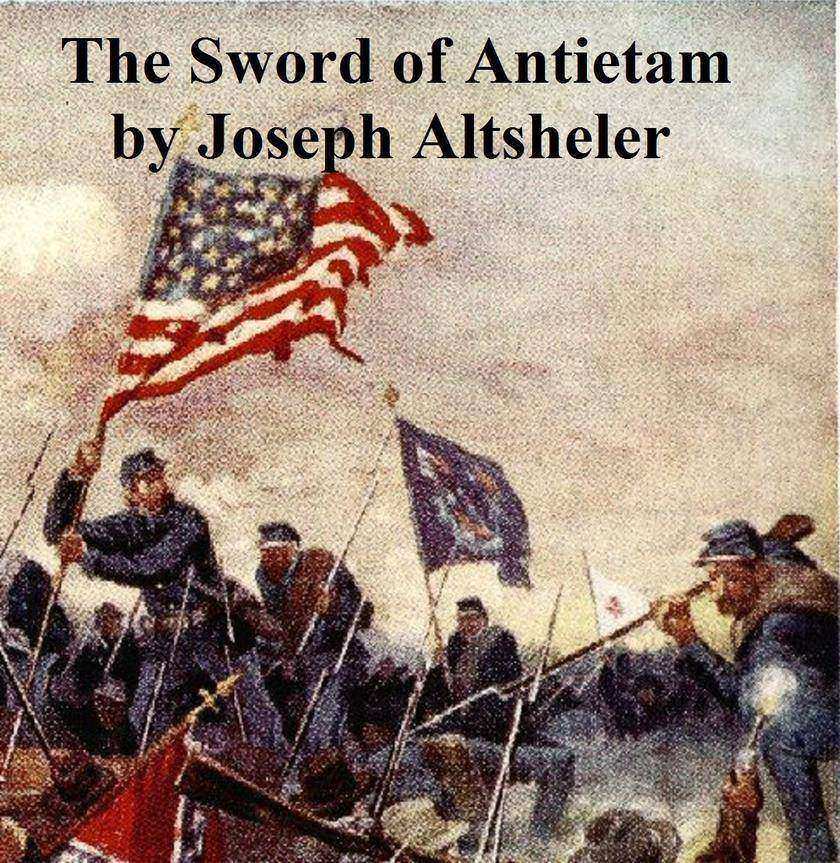
Historical novel from the Civil War series. "The Sword of Antietam" tells a complete story, but it is one in the chain of Civil War romances, begun in "The Guns of Bull Run" and continued through "The Guns of Shiloh" and "The Scouts of Stonewall." The young Northern hero, Dick Mason, and his friends are in the forefront of the tale. According to Wikipedia: "Joseph Alexander Altsheler (1862 - 1919), was an American author of popular juvenile historical fiction. Altsheler was born in Three Springs, Kentucky to Joseph and Louise Altsheler. In 1885, he took a job at the Louisville Courier-Journal as a reporter and later, an editor. He started working for the New York World in 1892, first as the paper's Hawaiian correspondent and then as the editor of the World's tri-weekly magazine. Due to a lack of suitable stories, he began writing children's stories for the magazine."
The Guns of Bull Run
¥8.09
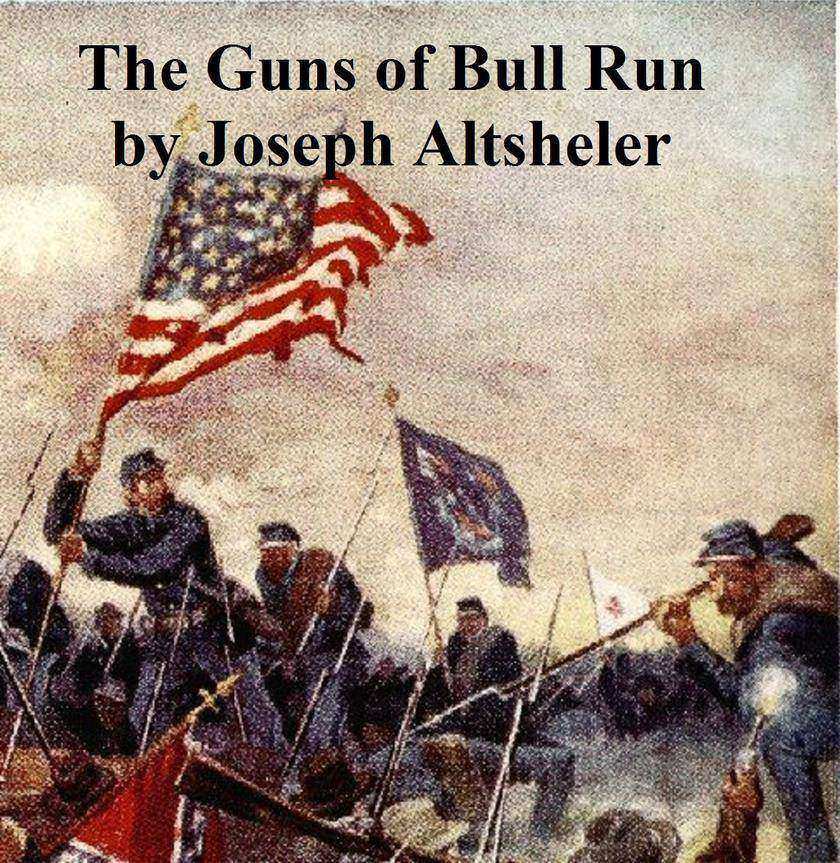
Historical novel from the Civil War series. According to Wikipedia: "Joseph Alexander Altsheler (1862 - 1919), was an American author of popular juvenile historical fiction. Altsheler was born in Three Springs, Kentucky to Joseph and Louise Altsheler. In 1885, he took a job at the Louisville Courier-Journal as a reporter and later, an editor. He started working for the New York World in 1892, first as the paper's Hawaiian correspondent and then as the editor of the World's tri-weekly magazine. Due to a lack of suitable stories, he began writing children's stories for the magazine.
The Shadow of the North
¥8.09
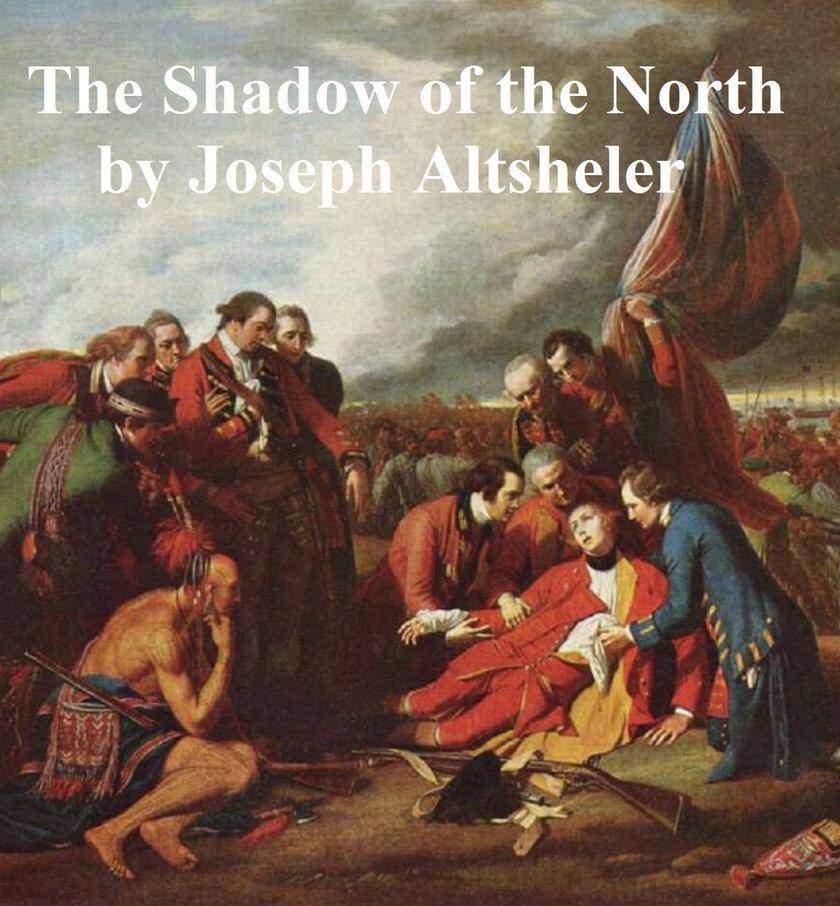
Historical novel from the French and Indian War series. "The Shadow of the North," while an independent story, in itself, is also the second volume of the Great French and Indian War series which began with "The Hunters of the Hills." All the important characters of the first romance reappear in the second. According to Wikipedia: "Joseph Alexander Altsheler (1862 - 1919), was an American author of popular juvenile historical fiction. Altsheler was born in Three Springs, Kentucky to Joseph and Louise Altsheler. In 1885, he took a job at the Louisville Courier-Journal as a reporter and later, an editor. He started working for the New York World in 1892, first as the paper's Hawaiian correspondent and then as the editor of the World's tri-weekly magazine. Due to a lack of suitable stories, he began writing children's stories for the magazine."


