


 购物车
 个人中心

Lord Jim (Mermaids Classics)
¥35.22
Lord Jim by Joseph Conrad (1857-1924): ....a young British seaman, becomes first mate on the Patna, a ship full of pilgrims travelling to Mecca for the hajj. When the ship starts rapidly taking on water and disaster seems imminent, Jim joins his captain and other crew members in abandoning the ship and its passengers. A few days later, they are picked up by a British ship. However, the Patna and its passengers are later also saved, and the reprehensible actions of the crew are exposed (Citation from Wikipedia: The free Encyclopaedia)Mermaids Classics, an imprint of Mermaids Publishing brings the very best of old classic literature to a modern era of digital reading by producing high quality books in ebook format. All of the Mermaids Classics epublications are reproductions of classic antique books that were originally published in print format, mostly over a century ago and are now republished in digital format as ebooks. Begin to build your collection of digital books by looking for more literary gems from Mermaids Classics.

Secret Garden (Mermaids Classics)
¥35.22
The Secret Garden (1911) by Frances Hodgson Burnett (1849-1924) is a classic childrens novel based on a young ten year old rude and spoiled girl named Mary Lennox who is the child of wealthy parents. Her parents end up dying and she is orphaned in her house all alone in India until she is sent to live with her uncle who is based in England. Whilst living in England with her cousins, Mary discovers a key that unlocks a neglected garden and also hears crying and finds a little boy named Colin who lives all alone in a hidden room of the house. Colin cannot walk and has not been outside of the house in years so Mary decides to escort Colin in his wheelchair out into the secret garden for some fresh air. With the help of her cousins, Colin learns to walk in the garden and they rebuild it by nurturing it until it flourishes to become a beautiful in-bloom garden.Mermaids Classics, an imprint of Mermaids Publishing brings the very best of old classic literature to a modern era of digital reading by producing high quality books in ebook format. All of the Mermaids Classics epublications are reproductions of classic antique books that were originally published in print format, mostly over a century ago and are now republished in digital format as ebooks. Begin to build your collection of digital books by looking for more literary gems from Mermaids Classics.
Lorna Doone (Mermaids Classics)
¥35.22
Lorna Doone: A Romance of Exmoor (1869) by Richard Doddridge Blackmore (1825- 1900) is a romance novel set in 17th century England in the region of Exmoor. The story follows a farmer named John Ridd who falls in love with Lorna Doone (the granddaughter of the Lord of the Doones). The Doones are considered to be the most notorious and outlawed clan in the region and who also had murdered his father when he was just a boy. As John tries to prevent his feelings developing any further towards Lorna, he later learns that Lorna is not actually related to the Doone family but the long lost girl whos mother was robbed and murdered by the Doone family.Mermaids Classics, an imprint of Mermaids Publishing brings the very best of old classic literature to a modern era of digital reading by producing high quality books in ebook format. All of the Mermaids Classics epublications are reproductions of classic antique books that were originally published in print format, mostly over a century ago and are now republished in digital format as ebooks. Begin to build your collection of digital books by looking for more literary gems from Mermaids Classics.
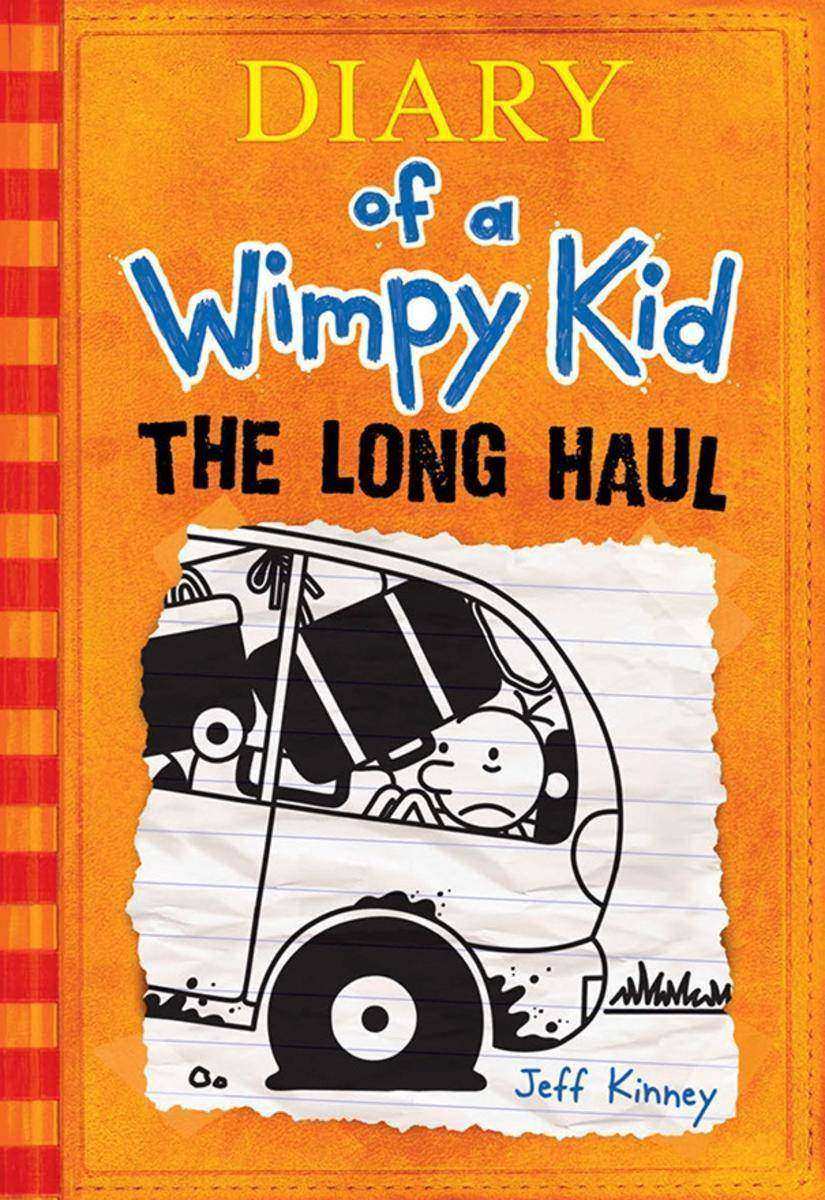
Long Haul (Diary of a Wimpy Kid #9)
¥158.82
A family road trip is supposed to be a lot of fun . . . unless, of course, you’re the Heffleys. The journey starts off full of promise, then quickly takes several wrong turns. Gas station bathrooms, crazed seagulls, a fender bender, and a runaway pig—not exactly Greg Heffley’s idea of a good time. But even the worst road trip can turn into an adventure—and this is one the Heffleys won’t soon forget.

Wes Anderson Collection: Bad Dads - Art Inspired by the Films of Wes Anderson
¥211.41
The third volume in the New York Times bestselling Wes Anderson Collection series showcases the best artwork from ';Bad Dads,' an annual exhibition of art inspired by the films of Wes Anderson. Curated by Spoke Art Gallery in San Francisco, ';Bad Dads' has continued to grow and progress as a dynamic group exhibition since its inaugural show in 2011, and has featured work from more than 400 artists from around the world. Those artworks range from paintings to sculptures to limited-edition screen prints and vary greatly in style, making for a diverse and lively show each year. Though each piece is distinct in its own right, the artworks' unifying element is the shared imagery and beloved characters from: Bottle Rocket Rushmore The Royal Tenenbaums The Life Aquatic with Steve Zissou The Darjeeling Limited Fantastic Mr. Fox Moonrise Kingdom The Grand Budapest Hotel The book features an original cover by graphic artist Max Dalton, a foreword by writer and director Wes Anderson himself, and an introduction by TV and movie critic Matt Zoller Seitz, author of the bestselling Wes Anderson Collectionbooks. A visual treasure trove, Bad Dads grants fans of Wes Anderson another creative avenue to explore his inspired worlds and movies. Also available from Matt Zoller Seitz: The Oliver Stone Experience, Mad Men Carousel, The Wes Anderson Collection: The Grand Budapest Hotel, and The Wes Anderson Collection.

Diary of a Wimpy Kid - Special CHEESIEST Edition
¥138.32
Wimpy Kid Just Got a Lot Cheesier Now you can enjoy the bestselling Diary of a Wimpy Kid series in a whole new way with this Special CHEESIEST Edition! Relive your favorite moments from the book that started it all, with this collectible version printed on premium paper and with a bold new design. You'll never look at Greg, Rowley, Manny, Rodrick, and Fregley the same way again. This Special CHEESIEST Edition is a must-have for longtime fans of the series and new readers alike. But before you open this book, you might want to cross your fingers-you wouldn't want to get the Cheese Touch!

Last Straw (Diary of a Wimpy Kid #3)
¥158.82
The highly anticipated third book in the critically acclaimed and bestselling series takes the art of being wimpy to a whole new level. Let's face it: Greg Heffley will never change his wimpy ways. Somebody just needs to explain that to Greg's father. You see, Frank Heffley actually thinks he can get his son to toughen up, and he enlists Greg in organized sports and other "e;manly? endeavors. Of course, Greg is able to easily sidestep his father's efforts to change him. But when Greg's dad threatens to send him to military academy, Greg realizes he has to shape up . . . or get shipped out. Greg and his family and friends, who make the Diary of a Wimpy Kid books a must-read for middle school readers, are back and at their best in this hilarious new installment of the series, which is sure to please current fans while attracting new ones. Publishers Weekly-1/19/2009:The third book in this genre-busting series is certain to enlarge Kinney's presence on the bestseller lists, where the previous titles have taken up residence for the past two years. Kinney's spot-on humor and winning formula of deadpan text set against cartoons are back in full force. This time, Greg starts off on New Year's Day (he resolves to "e;help other people improve,? telling his mother, "e;I think you should work on chewing your potato chips more quietly?) and ends with summer vacation. As he fends off his father's attempts to make him more of a man (the threat of military school looms), Greg's hapless adventures include handing out anonymous valentines expressing his true feelings ("e;Dear James, You smell?), attempting to impress his classmate Holly and single-handedly wrecking his soccer team's perfect season. Kinney allows himself some insider humor as well, with Greg noting the "e;racket? children's book authors have going. "e;All you have to do is make up a character with a snappy name, and then make sure the character learns a lesson at the end of the book.? Greg, self-centered as ever, may be the exception proving that rule. Ages 8"e;12. (Jan.) F&P level: T
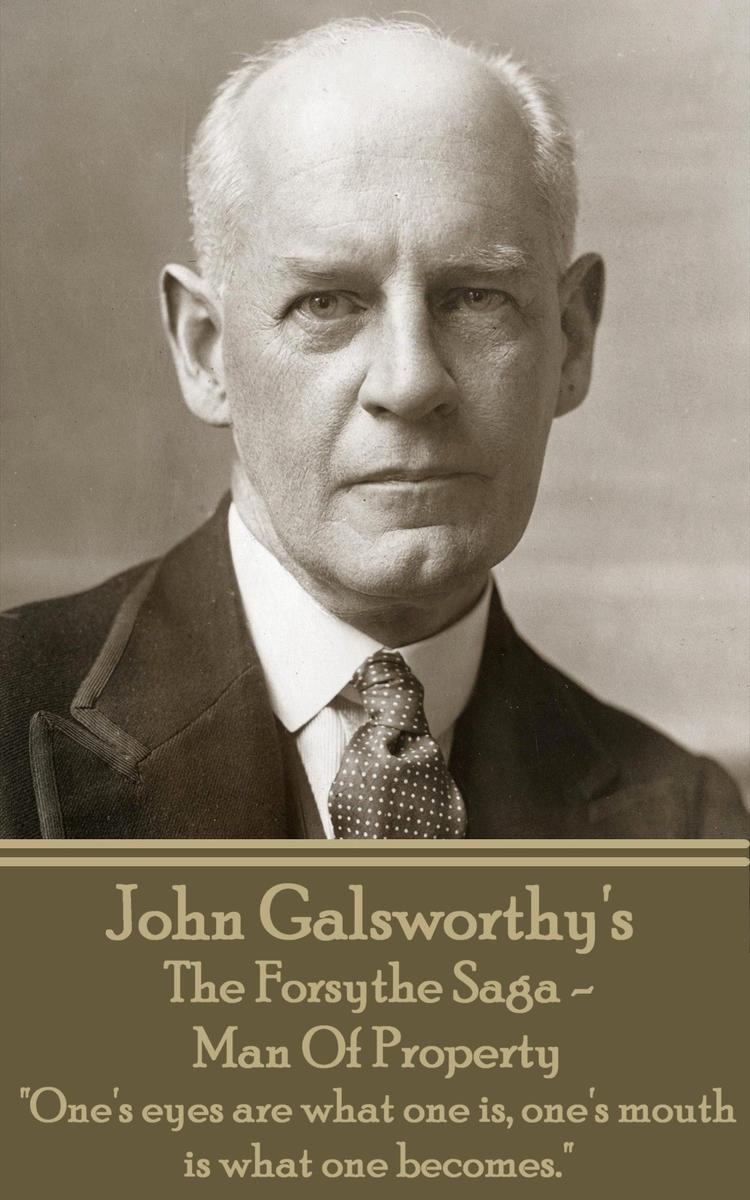
Forsythe Saga - Man Of Property - One's eyes are what one is, one's mouth is wha
¥46.99
John Galsworthy was born at Kingston Upon Thames in Surrey, England, on August 14th 1867 to a wealthy and well established family. His schooling was at Harrow and New College, Oxford before training as a barrister and being called to the bar in 1890. However, Law was not attractive to him and he travelled abroad becoming great friends with the novelist Joseph Conrad, then a first mate on a sailing ship. Galsworthy first published in 1897 with a collection of short stories entitled "e;The Four Winds"e;. For the next 7 years he published these and all works under his pen name John Sinjohn. It was only upon the death of his father and the publication of "e;The Island Pharisees"e; in 1904 that he published as John Galsworthy. His first play, The Silver Box in 1906 was a success and was followed by "e;The Man of Property"e; later that same year and was the first in the Forsyte trilogy. Whilst today he is far more well know as a Nobel Prize winning novelist then he was considered a playwright dealing with social issues and the class system. He is now far better known for his novels, particularly The Forsyte Saga, his trilogy about the eponymous family of the same name. These books, as with many of his other works, deal with social class, upper-middle class lives in particular. Although always sympathetic to his characters, he reveals their insular, snobbish, and somewhat greedy attitudes and suffocating moral codes. He is now viewed as one of the first from the Edwardian era to challenge some of the ideals of society depicted in the literature of Victorian England. He was appointed to the Order of Merit in 1929, after earlier turning down a knighthood, and awarded the Nobel Prize in 1932 though he was too ill to attend. John Galsworthy died from a brain tumour at his London home, Grove Lodge, Hampstead on January 31st 1933. In accordance with his will he was cremated at Woking with his ashes then being scattered over the South Downs from an aeroplane.

Ghosts (1881)
¥23.45
Henrik Ibsen (20th March, 1828 - 23rd May, 1906) is often referred to as the father of realism and ranked just below Shakespeare as Europe's greatest ever playwright especially as his plays are performed most frequently throughout the world after Shakespeare's. He was Norwegian and although set his plays in Norway, he wrote them in Danish and lived most of his professional life in Italy and Germany. His affect on the theatre is still evident today and shapes the distinction of plays being art as opposed to entertainment since he broke down all previous traditions and explored issues, developed characterisation, revealed uncomfortable truths, challenged assumptions and brokedown facades in ourselves as well as society. These factors are clearly demonstrated in Ghosts which exposes painful and hidden past secrets that affect many of the characters. The protagonist, Mrs Alving, is a wealthy middle aged widow who was the victim of an alcoholic unfaithful husband. She searches to make sense of her life and comes to realise that her husband was suffocated by convention and is unwilling to let her life go the same way. The play tackles many taboo topics of its day like assisted suicide, premarital sex, incest, syphilis and criticism of the church and whilst these issues are no longer the hot potatoes they were, Ibsen's strong characterisation and haunting prose make this a powerful relevant drama.
Henry IV, Part II - Uneasy lies the head that wears a crown.
¥11.67
The life of William Shakespeare, arguably the most significant figure in the Western literary canon, is relatively unknown. Shakespeare was born in Stratford-upon-Avon in 1565, possibly on the 23rd April, St. George's Day, and baptised there on 26th April. Little is known of his education and the first firm facts to his life relate to his marriage, aged 18, to Anne Hathaway, who was 26 and from the nearby village of Shottery. Anne gave birth to their first son six months later. Shakespeare's first play, The Comedy of Errors began a procession of real heavyweights that were to emanate from his pen in a career of just over twenty years in which 37 plays were written and his reputation forever established. This early skill was recognised by many and by 1594 the Lord Chamberlain's Men were performing his works. With the advantage of Shakespeare's progressive writing they rapidly became London's leading company of players, affording him more exposure and, following the death of Queen Elizabeth in 1603, a royal patent by the new king, James I, at which point they changed their name to the King's Men. By 1598, and despite efforts to pirate his work, Shakespeare's name was well known and had become a selling point in its own right on title pages. No plays are attributed to Shakespeare after 1613, and the last few plays he wrote before this time were in collaboration with other writers, one of whom is likely to be John Fletcher who succeeded him as the house playwright for the King's Men. William Shakespeare died two months later on April 23rd, 1616, survived by his wife, two daughters and a legacy of writing that none have since yet eclipsed.

Son Of Tarzan
¥35.22
Edgar Rice Burroughs was born on September 1, 1875, in Chicago, Illinois. His early career was unremarkable. After failing to enter West Point he enlisted in the 7th Calvary but was discharged after heart problems were diagnosed. A series of short term jobs gave no indication as to a career path but finally, in 1911, married and with two young children, he turned his hand to writing. He aimed his works squarely at the very popular pulp serial magazines. His first effort 'Under The Moons Of Mars' ran in Munsey's Magazine in 1912 under the pseudonym Norman Bean. With its success he began writing full time. A continuing theme of his work was to develop series so that each character had ample opportunities to return in sequels. John Carter was in the Mars series and there was another on Venus and one on Pellucidar among others. But perhaps the best known is Tarzan. Indeed Burroughs wanted so much to capitalise upon the brand that he introduced a syndicated Tarzan comic strip, movies and merchandise. He purchased a large ranch north of Los Angeles, California, which he named "e;Tarzana."e; The surrounding communities outside the ranch voted in 1927 to adopt the name as their own. By 1932 Burroughs set up his own company to print his own books. Here we publish the fourth in the Tarzan series 'The Son of Tarzan'. Another cultural classic.
Atlantic Book of Modern Plays - Including works by O'Neill, Galsworthy, Synge &
¥41.10
The Atlantic magazine was founded as the Atlantic Monthly in Boston, Massachusetts in 1857 and first published on November 1st of that year. The magazine's founder was Francis H. Underwood, also an assistant to the publisher, who because he was "e;neither a 'humbug' nor a Harvard man"e; received less recognition than his other founders who included Ralph Waldo Emerson; Oliver Wendell Holmes, Sr.; Henry Wadsworth Longfellow; Harriet Beecher Stowe; John Greenleaf Whittier; and James Russell Lowell, who served as its first editor.It quickly gained a reputation as a leading literary magazine being the first to publish pieces by the abolitionists Julia Ward Howe ("e;Battle Hymn of the Republic"e; on February 1, 1862), and William Parker's slave narrative, "e;The Freedman's Story"e; (in February & March 1866) and Charles W. Eliot's "e;The New Education"e;, a call for practical reform that led to his appointment to the presidency of Harvard University in 1869.In 1860, it became part of the Boston publishing house Ticknor and Fields (itself later part of Houghton Mifflin). It was purchased again in 1908 by its then editor, Ellery Sedgwick.The Atlantic has always been seen as a distinctively New England literary magazine (others ie Harper's and The New Yorker, were both from New York City) and its national reputation was instrumental in the launch of many other American writers and poets including Emily Dickinson. The Atlantic, in its earlier years, also published compendiums and anthologies of short stories and plays bringing many to far greater attention that would otherwise have been possible.In 1980, the magazine was acquired by Mortimer Zuckerman, property magnate and founder of Boston Properties, who became its Chairman. In 1999 Zuckerman transferred ownership to David G. Bradley, owner of the National Journal Group, who along with previous owners pledged to keep the magazine in Boston.However, in 2005, the publishers announced that the editorial offices would be moved from Boston to join the company's advertising and circulation divisions in Washington, D.C. in order to pool all of Bradley's publications into one location where they could collaborate under the Atlantic Media Company umbrella.
Beasts Of Tarzan - Then God make me a beast; for, man or beast, I am yours.
¥35.22
Edgar Rice Burroughs was born on September 1, 1875, in Chicago, Illinois. His early career was unremarkable. After failing to enter West Point he enlisted in the 7th Calvary but was discharged after heart problems were diagnosed. A series of short term jobs gave no indication as to a career path but finally, in 1911, married and with two young children, he turned his hand to writing. He aimed his works squarely at the very popular pulp serial magazines. His first effort 'Under The Moons Of Mars' ran in Munsey's Magazine in 1912 under the pseudonym Norman Bean. With its success he began writing full time. A continuing theme of his work was to develop series so that each character had ample opportunities to return in sequels. John Carter was in the Mars series and there was another on Venus and one on Pellucidar among others. But perhaps the best known is Tarzan. Indeed Burroughs wanted so much to capitalise upon the brand that he introduced a syndicated Tarzan comic strip, movies and merchandise. He purchased a large ranch north of Los Angeles, California, which he named "e;Tarzana."e; The surrounding communities outside the ranch voted in 1927 to adopt the name as their own. By 1932 Burroughs set up his own company to print his own books. Here we publish the third in the Tarzan series 'The Beasts of Tarzan'. Another cultural classic.
Taming of the Shrew - The poorest service is repaid with thanks.
¥11.67
The life of William Shakespeare, arguably the most significant figure in the Western literary canon, is relatively unknown. Shakespeare was born in Stratford-upon-Avon in 1565, possibly on the 23rd April, St. George's Day, and baptised there on 26th April. Little is known of his education and the first firm facts to his life relate to his marriage, aged 18, to Anne Hathaway, who was 26 and from the nearby village of Shottery. Anne gave birth to their first son six months later. Shakespeare's first play, The Comedy of Errors began a procession of real heavyweights that were to emanate from his pen in a career of just over twenty years in which 37 plays were written and his reputation forever established. This early skill was recognised by many and by 1594 the Lord Chamberlain's Men were performing his works. With the advantage of Shakespeare's progressive writing they rapidly became London's leading company of players, affording him more exposure and, following the death of Queen Elizabeth in 1603, a royal patent by the new king, James I, at which point they changed their name to the King's Men. By 1598, and despite efforts to pirate his work, Shakespeare's name was well known and had become a selling point in its own right on title pages. No plays are attributed to Shakespeare after 1613, and the last few plays he wrote before this time were in collaboration with other writers, one of whom is likely to be John Fletcher who succeeded him as the house playwright for the King's Men. William Shakespeare died two months later on April 23rd, 1616, survived by his wife, two daughters and a legacy of writing that none have since yet eclipsed.

Girl From Hollywood
¥35.22
Edgar Rice Burroughs was born on September 1, 1875, in Chicago, Illinois. His early career was unremarkable. After failing to enter West Point he enlisted in the 7th Calvary but was discharged after heart problems were diagnosed. A series of short term jobs gave no indication as to a career path but finally, in 1911, married and with two young children, he turned his hand to writing. He aimed his works squarely at the very popular pulp serial magazines. His first effort 'Under The Moons Of Mars' ran in Munsey's Magazine in 1912 under the pseudonym Norman Bean. With its success he began writing full time. A continuing theme of his work was to develop series so that each character had ample opportunities to return in sequels. John Carter was in the Mars series and there was another on Venus and one on Pellucidar among others. But perhaps the best known is Tarzan. Indeed Burroughs wanted so much to capitalise upon the brand that he introduced a syndicated Tarzan comic strip, movies and merchandise. He purchased a large ranch north of Los Angeles, California, which he named "e;Tarzana."e; The surrounding communities outside the ranch voted in 1927 to adopt the name as their own. By 1932 Burroughs set up his own company to print his own books. Here we publish 'The Girl From Hollywood' a gentle title that in the hands of an ordinary writer might be just so but in the hands of Edgar Rice Burroughs the title is just the beginning.....
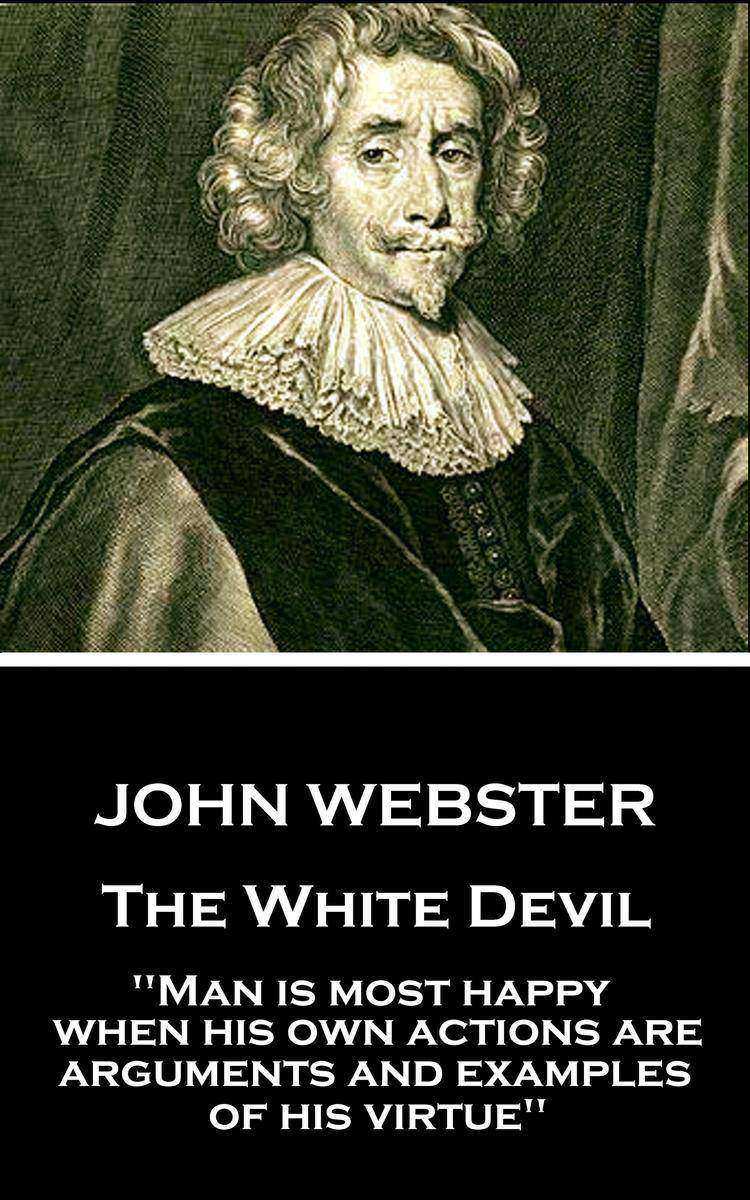
White Devil - Man is most happy, when his own actions are arguments and examples
¥25.80
John Webster is known primarily for his two Jacobean tragedies, The Duchess of Malfi and The White Devil. Much of the detail and chronology of his life that led to these two pivotal works is, however, unknown. His father, a carriage maker also named John Webster, married a blacksmith's daughter, Elizabeth Coates, on November 4th, 1577, and it is likely that Webster was born within a year or two in or near London. The family lived in St. Sepulchre's parish. Both his father and his uncle, Edward Webster, were Freemen of the Merchant Taylors' Company and Webster attended Merchant Taylors' School in Suffolk Lane, London. Some accounts say he began to study law but nothing is certain although there are some legal aspects to his later works to suggest this may have been so. By 1602, Webster was employed working as part of various teams of playwrights on history plays, though unfortunately most were never printed and therefore do not survive. These include a tragedy Caesar's Fall (written with Michael Drayton, Thomas Dekker, Thomas Middleton and Anthony Munday), and a collaboration with Thomas Dekker; Christmas Comes but Once a Year (1602). This factory line assembly of plays may seem rather odd to us today but plays then ran for much shorter durations and consequently a steady supply had to be assured. Webster's relationship with Dekker seems to have been a good one. Together they wrote Sir Thomas Wyatt, printed in 1607, although it is thought first performed in 1602 and two city comedies, Westward Ho! in 1604 and Northward Ho! in 1605. It seems Webster also adapted, in 1604, John Marston's The Malcontent for staging by the King's Men. On March 18th, 1606 Webster married the 17-year-old Sara Peniall at St Mary's Church, Islington. Sara was 7 months pregnant and marrying during Lent required the issuing of a special permit, hence the certainty of the date. Their first child, John, was baptised at the parish of St Dunstan-in-the-West on March 8th, 1606. Records show that on the death of a neighbour, who died in 1617, several bequests were made to the Webster family and it is therefore thought that other children were born to the couple. Despite his ability to write comedy, and to collaborate with others, Webster is remembered best for his sole authorship on two brooding English tragedies based on Italian sources. The White Devil, retells the intrigues involving Vittoria Accoramboni, an Italian woman assassinated at the age of 28. It was performed at the open-air Red Bull Theatre in 1612 but was unsuccessful, perhaps being too high brow for a working-class audience. In 1614 The Duchess of Malfi was first performed by the King's Men, most probably in the indoor Blackfriars Theatre and to a more high-brow audience. It proved to be more successful. The play Guise, based on French history, was also written but him but no text has survived. Webster wrote one more play on his own: The Devil's Law Case (c. 1617-1619), a tragicomedy. He continued to write thereafter but always in collaboration and usually city comedies; Anything for a Quiet Life (c. 1621), with Thomas Middleton, and A Cure for a Cuckold (c. 1624), with William Rowley. In 1624, he also co-wrote a topical play about a recent scandal, Keep the Widow Waking (with John Ford, Rowley and Dekker). The play itself is lost, although its plot is known from a court case. There is also some certainty that he contributed to the tragicomedy The Fair Maid of the Inn with John Fletcher, John Ford, and Phillip Massinger. His Appius and Virginia, was probably written with Thomas Heywood, and is of uncertain date. It is believed, mainly from Thomas Heywood's Hierarchie of the Blessed Angels (licensed 7 November 1634) that speaks of him in the past tense that John Webster had died at some point in that year of 1634.
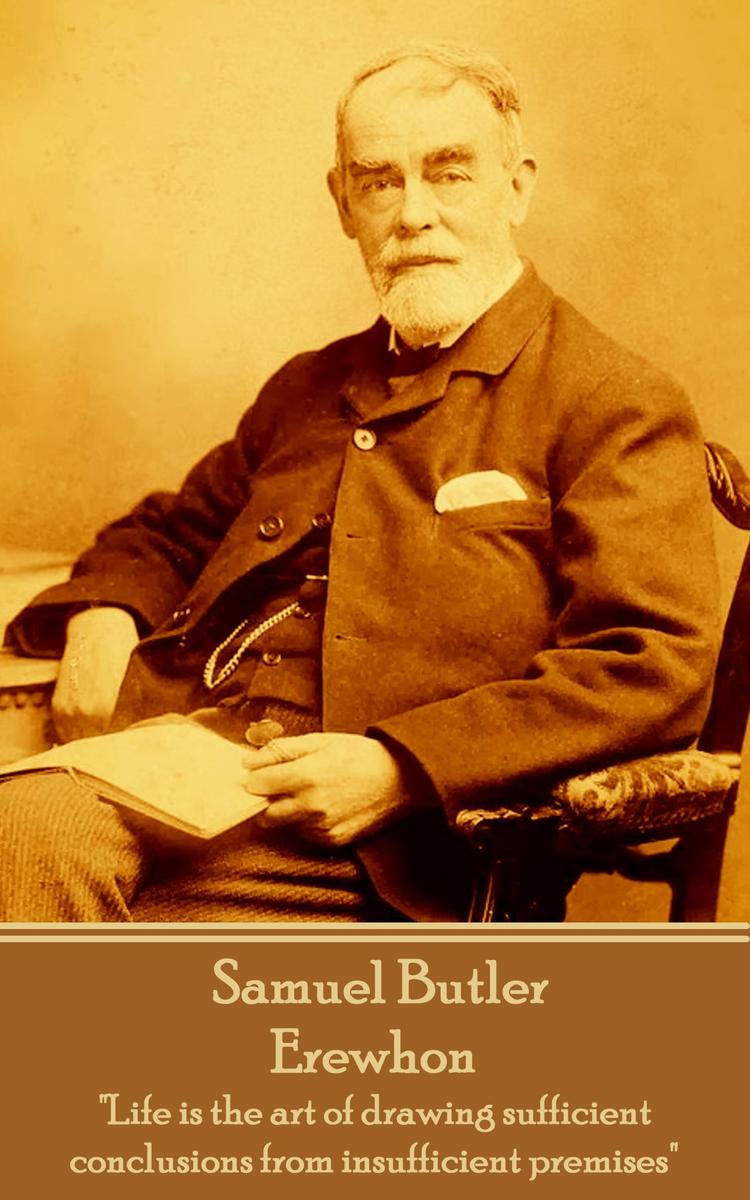
Erewhon - Life is the art of drawing sufficient conclusions from insufficient pr
¥38.75
Samuel Butler was born on 4th December 1835 at the village rectory in Langar, Nottinghamshire.His relationship with his parents, especially his father, was largely antagonistic. His education began at home and included frequent beatings, as was all too common at the time.Under his parents' influence, he was set to follow his father into the priesthood. He was schooled at Shrewsbury and then St John's College, Cambridge, where he obtained a first in Classics in 1858.After Cambridge he went to live in a low-income parish in London 1858-59 as preparation for his ordination into the Anglican clergy; there he discovered that baptism made no apparent difference to the morals and behaviour of his new peers. He began to question his faith. Correspondence with his father about the issue failed to set his mind at peace, inciting instead his father's wrath.As a result, the young Butler emigrated in September 1859 to New Zealand. He was determined to change his life.He wrote of his arrival and life as a sheep farmer on Mesopotamia Station in 'A First Year in Canterbury Settlement' (1863). After a few years he sold his farm and made a handsome profit. But the chief achievement of these years were the drafts and source material for much of his masterpiece 'Erewhon'.Butler returned to England in 1864, settling in rooms in Clifford's Inn, near Fleet Street, where he would live for the rest of his life.In 1872, he published his Utopian novel 'Erewhon' which made him a well-known figure.He wrote a number of other books, including a moderately successful sequel, 'Erewhon Revisited' before his masterpiece and semi-autobiographical novel 'The Way of All Flesh' appeared after his death. Butler thought its tone of satirical attack on Victorian morality too contentious to publish during his life time and thereby shied away from further potential problems.Samuel Butler died aged 66 on 18th June 1902 at a nursing home in St John's Wood Road, London. He was cremated at Woking Crematorium, and accounts say his ashes were either dispersed or buried in an unmarked grave.
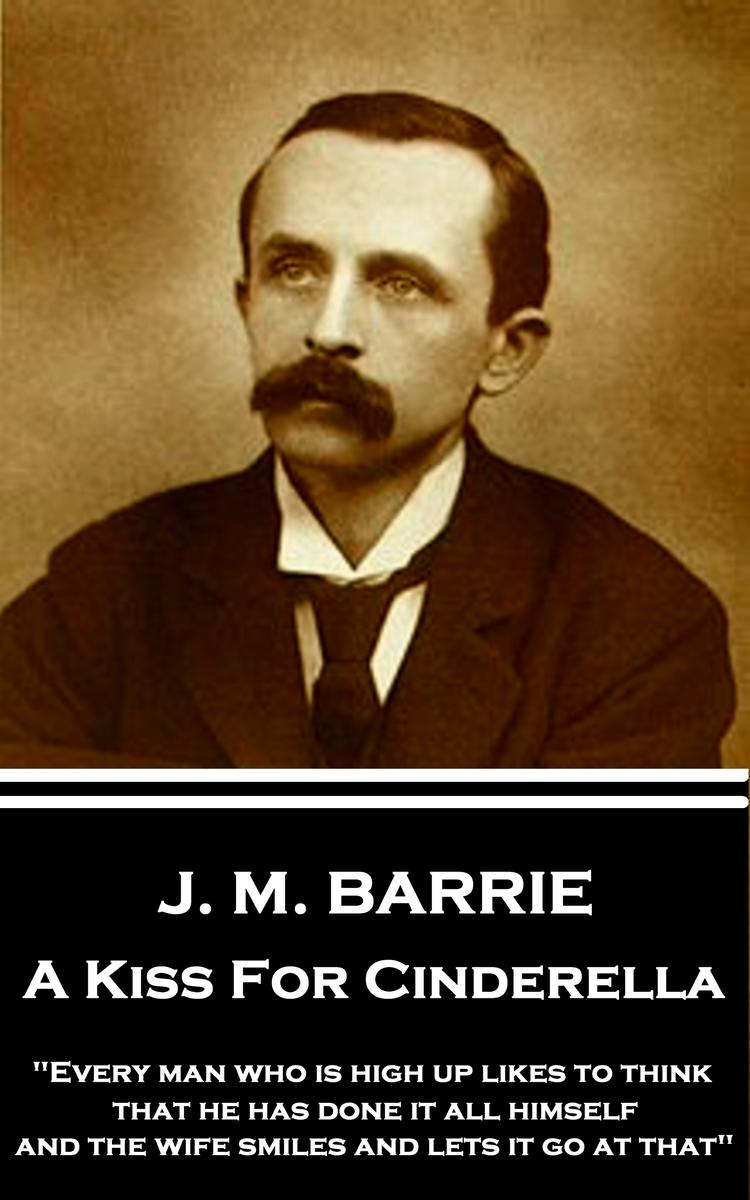
Kiss for Cinderella
¥16.38
Sir James Matthew Barrie, 1st Baronet, OM, was born in Kirriemuir, Angus the ninth of ten children on May 9th, 1860. From early formative experiences, Barrie knew that he wished to follow a career as an author. His family wished otherwise and sought to persuade him to choose a profession, such as the ministry. The compromise was that he would attend university to study literature at the University of Edinburgh. He graduated with an M.A. on April 21st, 1882. His first job was as a staff journalist for the Nottingham Journal. The London editor of the St. James's Gazette "e;liked that Scotch thing"e; in Barrie's short stories about his mother's early life. They also served as the basis for his first novels. Barrie though was increasingly drawn to working in the theatre. His first play, a biography of Richard Savage, was only performed once and critically panned. Undaunted he immediately followed this with Ibsen's Ghost in 1891, a parody of Ibsen's plays Hedda Gabler and Ghosts. Barrie's third play, Walker, London, in 1892 led to an introduction to his future wife, a young actress by the name of Mary Ansell. The two became friends, and she helped his family to care for him when he fell very ill in 1893 and 1894. Barrie proposed and they were married, in Kirriemuir, on July 9th, 1894. By some accounts the relationship was unconsummated and indeed the couple had no children. The story of Peter Pan had begun to formulate when Barrie became acquainted with the Llewelyn Davis family in 1897, meeting George, Jack and baby Peter with their nanny in London's Kensington Gardens. In 1901 and 1902, Barrie had back-to-back theatre successes with Quality Street and The Admirable Crichton. The character of "e;Peter Pan"e; first appeared in The Little White Bird in 1902. This most famous and enduring of his works; Peter Pan, or The Boy Who Wouldn't Grow Up had its first stage performance on December 27th, 1904. Peter Pan would overshadow everything written during his career. He continued to write for the rest of his life contributing many other fine and important works. Sir James Matthew Barrie, 1st Baronet, OM, died of pneumonia on June 19th,1937 and was buried at Kirriemuir next to his parents and two of his siblings.

Machine - Fascism is capitalism plus murder.
¥26.98
Upton Sinclair (1878-1968) was a prolific American novelist and a political activist. Apart from his bestselling novels, which told in black and white, illuminated the realities of the United States at the turn of the twentieth century, he is remembered today for championing socialist causes that were naturally unpopular in conservative America. In classics like 'The Jungle' his work had considerable effects on American politics and legislation. Sinclair's socialist ideals and dreams found their way to his fiction as he believed that no art can be practiced for art's sake as long as humanity still suffers from persistent dangers and evils. Such orientations have often subjected Sinclair to harsh criticism and even to demonization from numerous critics and politicians of his time, the most distinguished among which was probably President Theodore Roosevelt. However his legacy is that of a successful and established novelist and activist who if not always righting the balance was able to bring an incisive mind and mass exposure to many areas and industries.
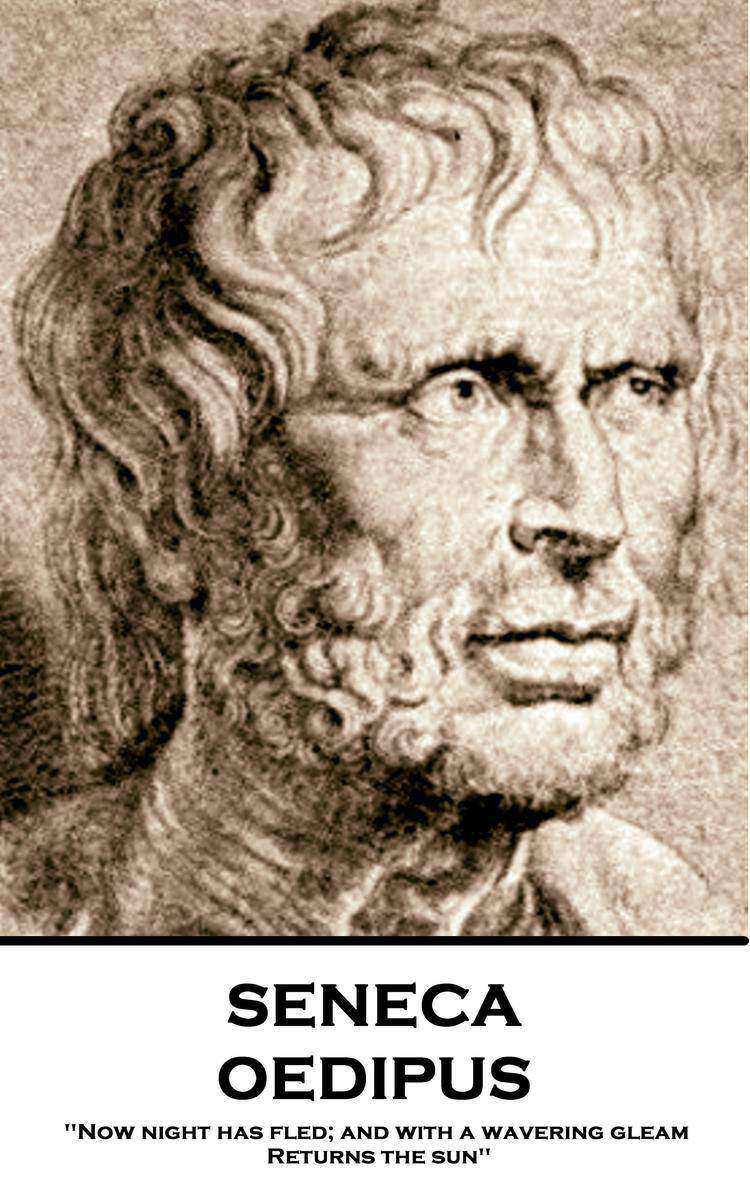
Oedipus - 'Now night has fled; and with a wavering gleam Returns the sun''
¥14.03
Lucius Annaeus Seneca, more readily known as Seneca the Younger, was born at Cordoba in the Roman province of Baetica in Hispania in approx 4 BC.Seneca attests that he was taken to Rome at a young age and educated in literature, grammar, and rhetoric; the standard education of high-born Romans. He also received philosophical training.Much of his life is not well documented but accounts do lean towards a pattern of ill-health at times. His breathing difficulties are thought to be the result of asthma and during his mid-twenties he contracted tuberculosis.He was sent to Egypt to live with his aunt, whose husband, Gaius Galerius, was Prefect of Egypt. In 31 AD he returned to Rome with her and, with her influence, was elected quaestor and with it the right to sit in the Roman Senate.Seneca's early career as a senator was successful and he was fulsomely praised for his oratory. A story related that emperor Caligula was so offended by Seneca's oratorical success that he ordered him to commit suicide. Seneca's ill-health prevented that.In 41 AD, Claudius became emperor, and Seneca was promptly cited by the new empress Messalina of adultery with Julia Livilla, the sister of Caligula and Agrippina.After trial the Senate pronounced a death sentence, which Claudius then commuted to exile. Seneca was to now spend the next eight years in Corsica. From this period of exile survive two of his earliest works-both consolations.In 49 AD Agrippina married her uncle Claudius, and through her Seneca was recalled to Rome. Agrippina appointed him, as tutor to her son, the future emperor Nero.Nero's early rule, during which he followed the advice of Seneca and Burrus, was competent. However, within a few years both Seneca and Burrus had lost their influence.In 58 AD the senator Publius Suillius Rufus made a series of public attacks on him saying that, Seneca had acquired a personal fortune of three hundred million sestertii. In response, Seneca brought a series of prosecutions for corruption against him. Suillius was dispatched into exile.After Burrus's death in 62 AD, Seneca's influence further declined. He adopted a quiet lifestyle at his country estates, concentrating on his studies and seldom visiting Rome. It was during these final few years that he composed two of his greatest works: 'Naturales Quaestiones'-an encyclopedia of the natural world; and his 'Letters to Lucilius'-which document his philosophical thoughts.In AD 65, Seneca was caught up in the aftermath of the Pisonian plot to kill Nero. Nero ordered him to kill himself. Seneca followed tradition by opening several veins in order to bleed to death. It was a sad conclusion for a man who has been called the first great Western thinker on the complex nature and role of gratitude in human relationships.
Tempest
¥17.56
William Shakespeare was born in Stratford-upon-Avon in late April 1565 and baptised there on 26th April. He was one of eight children. Little is known about his life but what is evident is the enormous contribution he has made to world literature. His writing was progressive, magnificent in scope and breathtaking in execution. His plays and sonnets helped enable the English language to speak with a voice unmatched by any other. William Shakespeare died on April 23rd 1616, survived by his wife and two daughters. He was buried two days after his death in the chancel of the Holy Trinity Church. The epitaph on the slab which covers his grave includes the following passage, Good friend, for Jesus's sake forbear, To dig the dust enclosed here. Blessed me the man that spares these stones, And cursed be he that moves my bones. Here we publish his comedy from 1611 'The Tempest'.


