


 购物车
购物车 个人中心
个人中心
A Splintered History of Wood
¥88.56
In a world without wood, we might not be here at all. Without wood, we wouldn't have had the fire, heat, and shelter that allowed us to expand into the colder regions of the planet. If civilization somehow did develop, our daily lives still would be vastly different: there would be no violins, baseball bats, chopsticks, or wine corks. The book you are now holding wouldn't exist. At the same time, many of us are removed from the world where wood is shaped and celebrated every day. That world is inhabited by a unique assortment of eccentric craftsmen and passionate enthusiasts who have created some of the world's most beloved musical instruments, feared weapons, dazzling architecture, sacred relics, and bizarre forms of transportation. In A Splintered History of Wood, Spike Carlsen has uncovered the most outlandish characters and examples, from world-champion chainsaw carvers to blind woodworkers, the Miraculous Staircase to the Lindbergh kidnapping case, and many more, in a passionate and personal exploration of nature's greatest gift.
The Bedwetter
¥94.10
Warning from publisher to reader: At HarperCollins, we are committed to customer satisfaction. Before proceeding with your purchase, please take the following questionnaire to determine your likelihood of enjoying this book:1. Which of the following do you appreciate?(a) Women with somewhat horse-ish facial features.(b) Women who, while not super Jew-y, are more identifiably Jewish than, say, Natalie Portman.(c) Frequent discussion of unwanted body hair. 2. Are you offended by the following behavior?(a) Instructing one's grandmother to place baked goods in her rectal cavity.(b) Stripping naked in public eleven times in a row.(c) Stabbing one's boss in the head with a writing implement. 3. The best way to treat an emotionally fragile young girl is:(a) Murder the main course of her Thanksgiving dinner before her very eyes.(b) Tell her that her older sister is prettier than she, and then immediately die.(c) Prevent her suicide by recommending she stay away from open windows. If you read the above questions without getting nauseous or forming a hate Web site, you are ready to buy this book! Please proceed to the cashier.

The Weather of the Future
¥90.77
Droughts. Floods.Climate refugees.Global warming isn't just about polar bears anymore. Let's assume we do nothing about climate change. Imagine that we just continue to emit carbon at our current levels or even exceed those levels. How would our weather changeWhat would our forecast beWelcome to The Weather of the Future. In this groundbreaking work, Dr. Heidi Cullen, one of the world's foremost climatologists and environmental journalists, puts a vivid face on climate change, offering a new way of seeing this phenomenon not just as an event set to happen in the distant future but as something happening right now in our own backyards. Arguing that we must connect the weather of today with the climate change of tomorrow, Cullen combines the latest research from scientists on the ground with state-of-the-art climate-model projections to create climate-change scenarios for seven of the most at-risk locations around the world.From the Central Valley of California, where coming droughts will jeopardize the entire state's water supply, to Greenland, where warmer temperatures will give access to mineral wealth buried beneath ice sheets for millennia, Cullen illustrates how, if left unabated, climate change will transform every corner of the world by midcentury. What emerges is a mosaic of changing weather patterns that collectively spell out the range of risks posed by global warming whether it's New York City, whose infrastructure is extremely vulnerable to even a relatively weak category 3 hurricane, or Bangladesh, a country so low-lying that millions of people could become climate refugees due to rising sea levels.Provocative and convincing, The Weather of the Future makes climate change local, showing how no two regions of the country or the world will be affected in quite the same way, and demonstrating that melting ice is just the beginning.
Men at Work
¥88.56
In his classic tribute to America's pastime now with a new introduction political commentator, Pulitzer Prize-winning journalist, and lifelong sports enthusiast George F. Will travels from the baseball field to the dugout to the locker room to get to the root of the game we all love. He breaks down the sport to its four basic components, managing, pitching, hitting, and fielding, and analyzes the way four of its notables, manager Tony La Russa, pitcher Orel Hershiser, outfielder Tony Gwynn, and shortstop Cal Ripken Jr., approach the game. One of the most acclaimed sports books ever written, Men at Work is a revelatory, and often surprising, study of professional baseball.
Science Is Culture
¥90.77
Seed magazine brings together a unique gathering of prominent scientists, artists, novelists, philosophers + other thinkers who are tearing down the wall between science + culture. We are on the cusp of a twenty-first-century scientific renaissance. Science is driving our culture and conversation unlike ever before, transforming the social, political, economic, aesthetic, and intellectual landscape of our time. Today, science is culture. As global issues like energy and health become increasingly interconnected, and as our curiosities like how the mind works or why the universe is expanding become more complex, we need a new way of looking at the world that blurs the lines between scientific disciplines and the borders between the sciences and the arts and humanities. In this spirit, the award-winning science magazine Seed has paired scientists with nonscientists to explore ideas of common interest to us all. This book is the result of these illuminating Seed Salon conversations, edited and with an introduction by Seedfounder and editor in chief Adam Bly. Science Is Culture includes:E. O. Wilson + Daniel C. DennetSteven Pinker + Rebecca GoldsteinNoam Chomsky + Robert TriversDavid Byrne + Daniel LevitinJonathan Lethem + Janna LevinBenoit Mandelbrot + Paola AntonelliLisa Randall + Chuck Hoberman Michel Gondry + Robert StickgoldAlan Lightman + Richard Colton Laurie David + Stephen SchneiderTom Wolfe + Michael GazzanigaMarc Hauser + Errol Morris

Marriage and the Family in the Middle Ages
¥88.56
A compelling, lucid, and highly readable chronicle of medieval life written by the authors of the bestselling Life in a Medieval Castle and Life in a Medieval City Historians have only recently awakened to the importance of the family, the basic social unit throughout human history. This book traces the development of marriage and the family from the Middle Ages to the early modern era. It describes how the Roman and barbarian cultural streams merged under the influence of the Christian church to forge new concepts, customs, laws, and practices. Century by century it follows the development -- sometimes gradual, at other times revolutionary -- of significant elements in the history of the family: The basic functions of the family as production unit, as well as its religious, social, judicial, and educational roles. The shift of marriage from private arrangement between families to public ceremony between individuals, and the adjustments in dowry, bride-price, and counter-dowry. The development of consanguinity rules and incest taboos in church law and lay custom. The peasant family in its varying condition of being free or unfree, poor, middling, or rich. The aristocratic estate, the problem of the younger son, and the disinheritance of daughters. The Black Death and its long-term effects on the family. Sex attitudes and customs: the effects of variations in age of men and women at marriage. The changing physical environment of noble, peasant, and urban families. Arrangements by families for old age and retirement.
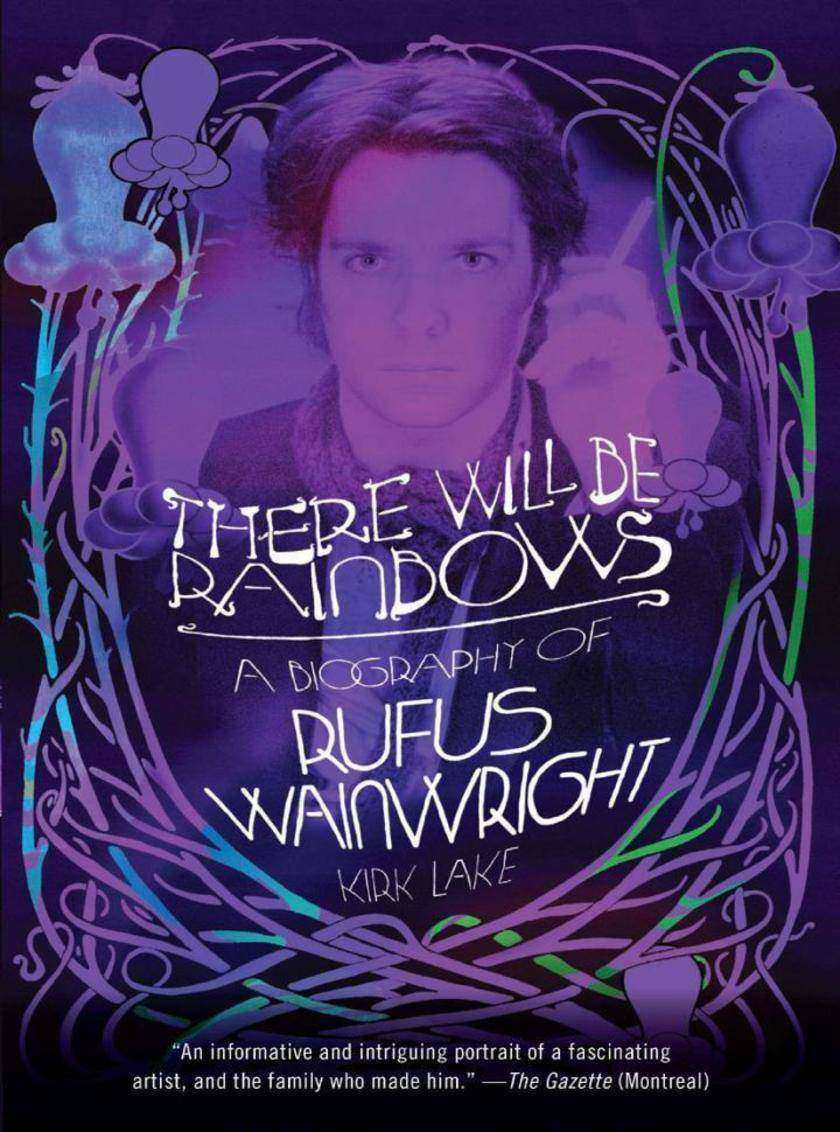
There Will Be Rainbows
¥90.73
No contemporary pop performer's work mixes innovation and tradition like Rufus Wainwright's. He is the son of singer, songwriter, actor Loudon Wainwright III and legendary Canadian folk singer Kate McGarrigle whose story is one of towering highs and rock bottom lows in which family influences, sexual experimentation, and a crystal meth addiction in the early 2000s have greatly contributed to his creative process.In seeking to explain how Wainwright works and where his place lies in a great tradition, rock journalist Kirk Lake entered into many odd and diverse worlds Canadian folk, neo-Conservatism, drug addiction, gay liberation, Hollywood musicals as he followed Wainwright's journey from Van Dyke Parks to rehab to Carnegie Hall. The product of in-depth interviews with musicians, producers, filmmakers, family friends, There Will Be Rainbows is a fascinating, sometimes troubling study of the glorious enigma that is Rufus Wainwright.

The Color of Death
¥55.31
The name Elizabeth Lowell has become synonymous with electrifying fiction that seamlessly combines suspense, intrigue, and passion. And now the phenomenal New York Times bestselling author brilliantly displays her incomparable talents in a story of treachery, greed, conspiracy, and murder that will hold the reader spellbound until the final word.It is the opportunity of a lifetime for Kate Chandler, the chance to cut seven rare, priceless sapphires and solidify her reputation as a world-class jewel cutter. But something goes horribly, tragically wrong during what should have been a simple transfer of goods. The sapphires vanish without a trace. Missing also is the man Kate trusted to transport the gems: her half brother, Lee, who now, quite possibly, is dead. And suddenly she is on the run, pursued by federal agents who suspect her of being the criminal mastermind of a cunning bait-and-switch scheme.Special agent Sam Groves is one of the best of the best, an essential member of the FBI's elite crime strike force and the perfect man to lead the hunt, since he could never be scammed by a beautiful confidence woman. But something is troubling about this assignment, because someone else is chasing Kate Chandler as well.Only Kate suspects the awful truth: She's unwittingly stumbled into a conspiracy of deceit, betrayal, and cold-blooded murder that goes far beyond a simple jewel heist. And a chilling, threatening voice on the telephone only confirms her worst suspicions. Getting Sam Groves, the FBI agent who's her constant shadow, to believe her is a step in the right direction -- but it may be one that's too little too late in a bloody game where terror dictates her every move and the rules are constantly changing. Because the order has already been passed down to a ruthlessly efficient assassin: Kate Chandler must not be allowed to live ...

Forever in Your Embrace
¥56.07
On a dark and dangerous road a daring British adventurer saves the life of a countess of royal blood. In all his travels Colonel Tyrone Rycroft has never encountered a woman as breathtaking alluring and inscrutably mysterious as the bewitching Synnovea. But his selfless bravery has drawn him into peril and into an inescapable web of intrigue and seduction. In an opulent and treacherous imperial court the proud headstrong lady's dashing champion has become a pawn in a dangerous game of power and influence and only his great courage and wits will enable him to survive it. But Rycroft's enflamed desire will not let him escape to the safety of his own world not until his dream is realized and the enigmatic highborn beauty has given herself to him freely honestly and forever.

The Marriage Contract
¥55.31
He was a man exiled from society handsome unpredictable and proud. Dark rumours surrounded his name. But Anne Burnett had signed a marriage contract binding her to Aiden Black the Earl of Tiebauld. And although she'd never met him she's determined to keep her word and make theirs a marriage in truth. Because a well bred lady with little fortune to recommend her has no choice. From the moment she arrived Anne fell in love with Kelwin Castle and its roguishly handsome laird. By day he instils a fierce loyalty in his people with his masterful ways...and by night he tempts Anne to surrender her innocence to him. But while he is willing to offer his body Aiden refuses to give Anne his heart...making her wonder what prevents him from truly claiming her as his wife.

Love According to Lily
¥52.70
Lily Langdon has finally grown up. Now that her brother the duke's completely malleable best friend Edward Wallis has been brutally (and luckily) rebuffed by his intended, Lily knows her chance for a very permissive and entirely convenient husband is here. In fact, he is staying in her very own home for a house party.But this promising party's tone is quickly changed by a horrible twist of fate that threatens Edward's very life. Nothing but luck can save Edward, but Lily's heart is lost for good when she sees what a strong and devoted man he can be in times of trouble. Lily has set her cap on a man who should be unlovable and fallen more in love than she ever thought possible. Their passion brings great risk, but when a man and a woman prove to be so much more together than they were apart, is there anything that their love cannot overcome?
Love and the Single Heiress
¥55.31
An anonymous author has turned English society upside down, and only one man can protect her identity from being revealed, and her life from being destroyed, in this sexy new romance from reader favourite Jacquie D Alessandro.The scandalous book, A Ladies Guide to the Pursuit of Personal Happiness and Marital Fulfilment has taken English society by storm. The slim but erotically explicit volume was penned by an unknown author, and now all of London is trying to discover the mysterious writer's true identity. But the search doesn't scare Catherine Ashfield, Viscountess Bickley, the proper woman who transcribed the book for her dear friend, a very elderly and experienced widow. Disgusted by the shallow values and morals of the town, Catherine was excited to help her friend and set the uppity nobility on its ear. And maybe by giving women a little more knowledge they could finally have happier marriages, instead of loveless unions as she had her with her own late husband.But Catherine didn't anticipate the violent backlash against the book. With threats being made against the unknown author, Catherine fears for her safety and that of her son. When she is the victim of a near fatal accident, she wonders how hidden her identity truly is.Knowing she needs protection, she turns to her brother's best friend, an accomplished pugilist and fencer. She invites him to stay at her country estate under the guise of a simple visit, not realizing that she has invited a fugitive with a dangerous past into her home--a man she soon finds herself powerfully attracted to...

The Price of Indiscretion
¥55.31
New York Times and USA Today bestselling author Cathy Maxwell delivers another passionate romance that is sure to delight her dedicated fans and increase her readership.When three impoverished young ladies brought up in America decide to fulfill their late mother's dream of successful marriages and seasons, they concentrate their resources on sending the prettiest to London to make a brilliant match. But whom does she see but the man who had broken her heart years beforeAlexander Haddon is no longer the rough and tumble man she once fell for, but a wealthy gentleman whose passionate nature is only just hidden under a veneer of sophistication ...

A Rogue's Proposal
¥62.90
Demon Cynster has seen love bring his brethren to their knees and he's vowed that he will not share their fate ... until he spies Felicity Parteger sneaking about his racing stable. Demon remembers Felicity as a mere chit of a girl but now she stands before him all lush curves and sparkling eyes... Felicity knows Demon was one of the town's most eligible bachelors and a rogue of the worst sort but he was the only one capable of getting her friend out of trouble. She knows Demon will never yield her the love she desperately seeks but could a marriage of passion alone be enough?
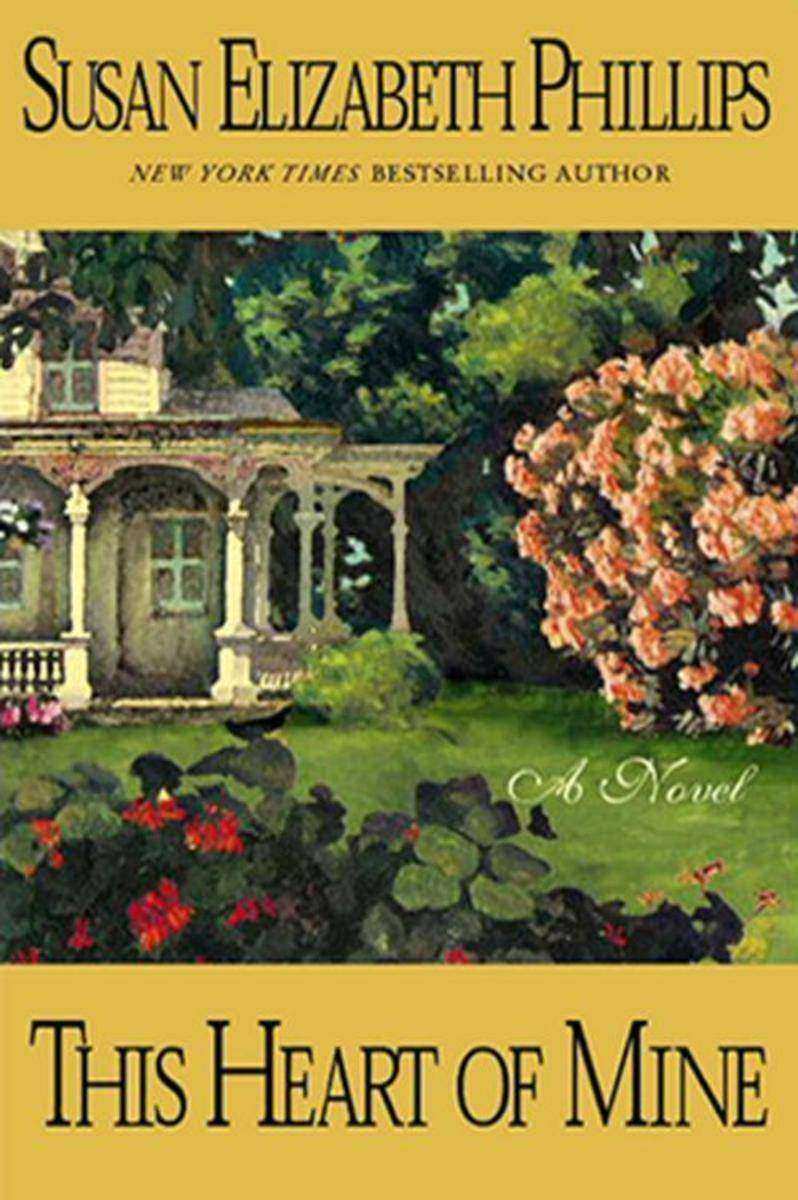
This Heart of Mine
¥56.07
Molly Somerville loves her career as the creator of the Daphne the Bunny children's book series, but the rest of her life could use some improvement. She has a reputation for trouble that started even before she gave away her fifteen-million-dollar inheritance. Then there's her long-term crush on the quarterback for the Chicago Stars football team her sister owns that awful, gorgeous Kevin Tucker, a man who can't even remember Molly's name!One night Kevin barges into Molly's not-quite-perfect life and turns it upside down. Unfortunately, the Ferrari-driving riving, poodle-hating jock isn't as shallow as she wishes he were, and she soon finds herself at a place called Wind Lake. Surrounded by paintbox cottages, including a charming old bed-and-breakfast, Molly and Kevin battle their attraction and each other as they face one of life's most important lessons. Sometimes love hurts, sometimes it makes you mad as hell, and sometimes if you're lucky it can heal in a most unexpected way.

To Distraction
¥55.31
The gentlemen of the Bastion Club have proven their courage while fighting England's enemies, but nothing has prepared them for dealing with that most formidable of challenges: the opposite sex.Deverell, Viscount Paignton, is in desperate need of a wife. Unmoved by the matchmaking herd, he seeks help from his aunt, who directs him to a lady she vows is perfect for him. Dispatched to a country house party to look the lady over, he discovers her not swanning about among the guests but with her nose buried in a book in the library.Phoebe Malleson is tempted to distraction by Deverell, but marrying him isn't part of her plan. Moved by an incident in her past, Phoebe has a secret cause to which she's committed. Unfortunately, telling Deverell to go away doesn't work, and he quickly learns of her secret. But someone powerful has her cause targeted for destruction and her in their sights. Phoebe must accept Deverell's help though the cost to them both might be dear and deadly.

To Love a Scottish Lord
¥56.07
A Lord Not Meant to MarryHamish MacRae, a changed man, returned to his beloved Scotland intending to turn his back on the world. The proud, brooding lord wants nothing more than to be left alone, but an unwanted visitor to his lonely castle has defied his wishes. While it is true that this healer, Mary Gilly, is a beauty beyond compare, it will take more than her miraculous potions to soothe his wounded spirit. But Mary's tender heart is slowly melting Hamish's frozen one . . . awakening a burning need to keep her with him -- forever.A Lady Who Dares Not LoveNever before has Mary felt such an attraction to a man! The mysterious Hamish MacRae is strong and commanding, with a face and form so handsome it makes Mary tremble with wanting him. Already shadowy forces are coming closer, heartless whispers and cruel rumors abound, and it will take a love more pure and powerful than any other to divine the truth -- and promise a future neither had dreamed possible.

The Undead Next Door
¥55.91
Three signs that something is very different with your mew man:1. He sleeps all day . . . which would be annoying except he's so attentive at night.2. He's attacked by sword-wielding assailants, yet insists he can handle it on his own.3. He never seems to age. Heather Westfield has always lived a quiet life, but that all changes when she helps a very handsome, very mysterious stranger. There's something not quite right about Jean-Luc, but still, she's never been with a man so charming, so attractive . . . so wonderful. Now if only a murderous villain wasn't after them, they might get their happily-ever-after.

Where's My Hero?
¥55.91
Dear Avon Books,Where are my heroesWhenever I'm reading a book by one of my favorite authors I find I'm falling for the wrong guy -- not the hero, but the other man -- and what I really want is for him to have his own story.Like Jake Linley, from Someone to Watch Over Me by Lisa Kleypas that doctor could sit by my bedside if I ever got sick. And Ned Blydon in Splendid by Julia Quinn...he makes me want to learn to waltz! I never thought living in a drafty castle would be much fun until Simon of Ravenswood in Master of Desire by Kinley MacGregor came along.Anyway, I just wanted to let you know that these are my men -- when do they get their stories?Sincerely,A Romance FanSome books are so special that there is more than one hero to love, but only a single story is told. So if you find yourself asking, "Where is my hero?" you'll discover the answer right here in this delicious collection by New York Times bestseller Lisa Kleypas, New York Times bestseller Julia Quinn and USA Today bestseller Kinley MacGregor.

You and No Other
¥55.31
The constraints of quiet widowhood have become too much for Lady Caroline Pearson to bear especially now that her brother-in law has idiotically, and illegally, gambled away her house. Boldly, she confronts the new owner in person. But not only does the dashing rogue, James Ferrington, refuse to return Caroline's deed, he tries to take scandalous advantage of her as well. Sheepish and repentant, James arrives on Caroline's doorstep to make amends unaware that the young widow and her eccentric aunt are intent on retaliation. James merely meant to seduce a bewitching minx and have done with it and, suddenly, he's a kidnapped prisoner in Caroline's cellar. But most shocking of all, James realizes that he has no desire whatsoever to be free for the audacious Caroline has inflamed his senses, destroyed his reason . . . and completely captured his heart.

Wolf and the Dove
¥55.31
The Wolf Noble Aislinn grieves as the Iron Wolf and his minions storm through her beloved Darkenwald. And she burns with malice for the handsome Norman savage who would enslave her. . .even as she aches to know the rapture of the conqueror's kiss The Dove For the first time ever mighty Wulfgar has been vanquished and by a bold and beautiful princess of Saxon blood. He must have the chaste sensuous enchantress who is sworn to his destruction. And he will risk life itself to nurture with tender passion a glorious union born in the blistering heat of hatred and war.


