


 购物车
购物车 个人中心
个人中心

The Detective (Mills & Boon Intrigue)
¥31.10
Detective Brodey Haywood has been called in by Lexi Vanderbilt to investigate a murder. But when Lexi captures the killer’s attention to become the new target, Brodey knows he must fight to keep her safe… because she’s also captured his heart.
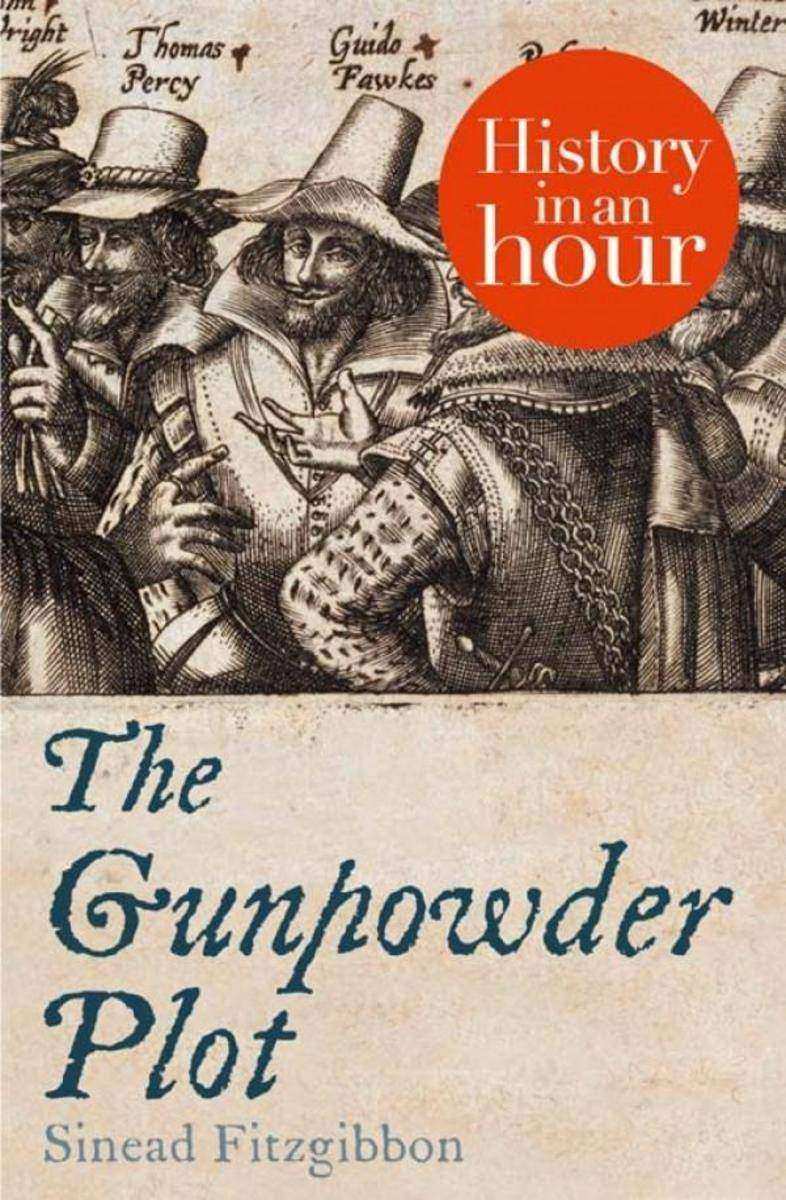
The Gunpowder Plot:History in an Hour
¥18.05
Love history? Know your stuff with History in an Hour. ‘Remember, remember, the fifth of November’. The gunpowder plot is a famed tale of treachery that continues to fascinate and capture the imagination four hundred years on. The Gunpowder Plot in an Hour reveals the elaborate background to the infamous plot to blow up the Houses of Parliament and James I, the ultimate act of treason. This compelling and engaging account of one of the most famous historical events in English history follows the Catholic protagonists hatching their plan through to their inevitable, gruesome deaths. Learn who the Catholic traitors were, what drove them to such desperate measures, and how the plot was discovered. The Gunpowder Plot in an Hour gives a concise overview of this enduring event and is a must for all history lovers. Love history? Know your stuff with History in an Hour…

The Billionaire's Intern - Part 1 (Mills & Boon M&B) (The Forbidden Series, Book
¥14.62
The Forbidden Series: billionaires who can look, but shouldn't touch! For Logan Black, Jaiven Rodriguez and Zair al Ruyi, New York City is spread out before them like the Garden of Eden… and no one knows the sweet taste of forbidden fruit better than America's most ruthless billionaires! Jaded and cynical, with a darkness that threatens to consume them whole, they think they've seen it all. But temptation has something new in store for each of them… In Part One of The Billionaire's Intern, Addison Treffen finds herself working for Logan Black—the notorious billionaire who literally came back from the dead. She might think she's found a safe haven from the shocking scandal surrounding her family, but has she really?
How To Bake The Perfect Apple Pie
¥39.24
A scrumptious pie. A long distance guy. 4th of July fireworks guaranteed. Lauren Hauser has it all…nearly. With a shiny new job and sparkly new engagement ring on her finger, the only thing she’s missing is her gorgeous new fiancé by her side. Should she be worried? Jack’s kisses are as sizzling as always and, sure, long distance is hard but, she and Jack are solid, right? Of course the stress of planning a wedding—or not—is nothing compared to the stress of baking an apple pie. Because it’s not just any apple pie that Lauren must bake for the 4th of July contest; it’s her grandmother’s famous, award-winning apple pie! Yet Lauren is determined to make this pie her own and a little apple pie should be no problem for the Hauser clan dessert queen…! But with her new job taking up so much time, a prize pie to perfect and the growing distance between her and Jack, Lauren begins to wonder if she can really have it all… Only one things for sure, there’ll be fireworks this 4th of July! The Home for the Holidays series: Book 1 - How to Bake the Perfect Pecan Pie Book 2 - How to Bake the Perfect Christmas Cake Book 3 - How to Bake the Perfect Apple Pie Book 4 - How to Bake the Perfect Wedding Cake

A Mistress For Major Bartlett (Mills & Boon Historical) (Brides of Waterloo, Boo
¥15.50
His Virgin Mistress! Major Tom Bartlett is shocked to discover that the angel who nursed his battle wounds is darling of the ton Lady Sarah Latymor. One taste of her threatens both her impeccable reputation and his career! An honourable man would ask for her hand, but Bartlett is considered an unrepentant rake by polite society – sweet Sarah would be spurned as his mistress and even as his wife. He demands she leave, but Sarah is just as determined to stay…by his side and in his bed! Brides of Waterloo: Love Forged on the Battlefield

Colton Cowboy Protector (Mills & Boon Romantic Suspense) (The Coltons of Oklahom
¥29.43
A Dangerous Assassin… Tracy McCain came to Colton ranch to meet her cousin’s son… but she didn’t expect Jack Colton, the boy’s father, to be so suspicious. Nor did she realise that an enemy had followed her, determined to keep her from getting too close to the Coltons. When Tracy is attacked, Jack realises the only way to protect her is to keep her under his roof. But sharing a home with the brave beauty introduces new temptations. And, as danger approaches, Jack knows he must keep Tracy and his son safe… so they can become a new family.
Cornered (Mills & Boon Intrigue) (Corcoran Team: Bulletproof Bachelors, Book 1)
¥31.10
It was an assignment he was more than prepared for–until an innocent beauty got caught in the crossfire. Undercover agent Cameron Roth’s hot on the trail of a drug-running crime cartel. The last thing he needs is to involve an innocent woman in the crossfire. But when he leaps into Julia White’s home for safety, she becomes part of the tangled web Cam’s trying so deseparately to unravel. Smooth, solid Cam’s the consummate professional. But gorgeous, feisty Julia transforms the high-stakes assignment into something far more than business as usual. Now that the villains have her in their sights, Cam’s got to not only solve the case—but also protect the only woman who’s ever found the way into his heart.

Desert Falcons
¥22.46
ROYAL CONSPIRACY In the Kingdom of Saudi Arabia, a secret group within the military is plotting to oust the Royal Family. Their next move: kidnapping the playboy prince from a desert warfare training session outside Las Vegas. But Sin City already has its share of trouble, with authorities investigating the disappearance of two park rangers and coping with threats made by an anti-Muslim rancher who has a highly efficient militia of his own. It falls to Mack Bolan to keep the prince safe at all costs. But someone in the heir's inner circle is a traitor, and the agents working the park ranger case are bound by official procedure. When it comes to stopping the fall of a kingdom and preventing a bloodbath on US soil, the Executioner makes his own rules.

A Spanish Awakening (Mills & Boon Modern)
¥25.41
In the chaos of an airport strike, Madrid's most sought-after bachelor Emilio Rios stumbles across old flame Megan Armstrong. In the past, he bowed to duty and married the "right" woman—leaving the less sophisticated Megan on the sidelines. Staying away from Megan has been the hardest thing Emilio's ever done, but now that he's free he isn't going to waste a single minute! He's got twenty-four hours—plenty of time for a full seduction.…

Once a Ferrara Wife... (Mills & Boon Modern)
¥25.41
For better...or for bedding? Laurel Ferrara wouldn't know a happy ending if she fell over it - of course her whirlwind wedding was always going to end in disaster. But it wasn't as simple as just walking away. From the moment she is summoned back to Sicily, the shivers of unease set in.... The command comes from legendary billionaire Cristiano Ferrara, the husband she can't forget - but it might as well have come from the devil himself. The outrageously gorgeous Cristiano's power is a potent reminder of this Sicilian dynasty's unbreakable rule:once a Ferrara wife, always a Ferrara wife....
The Dead Travel Fast (Mills & Boon M&B)
¥54.05
A husband, a family, a comfortable life:Theodora Lestrange lives in terror of it all. With a modest inheritance and the three gowns that comprise her entire wardrobe, Theodora leaves Edinburgh--and a disappointed suitor--far behind. She is bound for Rumania, where tales of vampires are still whispered, to visit an old friend and write the book that will bring her true independence. She arrives at a magnificent, decaying castle in the Carpathians, replete with eccentric inhabitants:the ailing dowager; the troubled steward; her own fearful friend, Cosmina. But all are outstripped in dark glamour by the castle's master, Count Andrei Dragulescu. Bewildering and bewitching in equal measure, the brooding nobleman ignites Theodora's imagination and awakens passions in her that she can neither deny nor conceal. His allure is superlative, his dominion over the superstitious town, absolute--Theodora may simply be one more person under his sway. Before her sojourn is ended--or her novel completed--Theodora will have encountered things as strange and terrible as they are seductive. For obsession can prove fatal...and she is in danger of falling prey to more than desire.

Kommandant's Girl (Mills & Boon M&B)
¥61.90
Nineteen-year-old Emma Bau has been married only three weeks when Nazi tanks thunder into her native Poland. Within days Emma's husband, Jacob, is forced to disappear underground, leaving her imprisoned within the city's decrepit, moldering Jewish ghetto. But then, in the dead of night, the resistance smuggles her out. Taken to Krakow to live with Jacob's Catholic aunt, Krysia, Emma takes on a new identity as Anna Lipowski, a gentile. Emma's already precarious situation is complicated by her introduction to Kommandant Richwalder, a high-ranking Nazi official who hires her to work as his assistant. Urged by the resistance to use her position to access details of the Nazi occupation, Emma must compromise her safety—and her marriage vows—in order to help Jacob's cause. As the atrocities of war intensify, so does Emma's relationship with the Kommandant, building to a climax that will risk not only her double life, but also the lives of those she loves.
Bronx Justice (Mills & Boon M&B)
¥61.90
Twenty-five years ago one phone call changed Jaywalker’s life forever. It is the late 1970s and criminal defense attorney Harrison J. Walker, better known as Jaywalker for his rebellious tactics, is struggling to build his own practice when he receives a call from a desperate mother. Her son, Darren Kingston, has been arrested for raping five white women in Castle Hill, an area of the Bronx long forgotten by the city. A young, good-looking black man, Darren is positively identified by four of the victims as the fifth prepares to do the same. Everyone—from the prosecution to the community at large—sees this as an open-and-shut case with solid eyewitness testimony. Everyone, that is, except Jaywalker. The young attorney looks deep into the crimes, studying both the characters involved and the character of our society. What he finds will haunt him for the rest of his career.
Copycat (Mills & Boon M&B)
¥45.13
Five years ago, three young victims were found murdered, posed like little angels. No witnesses, no evidence left behind. The Sleeping Angel Killer called his despicable acts 'the perfect crimes.' The case nearly destroyed homicide detective Kitt Lundgren's career - because she let the killer get away. Now the Sleeping Angel Killer is back. But Kitt notices something different about this new rash of killings - a tiny variation that suggests a copycat killer may be re-creating the original 'perfect crimes.' Then the unthinkable happens. The Sleeping Angel Killer himself approaches Kitt with a bizarre offer - he will help her catch his copycat. Kitt must decide whether to place her trust in a murderer - or risk falling victim to a fiend who has taken the art of the perfect murder to horrific new heights.

The Calamity Janes: Gina and Emma: To Catch a Thief / The Calamity Janes (The Ca
¥59.35
Calamity Janes…fierce friends facing challenges in life and love To Catch a Thief Gina Petrillo thought she was on the run from her troubles…but they followed her home to Winding River, Wyoming. City-slicker lawyer Rafe O'Donnell is in hot pursuit of Gina, and he doesn't intend to let his suspect out of his sight, even though Gina's mouthwatering kisses are irresistible. And while Rafe is out to catch a thief–she just might steal his heart! The Calamity Janes Struggling with single-motherhood and career pressures, Denver attorney Emma Rogers comes home for a reunion with the Calamity Janes in desperate need of their support. Can they–and her young daughter–possibly be right that sexy journalist Ford Hamilton, the biggest thorn in her side, is actually the answer to her prayers?

The Chaperon's Seduction (Mills & Boon Historical) (The Infamous Arrandales, Boo
¥38.36
‘Ten Thousand Pounds to Whoever Can Seduce the Heiress by Michaelmas!’ Even for dissolute rake Richard Arrandale, this latest bet is outrageously scandalous. But Richard doesn’t care – until he meets the heiress’s charming chaperon and the stakes are raised even higher! Widowed Lady Phyllida Tatham is no longer the shy, plain creature she once was, and she’s determined to protect her beautiful stepdaughter. But there’s one suitor – with the worst kind of reputation – who seems more interested in seducing her. Who will come out on top in this winner-takes-all game? The Infamous Arrandales: scandal is their destiny!

Lord Hadleigh's Rebellion (Mills & Boon Historical)
¥38.65
Russell Chancellor, Lord Hadleigh, found the love of his life over a decade ago, but she was forced to marry elsewhere. When a chance meeting at a house party unites him with Mary Wardour once more, both realize that the feelings between them have never died. Mary is now a widow and free to marry. Russell needs to marry or forgo his inheritance. But they have to discover the truth behind the secrets and betrayals that drove them apart before they can hope to find future happiness together....

Marianne and the Marquis (Mills & Boon Historical)
¥28.35
Sheltered innocent Miss Marianne Horne had come to Cornwall to care for her ailing great-aunt. She had expected quiet and solitude--not to be drawn into adventure! Surrounded by smugglers, spies and plots, Marianne hardly knew whom to trust. Instinctively, she turned to the enigmatic and handsome Mr. Beck. But plain Mr. Beck turned out to be Andrew, Marquis of Marlbeck--a nobleman who surely would never look twice at the daughter of a country vicar. So why was he insistent on paying Marianne such flattering attention?

An Unconventional Duenna (Mills & Boon Historical)
¥38.65
Two young women, up from Steepwood to London for the Season, immediately attract the attention of two highly eligible young men. Tall, dark and confident, Athene Filmer seizes the opportunity to act as companion to her small, blonde and decidedly timid friend when she is launched into the ton. Illegitimate, with no dowry, Athene sees this as her one chance to make a rich marriage. But troubles arise when both young women consider Adrian, Lord Kinloch, to be the ideal husband. It's more than obvious to Athene that his formidably brusque cousin, Nicholas Cameron, is disapproving of her - seeing her as an adventuress on the make - but since Nick has shown no signs of offering her marriage himself, she knows she should dismiss all thought of him! But Nick will not be ignored..
Wagon Train Proposal (Mills & Boon Love Inspired Historical) (Journey West, Book
¥31.10
For the Sake of His Children A marriage of convenience? Rachel Hewitt couldn't possibly accept. Not even for the sake of three adorable little girls who desperately want a new mother. Sheriff Tristan McCullough offers Rachel a home and family, but not the one thing she truly seeks–someone to love her for herself. Tristan McCullough hoped to find a wife on the wagon train, not a nanny. The hardworking widower wants a marriage without emotional risks. But independent Rachel intrigues him. One minute she's winning over his shy little girls, and the next she's tackling danger head-on. She might just be Tristan's unexpected second chance at happiness…if he'll risk his wary heart again. Journey West: Romance and adventure await three siblings on the Oregon Trail

Wedding Vows: Say I Do: Matrimony with His Majesty / Invitation to the Prince's
¥51.50
A royal proposal King Alexander Valleder rebelled one secret night, years ago. The result was a child. Now he has to make things right. But first he must persuade the beautiful and stubborn Darrell Collier she has the makings of a queen. Prince Rikardo is looking for a princes, but Mel Watson’s far from the cynical social climber he planned for. Rikardo’s long given up on love: he wants a temporary wife― and proposing to this sweet ordinary girl feels all too real… Prince Regent Max de Gautier isn’t expecting to be confronted by feisty Pippa when he arrives in the Outback to collect the heir to the throne. Now he must convince her to spend one month in his royal kingdom and become his royal bride! A royal wedding invitation you cannot refuse.


