


 购物车
购物车 个人中心
个人中心

Teach Your Children Well
¥94.10
Psychologist Madeline Levine brings together cutting-edge research and thirty years of clinical experience to explode once and for all the myth that good grades, high test scores, and college acceptances should define the parenting endgame.Parents, educators, and the media wring their hands about the plight of America's children and teens soaring rates of emotional problems, limited coping skills, disengagement from learning and yet there are ways to reverse these disheartening trends. Teach Your Children Well acknowledges that every parent wants successful children. However, until we are clearer about our core values and the parenting choices that are most likely to lead to authentic, and not superficial, success, we will continue to raise exhausted, externally driven, impaired children who believe they are only as good as their last performance. Real success is always an inside job, argues Levine, and is measured not by today's report card but by the people our children become fifteen or twenty years down the line.Refusing to be diverted by manufactured controversies such as "tiger moms versus coddling moms," Levine confronts the real issues behind the way we push some of our kids to the breaking point while dismissing the talents and interests of many others. She shows us how to shift our focus from the excesses of hyperparenting and the unhealthy reliance on our children for status and meaning to a parenting style that concentrates on both enabling academic success as well as developing a sense of purpose, well-being, connection, and meaning in our children's lives.Teach Your Children Well is a call to action. And while it takes courage to make the changes we believe in, the time has come, says Levine, to return our overwrought families to a healthier and saner version of themselves.

Inner Bonding
¥95.11
Inner bonding is the process of connecting our adult thoughts with our instinctual, gut feelings the feelings of the inner child so that we can minimize painful conflict within ourselves. Free of inner conflict, we feel peaceful, open to joy, and open to giving and receiving love.Margaret Paul, coauthor of Healing Your Aloneness, explores how abandonment of the inner child leads to increasingly negative and destructive feelings of low self-worth, codepenclence, addiction, shame, powerlessness, and withdrawal from relationships. Her breakthrough inner bonding process teaches us to heal past wounds through reparenting and clearly demonstrates how we can learn to parent in the present. Real-life examples illustrate the dynamics of the healing process and show the benefits we can expect in every facet of our lives and in all our relationships.Inner Bonding provides the tools we need to forge and maintain the inner unity that makes our family, sexual, work, and social relationships productive, honest, and joyful.
The Love Fix
¥94.10
Find your way back to a happy, satisfying relationshipAll couples argue, but how do some couples get to what seems like the point of no returnLicensed marriage and family therapist Dr. Tara Fields has spent more than twenty-eight years working with couples, and she has discovered that there are five common conflict loops that couples fall into and three steps to getting past having the same fights over and over again and onward to building a relationship where each partner feels heard, understood, respected, and loved. These steps include: Recognizing the conflict loop at play Exploring past and present fears Creating opportunities to get in touch with the deepest needs of both partners in order to find new gratitude, respect, and trust Change comes with awareness. When you're present in the moment, conflict with your partner can become an opportunity to work through unresolved issues and to learn more about each other; it can even become a way to grow closer. In The Love Fix, Fields shares her tested and proven tools to help build stronger relationships, including: Insight from real couples who have repaired their relationships Self-assessment quizzes to get to the root of the problem Practical 3-Minute Fixes you can start using immediately HEARTwork exercises to help you dig deeper in order to reconnect It's never too late to reignite your passion and to restore the love between you and your partner. Stop rehashing the same issues, figure out what you're really fighting about, and start enjoying a happier, stronger relationship today.
A Special Mother
¥95.39
All mothers experience worries and fears about their children, but none can compare with the early days when a mother feels something's not quite right. Anne Ford knows the feeling. She's had it herself, having raised a daughter with severe learning disabilities, and has gone on to share experiences with others during her many years as a volunteer with the National Center for Learning Disabilities.To bring comfort, support, and hard information to mothers-and fathers, too-in the early period surrounding the diagnosis, here is the book that Anne wishes she'd had years ago when she first received the news about her daughter and didn't know where to turn for the practical and emotional help she desperately needed.Filled with essential advice and the voices of other mothers whose children have LD and related disorders such as Asperger's and ADHD, A Special Mother lets parents know they are not alone and that they can help their child to thrive. This invaluable book addresses such matters as:Understanding Learning Disabilities and Related Disorders What Should You Do FirstInterpreting Evaluation Results Resolving Disputes Special Fathers: They Are Out ThereThe Social Side of LDAdvocacy vs. Obsession How Are You Doing?: Taking Care of Yourself
Healthy Child, Whole Child
¥101.00
Should you give your child nutritional supplementsAre vaccinations safeWhy are more and more children becoming couch potatoesIn Healthy Child, Whole Child, doctors Stuart H. Ditchek and Russell H. Greenfield answer these questions and more, offering authoritative, cutting-edge information on all aspects of children's health and wellness. Taking the position that conventional and alternative approaches to pediatric care are not mutually exclusive, they provide the newest science and most up-to-date information on: The 6 myths (and one true statement) about vaccinations The 10 powerhouse foods for your kids The 7 questions you need to ask to find out if your child is overweight The 16 herbs that are safe and effective for children How to receive more integrative care from your current pediatricianAnd more!
On Your Mark, Get Set, Grow!
¥88.56
Recognizing a need for puberty education books for younger children, award-winning author Lynda Madaras published Ready, Set, Grow!: A "What's Happening to My Body?" Book for Younger Girls in 2003 to widespread acclaim. Now, in her uniquely straightforward, warm, and funny style, Madaras introduces On Your Mark, Get Set, Grow!: A "What's Happening to My Body?" Book for Younger Boys.Responding to real-life questions and concerns from younger boys about their changing bodies, Madaras covers a wide range of topics at a reading and understanding level that's just right for them: the growth of sex organs, body hair, and facial hair; weight and height spurts; the unwelcome appearance of acne and body odor; shaving; circumcision; erections and ejaculation; feelings about puberty; and bullying.

100 Simple Secrets of Happy Families
¥67.09
The Simple Science of a Happy FamilyFrom raising children to getting along with in-laws, what do people with close and loving families do differently than those with strained or unfulfilling relationshipsSociologists, therapists, and psychiatrists have spent entire careers investigating the ins and outs of family dynamics, yet their findings are inaccessible to ordinary people, hidden in obscure journals to be shared with other experts. Now, David Niven, the international bestselling author of The 100 Simple Secret series has collected the most current and significant data from more than a thousand of the best scientific studies on families and then spelled out the findings in plain English.The advice is based not on one person's unique experiences or opinions, but offers for the first time the research of noted scientists studying average American families. These findings have been boiled down to one hundred essential ways to find and maintain love, joy, and satisfaction in all family relationships. Each statistic is accompanied by a true story about a real family showing the results in action.Don't Forget the Past: Parents who share stories of family history with their children create higher levels of concern for family members and increase the likelihood of their children's happiness.No Price Tag: Once basic necessities are met, the increasing economic status of one's family has zero effect on the likelihood of feeling satisfied with life.Let Every Opinion Be Heard: Senior citizens having trouble living in their own homes are 84 percent more likely to be satisfied with their housing situation if they feel as if their concerns are an important part of selecting a new home or facility.The Greatest Gift: Life satisfaction is 72 percent more likely among those who feel content with their family life.
Toxic In-Laws
¥95.39
Susan Forward's practical and powerful book will help couples cope with terrible and toxic in–laws. Toxic in–laws are in–laws who create genuine chaos through various assaults––aggressive or subtle––on you and your marriage. Toxic–in laws come in a wide variety of guises, " The Critics.; ", who tell you what you're doing wrong, "The Controllers.;", who try to run you and your partner's life, " The Engulfers.;", who make incessant demands on your time, " The Masters of Chaos.;", who drain you and your partner with their problems, and, " The Rejecters.;", who let you know they don't want you as part of their family. Susan Forward draws on real–life voices and stories of both women and men struggling to free themselves from the frustrating, hurtful and infuriating relationships with their toxic in–laws. Dr. Forward offers you highly effective communication and behavioral techniques for getting through to partners who won't or can't stand up to their parents. Next, she lays out accessible and practical ways to reclaim you marriage from your in–laws. She shows you what to say, what to do and what limits to set. If you follow these strategies, you may not turn toxic in–laws into the in–laws of your dreams, but you will find some peace in your relationship with them.
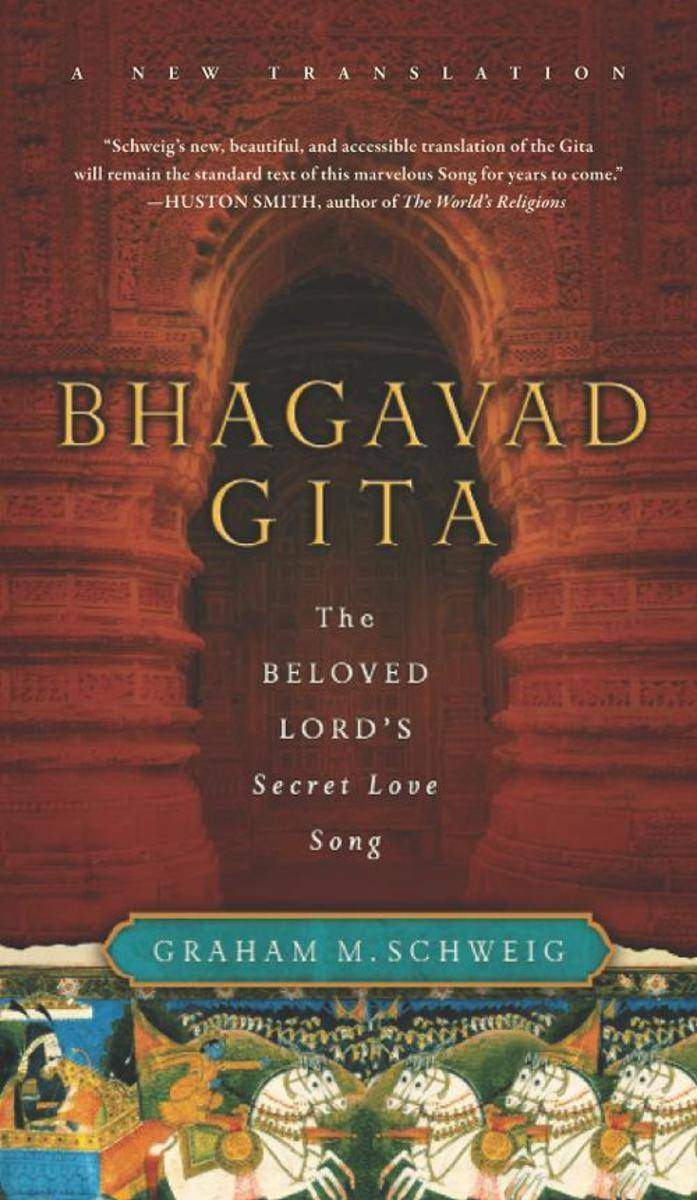
Bhagavad Gita
¥94.10
The Bhagavad Gita is often regarded as the Bible of India. With a gripping story and deeply compelling message, it is unquestionably one of the most popular sacred texts of Asia and, along with the Bible and the Qur'an, one of the most important holy *ures in the world. Part of an ancient Hindu epic poem, the dialogue of the Bhagavad Gita takes place on a battlefield, where a war for the possession of a North Indian kingdom is about to ensue between two noble families related by blood. The epic's hero, young Prince Arjuna, is torn between his duty as a warrior and his revulsion at the thought of his brothers and cousins killing each other over control of the realm. Frozen by this ethical dilemma, he debates the big questions of life and death with the supreme Hindu deity Krishna, cleverly disguised as his charioteer. By the end of the story, Eastern beliefs about mortality and reincarnation, the vision and practice of yoga, the Indian social order and its responsibilities, family loyalty, spiritual knowledge, and the loftiest pursuits of the human heart are explored in depth. Explaining the very purpose of life and existence, this classic has stood the test of twenty-three centuries. It is presented here in a thoroughly accurate, illuminating, and beautiful translation that is sure to become the standard for our day.
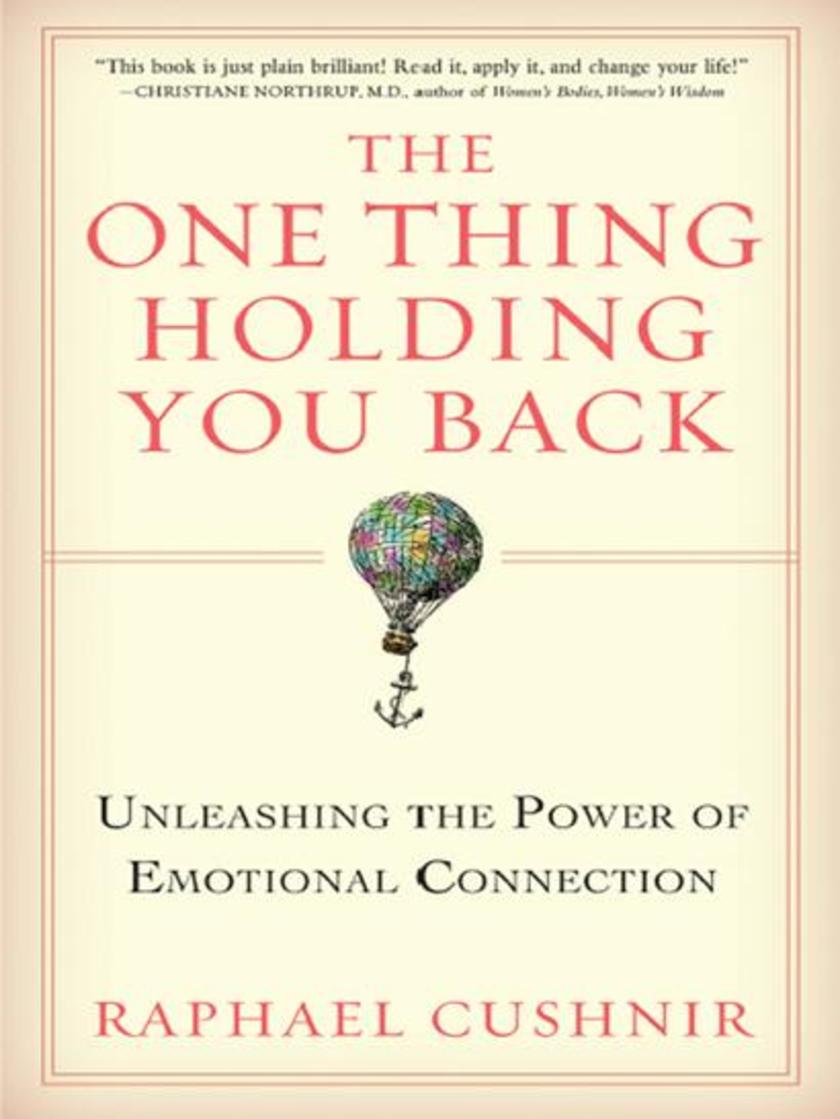
The One Thing Holding You Back
¥138.41
"By the time you finish this book, there will be nothing holding you back." from the Introduction Most people have a vision for their lives that they're not pursuing, half-heartedly pursuing, or pursuing with all their might yet somehow falling short. This vision can be modest or grand. It may involve breaking free of a destructive habit or finding a truly healthy relationship. It might have to do with making a real difference in the world or helping to lead a company to extraordinary success. In The One Thing Holding You Back, Raphael Cushnir, a leading voice in the world of personal and professional development, reveals that whenever people aren't living their dreams it's because they're not yet willing and able to feel specific emotions related to those dreams. Once we access and understand these emotions, our dreams can and will come true.Cushnir asserts that mere emotional awareness, commonly referred to as emotional intelligence, is not enough. For maximum benefit we must directly and consistently connect with our emotions. In particular, we need to connect with the emotions we routinely avoid, resist, or attempt to dismiss. It's these emotions that possess the key to our greatest goals. And learning to connect with them is another rarely taught but essential skill.The One Thing Holding You Back provides real solutions that can be implemented immediately and without external support and includes true stories of people who have put Cushnir's process to work and transformed their lives. Delivering a step-by-step program in accessible language, this landmark book will turn the obstacles in front of us into tremendous opportunities for achieving the life we always wanted.

The Power of Style
¥138.41
"Everyone gets dressed and getting dressed affects everything." —Bobbie Thomas, the TODAY show style editor Beyond understanding your best colors and figure-flattering clothes, Bobbie takes a unique step back in this inspiring guide to empower you to feel stylish, smart, sexy, and satisfied—with a look that's uniquely your own… You can't live life naked, so after you brush your teeth in the morning, you put "something" on. It's the first decision of your day, but have you ever considered that it's also one of the most importantStyle goes far beyond fashion and beauty and is a powerful way to say who we are and get what we want. Your "style speak" comes through in a louder "voice" than anything you might scream from a rooftop. But often, there is so much focus on the outside that we forget to step back and understand that style really starts inside. From your love life to your career, and the less obvious moments in between, the way people see you will filter your opportunities. Ultimately, what they see is what you get. In part I of this must-have style guide, Bobbie Thomas will help you identify what you'd like others to see and boost your confidence, and in part II , she'll show you how to find your best colors and cuts, edit your closet, and more, so you can build a better, more useful wardrobe.

The Truth
¥167.88
This is not a journey that was undertaken for journalistic purposes. It is a painfully honest account of a life crisis that was forced on me by my own behavior and its consequences. As such, it requires sharing a lot of things I'm not proud of and a few things I feel like I should regret a whole lot more than I actually do. Because, unfortunately, I am not the hero in this tale. I am the villain. So begins Neil Strauss's long-awaited follow-up to The Game, the funny and slyly instructive work of immersive journalism that jump-started the international seduction community and made Strauss a household name revered or notorious among single men and women alike.In The Truth, Strauss takes on his greatest challenge yet: Relationships. And in this wild and highly entertaining ride, he explores the questions that men and women are asking themselves every day: Is it natural to be faithful to one person for lifeDo alternatives to monogamy lead to better relationships and greater happinessWhat draws us to the partners we chooseCan we keep passion and romance from fading over timeHis quest for answers takes him from Viagra-laden free-love orgies to sex addiction clinics, from cutting-edge science labs to modern-day harems, and, most terrifying of all, to his own mother.What he discovered changed everything he knew about love, sex, relationships, and, ultimately, himself.Searingly honest and compulsively readable, The Truth just may have the same effect on you.If The Game taught you how to meet members of the opposite sex, The Truth will teach you how to keep them.
Discover the Wealth Within You
¥90.54
Achieve a Healthy, Balanced, and Richly Rewarding Life!Have your goals and dreams gotten lost in your daily struggle to earn and provide for your familyIf so, join Ric Edelman on a journey to self-discovery and personal fulfillment. In Discover the Wealth Within You, he shows you how to choose fun, enriching ... and rewarding goals and gives you a simple, straightforward plan for achieving them.You'll discover how easy it is to create wealth, once you're headed in the right direction. After using Ric's work sheets to help you get started, you'll embark on a detailed exploration of personal investing and discover Ric's formula for creating a plan to achieve your goals, build your financial future ... and finance your dream.

You've GOT to Read This Book!
¥94.10
There's nothing better than a book you can't put down or better yet, a book you'll never forget. This book puts the power of transformational reading into your hands. Jack Canfield, cocreator of the bestselling Chicken Soup for the Soul series, and self-actualization pioneer Gay Hendricks have invited notable people to share personal stories of books that changed their lives. What book shaped their outlook and habitsHelped them navigate rough seasSpurred them to satisfaction and successThe contributors include Dave Barry, Stephen Covey, Malachy McCourt, Jacquelyn Mitchard, Mark Victor Hansen, John Gray, Christiane Northrup, Bernie Siegel, Craig Newmark, Michael E. Gerber, Lou Holtz, and Pat Williams, to name just a few. Their richly varied stories are poignant, energizing, and entertaining.Author and actor Malachy McCourt tells how a tattered biography of Gandhi, stumbled on in his youth, offered a shining example of true humility and planted the seeds that would help support his sobriety decades later. Bestselling author and physician Bernie Siegel, M.D., tells how William Saroyan's The Human Comedy helped him realize that, in order to successfully treat his patients with life-threatening illnesses, "I had to help them live not just prevent them from dying."Actress Catherine Oxenberg reveals how, at a life crossroads and struggling with bulimia, a book taught her the transforming difference one person could make in the life of another and why that person for her was Richard Burton.Rafe Esquith, the award-winning teacher whose inner-city students have performed Shakespeare all over the world, recounts his deep self-doubt in the midst of his success and how reading To Kill a Mockingbird strengthened him to continue teaching.Beloved librarian and bestselling author Nancy Pearl writes how, at age ten, Robert Heinlein's science fiction book Space Cadet impressed on her the meaning of personal integrity and gave her a vision of world peace she'd never imagined possible. Two years later, she marched in her first civil rights demonstration and learned that there's always a way to make "a small contribution to intergalactic harmony."If you're looking for insight and illumination or simply for that next great book to read You've Got to Read This Book! has treasures in store for you.
The Speed Trap
¥67.32
Between work, play, family, and friends, most of us feel like we're speeding along at 100 miles an hour. Our lives are full, yet we don't feel fulfilled. One solution is to slam on the brakes and adopt a radically simpler lifestyle. But, as psychologist Joe Bailey demonstrates in this essential guide, you don't have to give up everything to slow down your life. In over thirty-five captivating, instructive stories, Bailey shows just how easy it is to transform your way of thinking-and wave good-bye to aggravating bosses, rocky relationships, stress-induced illnesses, and other symptoms of life in the fast lane. You'll discover how to: Enjoy each moment and stop worrying about the past or the future Gain insight by trusting your instincts Increase your productivity and achieve success-without stress Disregard the negative emotions of people around you Attain a deep-rooted sense of fulfillment and inner contentment
The Modern Girl's Guide to Sticky Situations
¥110.71
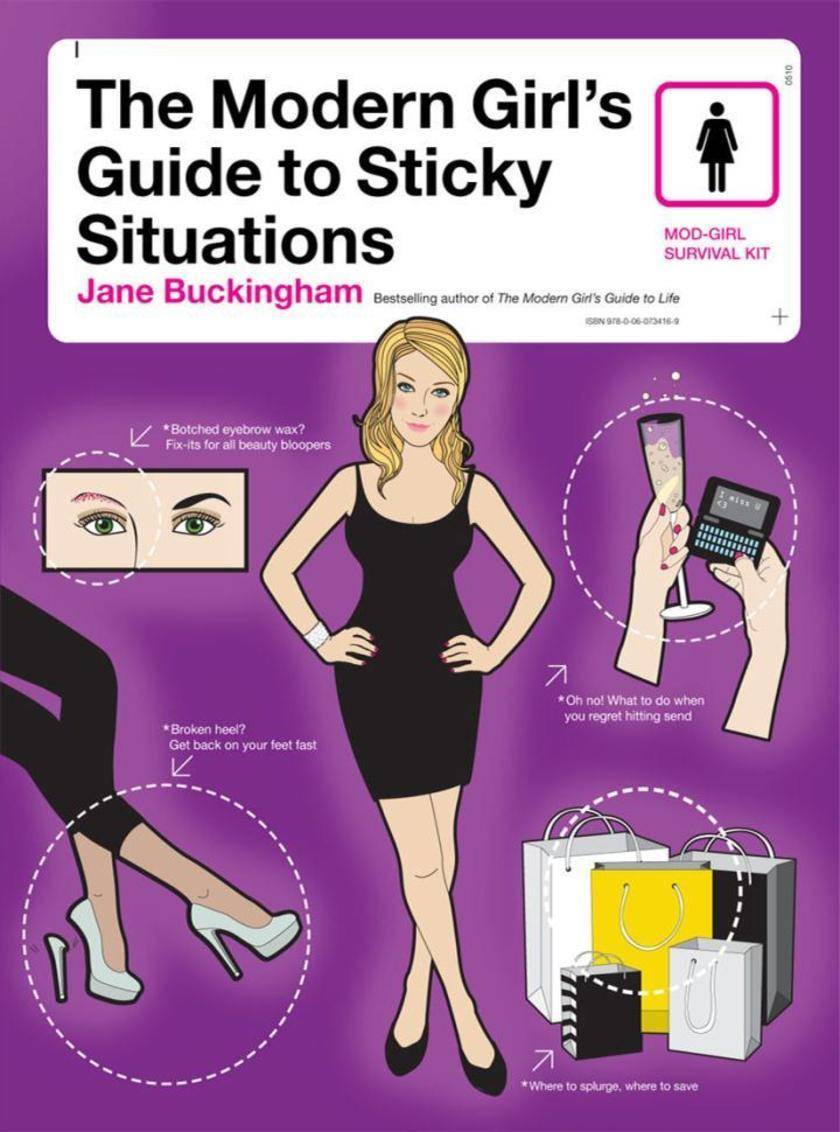
This is the book to grab when . . . you're pulling your hair out, screaming like a banshee, blubbering with frustration, or hyperventilating because you just don't know what to do!Jane Buckingham, author of The Modern Girl's Guide to Life, is back with a collection of helpful quick fixes for the deserving gal with the best intentions who gets caught in sticky situations. Here are warm, witty, and eminently wise solutions to those everyday problems that pop up as a result of impulsive actions or just plain bad luck helpful hints on what to do if you: Send an e-mail you instantly regret Botch your self-tan Discover your best friend's husband is cheating on her Break your corkscrew while opening your only bottle of wine Run into your ex and need to look hot, fast! Are expected to name your baby after a family member with an awful name And that's just a small sampling of the scenarios for which Jane Buckingham offers solutions in The Modern Girl's Guide to Sticky Situations. So if you find yourself in a pickle . . . just leave it to Jane!
Love Wins Companion
¥78.32
For those looking to go deeper with Rob Bell's bestselling pioneering book Love Wins, this companion offers: Insights and commentary by theologians, Bible scholars, scientists, and pastors Deep analysis of all relevant Bible passages on heaven, hell, and salvation Detailed chapter summaries, discussion questions, and Bible studies for individuals, groups, and classes Excerpts from works throughout Christian history illustrating the variety of teachers also debating the issues Bell wrestles with New material by Bell on his mission for the book and how people can take the next step

What Mama Taught Me
¥84.16
Millions of viewers of Tony Brown's Journal, the longest-running series on PBS, know Tony Brown as an advocate for self-reliance and self-enrichment. Now, in his most personal book yet, he introduces us to the woman who brought him up and taught him the seven core values he lives by to this day: reality, knowledge, race, history, truth, patience, and love. What Mama Taught Me states that only by understanding one's place in the world can one become free in mind and spirit, which is the path to true success. Brown argues that by following other people's rules, we betray ourselves and our desires, resulting in a vicious cycle of disconnection, unhappiness, and spiritual death. Enhanced by the homespun storytelling he heard as a child, this is Brown's personal recipe for achievement, imparting values that provide a blueprint for reaching success and happiness -- on one's own terms.
The Meaning of the Dead Sea Scrolls
¥138.41
The Dead Sea Scrolls, found in caves near the Dead Sea fifteen miles east of Jerusalem from 1947 to 1956, include the oldest existing biblical manu*s and the remarkable texts of the purist Jewish community at Qumran. The discovery of the scrolls has added dramatically to our understanding of the varieties of Judaism at the time of Jesus and the rise of Christianity, but has also prompted heated debate about the nature of these religions. As the monumental task of transcribing and translating the Dead Sea Scrolls is finally completed, people around the world are taking stock of the significance of these ancient documents. In this book, two of the world's leading experts on the scrolls reveal the complete and fascinating story in all its detail: the amazing discovery, the intense controversies, and the significant revelations. Drawing together all the evidence, this timely book explores: The discovery and dating of the scrolls Their relationship to the Hebrew Bible, Apocrypha, and New Testament Their messianic and apocalyptic messages The identity, nature, and theology of the Qumran community The nonbiblical scrolls Controversies surrounding the scrolls This comprehensive, up-to-date guide is the definitive introduction to all aspects of the scrolls, including their teachings, the community that created them, the world of Judaism, the origins of Christianity, our understanding of Jesus and the New Testament. Featuring photos of the original texts, the sites, and the scholars who deciphered them, and including illustrative passages from the scrolls, The Meaning of the Dead Sea Scrolls presents the most complete and accurate scholarship on the Dead Sea Scrolls available today.
Better Single Than Sorry
¥77.49
Let's be honest. No woman really wants to be alone for the rest of her life. But does being alone mean you're doomed to be miserable foreverDefinitely not! And does being single have to equal lonelyNo way! You can have the best time of your life when you're single, but you wouldn't know that from our relationship obsessed society, where celebrity magazines devote the majority of their content to who's dating whom and the wedding industry is a $100-billion business. Yet more than a third of marriages end in divorce, and countless other couples languish in unions that shouldn't have happened in the first place.Don't become a statistic love yourself and never settle!Jen Schefft knows that better than almost anyone. In 2003, she got engaged in front of millions of people on television's The Bachelor, only to see it end nine months later when the relationship just wasn't right anymore. A year later, she turned down an engagement on The Bachelorette, and the backlash was relentless. She was labeled a "spinster" by a celebrity magazine, and a noted national talk-show host remarked that she would be "a bachelorette for the rest of her life."This is a terrible message to send to the millions of sensational single women out there, and in Better Single Than Sorry Schefft makes it her mission to let women know that it's better to be single than to be in a relationship that doesn't make you happy. With testimonials from women of all ages single, married, in committed relationships, with children (even single moms) and without this book tells you how to let go of your fear of being alone and how to love yourself and never settle for a relationship that is anything less than you deserve.Written in a conversational style, as if talking with your best friend, Schefft helps you navigate the pressures of a culture that places an unhealthy importance on being in a relationship and shows you how to find happiness in work, home, and the simple pleasures of everyday life. Above all, she shows you how it's far, far better to be single than sorry. Being single is a time to have fun, learn new things, grow, and blossom not a time to feel desperate or depressed, so cherish it!
The Art of Mindfulness
¥54.46
This selection from Thich Nhat Hanh's bestselling The Art of Power illuminates the core Buddhist concept of mindfulness for the Western readerIn The Art of Mindfulness, one of the most revered Buddhist teachers in the world, Thich Nhat Hanh delivers a life changing practice to overcome our overdriven mind, to let go of preoccupations and multitasking and focus solely on the task at hand. By devoting 100% of our attention 100% of the time on what we are doing in the moment, we can alleviate suffering, fear, and anxiety. With the energy of mindfulness and the capacity of looking deeply, we can find the insights to transform and heal any situation.


