


 购物车
购物车 个人中心
个人中心

Connected: The Amazing Power of Social Networks and How They Shape Our Lives
¥73.58
Is happiness catching? Are your friends making you fat? Can your sibling make you smart? Is wealth contagious? Where is true love found? Does free will exist? Based on exciting discoveries in mathematics, genetics, psychology and sociology, ‘Connected’ is an innovative and fascinating exploration of how social networks operate. Think it's all about who you know? It is. But not the way you think. Turns out your colleague's husband's sister can make you fat, even if you don't know her. And a happy friend is more relevant to your happiness than a bigger income. Our connections – our friends, their friends, and even their friends' friends – have an astonishing power to influence everything from what we eat to who we sleep with. And we, in turn, influence others. Our actions can change the behaviours, the beliefs, and even the basic health of people we've never met. In this brilliantly original and effortlessly engaging exploration of how much we truly influence one another. Pre-eminent social scientists Nicholas Christakis and James Fowler explain why obesity is contagious, why the rich get richer, even how we find and choose our partners. Intriguing and entertaining, with revelatory implications for everything from our notion of the individual to ideas about public health initiatives, ‘Connected’ will change the way you think about every aspect of your life, and how you live it.

The Address Book: Our Place in the Scheme of Things
¥73.58
Over the years, millions of school children must have written out their address in the same way – their house number and street, their town, their country, their continent, planet Earth, the universe… Following this simplest of patterns, taking each line of the address as a starting point, Tim Radford explores our place in the scheme of things – why we are attached to a particular geographical place and what significance do we have when faced with the realms of astronomy and astrophysics. Fascinating, entertaining and completely original, The Address Book tackles some of the most fundamental questions facing us, and allows us see ourselves completely afresh.

Power Trip: From Oil Wells to Solar Cells – Our Ride to the Renewable Future
¥95.75
In this fresh and gutsy analysis, Amanda Little lays bare America’s energy past, present and future and shows how the innovatory designs that got it to its current energy crisis will actually save it from ruin. 'We're about to see a revolution in the way we live, fundamental changes to the way our homes work, the way our cars move, the way we grow our food, distribute our products, the way we make and recycle plastics.' - Amanda Little In this adventurous, jargon free, optimistic book, Amanda Little – tipped as 'the new voice of green' by Robert Redford – reveals the gargantuan influence of oil on our daily lives. It fights our wars, grows our crops, produces our plastics and medicines, warms our homes and animates our cities. We've allowed it to seep into every facet of our existence, from the shine on glossy magazine covers to life-saving pharmaceuticals. We depend on it completely. So what does this mean for when the oil runs out? From a deep-sea oil rig to a plastic surgery operating theatre, from New York City's electrical grid to the offices of the Pentagon, from a state-of-the-art wind farm to a testing ground for the cars of tomorrow, Little visits the most eccentric and exciting frontiers of the global energy landscape. As she introduces us to a range of characters - Saudi royalty, grassroots activists, the world's most respected politicians and an array of inventors - she argues that we are on the brink of a revolution in the way we source the energy that is so vital to us; there is an energy future beyond oil - as long as we have the courage and creativity to pursue it. Fresh, gutsy and optimistic, Power Trip will show you our world in a completely new way.
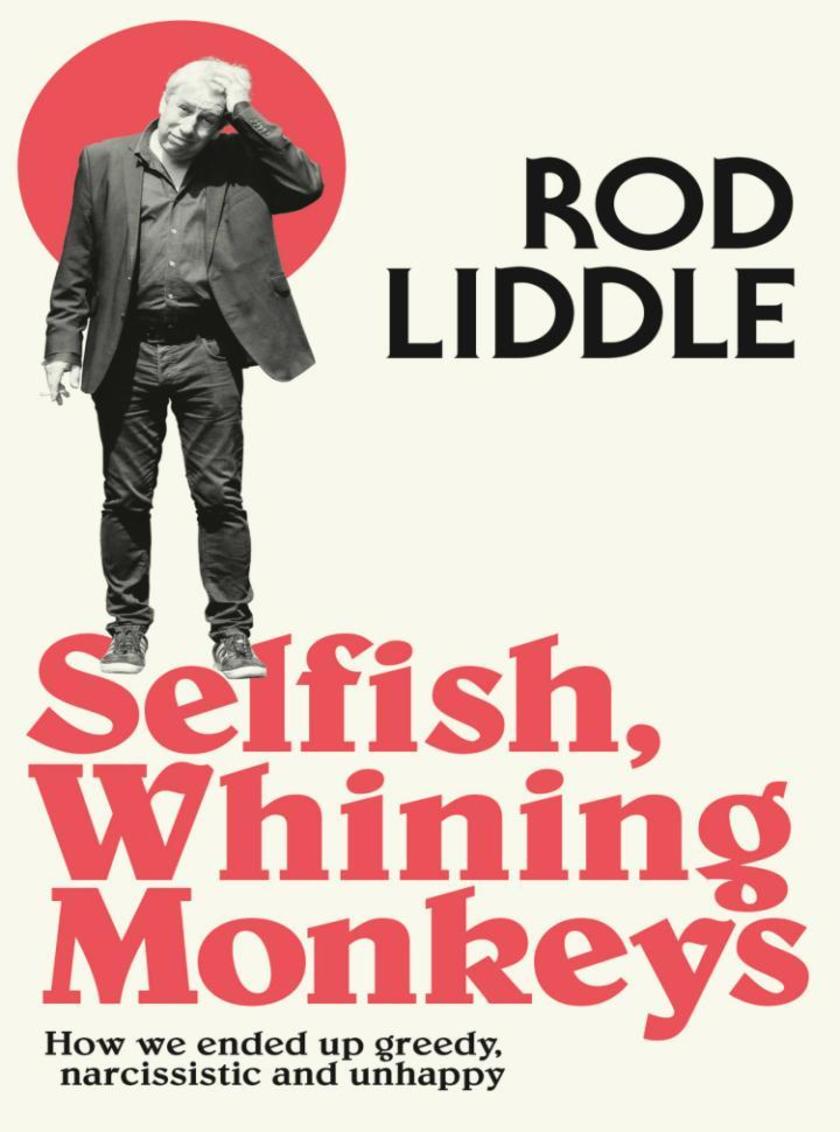
Selfish Whining Monkeys: How we Ended Up Greedy, Narcissistic and Unhappy
¥66.22
With a sharp eye for the magnificently absurd, Rod Liddle sets light to modern-day Britain. ‘One of Britain’s funniest, most daring columnists. If he weren’t so offensive you’d almost call him a national treasure’ Mail on Sunday ‘I, and my generation, seem feckless and irresponsible, endlessly selfish, whining, avaricious, self-deluding, self-obsessed, spoiled and corrupt and ill.’ What is it that has transformed the British who in living memory were admired for their unassuming, stiff-upper-lipped capacity for `muddling through' into the feckless, obese, self-deluding, avaricious and self-obsessed whingers we have become? Savagely funny and relentlessly contrary, yet with a poignant sense of all that we have lost, Rod Liddle mercilessly exposes the absurdity, cant and humbuggery of the way we live now.

The Blitz: The British Under Attack
¥72.40
In a series of powerful accounts drawn from diaries, letters, sound archives and interviews recorded during the period of devastation, discovery and transformation that make the blitz such an outstanding event in Britain's recent past, "The Blitz" brings to life the intense experiences, as they happened all over Britain. The blitz proved to be a highly effective laboratory constructed out of necessity, and intense forcing house for change. Yet, compared to other great events of the Second World War – Dunkirk, D – Day, and even VE Day, the Blitz remains curiously unexamined. A type of cleansing resulted from it. It soon became evident that many of the attitudes in society were outdated. The most obvious inequalities between British society also became clear, and yet with everyone sharing the same devastation, these differences slowly began to lose their importance. As well as a social laboratory, the Blitz was a medical one too. Overworked doctors and scientists were forced to experiment and improvise. It was during the Blitz that the embryonic blood transfusion service grew to become a nation-wide institution. Psychoanalysis took on a new meaning too: the enemy was now external, someone different from "us". It gave coherence to artists and writers at the time such as Cecil Beaton. The Blitz is arranged as a series of chronological chapters, each focusing on an aspect of key importance. The perspective will primarily be that of those who had actual experience of those tumultuous months, when no one knew when or if the bombings would stop. Above all, it will be recounted in the words of the many "ordinary people" across Britain who were caught up in the Blitz, their stories, entries that are taken from the journals that they kept during this difficult time and also interviews with those who are still alive today.
Men of Honour: Trafalgar and the Making of the English Hero
¥90.84
The Battle of Trafalgar can claim to be one of the most known of the great human events. In Men of Honour, Adam Nicolson takes one of the greatest identifiable heroes in British history, Horatio Nelson, and examines the broader themes of heroism, violence and virtue. Trafalgar gripped the nineteenth century imagination like no other battle: it was a moment of both transcendent fulfilment and unmatched despair. It was a drama of such violence and sacrifice that the concept of total war may be argued to start from there. It finished the global ambitions of a European tyrant but culminated in the death of Admiral Horatio Nelson, the greatest hero of the era. This book fuses the immediate intensity of the battle with the deeper currents that were running at the time. It has a three-part framework: the long, slow six hour morning before the battle; the afternoon itself of terror, death and destruction; and the shocked, exultant and sobered aftermath, which finds its climax at Nelson's funeral in a snowy London the following January. Adam Nicolson examines the concept of heroes and heroism, both then and now, using Nelson as one of the greatest examples. A man of complexity and contradiction, he was a supreme administrator of ships and men; overflowing with humanity, charm and love but also capable of astonishing ruthlessness and ferocity. Nelson's own courage, vanity, ruthlessness and sweetness made him one of the great identifiable heroes of English history. In Men of Honour, Adam Nicolson also traces the stories of many unknown people of the day. He tackles the grand theme of heroism; the move from the age of reason to the age of romanticism; and examines a battle that was not only a uniquely well-documented crisis in human affairs but also a lens on its own time. Adam Nicolson does not approach Trafalgar as a military historian. His book gives a wonderfully immediate recreation of both the battle itself and its aftermath in a rich, concrete and intellectually engaging style.
Whatever it Takes: The Real Story of Gordon Brown and New Labour
¥80.25
At the beginning of the financial crisis, in September 2008, Gordon Brown called an emergency press conference in which he declared, 'we will do whatever it takes to restore stability in the financial markets'. He was to repeated the phrase ‘whatever it takes’ constantly in the following weeks. As Shadow Chancellor Brown would do whatever it took to restore Labour's economic credibility. As leader-in-waiting he would do whatever it took to acquire the crown. As Prime Minister he would do whatever it took to buttress his enfeebled regime, going as far instigating a rapprochement with Peter Mandelson, a figure he had come to despise. Determined, wilful, multi-layered in his complexity, Brown would always do whatever it took to survive. New Labour, as a political force, rootless and defensive in its origins, would similarly do whatever it took to retain support in what its founders regarded as a conservative country. Written by one of the most influential political commentators in the UK, the Independent's chief political commentator, Steve Richards, this political expose examines Gordon Brown's wildly oscillating career and the ruthless and sometimes shallow pragmatism displayed by New Labour as a whole.
Dry Store Room No. 1: The Secret Life of the Natural History Museum (Text Only)
¥80.25
This edition does not include illustrations. ‘Dry Store Room No. 1’ is an intimate biography of the Natural History Museum, celebrating the eccentric personalities who have peopled it and capturing the wonders of scientific endeavour, academic rigour and imagination. Behind the public fa?ade of any great museum there lies a secret domain: one of unseen galleries, locked doors, priceless specimens and hidden lives.Through the stories of the numerous eccentric individuals whose long careers have left their mark on the study of evolutionary science, Richard Fortey, former senior paleaontologist at London's Natural History Museum, celebrates the pioneering work of the Museum from its inception to the present day. He delves into the feuds, affairs, scandals and skulduggery that have punctuated its long history, and formed a backdrop to extraordinary scientific endeavour from Darwin to the present day. He explores the staying power and adaptability of the Museum as it responds to changes wrought by advances in technology and molecular biology – 'spare' bones from an extinct giant bird suddenly become cutting-edge science with the new knowledge that DNA can be extracted from them, and ancient fish are tested with the latest equipment that is able to measure rises in pollution. 'Dry Store Room No.1’ is a fascinating and affectionate account of a hidden world of untold treasures, where every fragment tells a story about time past, by a scientist who combines rigorous professional learning with a gift for prose that sparkles with wit and literary sensibility. Note that it has not been possible to include the same picture content that appeared in the original print version.
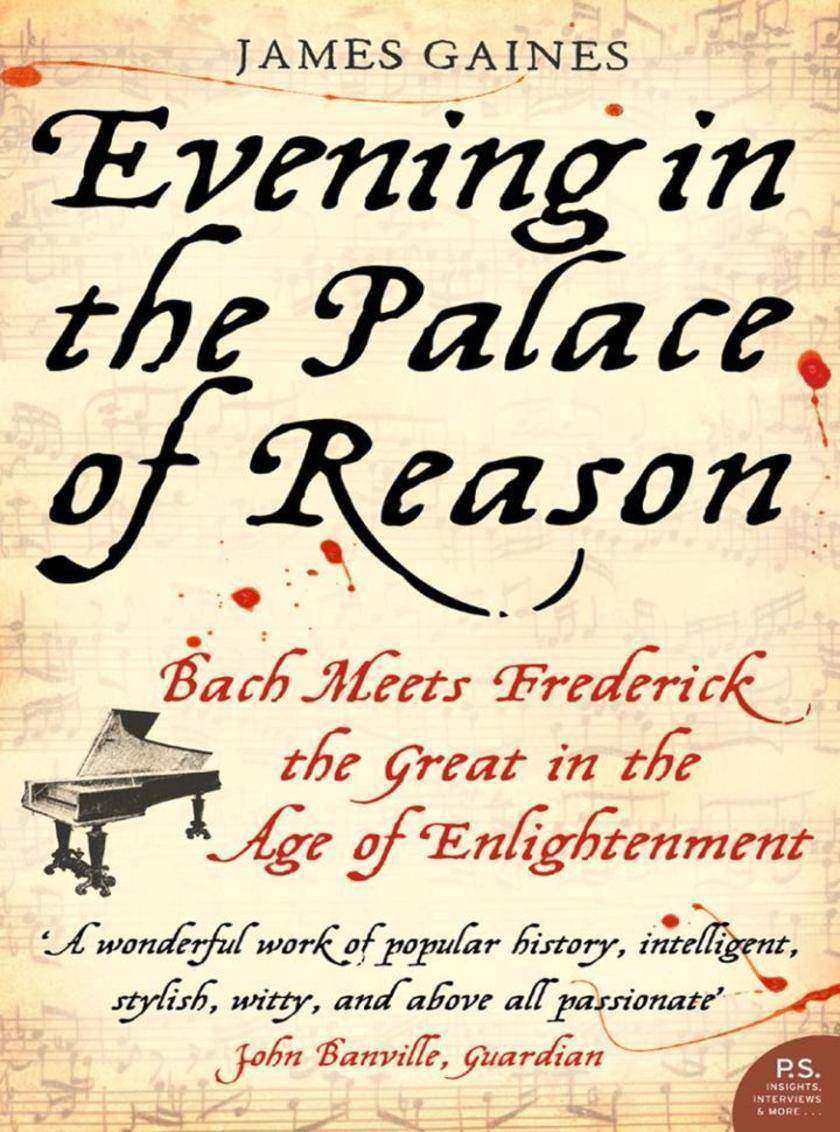
Evening in the Palace of Reason: Bach Meets Frederick the Great in the Age of En
¥81.32
In one corner, a godless young warrior, Voltaire's heralded 'philosopher-king', the It Boy of the Enlightenment. In the other, a devout if bad-tempered old composer of 'outdated' music, a scorned genius in his last years. The sparks from their brief conflict illuminate a turbulent age. Behind the pomp and flash, Prussia's Frederick the Great was a tormented man, son of an abusive king who forced him to watch as his best friend (probably his lover) was beheaded. In what may have been one of history's crueler practical jokes, Frederick challenged 'old Bach' to a musical duel, asking him to improvise a six-part fugue based on an impossibly intricate theme (possibly devised for him by Bach's own son). Bach left the court fuming, but in a fever of composition, he used the coded, alchemical language of counterpoint to write 'A Musical Offering' in response. A stirring declaration of faith, it represented 'as stark a rebuke of his beliefs and world view as an absolute monarch has ever received,' Gaines writes. It is also one of the great works of art in the history of music. Set at the tipping point between the ancient and the modern world, the triumphant story of Bach's victory expands to take in the tumult of the eighteenth century: the legacy of the Reformation, wars and conquest, the birth of the Enlightenment. Brimming with originality and wit, 'Evening in the Palace of Reason' is history of the best kind - intimate in scale and broad in its vision.
A Death in Belmont
¥73.58
A compelling portrait of 1960s America that takes as its starting point the brutal events of 11 March 1963, the day on which the lives of three complete strangers – a black handyman, an Italian-American carpenter and a second-generation Jewish housewife – collided in the leafy Boston suburb of Belmont. These three people did not know one another, but, by the end of the day, the housewife had been raped and strangled, the handyman had been arrested on suspicion of being the notorious Boston Strangler, and the real Boston Strangler – carpenter Al DeSalvo – had returned home to his wife and children. It was not until two years later that DeSalvo admitted to the gruesomely violent murders of thirteen women. Also unwittingly drawn into the drama were one-year-old Sebastian Junger's own family, who posed for a photograph with DeSalvo the day after the Belmont strangling, at the completion of his work on their studio. Taking the chilling family snap as his inspiration, Junger explores the worlds of the three protagonists and, in so doing, creates a portrait of America in the 1960s that touches on the historic themes of the era: the assassination of JFK, the rise of the immigrants and the troubling race relations that prefigured the death of Martin Luther King. This new work by Sebastian Junger, the acclaimed author of ‘Perfect Storm’ and ‘Fire’, is as enlightening as it is haunting. Taking as its foundation the events that shocked a quiet community in 1963, ‘A Death in Belmont’ expands to encompass an entire nation at a time of extraordinary social turmoil.

Witnessing Waterloo: 24 Hours, 48 Lives, A World Forever Changed
¥73.58
‘Of all the books marking the bicentenary Waterloo, this has to be the best’ Spectator ‘A book to die for’ Evening Standard From Samuel Johnson Prize shortlisted author David Crane, this is a breathtaking portrait of the Britain that fought the battle of Waterloo. As Wellington’s rain-sodden army retreated towards an obscure valley called Waterloo, the men and women of Britain were still going to the theatre and science lectures, working in the fields and the factories, reading and writing books and sermons, painting their pictures and sitting in front of Lord Elgin’s marbles. David Crane’s stunning freeze-frame of Britain on this day of momentous change shifts hour by hour between Britain and Belgium. The Britain that fought Waterloo – its radicals and patriots, artisans and aristocrats, prisoners and poets – appears through the smoke of battle and the mythology of Waterloo in this magnificent and original tracing of the endless, overlapping connections between people’s lives.
The Natural History of Orkney (Collins New Naturalist Library, Book 70)
¥456.66
This is the first survey of the islands' natural history, complete in one volume. Because Orkney is exceptional, it is vital reading for the serious naturalist, as well as for being a comprehensive and absorbing guide for every visitor. This edition is exclusive to newnaturalists.com Orkney is a very special place for naturalists. Closer to Oslo than to London, its geography and climate create quite distinct environmental conditions - even though it is only six miles from the Scottish mainland. On these islands of fierce gales, long summer days and long winter nights, the wildlife has adapted in intriguing ways… Starlings adapt to ground-nesting…local sheep eat seaweed…and there are voles exclusive to Orkney. Here is one of the very few areas where the rare and delicate Scottish Primrose thrives…where you find the British stronghold of the Hen Harrier, and vast colonies of seabirds and seals. This is the first - and long-needed - survey of the islands' natural history, complete in one volume. Because Orkney is exceptional, it is vital reading for the serious naturalist, as well as for being a comprehensive and absorbing guide for every visitor. In his tracing of the island's evolution from its geological creation to the effects of oil technology; in the detailed, yet fascinating exploration of the plants and animals (and where best to see them), Professor Berry's expertise and enthusiasm is backed by that of local specialists, and Orkney's long tradition of natural history study. Appendices include definitive lists of all the species of flora and fauna on record, and an extensive bibliography.

Birds Britannia
¥132.53
Birds and bird lore provide a fascinating window onto our social and cultural history, and can tell us much about our changing relationship with the British landscape, our people and society. We Brits love our birds. They hold a special place in our hearts – whether it's the sound of birdsong on a spring morning, the sight of a Barn Owl hunting on a summer's evening, or a Robin perched on our garden spade. In this book, Stephen Moss focusses on some of our most beloved and charismatic birds. He explores their fascinating biology, and their place in the evolving culture and history of the British people. The author delves into the worlds of Sea Birds (Puffin, Sea Eagle and Gannet), Water Birds (Kingfisher, Swan and Avocet), Countryside Birds (Red Grouse, Nightingale and Skylark ) and Town & Garden Birds (Robin, House Sparrow and Magpie), weaving their stories together to tell four very different stories about the changing face of Britain.
Southern England (Collins New Naturalist Library, Book 108)
¥231.22
Illustrated with beautifully detailed photographs throughout, New Naturalist Southern England comprehensively explores the formation of these wonderful landscapes that are so universally admired. Most people share an enthusiasm for beautiful and breathtaking scenery, explored variously through the physical challenge of climbing to the top of the tallest mountains or the joy of viewing the work of a painter; but while easy to admire from a distance, such landscapes are usually difficult to explain in words. Harnessing recent developments in computer technology, the latest New Naturalist volume uses the most up-to-date and accurate maps, diagrams and photographs to analyse the diverse landscapes of Southern England. Peter Friend highlights the many famous and much loved natural landscapes of the southern half of England, ranging from the Chalk Downs to the bays of Cornwall, Devon and Dorset, and provides detailed explanations for the wide variety of natural events and processes that have caused such an exciting range of surroundings. Setting apart the topography that has resulted from natural rather than man-made occurrences, Friend focuses on each region individually, from East Anglia to London and the Thames Valley, and explains the history and development of their land structures through detailed de*ions and colourful diagrams.

Nature Conservation (Collins New Naturalist Library, Book 91)
¥182.47
This latest volume in the New Naturalist series provides a comprehensive study of wildlife conservation in Britain, concentrating on events in the last 30 years. As our environment is subjected to increasing assault from climatic changes and pollutants, conservation has become a growing concern for both specialists and generalists alike. The first chapter of this book considers the political and institutional development of nature conservation and reviews the physical and biological nature of Britain, its geology, climate and wildlife habitats. Subsequent chapters cover the loss of habitats and species, how these losses have been managed and the techniques used to survey and monitor the integration of nature conservation policies in industries from agriculture to forestry and fisheries. Marren continues by discussing how nature conservation has emerged from the sidelines to become a major concern. He addresses the role of the media, weighs up the successes and failures of the conservation movement and looks to what the future may hold.
Compelling Reason
¥58.86
Born in Ireland in 1898, Clives Staples Lewis gained a triple First at Oxford and was Fellow and Tutor at Magdalen College from 1925-54, where among others he was a contemporary of Tolkien. In 1954 he became Professor of Mediaeval and Renaissance Literature at Cambridge. C. S. Lewis was for many years an atheist, until his conversion which he memorably described in his autobiography Surprised by Joy: “I gave in, and admitted that God was God … perhaps the most dejected and reluctant convert in all England.” He is also celebrated for his famous series of children’s books, the Narnia Chronicles (which have been filmed and broadcast many times), as well as his literary criticism and science fiction. C. S. Lewis died on 22nd November 1963.

The Bacon Book: Irresistible, mouthwatering recipes!
¥95.75
Christopher Sjuve is a chef and food editor. Based in Norway, his motto is your can never have too much bacon!

Stonehenge: Neolithic Man and the Cosmos
¥100.06
JOHN NORTH moved in 1977 from Oxford to the University of Groningen, where he is Professor of the History of Philosophy and the Exact Sciences. He is a member of the Royal Netherlands Academy, the Royal Danish Academy and is a Fellow of the British Academy.
Horse Trader: Robert Sangster and the Rise and Fall of the Sport of Kings
¥154.12
It was always tense in The Rooms when they were proposing to elect a statesman to membership. Actually, it was always tense in The Rooms whomever they were proposing to elect to membership. But a statesman created a special feeling of apprehension. Such an event happened only every fifty years or so, because, by and large, the Jockey Club did not see statesmen as the right calibre of chap. Most of them had depressingly brilliant intellects coupled with dazzling charm and tact. Or, put in the more ducal vernacular of the Club, they were too clever by half, ‘too smarmy’.The Earl of Rosebery, during his Lordship’s tenure as Prime Minister of England, had of course been a member of the Club back in 1894 when his colt Ladas had won the Derby at Epsom. However, having been a member since the age of twenty-two, the touchy business of electing a statesman had never really applied.The Jockey Club had admitted an Under-Secretary of State for War, Earl Cadogan, in the middle of the nineteenth century, in the knowledge that he was much preoccupied with the unrest along India’s north-west frontier. The same applied, in smaller measure, to the Marquis of Londonderry and the Earl of Zetland in the 1880s when they were appointed as successive Lords-Lieutenants of Ireland. Different frontier, similar unrest among the natives and one or two furrowed brows in the Club. Lord Randolph Churchill, Chancellor of the Exchequer and owner of an Oaks winner in 1889, had had to be elected. And they could not quite avoid accepting his often fractious son Sir Winston, who won the Jockey Club Cup in 1950 with his stout-hearted grey Colonist II shortly before becoming Prime Minister for the second time.

It’s Me or the Dog: How to have the Perfect Pet
¥130.87
Victoria Stilwell is an actress-turned-dog-trainer who has founded training schools in New York, New Jersey, and Britain. She stars in the U.K.’s Channel 4 television series It’s Me or the Dog. Since 1999, Victoria has lived in the United States, and is now based in New York.

British Wild Flowers: A photographic guide to every common species (Collins Comp
¥125.18
Paul Sterry is author of Complete British Wildlife, which has sold over half a million copies, as well as numerous other titles in the successful Collins Complete Photoguide series, including Complete British Birds and Complete British Wild Flowers. He owns the photo library Nature Photographers.


