


 购物车
购物车 个人中心
个人中心
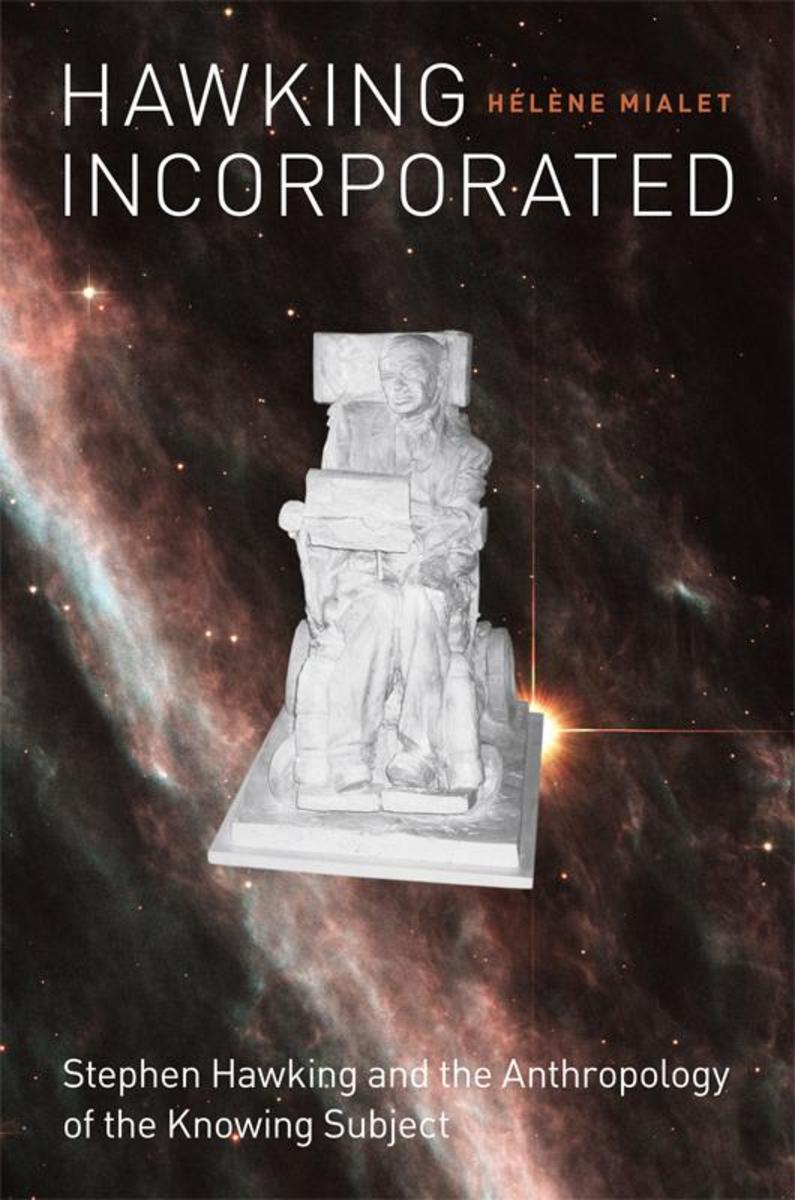
Hawking Incorporated
¥270.76
These days, the idea of the cyborg is less the stuff of science fiction and more a reality, as we are all, in one way or another, constantly connected, extended, wired, and dispersed in and through technology. One wonders where the individual, the person, the human, and the body are-or, alternatively, where they stop. These are the kinds of questions Hlne Mialet explores in this fascinating volume, as she focuses on a man who is permanently attached to assemblages of machines, devices, and collectivities of people: Stephen Hawking.Drawing on an extensive and in-depth series of interviews with Hawking, his assistants and colleagues, physicists, engineers, writers, journalists, archivists, and artists, Mialet reconstructs the human, material, and machine-based networks that enable Hawking to live and work. She reveals how Hawking-who is often portrayed as the most singular, individual, rational, and bodiless of all-is in fact not only incorporated, materialized, and distributed in a complex nexus of machines and human beings like everyone else, but even more so. Each chapter focuses on a de*ion of the functioning and coordination of different elements or media that create his presence, agency, identity, and competencies. Attentive to Hawking's daily activities, including his lecturing and scientific writing, Mialet's ethnographic analysis powerfully reassesses the notion of scientific genius and its associations with human singularity. This book will fascinate anyone interested in Stephen Hawking or an extraordinary life in science.

Moralizing Technology
¥253.10
Technology permeates nearly every aspect of our daily lives. Cars enable us to travel long distances, mobile phones help us to communicate, and medical devices make it possible to detect and cure diseases. But these aids to existence are not simply neutral instruments: they give shape to what we do and how we experience the world. And because technology plays such an active role in shaping our daily actions and decisions, it is crucial, Peter-Paul Verbeek argues, that we consider the moral dimension of technology.?Moralizing Technology offers exactly that: an in-depth study of the ethical dilemmas and moral issues surrounding the interaction of humans and technology. Drawing from Heidegger and Foucault, as well as from philosophers of technology such as Don Ihde and Bruno Latour, Peter-Paul Verbeek locates morality not just in the human users of technology but in the interaction between us and our machines. Verbeek cites concrete examples, including some from his own life, and compellingly argues for the morality of things. Rich and multifaceted, and sure to be controversial, Moralizing Technology will force us all to consider the virtue of new inventions and to rethink the rightness of the products we use every day.

Ethics of Interrogation
¥265.87
The act of interrogation, and the debate over its use, pervades our culture, whether through fictionalized depictions in movies and television or discussions of real-life interrogations on the news. But despite daily mentions of the practice in the media, there is a lack of informed commentary on its moral implications. Moving beyond the narrow focus on torture that has characterized most work on the subject, An Ethics of Interrogation is the first book to fully address this complex issue.In this important new examination of a controversial subject, Michael Skerker confronts a host of philosophical and legal issues, from the right to privacy and the privilege against compelled self-incrimination to prisoner rights and the legal consequences of different modes of interrogation for both domestic criminal and foreign terror suspects. These topics raise serious questions about the morality of keeping secrets as well as the rights of suspected terrorists and insurgents. Thoughtful consideration of these subjects leads Skerker to specific policy recommendations for law enforcement, military, and intelligence professionals.

Scars of Project 459
¥243.09
The Scars of Project 459 tells the environmental story of the Lake of the Ozarks, built by the Union Electric Company in 1931. At 55,000 acres, the lake was the biggest manmade lake in the United States at the time of its completion, and it remains the biggest in the Midwest, with 1,100 miles of shoreline in four different Missouri counties. Though created to generate hydroelectric power, not for development, the "e;Magic Dragon,"e; as it is popularly known because of its serpentine shape, has become a major recreational area. Located in some of the most spectacular Ozark scenery, the giant lake today attracts three million visitors annually and has more than 70,000 homes along its shoreline. Traci Angel shows how the popularity of the Lake of the Ozarks has resulted in major present-day problems, including poor water quality, loss of habitat, and increasing concerns about aging waste-management systems for the homes surrounding the lake. Many in the area, especially business owners whose incomes depend on tourism, resist acknowledging these problems. The Scars of Project 459 aims to make public the challenges facing this important resource and ensure that its future is not to be loved to death.

Narration
¥147.15
Newly famous in the wake of the publication of her groundbreaking Autobiography of Alice B. Toklas, Gertrude Stein delivered her Narration lectures to packed audiences at the University of Chicago in 1935. Stein had not been back to her home country since departing for France in 1903, and her remarks reflect on the changes in American culture after thirty years abroad.In Stein's trademark experimental prose, Narration reveals the legendary writer's thoughts about the energy and mobility of the American people, the effect of modernism on literary form, the nature of history and its recording, and the inventiveness of the English language-in particular, its American variant. Stein also discusses her ambivalence toward her own literary fame as well as the destabilizing effect that notoriety had on her daily life. Restored to print for a new generation of readers to discover, these vital lectures will delight students and scholars of modernism and twentieth-century literature."e;Narration is a treasure waiting to be rediscovered and to be pirated by jolly marauders of sparkling texts."e;-Catharine Stimpson, NYU

Whale and the Reactor
¥188.35
"e;The questions he poses about the relationship between technical change and political power are pressing ones that can no longer be ignored, and identifying them is perhaps the most a nascent 'philosophy of technology' can expect to achieve at the present time."e;-David Dickson, New York Times Book Review"e;The Whale and the Reactor is the philosopher's equivalent of superb public history. In its pages an analytically trained mind confronts some of the most pressing political issues of our day."e;-Ruth Schwartz Cowan, Isis
How Life Began
¥229.55
The origin of life is a hotly debated topic. The Christian Bible states that God created the heavens and the Earth, all in about seven days roughly six thousand years ago. This episode in Genesis departs markedly from scientific theories developed over the last two centuries which hold that life appeared on Earth about 3.5 billion years ago in the form of bacteria, followed by unicellular organisms half a millennia later. It is this version of genesis that Alexandre Meinesz explores in this engaging tale of life's origins and evolution.?How Life Began elucidates three origins, or geneses, of life-bacteria, nucleated cells, and multicellular organisms-and shows how evolution has sculpted life to its current biodiversity through four main events-mutation, recombination, natural selection, and geologic cataclysm.?As an ecologist who specializes in algae, the first organisms to colonize Earth, Meinesz brings a refreshingly novel voice to the history of biodiversity and emphasizes here the role of unions in organizing life. For example, the ingestion of some bacteria by other bacteria led to mitochondria that characterize animal and plant cells, and the chloroplasts of plant cells.?As Meinesz charmingly recounts, life's grandeur is a result of an evolutionary tendency toward sociality and solidarity. He suggests that it is our cohesion and collaboration that allows us to solve the environmental problems arising in the decades and centuries to come. Rooted in the science of evolution but enlivened with many illustrations from other disciplines and the arts, How Life Began?intertwines the rise of bacteria and multicellular life with Vermeer's portrait of Antoni van Leeuwenhoek, the story of Genesis and Noah, Meinesz's son's early experiences with Legos, and his own encounters with other scientists. All of this brings a very human and humanistic tone to Meinesz's charismatic narrative of the three origins of life.?

On the Nature of Limbs
¥229.55
The most prominent naturalist in Britain before Charles Darwin, Richard Owen made empirical discoveries and offered theoretical innovations that were crucial to the proof of evolution. Among his many lasting contributions to science was the first clear definition of the term homology-"e;the same organ in different animals under every variety of form and function."e; He also graphically demonstrated that all vertebrate species were built on the same skeletal plan and devised the vertebrate archetype as a representation of the simplest common form of all vertebrates.Just as Darwin's ideas continue to propel the modern study of adaptation, so too will Owen's contributions fuel the new interest in homology, organic form, and evolutionary developmental biology. His theory of the archetype and his views on species origins were first offered to the general public in On the Nature of Limbs, published in 1849. It reemerges here in a facsimile edition with introductory essays by prominent historians, philosophers, and practitioners from the modern evo-devo community.

Shaky Game
¥265.87
In this new edition, Arthur Fine looks at Einstein's philosophy of science and develops his own views on realism. A new Afterword discusses the reaction to Fine's own theory."e;What really led Einstein . . . to renounce the new quantum orderFor those interested in this question, this book is compulsory reading."e;-Harvey R. Brown, American Journal of Physics"e;Fine has successfully combined a historical account of Einstein's philosophical views on quantum mechanics and a discussion of some of the philosophical problems associated with the interpretation of quantum theory with a discussion of some of the contemporary questions concerning realism and antirealism. . . . Clear, thoughtful, [and] well-written."e;-Allan Franklin, Annals of Science"e;Attempts, from Einstein's published works and unpublished correspondence, to piece together a coherent picture of 'Einstein realism.' Especially illuminating are the letters between Einstein and fellow realist Schrdinger, as the latter was composing his famous 'Schrdinger-Cat' paper."e;-Nick Herbert, New Scientist"e;Beautifully clear. . . . Fine's analysis is penetrating, his own results original and important. . . . The book is a splendid combination of new ways to think about quantum mechanics, about realism, and about Einstein's views of both."e;-Nancy Cartwright, Isis

Rereading the Fossil Record
¥288.41
Rereading the Fossil Record presents the first-ever historical account of the origin, rise, and importance of paleobiology, from the mid-nineteenth century to the late 1980s.?Drawing on a wealth of archival material, David Sepkoski shows how the movement was conceived and promoted by a small but influential group of paleontologists and examines the intellectual, disciplinary, and political dynamics involved in the ascendency of paleobiology. By tracing the role of computer technology, large databases, and quantitative analytical methods in the emergence of paleobiology, this book also offers insight into the growing prominence and centrality of data-driven approaches in recent science.

Plant Physics
¥329.62
From Galileo, who used the hollow stalks of grass to demonstrate the idea that peripherally located construction materials provide most of the resistance to bending forces, to Leonardo da Vinci, whose illustrations of the parachute are alleged to be based on his study of the dandelion's pappus and the maple tree's samara, many of our greatest physicists, mathematicians, and engineers have learned much from studying plants.?A symbiotic relationship between botany and the fields of physics, mathematics, engineering, and chemistry continues today, as is revealed in Plant Physics. The result of a long-term collaboration between plant evolutionary biologist Karl J. Niklas and physicist Hanns-Christof Spatz, Plant Physics presents a detailed account of the principles of classical physics, evolutionary theory, and plant biology in order to explain the complex interrelationships among plant form, function, environment, and evolutionary history. Covering a wide range of topics-from the development and evolution of the basic plant body and the ecology of aquatic unicellular plants to mathematical treatments of light attenuation through tree canopies and the movement of water through plants' roots, stems, and leaves-Plant Physics is destined to inspire students and professionals alike to traverse disciplinary membranes.

Once Out of Nature
¥353.16
Once Out of Nature offers an original interpretation of Augustine's theory of time and embodiment. Andrea Nightingale draws on philosophy, sociology, literary theory, and social history to analyze Augustine's conception of temporality, eternity, and the human and transhuman condition.?In Nightingale's view, the notion of embodiment illuminates a set of problems much larger than the body itself: it captures the human experience of being an embodied soul dwelling on earth. In Augustine's writings, humans live both in and out of nature-exiled from Eden and punished by mortality, they are "e;resident aliens"e; on earth. While the human body is subject to earthly time, the human mind is governed by what Nightingale calls psychic time. For the human psyche always stretches away from the present moment-where the physical body persists-into memories and expectations. As Nightingale explains, while the body is present in the here and now, the psyche cannot experience self-presence. Thus, for Augustine, the human being dwells in two distinct time zones, in earthly time and in psychic time. The human self, then, is a moving target.?Adam, Eve, and the resurrected saints, by contrast, live outside of time and nature: these transhumans dwell in an everlasting present.?Nightingale connects Augustine's views to contemporary debates about transhumans and suggests that Augustine's thought reflects our own ambivalent relationship with our bodies and the earth. Once Out of Nature offers a compelling invitation to ponder the boundaries of the human.

Nature of Diversity
¥376.70
All living things on earth-from individual species to entire ecosystems-have evolved through time, and evolution is the acknowledged framework of modern biology. Yet many areas of biology have moved from a focus on evolution to much narrower perspectives.Daniel R. Brooks and Deborah A. McLennan argue that it is impossible to comprehend the nature of life on earth unless evolution-the history of organisms-is restored to a central position in research. They demonstrate how the phylogenetic approach can be integrated with ecological and behavioral studies to produce a richer and more complete picture of evolution. Clearly setting out the conceptual, methodological, and empirical foundations of their research program, Brooks and McLennan show how scientists can use it to unravel the evolutionary history of virtually any characteristic of any living thing, from behaviors to ecosystems. They illustrate and test their approach with examples drawn from a wide variety of species and habitats.The Nature of Diversity provides a powerful new tool for understanding, documenting, and preserving the world's biodiversity. It is an essential book for biologists working in evolution, ecology, behavior, conservation, and systematics. The argument in The Nature of Diversity greatly expands upon and refines the arguments made in the authors' previous book Phylogeny, Ecology, and Behavior.
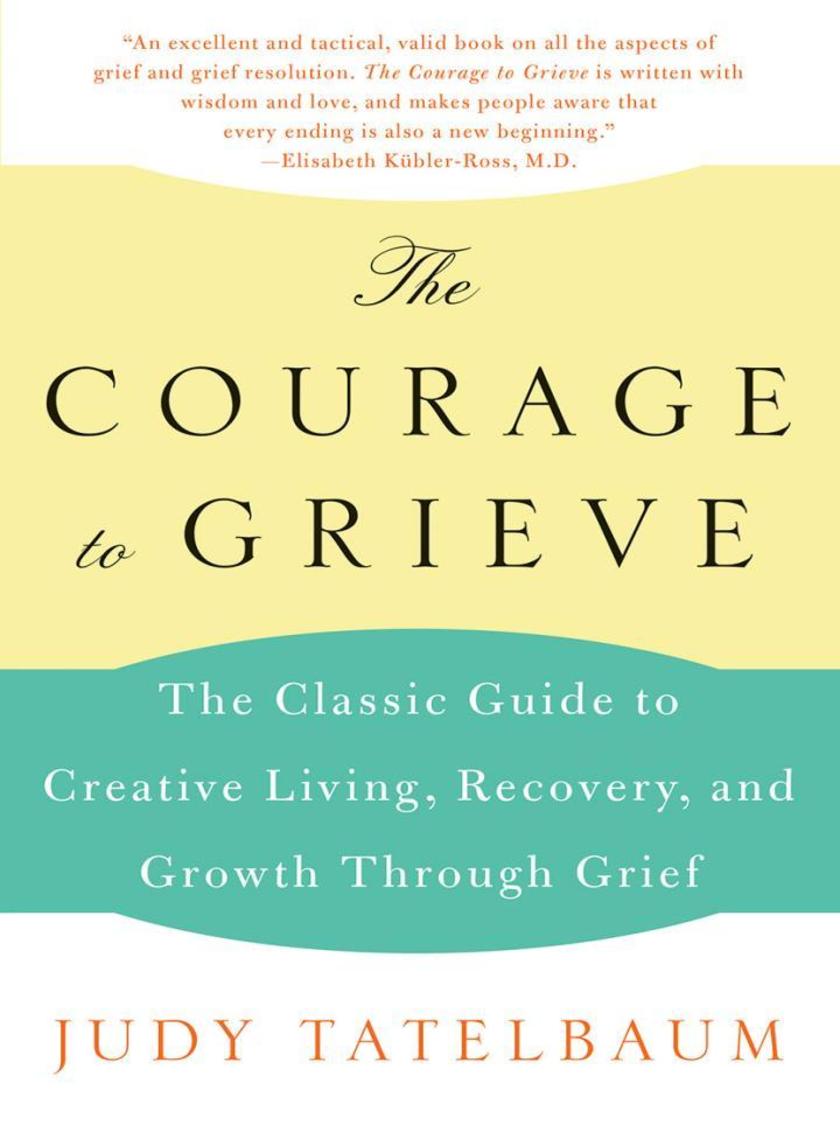
The Courage to Grieve
¥88.56
This unusual self-help book about surviving grief offers the reader comfort and inspiration. Each of us will face some loss, sorrow and disappointment in our lives, and The Courage to Grieve provides the specific help we need to enable us to face our grief fully and to recover and grow from the experience. Although the book emphasizes the response to the death of a loved one, The Courage to Grieve can help with every kind of loss and grief.Judy Tatelbaum gives us a fresh look at understanding grief, showing us that grief is a natural, inevitable human experience, including all the unexpected, intense and uncomfortable emotions like sorrow, guilt, loneliness, resentment, confusion, or even the temporary loss of the will to live. The emphasis is to clarify and offer help, and the tone is spiritual, optimistic, creative and easy to understand. Judy Tatelbaum provides excellent advice on how to help oneself and others get through the immediate experience of death and the grief that follows, as well as how to understand the special grief of children. Particularly useful are the techniques for completing or "finishing" grief--counteracting the popular misconception that grief never ends. The Courage to Grieve shows us how to live life with the ultimate courage: not fearing death. This book is about so much more than death and grieving it is about life and joy and growth.

Inner Bonding
¥95.11
Inner bonding is the process of connecting our adult thoughts with our instinctual, gut feelings the feelings of the inner child so that we can minimize painful conflict within ourselves. Free of inner conflict, we feel peaceful, open to joy, and open to giving and receiving love.Margaret Paul, coauthor of Healing Your Aloneness, explores how abandonment of the inner child leads to increasingly negative and destructive feelings of low self-worth, codepenclence, addiction, shame, powerlessness, and withdrawal from relationships. Her breakthrough inner bonding process teaches us to heal past wounds through reparenting and clearly demonstrates how we can learn to parent in the present. Real-life examples illustrate the dynamics of the healing process and show the benefits we can expect in every facet of our lives and in all our relationships.Inner Bonding provides the tools we need to forge and maintain the inner unity that makes our family, sexual, work, and social relationships productive, honest, and joyful.
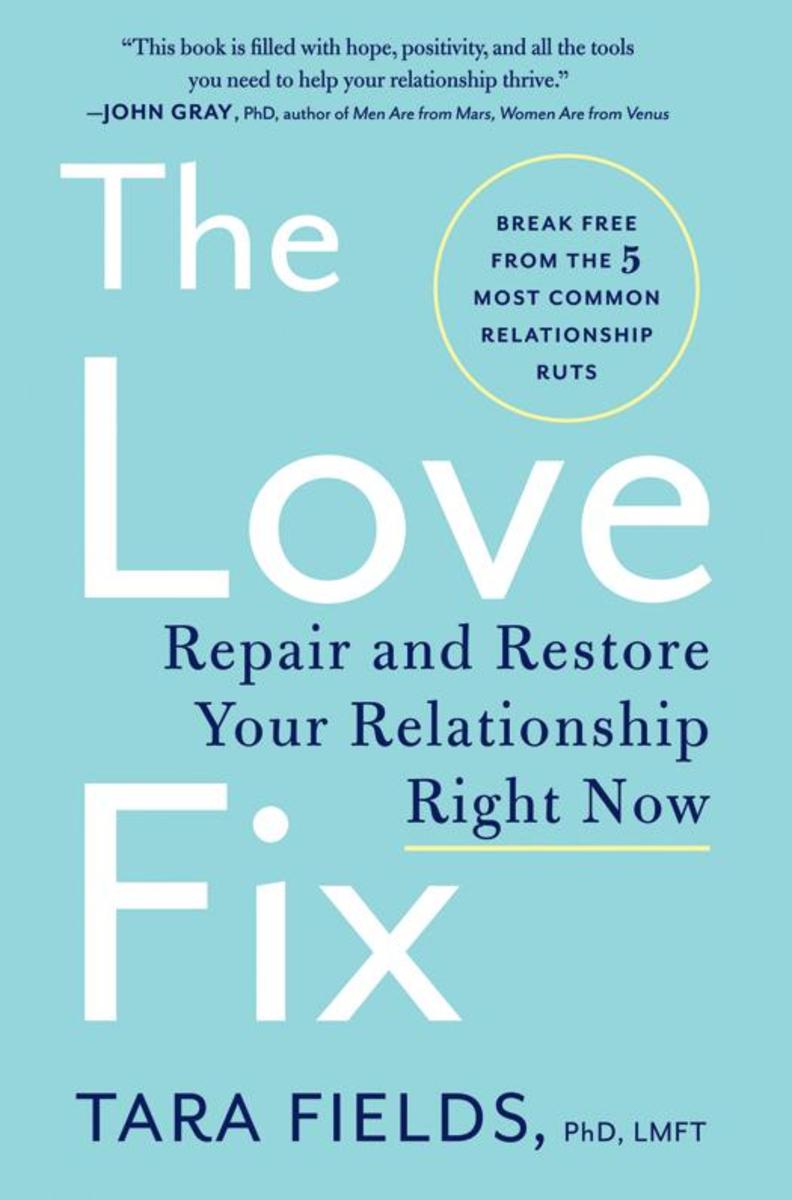
The Love Fix
¥94.10
Find your way back to a happy, satisfying relationshipAll couples argue, but how do some couples get to what seems like the point of no returnLicensed marriage and family therapist Dr. Tara Fields has spent more than twenty-eight years working with couples, and she has discovered that there are five common conflict loops that couples fall into and three steps to getting past having the same fights over and over again and onward to building a relationship where each partner feels heard, understood, respected, and loved. These steps include: Recognizing the conflict loop at play Exploring past and present fears Creating opportunities to get in touch with the deepest needs of both partners in order to find new gratitude, respect, and trust Change comes with awareness. When you're present in the moment, conflict with your partner can become an opportunity to work through unresolved issues and to learn more about each other; it can even become a way to grow closer. In The Love Fix, Fields shares her tested and proven tools to help build stronger relationships, including: Insight from real couples who have repaired their relationships Self-assessment quizzes to get to the root of the problem Practical 3-Minute Fixes you can start using immediately HEARTwork exercises to help you dig deeper in order to reconnect It's never too late to reignite your passion and to restore the love between you and your partner. Stop rehashing the same issues, figure out what you're really fighting about, and start enjoying a happier, stronger relationship today.
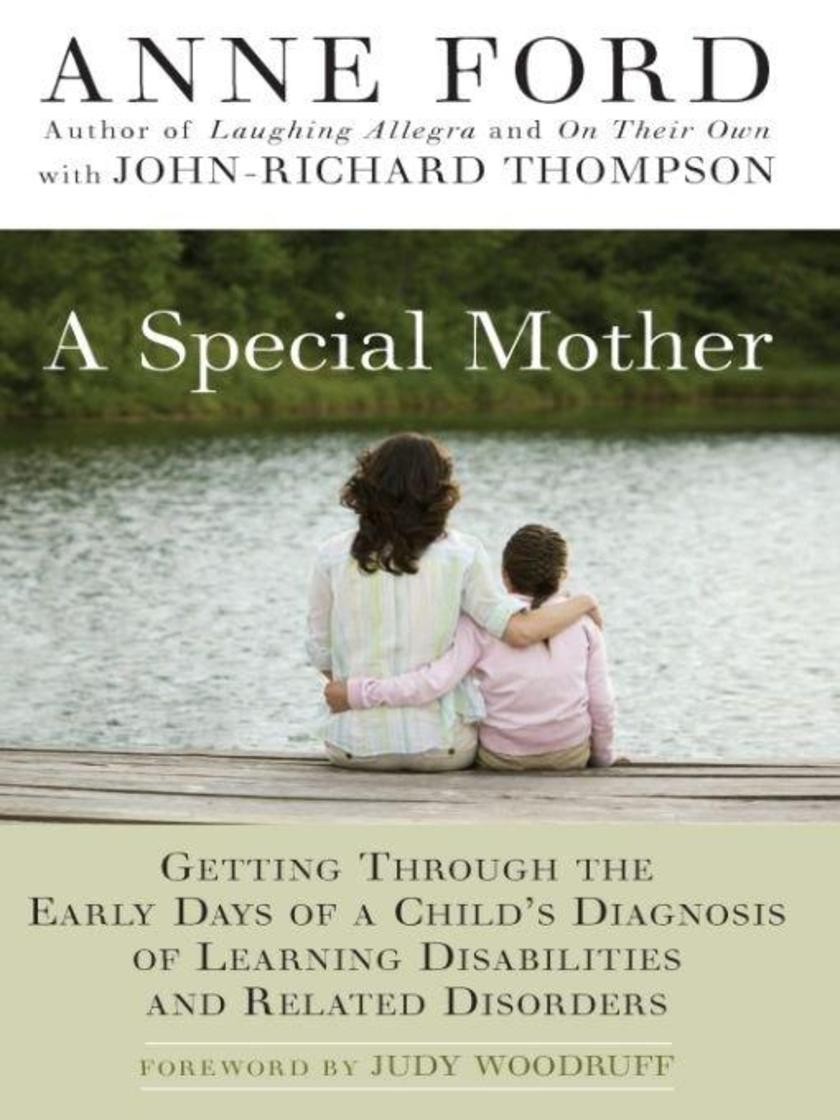
A Special Mother
¥95.39
All mothers experience worries and fears about their children, but none can compare with the early days when a mother feels something's not quite right. Anne Ford knows the feeling. She's had it herself, having raised a daughter with severe learning disabilities, and has gone on to share experiences with others during her many years as a volunteer with the National Center for Learning Disabilities.To bring comfort, support, and hard information to mothers-and fathers, too-in the early period surrounding the diagnosis, here is the book that Anne wishes she'd had years ago when she first received the news about her daughter and didn't know where to turn for the practical and emotional help she desperately needed.Filled with essential advice and the voices of other mothers whose children have LD and related disorders such as Asperger's and ADHD, A Special Mother lets parents know they are not alone and that they can help their child to thrive. This invaluable book addresses such matters as:Understanding Learning Disabilities and Related Disorders What Should You Do FirstInterpreting Evaluation Results Resolving Disputes Special Fathers: They Are Out ThereThe Social Side of LDAdvocacy vs. Obsession How Are You Doing?: Taking Care of Yourself

Healthy Child, Whole Child
¥101.00
Should you give your child nutritional supplementsAre vaccinations safeWhy are more and more children becoming couch potatoesIn Healthy Child, Whole Child, doctors Stuart H. Ditchek and Russell H. Greenfield answer these questions and more, offering authoritative, cutting-edge information on all aspects of children's health and wellness. Taking the position that conventional and alternative approaches to pediatric care are not mutually exclusive, they provide the newest science and most up-to-date information on: The 6 myths (and one true statement) about vaccinations The 10 powerhouse foods for your kids The 7 questions you need to ask to find out if your child is overweight The 16 herbs that are safe and effective for children How to receive more integrative care from your current pediatricianAnd more!
On Your Mark, Get Set, Grow!
¥88.56
Recognizing a need for puberty education books for younger children, award-winning author Lynda Madaras published Ready, Set, Grow!: A "What's Happening to My Body?" Book for Younger Girls in 2003 to widespread acclaim. Now, in her uniquely straightforward, warm, and funny style, Madaras introduces On Your Mark, Get Set, Grow!: A "What's Happening to My Body?" Book for Younger Boys.Responding to real-life questions and concerns from younger boys about their changing bodies, Madaras covers a wide range of topics at a reading and understanding level that's just right for them: the growth of sex organs, body hair, and facial hair; weight and height spurts; the unwelcome appearance of acne and body odor; shaving; circumcision; erections and ejaculation; feelings about puberty; and bullying.

100 Simple Secrets of Happy Families
¥67.09
The Simple Science of a Happy FamilyFrom raising children to getting along with in-laws, what do people with close and loving families do differently than those with strained or unfulfilling relationshipsSociologists, therapists, and psychiatrists have spent entire careers investigating the ins and outs of family dynamics, yet their findings are inaccessible to ordinary people, hidden in obscure journals to be shared with other experts. Now, David Niven, the international bestselling author of The 100 Simple Secret series has collected the most current and significant data from more than a thousand of the best scientific studies on families and then spelled out the findings in plain English.The advice is based not on one person's unique experiences or opinions, but offers for the first time the research of noted scientists studying average American families. These findings have been boiled down to one hundred essential ways to find and maintain love, joy, and satisfaction in all family relationships. Each statistic is accompanied by a true story about a real family showing the results in action.Don't Forget the Past: Parents who share stories of family history with their children create higher levels of concern for family members and increase the likelihood of their children's happiness.No Price Tag: Once basic necessities are met, the increasing economic status of one's family has zero effect on the likelihood of feeling satisfied with life.Let Every Opinion Be Heard: Senior citizens having trouble living in their own homes are 84 percent more likely to be satisfied with their housing situation if they feel as if their concerns are an important part of selecting a new home or facility.The Greatest Gift: Life satisfaction is 72 percent more likely among those who feel content with their family life.
Working Mothers 101
¥72.99
Motherhood comes naturally.Working motherhood doesn't. So admit it. You need some help. Though there's not a full-time nanny inside this book, there's information on how to find one. This is the book for you if you can't spare even five minutes to use your common sense. It's all laid out for you in how-to, when-to lists and plenty of stories from mothers like you that will help you get it all together.Well . . . as together as it's ever going to be. Here's where you'll learn everything you need to get your life in order: How to create a home where people actually hang up their jackets What to do with all those indispensable spelling tests and toddler works of art How to decide which type of child care is best for you at any given moment How to sort out the times you really have to be at your child's school How a time-crazed mother can make, keep and entertain friends How to sign up for and transport children to after-school activities, sports, music lessons and play dates when you can't be at any of them What to tell your boss when you don't want to travel so much The lost art of raising respectful children The best way to date your husband The first rule of convenience for birthday parties Eleven ways to take care of yourself without taking any extra time And, finally, delegating responsibilities you thought were yours and yours alone This practical strategy is for the millions of working mothers struggling to make it all work.Don't let your guilt slow you down. Katherine Wyse Goldman interviewed hundreds of mothers to come up with the tips, plans of action and decisions that have worked for career women around the country. Here's everything you need when you want to get control of your time, your life and your future. Here's how to make your home run as smoothly as a Fortune 500 corporation.


