


 购物车
购物车 个人中心
个人中心
Erotic Attunement
¥529.74
Heightened awareness of the problem of sexual abuse has led to deep anxiety over adults touching children-in nearly any context. Though our society has moved toward increasingly strict enforcement of this taboo, studies have shown that young children need regular human contact, and the benefits of breastfeeding have been widely extolled. Exploring the complicated history of love, desire, gender, sexuality, parenthood, and inequality, Erotic Attunement probes the disquieting issue of how we can draw a clear line between natural affection toward children and perverse exploitation of them.Cristina L. H. Traina demonstrates that we cannot determine what is wrong about sexual abuse without first understanding what is good about appropriate sensual affection. Pondering topics such as the importance of touch in nurturing children, the psychology of abuse and victimhood, and recent ideologies of motherhood, she argues that we must expand our philosophical and theological language of physical love and make a distinction between sexual love and erotic love. Taking on theological and ethical arguments over the question of sexuality between unequals, she arrives at the provocative conclusion that it can be destructive to completely bar eroticism from these relationships.
Essays in Ancient and Modern Historiography
¥253.10
Arnaldo Momigliano was one of the foremost classical historiographers of the twentieth century. This collection of twenty-one carefully selected essays is remarkable both in the depth of its scholarship and the breadth of its subjects. Moving with ease across the centuries, Momigliano supplements powerful readings of writers in the Greek, Jewish, and Roman traditions, such as Tacitus and Polybius, with writings that focus on later historians, such as Vico and Croce. Charmingly written and concise, these pieces range from review essays reprinted from the New York Review of Books to treatises on the nature of historical scholarship. Essays in Ancient and Modern Historiography is a brilliant reminder of Momigliano's profound knowledge of classical civilization and his gift for deftly handling prose.With a new Foreword by Anthony Grafton, this volume is essential reading for any student of classics or historiography.
Idea of Hegel's "e;Science of Logic"e;
¥453.22
Although Hegel considered?Science of Logic?essential to his philosophy, it has received scant commentary compared with the other three books he published in his lifetime. Here philosopher Stanley Rosen rescues the?Science of Logic?from obscurity, arguing that its neglect is responsible for contemporary philosophy's fracture into many different and opposed schools of thought. Through deep and careful analysis, Rosen sheds new light on the precise problems that animate Hegel's overlooked book and their tremendous significance to philosophical conceptions of logic and reason.Rosen's overarching question is how, if at all, rationalism can overcome the split between monism and dualism. Monism-which claims a singular essence for all things-ultimately leads to nihilism, while dualism, which claims multiple, irreducible essences, leads to what Rosen calls "e;the endless chatter of the history of philosophy."e; The?Science of Logic, he argues, is the fundamental text to offer a new conception of rationalism that might overcome this philosophical split. Leading readers through Hegel's book from beginning to end, Rosen's argument culminates in a masterful chapter on the Idea in Hegel. By fully appreciating theScience of Logic?and situating it properly within Hegel's oeuvre, Rosen in turn provides new tools for wrangling with the conceptual puzzles that have brought so many other philosophers to disaster.
Hardship and Happiness
¥453.22
Lucius Annaeus Seneca (4 BCE-65 CE) was a Roman Stoic philosopher, dramatist, statesman, and advisor to the emperor Nero, all during the Silver Age of Latin literature. The Complete Works of Lucius Annaeus Seneca is a fresh and compelling series of new English-language translations of his works in eight accessible volumes. Edited by Elizabeth Asmis, Shadi Bartsch, and Martha C. Nussbaum, this engaging collection helps restore Seneca-whose works have been highly praised by modern authors from Desiderius Erasmus to Ralph Waldo Emerson-to his rightful place among the classical writers most widely studied in the humanities.Hardship and Happiness?collects a range of essays intended to instruct, from consolations-works that offer comfort to someone who has suffered a personal loss-to pieces on how to achieve happiness or tranquility in the face of a difficult world. Expertly translated, the essays will be read and used by undergraduate philosophy students and experienced scholars alike.
Spinoza and the Politics of Renaturalization
¥353.16
There have been many Spinozas over the centuries: atheist, romantic pantheist, great thinker of the multitude, advocate of the liberated individual, and rigorous rationalist. The common thread connecting all of these clashing perspectives is Spinoza's naturalism, the idea that humanity is part of nature, not above it.?In this sophisticated new interpretation of Spinoza's iconoclastic philosophy, Hasana Sharp draws on his uncompromising naturalism to rethink human agency, ethics, and political practice. Sharp uses Spinoza to outline a practical wisdom of "e;renaturalization,"e; showing how ideas, actions, and institutions are never merely products of human intention or design, but outcomes of the complex relationships among natural forces beyond our control. This lack of a metaphysical or moral division between humanity and the rest of nature, Sharp contends, can provide the basis for an ethical and political practice free from the tendency to view ourselves as either gods or beasts.?Sharp's groundbreaking argument critically engages with important contemporary thinkers-including deep ecologists, feminists, and race and critical theorists-making Spinoza and the Politics of Renaturalization vital for a wide range of scholars.
Reading Darwin in Arabic, 1860-1950
¥370.82
In Reading Darwin in Arabic, Marwa Elshakry questions current ideas about Islam, science, and secularism by exploring the ways in which Darwin was read in Arabic from the late 1860s to the mid-twentieth century. Borrowing from translation and reading studies and weaving together the history of science with intellectual history, she explores Darwin's global appeal from the perspective of several generations of Arabic readers and shows how Darwin's writings helped alter the social and epistemological landscape of the Arab learned classes.?Providing a close textual, political, and institutional analysis of the tremendous interest in Darwin's ideas and other works on evolution, Elshakry shows how, in an age of massive regional and international political upheaval, these readings were suffused with the anxieties of empire and civilizational decline. The politics of evolution infiltrated Arabic discussions of pedagogy, progress, and the very sense of history. They also led to a literary and conceptual transformation of notions of science and religion themselves. Darwin thus became a vehicle for discussing *ural exegesis, the conditions of belief, and cosmological views more broadly. The book also acquaints readers with Muslim and Christian intellectuals, bureaucrats, and theologians, and concludes by exploring Darwin's waning influence on public and intellectual life in the Arab world after World War I.?Reading Darwin in Arabic is an engaging and powerfully argued reconceptualization of the intellectual and political history of the Middle East.
Book of Shells
¥194.24
Who among us hasn't marveled at the diversity and beauty of shellsOr picked one up, held it to our ear, and then gazed in wonder at its shape and hueMany a lifelong shell collector has cut teeth (and toes) on the beaches of the Jersey Shore, the Outer Banks, or the coasts of Sanibel Island. Some have even dived to the depths of the ocean. But most of us are not familiar with the biological origin of shells, their role in explaining evolutionary history, and the incredible variety of forms in which they come.Shells are the external skeletons of mollusks, an ancient and diverse phylum of invertebrates that are in the earliest fossil record of multicellular life over 500 million years ago. There are over 100,000 kinds of recorded mollusks, and some estimate that there are over amillion more that have yet to be discovered. Some breathe air, others live in fresh water, but most live in the ocean. They range in size from a grain of sand to a beach ball and in weight from a few grams to several hundred pounds. And in this lavishly illustrated volume, they finally get their full due.The Book of Shells offers a visually stunning and scientifically engaging guide to six hundred of the most intriguing mollusk shells, each chosen to convey the range of shapes and sizes that occur across a range of species. Each shell is reproduced here at its actual size, in full color, and is accompanied by an explanation of the shell's range, distribution, abundance, habitat, and operculum-the piece that protects the mollusk when it's in the shell. Brief scientific and historical accounts of each shell and related species include fun-filled facts and anecdotes that broaden its portrait.The Matchless Cone, for instance, or Conus cedonulli, was one of the rarest shells collected during the eighteenth century. So much so, in fact, that a specimen in 1796 was sold for more than six times as much as a painting by Vermeer at the same auction. But since the advent of scuba diving, this shell has become far more accessible to collectors-though not without certain risks. Some species of Conus produce venom that has caused more than thirty known human deaths.The Zebra Nerite, the Heart Cockle, the Indian Babylon, the Junonia, the Atlantic Thorny Oyster-shells from habitats spanning the poles and the tropics, from the highest mountains to the ocean's deepest recesses, are all on display in this definitive work.
Whales, Dolphins, and Porpoises
¥294.30
The eighty-nine cetacean species that swim our seas and rivers are as diverse as they are intelligent and elusive, from the hundred-foot-long, two-hundred-ton blue whale to the lesser-known tucuxi, ginkgo-toothed beaked whale, and diminutive, critically endangered vaquita. The huge distances these highly migratory creatures cover and the depths they dive mean we catch only the merest glimpses of their lives as they break the surface of the water. But thanks to the marriage of science and technology, we are now beginning to understand their anatomy, complex social structures, extraordinary communication abilities, and behavioral patterns. In this beautifully illustrated guide, renowned marine mammalogist Annalisa Berta draws on the contributions of a pod of fellow whale biologists to present the most comprehensive, authoritative overview ever published of these remarkable aquatic mammals.Opening with an accessible rundown of cetacean biology-including the most recent science on feeding, mating, and communication-Whales, Dolphins, and Porpoises then presents species-specific natural history on a range of topics, from anatomy and diet to distribution and conservation status. Each entry also includes original drawings of the species and its key identifiers, such as fin shape and color, tooth shape, and characteristic markings as they would appear both above and below water-a feature unique to this book.Figures of myth and-as the debate over hunting rages on-figures of conflict since long before the days of Moby-Dick, whales, dolphins, and porpoises are also ecologically important and, in many cases, threatened. Written for general enthusiasts, emergent cetacean fans, and biologists alike, this stunning, urgently needed book will serve as the definitive guide for years to come.

Undertones of War
¥117.72
"e;I took my road with no little pride of fear; one morning I feared very sharply, as I saw what looked like a rising shroud over a wooden cross in the clustering mist. Horror! But on a closer study I realized that the apparition was only a flannel gas helmet. . . . What an age since 1914!"e;In Undertones of War, one of the finest autobiographies to come out of World War I, the acclaimed poet Edmund Blunden records his devastating experiences in combat. After enlisting at the age of twenty, he took part in the disastrous battles at the Somme, Ypres, and Passchendaele, describing them as "e;murder, not only to the troops but to their singing faiths and hopes."e;All the horrors of trench warfare, all the absurdity and feeble attempts to make sense of the fighting, all the strangeness of observing war as a writer-of being simultaneously soldier and poet-pervade Blunden's memoir. In steely-eyed prose as richly allusive as any poetry, he tells of the endurance and despair found among the men of his battalion, including the harrowing acts of bravery that won him the Military Cross.Now back in print for American readers, the volume includes a selection of Blunden's war poems that unflinchingly juxtapose death in the trenches with the beauty of Flanders's fields. Undertones of War deserves a place on anyone's bookshelf between Siegfried Sassoon's poetry and Robert Graves's Goodbye to All That.
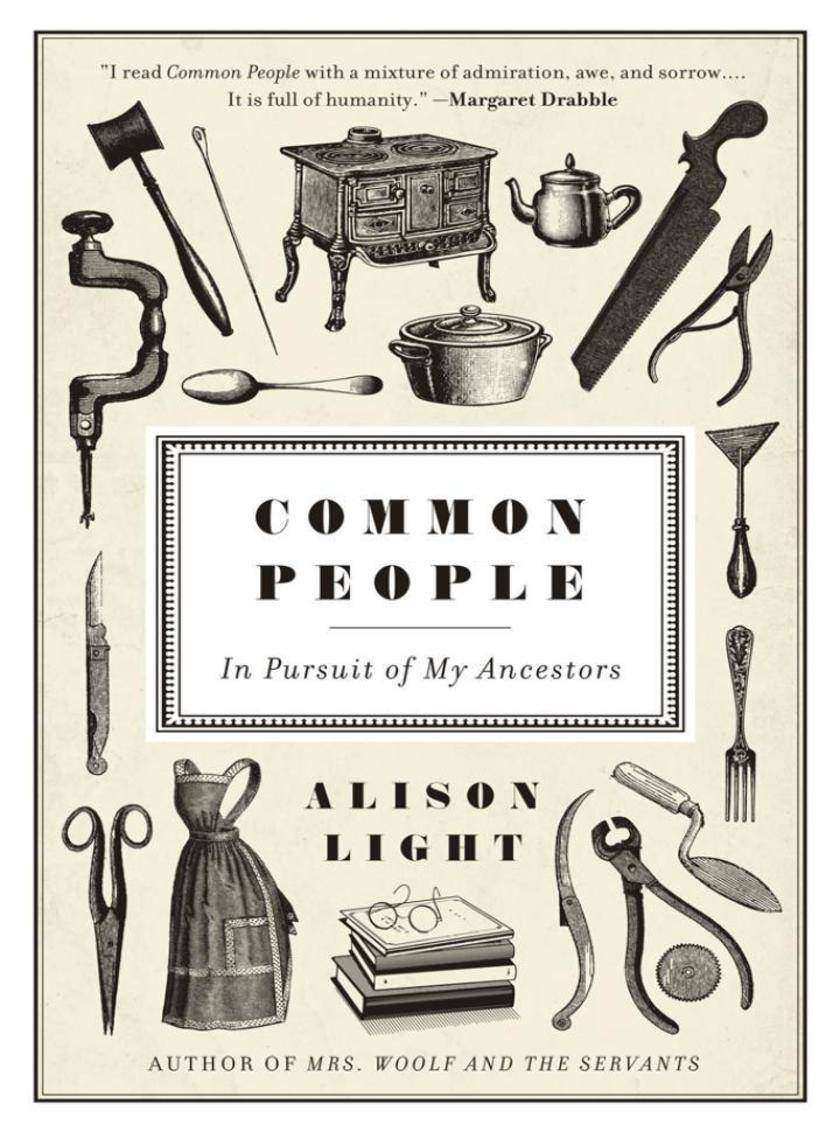
Common People
¥147.15
"e;Family history begins with missing persons,"e; Alison Light writes in Common People. We wonder about those we've lost, and those we never knew, about the long skein that led to us, and to here, and to now. So we start exploring.?Most of us, however, give up a few generations back. We run into a gap, get embarrassed by a ne'er-do-well, or simply find our ancestors are less glamorous than we'd hoped. That didn't stop Alison Light: in the last weeks of her father's life, she embarked on an attempt to trace the history of her family as far back as she could reasonably go. The result is a clear-eyed, fascinating, frequently moving account of the lives of everyday people, of the tough decisions and hard work, the good luck and bad breaks, that chart the course of a life. Light's forebears-servants, sailors, farm workers-were among the poorest, traveling the country looking for work; they left few lasting marks on the world. But through her painstaking work in archives, and her ability to make the people and struggles of the past come alive, Light reminds us that "e;every life, even glimpsed through the chinks of the census, has its surprises and secrets."e;?What she did for the servants of Bloomsbury in her celebrated Mrs. Woolf and the Servants Light does here for her own ancestors, and, by extension, everyone's: draws their experiences from the shadows of the past and helps us understand their lives, estranged from us by time yet inextricably interwoven with our own. Family history, in her hands, becomes a new kind of public history.
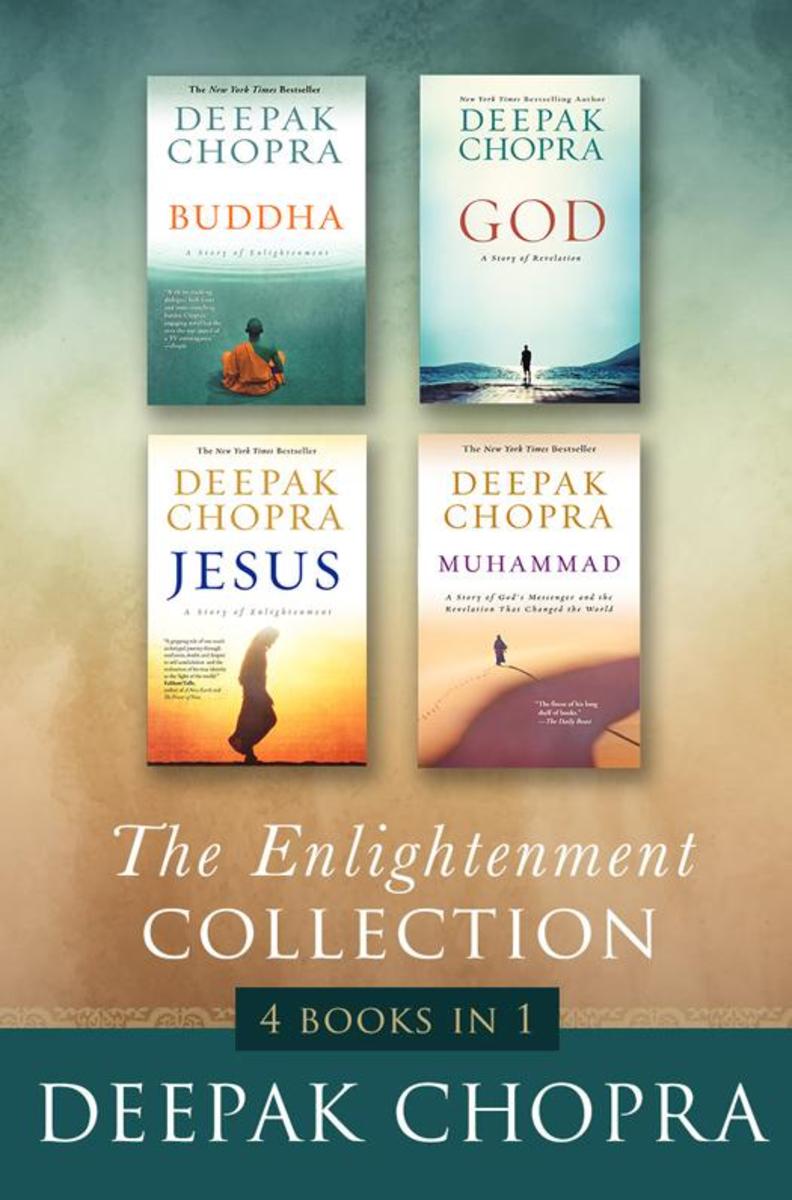
Deepak Chopra Collection
¥163.52
Four of the most popular and celebrated books by New York Times bestselling author Deepak Chopra are now available together in this collection.Buddha is an inspiring re-imagining of the life of a prince who gave up the trappings of royalty for something much more important wisdom and enlightenment. This revolutionary journey has changed the world forever, and the lessons Buddha taught continue to influence every corner of the globe today. This is a new form of teaching for beloved Chopra and with it he brings us closer to understanding the true nature of life and ourselves.Jesus captures the extraordinary life of Christ in this surprising, soul-stirring, and page-turning novel. Uncovering the transformational "lost years" that are not recounted in the New Testament, Chopra has imagined Jesus's path to enlightenment moving from obscurity to revolutionary, from doubt to miracles, and then beyond as the role of the long-awaited Messiah. As a teenager, Jesus has premonitions of his destiny, and by the end, as he arrives to be baptized in the River Jordan, he has accepted his fate, which combines extremes of light and darkness.Born into the factious world of war-torn Arabia, Muhammad's life is a gripping and inspiring story of one man's tireless fight for unity and peace. In a world where greed and injustice ruled, Muhammad created change by affecting hearts and minds. Just as the story of Jesus embodies the message of Christianity, Muhammad's life reveals the core of Islam. In the groundbreaking and imaginative God, the evolution of our highest spiritual figure is told through a unique blend of storytelling and teaching. By capturing the lives of ten historical prophets, saints, mystics, and martyrs who are touched by a divine power, Chopra brings to life the defining moments of our most influential sages, ultimately revealing universal lessons about the true nature of God.
Letters to an American Lady
¥87.15
On October 26, 1950, C. S. Lewis wrote the first of more than a hundred letters he would send to a woman he had never met, but with whom he was to maintain a correspondence for the rest of his life.Ranging broadly in subject matter, the letters discuss topics as profound as the love of God and as frivolous as preferences in cats. Lewis himself clearly had no idea that these letters would ever see publication, but they reveal facets of his character little known even to devoted readers of his fantasy and scholarly writings a man patiently offering encouragement and guidance to another Christian through the day-to-day joys and sorrows of ordinary life.Letters to an American Lady stands as a fascinating and moving testimony to the remarkable humanity and even more remarkable Christianity of C. S. Lewis, and is richly deserving of the position it now takes among the balance of his Christian writings.
The Pilgrim's Regress
¥65.33
The first book written by C. S. Lewis after his conversion, The Pilgrim's Regress is, in a sense, the record of Lewis's own search for meaning and spiritual satisfaction a search that eventually led him to Christianity.Here is the story of the pilgrim John and his odyssey to an enchanting island which has created in him an intense longing; a mysterious, sweet desire. John's pursuit of this desire takes him through adventures with such people as Mr. Enlightenment, Media Halfways, Mr. Mammon, Mother Kirk, Mr. Sensible, and Mr. Humanist and through such cities as Thrill and Eschropolis as well as the Valley of Humiliation.Though the dragons and giants here are different from those in Bunyan's Pilgrim's Progress, Lewis's allegory performs the same function of enabling the author to say simply and through fantasy what would otherwise have demanded a full-length philosophy of religion.
HarperOne
¥161.78
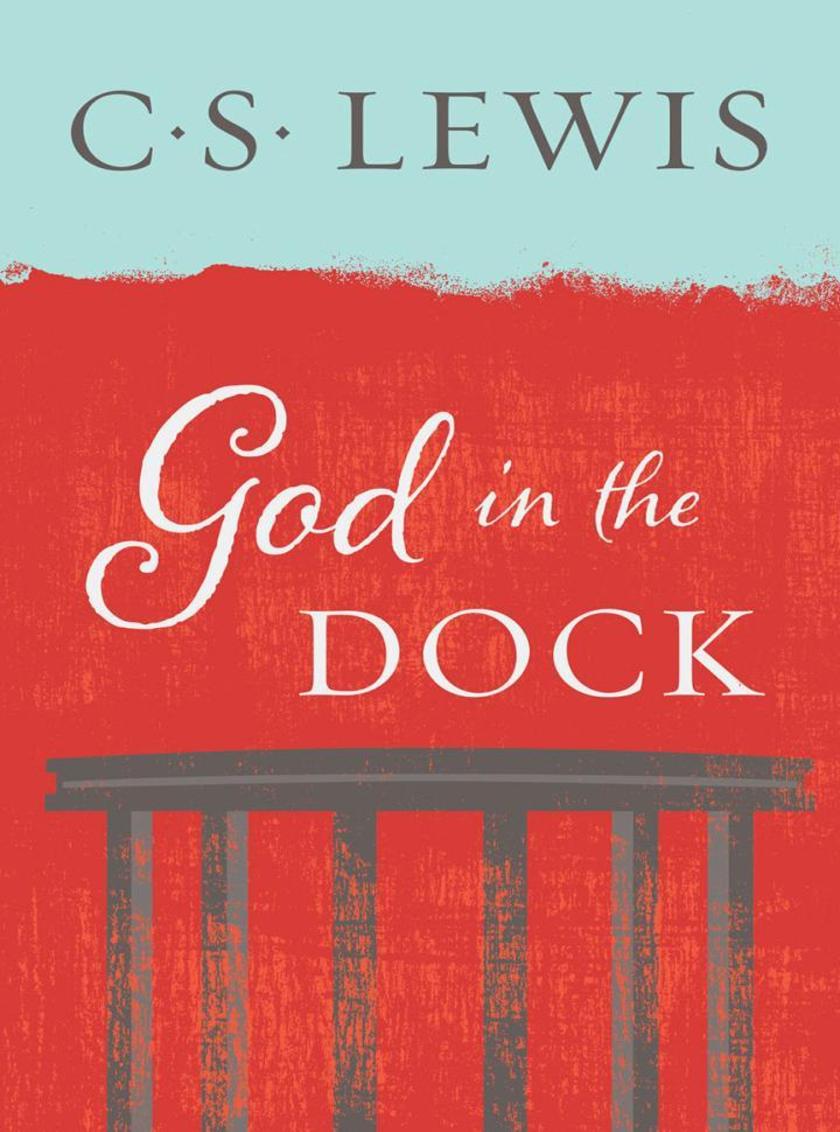
God in the Dock is one of the best known of C.S. Lewis's collections of essays and includes Myth Become Fact, The Grand Miracle, Priestesses in the Church and, of course, God in the Dock.
A Letter of Consolation
¥67.32
Finding faith in a time of sorrow Beloved author Henri Nouwen reflects on the spiritual significance of death and life in this moving meditation dedicated to "all those who suffer the pain that death can bring and who search for new life."
Seasons of Your Heart
¥77.49
In this masterpiece of simplicity, Macrina Wiederkehr offers a series of meditations to bring us closer to a "God for all seasons," revised and expanded into this new edition. Designed for daily use as well as for retreats, Seasons of Your Heart is an eloquent and lyrical invitation to journey through the spiritual seasons of wonder, hope, love, mystery, and faith. Macrina Weiderkehr shares her "seasonal struggle with God" and encourages us to reconize those same peaks and valleys in our own spiritual life. Using biblical passages, poetry, and excerpts from her journal, Wiederkehr provides meditative ideas and prayers as "postures" for realizing and approaching the holy in our daily lives. These reflections and prayers, then, have grown out of a daily listening to God in the changing seasons of my spiritual life, "writes the author. "These reflections have grown out of my conviction that our God is not some Almighty Being beyond us, but a Mystery within."

The Proper Care and Feeding of Marriage
¥90.77
Dr. Laura Schlessinger reveals how to bring a marriage back from the brink of disaster.Jumping off her million-copy bestseller The Proper Care and Feeding of Husbands, Dr. Laura Schlessinger exposes the sensitive and loving truths necessary to produce and sustain a wonderfully satisfying marriage. First and foremost, men and women need to understand and appreciate the uniqueness of masculinity and femininity. Both husband and wife have power in their relationship, and both need to realize this to ensure for themselves the personal satisfaction they yearn for. Dr. Laura explores the best ways a couple can relate, caretake, and nurture each other, and how to rescue a troubled marriage that seems doomed to fail. Using real-life examples from her call-in radio show, Dr. Laura focuses on the typical mistakes made by men and women in their relationships, and gives us real-life solutions for keeping our unions strong, loving, and lasting.

The Tao Of Womanhood
¥79.16
The Tao of Womanhood is for every woman who is searching for both external power and internal peace. It's for the woman who wants to be tough but nice, who wants to take care of things and everyone else but needs to be reminded to look after herself, who feels pulled in too many directions and yearns to live a full, balanced life. It's for the woman who wants to be a strong, proactive leader at work and at home, and lead a life of harmony and inner peace. A spiritual resource that combines the wisdom of the Tao Te Ching with straightforward advice and illuminating anecdotes, The Tao of Womanhood is a pre*ive, practical road map. Using Taoist principles, teacher and spiritualist Dreher explains how any woman can learn to incorporate calm into her busy modern life by learning how to Say "no" without feeling guilty Respond without being frantic or reactive Seize opportunities Summon the strength to change Clear the space necessary for continual growth transformation Calm and reassuring, The Tao of Womanhood imparts the invigorating message to all women -- whether stay-at-home moms or corporate executives -- that leading a balanced and fulfilling life does not mean surrendering peace of mind.

How to Marry a Divorced Man
¥78.43
You may not be his first wife -- but you want to be his last! More than half of all American women between the ages of 18 and 54 will date or marry a divorced man during their lifetime.Entering a relationship with any man is daunting. But entering one with a divorced man means navigating a host of new and complicated problems. Will remnants of his past -- his guilt, the X, their children, the financial and legal fallout -- wreak havoc on your sanity and finances and sabotage your quest for loveIn this reassuring book, Leslie Fram combines fundamental wisdom, guerrilla tactics, and humor to inform and empower the millions of women who are dating divorces -- and the many more who someday will.
Guests
¥56.08
Our eminent founding father Ben Franklin once famously compared guests to stinking fish. While this assessment may seem a trifle harsh, the truth remains that social intercourse is a most risky endeavor. Who better to address this concern than the inimitable pundit Russell Lynes a man renowned for his unparalleled expertise on the social graces and the many personality types who regularly abuse themIn this classic guide to "guesting," Lynes provides an indispensable overview of the rituals of behavior that make it possible to visit and be visited, and the necessary safeguards that protect us from our friends and our friends from us. It is a book that demands to be read by every potential guest and host, stinker and stinkee alike.

Death by Suburb
¥77.49
A great number of seekers find themselves in the seemingly unreal world of the suburbs. They read spirituality books but find themselves in carpools and coaching soccer, not in monasteries. Dave Goetz, a former pastor, shows that the suburbs are a real world, but a spiritually corrosive one. The land of SUVs and soccer leagues can truly be toxic to the soul. Suburbanites need to understand how the environment affects them and what spiritual disciplines are needed for their faith to survive and thrive. Goetz identifies eight toxins in the suburban life, such as hyper competition and the "transactional" friendship, and suggests eight corresponding disciplines to keep the spiritual life authentic. Goetz weaves sociology studies, his own experiences, current events, wisdom of the spiritual masters, and a little humor to equip spiritual suburbanites for how to relate to God amidst Starbucks, strip malls, and perfect lawns.


