


 购物车
购物车 个人中心
个人中心

Egyptian Oedipus
¥247.21
A contemporary of Descartes and Newton, Athanasius Kircher, S. J. (1601/2-80), was one of Europe's most inventive and versatile scholars in the baroque era. He published more than thirty works in fields as diverse as astronomy, magnetism, cryptology, numerology, geology, and music. But Kircher is most famous-or infamous-for his quixotic attempt to decipher the Egyptian hieroglyphs and reconstruct the ancient traditions they encoded. In 1655, after more than two decades of toil, Kircher published his solution to the hieroglyphs, Oedipus Aegyptiacus, a work that has been called "e;one of the most learned monstrosities of all times."e; Here Daniel Stolzenberg presents a new interpretation of Kircher's hieroglyphic studies, placing them in the context of seventeenth-century scholarship on paganism and Oriental languages.?Situating Kircher in the social world of baroque Rome, with its scholars, artists, patrons, and censors, Stolzenberg shows how Kircher's study of ancient paganism depended on the circulation of texts, artifacts, and people between Christian and Islamic civilizations. Along with other participants in the rise of Oriental studies, Kircher aimed to revolutionize the study of the past by mastering Near Eastern languages and recovering ancient manu*s hidden away in the legendary libraries of Cairo and Damascus. The spectacular flaws of his scholarship have fostered an image of Kircher as an eccentric anachronism, a throwback to the Renaissance hermetic tradition. Stolzenberg argues against this view, showing how Kircher embodied essential tensions of a pivotal phase in European intellectual history, when pre-Enlightenment scholars pioneered modern empirical methods of studying the past while still working within traditional frameworks, such as biblical history and beliefs about magic and esoteric wisdom.
Tragic Sense of Life
¥253.10
Prior to the First World War, more people learned of evolutionary theory from the voluminous writings of Charles Darwin's foremost champion in Germany, Ernst Haeckel (1834-1919), than from any other source, including the writings of Darwin himself. But, with detractors ranging from paleontologist Stephen Jay Gould to modern-day creationists and advocates of intelligent design, Haeckel is better known as a divisive figure than as a pioneering biologist. Robert J. Richards's intellectual biography rehabilitates Haeckel, providing the most accurate measure of his science and art yet written, as well as a moving account of Haeckel's eventful life.

Africa as a Living Laboratory
¥270.76
Tropical Africa was one of the last regions of the world to experience formal European colonialism, a process that coincided with the advent of a range of new scientific specialties and research methods. Africa as a Living Laboratory is a far-reaching study of the thorny relationship between imperialism and the role of scientific expertise-environmental, medical, racial, and anthropological-in the colonization of British Africa.A key source for Helen Tilley's analysis is the African Research Survey, a project undertaken in the 1930s to explore how modern science was being applied to African problems. This project both embraced and recommended an interdisciplinary approach to research on Africa that, Tilley argues, underscored the heterogeneity of African environments and the interrelations among the problems being studied. While the aim of British colonialists was unquestionably to transform and modernize Africa, their efforts, Tilley contends, were often unexpectedly subverted by scientific concerns with the local and vernacular. Meticulously researched and gracefully argued, Africa as a Living Laboratory transforms our understanding of imperial history, colonial development, and the role science played in both.
Air's Appearance
¥394.36
In Air's Appearance, Jayne Elizabeth Lewis enlists her readers in pursuit of the elusive concept of atmosphere in literary works. She shows how diverse conceptions of air in the eighteenth century converged in British fiction, producing the modern literary sense of atmosphere and moving novelists to explore the threshold between material and immaterial worlds.?Air's Appearance links the emergence of literary atmosphere to changing ideas about air and the earth's atmosphere in natural philosophy, as well as to the era's theories of the supernatural and fascination with social manners-or, as they are now known, "e;airs."e; Lewis thus offers a striking new interpretation of several standard features of the Enlightenment-the scientific revolution, the decline of magic, character-based sociability, and the rise of the novel-that considers them in terms of the romance of air that permeates and connects them. As it explores key episodes in the history of natural philosophy and in major literary works like Paradise Lost, "e;The Rape of the Lock,"e; Robinson Crusoe, and The Mysteries of Udolpho, this book promises to change the atmosphere of eighteenth-century studies and the history of the novel.

Trams or Tailfins?
¥394.36
In the years that followed World War II, both the United States and the newly formed West German republic had an opportunity to remake their economies. Since then, much has been made of a supposed "e;Americanization"e; of European consumer societies-in Germany and elsewhere. Arguing against these foggy notions, Jan L. Logemann takes a comparative look at the development of postwar mass consumption in West Germany and the United States and the emergence of discrete consumer modernities.?In Trams or Tailfins?, Logemann explains how the decisions made at this crucial time helped to define both of these economic superpowers in the second half of the twentieth century. While Americans splurged on private cars and bought goods on credit in suburban shopping malls, Germans rebuilt public transit and developed pedestrian shopping streets in their city centers-choices that continue to shape the quality and character of life decades later. Outlining the abundant differences in the structures of consumer society, consumer habits, and the role of public consumption in these countries, Logemann reveals the many subtle ways that the spheres of government, society, and physical space define how we live.

Reasons of Conscience
¥288.41
The implicit questions that inevitably underlie German bioethics are the same ones that have pervaded all of German public life for decades: How could the Holocaust have happenedAnd how can Germans make sure that it will never happen againIn Reasons of Conscience, Stefan Sperling considers the bioethical debates surrounding embryonic stem cell research in Germany at the turn of the twenty-first century, highlighting how the country's ongoing struggle to come to terms with its past informs the decisions it makes today.?Sperling brings the reader unmatched access to the offices of the German parliament to convey the role that morality and ethics play in contemporary Germany. He describes the separate and interactive workings of the two bodies assigned to shape German bioethics-the parliamentary Enquiry Commission on Law and Ethics in Modern Medicine and the executive branch's National Ethics Council-tracing each institution's genesis, projected image, and operations, and revealing that the content of bioethics cannot be separated from the workings of these institutions. Sperling then focuses his discussion around three core categories-transparency, conscience, and Germany itself-arguing that without fully considering these, we fail to understand German bioethics. He concludes with an assessment of German legislators and regulators' attempts to incorporate criteria of ethical research into the German Stem Cell Law.

Modernity Bluff
¥265.87
In Cte d'Ivoire, appearing modern is so important for success that many young men deplete their already meager resources to project an illusion of wealth in a fantastic display of Western imitation, spending far more than they can afford on brand name clothing, accessories, technology, and a robust nightlife. Such imitation, however, is not primarily meant to deceive-rather, as Sasha Newell argues in?The Modernity Bluff, it is an explicit performance so valued in Cte d'Ivoire it has become a matter of national pride.Called bluffeurs, these young urban men operate in a system of cultural economy where reputation is essential for financial success. That reputation is measured by familiarity with and access to the fashionable and expensive, which leads to a paradoxical state of affairs in which the wasting of wealth is essential to its accumulation. Using the consumption of Western goods to express their cultural mastery over Western taste, Newell argues, bluffeurs engage a global hierarchy that is profoundly modern, one that values performance over authenticityhighlighting the counterfeit nature of modernity itself.

Uncivil Rights
¥265.87
Almost fifty years after?Brown v. Board of Education, a wealth of research shows that minority students continue to receive an unequal education. At the heart of this inequality is a complex and often conflicted relationship between teachers and civil rights activists, examined fully for the first time in Jonna Perrillo's?Uncivil Rights, which traces the tensions between the two groups in New York City from the Great Depression to the present.While movements for teachers' rights and civil rights were not always in conflict, Perrillo uncovers the ways?they have become so, brought about both by teachers who have come to see civil rights efforts as detracting from or competing with their own goals and by civil rights activists whose aims have de-professionalized the role of the educator. Focusing in particular on unionized teachers, Perrillo finds a new vantage point from which to examine the relationship between school and community, showing how in this struggle, educators, activists, and especially our students have lost out.?

Combating Jihadism
¥247.21
Although terrorism is an age-old phenomenon, jihadi ideology is distinctive in its ambition to abandon the principle of state sovereignty, overthrow the modern state system, and replace it with an extremely radical interpretation of an Islamic world order. These characteristics reflect a radical break from traditional objectives promoted by terrorist groups. In Combating Jihadism Barak Mendelsohn argues that the distinctiveness of the al-Qaeda threat led the international community to change its approach to counterterrorism. Contrary to common yet erroneous conceptions, the United States, in its role as a hegemon, was critical for the formulation of a multilateral response.While most analyses of hegemony have focused on power, Mendelsohn firmly grounds the phenomenon in a web of shared norms and rules relating to the hegemon's freedom of action. Consequently, he explains why US leadership in counterterrorism efforts was in some spheres successful, when in others it failed or did not even seek to establish multilateral collaborative frameworks. Tracing the ways in which international cooperation has stopped terrorist efforts, Combating Jihadism provides a nuanced, innovative, and timely reinterpretation of the war on terrorism and the role of the United States in leading the fight against al-Qaeda and its affiliates.
These Kids
¥206.01
Few would deny that getting ahead is a legitimate goal of learning, but the phrase implies a cruel hierarchy: a student does not simply get ahead, but gets ahead of others. In These Kids, Kysa Nygreen turns a critical eye on this paradox. Offering the voices and viewpoints of students at a "e;last chance"e; high school in California, she tells the story of students who have, in fact, been left behind.?Detailing a youth-led participatory action research project that she coordinated, Nygreen uncovers deep barriers to educational success that are embedded within educational discourse itself. Struggling students internalize de*ions of themselves as "e;at risk,"e; "e;low achieving,"e; or "e;troubled"e;-and by adopting the very language of educators, they also adopt its constraints and presumption of failure. Showing how current educational discourse does not, ultimately, provide an adequate vision of change for students at the bottom of the educational hierarchy, she levies a powerful argument that social justice in education is impossible today precisely because of how we talk about it.

Who Governs?
¥206.01
America's model of representational government rests on the premise that elected officials respond to the opinions of citizens. This is a myth, however, not a reality, according to James N. Druckman and Lawrence R. Jacobs. In Who Governs?, Druckman and Jacobs combine existing research with novel data from US presidential archives to show that presidents make policy by largely ignoring the views of most citizens in favor of affluent and well-connected political insiders. Presidents treat the public as pliable, priming it to focus on personality traits and often ignoring it on policies that fail to become salient.Melding big debates about democratic theory with existing research on American politics and innovative use of the archives of three modern presidents-Johnson, Nixon, and Reagan-Druckman and Jacobs deploy lively and insightful analysis to show that the conventional model of representative democracy bears little resemblance to the actual practice of American politics. The authors conclude by arguing that polyarchy and the promotion of accelerated citizen mobilization and elite competition can improve democratic responsiveness. An incisive study of American politics and the flaws of representative government, this book will be warmly welcomed by readers interested in US politics, public opinion, democratic theory, and the fecklessness of American leadership and decision-making.
Restless Anthropologist
¥229.55
What does a move from a village in the West African rain forest to a West African community in a European city entail What about a shift from a Greek sheep-herding community to working with evictees and housing activists in Rome and BangkokIn?The Restless Anthropologist, Alma Gottlieb brings together eight eminent scholars to recount the riveting personal and intellectual dynamics of uprooting one's life-and decades of work-to embrace a new fieldsite.Addressing questions of life-course, research methods, institutional support, professional networks, ethnographic models, and disciplinary paradigm shifts, the contributing writers of?The Restless Anthropologist?discuss the ways their earlier and later projects compare on both scholarly and personal levels, describing the circumstances of their choices and the motivations that have emboldened them to proceed, to become novices all over again. In doing so, they question some of the central expectations of their discipline, reimagining the space of the anthropological fieldsite at the heart of their scholarly lives.
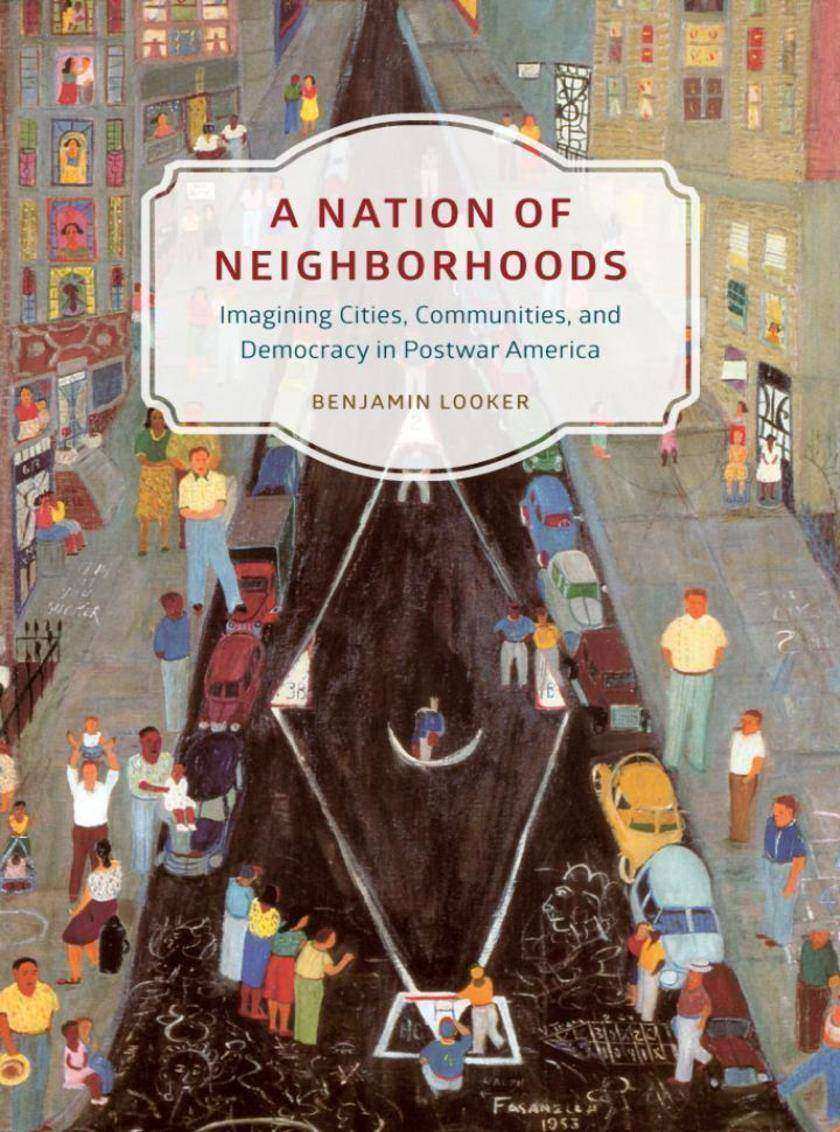
Nation of Neighborhoods
¥229.55
Despite the pundits who have written its epitaph and the latter-day refugees who have fled its confines for the half-acre suburban estate, the city neighborhood has endured as an idea central to American culture. In A Nation of Neighborhoods, Benjamin Looker presents us with the city neighborhood as both an endless problem and a possibility.Looker investigates the cultural, social, and political complexities of the idea of "e;neighborhood"e; in postwar America and how Americans grappled with vast changes in their urban spaces from World War II to the Reagan era. In the face of urban decline, competing visions of the city neighborhood's significance and purpose became proxies for broader debates over the meaning and limits of American democracy. By studying the way these contests unfolded across a startling variety of genres-Broadway shows, radio plays, urban ethnographies, real estate documents, and even children's programming-Looker shows that the neighborhood ideal has functioned as a central symbolic site for advancing and debating theories about American national identity and democratic practice.

Empowering Science and Mathematics Education in Urban Schools
¥253.10
Math and science hold powerful places in contemporary society, setting the foundations for entry into some of the most robust and highest-paying industries. However, effective math and science education is not equally available to all students, with some of the poorest students-those who would benefit most-going egregiously underserved. This ongoing problem with education highlights one of the core causes of the widening class gap.?While this educational inequality can be attributed to a number of economic and political causes, in?Empowering Science and Mathematics Education in Urban Communities, Angela Calabrese?Barton?and Edna Tan demonstrate that it is augmented by a consistent failure to integrate student history, culture, and social needs into the core curriculum. They argue that teachers and schools should create hybrid third spaces-neither classroom nor home-in which underserved students can merge their personal worlds with those of math and science. A host of examples buttress this argument: schools where these spaces have been instituted now provide students not only an immediate motivation to engage the subjects most critical to their future livelihoods but also the broader math and science literacy necessary for robust societal engagement. A unique look at a frustratingly understudied subject,?Empowering Science and Mathematics Education?pushes beyond the idea of teaching for social justice and into larger questions of how and why students participate in math and science.?

Power in Concert
¥265.87
How states cooperate in the absence of a sovereign power is a perennial question in international relations. With Power in Concert, Jennifer Mitzen argues that global governance is more than just the cooperation of states under anarchy: it is the formation and maintenance of collective intentions, or joint commitments among states to address problems together. The key mechanism through which these intentions are sustained is face-to-face diplomacy, which keeps states' obligations to one another salient and helps them solve problems on a day-to-day basis.Mitzen argues that the origins of this practice lie in the Concert of Europe, an informal agreement among five European states in the wake of the Napoleonic wars to reduce the possibility of recurrence, which first institutionalized the practice of jointly managing the balance of power.?Through the Concert's many successes, she shows that the words and actions of state leaders in public forums contributed to collective self-restraint and a commitment to problem solving-and at a time when communication was considerably more difficult than it is today. Despite the Concert's eventual breakdown, the practice it introduced-of face to face diplomacy as a mode of joint problem solving-survived and is the basis of global governance today.
Rise of the Public Authority
¥229.55
In the late nineteenth century, public officials throughout the United States began to experiment with new methods of managing their local economies and meeting the infrastructure needs of a newly urban, industrial nation.?Stymied by legal and financial barriers, they created a new class of quasi-public agencies called public authorities. Today these entities operate at all levels of government, and range from tiny operations like the Springfield Parking Authority in Massachusetts, which runs thirteen parking lots and garages, to mammoth enterprises like the Tennessee Valley Authority, with nearly twelve billion dollars in revenues each year.?In?The Rise of the Public Authority, Gail Radford recounts the history of these inscrutable agencies, examining how and why they were established, the varied forms they have taken, and how these pervasive but elusive mechanisms have molded our economy and politics over the past hundred years.?
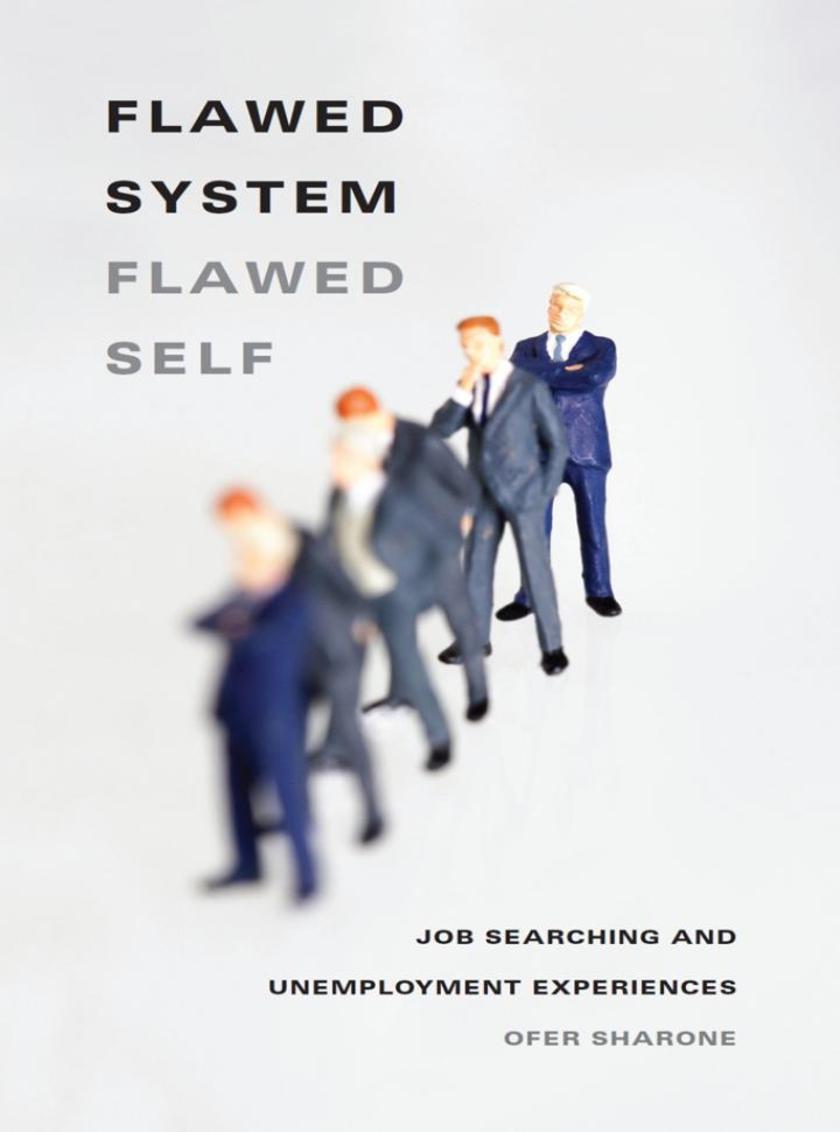
Flawed System/Flawed Self
¥229.55
Today 4.7 million Americans have been unemployed for more than six months. In France more than ten percent of the working population is without work. In Israel it's above seven percent. And in Greece and Spain, that number approaches thirty percent. Across the developed world, the experience of unemployment has become frighteningly common-and so are the seemingly endless tactics that job seekers employ in their quest for new work.Flawed System/Flawed Self?delves beneath these staggering numbers to explore the world of job searching and unemployment across class and nation. Through in-depth interviews and observations at job-search support organizations, Ofer Sharone reveals how different labor-market institutions give rise to job-search games like Israel's rsum-based "e;spec games"e;-which are focused on presenting one's skills to fit the job-and the "e;chemistry games"e; more common in the United States in which job seekers concentrate on presenting the person behind the rsum. By closely examining the specific day-to-day activities and strategies of searching for a job, Sharone develops a theory of the mechanisms that connect objective social structures and subjective experiences in this challenging environment and shows how these different structures can lead to very different experiences of unemployment.
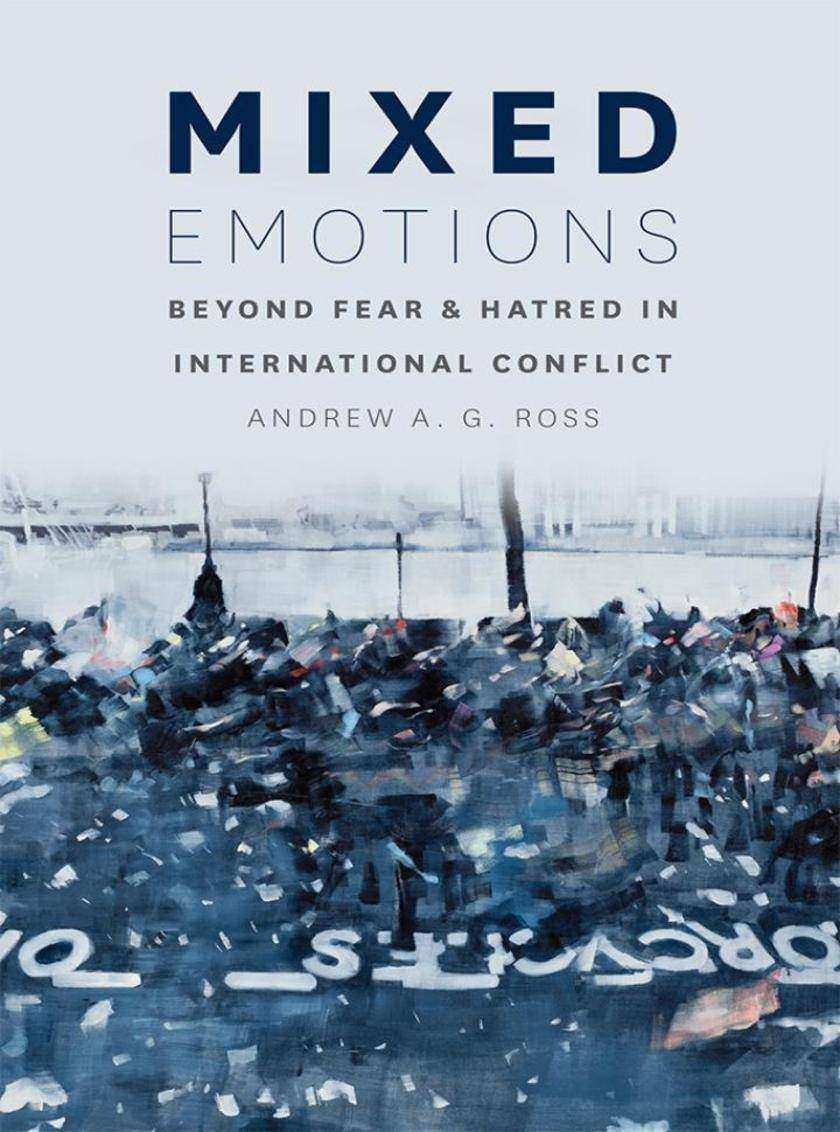
Mixed Emotions
¥229.55
In recent years, it's become increasingly clear that emotion plays a central role in global politics. For example, people readily care about acts of terrorism and humanitarian crises because they appeal to our compassion for human suffering. These struggles also command attention where social interactions have the power to produce or intensify the emotional responses of those who participate in them.?From passionate protests to poignant speeches, Andrew A. G. Ross analyzes high-emotion events with an eye to how they shape public sentiment and finds that there is no single answer. The politically powerful play to the public's emotions to advance their political aims, and such appeals to emotion also often serve to sustain existing values and ?institutions. But the affective dimension can produce profound change, particularly when a struggle in the present can be shown to line up with emotionally resonant events from the past. Extending his findings to well-studied conflicts, including the War on Terror and the violence in Rwanda and the Balkans, Ross identifies important sites of emotional impact missed by earlier research focused on identities and interests.

Saharan Jews and the Fate of French Algeria
¥229.55
The history of Algerian Jews has thus far been viewed from the perspective of communities on the northern coast, who became, to some extent, beneficiaries of colonialism. ?But to the south, in the Sahara, Jews faced a harsher colonial treatment. In Saharan Jews and the Fate of French Algeria, Sarah Abrevaya Stein asks why the Jews of Algeria's south were marginalized by French authorities, how they negotiated the sometimes brutal results, and what the reverberations have been in the postcolonial era.?Drawing on materials from thirty archives across six countries, Stein tells the story of colonial imposition on a desert community that had lived and traveled in the Sahara for centuries. She paints an intriguing historical picture-of an ancient community, trans-Saharan commerce, desert labor camps during World War II, anthropologist spies, battles over oil, and the struggle for Algerian sovereignty. Writing colonialism and decolonization into Jewish history and Jews into the French Saharan one, Saharan Jews and the Fate of French Algeria is a fascinating exploration not of Jewish exceptionalism but of colonial power and its religious and cultural differentiations, which have indelibly shaped the modern world.?

Good Project
¥229.55
NGOs set out to save lives, relieve suffering, and service basic human needs. They are committed to serving people across national borders and without regard to race, ethnicity, gender, or religion, and they offer crucial help during earthquakes, tsunamis, wars, and pandemics. But with so many ailing areas in need of assistance, how do these organizations decide where to go-and who gets the aid?In?The Good Project, Monika Krause dives into the intricacies of the decision-making process at NGOs and uncovers a basic truth: It may be the case that relief agencies try to help people but, in practical terms, the main focus of their work is to produce projects. Agencies sell projects to key institutional donors, and in the process the project and its beneficiaries become commodities. In an effort to guarantee a successful project, organizations are incentivized to help those who are easy to help, while those who are hardest to help often receive no assistance at all. The poorest of the world are made to compete against each other to become projects-and in exchange they offer legitimacy to aid agencies and donor governments. Sure to be controversial,?The Good Project?offers a provocative new perspective on how NGOs succeed and fail on a local and global level.
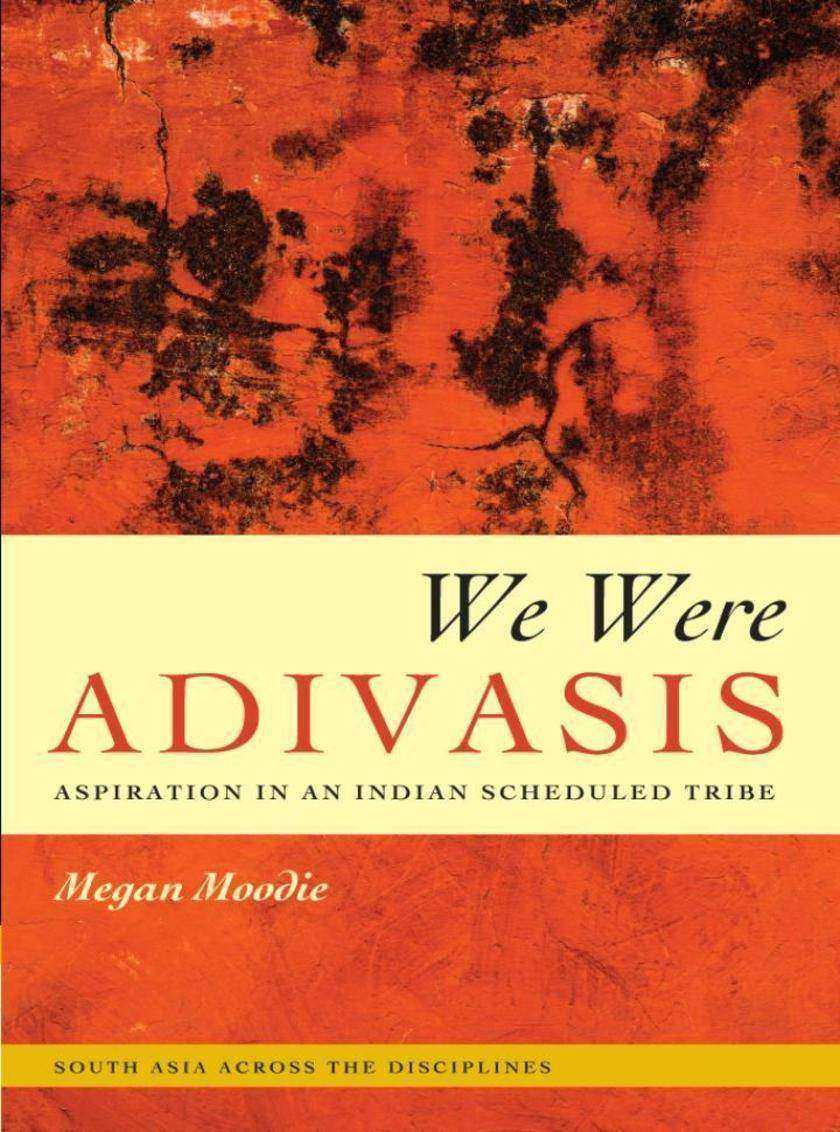
We Were Adivasis
¥229.55
In We Were Adivasis, anthropologist Megan Moodie examines the Indian state's relationship to "e;Scheduled Tribes,"e; or adivasis-historically oppressed groups that are now entitled to affirmative action quotas in educational and political institutions. Through a deep ethnography of the Dhanka in Jaipur, Moodie brings readers inside the creative imaginative work of these long-marginalized tribal communities. She shows how they must simultaneously affirm and refute their tribal status on a range of levels, from domestic interactions to historical representation, by relegating their status to the past: we were adivasis.Moodie takes readers to a diversity of settings, including households, tribal council meetings, and wedding festivals, to reveal the aspirations that are expressed in each. Crucially, she demonstrates how such aspiration and identity-building are strongly gendered, requiring different dispositions required of men and women in the pursuit of collective social uplift. The Dhanka strategy for occupying the role of adivasi in urban India comes at a cost: young women must relinquish dreams of education and employment in favor of community-sanctioned marriage and domestic life. Ultimately, We Were Adivasis explores how such groups negotiate their pasts to articulate different visions of a yet uncertain future in the increasingly liberalized world.


