


 购物车
 个人中心

Darwin Deleted
¥147.15
The ideas and terminology of Darwinism are so pervasive these days that it seems impossible to avoid them, let alone imagine a world without them. But in this remarkable rethinking of scientific history, Peter J. Bowler does just that. He asks:?What if Charles Darwin had not returned from the voyage of the Beagle and thus did not write On the Origin of SpeciesWould someone else, such as Alfred Russel Wallace, have published the selection theory and initiated a similar transformationOr would the absence of Darwin's book have led to a different sequence of events, in which biology developed along a track that did not precipitate a great debate about the impact of evolutionismWould there have been anything equivalent to social Darwinism, and if so would the alternatives have been less pernicious and misappropriated?In Darwin Deleted, Bowler argues that no one else, not even Wallace, was in a position to duplicate Darwin's complete theory of evolution by natural selection.?Evolutionary biology would almost certainly have emerged, but through alternative theories, which were frequently promoted by scientists, religious thinkers, and moralists who feared the implications of natural selection. Because non-Darwinian elements of evolutionism flourished for a time in the real world, it is possible to plausibly imagine how they might have developed, particularly if the theory of natural selection had not emerged until decades after the acceptance of the basic idea of evolution. Bowler's unique approach enables him to clearly explain the non-Darwinian tradition-and in doing so, he reveals how the reception of Darwinism was historically contingent. By taking Darwin out of the equation, Bowler is able to fully elucidate the ideas of other scientists, such as Richard Owen and Thomas Huxley, whose work has often been misunderstood because of their distinctive responses to Darwin.Darwin Deleted boldly offers a new vision of scientific history. It is one where the sequence of discovery and development would have been very different and would have led to an alternative understanding of the relationship between evolution, heredity, and the environment-and, most significantly, a less contentious relationship between science and religion. Far from mere speculation, this fascinating and compelling book forces us to reexamine the preconceptions that underlie many of the current controversies about the impact of evolutionism. It shows how contingent circumstances surrounding the publication of On the Origin of Species polarized attitudes in ways that still shape the conversation today.?

Nature and Nurture of Love
¥247.21
The notion that maternal care and love will determine a child's emotional well-being and future personality has become ubiquitous. In countless stories and movies we find that the problems of the protagonists-anything from the fear of romantic commitment to serial killing-stem from their troubled relationships with their mothers during childhood. How did we come to hold these views about the determinant power of mother love over an individual's emotional developmentAnd what does this vision of mother love entail for children and mothersIn The Nature and Nurture of Love, Marga Vicedo examines scientific views about children's emotional needs and mother love from World War II until the 1970s, paying particular attention to John Bowlby's ethological theory of attachment behavior. Vicedo tracks the development of Bowlby's work as well as the interdisciplinary research that he used to support his theory, including Konrad Lorenz's studies of imprinting in geese, Harry Harlow's experiments with monkeys, and Mary Ainsworth's observations of children and mothers in Uganda and the United States. Vicedo's historical analysis reveals that important psychoanalysts and animal researchers opposed the project of turning emotions into biological instincts. Despite those substantial criticisms, she argues that attachment theory was paramount in turning mother love into a biological need. This shift introduced a new justification for the pre*ive role of biology in human affairs and had profound-and negative-consequences for mothers and for the valuation of mother love.
Trying Biology
¥170.69
In Trying Biology, Adam R. Shapiro convincingly dispels many conventional assumptions about the 1925 Scopes "e;monkey"e; trial. Most view it as an event driven primarily by a conflict between science and religion. Countering this, Shapiro shows the importance of timing: the Scopes trial occurred at a crucial moment in the history of biology textbook publishing, education reform in Tennessee, and progressive school reform across the country. He places the trial in this broad context-alongside American Protestant antievolution sentiment-and in doing so sheds new light on the trial and the historical relationship of science and religion in America.?For the first time we see how religious objections to evolution became a prevailing concern to the American textbook industry even before the Scopes trial began. Shapiro explores both the development of biology textbooks leading up to the trial and the ways in which the textbook industry created new books and presented them as "e;responses"e; to the trial. Today, the controversy continues over textbook warning labels, making Shapiro's study-particularly as it plays out in one of America's most famous trials-an original contribution to a timely discussion.

Jane Austen's Names
¥170.69
In Jane Austen's works, a name is never just a name. In fact, the names Austen gives her characters and places are as rich in subtle meaning as her prose itself. Wiltshire, for example, the home county of Catherine Morland in Northanger Abbey, is a clue that this heroine is not as stupid as she seems: according to legend, cunning Wiltshire residents caught hiding contraband in a pond capitalized on a reputation for ignorance by claiming they were digging up a "e;big cheese"e;-the moon's reflection on the water's surface. It worked.In Jane Austen's Names, Margaret Doody offers a fascinating and comprehensive study of all the names of people and places-real and imaginary-in Austen's fiction. Austen's creative choice of names reveals not only her virtuosic talent for riddles and puns. Her names also pick up deep stories from English history, especially the various civil wars, and the blood-tinged differences that played out in the reign of Henry VIII, a period to which she often returns. Considering the major novels alongside unfinished works and juvenilia, Doody shows how Austen's names signal class tensions as well as regional, ethnic, and religious differences. We gain a new understanding of Austen's technique of creative anachronism, which plays with and against her skillfully deployed realism-in her books, the conflicts of the past swirl into the tensions of the present, transporting readers beyond the Regency.Full of insight and surprises for even the most devoted Janeite, Jane Austen's Names will revolutionize how we read Austen's fiction.
Invisible
¥211.90
If offered the chance-by cloak, spell, or superpower-to be invisible, who wouldn't want to give it a tryWe are drawn to the idea of stealthy voyeurism and the ability to conceal our own acts, but as desirable as it may seem, invisibility is also dangerous. It is not just an optical phenomenon, but a condition full of ethical questions. As esteemed science writer Philip Ball reveals in this book, the story of invisibility is not so much a matter of how it might be achieved but of why we want it and what we would do with it.In this lively look at a timeless idea, Ball provides the first comprehensive history of our fascination with the unseen. This sweeping narrative moves from medieval spell books to the latest nanotechnology, from fairy tales to telecommunications, from camouflage to ghosts to the dawn of nuclear physics and the discovery of dark energy. ?Along the way, Invisible tells little-known stories about medieval priests who blamed their misdeeds on spirits; the Cock Lane ghost, which intrigued both Samuel Johnson and Charles Dickens; the attempts by Victorian scientist William Crookes to detect forces using tiny windmills; novelist Edward Bulwer-Lytton's belief that he was unseen when in his dressing gown; and military efforts to enlist magicians to hide tanks and ships during WWII. ?Bringing in such voices as Plato and Shakespeare, Ball provides not only a scientific history but a cultural one-showing how our simultaneous desire for and suspicion of the invisible has fueled invention and the imagination for centuries.In this unusual and clever book, Ball shows that our fantasies about being unseen-and seeing the unseen-reveal surprising truths about who we are.

Walking
¥123.61
Thomas Bernhard is "e;one of the masters of contemporary European fiction"e; (George Steiner); "e;one of the century's most gifted writers"e; (Newsday); "e;a virtuoso of rancor and rage"e; (Bookforum). And although he is favorably compared with Franz Kafka, Samuel Beckett, and Robert Musil, it is only in recent years that he has gained a devoted cult following in America.A powerful, compact novella, Walking provides a perfect introduction to the absurd, dark, and uncommonly comic world of Bernhard, showing a preoccupation with themes-illness and madness, isolation, tragic friendships-that would obsess Bernhard throughout his career. Walking records the conversations of the unnamed narrator and his friend Oehler while they walk, discussing anything that comes to mind but always circling back to their mutual friend Karrer, who has gone irrevocably mad. Perhaps the most overtly philosophical work in Bernhard's highly philosophical oeuvre, Walking provides a penetrating meditation on the impossibility of truly thinking.

Hegel's Theory of Intelligibility
¥265.87
Hegel's Theory of Intelligibility?picks up on recent revisionist readings of Hegel to offer a productive new interpretation of his notoriously difficult work, the Science of Logic. Rocio Zambrana transforms the revisionist tradition by distilling the theory of normativity that Hegel elaborates in the?Science of Logic?within the context of his signature treatment of negativity, unveiling how both features of his system of thought operate on his theory of intelligibility. ?Zambrana clarifies crucial features of Hegel's theory of normativity previously thought to be absent from the argument of the?Science of Logic-what she calls normative precariousness and normative ambivalence. She shows that Hegel's theory of determinacy views intelligibility as both precarious, the result of practices and institutions that gain and lose authority throughout history, and ambivalent, accommodating opposite meanings and valences even when enjoying normative authority. In this way, Zambrana shows that the Science of Logic provides the philosophical justification for the necessary historicity of intelligibility. Intervening in several recent developments in the study of Kant, Hegel, and German Idealism more broadly, this book provides a productive new understanding of the value of Hegel's systematic ambitions.
Making of Tocqueville's America
¥265.87
Alexis de Tocqueville was among the first to draw attention to Americans' propensity to form voluntary associations-and to join them with a fervor and frequency unmatched anywhere in the world. For nearly two centuries, we have sought to understand how and why early nineteenth-century Americans were, in Tocqueville's words, "e;forever forming associations."e; In The Making of Tocqueville's America, Kevin Butterfield argues that to understand this, we need to first ask: what did membership really mean to the growing number of affiliated Americans?Butterfield explains that the first generations of American citizens found in the concept of membership-in churches, fraternities, reform societies, labor unions, and private business corporations-a mechanism to balance the tension between collective action and personal autonomy, something they accomplished by emphasizing law and procedural fairness. As this post-Revolutionary procedural culture developed, so too did the legal substructure of American civil society. Tocqueville, then, was wrong to see associations as the training ground for democracy, where people learned to honor one another's voices and perspectives. Rather, they were the training ground for something no less valuable to the success of the American democratic experiment: increasingly formal and legalistic relations among people.
On Hysteria
¥365.93
These days, hysteria is known as a discredited diagnosis that was used to group and pathologize a wide range of conditions and behaviors in women. But for a long time, it was seen as a legitimate category of medical problem-and one that, originally, was applied to men as often as to women.In On Hysteria, Sabine Arnaud traces the creation and rise of hysteria, from its invention in the eighteenth century through nineteenth-century therapeutic practice. Hysteria took shape, she shows, as a predominantly aristocratic malady, only beginning to cross class boundaries (and be limited to women) during the French Revolution. Unlike most studies of the role and status of medicine and its categories in this period, On Hysteria focuses not on institutions but on narrative strategies and writing-the ways that texts in a wide range of genres helped to build knowledge through misinterpretation and recontextualized citation.Powerfully interdisciplinary, and offering access to rare historical material for the first time in English, On Hysteria will speak to scholars in a wide range of fields, including the history of science, French studies, and comparative literature.
Rhetorical Memory
¥329.62
Institutions have regimes-policies that typically come from the top down and are meant to align the efforts of workers with the goals and mission of an institution. Institutions also have practices-day-to-day behaviors performed by individual workers attempting to interpret the institution's missives. Taken as a whole, these form a company's memory regime, and they have a significant effect on how employees analyze, mix, translate, sort, filter, and repurpose everyday information in order to meet the demands of their jobs, their customers, their colleagues, and themselves.In Rhetorical Memory, Stewart Whittemore demonstrates that strategies we use to manage information-techniques often acquired through trial and error, rarely studied, and generally invisible to us-are as important to our success as the end products of our work. First, he situates information management within the larger field of rhetoric, showing that both are tied to purpose, audience, and situation. He then dives into an engaging and tightly focused workplace study, presenting three cases from a team of technical communicators making use of organizational memory during their everyday work. By examining which techniques succeed and which fail, Whittemore illuminates the challenges faced by technical communicators. He concludes with a number of practical strategies to better organize information, that will help employees, managers, and anyone else suffering from information overload.
Politics of Pain Medicine
¥329.62
Chronic pain is a medical mystery, debilitating to patients and a source of frustration for practitioners. It often eludes both cause and cure and serves as a reminder of how much further we have to go in unlocking the secrets of the body. A new field of pain medicine has evolved from this landscape, one that intersects with dozens of disciplines and subspecialties ranging from psychology and physiology to anesthesia and chiropractic medicine. Over the past three decades, researchers, policy makers, and practitioners have struggled to define this complex and often contentious field as they work to establish standards while navigating some of the most challenging philosophical issues of Western science.In The Politics of Pain Medicine: A Rhetorical-Ontological Inquiry, S. Scott Graham offers a rich and detailed exploration of the medical rhetoric surrounding pain medicine. Graham chronicles the work of interdisciplinary pain management specialists to found a new science of pain and a new approach to pain medicine grounded in a more comprehensive biospychosocial model. His insightful analysis demonstrates how these materials ultimately shape the healthcare community's understanding of what pain medicine is, how the medicine should be practiced and regulated, and how practitioner-patient relationships are best managed. It is a fascinating, novel examination of one of the most vexing issues in contemporary medicine.

Second-Best Justice
¥329.62
It's long been known that Japanese file fewer lawsuits per capita than Americans do. Yet explanations for the difference have tended to be partial and unconvincing, ranging from circular arguments about Japanese culture to suggestions that the slow-moving Japanese court system acts as a deterrent.With?Second-Best Justice, J. Mark Ramseyer offers a more compelling, better-grounded explanation: the low rate of lawsuits in Japan results not from distrust of a dysfunctional system but from trust in a system that works-that sorts and resolves disputes in such an overwhelmingly predictable pattern that opposing parties rarely find it worthwhile to push their dispute to trial. Using evidence from tort claims across many domains, Ramseyer reveals a court system designed not to find perfect justice, but to "e;make do"e;-to adopt strategies that are mostly right and that thereby resolve disputes quickly and economically.An eye-opening study of comparative law,?Second-Best Justice?will force a wholesale rethinking of the differences among alternative legal systems and their broader consequences for social welfare.?
From Boom to Bubble
¥294.30
During the Great Recession, the housing bubble took much of the blame for bringing the American economy to its knees, but commercial real estate also experienced its own boom-and-bust in the same time period. In Chicago, for example, law firms and corporate headquarters abandoned their historic downtown office buildings for the millions of brand-new square feet that were built elsewhere in the central business district. What causes construction booms like this, and why do they so often leave a glut of vacant space and economic distress in their wake?In From Boom to Bubble, Rachel Weber debunks the idea that booms occur only when cities are growing and innovating. Instead, she argues, even in cities experiencing employment and population decline, developers rush to erect new office towers and apartment buildings when they have financial incentives to do so. Focusing on the main causes of overbuilding during the early 2000s, Weber documents the case of Chicago's "e;Millennial Boom,"e; showing that the Loop's expansion was a response to global and local pressures to produce new assets. An influx of cheap cash, made available through the use of complex financial instruments, helped transform what started as a boom grounded in modest occupant demand into a speculative bubble, where pricing and supply had only tenuous connections to the market. Innovative and compelling, From Boom to Bubble is an unprecedented historical, sociological, and geographic look at how property markets change and fail-and how that affects cities.
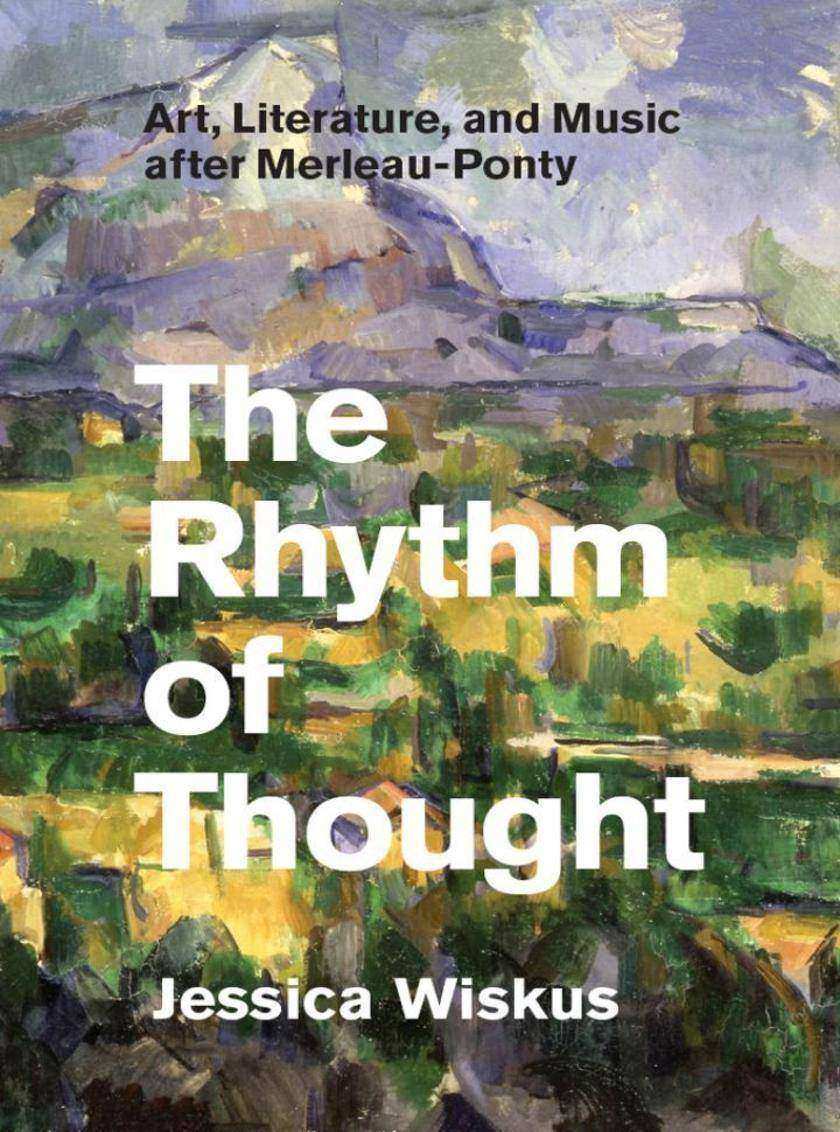
Rhythm of Thought
¥170.69
Between present and past, visible and invisible, and sensation and idea, there is resonance-so philosopher Maurice Merleau-Ponty argued and so Jessica Wiskus explores in The Rhythm of Thought. Holding the poetry of Stephane Mallarme, the paintings of Paul Cezanne, the prose of Marcel Proust, and the music of Claude Debussy under Merleau-Ponty's phenomenological light, she offers innovative interpretations of some of these artists' masterworks, in turn articulating a new perspective on Merleau-Ponty's philosophy.?More than merely recovering Merleau-Ponty's thought, Wiskus thinks according to it. First examining these artists in relation to noncoincidence-as silence in poetry, depth in painting, memory in literature, and rhythm in music-she moves through an array of their artworks toward some of Merleau-Ponty's most exciting themes: our bodily relationship to the world and the dynamic process of expression. She closes with an examination of synesthesia as an intertwining of internal and external realms and a call, finally, for philosophical inquiry as a mode of artistic expression. Structured like a piece of music itself, The Rhythm of Thought offers new contexts in which to approach art, philosophy, and the resonance between them.
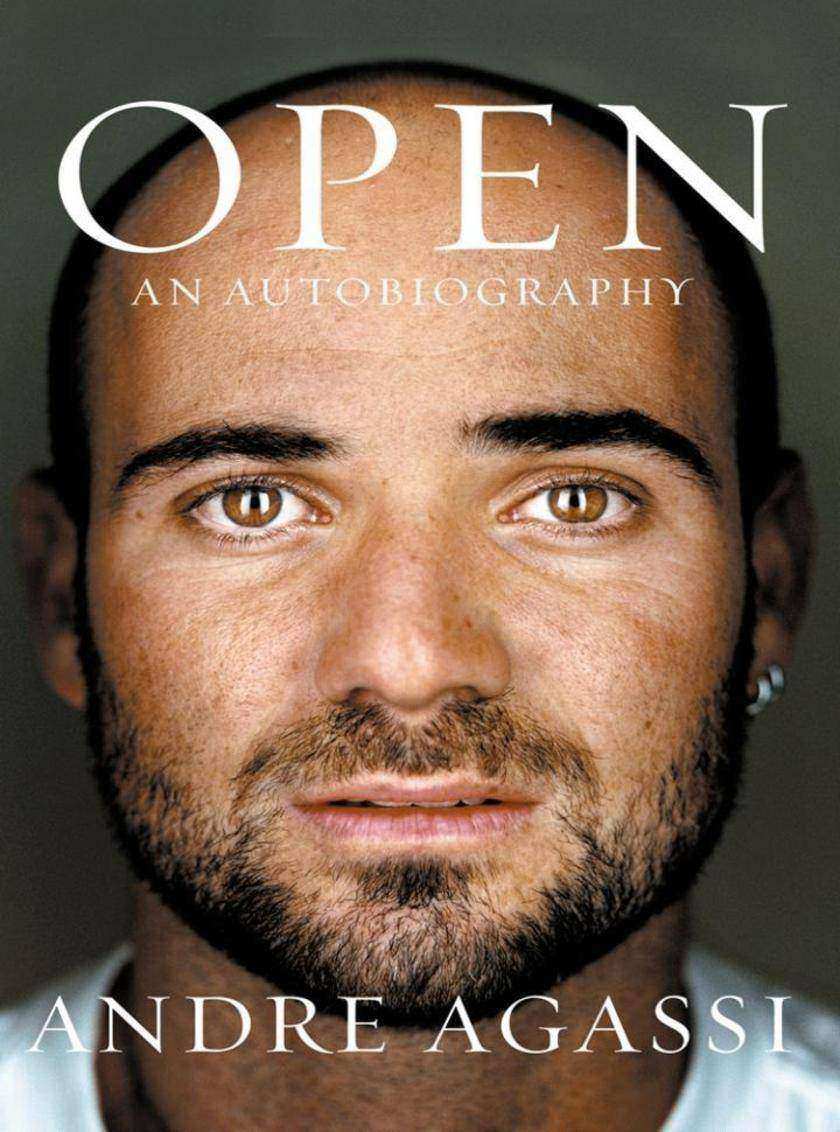
Open: An Autobiography
¥78.38
He is one of the most beloved athletes in history and one of the most gifted men ever to step onto a tennis court – but from early childhood Andre Agassi hated the game. Coaxed to swing a racket while still in the crib, forced to hit hundreds of balls a day while still in grade school, Agassi resented the constant pressure even as he drove himself to become a prodigy, an inner conflict that would define him. Now, in his beautiful, haunting autobiography, Agassi tells the story of a life framed by such conflicts. Agassi makes us feel his panic as an undersized seven-year-old in Las Vegas, practicing all day under the obsessive gaze of his violent father. We see him at thirteen, banished to a Florida tennis camp. Lonely, scared, a ninth-grade dropout, he rebels in ways that will soon make him a 1980s icon. By the time he turns pro at sixteen, his new look promises to change tennis forever, as does his lightning fast return. And yet, despite his raw talent, he struggles early on. We feel his confusion as he loses to the world's best, his greater confusion as he starts to win. After stumbling in three Grand Slam finals, Agassi shocks the world, and himself, by capturing the 1992 Wimbledon. Overnight he becomes a fan favorite and a media target. Agassi brings a near-photographic memory to every pivotal match, and every public relationship. Alongside vivid portraits of rivals, Agassi gives unstinting accounts of his brief time with Barbra Streisand and his doomed marriage to Brooke Shields. He reveals the depression that shatters his confidence, and the mistake that nearly costs him everything. Finally, he recounts his spectacular resurrection and his march to become the oldest man ever ranked number one. In clear, taut prose, Agassi evokes his loyal brother, his wise coach, his gentle trainer, all the people who help him regain his balance and find love at last with Stefanie Graf. With its breakneck tempo and raw candor, Open will be read and cherished for years. A treat for ardent fans, it will also captivate readers who know nothing about tennis. Like Agassi's game, it sets a new standard for grace, style, speed and power.

How Starbucks Saved My Life
¥72.30
A candid, moving and inspirational memoir about a high-flying business man who is forced to re-evaluate his life and values when he suddenly loses everything and goes to work in Starbucks. Michael Gill had it made. He was educated, wealthy and well-connected. He had a creative and lucrative advertising job, which he loved and which he was good at, and a model family and home life. Then he loses it all. He is fired by a young exec whom he had mentored. He has an extramarital affair that destroys his family and results in a newborn son. Then he is diagnosed with brain cancer. He has no insurance, no income. One day he wanders into Starbucks and by chance signs up for a job interview. His would-be boss is a young black woman who gives him a job, and sets about training him and mentoring him. What follows is an inspirational eye-opener as Gill experiences a whole new world compared to his former life – with people from completely different ethnic and social backgrounds. ‘How Starbucks Saved My Life’ follows Gill's journey of discovery as gradually he is forced to question his ingrained assumptions, prejudices and habits. Gill emerges from his fall from grace with humility and gratitude. His new-found empathy teaches him how anyone who has lost their way, or made a mistake, can start again.
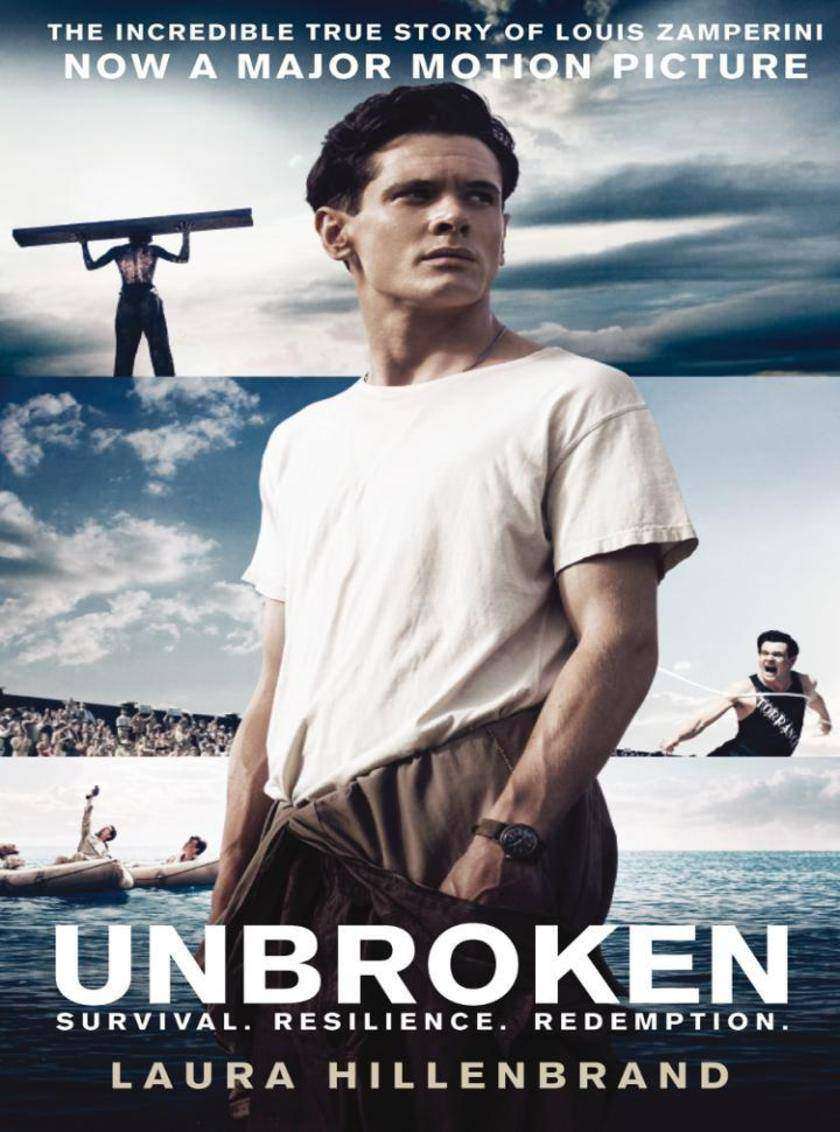
Unbroken
¥66.22
The incredible true story of Louis Zamperini, now a major motion picture directed by Angelina Jolie. THE INTERNATIONAL NUMBER ONE BESTSELLER In 1943 a bomber crashes into the Pacific Ocean. Against all odds, one young lieutenant survives. Louise Zamperini had already transformed himself from child delinquent to prodigious athlete, running in the Berlin Olympics. Now he must embark on one of the Second World War’s most extraordinary odysseys. Zamperini faces thousands of miles of open ocean on a failing raft. Beyond like only greater trials, in Japan’s prisoner-of-war camps. Driven to the limits of endurance, Zamperini’s destiny, whether triumph or tragedy, depends on the strength of his will … Now a major motion picture, directed by Angelina Jolie and starring Jack O’ Connell.

The Kraus Project
¥76.91
A great American writer’s confrontation with a great European critic – a personal and intellectual awakening. Karl Kraus: satirist. Controversialist. Forgotten voice of the early twentieth century. Jonathan Franzen: bestseller. Contrarian. One of the greatest novelists working today. Recalling his student days, the celebrated author of ‘The Corrections’ and ‘Freedom’ recounts his discovery of Kraus and presents his own translations and annotations of the philosopher’s most famous essays. A pioneer of self-publishing, Kraus brilliantly attacked the mass media and the dehumanizing machinery of technology and capitalism. A notoriously difficult writer, Kraus has met his match in Franzen: a popular novelist unafraid to voice unpopular opinions. In the extensive footnotes Franzen explains why Kraus is relevant today – while also revealing his own intellectual and personal preoccupations. Painstakingly wrought, strikingly original, ‘The Kraus Project’ is a feast of thought and literature.
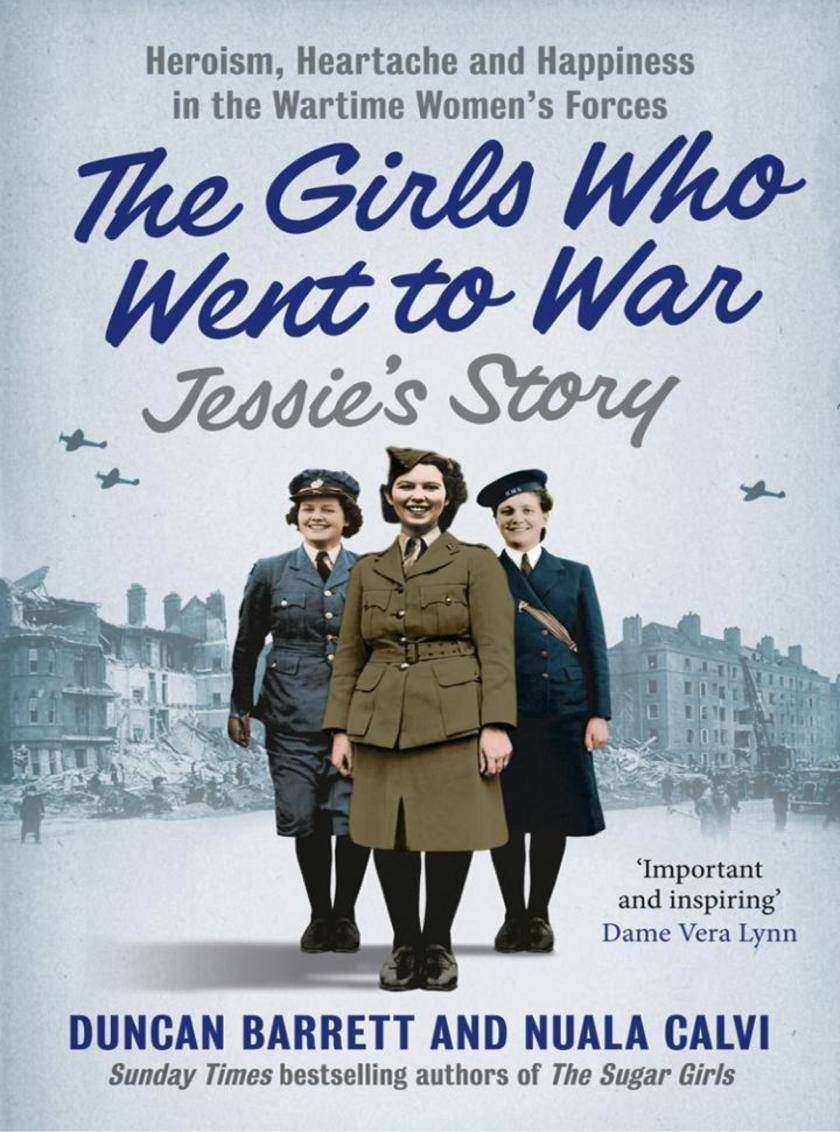
Jessie’s Story
¥9.71
From the bestselling authors of The Sugar Girls and GI Brides, this is Jessie’s story, one of three true accounts from the book The Girls Who Went to War. “Since Jessie’s surname was Ward, she was one of the last to hear what role she had been assigned to. Mary and Olive had already been told they were going to an ack-ack training camp in Berkshire, and she crossed her fi ngers, hoping that she would be setting off with them. Finally, the corporal came to her name. ‘Private Ward,’ she called out. ‘Anti-aircraft.’ At that moment, Jessie couldn’t have been happier. She was joining the artillery, and would soon be giving the Germans what for.” In the summer of 1940, Britain stood alone against Germany. The British Army stood at just over one and a half million men, while the Germans had three times that many, and a population almost twice the size of ours from which to draw new waves of soldiers. Clearly, in the fight against Hitler, manpower alone wasn’t going to be enough. Eighteen-year-old Jessie Ward defied her mother to join the ATS, leaving her quiet home for the rigours of training, the camaraderie of the young women who worked together so closely and to face a war that would change her life forever. Overall, more than half a million women served in the armed forces during the Second World War. This book tells the story of just one of them. But in her story is reflected the lives of hundreds of thousands of others like them – ordinary girls who went to war, wearing their uniforms with pride.
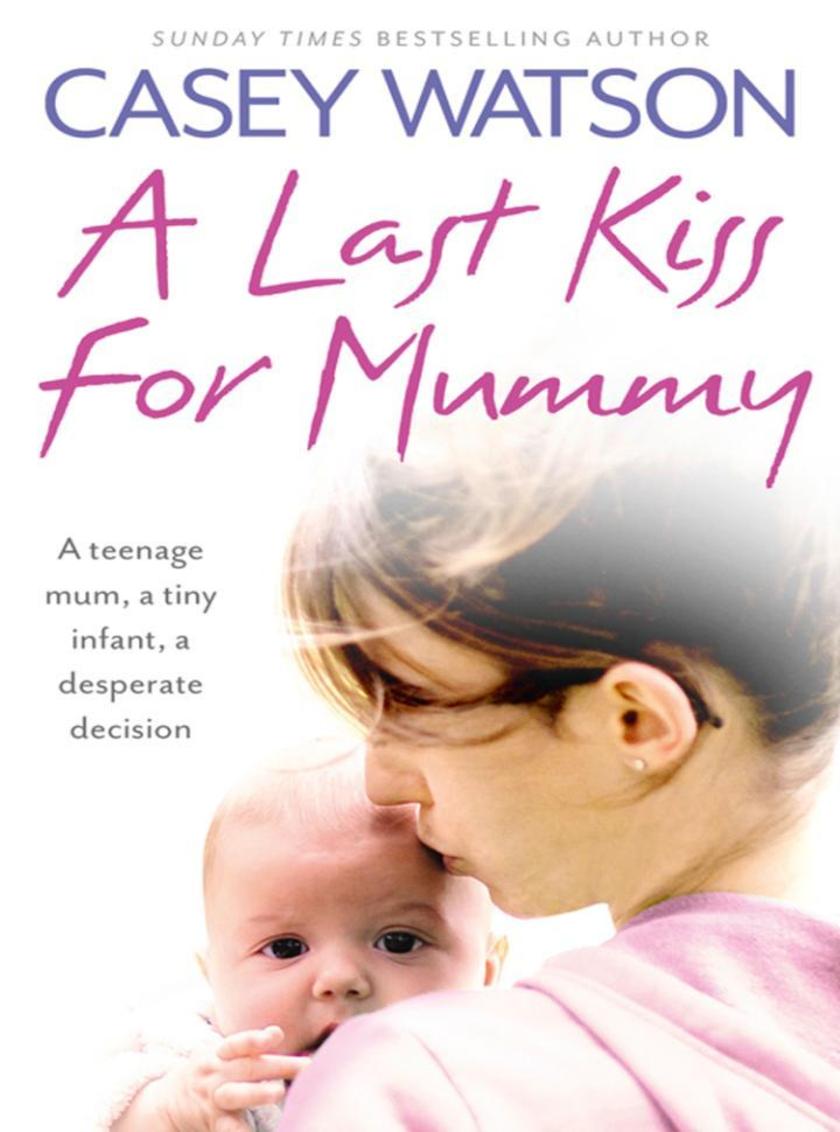
A Last Kiss for Mummy
¥58.86
Bestselling author and foster carer Casey Watson tells the heartbreaking true story of a teenage mother and baby in need of a safe and loving home. At fourteen, Emma is just a child herself – and one who’s never been properly mothered. She has been in foster care several times already and when she discovered she was pregnant, and refused to have an abortion, her mother threw her out of the house. Casey and her family instantly form a strong bond with Emma’s baby Roman, but dealing with Emma’s behaviour and constant lack of responsibility is a far tougher challenge. And before long Casey finds she’s doing something she never thought she would – covering up for Emma’s shortcomings as she allows her personal involvement to colour her judgement. But the more Casey gets to know Emma the more she’s convinced that with the right help and guidance this lonely and unsupported girl can become a good mother to her gorgeous little boy. That’s what makes it even harder when Casey and her family have to make a stark choice: to hold on to Emma or look after Roman; to help a teenage girl desperate to turn her life around, or offer an innocent baby a safe home and much-needed good start in life.
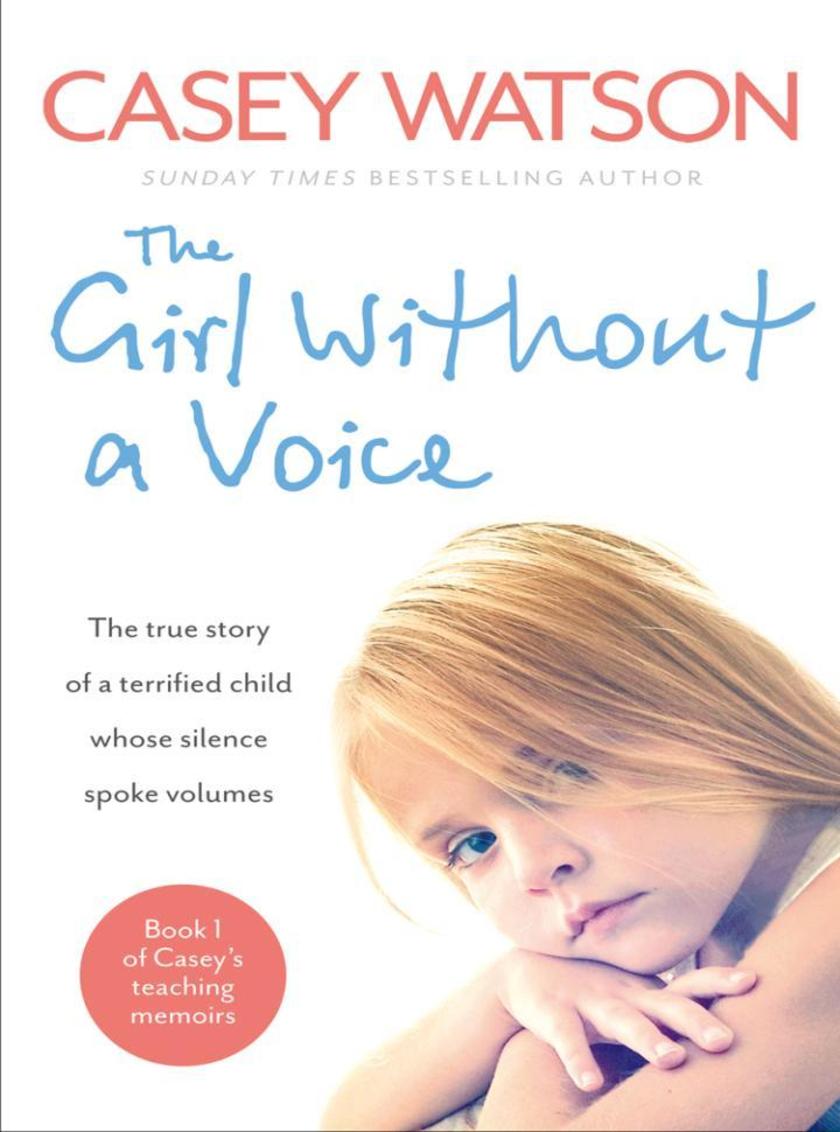
The Girl Without a Voice
¥58.86
Bestselling author and foster carer Casey Watson tells the shocking and deeply moving true story of a young girl with severe behavioural problems. This is the first of several stories about ‘difficult’ children Casey helped during her time as a behaviour manager at her local comprehensive. Casey has been in the post for six months when thirteen-year-old Imogen joins her class. One of six children Casey is teaching, Imogen has selective mutism. She’s a bright girl, but her speech problems have been making mainstream lessons difficult. Life at home is also hard for Imogen. Her mum walked out on her a few years earlier and she’s never got on with her dad’s new girlfriend. She’s now living with her grandparents. There’s no physical explanation for Imogen’s condition, and her family insist she’s never had troubles like this before. Everyone thinks Imogen is just playing up – except the member of staff closest to her, her teacher Casey Watson. It is the deadpan expression she constantly has on her face that is most disturbing to Casey. Determined there must be more to it, Casey starts digging and it’s not long before she starts to discover a very different side to Imogen’s character. A visit to her grandparents’ reveals that Imogen is anything but silent at home. In fact she’s prone to violent outbursts; her elderly grandparents are terrified of her. Eventually Casey’s hard work starts to pay off. After months of silence, Imogen utters her first, terrified, words to Casey: ‘I thought she was going to burn me.’ Dark, shocking and deeply disturbing, Casey begins to uncover the reality of what Imogen has been subjected to for years.


