The Earth: An Intimate History (Text Only)
¥95.75
This ebook edition does not include illustrations. ‘The Earth is a true delight: full of awe-inspiring details… it blends travel, history, reportage and science to creat an unforgettable picture of our ancient earth.’ Sunday Times The face of the Earth, criss-crossed by chains of mountains like the scars of old wounds has changed constantly over billions of years, and the testament of the remote past is all around us. In this book, Richard Fortey teaches us how to read its character, laying out the dominions of the world before us. He shows how everything – human culture, natural history, even the shape of cities – roots back to a deeper geological truth. Far from being the driest of sciences, he proves that geology informs all our lives in the most intimate way. Nothing in this book seems to be at rest. The surface of the Earth dilates and collapses; seas and mountains rise and fall; continents move. We climb the Alps, wallow in Icelandic hot springs, dive down to the ocean floor; we explore the barren rocks of Newfoundland, walk through the lush ecosystems of Hawaii, cross the salt flats of Oman and saunter along the San Andreas Fault. And Fortey is the ideal guide, his de*ions of natural beauty as memorable as the best travel-writers, his prose as gripping as the best novelist, his crystal-clear scientific explanations fascinating and often surprising. Note that it has not been possible to include the same picture content that appeared in the original print version.
The Planets
¥73.58
After the huge national and international success of ‘Longitude’ and ‘Gallileo’s Daughter’, Dava Sobel tells the human story of the nine planets of our solar system. This groundbreaking work traces the ‘lives’ of each member of our solar family, from myth and history, astrology and science fiction, to the latest data from the modern era's robotic space probes. Whether revealing what hides behind Venus's cocoon of acid clouds, describing Neptune's complex beauty, or capturing first-hand the excitement at the Jet Propulsion Laboratory when the first pictures from Cassini at Saturn were recently beamed to earth, Dava Sobel's unique tour of the solar system is filled with fascination and beauty. In lyrical prose interspersed with poems by Tennyson, Blake and others, ‘The Planets’ gives a breathtaking, intimate view of those heavenly bodies that have captured the imagination since humanity’s first glimpse of the glittering night skies. Timely and timeless, ‘The Planets’ will engage and delight as it unravels the mysteries of the cosmos. It is of infinite relevance to this age in which new planets are being discovered elsewhere in our galaxy. Note that it has not been possible to include the same picture content that appeared in the original print version.
BMW 5 & 6 Series E12 - E24 - E28 -E34 Restoration Tips and Techniques
¥245.17
A wealth of restoration tips and techniques covering E12, E24, E28, E34, 5 and 6 Series BMWs built between 1972 and 1995. Covers all models from 518 to M6. Advice is given on acquiring a good 5 & 6 Series model, plus tips on restoring, engines, bodywork, trim, electrics, suspension & much more.
VW Transporter T4 (Petrol and Diesel - 1990-1995) Workshop Manual
¥245.17
Covers models from 1990 to 1995. Covering: short & long wheelbase, Van, Caravelle, Bus, 2.0 & 2.5-litre petrol and 1.9 & 2.4-litre diesel engines, clutch, suspension, fuel, ignition, steering, braking, electrics, bodywork, plus a fault-finding section. Covers manual only.
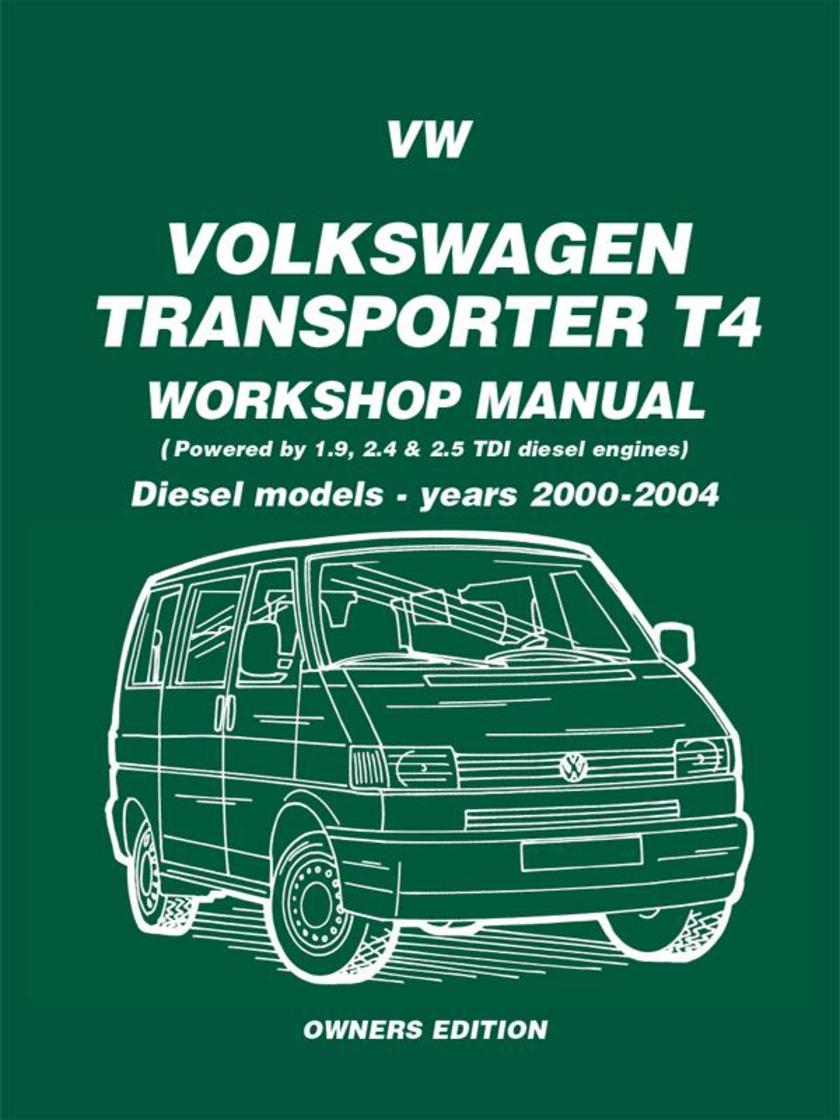
VW Transporter T4 Workshop Manual Diesel 2000-2004
¥245.17
Covers all T4 diesel vehicles from 2000 to the end of 2004, including Vans 800, 1,000, and 1,200, Caravelle CL and GL, Bus (long and short wheelbase). Engines covered: Diesel 1.9L, 2.4L & 2.5L TDI, with a manual gearbox only. 164 large pages including 11 pages of wiring & over 200 illustrations.
10% Human: How Your Body’s Microbes Hold the Key to Health and Happiness
¥69.26
‘A manual for the new, healthy way of being dirty … Read it, and you will learn to love your microbiota’ Newsweek Obesity, autism, mental health problems, IBS, allergies, auto-immunity, cancer. Does the answer to the modern epidemic of ‘Western’ diseases lie in our gut? You are 10% human. For every one of your cells, there are nine impostors hitching a ride. You are not just flesh and bone, but also bacteria and fungi. And you are more ‘them’ than you are ‘you’. Your gut alone hosts 100 trillion of them and until recently we thought that our microbes didn’t matter. This is all set to change as the latest scientific research tells a very different story, one where microbes run our bodies and becoming healthy is impossible without them. In this ground-breaking book, biologist Alanna Collen reveals how our personal colony of microbes influence our weight, immune system, mental health and even our choice of partner. This is a new way of understanding modern diseases – obesity, autism, mental health problems, gut disorders, allergies, auto-immunity and even cancer – as she argues they have their root in our failure to cherish our most fundamental and enduring relationship: that with our microbes. Illuminating many of the questions still unanswered by the human genome project 10% Human completely changes our understanding of diet, modern disease and medicine. The good news is that unlike our human cells, we can change our microbes for the better and this book shows you how. A revelatory and indispensable guide: life – and your body – will never seem the same again.
Geekspeak: Why Life + Mathematics = Happiness
¥66.22
The quirky offspring of ‘QI’ and ‘Freakonomics’, ‘Geekspeak’ melds ingenious statistical analysis with edifying trivia to explain away some curious facts of life. Curiosity is our human birthright, and destiny. As a species we are to prone to think, ruminate, reflect, cogitate, deliberate and philosophise. We do all these things, and why? To explain away the world around us, to find solace in knowledge, to answer all those seeming unanswerables: why are we here? Is there a God? Is there life after death? How many slaves on treadmills does it take to power my kettle? Yes, forget the Bible, ‘Geekspeak’ is the new oracle for 21st century living. Graham Tattersall, a confirmed and superior geek, has rescued maths from the prison of the classroom, imbued it with fresh new life, and put it to use in novel and unexpected ways. His ingenious, deceptively simple formula melds statistical analysis with personal experience and enlightening trivia to explain away some curious and oft-pondered mysteries of the world: how big is your vocabulary, how heavy is your house, do the dead outnumber the living, how powerful is a fly, how fast is a fart. With its recipe of sophisticated mathematical techniques, witty anecdotes and startling amount of learning, ‘Geekspeak’ is an essential tool for impressing friends, sounding intelligent and better understanding the fascinating world in which we live. Maths has a new champion, and the Geeks a new King.
The Wood for the Trees: The Long View of Nature from a Small Wood
¥73.58
From one of our greatest science writers, this biography of a beech-and-bluebell wood through diverse moods and changing seasons combines stunning natural history with the ancient history of the countryside to tell the full story of the British landscape. ‘The woods are the great beauty of this country… A fine forest-like beech wood far more beautiful than anything else which we have seen in its vicinity’ is how John Stuart Mill described a small patch of beech-and bluebell woodland, buried deeply in the Chiltern Hills and now owned by Richard Fortey. Drawing upon a lifetime of scientific expertise and abiding love of nature, Fortey uses his small wood to tell a wider story of the ever-changing British landscape, human influence on the countryside over many centuries and the vital interactions between flora, fauna and fungi. The trees provide a majestic stage for woodland animals and plants to reveal their own stories. Fortey presents his wood as an interwoven collection of different habitats rich in species. His attention ranges from the beech and cherry trees that dominate the wood to the flints underfoot; the red kites and woodpeckers that soar overhead; the lichens, mosses and liverworts decorating the branches as well as the myriad species of spiders, moths, beetles and crane-flies. The 300 species of fungi identified in the wood capture his attention as much as familiar deer, shrews and dormice. Fortey is a naturalist who believes that all organisms are as interesting as human beings – and certainly more important than the observer. So this book is a close examination of nature and human history. He proves that poetic writing is compatible with scientific precision. The book is filled with details of living animals and plants, charting the passage of the seasons, visits by fellow enthusiasts; the play of light between branches; the influence of geology; and how woodland influences history, architecture and industry. On every page he shows how an intimate study of one small wood can reveal so much about the natural world and demonstrates his relish for the incomparable pleasures of discovery.
The Times Improve Your Bridge Game
¥44.24
Based on The Times Bridge column, an extensive bridge guide aimed at the less experienced or social player who longs to improve their game, with instructive deals and tips, as well as a helpful Index. Andrew Robson, The Times Bridge Correspondent, is both a champion Bridge player and an inspired teacher. He teaches and tutors at his Bridge Club and has acquired great practical knowledge about how people learn to play Bridge. Based on Andrew Robson’s Friday column in The Times, common scenarios are presented with an outline of what actually happened, as well as what should have happened. Along with every deal is the very popular handy tip ‘If you remember just one thing…’, which features throughout the book. The first section of the book, ‘The Game’, is a basic outline providing the key to playing a sensible game of Bridge, subdivided into ‘Bidding’, ‘Declarer Play’ and ‘Defence’. The reader can either read ‘The Game’ first, paying particular attention to the tips, or they can dip in and out of the book, picking a common mistake at random, with the option to cross-reference to the same tip in ‘The Game’ section. Bridge is now reaching a new audience, and is being played by people of all ages. Let Andrew Robson help you to improve your game! Previously published as The Times Bridge: Common Mistakes and How to Avoid Them
Music in German Philosophy
¥353.16
Though many well-known German philosophers have devoted considerable attention to music and its aesthetics, surprisingly few of their writings on the subject have been translated into English. Stefan Lorenz Sorgner, a philosopher, and Oliver Furbeth, a musicologist, here fill this important gap for musical scholars and students alike with this compelling guide to the musical discourse of ten of the most important German philosophers, from Kant to Adorno.Music in German Philosophy includes contributions from a renowned group of ten scholars, including some of today's most prominent German thinkers, all of whom are specialists in the writers they treat. Each chapter consists of a short biographical sketch of the philosopher concerned, a summary of his writings on aesthetics, and finally a detailed exploration of his thoughts on music. The book is prefaced by the editors' original introduction, presenting music philosophy in Germany before and after Kant, as well as a new introduction and foreword to this English-language addition, which places contemplations on music by these German philosophers within a broader intellectual climate.
Ecology and Evolution of Ant-Plant Interactions
¥282.53
Ants are probably the most dominant insect group on Earth, representing ten to fifteen percent of animal biomass in terrestrial ecosystems. Flowering plants, meanwhile, owe their evolutionary success to an array of interspecific interactions-such as pollination, seed dispersal, and herbivory-that have helped to shape their great diversity. The Ecology and Evolution of Ant-Plant Interactions brings together findings from the scientific literature on the coevolution of ants and plants to provide a better understanding of the unparalleled success of these two remarkable groups, of interspecific interactions in general, and ultimately of terrestrial biological communities.The Ecology and Evolution of Ant-Plant Interactions synthesizes the dynamics of ant-plant interactions, including the sources of variation in their outcomes. Victor Rico-Gray and Paulo S. Oliveira capture both the emerging appreciation of the importance of these interactions within ecosystems and the developing approaches that place studies of these interactions into a broader ecological and evolutionary context. The collaboration of two internationally renowned scientists, The Ecology and Evolution of Ant-Plant Interactions will become a standard reference for understanding the complex interactions between these two taxa.
Man Who Flattened the Earth
¥311.96
Self-styled adventurer, literary wit, philosopher, and statesman of science, Pierre-Louis Moreau de Maupertuis (1698-1759) stood at the center of Enlightenment science and culture. Offering an elegant and accessible portrait of this remarkable man, Mary Terrall uses the story of Maupertuis's life, self-fashioning, and scientific works to explore what it meant to do science and to be a man of science in eighteenth-century Europe.Beginning his scientific career as a mathematician in Paris, Maupertuis entered the public eye with a much-discussed expedition to Lapland, which confirmed Newton's calculation that the earth was flattened at the poles. He also made significant, and often intentionally controversial, contributions to physics, life science, navigation, astronomy, and metaphysics. Called to Berlin by Frederick the Great, Maupertuis moved to Prussia to preside over the Academy of Sciences there. Equally at home in salons, cafs, scientific academies, and royal courts, Maupertuis used his social connections and his printed works to enhance a carefully constructed reputation as both a man of letters and a man of science. His social and institutional affiliations, in turn, affected how Maupertuis formulated his ideas, how he presented them to his contemporaries, and the reactions they provoked.Terrall not only illuminates the life and work of a colorful and important Enlightenment figure, but also uses his story to delve into many wider issues, including the development of scientific institutions, the impact of print culture on science, and the interactions of science and government. Smart and highly readable, Maupertuis will appeal to anyone interested in eighteenth-century science and culture.”Terrall's work is scholarship in the best sense. Her explanations of arcane 18th-century French physics, mathematics, astronomy, and biology are among the most lucid available in any language.”-Virginia Dawson, American Historical ReviewWinner of the 2003 Pfizer Award from the History of Science Society
Paradise Found
¥147.15
The first Europeans to set foot on North America stood in awe of the natural abundance before them. The skies were filled with birds, seas and rivers teemed with fish, and the forests and grasslands were a hunter's dream, with populations of game too abundant and diverse to even fathom. It's no wonder these first settlers thought they had discovered a paradise of sorts. Fortunately for us, they left a legacy of copious records documenting what they saw, and these observations make it possible to craft a far more detailed evocation of North America before its settlement than any other place on the planet.Here Steve Nicholls brings this spectacular environment back to vivid life, demonstrating with both historical narrative and scientific inquiry just what an amazing place North America was and how it looked when the explorers first found it. The story of the continent's colonization forms a backdrop to its natural history, which Nicholls explores in chapters on the North Atlantic, the East Coast, the Subtropical Caribbean, the West Coast, Baja California, and the Great Plains. Seamlessly blending firsthand accounts from centuries past with the findings of scientists today, Nicholls also introduces us to a myriad cast of characters who have chronicled the changing landscape, from pre-Revolutionary era settlers to researchers whom he has met in the field.A director and writer of Emmy Award-winning wildlife documentaries for the Smithsonian Channel, Animal Planet, National Geographic, and PBS, Nicholls deploys a cinematic flair for capturing nature at its most mesmerizing throughout. But Paradise Found is much more than a celebration of what once was: it is also a reminder of how much we have lost along the way and an urgent call to action so future generations are more responsible stewards of the world around them. The result is popular science of the highest order: a book as remarkable as the landscape it recreates and as inspired as the men and women who discovered it.
Plan of Chicago
¥100.06
Arguably the most influential document in the history of urban planning, Daniel Burnham's 1909 Plan of Chicago, coauthored by Edward Bennett and produced in collaboration with the Commercial Club of Chicago, proposed many of the city's most distinctive features, including its lakefront parks and roadways, the Magnificent Mile, and Navy Pier. Carl Smith's fascinating history reveals the Plan's central role in shaping the ways people envision the cityscape and urban life itself.?Smith's concise and accessible narrative begins with a survey of Chicago's stunning rise from a tiny frontier settlement to the nation's second-largest city. He then offers an illuminating exploration of the Plan's creation and reveals how it embodies the renowned architect's belief that cities can and must be remade for the better. The Plan defined the City Beautiful movement and was the first comprehensive attempt to reimagine a major American city. Smith points out the ways the Plan continues to influence debates, even a century after its publication, about how to create a vibrant and habitable?urban environment.?Richly illustrated and incisively written, his insightful book will be indispensable to our understanding of Chicago, Daniel Burnham, and the emergence of the modern city.
Black Pearls and Red Tide
¥8.09
The strange death of three young children in a small coastal village in far away Papua New Guinea in March 1972 did not rate a mention in the territory’s annual report that year to its Australian governors—let alone make a ripple in international ponds. Yet, it was an event of incredible proportions. It marked the end of a chain of knowledge that extended back more than 45,000 years; it heralded the beginning of an era of immense, baffling phenomena and disasters around the world; and it marked the rise of a deadly toxin from the seabed that would spread from country to country. The book works back in time to discover the origin of the toxin’s host, traces its emergence and bizarre spread from country to country with resulting deaths, and projects into the future the likely, unsettling to horrific, consequences for the world’s food security, already set irreversibly in motion. It is a story that encompasses much of the globe, from the Pacific islands to Asia—Brunei Darussalam, Indonesia, Japan, Malaysia and the Philippines—to the Middle East—Persian Gulf and Red Sea, and the Egypt of the Pharaohs—to the Pacific and Atlantic coasts of the Americas, and to Australia and Antarctica. It is a detective story too, about who or what killed the three children, taking us in helicopters, light planes, speedboats and a naval patrol vessel, and on underwater explorations. It is a romance spanning a period from the tail end of the Palaeolithic era, pausing for a less ancient exodus, that of the Jews from Egypt, and for Cleopatra’s—incredibly expensive as we will see—dinner with Marc Antony, and leap-frogging through events over the following two millennia via connections with Spanish kings, Napoleon Bonaparte, and the most famous pair to play the part of Cleopatra and Marc Antony in modern times: Elizabeth Taylor and Richard Burton. Finally, it is the story of a young scientist sent unknowingly as a spy into Papua New Guinea shortly before its independence. How did he find himself enmeshed in the threads of this strange puzzle and what did he discover?
Identitatea rom?neasc?
¥53.14
Acumularea de produse reziduale acide ?n organism determin? ?mb?tr?nirea. Dac? reu?im s? elimin?m aceste de?euri, mai ales pe cele vechi, putem inversa procesul de ?mb?tr?nire. Putem chiar elimina simptomele bolilor dac? nu s-au produs deja daune iremediabile. Atunci c?nd ne g?ndim la ?s?n?tate“, de fapt spunem ?diet? ?i exerci?ii fizice“, care ajut? organismul s? elimine substan?ele reziduale, dar nu sunt ?ntotdeauna u?or de realizat ?i eficiente. Scopul acestei c?r?i este de a le ar?ta oamenilor cum s? ?nve?e ?i s? practice metodele simple de inversare a procesului de ?mb?tr?nire, pentru a tr?i s?n?to?i mult? vreme.
Surgical Anatomy: "With Sixty-Eight Coloured Plates"
¥37.20
The object of this work is to present to the student of medicine and the practitioner removed from the schools, a series of dissections demonstrative of the relative anatomy of the principal regions of the human body. Whatever title may most fittingly apply to a work with this intent, whether it had better be styled surgical or medical, regional, relative, descriptive, or topographical anatomy, will matter little, provided its more salient or prominent character be manifested in its own form and feature. The work, as I have designed it, will itself show that my intent has been to base the practical upon the anatomical, and to unite these wherever a mutual dependence was apparent.That department of anatomical research to which the name topographical strictly applies, as confining itself to the mere account of the form and relative location of the several organs comprising the animal body, is almost wholly isolated from the main questions of physiological and transcendental interest, and cannot, therefore, be supposed to speak in those comprehensive views which anatomy, taken in its widest signification as a science, necessarily includes. While the anatomist contents himself with describing the form and position of organs as they appear exposed, layer after layer, by his dissecting instruments, he does not pretend to soar any higher in the region of science than the humble level of other mechanical arts, which merely appreciate the fitting arrangement of things relative to one another, and combinative to the whole design of the form or machine of whatever species this may be, whether organic or inorganic. The descriptive anatomist of the human body aims at no higher walk in science than this, and hence his nomenclature is, as it is, a barbarous jargon of words, barren of all truthful signification, inconsonant with nature, and blindly irrespective of the cognitio certa ex principiis certis exorta. Still, however, this anatomy of form, although so much requiring purification of its nomenclature, in order to clothe it in the high reaching dignity of a science, does not disturb the medical or surgical practitioner, so far as their wants are concerned. Although it may, and actually does, trammel the votary who aspires to the higher generalizations and the development of a law of formation, yet, as this is not the object of the surgical anatomist, the nomenclature, such as it is, will answer conveniently enough the present purpose. The anatomy of the human form, contemplated in reference to that of all other species of animals to which it bears comparison, constitutes the study of the comparative anatomist, and, as such, establishes the science in its full intent. But the anatomy of the human figure, considered as a species, per se, is confessedly the humblest walk of the understanding in a subject which, as anatomy, is relationary, and branches far and wide through all the domain of an animal kingdom. While restricted to the study of the isolated human species, the cramped judgment wastes in such narrow confine; whereas, in the expansive gaze over all allying and allied species, the intellect bodies forth to its vision the full appointed form of natural majesty; and after having experienced the manifold analogies and differentials of the many, is thereby enabled, when it returns to the study of the one, to view this one of human type under manifold points of interest, to the appreciation of which the understanding never wakens otherwise. If it did not happen that the study of the human form (confined to itself) had some practical bearing, such study could not deserve the name of anatomical, while anatomical means comparative, and whilst comparison implies inductive reasoning. ? ABOUT AUTHOR: Joseph Maclise:FELLOW OF THE ROYAL COLLEGE OF SURGEONS I INSCRIBE THIS WORK TO THE GENTLEMENWITH WHOM AS A FELLOW-STUDENT I WAS ASSOCIATED AT THELondon University College: AND IN AN ESPECIAL MANNER, IN THEIR NAME AS WELL AS MY OWN,I AVAIL MYSELF OF THE OPPORTUNITY TO RECORD, ON THIS PAGE,ALBEIT IN CHARACTERS LESS IMPRESSIVE THAN THOSE WHICH AREWRITTEN ON THE LIVING TABLET OF MEMORY,THE DEBT OF GRATITUDE WHICH WE OWE TO THE LATE SAMUEL COOPER, F.R.S., AND ROBERT LISTON, F.R.S., TWO AMONG THE MANY DISTINGUISHED PROFESSORS OF THATINSTITUTION, WHOSE PUPILS WE HAVE BEEN,AND FROM WHOM WE INHERIT THAT BETTER POSSESSION THAN LIFEITSELF, AN ASPIRATION FOR THE LIGHT OF SCIENCE. JOSEPH MACLISE.
REIGNITE: Transform From Burned Out to On Fire and Find New Meaning in Your Care
¥81.50
Think about your job or career for a moment. Is your work pleasant, enjoyable, and inspiring? Does it provide you with opportunities to innovate and create using all of your natural talents and abilities? Does work energize you and bring you joy and happiness? Or, do you instead feel emotionally exhausted and cynical with a lack of any sense of personal accomplishment? If so, you are probably burned out. One thing is certain, you cannot live a life of happiness and passion driven purpose if you are burned out. Instead of finding deep satisfaction and happiness in your work it is probably something you have come to dread, like going back to work on Mondays. I should know. I became burned out once. I became burned out at my job as a family physician so I understand burnout. I know firsthand how personally and professionally devastating it can be and how costly it can become to organizations. I also learned what to do about it, how to FIX it! Learn how to transform from being burned out to ON FIRE and find new meaning in your career and life. Within the pages of this book, I will show you how.
The Book of Prognostics
¥40.79
It appears to me a most excellent thing for the physician to cultivate Prognosis; for by foreseeing and foretelling, in the presence of the sick, the present, the past, and the future, and explaining the omissions which patients have been guilty of, he will be the more readily believed to be acquainted with the circumstances of the sick; so that men will have confidence to intrust themselves to such a physician.
Lezzetten ?dün Vermeyen Diyet
¥27.88
Pek ?ok diyet program? ve kitab? sizlere diyet listeleri vermekte bunlar? uygulaman?z? sizlerden istemektedir. Peki siz bu listeleri uygulayabiliyor musunuz? ?al??t???n?z yerde tabldot yemek servisi yapan g?revliye bu listeleri verebiliyor musunuz? D??ar?da büfede veya lokantada yemek yerken garsondan sizin günlük diyet listenizi size haz?rlamas?n? isteyebiliyor musunuz? Günlük hayatta uygulayamad???n?z bu listelerin size ne faydas? var? Biz size liste vermeyece?iz. Biz sizi diyet listelerine uymak zorunda b?rakmayaca??z, sizin günlük ya?amda ?evrenizde size sunulan yemekleri nas?l diyetinize uygun hale getirilebilece?ini g?stermek istiyoruz.Kitab?m?z? haz?rlarken hekimlik bilgilerimizi de sizlere sunmay? ama?lad?k. Kitab?n haz?rlanmas?nda bana yard?mc? olan sevgili e?im Uzm. Dr. Candan Engin’e ?ok te?ekkür ediyorum.Kitab?m?z? olabildi?ince k?sa tutmay? hedefledik. Uzun yaz?lan kitaplar okuyucuya s?k?c? gelebiliyor ve kitap ?zümsenme-yebiliyor. Amac?m?z sizi s?kmadan gerekli bilgileri verebilmektir.Keyifli okumalar dile?iyle, Uz. Dr. ?mer Engin Genel Cerrahi Uzman?
Life and Habit
¥27.88
One more point deserves notice. Butler often refers in “Life and Habit” to Darwin’s “Variations of Animals and Plants under Domestication.” When he does so it is always under the name “Plants and Animals.” More often still he refers to Darwin’s “Origin of Species by means Natural Selection,” terming it at one time “Origin of Species” and at another “Natural Selection,” sometimes, as on p. 278, using both names within a few lines of each other. Butler was as a rule scrupulously careful about quotations, and I can offer no explanation of this curious confusion of titles.? Since Samuel Butler published “Life and Habit” thirty-three [vii] years have elapsed—years fruitful in change and discovery, during which many of the mighty have been put down from their seat and many of the humble have been exalted. I do not know that Butler can truthfully be called humble, indeed, I think he had very few misgivings as to his ultimate triumph, but he has certainly been exalted with a rapidity that he himself can scarcely have foreseen. During his lifetime he was a literary pariah, the victim of an orga-nized conspiracy of silence. He is now, I think it may be said without exaggeration, universally accepted as one of the most remarkable English writers of the latter part of the nineteenth century. ??I will not weary my readers by quoting the numerous tributes paid by distinguished contemporary writers to Butler’s originality and force of mind, but I cannot refrain from illustrating the changed attitude of the sci-entific world to Butler and his theories by a reference to “Darwin and Modern Science,” the collection of essays published in 1909 by the University of Cambridge, in commemoration of the Darwin centenary. ??In that work Professor Bateson, while referring repeatedly to Butler’s biological works, speaks of him as “the most brilliant and by far the most interesting of Darwin’s opponents, whose works are at length emerging from oblivion.” ??R. A. STREATFEILD.?November, 1910.

购物车
个人中心